Festival foods and gluten: where wheat enters and what to ask the cook
Short answer
None of the three Gluten Intolerance Group (GIG) pages we read mentions Diwali, Ramadan, Eid or Lunar New Year1, 2, 3, so ask the cook about the ingredient, not the dish. GIG names where wheat enters:
- Maida (refined wheat flour) in some Indian desserts and breads, and suji or rava (wheat semolina) used as a batter4, 5.
- Hing, a spice that is often processed with wheat6.
- Naan, chapati, puri and other Indian breads, many of them made with wheat flour7.
- Soy sauce, noodles and dumplings in traditional Asian dishes8.
- Shared fryers and tandoor ovens, where cross-contact with gluten-containing items or with crumbs may be an issue9, 10.
Part of Holidays, weddings and celebrations, 16 guides

Key points
- GIG names the wheat ingredients in South Asian dishes: maida, suji or rava, hing, sevian, kofta and breads4, 5, 6, 11, 12, 7.
- GIG says wheat enters traditional Asian dishes through soy sauce, noodles and dumplings8.
- GIG’s Middle Eastern page covers dishes of Iran and Israel and names no wheat ingredient, so for flatbread, pastry and sweets the question is what they are made from2.
- FDA’s gluten-free regulation applies to packaged foods, so for a dish made in a kitchen the check is the questions you ask13.
Ask about the ingredient, not the dish
The three GIG pages we read cover everyday Indian, Middle Eastern (Iran and Israel) and Asian food. None of them mentions Diwali, Ramadan, Iftar, Eid or Lunar New Year1, 2, 3. So these pages do not say what is in a dish made for those festivals, and this page does not either. It gives the ingredients where wheat enters, and the question to ask about each.
The same dish can be made differently in different kitchens: GIG notes that Indian dishes vary from region to region15. That is one more reason to ask what went into the plate in front of you.
Rice and lentils are a good starting point, not the end of the check. GIG says most Indian food is naturally gluten-free, as major staples include rice, vegetables and meats, and it features beans and legumes like chickpeas and lentils16, and it advises choosing lentils that are certified or labeled gluten-free to avoid cross-contact17. Our verdicts on rice, lentils and chickpeas show what the packaged versions we read list.
Diwali and other South Asian meals: names to ask about
GIG’s Indian cuisine page lists the ingredients below as ones that can sneak wheat into a dish. The third column is our suggested question.
| Name | What GIG says | What to ask |
|---|---|---|
| Maida | Refined wheat flour, found in some Indian desserts, breads and other menu items4. | Is any of this made with maida? |
| Suji or rava | Semolina (wheat)-based, often used as a batter for dishes such as upma and rawa ladoo5. | Is there suji or rava in the dish or its coating? |
| Hing | A potent spice that is often processed with wheat and could be used in chutneys, soups and sauces6. | Was the hing in this processed with wheat? |
| Sevian | A North Indian dessert made from noodles that often contains wheat11. | What is the sevian made from? |
| Kofta | Meatballs that could contain breadcrumbs or gluten-containing fillers12. | What binds the kofta? |
| Naan, chapati, puri and other breads | Many Indian breads are made with wheat flour7. | What flour is the bread made from? |
| Sauces and gravies | The majority of Indian sauces are not thickened with wheat flour, GIG says, and it still advises asking to confirm18. | Is the gravy thickened with flour? |
| Fried foods | Frying raises the risk of cross-contact; GIG says to ask whether gluten-containing items are cooked in the same fryer9. | Is this fried in oil that also cooks breaded or battered food? |
| Tandoori meats | They are often cooked in the same oven as bread, so crumbs may be an issue10. | Is the tandoor also used for the bread? |
The page names sevian as a North Indian dessert and rawa ladoo only as a dish that suji or rava is used for1, so for a sweet from a counter or a gift box, ask what flour, semolina or noodles it is made from. Where we have checked the packaged version of a food, the verdict shows what the maker’s page lists: naan, curry and chai.
Ramadan and Eid tables: what is supported and what is not
GIG’s Middle Eastern page says that covering the foods of the entire region would be next to impossible, so it focuses on dishes of Iran and Israel19. It does not mention Ramadan, Iftar or Eid, and the word “wheat” does not appear on it2. What it does support is short:
- Persian rice dishes: GIG calls rice a naturally gluten-free staple of Persian dishes20.
- Falafel, which GIG describes as fried chickpea dumplings that can be prepared with gluten-free ingredients21. The word is “can”: our falafel verdict shows what the mixes we read list.
- Hummus, which GIG calls one of the best known naturally gluten-free foods of Israel and the Middle East22, served in one passage with a gluten-free flatbread23.
The page lists dishes it calls gluten-free and names no wheat-based dish2. The sweets it does name are rice-based: Naan Berenji, rice cookies eaten around the Persian New Year56, and malabi, a rose-flavored rice and milk pudding that GIG calls a gluten-free dessert57. So we have no source for what wheat to expect in the bread, pastries or other sweets on a Ramadan or Eid table. The question is the same as for South Asian meals: what flour or semolina is it made from? Our verdicts on pita and couscous give what the labels and makers’ pages we read list.
Lunar New Year and East Asian meals
GIG’s Asian cuisine page, which does not mention Lunar New Year or Chinese New Year3, says many traditional Asian dishes are made with wheat-based ingredients such as soy sauce, noodles and dumplings8.
| Name | What the source says | What to ask |
|---|---|---|
| Soy sauce | GIG: it traditionally contains wheat and is not gluten-free24. Kikkoman says it brews its traditional soy sauces from wheat, soybeans, salt and water25. | Is the soy sauce wheat-free, or a labeled gluten-free one? |
| Noodles such as ramen and udon | GIG: often made with wheat flour26. | What are the noodles made from? |
| Gyoza, potstickers and dumpling wrappers | GIG: often made with wheat-based wrappers, or breaded in panko breadcrumbs that are not gluten-free27. | What is the wrapper made of, and is it breaded? |
| Marinades and sauces | The Celiac Disease Foundation’s question for marinated food is whether the sauce contains flour, soy sauce or teriyaki sauce28. | Was it marinated, and in what? |
FDA says that soy sauce made from soybeans and wheat, or any other gluten-containing grain, may not bear a gluten-free claim29. Kikkoman’s gluten-free soy sauce replaces wheat with rice30 and lists water, soybeans, rice and salt as its ingredients31. Our verdicts show what the sauce makers’ pages list: soy-sauce, hoisin-sauce, oyster-sauce, teriyaki-sauce and fish-sauce.
For wrappers and noodles, see our verdicts on dumplings, egg-rolls, lo-mein and rice-noodles. For an Asian restaurant meal, GIG advises calling ahead to make sure gluten-free ingredients and sauces are used and that the gluten-free standard, particularly avoiding cross-contact, is understood32.
Questions to ask a host, a sweet shop or a banquet kitchen
Do not expect a host to know what celiac disease is: the Celiac Disease Foundation says a waiter or party host may not be familiar with it, and suggests explaining politely what you can and cannot eat33. Short questions about ingredients are easier to answer than a lecture.
- What flour is in the bread, puri or pastry? Many Indian breads are made with wheat flour7, and maida is refined wheat flour4.
- Is there semolina (suji or rava) or noodle (sevian) in it, or in its coating?5, 11
- Was the hing in this processed with wheat?6
- What is the sauce thickened with, and was the food marinated in soy sauce or teriyaki sauce?18, 28
- Was it dusted with flour before frying, and is the fryer shared with breaded food?34, 35
- Is the tandoor or grill also used for bread?10
- For a catered meal: can a gluten-free meal or options be requested ahead of time?36
If the answer is “I don’t know”, treat the dish as unchecked: the Celiac Disease Foundation says not to assume anything is gluten-free37. For a restaurant, it suggests calling in its non-busy hours to discuss the menu38.
Packaged festival foods: what the label can tell you
A gluten-free claim is voluntary39. On a food that carries one, FDA’s rule is that it must contain less than 20 parts per million of gluten14, and the food may not contain an ingredient derived from a gluten-containing grain that has not been processed to remove gluten, such as wheat flour40.
That rule is for packaged food: FDA says its regulation applies to packaged foods13. For restaurants, FDA recommends that a gluten-free claim on a menu be consistent with its definition41. For a sweet weighed out at a counter, the questions above are the check.
On a package, read the ingredient list as well as any Contains line. US law lets a maker name a major allergen in a Contains statement printed immediately after or next to the ingredient list42; FDA’s FALCPA page lists wheat among the major allergens and does not list barley or rye43. A line such as “made in a facility that also processes wheat” is voluntary, and FDA allows it on a food that also carries a gluten-free claim, if it is truthful and not misleading44.
Some packages carry a certifier’s mark; FDA does not endorse any particular third-party certification program45. For the Gluten-Free Certification Organization (GFCO), a product is certified if it is on the Product Finder list and carries a GFCO mark46, and a listed product whose packaging lacks the mark is not certified47.
For East Asian pantry items, Kikkoman says its gluten-free products, including soy sauces, panko, hoisin and other sauces48, are certified by GFCO at less than 10 ppm49, and the GFCO directory lists Kikkoman gluten-free soy sauces among its entries50. GIG’s Asian cuisine page lists certified soy sauce, noodle and dumpling brands51. For Indian cooking, GIG suggests pre-made spice mixes and sauces that are labeled or certified gluten-free52. Recipes and formulas change, so the package in your hand has the final word.
Bringing a dish and eating at a shared table
The Celiac Disease Foundation’s advice for a get-together at someone else’s house is to bring a dish or two you are sure you can eat if you are unsure of the menu53.
At a family-style Indian meal, GIG says that if you sample several dishes, everything at the table needs to be gluten-free, and that enjoying your own entree is fine as well54. It also says Indian buffets “exponentially increase” the risk of cross-contact, and suggests ordering off the menu or using your best judgement55.
If you are the host, the labeled-sauce route above is the easy one: a labeled gluten-free soy sauce for the Asian dishes, and labeled spice mixes for the Indian ones. For more on guests and holiday tables, see gluten-free holiday dinner as a guest, eating out with celiac disease and hidden sources of gluten.
Verdicts in this guide
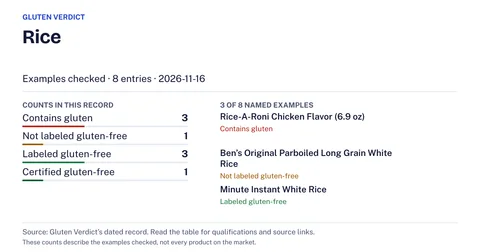 RiceNaturally gluten-free3 of 8 products we checked contain gluten: Rice-A-Roni Chicken Flavor (6.9 oz), Near East Original Rice Pilaf, and Ben’s Original Ready Rice Rice PilafBuy it labeled gluten-freechecked Nov 16, 2026
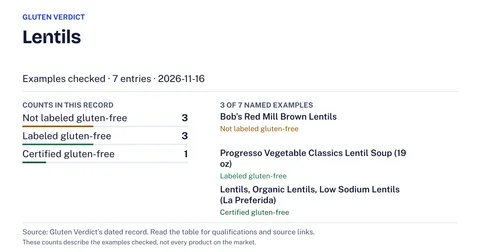 LentilsDepends on the productchecked Nov 16, 2026
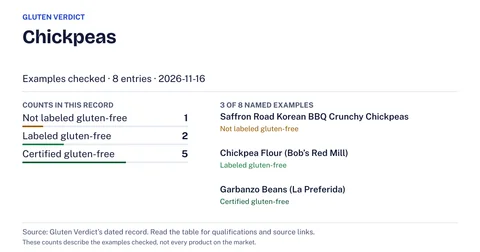 ChickpeasNaturally gluten-freechecked Nov 16, 2026
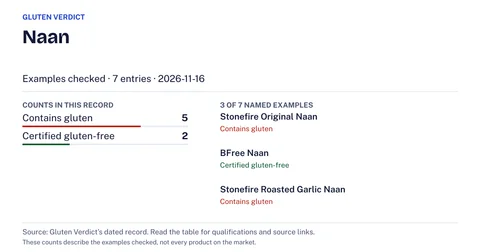 NaanContains glutenchecked Nov 16, 2026
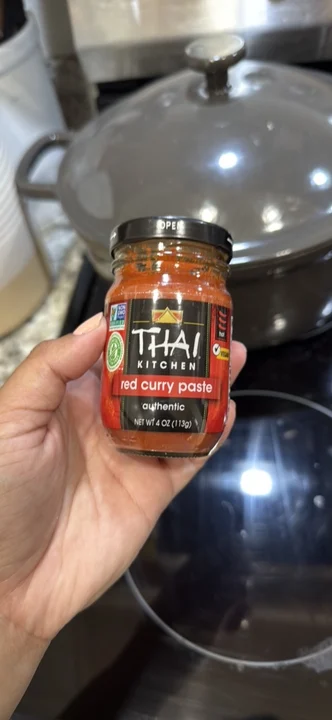 CurryDepends on the product2 of 11 products we checked contain gluten: S&B Golden Curry Mix, Mild (curry roux block) and S&B Golden Curry Sauce with Vegetables, Mild (pouch)checked Nov 16, 2026
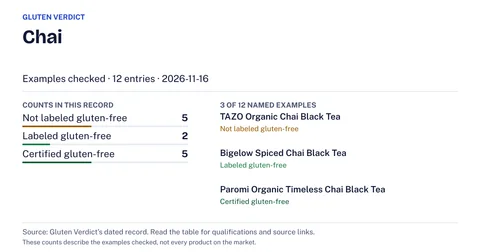 ChaiDepends on the productchecked Nov 16, 2026
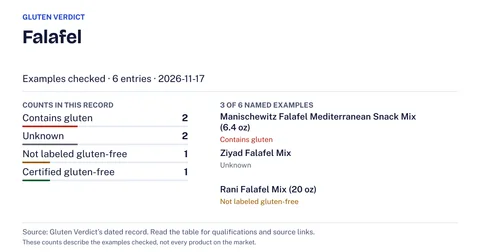 FalafelDepends on the product2 of 6 products we checked contain gluten: Manischewitz Falafel Mediterranean Snack Mix (6.4 oz) and Al’Fez Lebanese Falafel Kit (5.3 oz)checked Nov 17, 2026
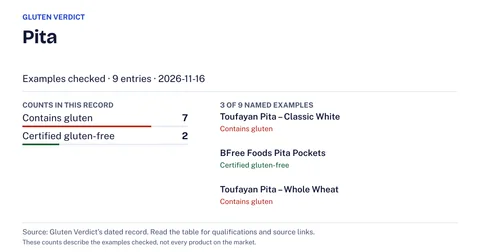 PitaContains glutenchecked Nov 16, 2026
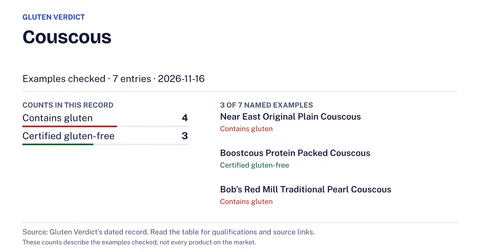 CouscousContains glutenchecked Nov 16, 2026
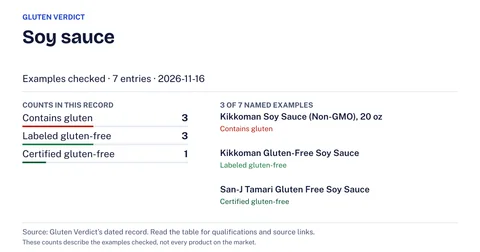 Soy sauceDepends on the product3 of 7 products we checked contain gluten: Kikkoman Soy Sauce (Non-GMO), 20 oz; San-J Organic Shoyu Soy Sauce; and Lee Kum Kee Premium Soy Sauce (No Preservatives Added)checked Nov 16, 2026
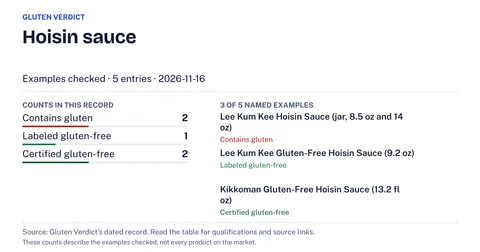 Hoisin sauceDepends on the product2 of 5 products we checked contain gluten: Lee Kum Kee Hoisin Sauce (jar, 8.5 oz and 14 oz) and Kikkoman Hoisin Sauce (9.3 oz)checked Nov 16, 2026
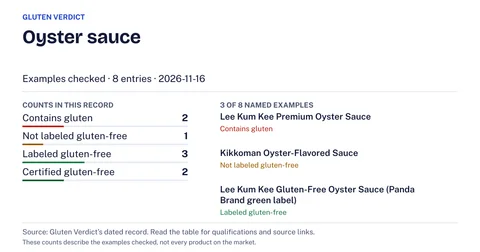 Oyster sauceDepends on the product2 of 8 products we checked contain gluten: Lee Kum Kee Premium Oyster Sauce and Lee Kum Kee Panda Brand Oyster Flavored Saucechecked Nov 16, 2026
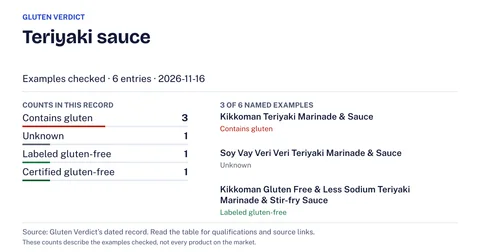 Teriyaki sauceDepends on the product3 of 6 products we checked contain gluten: Kikkoman Teriyaki Marinade & Sauce, Kikkoman Teriyaki Marinade & Stir-fry Sauce – Roasted Garlic, and Kikkoman Teriyaki BBQ Sauce – Originalchecked Nov 16, 2026
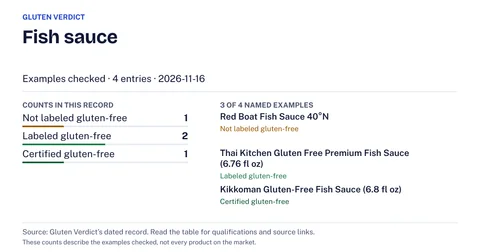 Fish sauceDepends on the productchecked Nov 16, 2026
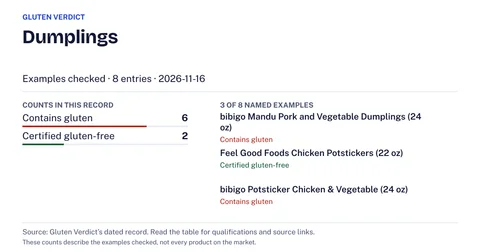 DumplingsContains glutenchecked Nov 16, 2026
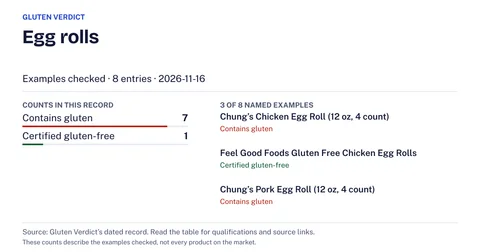 Egg rollsContains glutenchecked Nov 16, 2026
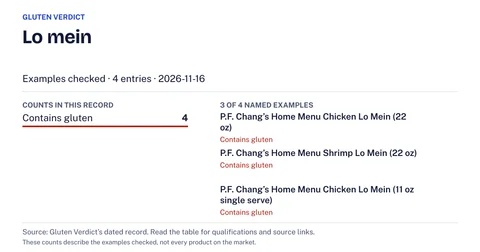 Lo meinContains glutenchecked Nov 16, 2026
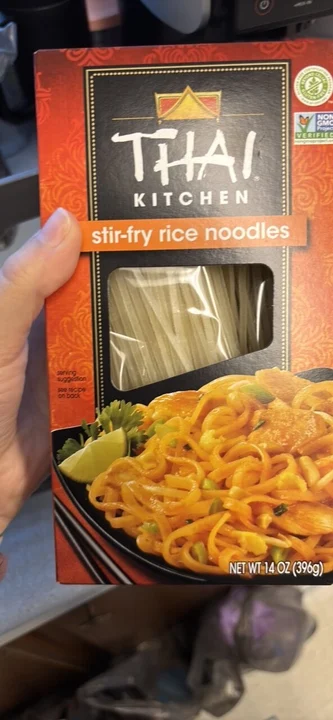 Rice noodlesNaturally gluten-free2 of 9 products we checked contain gluten: Annie Chun’s Pad Thai Noodle Bowl with Vegetables and Annie Chun’s Pho Soup Bowl with VegetablesBuy it labeled gluten-freechecked Nov 16, 2026
Questions people ask
Is maida gluten-free?
No. GIG describes maida as refined wheat flour found in some Indian desserts, breads and other menu items4. FDA’s rule does not allow a gluten-free label on a food containing an ingredient derived from a gluten-containing grain that has not been processed to remove gluten, such as wheat flour40.
Is soy sauce gluten-free?
Traditional soy sauce is not: GIG says it traditionally contains wheat24. Kikkoman makes a gluten-free soy sauce that replaces wheat with rice30.
Is hing gluten-free?
GIG says hing, a potent spice, is often processed with wheat and could be used in chutneys, soups and sauces6. Ask whether the hing used was processed with wheat.
More in Holidays, weddings and celebrations
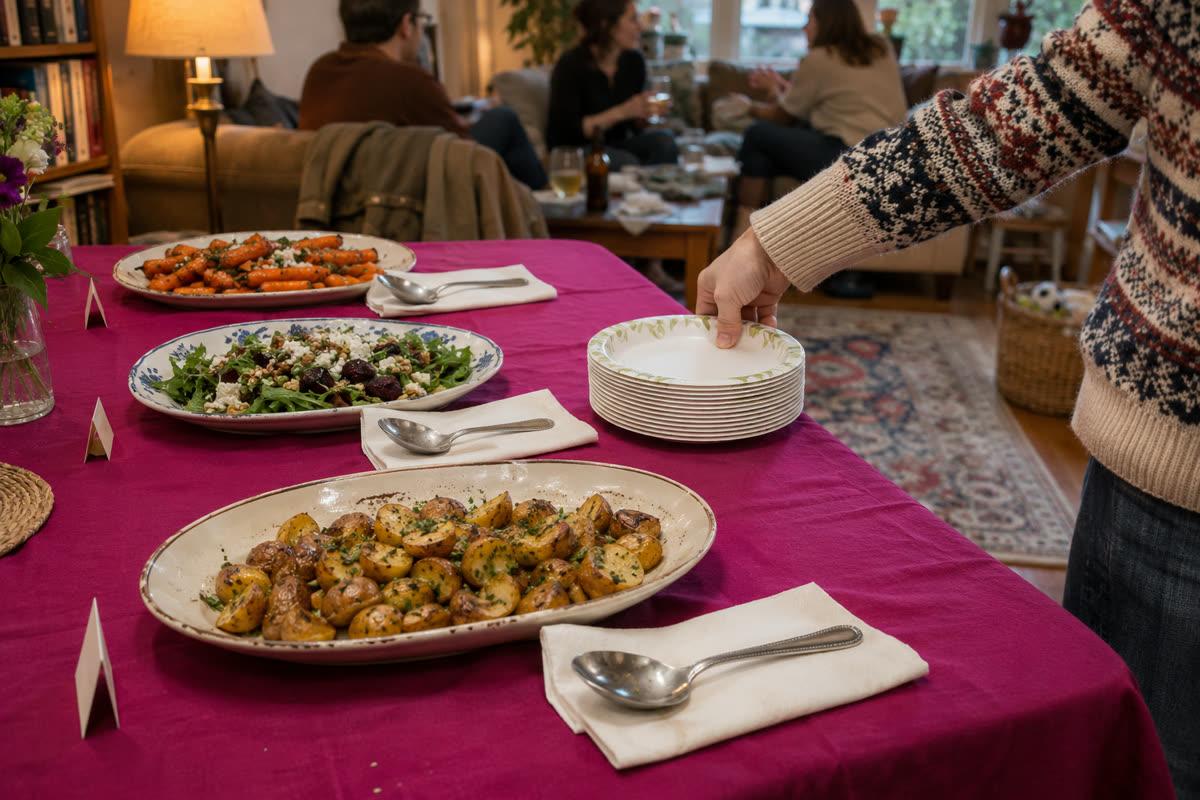 Hosting a gluten-free party: a menu and cross-contact planPlan a mixed party table for a guest with celiac disease: what to ask, which store-bought items to check, and how to keep dishes apart.
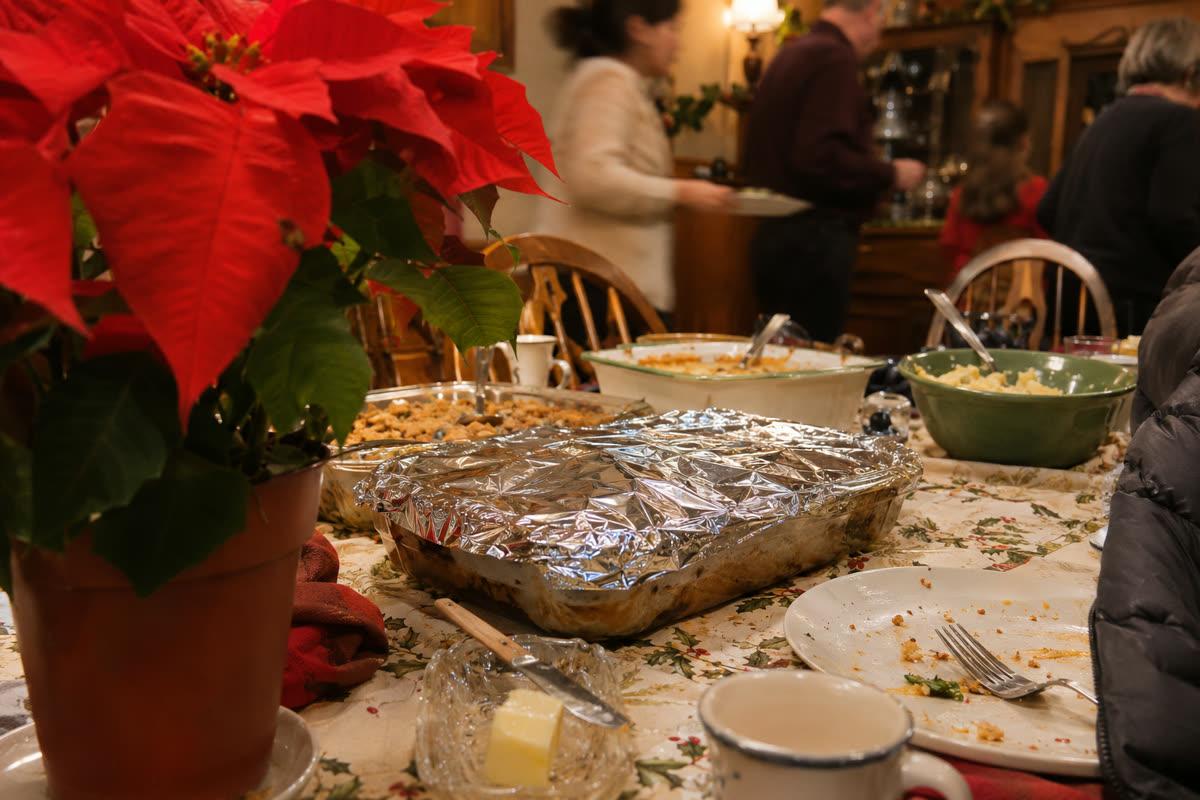 Gluten-free at a holiday dinner, potluck or cookout as a guestHow a guest with celiac disease can message the host, bring a dish, serve first at a buffet and decide when to eat only their own food.
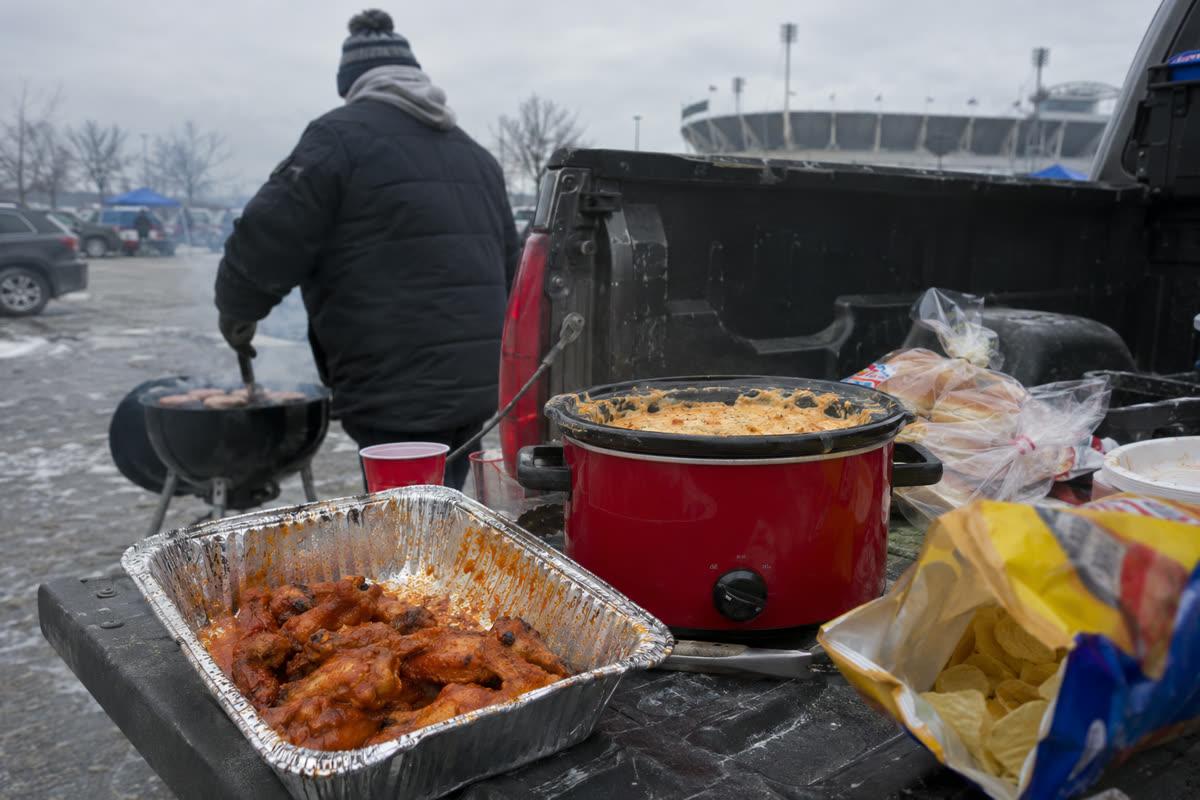 Super Bowl and tailgate food: label checks for dips, wings, chips and bunsCheck dips, chips, wings, sauces and buns for gluten before game day, ask the right questions about wings, and keep one dish apart on a shared table.
 Receiving Communion With Celiac Disease: What Each Church Says in Its Own DocumentsWhat Catholic, United Methodist, Lutheran and Episcopal documents say about low-gluten hosts, the cup and a separate chalice, and how to ask your clergy.
 Eating at a wedding with celiac disease: what to write, who to call and what to askA wedding guest with celiac disease: the RSVP line, the caterer call, the questions to ask and when to rely on your own food.
 Ordering a gluten-free birthday cake: what to ask the bakeryBakery, labeled packaged cake or your own? The questions to ask a bakery that also bakes wheat, and how to cut and serve the cake at the party.
Related guides
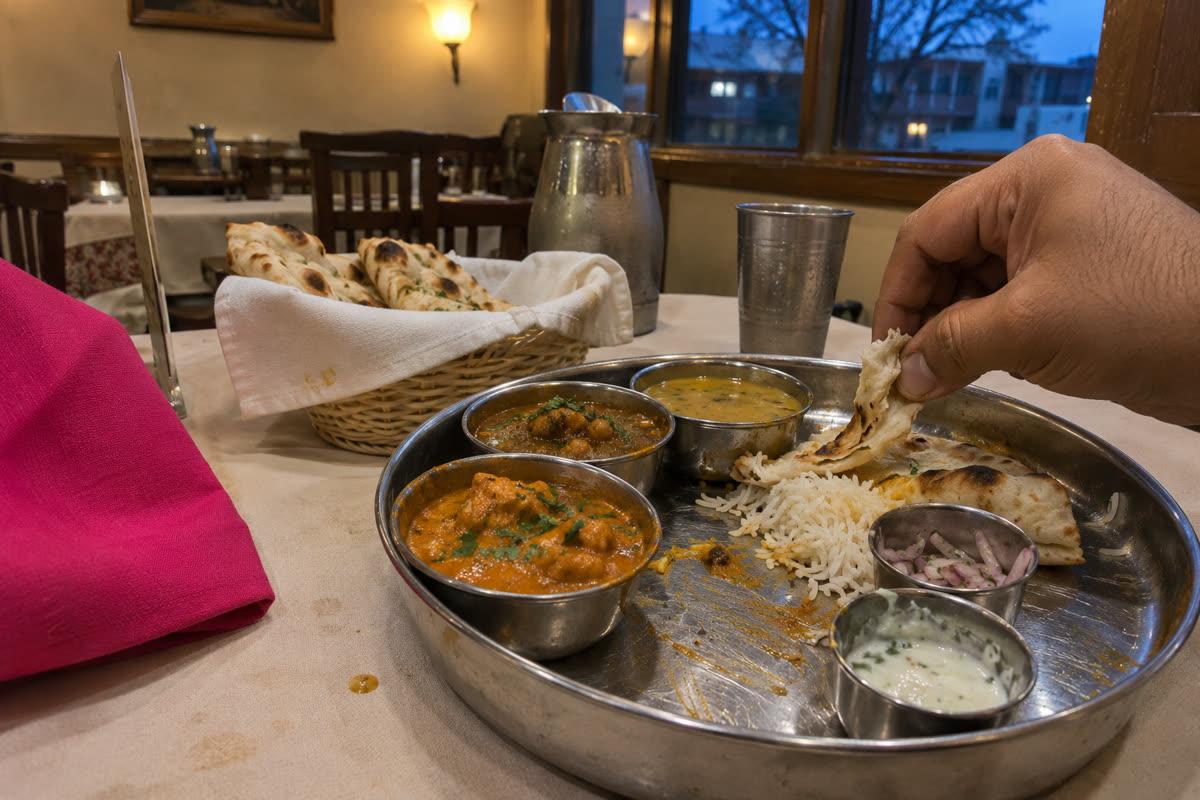 Ordering at an Indian restaurant: where wheat enters the menuWhere wheat enters an Indian menu (naan, hing, thickeners, samosas, the fryer and the tandoor) and the questions to ask before you order.
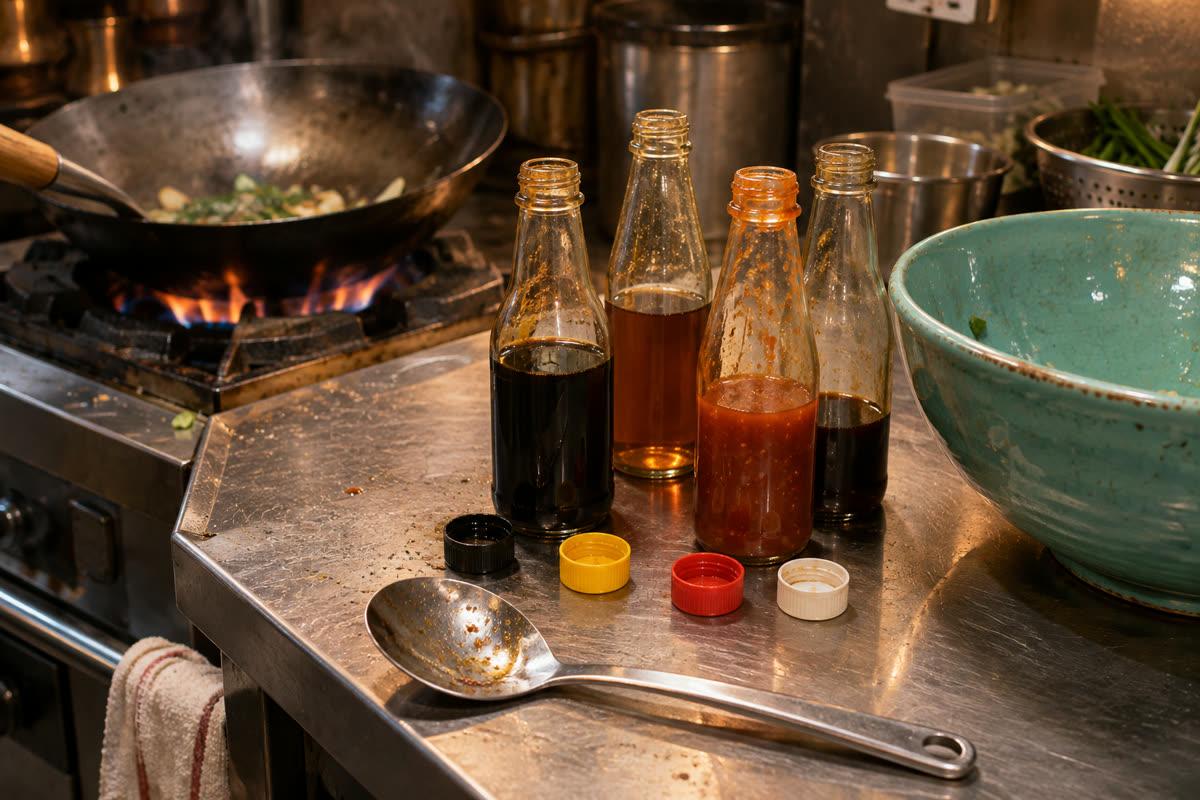 Soy, hoisin, oyster, teriyaki and fish sauce: which bottles carry wheatSoy, hoisin, oyster, teriyaki and fish sauce compared by the ingredient lists of Kikkoman, Lee Kum Kee, San-J and Red Boat, plus what to ask at a counter.
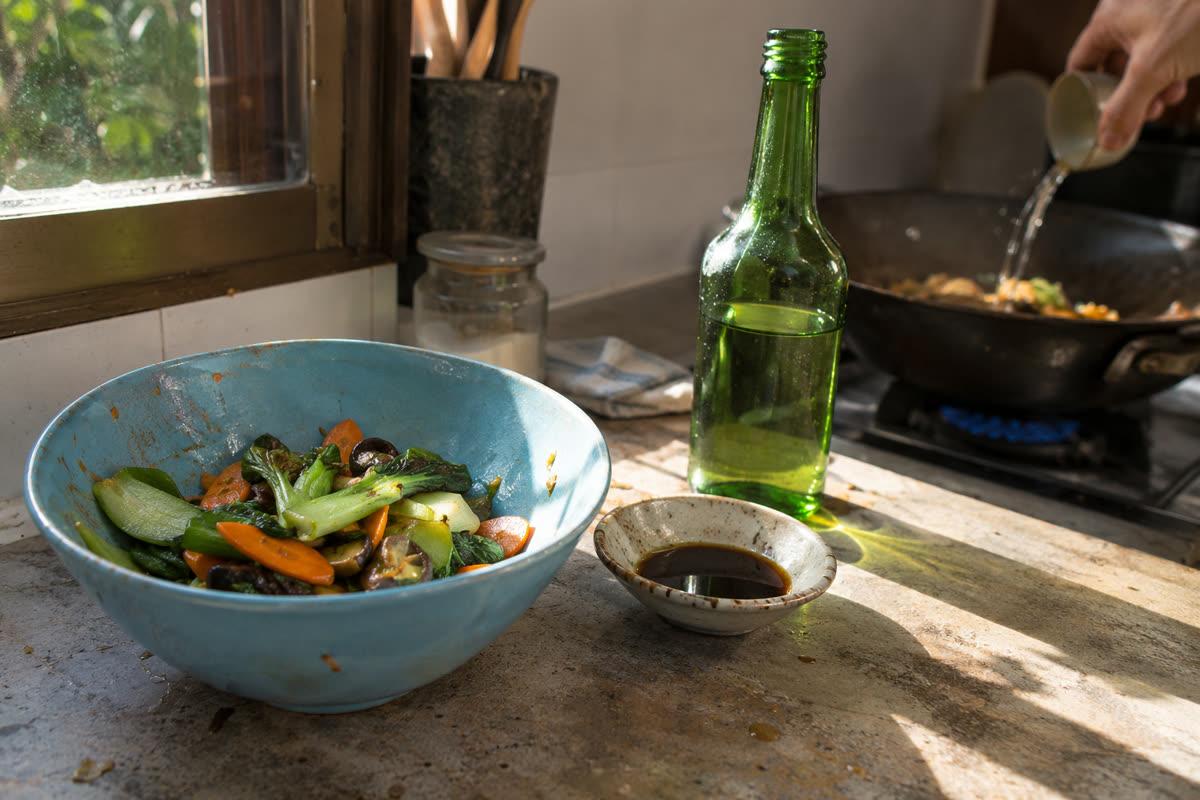 What to use instead of soy sauce when you eat gluten-freeTamari, gluten-free soy sauce, coconut aminos and liquid aminos: what each maker says, how to confirm it on the bottle, and what changes when you cook.
 Where wheat, barley and rye hide in processed food: 15 places to checkFifteen processed foods where wheat, barley or rye turn up, the label step that catches each, and what US allergen law does and does not flag.
Sources
- [1, 4, 5, 6, 7, 9, 10, 11, 12, 15, 16, 17, 18, 52, 54, 55] Gluten Intolerance Group, Venturing into Indian Cuisine, checked Nov 17, 2026.
Read on 2026-11-17: no mention of Diwali, a festival or a holiday in the article text; it names sevian as a North Indian dessert and names rawa ladoo only as a dish suji or rava is used for.
- [2, 19, 20, 21, 22, 23, 56, 57] Gluten Intolerance Group, Exploring Gluten-Free Dishes in Middle Eastern Cuisine, checked Nov 17, 2026.
Read on 2026-11-17: no mention of Ramadan, Iftar or Eid on the page, and the word “wheat” does not appear on it; the page covers dishes of Iran and Israel, heads its dish lists “Some gluten-free Persian dishes” and “Popular gluten-free Israeli dishes”, and names Naan Berenji, rice cookies eaten around the Persian New Year, and malabi, a rice and milk pudding.
- [3, 8, 24, 26, 27, 32, 51] Gluten Intolerance Group, Explore Asian Cuisine - Gluten-Free, checked Nov 17, 2026.
Read on 2026-11-17: no mention of Lunar New Year, Chinese New Year, a festival or a holiday on the page.
Read on 2026-11-17: the page lists GFCO-certified soy sauce brands (Iron Chef, Kikkoman, Lee Kum Kee, Pekin, San-J, TH Foods, Yasama), noodle brands (Cece’s Veggie Co, Explore Cuisine, From Japan, House Foods, Long Kow, Meister, Miracle Noodle Kitchen) and gyoza, dumpling and potsticker products (Make It GF, Gyoza Keikaku, SHIRAKIKU, UMAUMA, Feel Good Foods), and panko (Aleia’s Gluten Free Food, Kikkoman).
- [13, 29, 39, 41, 44] US Food and Drug Administration, Questions and Answers on the Gluten-Free Food Labeling Final Rule, checked Nov 17, 2026.
- [14, 45] US Food and Drug Administration, Gluten and Food Labeling, checked Nov 17, 2026.
- [25, 30, 31] Kikkoman USA, Gluten-Free Soy Sauce, checked Nov 17, 2026.
- [28, 33, 34, 35, 36, 37, 38, 53] Celiac Disease Foundation, Dining and Social Eating, checked Nov 17, 2026.
- [40] Electronic Code of Federal Regulations, 21 CFR 101.91 Gluten-free labeling of food, checked Nov 17, 2026.
- [42, 43] US Food and Drug Administration, Food Allergen Labeling and Consumer Protection Act of 2004 (FALCPA), checked Nov 17, 2026.
- [46, 47, 50] Gluten-Free Certification Organization, GFCO Product Finder, checked Nov 17, 2026.
Read on 2026-11-17: the search for soy sauce with the brand “kikkoman” lists Kikkoman and Kikkoman Foods, Inc. entries, among them “10 fl oz GF NPA Soy Sauce” and “10 fl oz GF Organic Tamari Soy Sauce”, both with sales region US.
- [48, 49] Kikkoman USA, Does Kikkoman make gluten-free products?, checked Nov 17, 2026.