Ordering gluten-free at a Chinese restaurant: sauces, coatings, wine, woks and MSG
Short answer
Wheat can reach Chinese-restaurant food by the four routes below, and MSG is not one of them1. Ask about each before you order:
- The sauce: soy sauce is ordinarily made from soybeans and wheat, and some hoisin and oyster sauces list wheat flour2, 3, 4.
- The marinade, coating and thickener: sauces and marinades may contain added gluten as a thickener or binding agent5, and Coeliac New Zealand says to check that battered items do not contain wheat-based flour7.
- The cooking wine, noodles and wrappers: one recalled Shaoxing cooking wine contained undeclared wheat, Coeliac New Zealand lists wheat noodles and wonton wrappers among the foods to avoid, and one egg roll wrapper lists wheat flour6, 7, 8, 9.
- The wok and fryer: Coeliac New Zealand says to be wary of cross-contamination from woks, fryers and cooking surfaces, and the Gluten Intolerance Group says fry oil may be shared with breaded items10, 11.
Part of Eating out and chain restaurant policies, 25 guides
Key points
- MSG is not a gluten ingredient: FDA says glutamate and glutamic acid have nothing to do with gluten1, and the National Celiac Association says it is unlikely MSG would contain traces of gluten even if derived from wheat starch12.
- The wheat in a dish that contains MSG can be in another ingredient: Lee Kum Kee’s Premium Oyster Sauce lists monosodium glutamate and wheat flour as separate ingredients4.
- Coeliac New Zealand’s advice is to start from steamed rice, stir-fried vegetables and grilled or steamed meats, with sauces and seasonings on the side13.
- Coeliac New Zealand says dishes described as “fried” or “crispy” are more likely to contain gluten14.
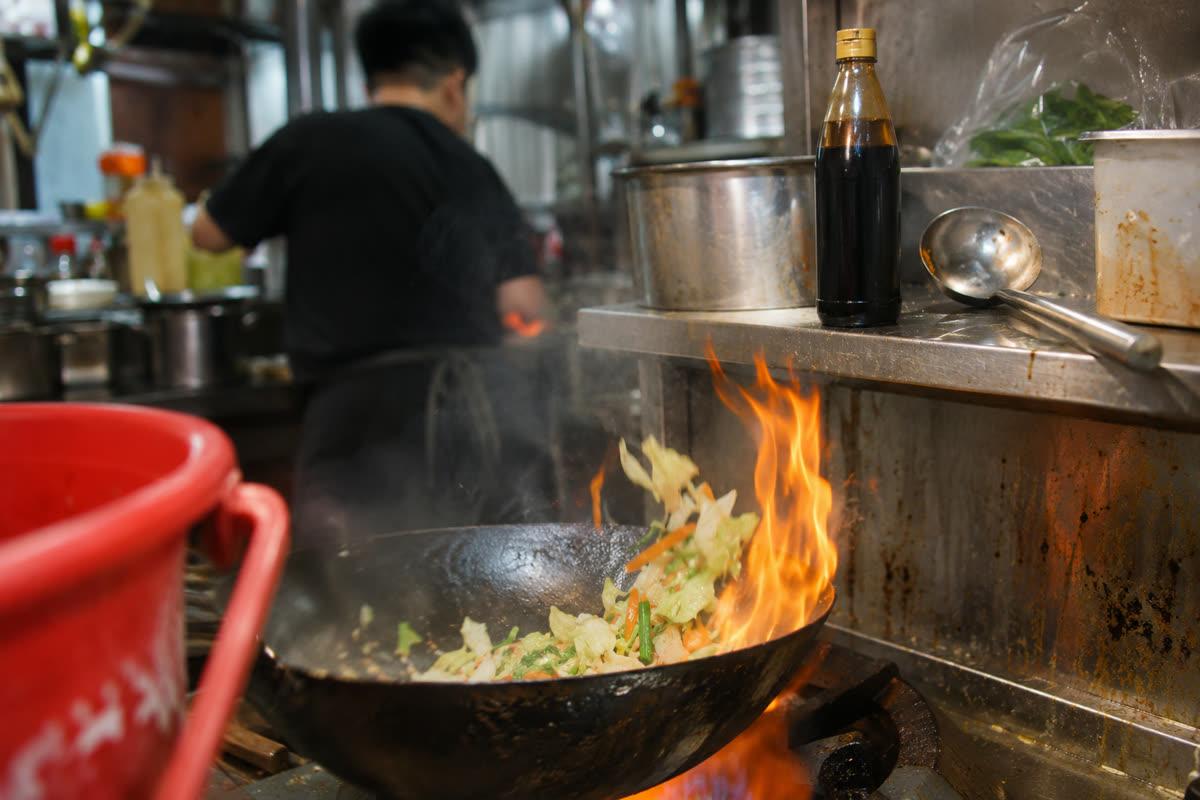
- P.F. Chang’s own pages describe a designated gluten-free cooking area with gluten-free woks15, and its allergen chart says that, because of shared cooking and preparation, it is unable to guarantee the absence of cross-contamination16.
Where the wheat is in Chinese-restaurant cooking
The Gluten Intolerance Group (GIG) says many traditional Asian dishes are made with wheat-based ingredients such as soy sauce, noodles and dumplings17. The table pairs each route with the question that covers it.
| Route | What the sources say | What to ask |
|---|---|---|
| Soy sauce, and sauces made with it | FDA describes soy sauce as ordinarily made by fermenting a mixture of soybeans and wheat2. Coeliac New Zealand says traditional teriyaki is made with it18. | Which soy sauce is it, and which sauces contain it? |
| Hoisin and oyster sauce | The Lee Kum Kee hoisin jar and Premium Oyster Sauce we read list wheat flour3, 4. | Can I see the bottle or can label? |
| Marinades, coatings, thickeners | GIG: sauces and marinades may contain added gluten as a thickener or binding agent5. | What is on the meat before it is cooked, and is the sauce thickened with flour? |
| Cooking wine | A Canadian recall covered a Shaoxing cooking wine that contains wheat not declared on its label6. | Is cooking wine in this dish, and does it contain wheat? |
| Woks and fryers | Coeliac New Zealand: be wary of cross-contamination from woks, fryers and cooking surfaces10. | Is it cooked in a clean wok, and is the oil shared with breaded food? |
| Noodles, wrappers, mock meat | Coeliac New Zealand lists wheat noodles among the dishes to avoid7, says anything made with wonton wrappers is not gluten free8, and says seitan is made from wheat19. | Is there a rice-noodle or no-wrapper option? |
Is MSG a gluten source?
No. FDA’s question-and-answer page says glutamate and glutamic acid have nothing to do with gluten, and that a person with celiac disease may react to the wheat that may be present in soy sauce, but not to the MSG in the product1.
The National Celiac Association adds that various starches and sugars may be the starting material for MSG, and that even if it is derived from wheat starch it is unlikely MSG would contain traces of gluten12.
The two can sit in one ingredient list. Lee Kum Kee’s Premium Oyster Sauce lists monosodium glutamate as a flavor enhancer and, separately, wheat flour4. FDA puts the celiac concern on wheat in an ingredient such as soy sauce, not on MSG1. Our verdict on monosodium glutamate has the detail.
Some people do report reactions to MSG. The National Celiac Association notes that people have reported sensitivities to it with symptoms such as headache, flushing, sweating, nausea and weakness20, and says those symptoms are not related to gluten21. That is a separate question from celiac disease.
Soy, hoisin, oyster and teriyaki sauces
FDA says some soy sauces are made without wheat, but that soy sauce ordinarily is made from soybeans and wheat, and one made that way may not carry a gluten-free claim2. Coeliac New Zealand lists dishes with hoisin sauce, oyster sauce and gluten-containing soy sauce among those to avoid7.
Two Lee Kum Kee bottles show how this reads on a label. The hoisin jar lists a fermented soybean paste made with wheat flour3, and Premium Oyster Sauce lists wheat flour4. The same brand sells a Green Panda oyster sauce that it calls gluten-free22, and whose ingredient list shows no wheat23.
Coeliac New Zealand says traditional teriyaki sauce contains gluten because it is made with soy sauce18.
A sauce name on a menu does not say which bottle is behind it, so ask. GIG notes that some restaurants use canned sauces and that you may be able to ask to check the ingredients list on the can24. Our verdicts: soy sauce, hoisin sauce, oyster sauce, teriyaki sauce and fish sauce.
Marinades, coatings and thickeners
GIG says dressings, sauces and marinades may contain added gluten as a thickener or binding agent5. Coeliac New Zealand’s advice is to check that marinades and battered items do not contain wheat-based flour, and to watch for flour-based sauces or thickeners7.
On the menu itself, Coeliac New Zealand says dishes described as “fried” or “crispy” are more likely to contain gluten14. Our orange chicken verdict shows one chain’s chart marking wheat on that dish.
Plain tofu is naturally gluten-free, Coeliac New Zealand says, but it is worth checking whether it has been marinated or flavored25. See tofu.
Soups can hide a thickener too: GIG says soup bases may be made with a roux of butter and flour26. Our wonton soup verdict covers the wrappers and the broth.
Cooking wine
Wheat can be in a cooking wine. A Canadian Food Inspection Agency recall notice for a Shaoxing cooking wine says the product was recalled because it contains wheat which is not declared on the label6.
That is one product in one country, not a finding about every cooking wine, and it says nothing about any US restaurant. It is a reason to ask whether wine goes into the sauce or marinade, and what the bottle lists. In the recalled case the label itself did not declare the wheat6.
Woks, fryers and shared surfaces
Coeliac New Zealand’s advice is to be wary of cross-contamination from kitchen utensils, cooking surfaces, fryers and woks10. GIG says the oil used to deep-fry foods may be shared by breaded and non-breaded items, in which case those foods should be avoided11.
GIG also suggests finding out whether breaded or gluten-containing foods have been cooked on the same surface beforehand, and suggests foil over the cooking surface as one way to avoid cross-contact27. For a deep fryer, the question GIG lists is “Are the french fries cooked in a dedicated fryer, or do they share oil with breaded items?”28. Ask it about whatever the kitchen fries: egg rolls, crispy chicken, crab rangoon.
Coeliac New Zealand says prawn crackers are likely to be gluten-free if they are made in a dedicated fryer29.
Among the red flags in GIG’s guide for parents and caregivers for eating elsewhere: being told that gluten-free foods share cooking oil or grill space with heavily breaded items30, and kitchen staff refusing or hesitating to check ingredient labels on packaged sauces31.
Noodles, wrappers, rice and mock meat
| Item | What the sources say | Our verdict |
|---|---|---|
| Wheat noodles (lo mein, chow mein) | Coeliac New Zealand lists wheat noodles among the dishes to avoid7. | Lo mein, chow mein |
| Rice noodles | Coeliac New Zealand says to check whether rice noodles are available instead of wheat noodles, and whether spring rolls can be made with rice paper32. | Rice noodles |
| Dumplings, wontons, egg rolls | GIG says dumplings are often made with wheat-based wrappers33. Wei-Chuan lists wheat flour in its egg roll wrapper9. | Dumplings, egg rolls, wonton soup |
| Fried and seasoned rice | GIG says seasoned rice may have added gluten-containing ingredients, and that plain or steamed rice cooked in water is a good choice34. | Fried rice |
| Mock meat | Coeliac New Zealand says mock meat dishes are generally not gluten-free, and that seitan is made from wheat19. | Seitan |
How to order, step by step
- Call ahead and ask for the chef or manager. GIG suggests calling the day before or earlier the same day and speaking to the chef35. For an Asian restaurant it also says to confirm that gluten-free ingredients and sauces are used and the gluten-free standard is understood, particularly avoiding cross-contact36.
- Start from the plain end of the menu. Coeliac New Zealand names steamed rice, stir-fried vegetables and grilled or steamed meats as generally gluten-free, with sauces and seasonings on the side13.
- Ask the four questions: which sauce goes on the dish and whether it contains soy, hoisin or oyster sauce; what is on the meat before it is cooked; whether cooking wine is used; and whether the wok is clean and the oil not shared with breaded food.
- Ask to see the label of any bottled or canned sauce. GIG notes some restaurants use canned sauces and you may be able to check the list on the can24.
- When the plate arrives, confirm it is the meal you ordered. GIG suggests double-checking with your server37.
If staff will not check a label, or say gluten-free food shares oil with breaded food, those are two of the red flags GIG’s guide for parents and caregivers lists for eating elsewhere30, 31.
What a “gluten-free” menu label means, and P.F. Chang’s
FDA’s gluten-free rule applies to packaged foods, which may be sold in some food-service establishments such as some carry-out restaurants. For restaurant menus FDA recommends that a “gluten-free” claim be consistent with its definition38. FDA’s consumer page says the same thing about restaurants’ use of gluten-free labeling39. A recommendation is not the packaged-food rule, so ask what a restaurant means by its gluten-free mark.
P.F. Chang’s is the Chinese-style chain whose own pages we cite here. It says its chefs use a designated gluten-free cooking area with gluten-free woks and cooking utensils15, and asks guests to alert the server when ordering gluten-free40. Its allergen chart carries this disclaimer: “Due to normal operations involving shared cooking and preparation, we are unable to guarantee the absence of cross-contamination or that any menu item can be completely free of allergens”16.
On the chart we read, the Wheat column is marked on dishes such as Orange Chicken, Fried Rice and Signature Lo Mein, and blank on the rows under the gluten-free headings41. Our P.F. Chang’s verdict has the details and the date.
Verdicts in this guide
 Soy sauceDepends on the product3 of 7 products we checked contain gluten: Kikkoman Soy Sauce (Non-GMO), 20 oz; San-J Organic Shoyu Soy Sauce; and Lee Kum Kee Premium Soy Sauce (No Preservatives Added)checked Nov 16, 2026
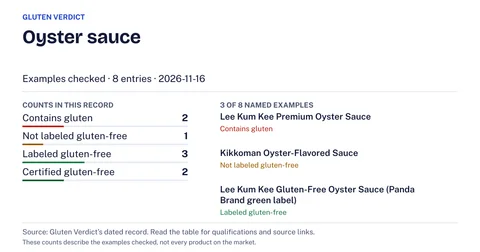 Oyster sauceDepends on the product2 of 8 products we checked contain gluten: Lee Kum Kee Premium Oyster Sauce and Lee Kum Kee Panda Brand Oyster Flavored Saucechecked Nov 16, 2026
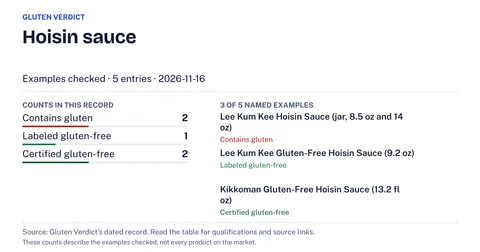 Hoisin sauceDepends on the product2 of 5 products we checked contain gluten: Lee Kum Kee Hoisin Sauce (jar, 8.5 oz and 14 oz) and Kikkoman Hoisin Sauce (9.3 oz)checked Nov 16, 2026
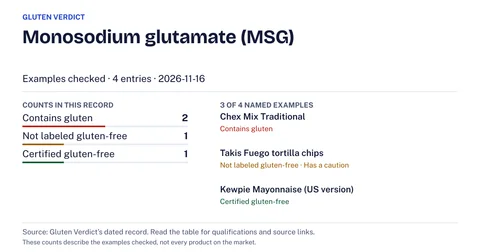 Monosodium glutamate (MSG)Naturally gluten-free2 of 4 products we checked contain gluten: Chex Mix Traditional and S&B Golden Curry Mix (Mild)checked Nov 16, 2026
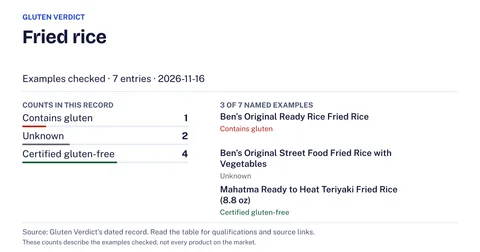 Fried riceDepends on the product1 of 7 products we checked contains gluten: Ben’s Original Ready Rice Fried Ricechecked Nov 16, 2026
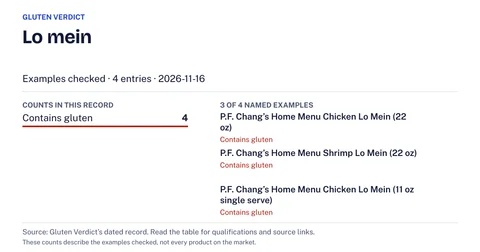 Lo meinContains glutenchecked Nov 16, 2026
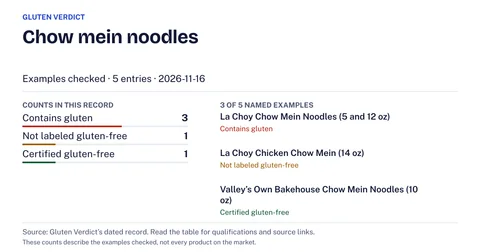 Chow mein noodlesContains glutenchecked Nov 16, 2026
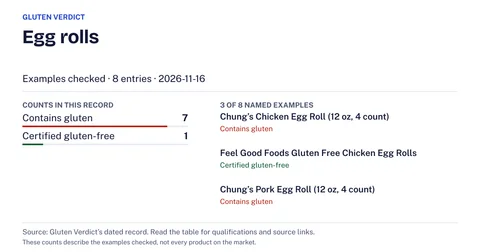 Egg rollsContains glutenchecked Nov 16, 2026
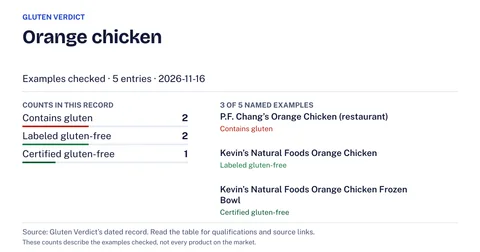 Orange chickenDepends on the product2 of 5 products we checked contain gluten: P.F. Chang’s Orange Chicken (restaurant) and P.F. Chang’s Kid’s Orange Chicken (restaurant)checked Nov 16, 2026
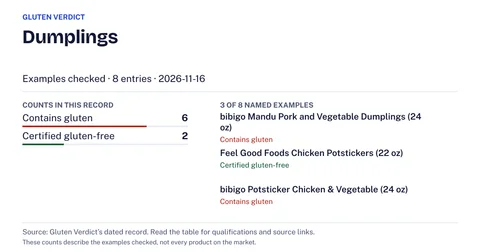 DumplingsContains glutenchecked Nov 16, 2026
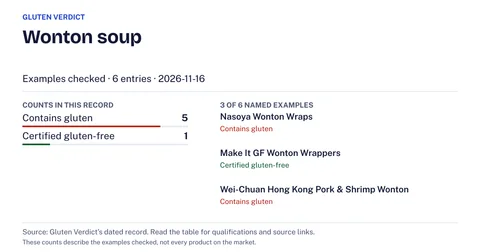 Wonton soupContains glutenchecked Nov 16, 2026
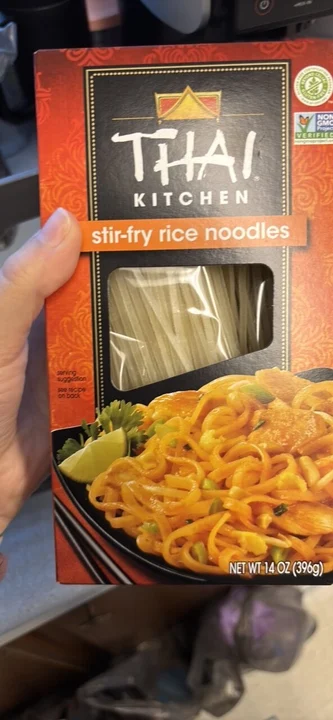 Rice noodlesNaturally gluten-free2 of 9 products we checked contain gluten: Annie Chun’s Pad Thai Noodle Bowl with Vegetables and Annie Chun’s Pho Soup Bowl with VegetablesBuy it labeled gluten-freechecked Nov 16, 2026
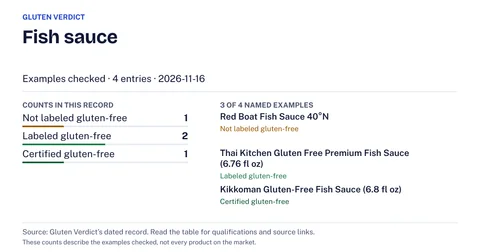 Fish sauceDepends on the productchecked Nov 16, 2026
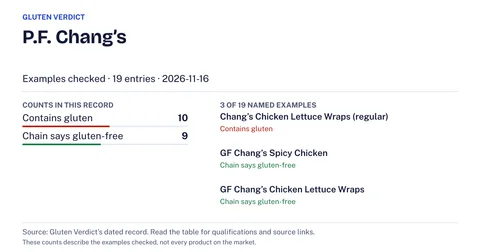 P.F. Chang’sDepends on the order10 of 19 menu items we checked contain glutenP.F. Chang’s · checked Nov 16, 2026
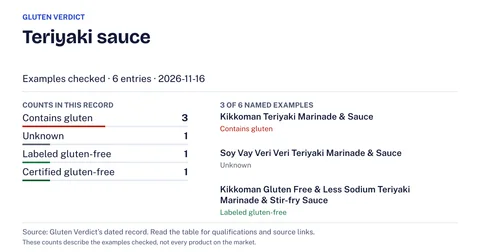 Teriyaki sauceDepends on the product3 of 6 products we checked contain gluten: Kikkoman Teriyaki Marinade & Sauce, Kikkoman Teriyaki Marinade & Stir-fry Sauce – Roasted Garlic, and Kikkoman Teriyaki BBQ Sauce – Originalchecked Nov 16, 2026
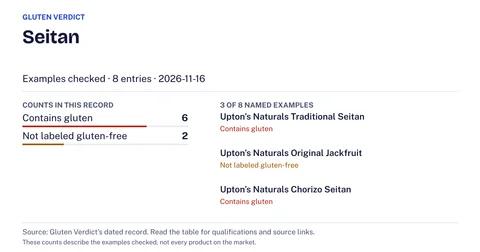 SeitanContains glutenchecked Nov 16, 2026
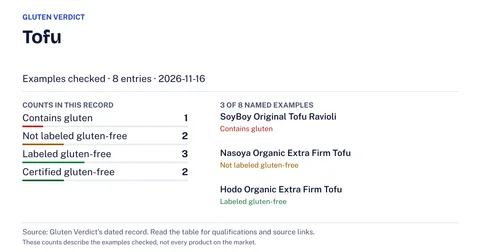 TofuDepends on the product1 of 8 products we checked contains gluten: SoyBoy Original Tofu Raviolichecked Nov 16, 2026
Questions people ask
Is MSG gluten-free?
MSG is not a gluten ingredient. FDA says glutamate and glutamic acid have nothing to do with gluten1. The wheat to watch for is in ingredients such as soy sauce1.
Is soy sauce at a Chinese restaurant gluten-free?
Not by default. FDA says soy sauce is ordinarily made by fermenting soybeans and wheat, though some are made without wheat2. Ask which one the kitchen uses.
Can I eat fried rice?
It depends on how it is seasoned. GIG says seasoned rice may have added gluten-containing ingredients and plain or steamed rice cooked in water is a good choice34. Our fried rice verdict covers products we checked.
More in Eating out and chain restaurant policies
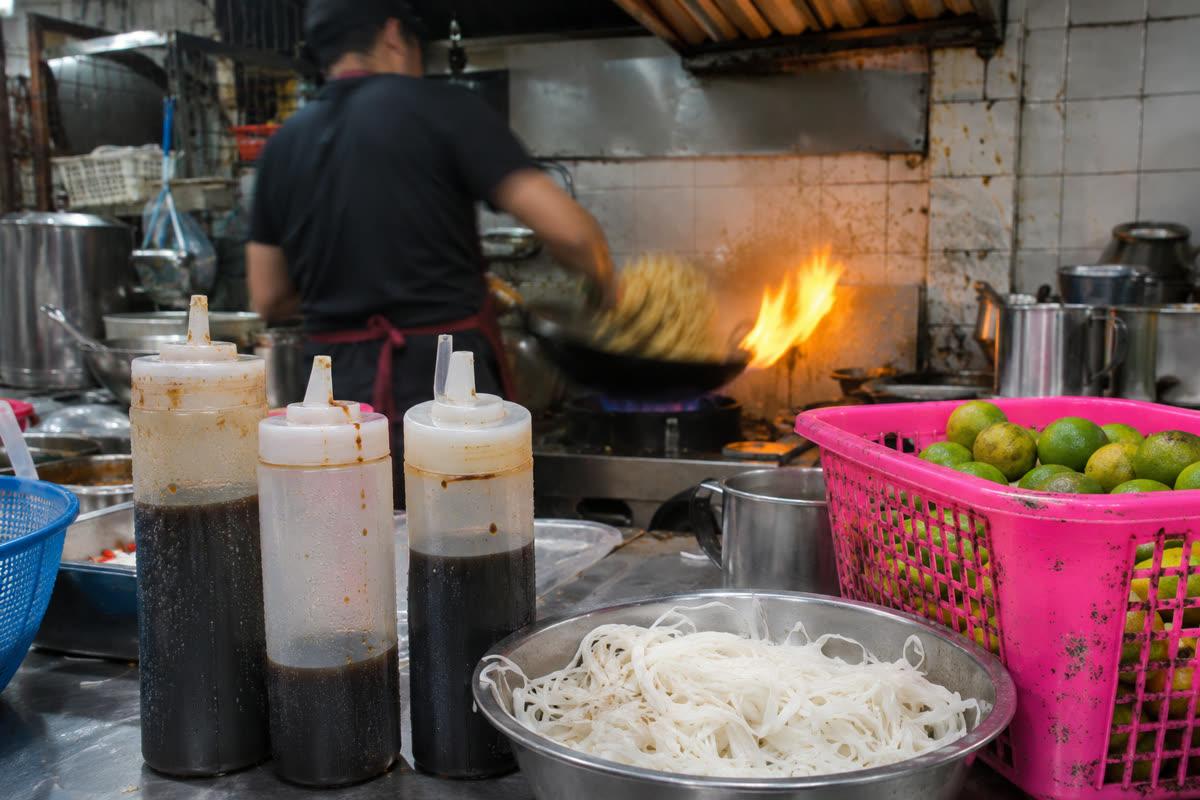 Ordering at a Thai restaurant when you avoid gluten: sauces, noodles and woksWhich Thai sauces, noodles, coatings and kitchen habits can bring in wheat, and the questions to ask before you order at a Thai restaurant.
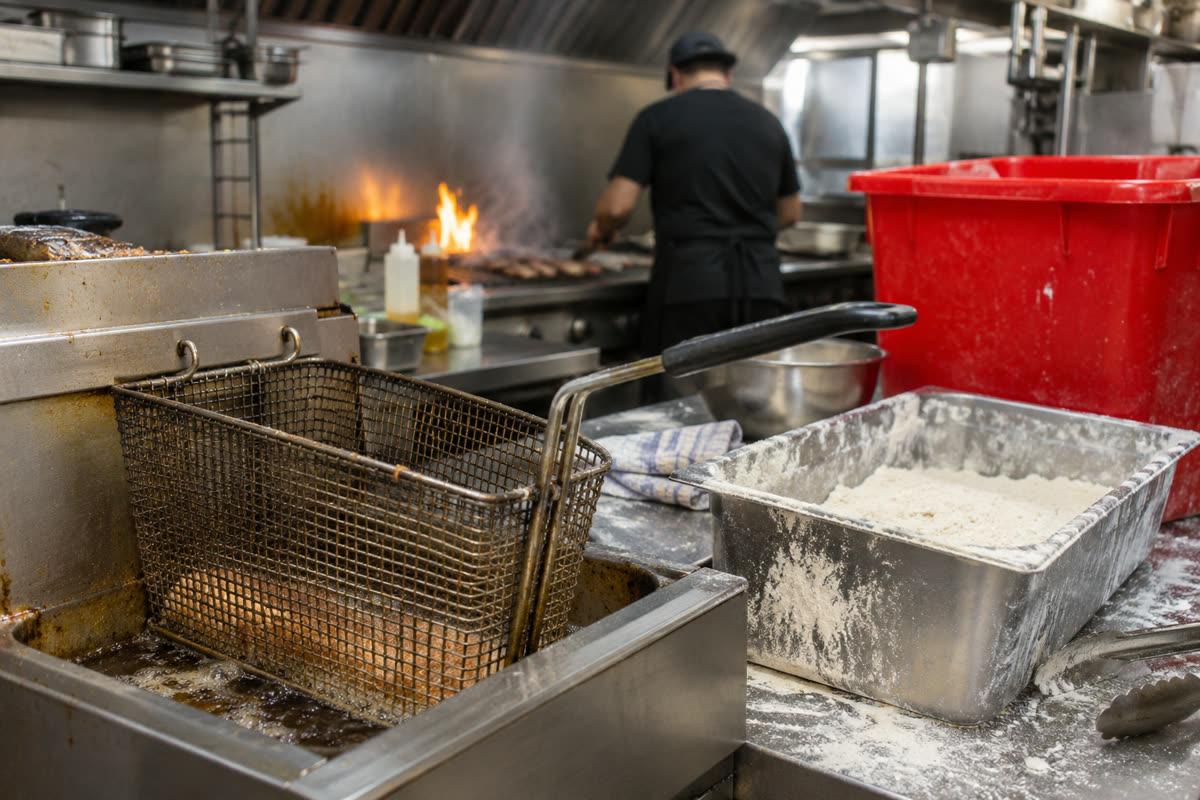 Where gluten hides in a restaurant kitchen, and the question to ask about each sourceFryers, sauces, roux, marinades, grills, pasta water and eggs: how gluten reaches restaurant food and the question GIG lists for each source.
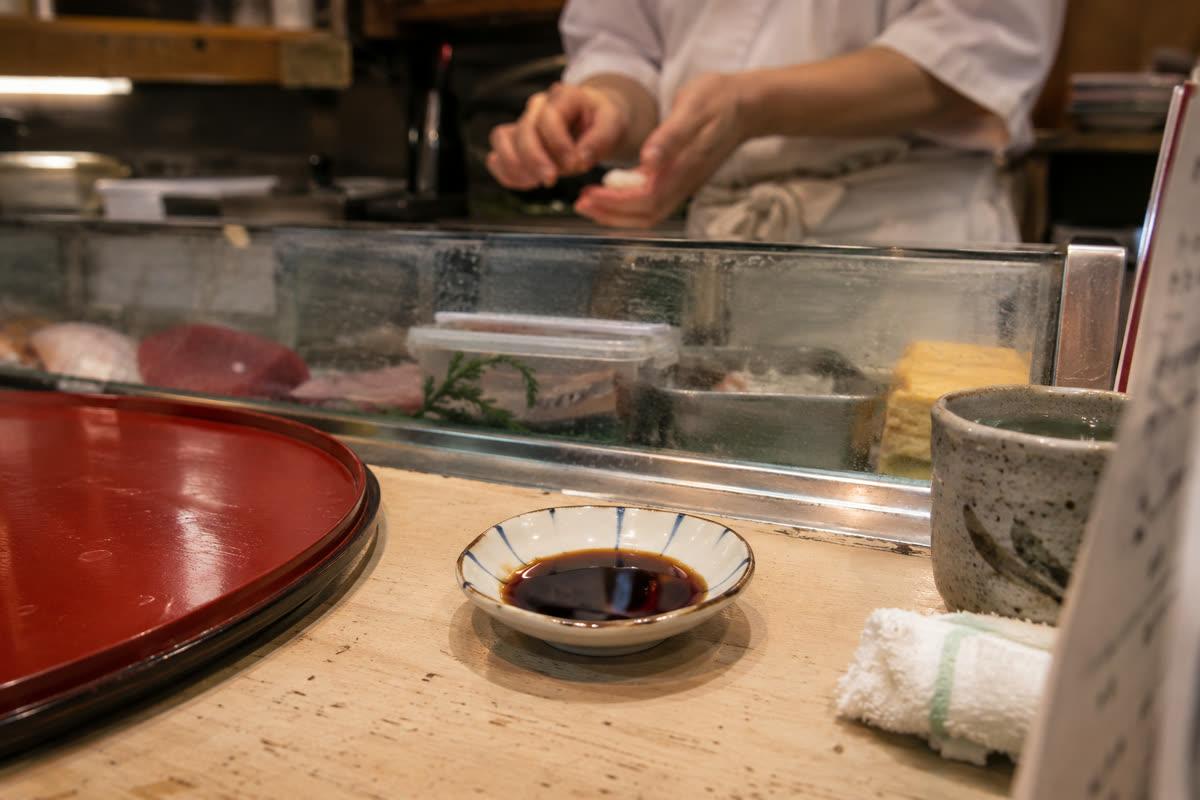 Ordering sushi and Japanese food when you avoid glutenWhich sushi, ramen and hibachi items carry wheat, what to ask about soy sauce, imitation crab, tempura and shared fryers, and a first-visit order.
 Eating out with celiac disease: what to check, ask and watch forPlan a restaurant meal with celiac disease: what to check before you go, the questions to ask in order, how to read the answers, and what studies measured.
 Ordering gluten-free through delivery apps and online menusWhat a dietary filter, tag or special-instructions note does in DoorDash and Uber Eats, and how to check a chain’s page and call before you order.
 How to read a restaurant allergen chart for glutenWhat a mark, a blank cell, an X and a footnote mean on real US chain allergen charts, and which gluten questions the chart cannot answer.
Related guides
 Soy, hoisin, oyster, teriyaki and fish sauce: which bottles carry wheatSoy, hoisin, oyster, teriyaki and fish sauce compared by the ingredient lists of Kikkoman, Lee Kum Kee, San-J and Red Boat, plus what to ask at a counter.
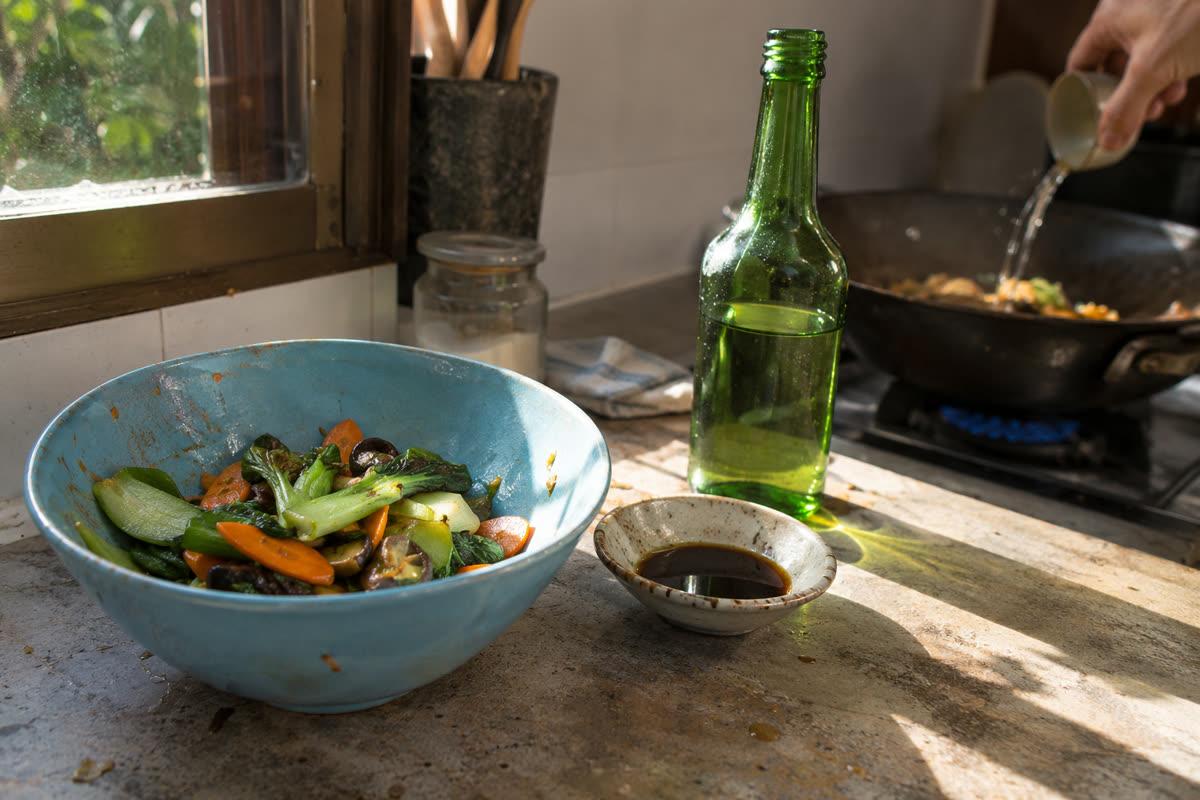 What to use instead of soy sauce when you eat gluten-freeTamari, gluten-free soy sauce, coconut aminos and liquid aminos: what each maker says, how to confirm it on the bottle, and what changes when you cook.
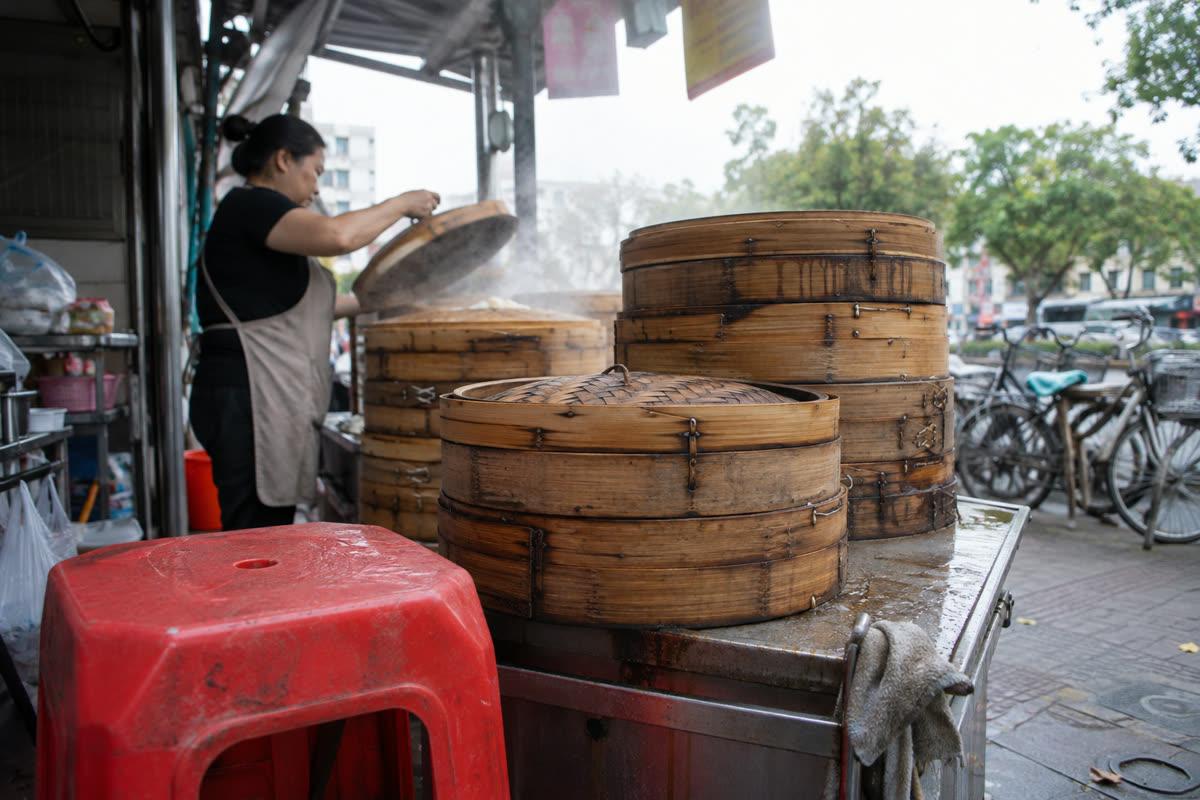 Gluten-free in China: wheat staples, sauces, hot pot and the label rulesWhere wheat sits in Chinese staples, sauces and hot-pot bases, what China’s label standard requires, and the Chinese words it prints for wheat and gluten.
 Eating gluten-free in Thailand: sauces, noodles and street stallsWhere wheat shows up in Thai sauces, noodles and street food, how Thailand words its own gluten-free rule, and the Thai words to look for on a pack.
Sources
- [1] US Food and Drug Administration, Questions and Answers on Monosodium glutamate (MSG), checked Nov 17, 2026.
- [2, 38] US Food and Drug Administration, Questions and Answers on the Gluten-Free Food Labeling Final Rule, checked Nov 17, 2026.
- [3] Lee Kum Kee USA, Hoisin Sauce (Jar), checked Nov 17, 2026.
- [4] Lee Kum Kee USA, Premium Oyster Sauce, checked Nov 17, 2026.
- [5, 11, 24, 26, 27, 34, 35, 37] Gluten Intolerance Group, Eating Out: 7 Tips For Staying Gluten-Free, checked Nov 17, 2026.
- [6] Canadian Food Inspection Agency, Certain Shaoxing Cooking Wines recalled due to undeclared wheat, checked Nov 17, 2026.
- [7, 8, 10, 13, 14, 18, 19, 25, 29, 32] Coeliac New Zealand, Advice for eating out to celebrate Chinese New Year, checked Nov 17, 2026.
- [9] Wei-Chuan USA, Egg Roll Wrapper, checked Nov 17, 2026.
- [12, 20, 21] National Celiac Association, Is monosodium glutamate ok on the gluten-free diet?, checked Nov 17, 2026.
- [15, 40] P.F. Chang’s, Nutrition & Allergen Info, gluten-free menu, checked Nov 17, 2026.
- [16, 41] P.F. Chang’s, National menu allergen chart, holiday 2026, checked Nov 17, 2026.
Read on 2026-11-17: the allergen chart (revised October 2026) marks the Wheat column on the Orange Chicken, Fried Rice and Signature Lo Mein rows, and leaves the Wheat column blank on the rows listed under its “GF” and “Gluten-Free” headings, for example GF Chang’s Spicy Chicken, GF Mongolian Beef and GF Chang’s Fried Rice Chicken.
- [17, 33, 36] Gluten Intolerance Group, Explore Asian Cuisine – Gluten-Free, checked Nov 17, 2026.
- [22, 23] Lee Kum Kee USA, Gluten-Free Oyster Sauce (Panda Brand green label), checked Nov 17, 2026.
- [28, 30, 31] Gluten Intolerance Group, Questions to Ask When Eating Out, checked Nov 17, 2026.
- [39] US Food and Drug Administration, Gluten and Food Labeling, checked Nov 17, 2026.