Ordering sushi and Japanese food when you avoid gluten
Short answer
Fish and rice are naturally gluten-free when they come without additives or some seasonings4, but a Japanese menu adds gluten in a few places. Check these before you order:
- Soy sauce: shoyu contains wheat unless noted, so ask for a gluten-free soy sauce or tamari6.
- Imitation crab: some may use wheat starch to bind it15.
- Fried items such as tempura and karaage: panko, which is made from wheat, is typically used in the batter, and the frying oil could contain gluten too10.
- Sauces, seasoned rice and miso soup: ask what is in each, because gluten can turn up in all three7, 16, 30.
- Noodles: udon, somen and ramen noodles are made with wheat flour8.
Part of Eating out and chain restaurant policies, 25 guides
Key points
- Imitation crab depends on the brand: GIG says some may use wheat starch to bind15, while one maker, Trans-Ocean, says its Crab Classic legs are certified gluten free18.
- A “gluten-free” mark on a restaurant menu is not the packaged-food rule: FDA’s regulation applies to packaged foods, and FDA recommends that restaurants making a “gluten-free” claim on their menus match its definition2.
- Ask about the fryer and the grill as well as the ingredients: NCA says gluten-free fried food should be prepared in a dedicated fryer22.
- Ask to see the package of any ingredient you are unsure about; GIG says most eating establishments can accommodate the request40.
- Barley tea is a tea to avoid, and GIG suggests green tea instead9.
What is and is not gluten at a sushi counter
The NIDDK lists fish and rice among the foods that are naturally gluten-free when they come without additives or some seasonings4. At a Japanese restaurant, the additions are the question. The table sorts the usual items by what the sources say, and links to our verdict where we have checked the food.
| Item | What the sources say | Our verdict |
|---|---|---|
| Sashimi and plain nigiri fish | Fish is naturally gluten-free when it comes without additives or some seasonings4. The rice and the dipping sauce are the questions below. | Sushi |
| Seasoned rice | GIG lists seasoned rice among foods where gluten may be hidden16. | No seasoned-rice verdict; related: rice vinegar |
| Soy sauce (shoyu) | Contains wheat unless otherwise noted6. | Soy sauce |
| Imitation crab | Some may use wheat starch to bind15. | Imitation crab |
| Tempura and karaage | Not traditionally gluten-free; panko is typically used in the batter10. | Tempura |
| Teriyaki-style sauce | Soy sauce and teriyaki sauce are traditionally made with fermented crushed wheat and soy17. | Teriyaki sauce |
| Miso soup | Miso is fermented with koji, and versions made with barley must be avoided7. | Miso |
| Ramen and udon noodles | Made with wheat flour8. | Ramen, udon |
| Soba noodles | Buckwheat is gluten-free, but some soba is a mixture of buckwheat and wheat8. | Soba noodles |
| Barley tea (mugicha) | A tea to avoid; green tea (ocha) is the alternative GIG names9. | Not applicable |
Edamame, wasabi and poke bowls have their own verdicts too: edamame, wasabi and poke. For eating out in general, start with our guide to eating out with celiac disease; for a trip, see gluten-free Japan travel.
Soy sauce and tamari: what to ask for
FDA says soy sauce is ordinarily made by fermenting a mixture of soybeans and wheat, and that some soy sauces are not made using wheat3. GIG’s page on Japanese cuisine says shoyu is a condiment that contains wheat unless otherwise noted, and suggests a gluten-free version or tamari instead6.
The label is where bottles differ. Yamasa lists “Water, Soybeans, Wheat, Salt, Alcohol (to retain freshness)” for its Shoyu12, while its Organic Tamari page is labeled Gluten-Free13. GFCO’s Product Finder search for Kikkoman soy sauce lists a product named “GF Soy Sauce” from Kikkoman Foods, Inc.14. Our soy sauce verdict compares more bottles.
The word “tamari” on a menu is not a label. Ask to see the bottle and look for a gluten-free claim or an ingredient list without wheat. GIG says to ask to see the package of any ingredient you are unsure about, and that most eating establishments can accommodate the request40.
Our suggestion, not a charity’s rule: if the restaurant has no gluten-free soy sauce, ask whether you may bring a small bottle of your own. GIG gives the same advice for salad dressing: bring a small container from home if you are unsure of the restaurant’s35.
Imitation crab
Trans-Ocean, a maker of imitation crab, says its Crab Classic legs are most often served as an appetizer with dipping sauce or as the main ingredient in California-style sushi rolls18.
GIG’s list of foods where gluten may be hidden says some imitation crab products may use wheat starch to bind, and that unless it is labeled or certified, wheat starch cannot be assumed to be gluten-free15. The National Celiac Association (NCA) says food containing wheat starch that is not labeled gluten free should not be eaten because it may contain high levels of gluten21.
Brands differ, and the package is out of sight at the counter. Trans-Ocean’s page calls its Crab Classic legs certified gluten free18 and lists pea starch and potato starch among the ingredients19. Our imitation crab verdict compares brands. At a restaurant, ask which brand the kitchen uses and whether you can see the package.
Tempura, karaage and fried rolls
GIG says deep-fried foods such as tempura and Japanese fried chicken (karaage) are not traditionally gluten-free, because panko breadcrumbs, made from wheat, are typically used in the batter and the oil used to deep fry could contain gluten as well10. NCA also lists panko (Japanese bread crumbs) among frequently overlooked sources of gluten or potential gluten20.
Where a fried item has no wheat in its coating, the oil still matters. GIG says the oil used to deep-fry foods may be used for both breaded and non-breaded items, in which case they should be avoided27. NCA says gluten-free fried food should be prepared in a dedicated fryer, one not used to fry anything with gluten22. Our tempura verdict has the dated sources.
A roll described as crunchy, tempura or fried belongs in this group until the kitchen tells you what the coating is and where it was fried.
Sauces, seasoned rice, miso and broth
Sauces on rolls and plates
NCA lists soy sauce, BBQ sauce and teriyaki sauce among frequently overlooked sources of gluten or potential gluten20, and GIG says soy sauce and teriyaki sauce are traditionally made with fermented crushed wheat and soy17. GIG adds that dressings, sauces and marinades may contain added gluten as a thickener or binding agent, and that some restaurants use canned sauces, so you may be able to ask to check the ingredients list on the can30.
Name each sauce on the plate or roll and ask what is in it. One of GIG’s suggested questions is whether the sauces are certified gluten-free and, if made in-house, whether the kitchen knows if they contain gluten37. Our teriyaki sauce verdict shows what brands say.
Seasoned rice
GIG says seasonings in seasoned rice could be combined with gluten-containing ingredients such as soy sauce solids, wheat flour or wheat starch16. In another bulletin it calls plain or steamed rice cooked in water a good choice34. NCA says rice dishes are often enhanced by spices, broth or other hidden gluten25, and lists Asian rice vinegars among vinegars that may contain wheat, which will be on the ingredient label26.
We have no source for what any particular sushi counter seasons its rice with, so ask. See our rice vinegar verdict for bottles we have read.
Miso soup and other broths
GIG says miso is made by fermenting soybeans with salt and koji, cultured grains such as barley or rice, and that versions made with barley must be avoided7. Hikari Miso, a miso maker, says some miso pastes are made with barley or wheat koji, and that the ingredient label shows whether the miso includes these grains42. GIG’s restaurant bulletin adds that soup bases may be made with roux, a combination of butter and flour31. Ask the kitchen what miso and what stock the soup uses; our miso verdict lists the products we read.
Ramen, udon, soba and barley tea
GIG says udon, somen and ramen noodles are made with wheat flour. Soba made from buckwheat is gluten-free, but GIG warns that some soba is made from a mixture of buckwheat and wheat, so the ingredients matter8. At a restaurant, ask whether the soba is entirely buckwheat.
GIG also says gluten-free versions of ramen and udon noodles, made from rice, edamame and other ingredients, are widely available from many brands11. That is about packaged noodles, so a restaurant that offers them still has to cook them apart from wheat noodles. NCA’s instruction for gluten-free pasta is fresh water rather than water used to cook gluten-containing pasta24; it is worth asking the same about a noodle pot.
The broth is a separate question from the noodle. Ask what the broth and its seasoning are made from; GIG notes that soup bases may be made with roux31. Our verdicts for ramen, udon and soba noodles cover the packaged versions.
GIG says barley tea (mugicha) is commonly served alongside water in restaurants, that it is a tea to avoid, and suggests green tea (ocha) instead9.
Shared fryers, flat-tops and cutting boards
The cooking surface at a hibachi or teppanyaki grill falls under questions GIG suggests asking a server: whether the item is cooked on a clean section of the grill or flat-top, separate from breaded foods (from a GIG guide written for parents and caregivers)38, and whether the grill used for gluten-free food is separate or shared with gluten foods and, if shared, how it is cleaned and how often36. In that same guide for parents and caregivers, GIG lists confirmation that gluten-free food shares cooking oil or grill space with heavily breaded items among the signs to consider eating elsewhere39.
GIG’s restaurant bulletin suggests asking for food to be prepared on a clean surface with clean utensils, finding out whether breaded or gluten-containing foods were cooked on the same surface beforehand, and suggests foil over the cooking surface28. Coeliac UK, a UK charity, advises double-checking that cooking methods such as the fryer and utensils are specifically used for gluten-free options41.
GIG names cutting boards used to chop ingredients as a point of cross-contact; its example is a salad29. It is worth asking the same about the board and knife used for your fish and rolls.
How to ask, and what a menu claim means
- Call ahead and ask for the chef. GIG suggests calling the day before or earlier the same day and speaking to the chef about your meal options33.
- Say it plainly. NCA’s wording advice is to tell the staff you must avoid food, sauces, soy sauce, marinades and salad dressings that contain or come into contact with wheat, rye and barley or malt, even in tiny amounts23. The NIDDK’s advice is to ask about ingredients, how food is prepared, and whether a gluten-free menu is available, and to ask to talk with the chef for more detail5.
- Ask to see the package of any sauce, soy sauce, imitation crab or miso you are unsure about40.
- Ask the fryer and grill questions in the section above.
- When the food arrives, confirm that the order you are getting is the gluten-free one, as NCA advises43.
GIG cautions about restaurants where language may create a communication barrier and where staff may not easily understand dietary restrictions32. A written note in the staff’s language is one way to prepare; we have no source for a translated phrase, so we do not supply one.
A gluten-free mark on a menu is not the packaged-food rule. FDA says its regulation applies to packaged foods, which may be sold in some retail and food-service establishments such as some carry-out restaurants, and recommends that restaurants making a “gluten-free” claim on their menus be consistent with its definition2. FDA’s labeling page adds that state and local governments play an important role in oversight of restaurants1. A menu mark is a reason to ask, not an answer.
A short order for a first visit
This is our own plan, built from the sections above; every fact behind it is cited there.
- Call first and ask what the kitchen can do, using the questions above.
- Start with sashimi or nigiri with plain fish, once the rice seasoning is confirmed.
- Choose rolls where you can name every ingredient. Hold anything crunchy, fried or sauced until you have asked.
- Use a gluten-free soy sauce or tamari from a bottle whose label you have read, or your own.
- Add edamame or another plain side after checking how it is seasoned. Take miso soup only after asking about the miso.
- Drink green tea (ocha) rather than barley tea9.
- At a ramen, udon or hibachi place, ask about noodles, broth and the grill before you order anything from them.
Verdicts in this guide
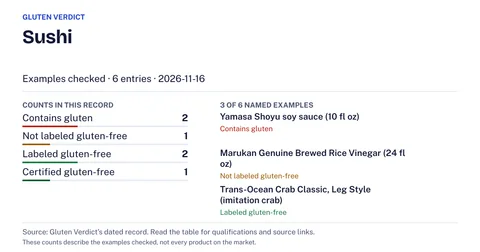 SushiDepends on the product2 of 6 products we checked contain gluten: Yamasa Shoyu soy sauce (10 fl oz) and Lee Kum Kee Less Sodium Soy Saucechecked Nov 16, 2026
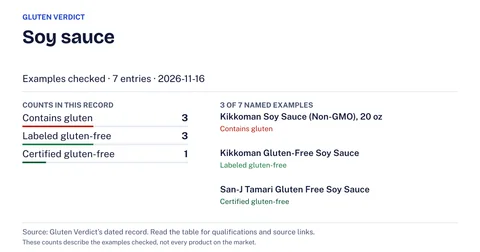 Soy sauceDepends on the product3 of 7 products we checked contain gluten: Kikkoman Soy Sauce (Non-GMO), 20 oz; San-J Organic Shoyu Soy Sauce; and Lee Kum Kee Premium Soy Sauce (No Preservatives Added)checked Nov 16, 2026
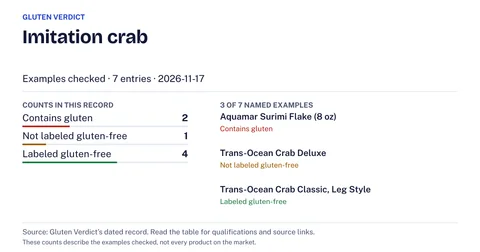 Imitation crabDepends on the product2 of 7 products we checked contain gluten: Aquamar Surimi Flake (8 oz) and Aquamar Surimi Stick (8 oz)checked Nov 17, 2026
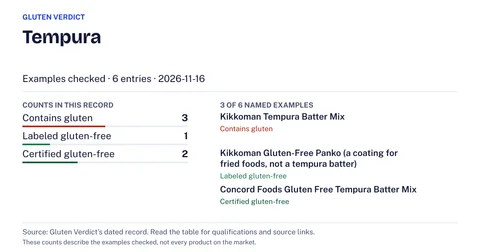 TempuraDepends on the product3 of 6 products we checked contain gluten: Kikkoman Tempura Batter Mix, Kikkoman Tempura Dipping Sauce, and Nongshim Tempura Udon Cupchecked Nov 16, 2026
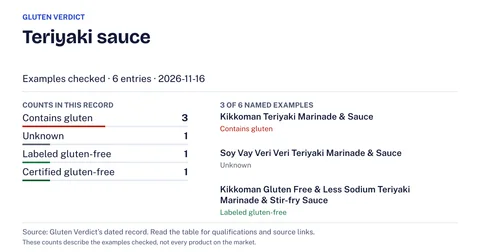 Teriyaki sauceDepends on the product3 of 6 products we checked contain gluten: Kikkoman Teriyaki Marinade & Sauce, Kikkoman Teriyaki Marinade & Stir-fry Sauce – Roasted Garlic, and Kikkoman Teriyaki BBQ Sauce – Originalchecked Nov 16, 2026
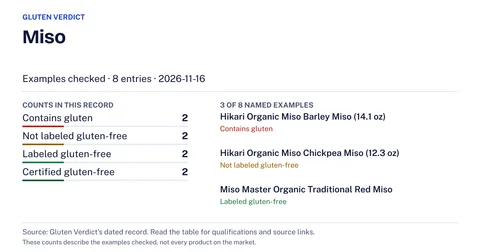 MisoDepends on the product2 of 8 products we checked contain gluten: Hikari Organic Miso Barley Miso (14.1 oz) and Hikari Miso Soup Akadashi (12 servings, 7.0 oz)checked Nov 16, 2026
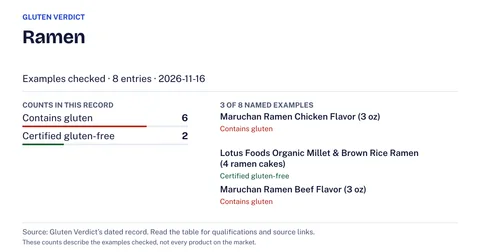 RamenContains glutenchecked Nov 16, 2026
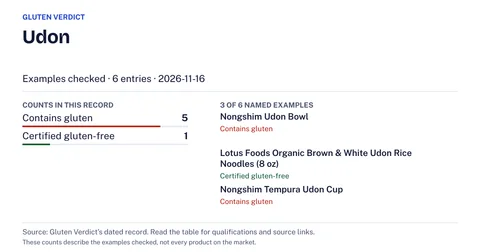 UdonContains glutenchecked Nov 16, 2026
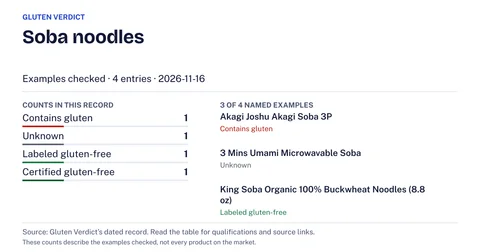 Soba noodlesDepends on the product1 of 4 products we checked contains gluten: Akagi Joshu Akagi Soba 3Pchecked Nov 16, 2026
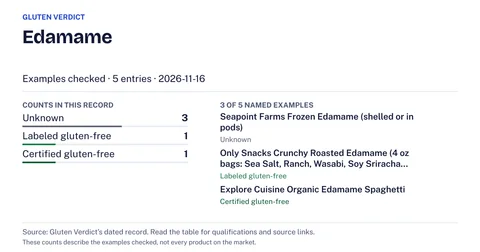 EdamameNaturally gluten-freechecked Nov 16, 2026
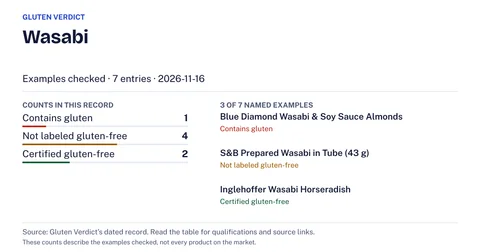 WasabiDepends on the product1 of 7 products we checked contains gluten: Blue Diamond Wasabi & Soy Sauce Almondschecked Nov 16, 2026
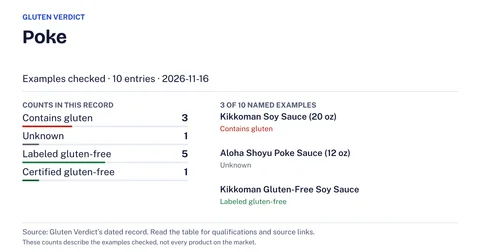 PokeDepends on the product3 of 10 products we checked contain gluten: Kikkoman Soy Sauce (20 oz), Pokeworks Umami Shoyu sauce, and Pokeworks Seaweed Salad toppingchecked Nov 16, 2026
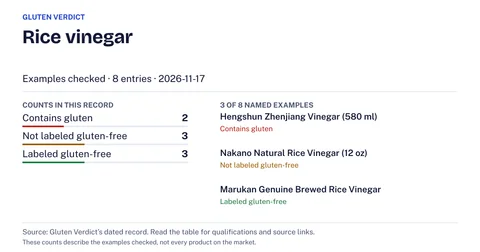 Rice vinegarDepends on the product2 of 8 products we checked contain gluten: Hengshun Zhenjiang Vinegar (580 ml) and Gold-Plum Chinkiang Vinegar (18.6 fl oz)checked Nov 17, 2026
Questions people ask
Is sushi rice gluten-free?
Plain or steamed rice cooked in water is a good choice, GIG says, while seasoned rice may have gluten-containing ingredients added34. Ask what the restaurant seasons its rice with.
Is tamari the same as gluten-free soy sauce?
GIG suggests tamari as a swap for shoyu6. What counts at the table is the bottle: Yamasa’s Shoyu lists wheat12, and its Organic Tamari page is labeled Gluten-Free13.
Is miso soup gluten-free?
It depends on the miso. Some pastes are made with barley or wheat koji42, and GIG says versions made with barley must be avoided7.
Does a restaurant’s “gluten-free” menu item follow FDA’s rule?
FDA’s regulation applies to packaged foods; for menus, FDA recommends that restaurants making a gluten-free claim match its definition2.
More in Eating out and chain restaurant policies
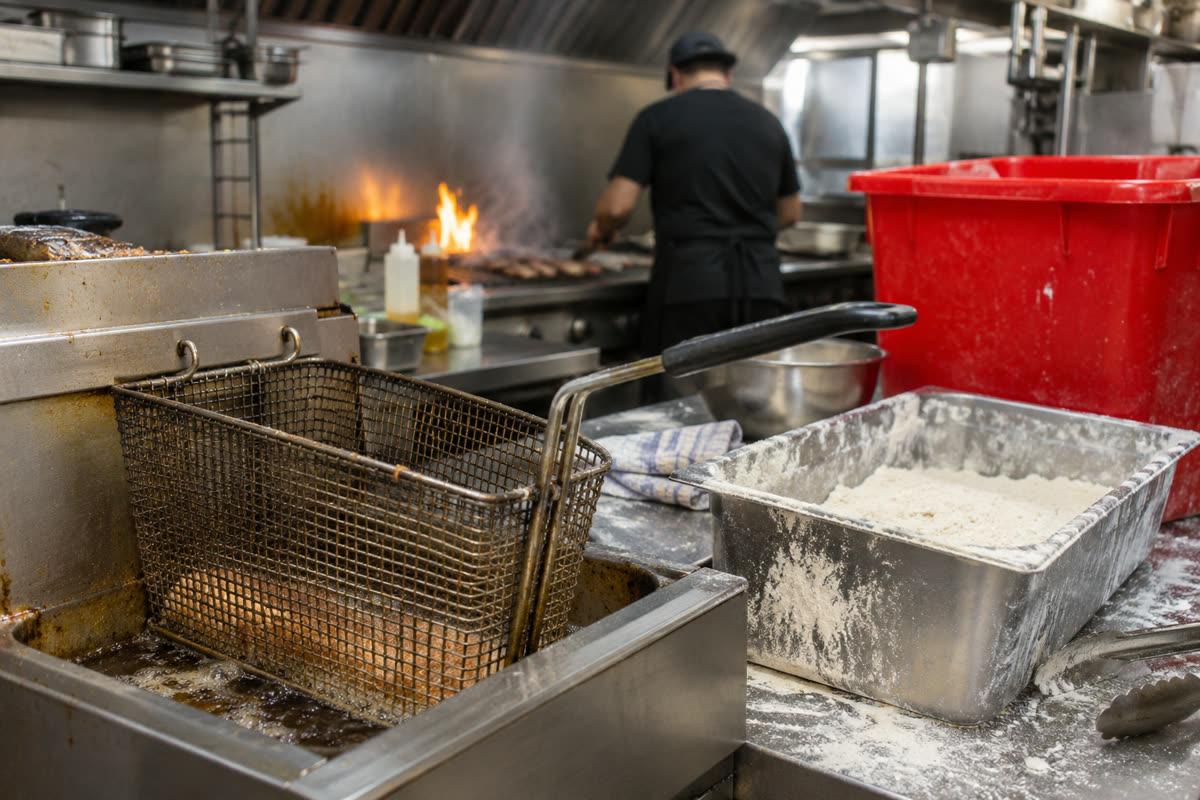 Where gluten hides in a restaurant kitchen, and the question to ask about each sourceFryers, sauces, roux, marinades, grills, pasta water and eggs: how gluten reaches restaurant food and the question GIG lists for each source.
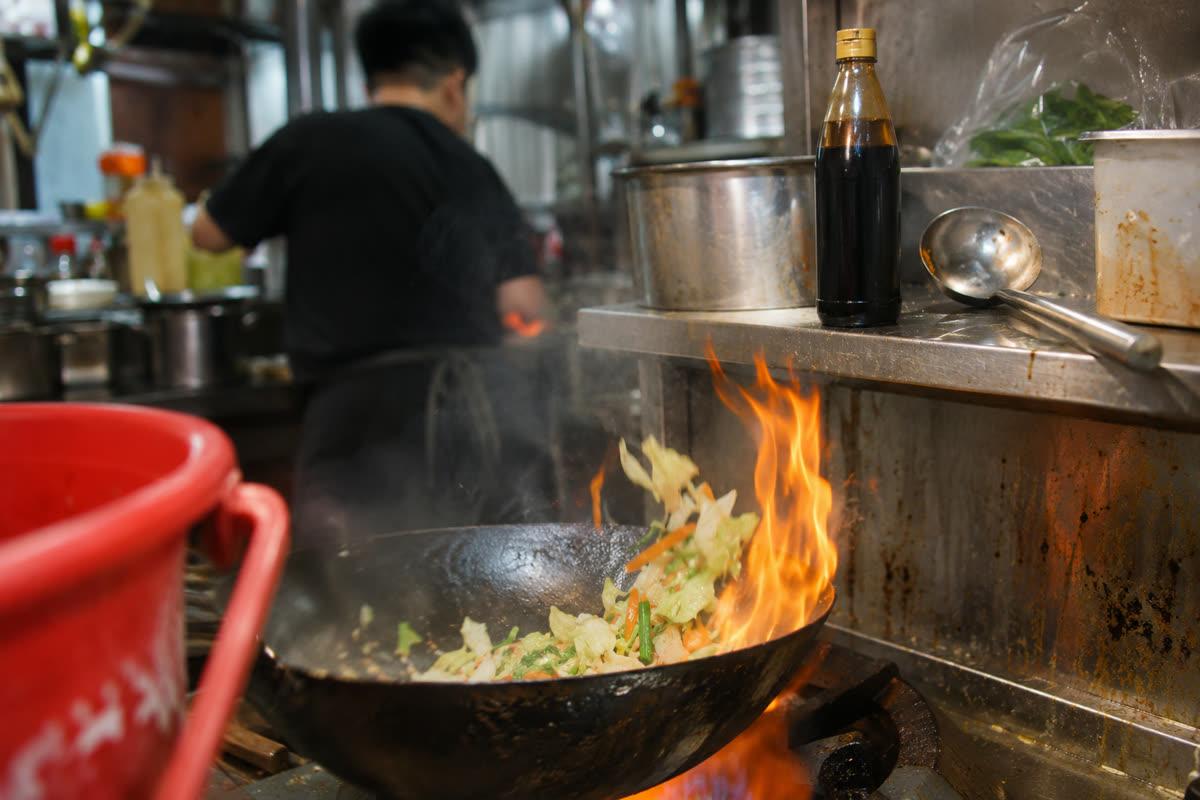 Ordering gluten-free at a Chinese restaurant: sauces, coatings, wine, woks and MSGWhere wheat enters Chinese-restaurant cooking (sauces, coatings, cooking wine, woks), why MSG is not a gluten source, and what to ask before you order.
 Eating out with celiac disease: what to check, ask and watch forPlan a restaurant meal with celiac disease: what to check before you go, the questions to ask in order, how to read the answers, and what studies measured.
 Ordering at a Thai restaurant when you avoid gluten: sauces, noodles and woksWhich Thai sauces, noodles, coatings and kitchen habits can bring in wheat, and the questions to ask before you order at a Thai restaurant.
 How to order at a Mexican restaurant when you avoid glutenCorn is not the whole story at a Mexican restaurant. What to ask about tortillas, chip fryers, sauces, seasoning and shared grills.
 Ordering gluten-free at an Italian restaurantBefore you order at an Italian restaurant: where the gluten-free pasta is boiled, what thickens the sauces, and what is breaded or fried.
Related guides
 Soy, hoisin, oyster, teriyaki and fish sauce: which bottles carry wheatSoy, hoisin, oyster, teriyaki and fish sauce compared by the ingredient lists of Kikkoman, Lee Kum Kee, San-J and Red Boat, plus what to ask at a counter.
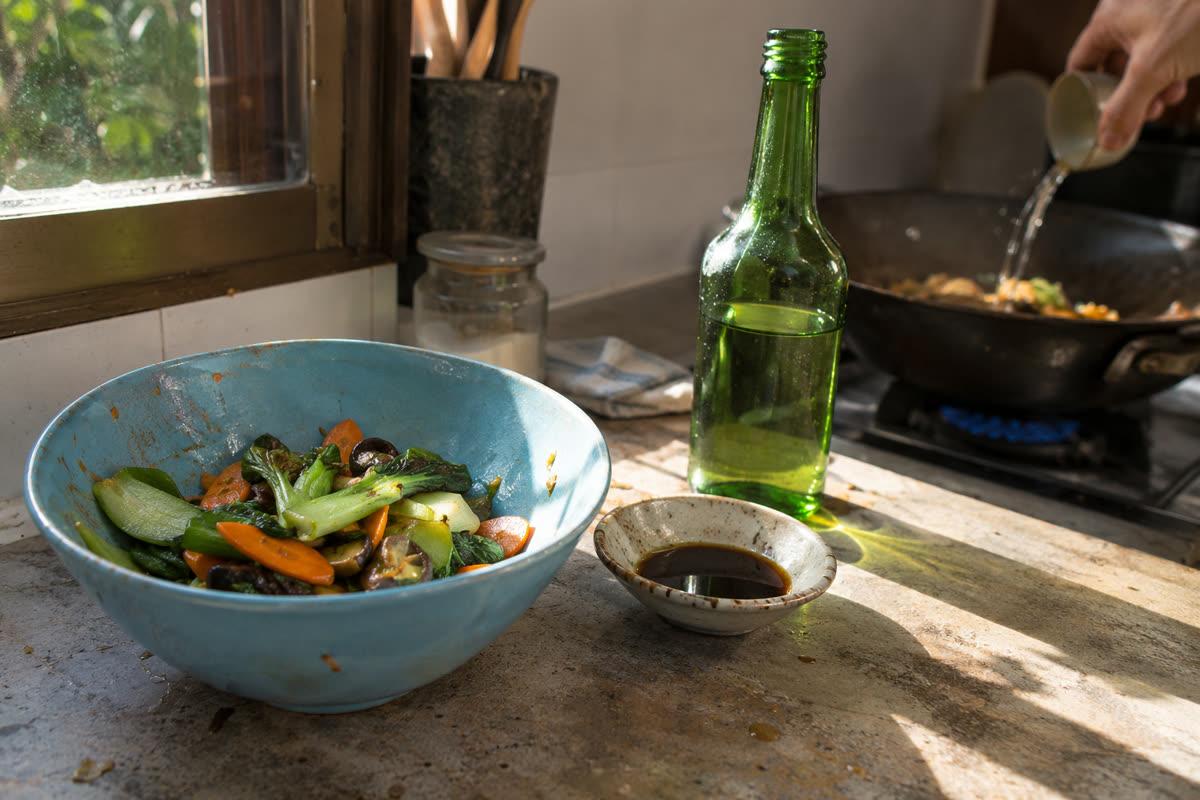 What to use instead of soy sauce when you eat gluten-freeTamari, gluten-free soy sauce, coconut aminos and liquid aminos: what each maker says, how to confirm it on the bottle, and what changes when you cook.
 Gluten-free in Japan: soy sauce, miso, barley tea and the allergen boxWhat to check in Japan: wheat in soy sauce, barley in miso and barley tea, and what the Japanese allergen box covers and leaves out.
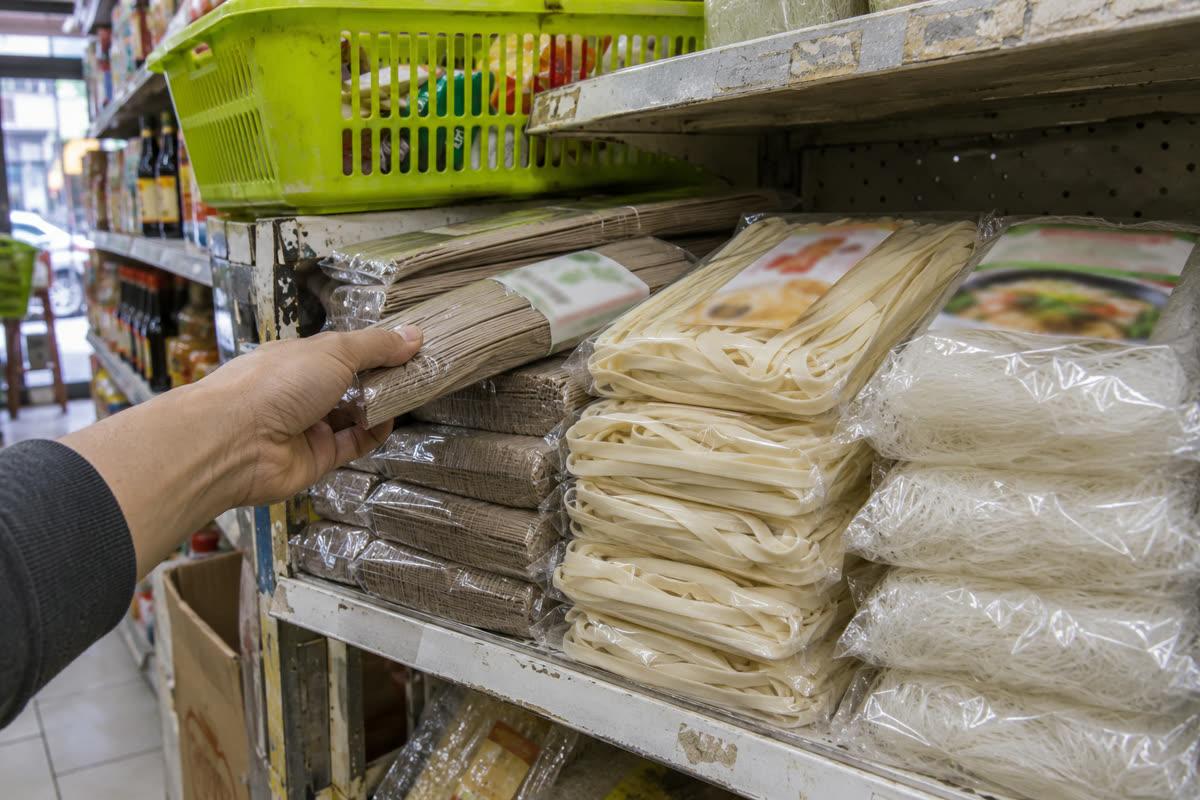 Soba vs udon vs rice noodles: which noodle holds wheatUdon is wheat, soba can be a buckwheat and wheat mix, and rice noodles are rice. How to read a package and ask about the broth and dipping sauce.
Sources
- [1] US Food and Drug Administration, Gluten and Food Labeling, checked Nov 17, 2026.
- [2, 3] US Food and Drug Administration, Questions and Answers on the Gluten-Free Food Labeling Final Rule, checked Nov 17, 2026.
- [4, 5] National Institute of Diabetes and Digestive and Kidney Diseases (NIDDK), Eating, Diet, & Nutrition for Celiac Disease, checked Nov 17, 2026.
- [6, 7, 8, 9, 10] Gluten Intolerance Group (GIG), Japanese Cuisine When You’re Eating Gluten-Free (October 21, 2021), checked Nov 17, 2026.
- [11] Gluten Intolerance Group (GIG), Explore Asian Cuisine – Gluten-Free (April 11, 2023), checked Nov 17, 2026.
- [12] Yamasa Corporation USA, Yamasa Shoyu, checked Nov 17, 2026.
- [13] Yamasa Corporation USA, Yamasa Tamari Organic Gluten-Free, checked Nov 17, 2026.
- [14] Gluten-Free Certification Organization (GFCO), GFCO Product Finder search for Kikkoman soy sauce, checked Nov 17, 2026.
Read on 2026-11-17: the results list for the search “soy sauce” with brand Kikkoman includes entries named “GF Soy Sauce”, with the maker given as Kikkoman Foods, Inc.
- [15, 16, 17] Gluten Intolerance Group (GIG), 38 Foods Where Gluten May Be “Hidden”, checked Nov 17, 2026.
- [18, 19] Trans-Ocean Products, Crab Classic, Leg Style, checked Nov 17, 2026.
- [20, 21, 22, 23, 24, 25, 43] National Celiac Association (NCA), The Complete Guide to Gluten-Free Living (2023), checked Nov 17, 2026.
Read on 2026-11-17: the list headed “Frequently Overlooked Sources of Gluten or Potential Gluten” names, among other items, panko (Japanese bread crumbs); soy sauce, BBQ sauce, teriyaki sauce; imitation meats/seafood; seasoned rice mixes; and marinades, sauces, gravies.
- [26] National Celiac Association (NCA), Is vinegar gluten-free? (reviewed July 1, 2025), checked Nov 17, 2026.
- [27, 28, 29, 30, 31, 32, 33, 34, 35] Gluten Intolerance Group (GIG), Eating Out: 7 Tips For Staying Gluten-Free (December 2021), checked Nov 17, 2026.
- [36, 37] Gluten Intolerance Group (GIG), What are some of the most important questions to ask the wait staff or management of a food service or restaurant? (October 14, 2019), checked Nov 17, 2026.
- [38, 39] Gluten Intolerance Group (GIG), Questions to Ask When Eating Out (September 8, 2026), checked Nov 17, 2026.
- [40] Gluten Intolerance Group (GIG), 25 Ways Cross-Contact Could Happen and How to Avoid It (June 13, 2022), checked Nov 17, 2026.
- [41] Coeliac UK, Hints and tips for eating out, checked Nov 17, 2026.
- [42] Hikari Miso, Is Miso Gluten-Free? (updated May 25, 2026), checked Nov 17, 2026.