Gluten-free substitutes: the swap for each wheat ingredient and the label check it needs
Short answer
Each swap in the tables below needs the same check at the shelf: a “gluten-free” claim. On foods FDA regulates, the rule sets ingredient limits and requires any unavoidable gluten to be below 20 parts per million1. FDA notes that grains, legumes and seeds that are gluten-free by nature often come into contact with gluten-containing grains through crop rotation and shared harvest, transport and storage equipment2.
Part of Grains, flours and substitutes, 13 guides

Key points
- Four phrases carry the same rule on FDA-regulated foods: “gluten-free”, “free of gluten”, “without gluten” and “no gluten”3.
- Couscous, bulgur, spelt, farro, semolina and durum are all forms of wheat, so none of them is a swap for another wheat food4.
- Malt is one ingredient to watch for in swaps: FDA says malt extract and similar malt-derived ingredients cannot be used in a food that bears a gluten-free claim5.
- A food that names wheat and also says gluten-free is misbranded unless the wheat is marked with an asterisk (or other symbol) that leads to a statement that the wheat has been processed for gluten-free requirements6.
- The National Celiac Association recommends making sure corn flour, cornmeal, masa and cornstarch are labeled gluten free7.
How to use the table
Find the wheat ingredient from your recipe or shopping list in the first column. The second column gives the usual swap, the third the label check that swap needs, and the fourth the guide or verdicts that cover the food in full. The swaps come from educational pages of the Gluten Intolerance Group (GIG), a celiac charity, and the National Celiac Association; the label checks come from FDA, TTB and NIDDK, the US National Institute of Diabetes and Digestive and Kidney Diseases, which is part of the NIH. Where a food has a verdict page here, the page lists the sources we read and the date we checked them.
The label check for every row is the same four steps, set out at the end of the page.
Flour, roux and thickeners
| Wheat ingredient | Usual swap | Label check on the swap | Full answer |
|---|---|---|---|
| Wheat flour in baking | A ready-made “one to one” or all-purpose gluten-free blend, which GIG says is now commercially available46. GIG says one gluten-free flour on its own is not ideal for most recipes and a blend of several gives the best results8. | A gluten-free claim or certification on the bag. GIG notes that some all-purpose blends and baking mixes contain xanthan gum or a similar binder and some do not9. | Gluten-free flour guide, 1-to-1 and all-purpose blends; verdicts: flour, Bob’s Red Mill 1-to-1, King Arthur |
| Wheat flour replaced by a single flour (such as teff or buckwheat) | GIG says that liking one gluten-free flour does not mean you can sub it into a recipe that calls for wheat flour and expect successful results, though depending on the recipe it can sometimes work10. | The claim on the package. For corn-based flours the National Celiac Association says to make sure they are labeled gluten free7; GIG says lentil flour should be labeled or certified gluten-free11. | Rice flour, buckwheat, corn tortillas |
| Wheat flour as a thickener or roux | GIG names cornstarch and arrowroot for thickening a stir-fry sauce or gravy12, and white or sweet rice flour for a roux13. It also says tapioca flour functions well as a thickener14. | Cornstarch: the National Celiac Association advises one labeled gluten free7. GIG says to use cornstarch in place of flour only when the recipe calls for it15. | Cornstarch, tapioca, rice flour, gravy |
| Pancake and biscuit mix | A baking mix sold with its own gluten-free claim. GIG says “baking mixes” often already contain a binder, where plain “flours” often do not16. | The claim on that box, not on the maker’s regular mix. If the mix has no binder, GIG says to add xanthan gum or a similar one when baking17. | Bisquick, pancakes |
Pasta and noodles
| Wheat ingredient | Usual swap | Label check on the swap | Full answer |
|---|---|---|---|
| Wheat pasta (spaghetti, penne, macaroni) | Packaged gluten-free pasta. NIDDK lists gluten-free types of baked goods, bread and pasta among the packaged gluten-free foods you can buy18. | The claim on the box. NIDDK names pastas among the foods made with ingredients from wheat, barley and rye19. | Pasta |
| Ramen and udon noodles | Gluten-free versions of these noodles. GIG says ramen and udon are often made with wheat flour and that gluten-free versions made with rice, edamame and other ingredients are now widely available20. Rice noodles are a separate food with their own verdict. | The claim on the noodle package, and on any sauce packet, broth or kit sold with it. NIDDK says flavorings, starches and thickeners can be made from grains that contain gluten21. | Egg noodles, rice noodles, ramen and udon in the pasta guide |
Bread, tortillas, crumbs and crackers
| Wheat ingredient | Usual swap | Label check on the swap | Full answer |
|---|---|---|---|
| Sandwich bread, buns and rolls | Packaged gluten-free bread. For a sandwich, GIG says tasty gluten-free breads are available now, so all you need to do is swap out the bread22. It also suggests lettuce leaves in place of bread23. | The claim on the loaf. GIG says to make sure the fillings are gluten-free too, and that most usually are24. | Bread |
| Flour tortillas and wraps | Corn tortillas, or a gluten-free tortilla. GIG names masa harina, a corn flour, for making fresh corn tortillas25, and suggests a gluten-free tortilla as a roll-up23. | The claim on the package. The National Celiac Association recommends that masa and other corn flours be labeled gluten free, since they could have had cross-contact with gluten-containing grains during processing7. | Tortillas, corn tortillas, corn vs flour tortillas |
| Breadcrumbs, croutons, stuffing, crackers and pie crust | The same product from a maker that sells it with a gluten-free claim; each verdict lists products we checked, including ones with a gluten-free claim. NIDDK lists baked goods, baking mixes and breads among the foods made with gluten grains19. | The claim on that package, which for these foods means the ingredient rules in FDA’s definition1. | Breadcrumbs, croutons, stuffing, crackers, pie crust |
Soy sauce, soups, broth and seasoning packets
| Wheat ingredient | Usual swap | Label check on the swap | Full answer |
|---|---|---|---|
| Soy sauce | Soy sauce made without wheat or another gluten grain, which FDA says can bear a gluten-free claim26. | The claim on the bottle. FDA says that, in general, soy sauce made from soybeans and wheat, or any other gluten-containing grain, may not bear one27. | Soy sauce |
| Soup, broth, gravy mix and seasoning packets | A version sold with a gluten-free claim. | The claim, then the full ingredient list. NIDDK says flavorings, starches and thickeners can be made from grains that contain gluten21, and advises reading labels for wheat, barley, rye and ingredients made from them28. | Chicken broth, gravy |
Beer and malt vinegar
| Wheat ingredient | Usual swap | Label check on the swap | Full answer |
|---|---|---|---|
| Beer | Beer made from a gluten-free grain such as sorghum, which GIG lists as gluten-free29. | The claim on the label. GIG says beers labeled “gluten-removed” may not be gluten-free30; TTB allows a product fermented from gluten-containing grains to claim it was processed, treated or crafted to remove gluten when the claim includes a qualifying statement and the maker has documentation to substantiate it31. | Beer, gluten-removed beer, gluten-free alcohol |
| Malt vinegar | Another vinegar. GIG says most vinegars are gluten-free32 and that malt vinegar is the one to avoid33. | On a food with no gluten-free claim, GIG says a plain “vinegar” in the ingredient list could be malt vinegar and the food should be avoided unless the maker confirms it is not34. | Malt vinegar, vinegar |
Couscous, bulgur and other wheat grains
GIG lists durum, spelt, semolina, couscous, bulgur, emmer, farina, farro and einkorn as varieties and forms of wheat4. The National Celiac Association adds that couscous is made from semolina, which comes from durum wheat35. A wheat grain is therefore never the swap for another one.
| Wheat ingredient | Usual swap | Label check on the swap | Full answer |
|---|---|---|---|
| Couscous | Sorghum. GIG says it works well as a substitute for couscous36. | The claim on the package. FDA says crop rotation and shared harvest, transport and storage equipment often bring gluten-containing grains into contact with naturally gluten-free grains, legumes and seeds2. | Couscous, sorghum |
| Bulgur, farro, spelt, semolina and durum | Another grain from GIG’s list of naturally gluten-free grains and flours, such as rice, corn, sorghum, quinoa, millet, buckwheat, amaranth and teff37. | The claim or a certification mark on the package. GIG’s list names grains that are gluten-free by nature; it does not say which one replaces which wheat grain. For the certified route, the GFCO directory counts a product as certified if it is listed there and carries a certification mark38. | Bulgur, farro, spelt, quinoa, millet, types of wheat |
Cereal, oatmeal and granola
| Wheat ingredient | Usual swap | Label check on the swap | Full answer |
|---|---|---|---|
| Corn flakes (many contain malt) | Cereal made from whole gluten-free grains such as amaranth, buckwheat or teff, which GIG suggests in place of corn flakes39. | The ingredient list, for malt. GIG says lots of corn flakes contain malt extract40, and FDA says malt extract and similar malt-derived ingredients cannot be used in a food bearing a gluten-free claim5. | Corn flakes, cereal |
| Oats and oatmeal | Oats labeled gluten-free. FDA says oats labeled gluten-free must contain less than 20 ppm gluten, and they do not have to be certified to carry the claim41. | The claim, and whether the box is also certified. GIG says a labeled product should meet the FDA limit but that this is not third-party verified, while GFCO’s certification standard is 10 ppm of gluten or less42. | Oatmeal, gluten-free oats vs regular oats |
The label check that applies to every row
- Look for “gluten-free” on the package, or one of its three equivalents. On an FDA-regulated food any of the four phrases means the food has to meet the gluten-free rule3.
- With no claim, read the whole ingredient list for wheat, barley, rye and anything made from them; NIDDK advises this28. Malt counts: FDA says malt extract and similar malt-derived ingredients cannot be used in foods that bear a gluten-free claim5.
- If the ingredient list names wheat and the package also says gluten-free, look for the sentence “The wheat has been processed to allow this food to meet the Food and Drug Administration (FDA) requirements for gluten-free foods.” The regulation requires the wheat to be marked with an asterisk (or other symbol) that leads to that statement6.
- If the package shows a certification mark, check the certifier’s own list: GFCO says a product that is on its list but does not carry the mark on the package is not certified43. NIDDK advises not eating foods you are not sure contain gluten and, if possible, contacting the company that makes the food44.
FDA’s gluten-free rule does not cover foods whose labels USDA or TTB regulate, such as meat, poultry and most alcoholic drinks45. Recipes change, so read the package in your hand each time. The label-reading guide and the packaged-food check go through the rest of the label.
Verdicts in this guide
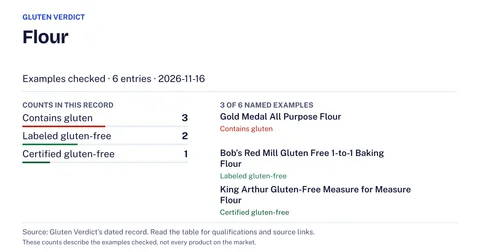 FlourContains glutenchecked Nov 16, 2026
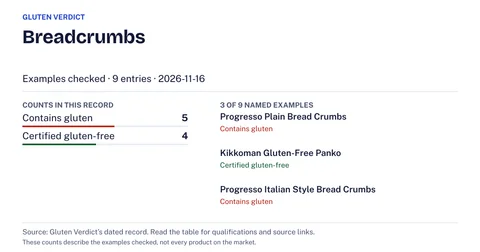 BreadcrumbsContains glutenchecked Nov 16, 2026
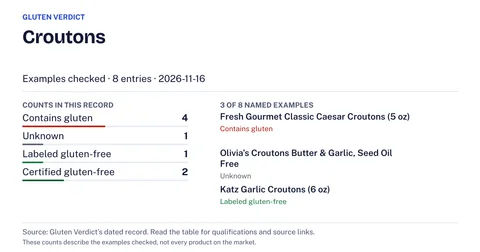 CroutonsContains glutenchecked Nov 16, 2026
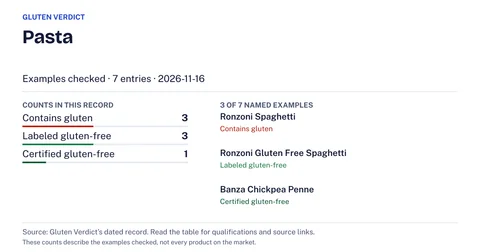 PastaContains glutenchecked Nov 16, 2026
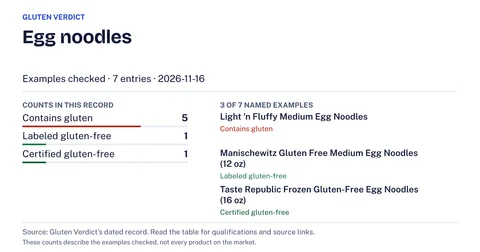 Egg noodlesContains glutenchecked Nov 16, 2026
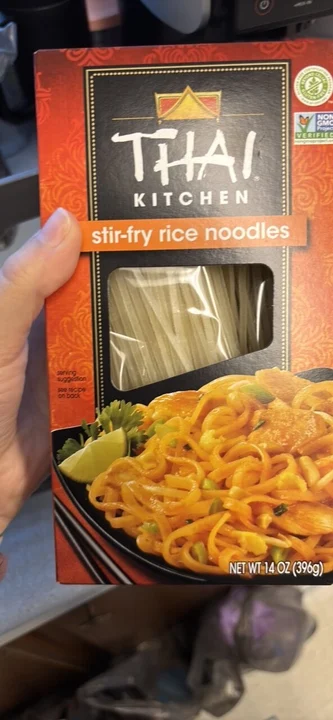 Rice noodlesNaturally gluten-free2 of 9 products we checked contain gluten: Annie Chun’s Pad Thai Noodle Bowl with Vegetables and Annie Chun’s Pho Soup Bowl with VegetablesBuy it labeled gluten-freechecked Nov 16, 2026
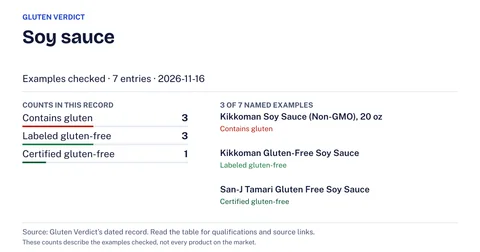 Soy sauceDepends on the product3 of 7 products we checked contain gluten: Kikkoman Soy Sauce (Non-GMO), 20 oz; San-J Organic Shoyu Soy Sauce; and Lee Kum Kee Premium Soy Sauce (No Preservatives Added)checked Nov 16, 2026
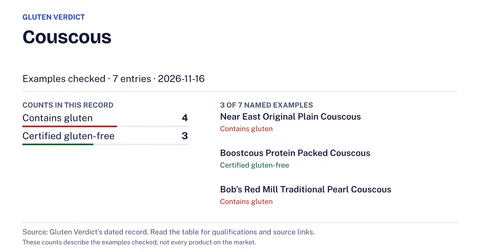 CouscousContains glutenchecked Nov 16, 2026
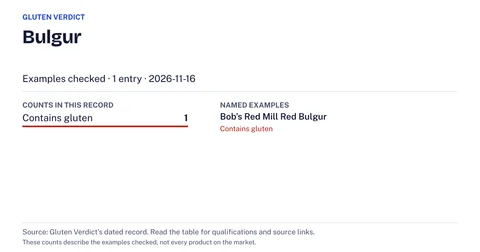 BulgurContains glutenchecked Nov 16, 2026
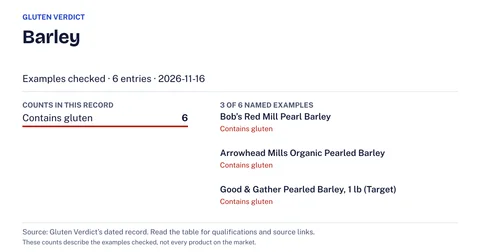 BarleyContains glutenchecked Nov 16, 2026
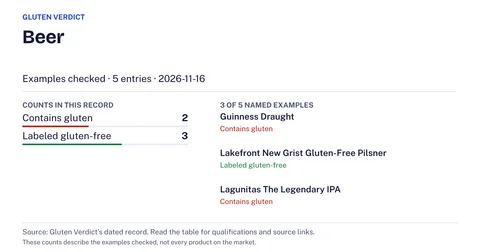 BeerDepends on the product2 of 5 products we checked contain gluten: Guinness Draught and Lagunitas The Legendary IPAchecked Nov 16, 2026
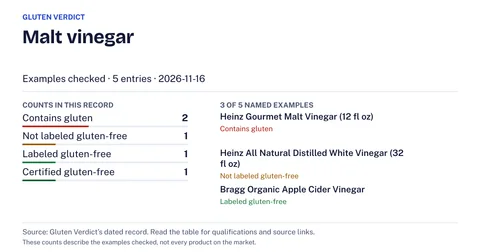 Malt vinegarContains glutenchecked Nov 16, 2026
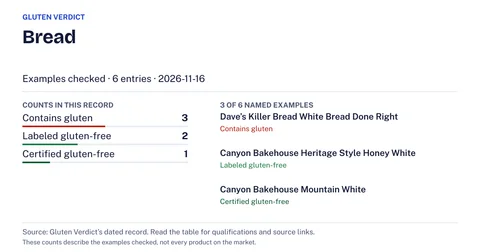 BreadContains glutenchecked Nov 16, 2026
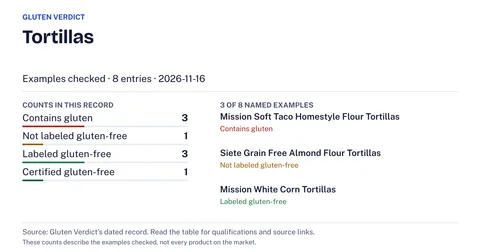 TortillasDepends on the product3 of 8 products we checked contain gluten: Mission Soft Taco Homestyle Flour Tortillas, Guerrero Riquisimas Soft Taco Flour Tortillas (24 ct), and Guerrero Corn and Wheat Tortillaschecked Nov 16, 2026
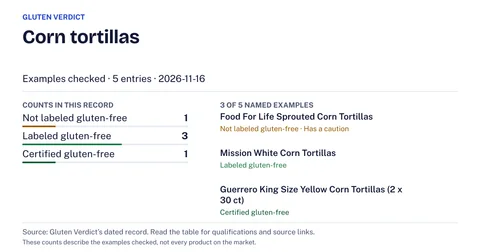 Corn tortillasDepends on the productchecked Nov 16, 2026
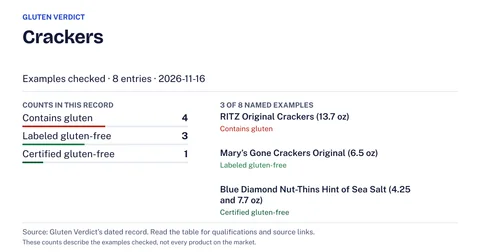 CrackersDepends on the product4 of 8 products we checked contain glutenchecked Nov 16, 2026
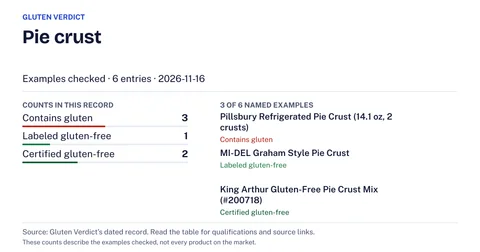 Pie crustContains glutenchecked Nov 16, 2026
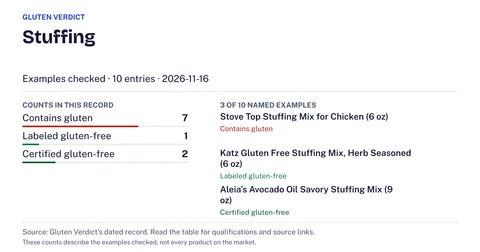 StuffingContains glutenchecked Nov 16, 2026
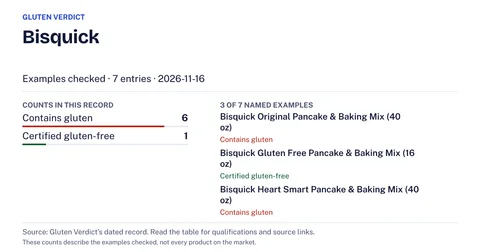 BisquickContains glutenGeneral Mills (Betty Crocker) · checked Nov 16, 2026
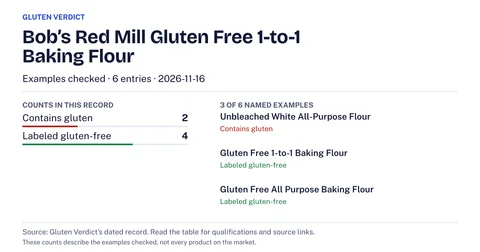 Bob’s Red Mill Gluten Free 1-to-1 Baking FlourLabeled gluten-free2 of 6 varieties we checked contain gluten: Unbleached White All-Purpose Flour and Whole Wheat FlourBob’s Red Mill Natural Foods · checked Nov 16, 2026
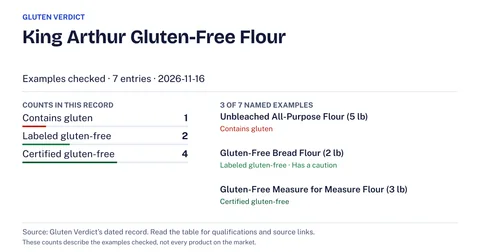 King Arthur Gluten-Free FlourCertified gluten-free1 of 7 varieties we checked contains gluten: Unbleached All-Purpose Flour (5 lb)Wheat warning on 2 of 7 varieties we checkedKing Arthur Baking Company · checked Nov 16, 2026
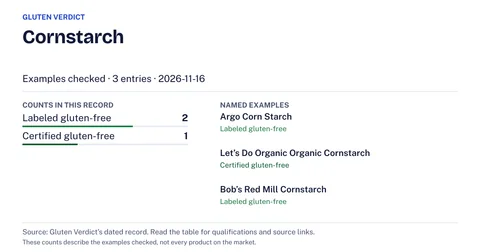 CornstarchNaturally gluten-freeBuy it labeled gluten-freechecked Nov 16, 2026
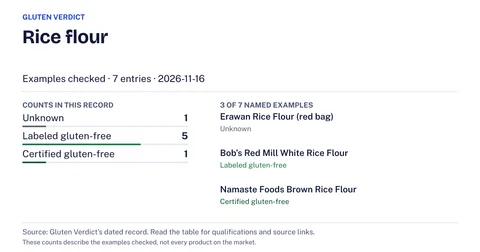 Rice flourNaturally gluten-freeBuy it labeled gluten-freechecked Nov 16, 2026
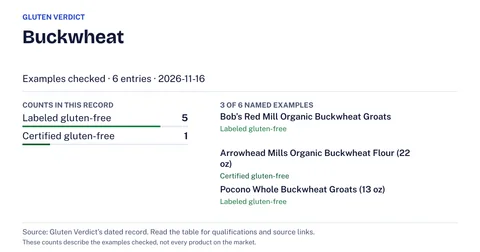 BuckwheatNaturally gluten-freeBuy it labeled gluten-freechecked Nov 16, 2026
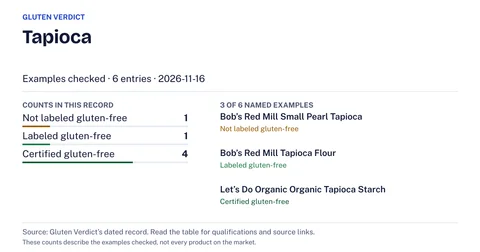 TapiocaNaturally gluten-freeBuy it labeled gluten-freechecked Nov 16, 2026
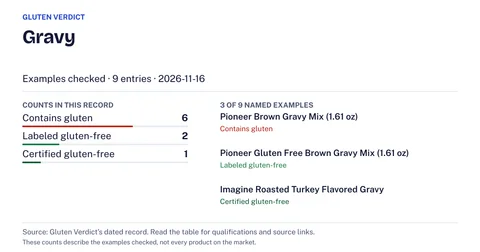 GravyDepends on the product6 of 9 products we checked contain glutenchecked Nov 16, 2026
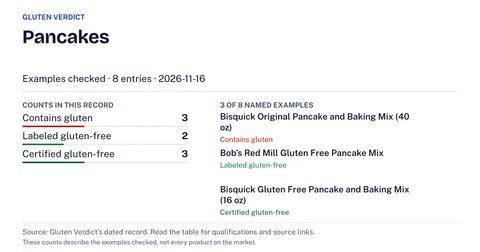 PancakesContains glutenchecked Nov 16, 2026
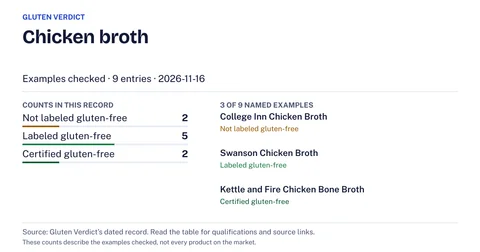 Chicken brothDepends on the productchecked Nov 16, 2026
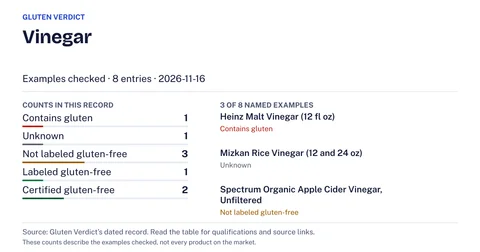 VinegarDepends on the product1 of 8 products we checked contains gluten: Heinz Malt Vinegar (12 fl oz)checked Nov 16, 2026
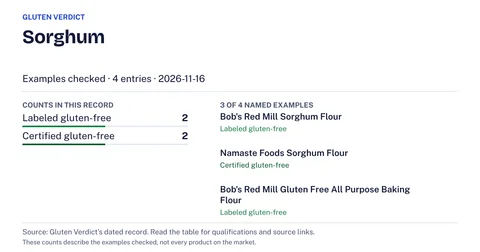 SorghumNaturally gluten-freeBuy it labeled gluten-freechecked Nov 16, 2026
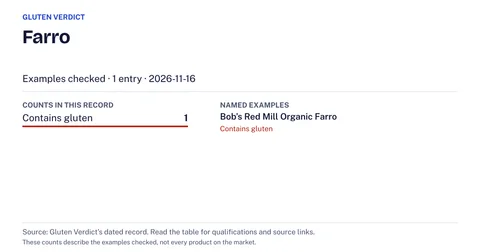 FarroContains glutenchecked Nov 16, 2026
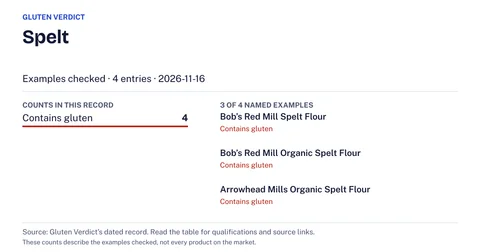 SpeltContains glutenchecked Nov 16, 2026
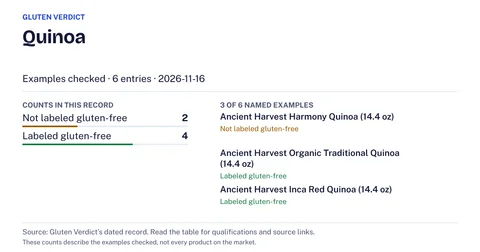 QuinoaNaturally gluten-freeBuy it labeled gluten-freechecked Nov 16, 2026
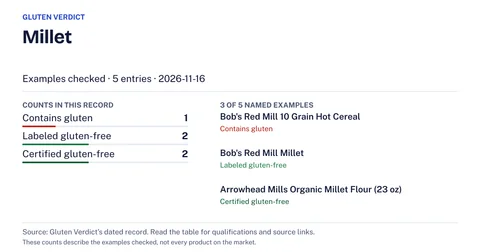 MilletNaturally gluten-free1 of 5 products we checked contains gluten: Bob's Red Mill 10 Grain Hot CerealBuy it labeled gluten-freechecked Nov 16, 2026
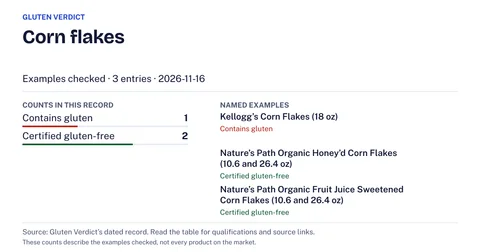 Corn flakesDepends on the product1 of 3 products we checked contains gluten: Kellogg’s Corn Flakes (18 oz)checked Nov 16, 2026
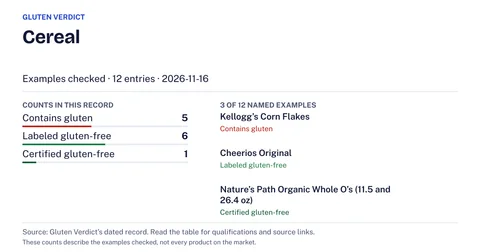 CerealDepends on the product5 of 12 products we checked contain glutenchecked Nov 16, 2026
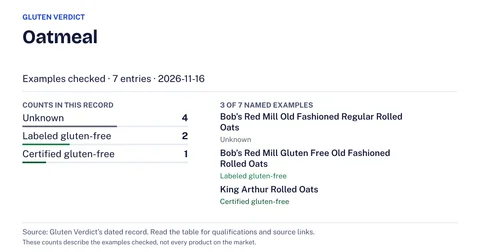 OatmealDepends on the productchecked Nov 16, 2026
Questions people ask
Can I swap wheat flour for any gluten-free flour, cup for cup?
Not necessarily. GIG says one gluten-free flour on its own is not ideal for most recipes and a blend of several gives the best results8, and that a flour you like does not automatically work in a recipe written for wheat flour10.
Do I need to add xanthan gum to a gluten-free flour blend?
It depends on the bag. GIG says some all-purpose gluten-free flours and baking mixes contain xanthan gum or a similar binder and some do not9; if the blend has none, GIG says to add it when baking17.
Is cornstarch a gluten-free swap for flour?
GIG’s flour page names cornstarch among the thickeners for a stir-fry sauce or gravy12. GIG says to use cornstarch in place of flour only when the recipe calls for it15, and the National Celiac Association recommends making sure cornstarch is labeled gluten free7.
More in Grains, flours and substitutes
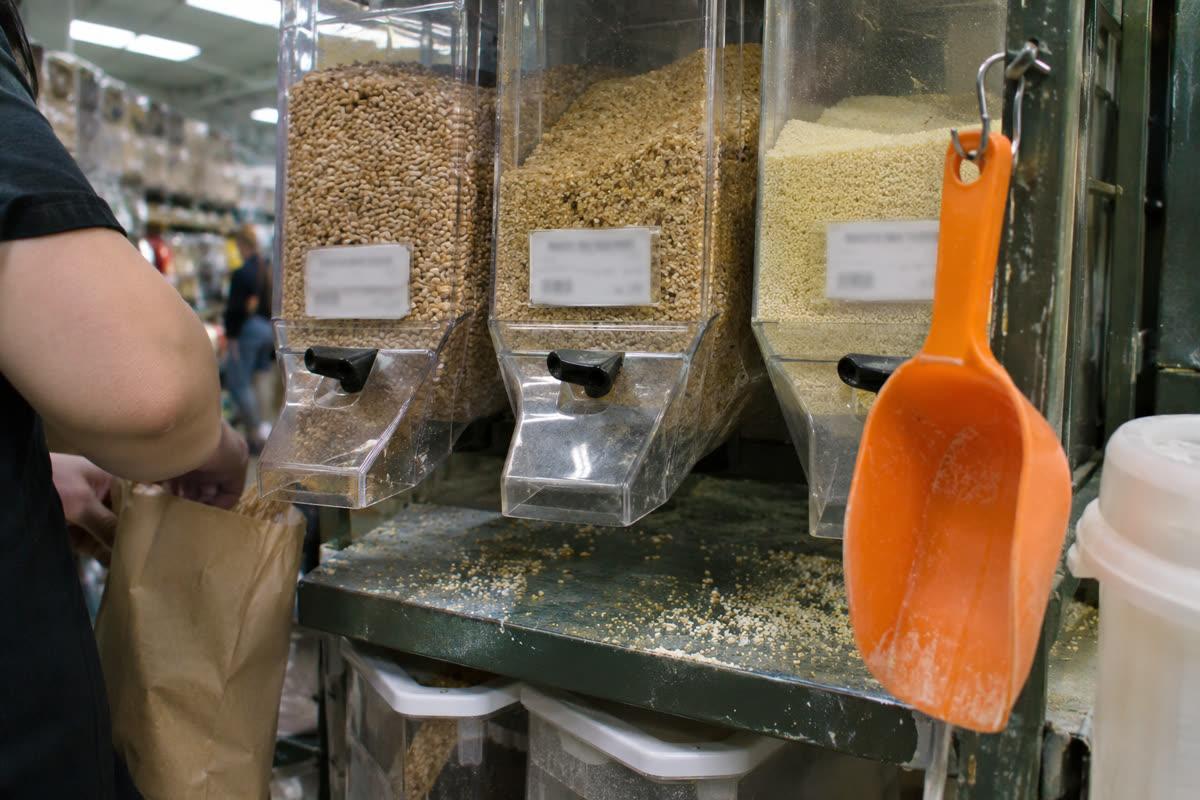 Spelt, farro, Kamut, bulgur, couscous and freekeh: wheat under other namesWhich shop and menu names are wheat: spelt, farro, Kamut, einkorn, bulgur, couscous, freekeh and more, and what FDA’s rules say about them.
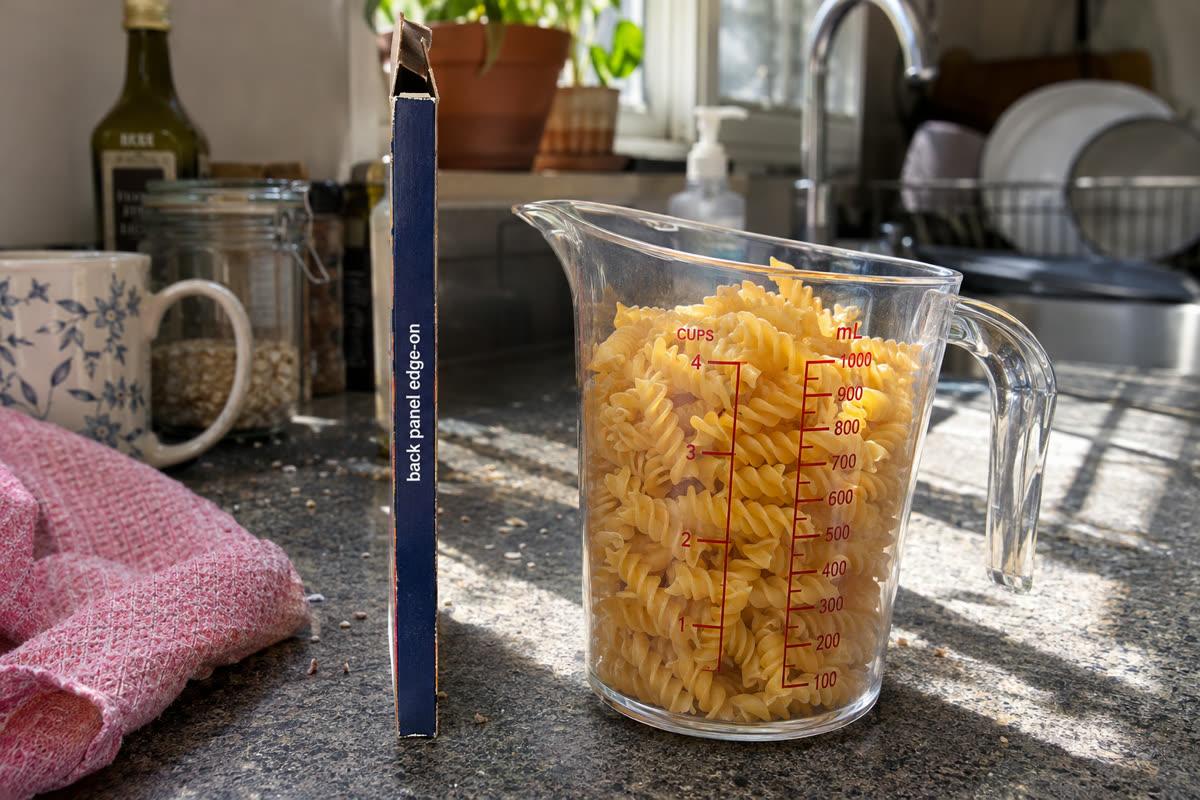 Gluten-free pasta and noodles: what to read on the boxHow to read a pasta or noodle box: the gluten-free claim, the ingredient list, same-brand wheat twins, and why soba and udon need a close read.
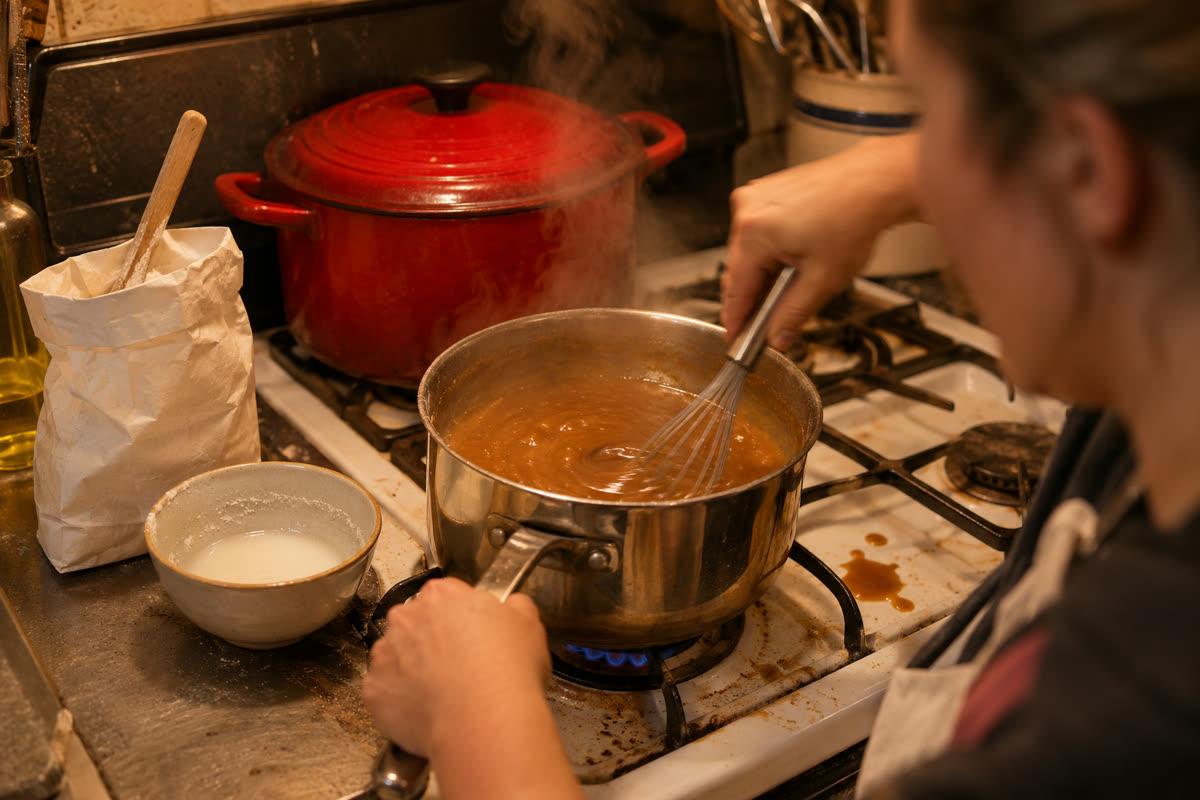 Gluten-free thickeners: cornstarch, tapioca, arrowroot, potato starch and rice flourPick a gluten-free thickener for gravy, soup or pie filling, follow the maker's directions, choose slurry or roux, and spot wheat thickeners.
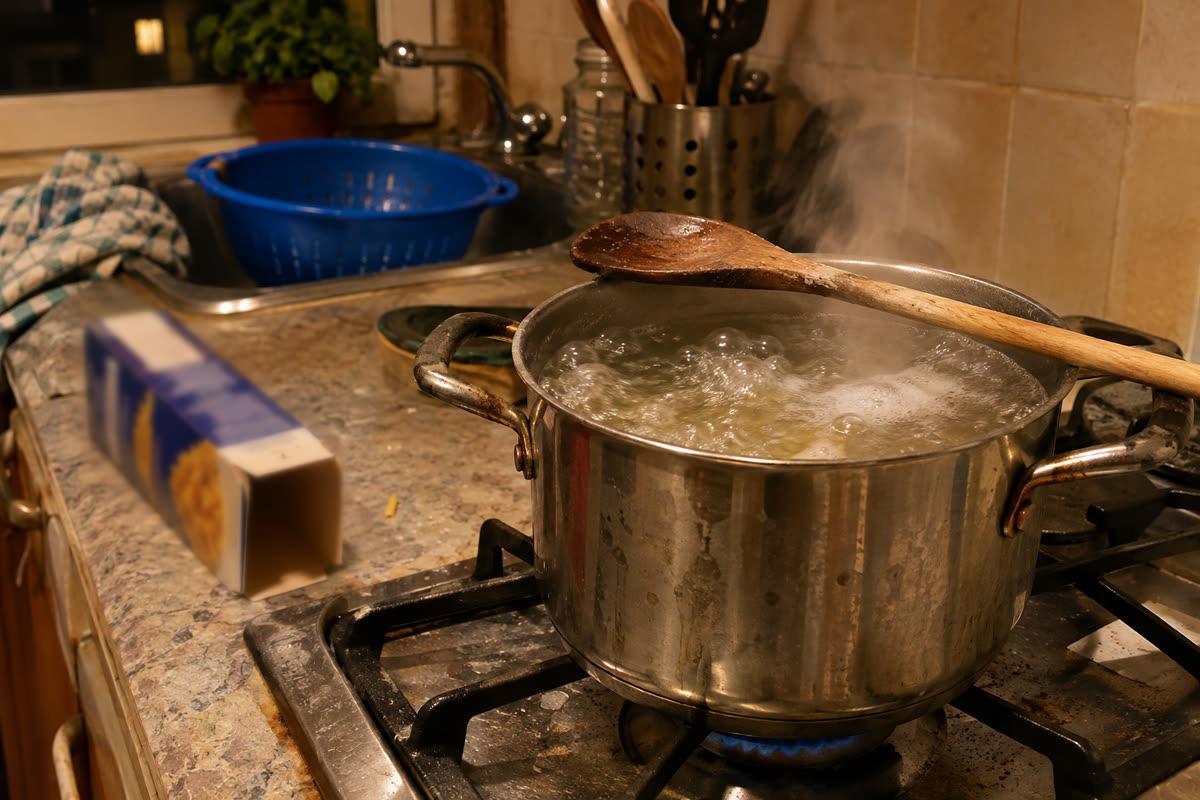 Cooking gluten-free pasta and rice noodles: what makers’ directions sayCompare what Jovial, Banza, Tinkyada, Lotus Foods and Thai Kitchen print for water, stirring, rinsing and time, then match the directions to your pasta.
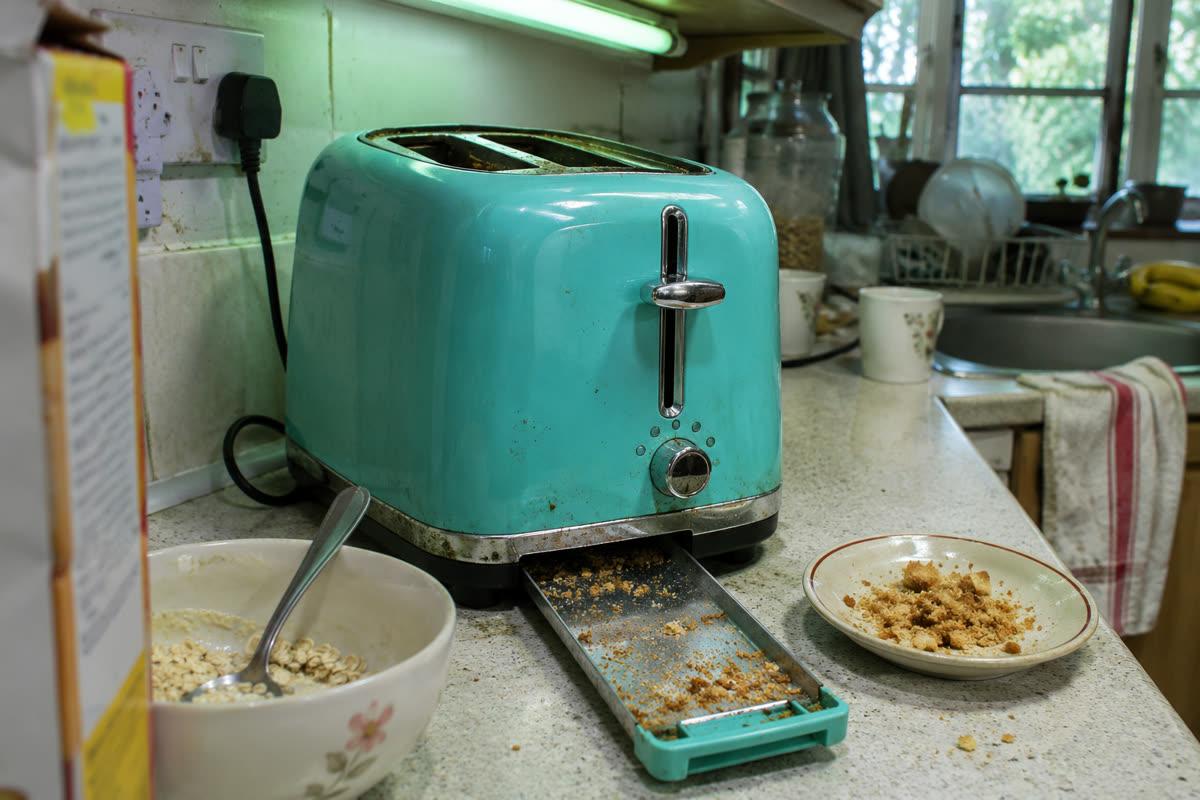 Gluten-free breakfast: what to check on the label and in your kitchenGo through a usual breakfast item by item: what is gluten-free by nature, what needs a label check, and which kitchen habits cause trouble.
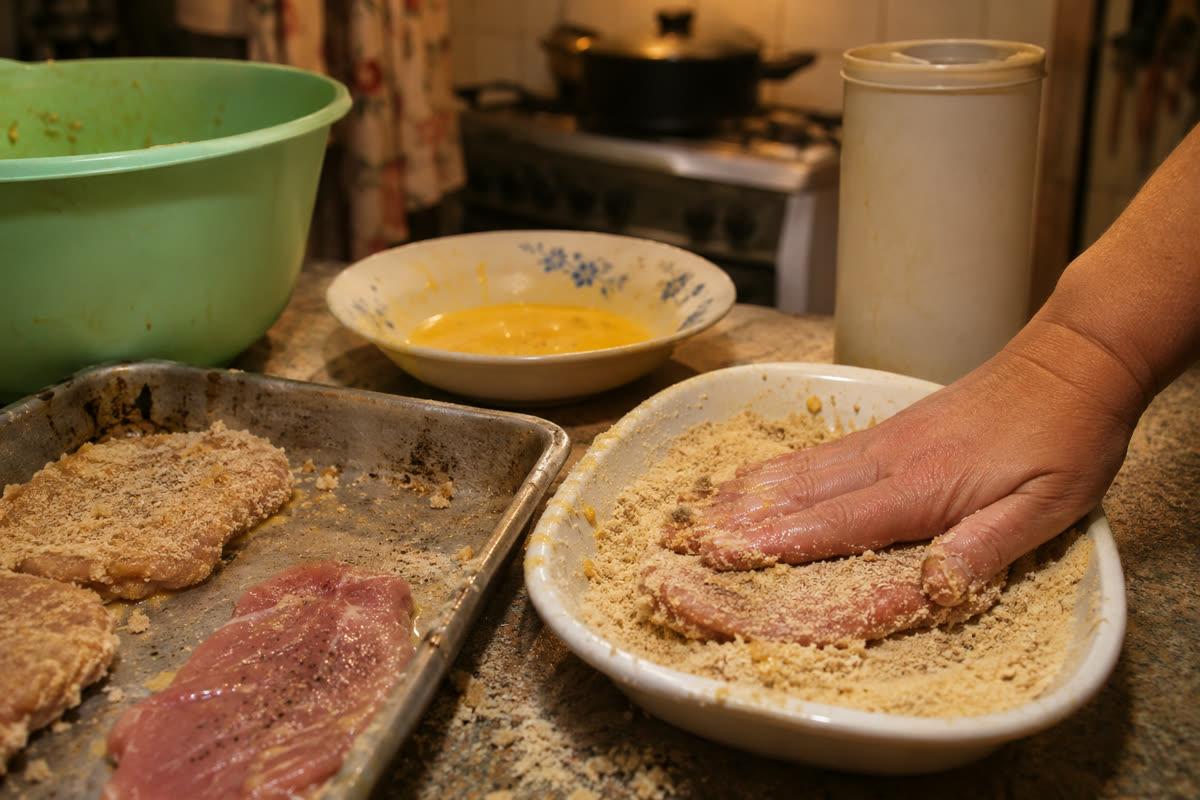 Gluten-free breadcrumbs, panko and coatings: what to read on the packHow to read a crumb, panko or batter mix for wheat, which gluten-free crumbs makers state, and what their pages say about baking and frying.
Related guides
 Gluten-free flours and starches: what each one is and how to read the bagWhich flours and starches are gluten-free by nature, what a claim and a certification mark on the bag each mean, and how to read a blend’s list.
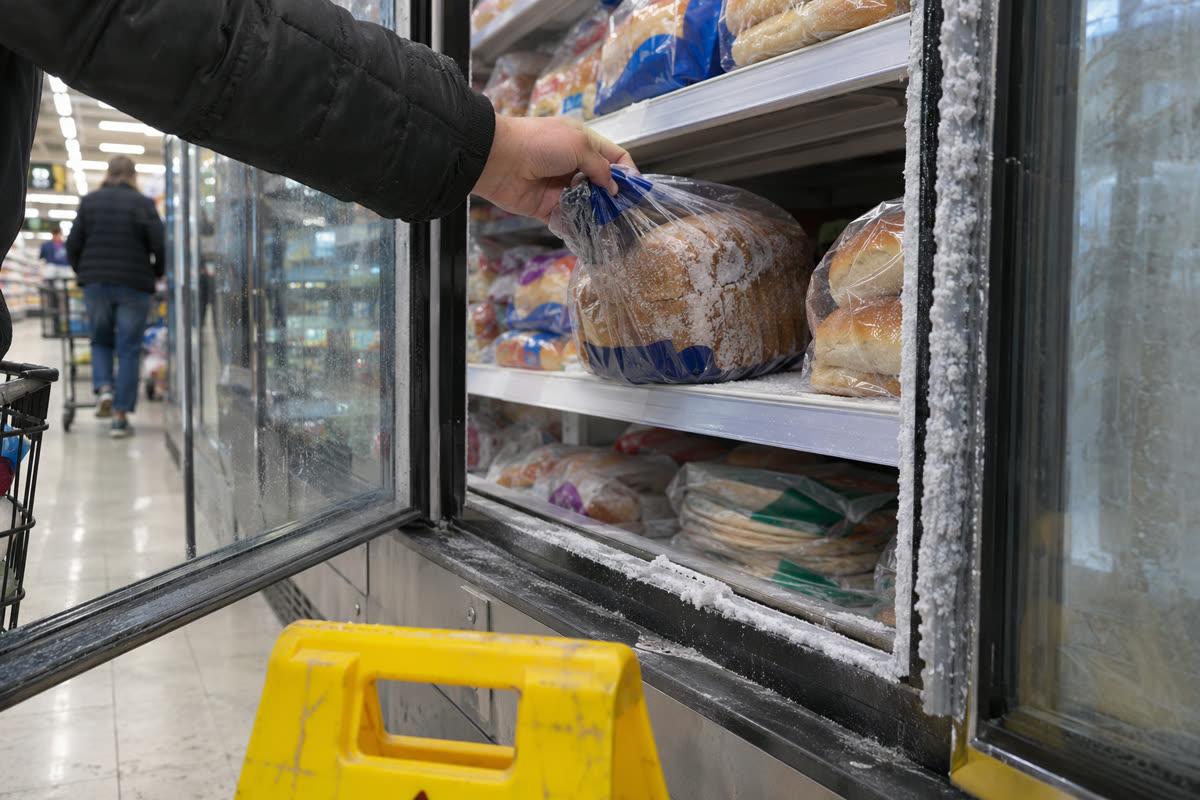 Gluten-free bread, buns and wraps: what the package tells youHow to tell a gluten-free bread, bun or wrap from a wheat look-alike: certification mark, maker’s claim or ingredient list, in a fixed order.
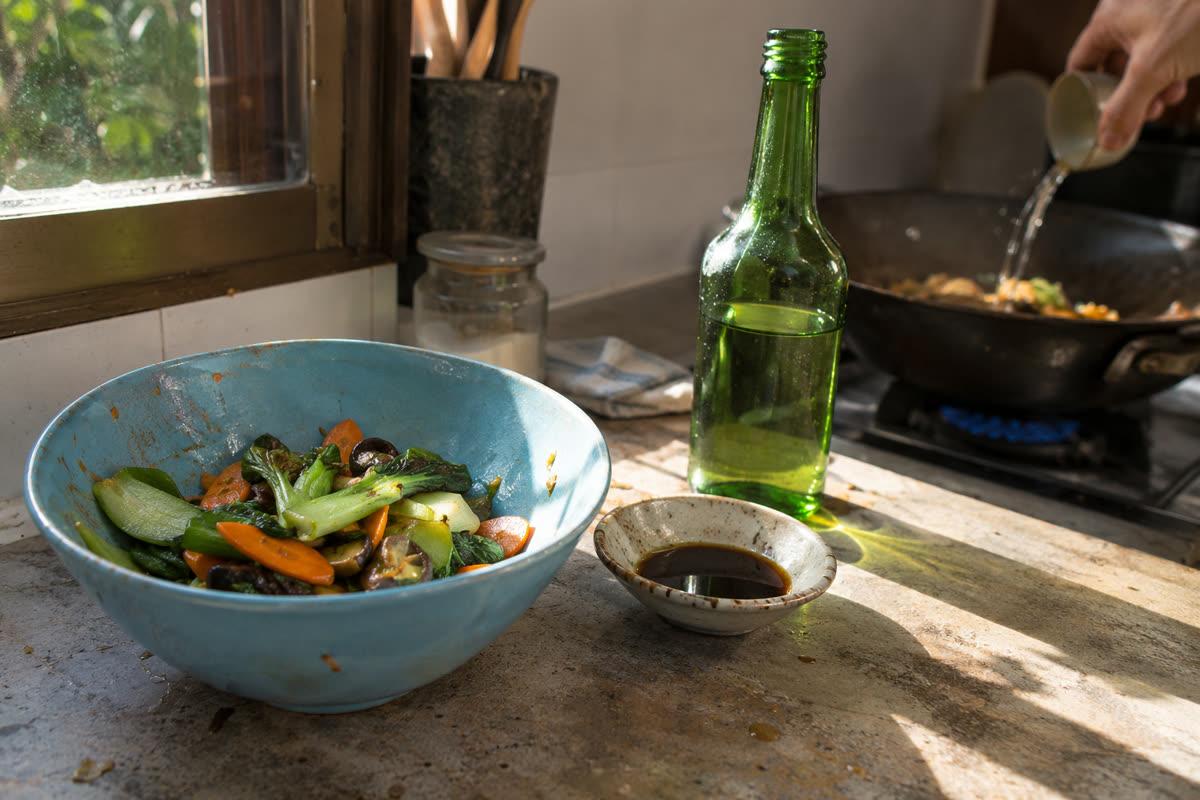 What to use instead of soy sauce when you eat gluten-freeTamari, gluten-free soy sauce, coconut aminos and liquid aminos: what each maker says, how to confirm it on the bottle, and what changes when you cook.
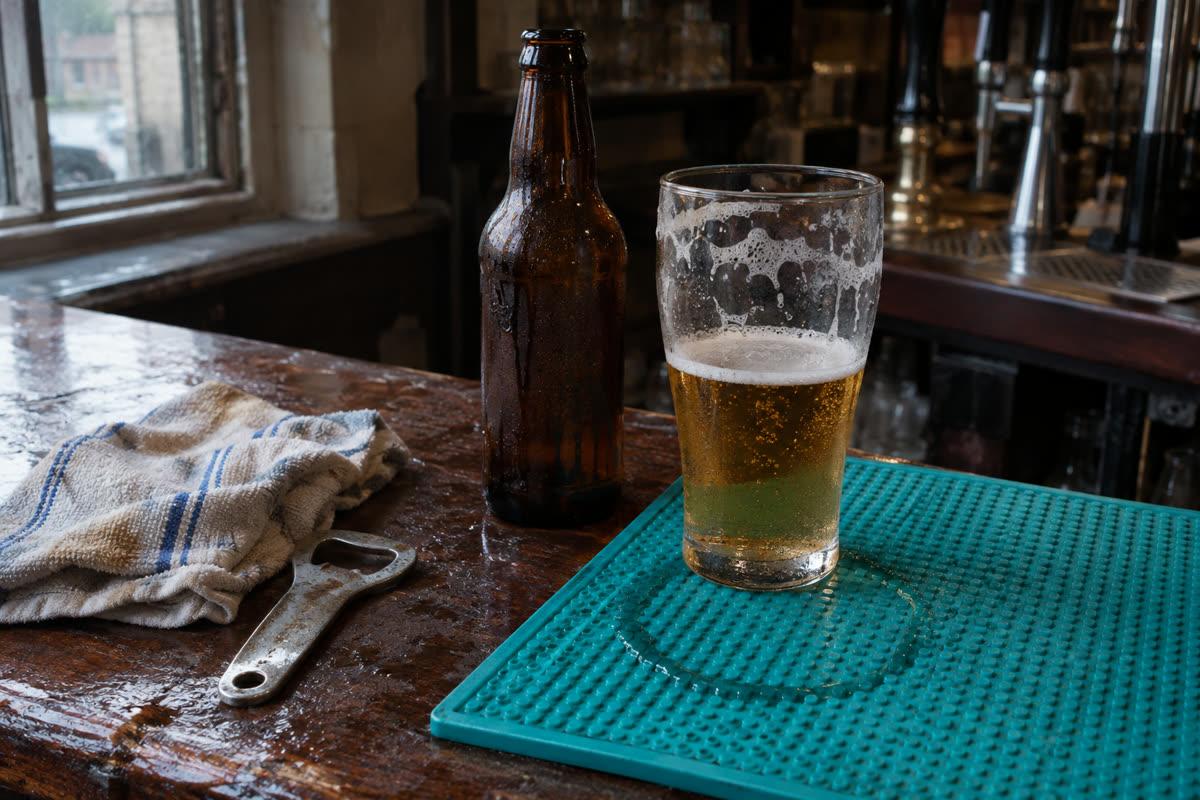 Gluten-removed beer: what the treatment does, why the tests are disputed and what the TTB statement saysWhat “crafted to remove gluten” means on a barley beer, why lab results on it are disputed, and what TTB, NCA and GIG say, for your clinician talk.
Sources
- [1, 2, 3, 5, 26, 27, 41, 45] US Food and Drug Administration, Questions and Answers on the Gluten-Free Food Labeling Final Rule, checked Nov 17, 2026.
- [4, 29, 30, 37] Gluten Intolerance Group, Getting Started on a Gluten-Free Diet: A Step-By-Step Guide, checked Nov 17, 2026.
- [6] Electronic Code of Federal Regulations, 21 CFR 101.91 Gluten-free labeling of food, checked Nov 17, 2026.
- [7] National Celiac Association, Is there gluten in corn?, checked Nov 17, 2026.
- [8, 9, 10, 12, 13, 16, 17, 46] Gluten Intolerance Group, Gluten-Free Flours & Thickening Agents, checked Nov 17, 2026.
- [11, 14, 15, 25, 36, 42] Gluten Intolerance Group, 35+ Alternative Gluten-Free Grains and Flour Substitutes, checked Nov 17, 2026.
- [18, 19, 21, 28, 44] National Institute of Diabetes and Digestive and Kidney Diseases (NIDDK), Eating, Diet, & Nutrition for Celiac Disease, checked Nov 17, 2026.
- [20] Gluten Intolerance Group, Explore Asian Cuisine, Gluten-Free, checked Nov 17, 2026.
- [22, 23, 24, 39, 40] Gluten Intolerance Group, Swap This for That, checked Nov 17, 2026.
- [31] Alcohol and Tobacco Tax and Trade Bureau (TTB), TTB Ruling 2020-2: Gluten Content Statements in the Labeling and Advertising of Wine, Distilled Spirits, and Malt Beverages, checked Nov 17, 2026.
- [32, 33, 34] Gluten Intolerance Group, Should a person with celiac disease avoid vinegar and products containing vinegar?, checked Nov 17, 2026.
- [35] National Celiac Association, Couscous: Is couscous gluten-free?, checked Nov 17, 2026.
- [38, 43] Gluten-Free Certification Organization (GFCO), GFCO Product Finder, checked Nov 17, 2026.