Frozen meals, pizza and nuggets on a gluten-free diet: what to read on the box
Short answer
On a frozen box that FDA regulates, a gluten-free claim means the maker says the food meets FDA’s rule1. With no claim or mark, the ingredient list is what you have to go on. Check five places, in this order:
- The front claim: on foods FDA regulates, “gluten-free” means unavoidable gluten under 20 parts per million, and the claim is voluntary1, 2.
- A certification mark: FDA lets makers print one and does not recommend any program3; GFCO says it requires a product to test at or below 10 ppm4.
- The ingredient list, including the crust, breading, batter, dough and sauce, because NIDDK says many ingredients such as starches and thickeners are made from gluten-containing grains and added to many processed foods, including frozen ones5.
- The Contains line, which names wheat but need not name barley or rye, and which a USDA-regulated entree may follow only voluntarily6, 7.
- Any may-contain or shared-facility line, which is voluntary8.
Part of Grocery shopping and meal planning, 15 guides

Key points
- “Gluten-free” on an FDA-regulated box means any unavoidable gluten is under 20 ppm, and makers may leave the claim off1, 2.
- A frozen box can be regulated by USDA instead of FDA when it is meat, poultry or, GIG says, a mixed product such as some frozen entrees; FDA’s gluten-free rule does not cover those labels9, 7.
- On the makers’ pages we read, wheat flour was on the ingredient lists of Totino’s and Red Baron pizza, Foster Farms nuggets, Chung’s egg roll crust and bibigo dumpling dough10, 11, 12, 13, 14.
- Ingredients and allergen statements can change; Totino’s own page says to refer to the actual package15.
What the front of a frozen box can tell you
A frozen box can say four different things about gluten. Each tells you something, and each leaves something open.
| On the box | What it tells you | What it leaves open |
|---|---|---|
| A “gluten-free” claim (or “no gluten”, “free of gluten”, “without gluten”) | On foods FDA regulates, any unavoidable gluten is under 20 ppm, and the food has no ingredient that is a gluten-containing grain or is derived from one that has not been processed to remove gluten (a processed-derived ingredient such as wheat starch counts only if it leaves the food under 20 ppm)1. The other three phrases carry the same requirements16. | FDA does not require makers to test for gluten, but they are responsible for meeting the rule17. |
| A certification mark such as GFCO’s | FDA allows a certifier’s logo if its use is truthful and not misleading3. GFCO says a product must test at or below 10 ppm4 and that it audits every manufacturing facility in person each year18. | FDA does not recommend any program3, so what a mark requires is that certifier’s own rule. |
| “Made with no gluten-containing ingredients” | A statement about ingredients only. | FDA says that unless the label also bears a “gluten-free” claim, you should not assume the food meets all of the claim’s requirements19. |
| Nothing about gluten | The claim is voluntary, so its absence is not a warning by itself2. | The ingredient list and the Contains line are what is left to read. |
In FDA’s sampling of 702 samples from more than 250 products labeled “gluten free”, only one product did not comply with one of the major requirements20. That sampling ran from July 2015 to August 201621. The update does not break the sampling down by type of food, so it says nothing specific about frozen boxes20.
Why frozen food needs a second look
NIDDK says that many ingredients and additives such as colorings, flavorings, starches and thickeners are made from grains that contain gluten, and that these ingredients are added to many processed foods, including frozen ones5. On a frozen box, read the coating, crust, dough, sauce and noodles as well as the main ingredient.
Which agency regulates the box also matters. FDA’s gluten-free rule does not apply to foods whose labeling USDA regulates, which generally means meat, poultry and certain egg products9. GIG adds that USDA also regulates mixed products that generally contain more than 3% raw or 2% cooked meat, for example some soups and frozen entrees, and that USDA-regulated products are not required to follow the allergen law (FALCPA), though GIG estimates 80-90% do so voluntarily7.
A box of chicken nuggets or an entree with meat may therefore sit outside FDA’s gluten-free rule9, 7. For those boxes the ingredient list and the maker’s own page carry more of the weight.
What makers’ pages show for frozen foods
Our verdict records show what makers’ own pages say, with the date we read them. These examples come from pages opened on 2026-11-17. They illustrate the check; they are not a ranking, and a recipe can change.
| Food | What the maker’s page showed | Our record |
|---|---|---|
| Pizza | Totino’s Party Pizza, Pepperoni lists enriched flour (wheat flour)10 and says “Contains milk, soy and wheat ingredients.”22 Red Baron’s Classic Crust Four Cheese lists wheat flour and malted barley flour11 and declares “CONTAINS: MILK, WHEAT AND SOY.”23 Freschetta’s Gluten Free Four Cheese Pizza says it “just happens to be Gluten Free”24; its list names tapioca starch and rice flour, and its allergen line is milk and soy25. | Pizza |
| Chicken nuggets | Foster Farms’ frozen nuggets list wheat flour and wheat gluten and end “Contains: wheat and soy.”12 Applegate Naturals calls its nuggets “gluten-free nuggets”26 and begins its ingredient list with white meat chicken, rice flour, water and tapioca starch27. | Chicken nuggets |
| Egg rolls | Chung’s chicken egg roll lists wheat flour first in its crust13 and ends “Egg, sesame, soy, wheat.”28 | Egg rolls |
| Dumplings | bibigo’s frozen mandu list wheat flour and wheat gluten in the dough and say “Contains: Wheat and Soy”14. | Dumplings |
A brand name settles nothing. Foster Farms’ frozen nuggets list wheat flour12, while its Gluten Free Honey Crunchy Corn Dogs list batter ingredients that include corn meal, corn flour, corn starch, tapioca starch and rice flour29.
A claim and a certification are separate things. Freschetta’s page makes the claim24, and a search of GFCO’s directory for Freschetta returned no products30; that says only that GFCO lists none, not that the claim is wrong. GFCO’s directory does list Perdue Simply Smart gluten-free breaded nuggets31. How to look a mark up is in how to check a gluten-free seal in a certifier’s directory.
Our records for pot pie, lasagna, waffles, pancakes, corn dogs, mac and cheese and pasta show what makers’ pages said when we read them.
The Contains line and the shared-facility line
The Contains line
US allergen law gives a maker two ways to name wheat: a line starting “Contains”, printed right after or next to the ingredient list32, or the source in parentheses after an ingredient, as in “enriched flour (wheat flour)”33.
Wheat is on the law’s list of major food allergens; barley and rye are not6. A Contains line therefore need not name barley or rye, so read the whole ingredient list. Red Baron’s crust, for example, names malted barley flour beside the wheat flour11.
On a USDA-regulated entree the line may not follow the allergen law at all7. GIG says that where a USDA-regulated product follows FALCPA you can look for the word “wheat”, and that if there is any doubt, other ingredients may be derived from wheat34; its list to investigate names starch, food starch, modified food starch and dextrin35.
May contain and shared facility
Lines such as “made in a facility that also processes wheat” are voluntary, and FDA allows one on a box that also carries a gluten-free claim if the statement is truthful and not misleading36. GIG says they are not required or regulated by FDA8, and that they are not relevant to the gluten-free status of a product that is certified or labeled gluten-free37.
On a box with no claim and no mark, GIG’s reference table says of a may-contain wheat statement: “It’s somewhat risky, and you’re better off avoiding it.”38 A gluten-free box can also come from a facility that is not dedicated gluten-free: Van’s Foods says its gluten-free waffles, pancakes, crackers and bars are not produced in gluten-free facilities39, and lists equipment sanitation, ingredient segregation, an allergen-controlled area and regular gluten testing among its practices40.
When the box makes no claim
Because the claim is voluntary2, a plain box is not suspect for that reason alone. With no claim and no mark you are judging from the ingredient list, and GIG says some products that look gluten-free from their lists carry a higher risk of cross-contact and are best avoided unless certified or labeled, naming oats, lentils and milled products made from grains, beans, seeds or legumes41.
- Read every component of the meal: crust, breading, batter, dough, sauce and noodles.
- Look for wheat, barley, rye and malt in the list, not only on the Contains line.
- Open the maker’s page for the same item and size, and match it to the box, because ingredients and allergen statements can change15.
- If the box and the page disagree, or the page shows no list, leave it or ask the maker.
Check the box again on each purchase and each online order; our guide to online gluten-free grocery shopping covers what to look for on a product page. Our verdicts, A to Z show what makers’ pages said and when, and our gluten scanner looks for gluten names in a photo of a label or in pasted text.
Cooking it at home
GIG’s page on appliances advises baking or broiling gluten-free and gluten-containing items separately when you can, and, if you cannot, putting the gluten-free items on the higher oven rack42. It says not to use the same air fryer for gluten-free and gluten-containing cooking, because the fan can blow particles of earlier food onto what is being cooked43.
To keep gluten-free packages apart in a shared freezer, see freezing gluten-free food; to keep a gluten-free pizza apart in the oven, see gluten-free pizza at home.
Frozen vegetables, fries and hash browns
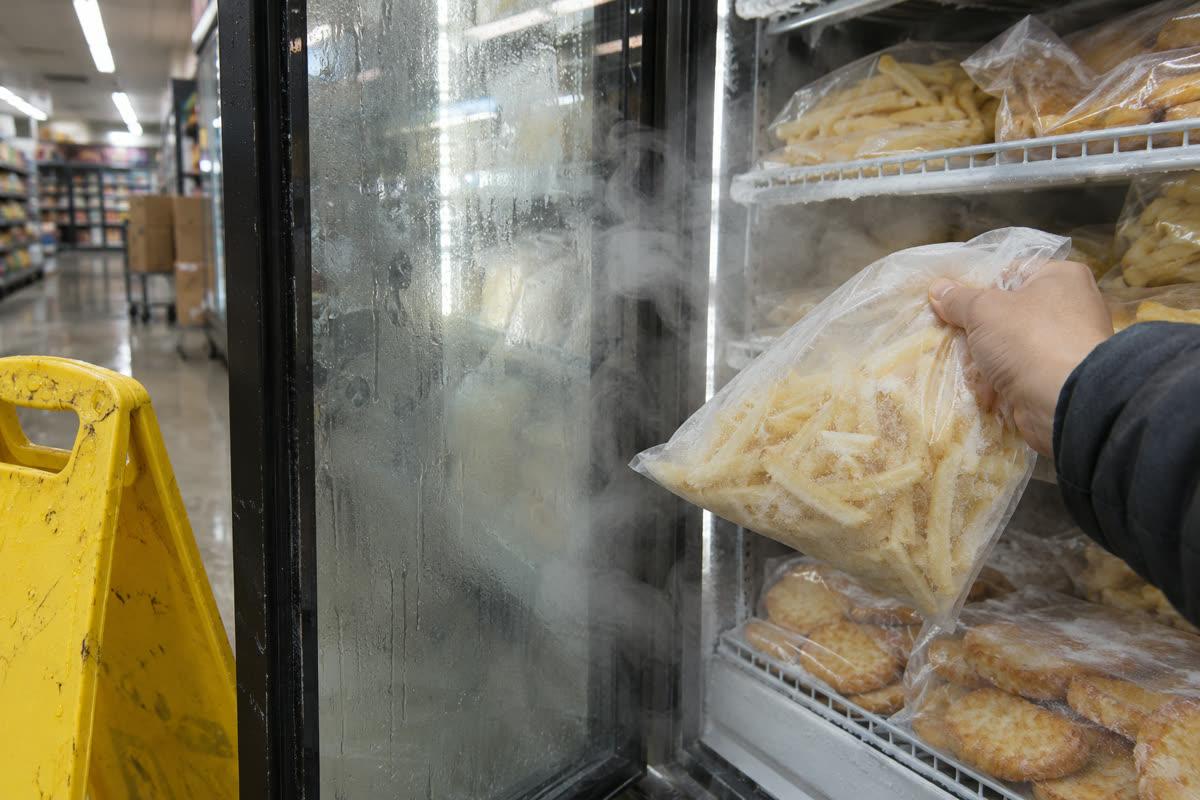
Coated fries, seasoned bags and sauced vegetables follow the same five checks. Our guide to frozen vegetables, fries and hash browns goes through them with examples from makers’ pages, and the records for french fries and hash browns show what we read.
Verdicts in this guide
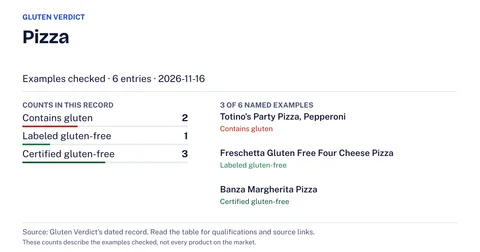 PizzaContains glutenchecked Nov 16, 2026
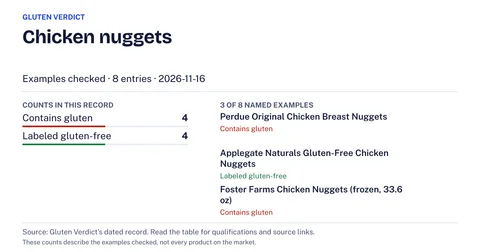 Chicken nuggetsDepends on the product4 of 8 products we checked contain glutenchecked Nov 16, 2026
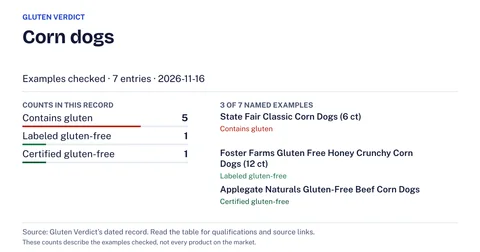 Corn dogsDepends on the product5 of 7 products we checked contain glutenchecked Nov 16, 2026
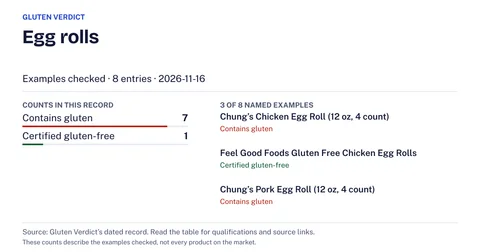 Egg rollsContains glutenchecked Nov 16, 2026
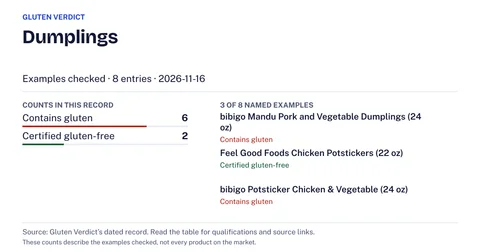 DumplingsContains glutenchecked Nov 16, 2026
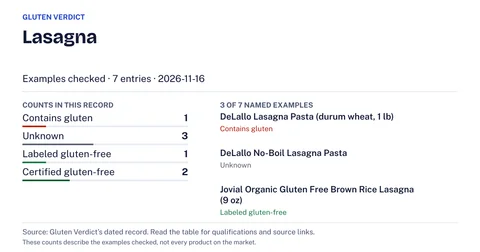 LasagnaContains glutenchecked Nov 16, 2026
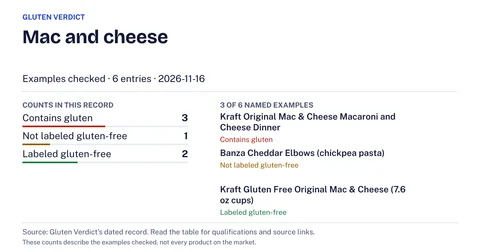 Mac and cheeseContains glutenchecked Nov 16, 2026
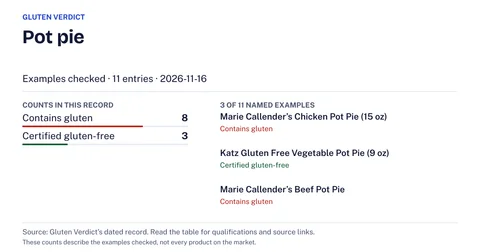 Pot pieContains glutenchecked Nov 16, 2026
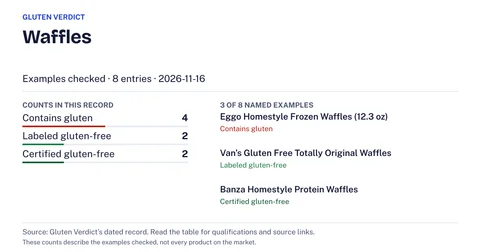 WafflesContains glutenchecked Nov 16, 2026
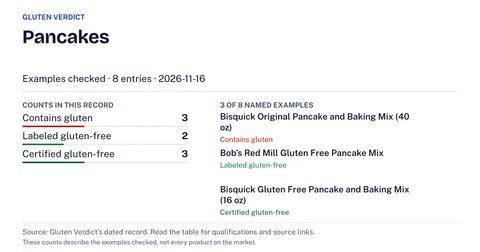 PancakesContains glutenchecked Nov 16, 2026
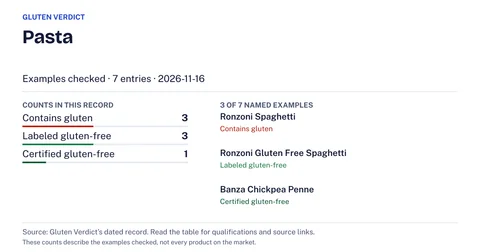 PastaContains glutenchecked Nov 16, 2026
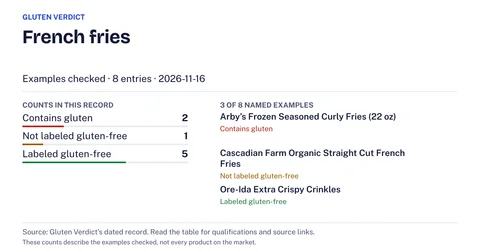 French friesDepends on the product2 of 8 products we checked contain gluten: Arby’s Frozen Seasoned Curly Fries (22 oz) and Checkers Frozen Crispy Seasoned Fries (28 oz)checked Nov 16, 2026
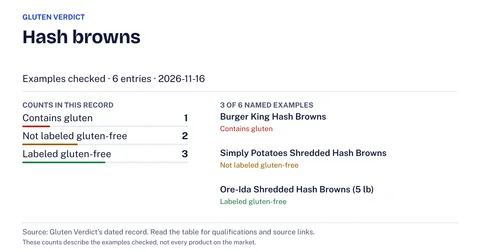 Hash brownsDepends on the product1 of 6 products we checked contains gluten: Burger King Hash Brownschecked Nov 16, 2026
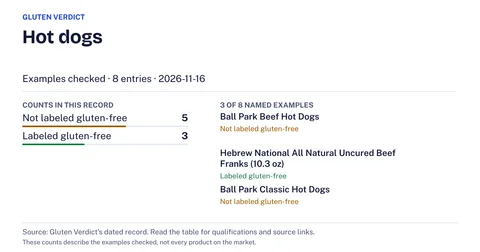 Hot dogsDepends on the productchecked Nov 16, 2026
Questions people ask
Are frozen meals gluten-free?
Not as a group. Some boxes carry a gluten-free claim and some list wheat, such as Totino’s pizza crust10 and bibigo’s dumpling dough14. NIDDK says starches and thickeners made from gluten grains are added to many processed foods, including frozen ones5.
Does “gluten-free” on a frozen pizza mean no gluten at all?
No. On an FDA-regulated food it means any unavoidable gluten is under 20 ppm and the food has no gluten-containing grain or unprocessed grain-derived ingredient such as wheat flour1.
Does the Contains line list barley or rye?
Not necessarily. The law’s major allergen list names wheat, not barley or rye6, so a Contains line need not name them.
Can a gluten-free box also say it was made in a facility with wheat?
Yes, if the statement is truthful and not misleading, and the food still has to meet the gluten-free rule36.
Do I need to read a box I have bought before?
Re-reading is the careful step: Totino’s page says ingredients, nutrition facts and allergen statements can change and to refer to the actual package15.
More in Grocery shopping and meal planning
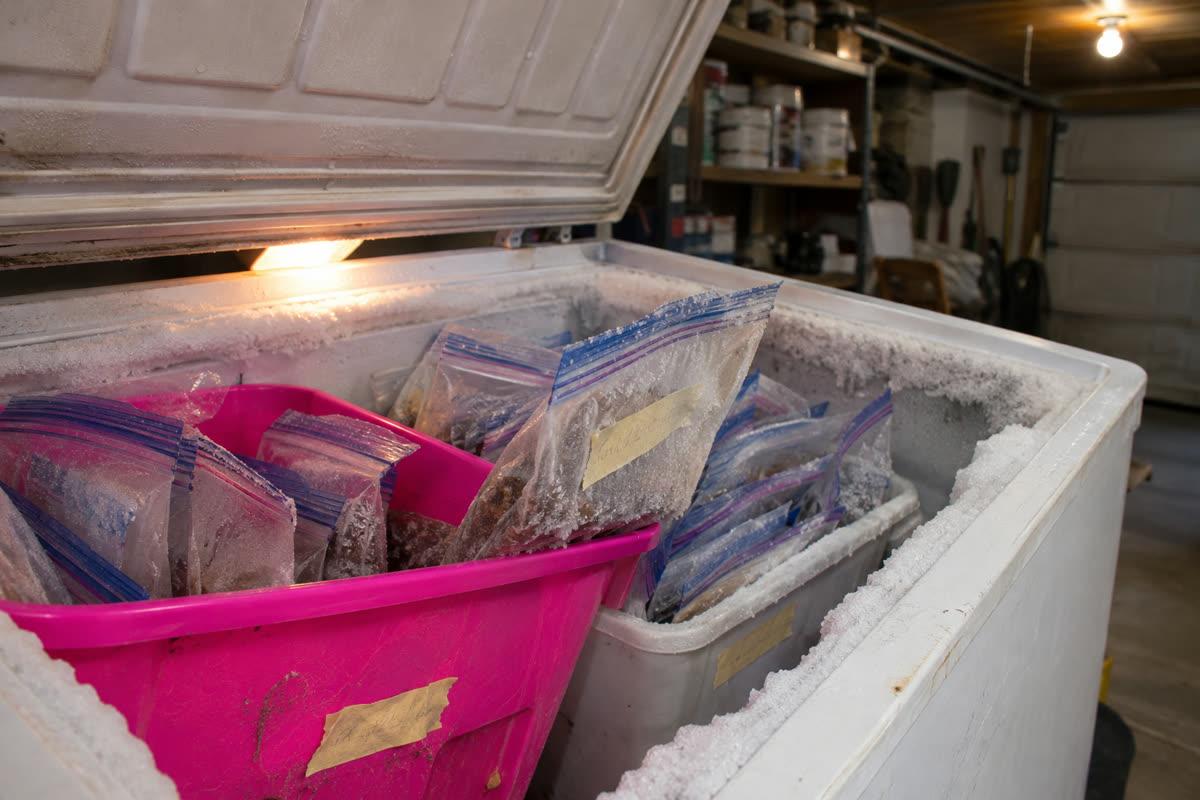 Freezing gluten-free food: what holds up, how to thaw it and how to keep it apartHow to freeze, label and thaw gluten-free food, which foods lose texture, and how to keep gluten-free packages apart in a shared freezer.
 Gluten-free grocery shopping: what to check at the shelf, the bulk bins and the checkoutOne reading order for any US supermarket pack, plus what to do about bulk bins, frozen cases, wheat starch and storage once the bags are home.
 A gluten-free grocery list by aisle for US supermarketsAn aisle-by-aisle gluten-free grocery list for US stores: what needs no label, what needs a check, and what stays off the list.
 How to check a grocery listing for gluten before you orderRead an online grocery listing for gluten in a fixed order, tell a store tag from a maker claim and a certifier mark, and re-check on reorders.
 A gluten-free meal plan as a shopping template, by meal slotA weekly gluten-free shopping template: staples for each meal slot, the check each packaged item needs, and a ledger of when you last read each label.
 Gluten-free meal prep in a shared kitchen: order, containers, labels and refrigerator timesHow to run a gluten-free prep session in a kitchen shared with wheat eaters: what to clean, what to handle first, how to label, and how long food keeps.
Related guides
 Frozen fries, hash browns and vegetables: where wheat hides in the coating, seasoning and sauceHow to tell a plain frozen potato or vegetable bag from one with a wheat batter, coating, seasoning or sauce, using the ingredient list and Contains line.
 Certified or naturally gluten-free: when a seal mattersWhich naturally gluten-free foods are worth buying with a claim or seal: produce, grains, flours, oats and processed foods, with FDA rules and test data.
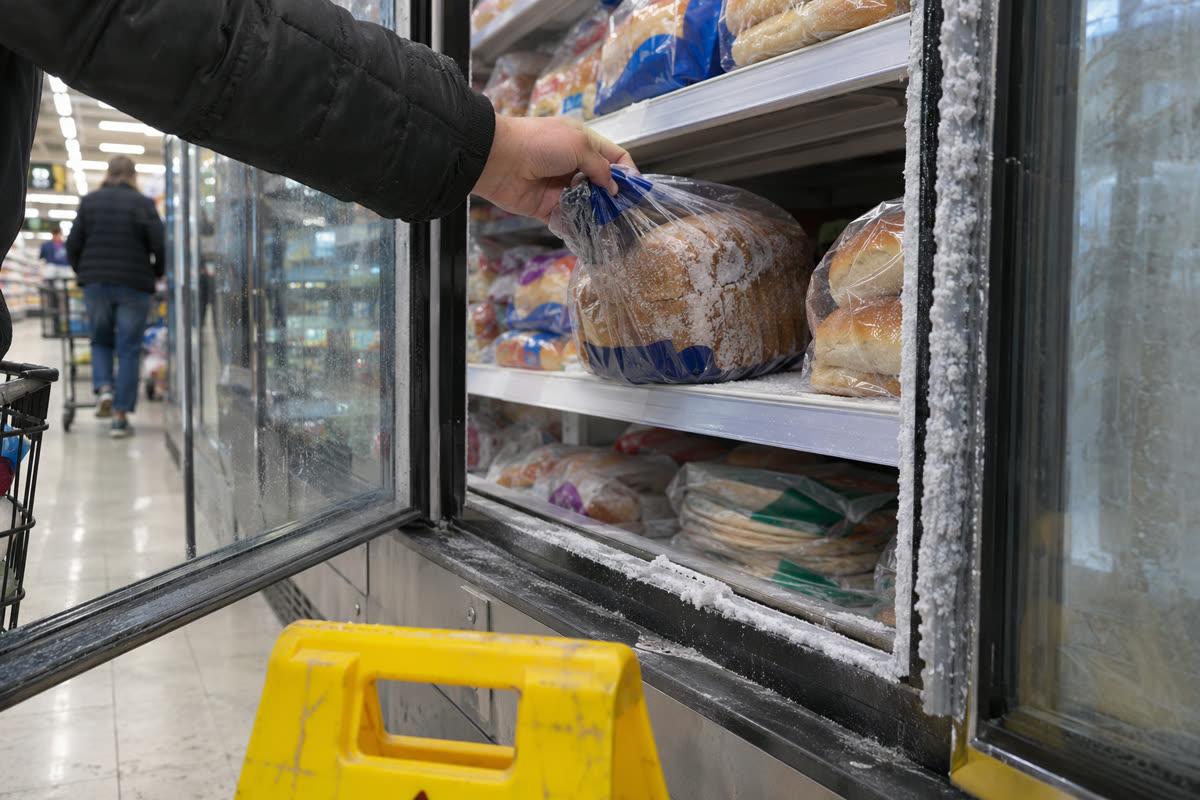 Gluten-free bread, buns and wraps: what the package tells youHow to tell a gluten-free bread, bun or wrap from a wheat look-alike: certification mark, maker’s claim or ingredient list, in a fixed order.
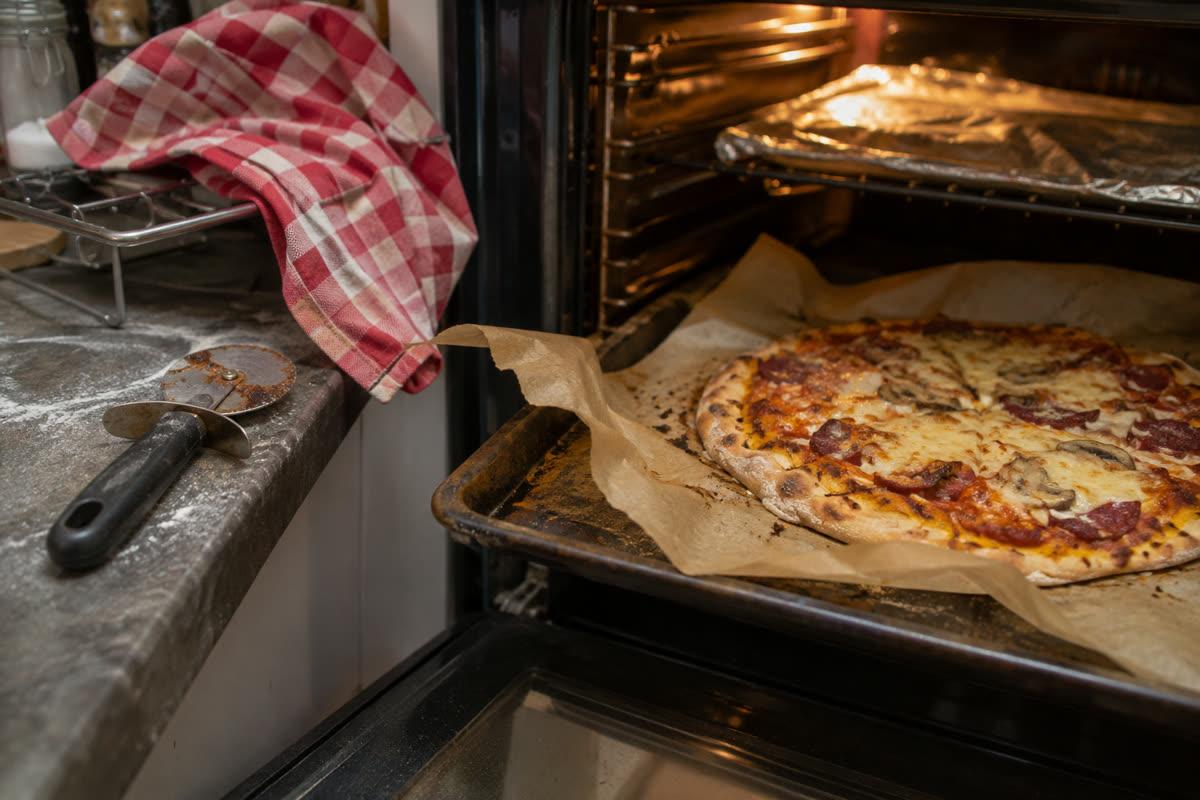 Gluten-free pizza at home: check each part, then keep it apart in the ovenCheck the crust, sauce, cheese and toppings against each maker’s own statement, then set up stone, parchment and oven so a gluten-free pizza stays apart.
Sources
- [1, 2, 3, 9, 16, 17, 19, 36] US Food and Drug Administration, Questions and Answers on the Gluten-Free Food Labeling Final Rule, checked Nov 17, 2026.
- [4, 8, 38] Gluten Intolerance Group, Do All Wheat Mentions on Food Labels Mean Not Gluten-Free?, checked Nov 17, 2026.
- [5] National Institute of Diabetes and Digestive and Kidney Diseases (NIDDK), Eating, Diet, & Nutrition for Celiac Disease, checked Nov 17, 2026.
- [6, 32, 33] US Food and Drug Administration, Food Allergen Labeling and Consumer Protection Act of 2004 (FALCPA), checked Nov 17, 2026.
- [7, 34, 35, 37] Gluten Intolerance Group, 3 Tips for Gluten-Free Label Reading, checked Nov 17, 2026.
Read on 2026-11-17: under “More About “Contains” Statements”, the list headed “Avoid these or investigate further:” names starch, food starch, modified food starch and dextrin.
- [10, 15, 22] Totino’s (General Mills), Totino’s Party Pizza, Pepperoni, checked Nov 17, 2026.
- [11, 23] Red Baron (Schwan’s), RED BARON Classic Crust Four Cheese Pizza, checked Nov 17, 2026.
- [12] Foster Farms, Chicken Nuggets, Frozen - 33.6 oz, checked Nov 17, 2026.
- [13, 28] Chung’s Gourmet Foods, Chung’s 12 oz 4 Count Chicken Egg Roll Carton with Sauce, checked Nov 17, 2026.
- [14] bibigo (Schwan’s Consumer Brands), bibigo Mandu Pork and Vegetable Dumplings (24 oz), checked Nov 17, 2026.
- [18] Gluten Intolerance Group (GFCO), How GFCO certifies gluten-free food, checked Nov 17, 2026.
- [20, 21] US Food and Drug Administration, FDA Sampling Finds High Level of Compliance with Gluten-Free Standards, checked Nov 17, 2026.
- [24, 25] Freschetta (Schwan’s), FRESCHETTA Gluten Free Four Cheese Pizza, checked Nov 17, 2026.
Read on 2026-11-17: the ingredient list names tapioca starch, rice flour, rice starch and modified rice starch and no wheat, barley or rye, and the allergen line reads “CONTAINS: MILK AND SOY.”
- [26, 27] Applegate, Applegate Naturals Gluten-Free Chicken Nuggets, checked Nov 17, 2026.
- [29] Foster Farms, Gluten Free Honey Crunchy Corn Dogs, Frozen - 12 ct, checked Nov 17, 2026.
- [30] Gluten-Free Certification Organization, GFCO Product Finder search for Freschetta, checked Nov 17, 2026.
Read on 2026-11-17: a search of the GFCO Product Finder for “Freschetta” returned “No products found”.
- [31] Gluten-Free Certification Organization, GFCO Product Finder search for Perdue, checked Nov 17, 2026.
Read on 2026-11-17: a search of the GFCO Product Finder for “Perdue” lists “PERDUE GLUTEN FREE BRD NAE CHICKEN NUGGETS” under the brand Perdue Simply Smart, among other Perdue products.
- [39, 40] Van’s Foods, Frequently Asked Questions, checked Nov 17, 2026.
- [41] Gluten Intolerance Group, FAQ: choosing a product when none is certified or labeled gluten-free, checked Nov 17, 2026.
- [42, 43] Gluten Intolerance Group, Appliances: Risks of Cross-Contact, checked Nov 17, 2026.