A gluten-free meal plan as a shopping template, by meal slot
Short answer
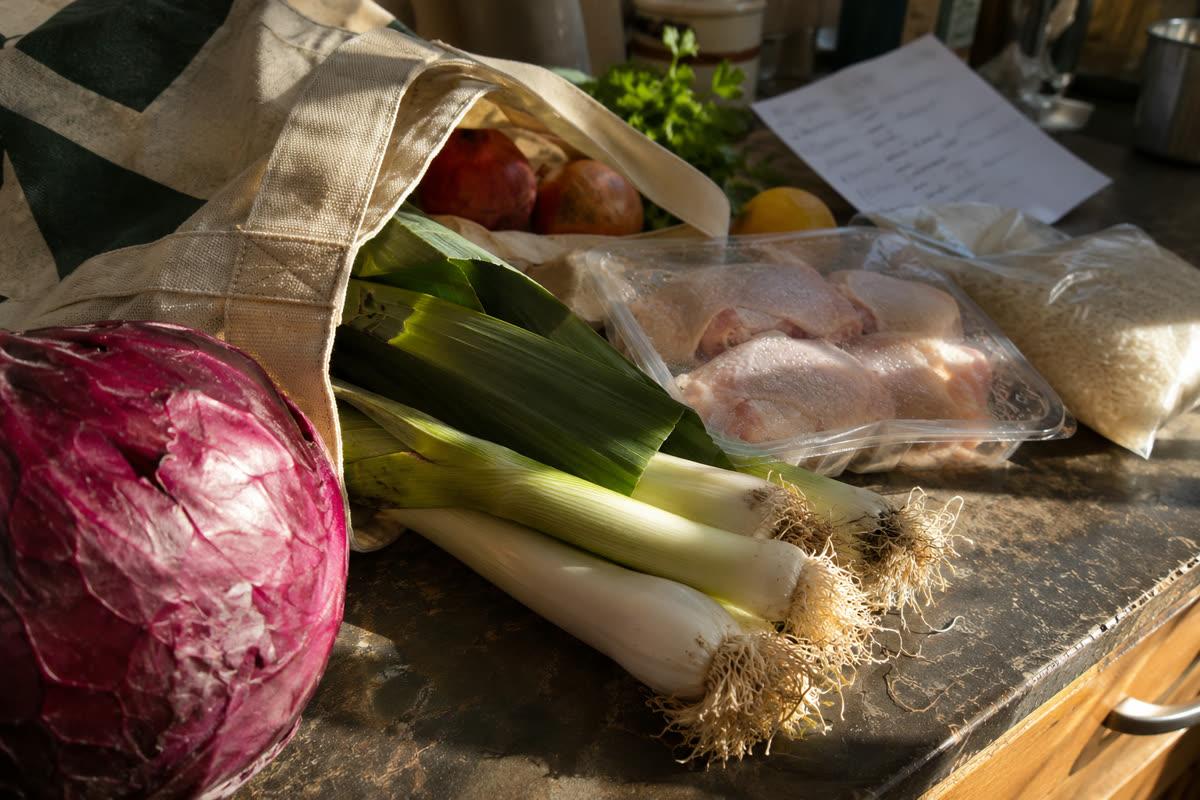
A week’s staples can start with foods that are gluten-free by nature1, 2, and each packaged item gets one check before it goes in the cart. Give each line of the template one of four tags:
- Plain: a single ingredient bought plain, such as eggs, fruit, rice or potatoes3, 1.
- Read the list: any processed or seasoned item, because additives and flavorings can be made from grains that contain gluten4.
- Buy labeled: oats, bread, pasta and soy sauce, where a gluten-free claim means less than 20 parts per million of gluten5.
- Wash and sort: dry beans and rice that carry no label, the way the Gluten Intolerance Group describes6, 7.
Part of Grocery shopping and meal planning, 15 guides
Key points
- NIDDK names meat, fish, fruits, vegetables, rice and potatoes as naturally gluten-free when they come without additives or some seasonings1.
- A gluten-free claim is voluntary, so a naturally gluten-free food may not carry one8, 2.
- Oats, bread and pasta are the staples in the template to buy labeled: FDA says labeled oats must contain less than 20 ppm of gluten, and lists breads and pastas among foods that typically contain gluten9, 10.
- The Academy of Nutrition and Dietetics says to read a product’s label every time you buy it, because a maker may change an ingredient11.
- NIDDK says a doctor or registered dietitian can guide a balanced diet, and that some packaged gluten-free foods may be higher in fat and sugar12, 13.
How the template works: four check tags
A weekly menu tells you what to cook. This page does a narrower job: it lists what to keep in the house for each meal slot and what each packaged item needs before you buy it. No dishes, no recipes and no brands are picked for you. Each line carries one of four tags, which are our shorthand for the kind of check a line needs, not a ruling on a product.
| Tag | Use it for | What the sources say |
|---|---|---|
| Plain | A single ingredient with nothing added: eggs, fruit, vegetables, rice, potatoes. | NIDDK calls meat, fish, fruits, vegetables, rice and potatoes naturally gluten-free when they come without additives or some seasonings1. FDA adds that a food like this may carry no gluten-free claim at all2. |
| Read the list | Anything processed, seasoned or mixed: read the whole ingredient list. | Colorings, flavorings, starches and thickeners can be made from grains that contain gluten, and they go into boxed, canned, frozen, packaged and prepared foods4. The Academy of Nutrition and Dietetics says to avoid foods that contain wheat, rye, barley or malt14. |
| Buy labeled | Staples that usually contain gluten (bread, pasta)10, are often cross-contacted (oats)15, or may be made with wheat (soy sauce)16. Pick the version that says gluten-free. | A food labeled “gluten-free”, “no gluten”, “free of gluten” or “without gluten” must contain less than 20 parts per million of gluten under FDA’s rule5. The claim is voluntary8, and FDA does not endorse any particular third-party certification program17. |
| Wash and sort | Dry beans and small grains with no label. | The Gluten Intolerance Group (GIG) describes washing and visually sorting beans6, and rinsing rice in a fine sieve7. This is a charity’s advice for a bag with no label, not a labeling rule. |
We have a verdict for 16 of the foods in the tables below: oatmeal, rice, quinoa, lentils, chicken broth, corn tortillas, yogurt, potatoes, soy sauce, salsa, peanut butter, pasta, cereal, hummus, bacon and bread. By our own verdict labels, three are naturally gluten-free in their plain form (rice, quinoa, potatoes), two contain gluten in their usual form (pasta, bread) and eleven depend on the product. Each verdict lists the sources we read and the date we read them.
Breakfast slot
| Staple | Tag | What the check is |
|---|---|---|
| Eggs | Plain | FDA lists eggs among foods that are naturally gluten-free2, and the Academy lists eggs among single-ingredient foods that are naturally gluten-free3. |
| Milk and butter | Plain | Named as naturally gluten-free single-ingredient foods by the Academy3. |
| Fresh fruit | Plain | Fruits are on FDA’s and NIDDK’s naturally gluten-free lists2, 1. |
| Yogurt and cheese | Read the list | GIG says to read the ingredient list for gluten-containing ingredients added as flavorings, and that cultured dairy products could in some cases contain small amounts of gluten because cultures can be grown on gluten-containing grains18. Our yogurt verdict covers plain cups and a cookie mix-in cup that declares wheat. |
| Oatmeal and rolled oats | Buy labeled | Oats are by nature gluten-free but often contaminated with other gluten-containing grains during processing, says the Academy15. Oats labeled gluten-free must contain less than 20 ppm of gluten9. NIDDK says to talk with your doctor or a registered dietitian about whether to include oats and how much19. |
| Boxed cereal | Read the list | FDA lists cereals among foods that typically contain gluten10. With no gluten-free claim on the box, the Academy’s check is the ingredient list: wheat, rye, barley, oats and malt20. Our cereal verdict shows the answer changes from box to box. |
Lunch slot
| Staple | Tag | What the check is |
|---|---|---|
| Plain fish, poultry and meat | Plain | NIDDK lists meat and fish, and the Academy lists fish and poultry, as naturally gluten-free1, 3. A seasoned or marinated cut is no longer a single ingredient, so it moves to Read the list; NIDDK’s statement carries the condition “without additives or some seasonings”1. |
| Deli meat, hot dogs and bacon | Read the list | The Academy names deli meats and hot dogs among foods where gluten may appear21. FDA’s gluten-free rule does not apply to foods whose labeling USDA regulates, which FDA says generally means meats, poultry and certain egg products22; read the list either way. |
| Bread and wraps | Buy labeled | FDA lists breads among foods that typically contain gluten10. NIDDK notes that packaged gluten-free foods include gluten-free types of baked goods, bread and pasta23. Our bread verdict covers the usual loaf and labeled gluten-free loaves. |
| Corn tortillas | Read the list | Corn is on the Academy’s list of grains for a gluten-free grocery list24. Our verdict notes that some corn tortillas are mixes of corn and wheat flour, so the ingredient list decides. |
| Dry beans and lentils | Beans: Wash and sort. Lentils: Buy labeled | FDA says crop rotation and shared harvesting, transport and storage equipment often bring gluten-containing grains into contact with legumes that are naturally free of gluten25. For dry beans with no label, GIG describes washing and visually sorting6. For lentils, GIG says a higher level of cross-contact risk than with other legumes or beans means they should be labeled gluten-free or GFCO-certified39; our lentils verdict records the same advice. |
| Hummus, peanut butter and spreads | Read the list | These are processed foods, and flavorings, starches and thickeners in processed foods can come from gluten grains4. Our verdicts show what the tubs and jars we read list. |
| Salad dressings and condiments | Read the list | The Academy names salad dressings among foods where gluten may appear21, and NIDDK names condiments26. |
Dinner slot
| Staple | Tag | What the check is |
|---|---|---|
| Fresh vegetables | Plain | Vegetables are on FDA’s and NIDDK’s naturally gluten-free lists2, 1. |
| Plain rice and potatoes | Plain | Both are on NIDDK’s naturally gluten-free list1. For rice with no label, GIG describes rinsing in a fine sieve or colander plus a visual sort7. |
| Quinoa, millet, buckwheat, amaranth, teff, sorghum, polenta and grits | Plain, then Wash and sort or Buy labeled | All appear on the Academy’s list of grains for a gluten-free grocery list24. FDA’s point about crop rotation and shared equipment applies to grains too25. GIG says millet, teff and amaranth are too small to strain and describes a visual sort and a jar-and-water method instead27. |
| Rice mixes and pilafs | Read the list | The Academy says a food that seems gluten-free, such as a rice mix, may have traces of gluten28. |
| Pasta | Buy labeled | FDA lists pastas among foods that typically contain gluten10, and NIDDK notes that packaged gluten-free foods include pasta23. Our pasta verdict covers regular and labeled versions. |
| Broth, bouillon, gravy and soups | Read the list | The Academy names bouillon cubes, gravy and soups among foods where gluten may appear21. Our broth verdict separates cartons of broth from bouillon cubes and bases. |
| Soy sauce | Buy labeled | FDA says that in general, soy sauce made from soybeans and wheat, or any other gluten-containing grain, may not bear a gluten-free claim16. |
| Jarred salsa and other sauces | Read the list | Sauces are processed foods, and NIDDK says additives and flavorings in them can be made from gluten grains4. Our salsa verdict compares jars. |
Snack slot
| Staple | Tag | What the check is |
|---|---|---|
| Fresh fruit and vegetables | Plain | See breakfast and dinner2. |
| Nuts and seeds, in a sealed package | Plain | The Academy lists nuts and seeds as single-ingredient foods that are naturally gluten-free3. GIG’s advice is to stay clear of the store’s bulk section, where gluten-containing ingredients could linger on scoops or bins29. |
| Peanut butter | Read the list | A processed food; see the lunch table4. |
| Yogurt and cheese | Read the list | See breakfast18. |
| Candy, bars, crackers and other boxed snacks | Read the list, or Buy labeled | The Academy names candy among foods where gluten may appear21, and NIDDK does too26. With no gluten-free claim, the Academy’s check is the ingredient list for wheat, rye, barley, oats and malt20. |
The label ledger: record the date you last read each label
The ledger turns the tags into a habit. For every packaged item on your list, note the tag, whether the package carries a gluten-free claim, and the date you last read the label. The Academy’s reason is that a maker may change an ingredient, so a product you have bought before still gets read each time11.
| Item | Tag | “Gluten-free” claim on the pack? | Date last read | Changed since last time? |
|---|---|---|---|---|
| Oats | Buy labeled | Yes / No | ____ | Yes / No |
| Bread or wraps | Buy labeled | Yes / No | ____ | Yes / No |
| Pasta | Buy labeled | Yes / No | ____ | Yes / No |
| Cereal | Read the list | Yes / No | ____ | Yes / No |
| Broth or soup | Read the list | Yes / No | ____ | Yes / No |
| Sauce or condiment | Read the list | Yes / No | ____ | Yes / No |
| Soy sauce | Buy labeled | Yes / No | ____ | Yes / No |
| Snack or candy | Read the list | Yes / No | ____ | Yes / No |
| Dry beans or grains | Wash and sort, or Buy labeled | Yes / No | ____ | Yes / No |
Notes on filling it in
- Look at the whole package, not just the front: FDA’s rule does not require the gluten-free claim to sit in any specific location on the label30.
- No claim is a blank in the ledger, not a verdict: the claim is voluntary8, and the next step is the ingredient list20.
- A “may contain” or “made in a facility” line goes in your notes if you want it. GIG says such statements are not relevant to the gluten-free status of a product that is certified or labeled gluten-free31, and FDA allows one on a food that also carries the claim if it is truthful and not misleading32.
- If you are unsure after reading, NIDDK’s advice is not to eat the food, and to contact the maker if possible33.
Where the week’s food sits at home
The tags cover what you buy. Storage covers what happens next. NIDDK advises storing and preparing gluten-free foods separately from other family members’ foods that contain gluten, to prevent cross-contact34. GIG adds two practical points: in a shared fridge or cupboard, put gluten-free packages above gluten-containing ones and keep them securely packaged35; and colanders, sifters and waffle irons, which are hard to clean thoroughly, should not be shared between gluten-free and other use if possible36.
A note on balance
This template is about gluten, not nutrition. For the nutrition side, NIDDK says your doctor or a registered dietitian can guide you on what to eat and drink to maintain a balanced diet12, and the Academy suggests discussing gluten-free choices with a registered dietitian nutritionist or a physician who specializes in celiac disease37.
NIDDK also says that avoiding gluten without advice from a doctor or dietitian may leave a diet short of nutrients such as fiber, iron and calcium, and that some packaged gluten-free foods may be higher in fat and sugar than the same foods that contain gluten13.
NIDDK says that anyone who thinks they might have celiac disease should talk with their doctor about testing before beginning a gluten-free diet, because avoiding gluten before testing may make the results inaccurate38.
When you swap an item
A different brand, flavor or product type is a new line in the ledger, with its own tag and its own date. Swapping regular pasta for a labeled gluten-free pasta, for example, changes the line from a staple that usually contains gluten10 to one you check by its claim5. Swapping a plain item for a seasoned one changes it from Plain to Read the list1. When a label leaves a question open, the maker is who to ask33.
Print the template
Use your browser’s print command on this page: the four tables and the ledger are the template. For a one-page aisle-by-aisle version built from our verdict records, see the printable gluten-free grocery list, and for the longer aisle walk-through read the gluten-free grocery list guide. A maker may change an ingredient11, so the package in your hand has the final word.
Verdicts in this guide
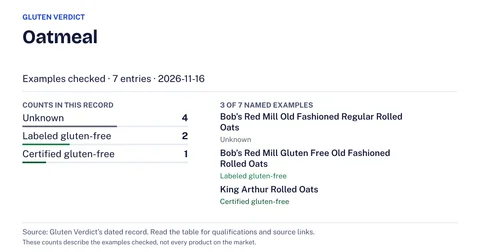 OatmealDepends on the productchecked Nov 16, 2026
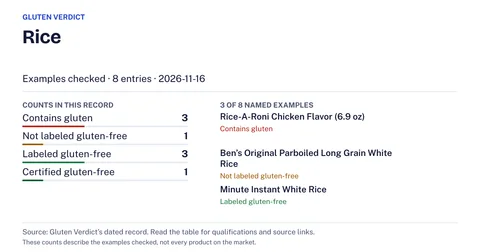 RiceNaturally gluten-free3 of 8 products we checked contain gluten: Rice-A-Roni Chicken Flavor (6.9 oz), Near East Original Rice Pilaf, and Ben’s Original Ready Rice Rice PilafBuy it labeled gluten-freechecked Nov 16, 2026
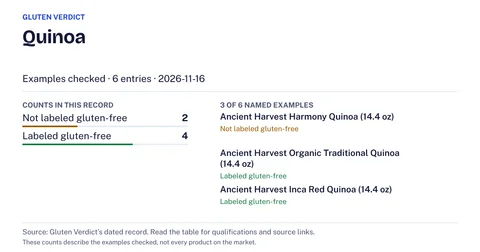 QuinoaNaturally gluten-freeBuy it labeled gluten-freechecked Nov 16, 2026
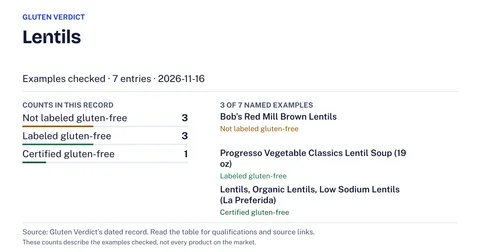 LentilsDepends on the productchecked Nov 16, 2026
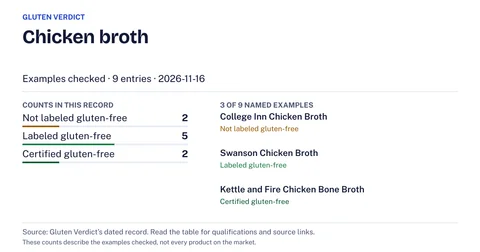 Chicken brothDepends on the productchecked Nov 16, 2026
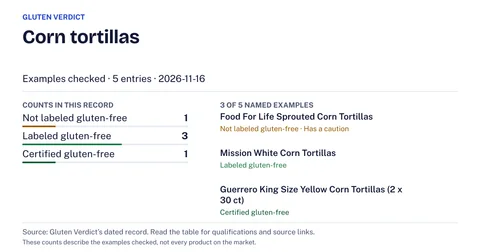 Corn tortillasDepends on the productchecked Nov 16, 2026
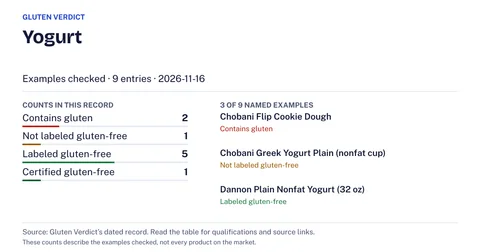 YogurtDepends on the product2 of 9 products we checked contain gluten: Chobani Flip Cookie Dough and Chobani Flip Cookies & Creamchecked Nov 16, 2026
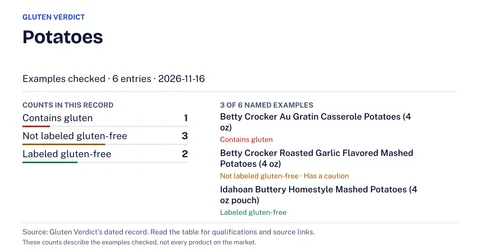 PotatoesNaturally gluten-free1 of 6 products we checked contains gluten: Betty Crocker Au Gratin Casserole Potatoes (4 oz)checked Nov 16, 2026
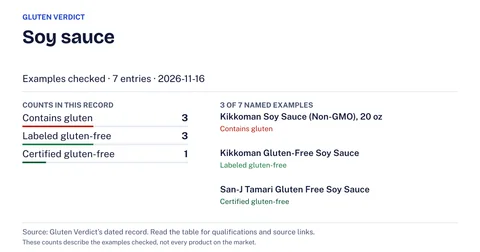 Soy sauceDepends on the product3 of 7 products we checked contain gluten: Kikkoman Soy Sauce (Non-GMO), 20 oz; San-J Organic Shoyu Soy Sauce; and Lee Kum Kee Premium Soy Sauce (No Preservatives Added)checked Nov 16, 2026
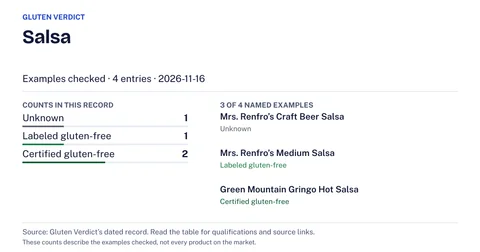 SalsaDepends on the productchecked Nov 16, 2026
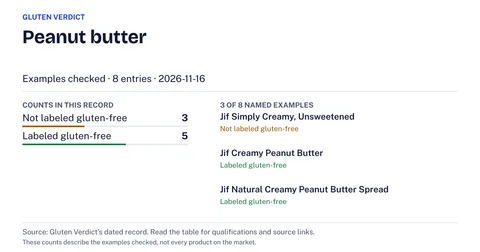 Peanut butterDepends on the productchecked Nov 16, 2026
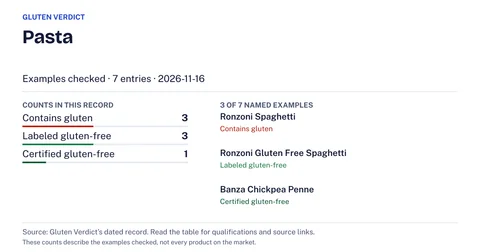 PastaContains glutenchecked Nov 16, 2026
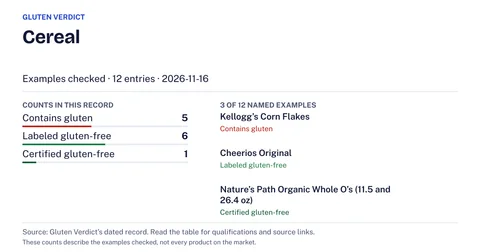 CerealDepends on the product5 of 12 products we checked contain glutenchecked Nov 16, 2026
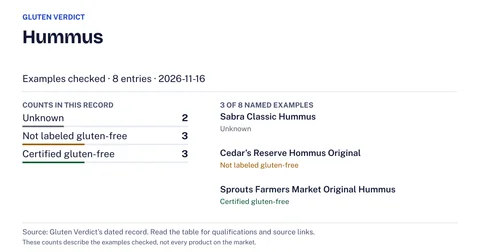 HummusDepends on the productchecked Nov 16, 2026
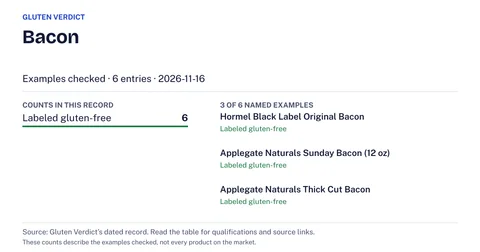 BaconDepends on the productchecked Nov 16, 2026
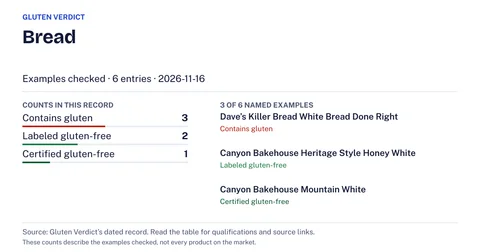 BreadContains glutenchecked Nov 16, 2026
Questions people ask
Does a gluten-free food have to say “gluten-free”?
No. The claim is voluntary8, and FDA notes that naturally gluten-free foods such as fruits, vegetables and eggs may not carry it2.
Do I need to re-read the label on something I buy every week?
The Academy of Nutrition and Dietetics says to read all product labels each time you buy a product, even one you have had before, because the maker may change an ingredient11.
Should I start the diet before I see a doctor?
NIDDK says that if you think you might have celiac disease, you should talk with your doctor about testing before you begin a gluten-free diet, because avoiding gluten first may make test results inaccurate38.
More in Grocery shopping and meal planning
 Gluten-free grocery shopping: what to check at the shelf, the bulk bins and the checkoutOne reading order for any US supermarket pack, plus what to do about bulk bins, frozen cases, wheat starch and storage once the bags are home.
 Gluten-free meal prep in a shared kitchen: order, containers, labels and refrigerator timesHow to run a gluten-free prep session in a kitchen shared with wheat eaters: what to clean, what to handle first, how to label, and how long food keeps.
 Packing a gluten-free work lunch from shelf-stable foodsWhat to pack for a gluten-free office lunch, which packaged items to label-check once, and how to use a shared fridge, microwave and toaster.
 Gluten-free grocery pickup and delivery: setting substitutions and checking swapsHow to set no-substitution choices on Instacart, Target and Whole Foods orders, check each swapped item at the door, and report a swap that fails.
 A starter gluten-free pantry: 30 shelf items and the label check for eachThirty shelf items for a first gluten-free pantry, tagged by the label check each needs, plus how to keep jars, toaster and colander apart at home.
 How to check a grocery listing for gluten before you orderRead an online grocery listing for gluten in a fixed order, tell a store tag from a maker claim and a certifier mark, and re-check on reorders.
Related guides
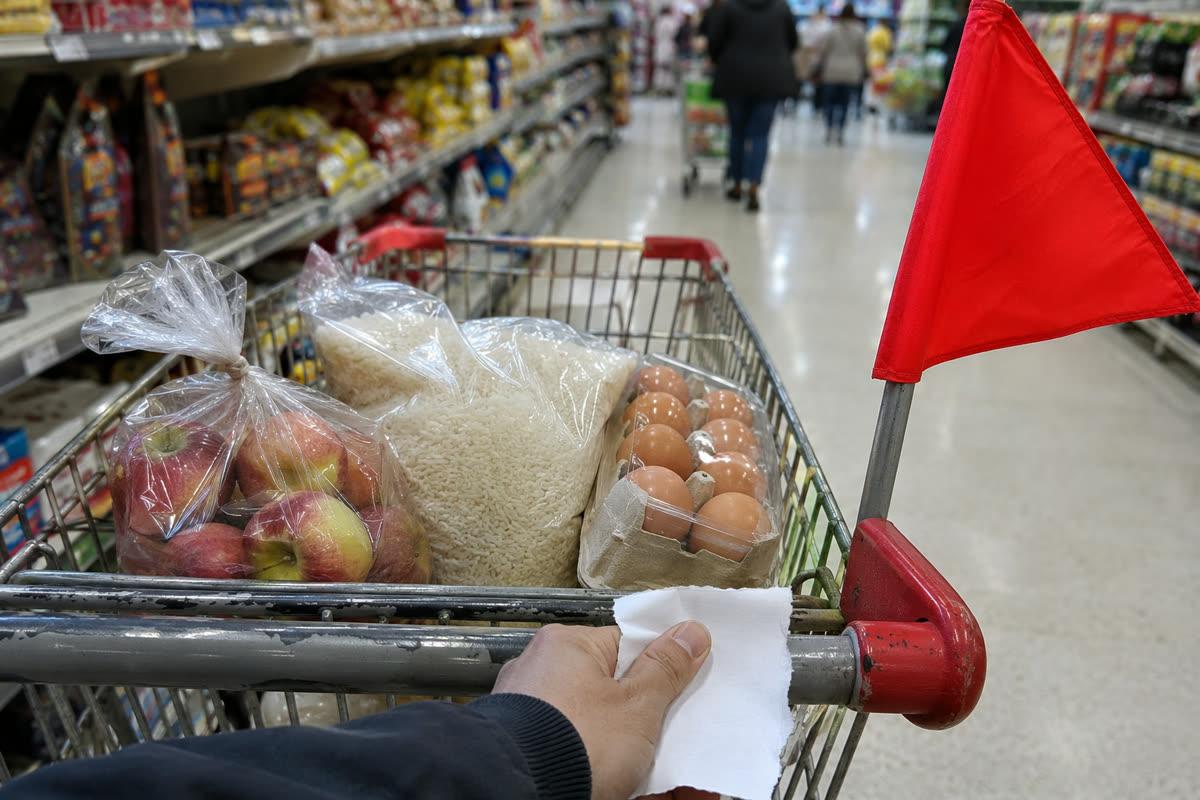 A gluten-free grocery list by aisle for US supermarketsAn aisle-by-aisle gluten-free grocery list for US stores: what needs no label, what needs a check, and what stays off the list.
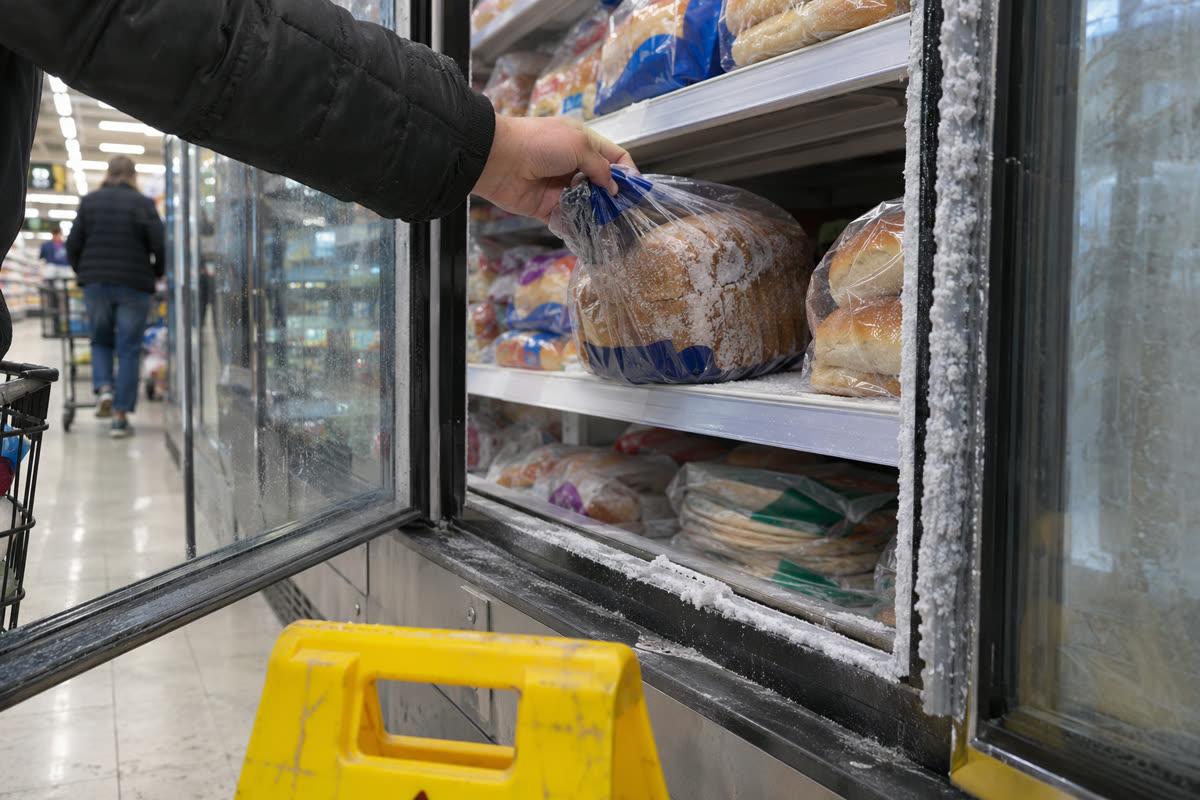 Gluten-free bread, buns and wraps: what the package tells youHow to tell a gluten-free bread, bun or wrap from a wheat look-alike: certification mark, maker’s claim or ingredient list, in a fixed order.
 Frozen meals, pizza and nuggets on a gluten-free diet: what to read on the boxCheck a frozen meal, pizza or nugget box for gluten in order: the claim, any certification mark, the ingredient list, the Contains line and facility lines.
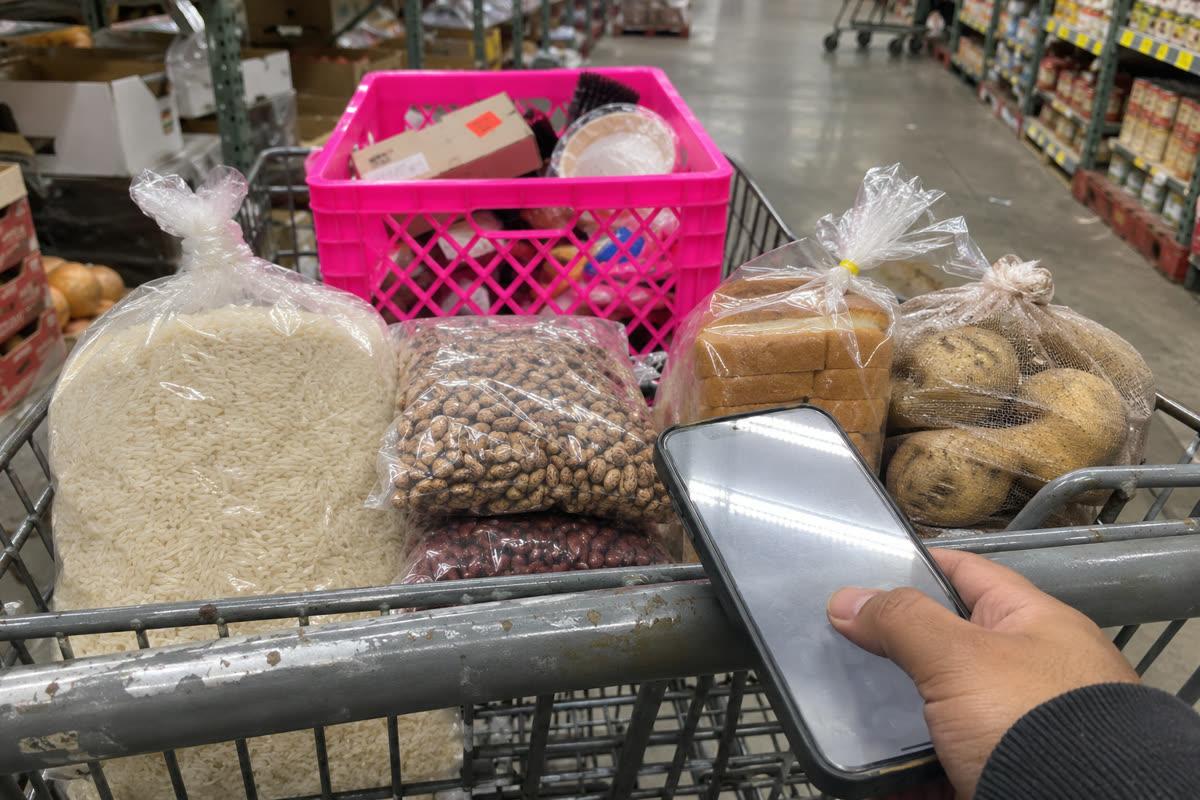 Gluten-free on a budget: what costs extra and what does notSort a gluten-free shopping list into plain foods, foods that need a statement and packaged substitutes, then compare costs and check each claim.
Sources
- [1, 4, 12, 13, 19, 23, 26, 33, 34, 38] National Institute of Diabetes and Digestive and Kidney Diseases (NIDDK), Eating, Diet, & Nutrition for Celiac Disease, checked Nov 17, 2026.
- [2, 5, 10, 17, 30] US Food and Drug Administration, Gluten and Food Labeling, checked Nov 17, 2026.
- [3, 11, 14, 15, 20, 21, 24, 28, 37] Academy of Nutrition and Dietetics, Gluten-Free Diet: Building the Grocery List, checked Nov 17, 2026.
Read on 2026-11-17: the list under “Build a Gluten-Free Grocery List” names rice, wild rice, corn (maize, polenta, grits), sorghum, quinoa, millet, buckwheat, amaranth, teff and gluten-free oats.
- [6, 7, 27] Gluten Intolerance Group, Washing beans and grains that are not labeled gluten-free, checked Nov 17, 2026.
- [8, 9, 16, 22, 25, 32] US Food and Drug Administration, Questions and Answers on the Gluten-Free Food Labeling Final Rule, checked Nov 17, 2026.
- [18, 29, 35, 36] Gluten Intolerance Group, 25 Ways Cross-Contact Could Happen (And How to Avoid It), checked Nov 17, 2026.
- [31] Gluten Intolerance Group, 3 Tips for Gluten-Free Label Reading, checked Nov 17, 2026.
- [39] Gluten Intolerance Group, Lentils: labeled or certified gluten-free, checked Nov 17, 2026.