Gluten-free meal prep in a shared kitchen: order, containers, labels and refrigerator times
Short answer
In a kitchen shared with wheat eaters, run the session in this order:
- Clean your hands, the counter and every pot, pan and utensil you will use before the gluten-free food comes out1, 2.
- Two charities give an order: Celiac Canada says to prepare gluten-free pasta first when both pastas are made at one meal, and Coeliac Australia says to prepare gluten-free food first or wipe down a shared chopping board. The National Celiac Association says not to prepare gluten-free and flour-containing items at the same time3, 4, 5.
- Divide hot food into shallow containers, cover or seal them, and get them into the refrigerator within 2 hours of cooking6, 7, 8.
- Label each container with its contents and the date you cooked it9.
- Use most cooked leftovers within 3 to 4 days, or freeze them10, 11.
Part of Grocery shopping and meal planning, 15 guides

Key points
- Two charities give an order for specific tasks: Celiac Canada says to prepare gluten-free pasta first when both are cooked at one meal, and Coeliac Australia says to prepare the gluten-free food first or wipe down a shared chopping board3, 4.
- The National Celiac Association names a strainer or colander and a sifter among the items too hard to clean or porous, and recommends a dedicated gluten-free version of each12.
- The refrigerator times in the chart below come from USDA FSIS: most cooked leftovers within 3 to 4 days, with the refrigerator at 40 °F or below10, 13.
- A container label should say what is inside and the date you cooked it9.
- Ingredients can change, so GIG’s pantry reset includes checking labels again14.
What to do before the session starts
Set up in this order. Each step comes from a charity’s own advice.
- Hands. Celiac Canada says to wash hands after touching gluten-containing products, utensils or surfaces and before handling gluten-free food15.
- Counter. GIG says kitchen counters, tables and prep areas should be washed with hot soapy water and a clean cloth or paper towel before any gluten-free meal preparation begins16. Coeliac Australia accepts either warm soapy water or a damp cloth that wipes off crumbs and flour dust2. GIG adds that any food prep or cooking surface should be wiped down often, and always after making dishes with gluten-containing ingredients17.
- Pots, pans and utensils. Celiac Canada says to clean them very well before using them to prepare gluten-free food1; Coeliac UK’s wording is hot soapy water18.
- Hard-to-clean items. The National Celiac Association lists a strainer or colander, a sifter, cast iron pans, a waffle iron or sandwich maker, a fryer or air fryer, and a toaster as too hard to clean or porous, and recommends a dedicated gluten-free version of each12. GIG says colanders, sifters and waffle irons should not be shared, if possible, and otherwise cleaned thoroughly between every use19.
- Flour. The National Celiac Association advises against preparing gluten-free and flour-containing items at the same time, because flour can easily cover many surfaces and items5. That is a reason to ask whoever shares the kitchen not to bake during your session.
Not every source asks for as much washing. In one small study, rinsing pots with water alone after cooking gluten-containing pasta was as effective as scrubbing with soap and water at preventing detectable gluten transfer20, and the authors list a small sample size among the study’s limits21. The charities above still advise washing, and this page follows them.
In what order do you handle things?
Two charities give an order for particular jobs. Celiac Canada says that when gluten-free pasta and regular pasta are made at the same meal, the gluten-free pasta goes first3. Coeliac Australia says that where a chopping board is shared, you can prepare the gluten-free food first or wipe the board down4.
Putting those together with the cleaning advice above, a prep session runs like this. This sequence is our summary of the advice, not a rule from one source:
- Wash hands, wash the counter, and lay out only the clean pots, pans and tools you will use for the gluten-free food.
- Cook and portion the gluten-free food first, using the gluten-free-only or freshly washed tools.
- Cover or seal each container as it is filled, and label it.
- Only then bring out flour, bread, regular pasta or anything else that sheds crumbs or dust.
Water and oil carry over from earlier cooking. Celiac Canada says to cook pasta and rice in fresh, clean water22 and to use fresh oil for deep frying or cooking gluten-free foods23. In that same small study, which reused regular pasta’s cooking water, gluten was detected in all of the gluten-free pasta cooked in it, at 33.9 to 115.7 parts per million24. Pasta has its own page: cooking gluten-free pasta in a mixed kitchen.
Where gluten gets in during a prep session
| Where | What the sources say | What to do in a session |
|---|---|---|
| Shared spreads and condiments | GIG calls double-dipping, or using one serving utensil in both types of food, one of the most common ways crumbs get into gluten-free food25. Coeliac UK says to have separate condiments, or at least use clean cutlery for shared butters, jams and spreads26. | Use a clean spoon every time, or keep a separate jar for the week. |
| Wooden utensils | GIG says wood can be tricky to thoroughly clean, and that wood fibers could harbor gluten particles and enter your food with the next stir27. | Use tools you can wash thoroughly, and keep a colour for the gluten-free set. |
| The oven | The National Celiac Association says that if gluten-containing and gluten-free foods must cook together in the oven, the gluten-free item goes above the other and both are covered28. | Give the gluten-free tray the top rack and cover it. |
| Sponges and dish cloths | Coeliac UK says you do not need separate cloths or sponges29. GIG says shared sponges and dish rags should be replaced or laundered frequently, as they can transfer gluten from one surface to another30. | The two charities differ; see dishes, sponges and towels in a mixed household. |
Containers, lids and labels
USDA FSIS says to cover leftovers, wrap them in airtight packaging, or seal them in storage containers8. GIG advises dividing food into shallow containers, preferably in one to two portion sizes31.
Once food is out of its original package, the label is gone. Coeliac Australia says to store gluten-free and gluten-containing food separately and labelled clearly, especially after being removed from original packaging32. GIG suggests labels for food items, and even for utensils and cookware33, and colour coding for everything strictly gluten-free, storage containers included34. The National Celiac Association also says to label or colour code gluten-free foods or utensils35.
Write two things on every container: what is in it and the date you cooked it. GIG says to label the contents and include a date, either the cooking date or the use-by date9. A useful habit is to write the last day you plan to eat it, counted from the times in the next section.
GIG also suggests storing ingredients separately rather than assembling complete meals, so you can mix and match through the week36. Separate containers also keep each packaged sauce or seasoning easy to re-check later.
How long prepared food keeps in the refrigerator
USDA FSIS says leftovers must be refrigerated within 2 hours of cooking, or of being removed from an appliance keeping them warm6, and within 1 hour when the temperature is above 90 °F37. Hot food can go directly into the refrigerator, or be chilled first in an ice or cold water bath38. FSIS says the refrigerator should be at 40 °F or below and the freezer at 0 °F or below, checked with an appliance thermometer13.
FSIS says to use most cooked leftovers within 3 to 4 days10. Its chart gives these times for foods a prep session often makes:
| Food, as FSIS names it | Refrigerator (40 °F) | Freezer (0 °F) |
|---|---|---|
| Beef, lamb, pork or veal leftovers, including casseroles | 3-4 days39 | 2-3 months39 |
| Poultry leftovers: casseroles | 3-4 days39 | 4-6 months39 |
| Poultry leftovers: pieces, plain or fried | 3-4 days39 | 4 months39 |
| Poultry leftovers: pieces in broth or gravy | 3-4 days39 | 6 months39 |
| Egg leftovers: casserole, quiche, omelet | 3-4 days39 | 2 months39 |
| Hard-cooked eggs | 1 week39 | Does not freeze well39 |
| Fish and shellfish leftovers | 3-4 days39 | 3 months39 |
| Soups and stews | 3-4 days39 | 2-3 months39 |
| Gravy and meat broth | 3-4 days39 | 2-3 months39 |
| Egg, chicken, ham, macaroni or tuna salads (store-prepared or homemade) | 3-5 days39 | Does not freeze well39 |
The FSIS chart has no row for cooked rice, other grains or vegetables. GIG’s batch-cooking article says cooked grains like rice or pasta last 3–4 days in the fridge40, and cooked vegetables stay fresh for 3–4 days41.
GIG and FSIS differ on some freezer times. GIG says soups, stews and sauces hold about 6 months in the freezer42; FSIS’s chart says 2-3 months for soups and stews39. This page uses FSIS’s figures.
When you reheat, FSIS says to make sure leftovers reach 165° F as measured with a food thermometer, and to bring sauces, soups and gravies to a rolling boil43.
Where to put the containers in a shared refrigerator
GIG says that if gluten-free and gluten-containing food share a fridge or cupboard, the gluten-free packages go above the gluten-containing ones, kept securely packaged44. Celiac Canada gives the same advice: when possible, store gluten-free foods on shelves above gluten-containing items45. The National Celiac Association adds that a separate cabinet or shelf is another option46.
For a prep week, that means one shelf, or one bin on a top shelf, that holds only the labelled gluten-free containers, with every lid on.
When to freeze instead
Freeze what you will not eat within the refrigerator window. USDA FSIS says leftovers can be kept in the refrigerator for 3 to 4 days or frozen for 3 to 4 months11; the chart above gives freezer times by food. Label the frozen container the same way, with contents and date9.
On thawing, FSIS says the food should be used within 3 to 4 days or can be refrozen47, and that food thawed in cold water should be cooked before refreezing49. Packing, thawing and keeping a shared freezer separate are in freezing gluten-free food.
Re-checking a packaged item when the batch changes
A batch often leans on the same few packaged items: a broth, a seasoning, a sauce. The gluten-free claim is voluntary, and FDA’s rule says what it means when a maker chooses to use it48. GIG’s pantry reset includes checking labels, because ingredients can change14.
So read the package again each time you buy it, even when it is the same brand. The shopping-side label checks are in our meal plan template.
Items that often go into a batch, each with our verdict: rice, quinoa, chicken broth, soy sauce, spices, taco seasoning, salsa, pasta, corn tortillas and hummus. Each verdict lists the pages we read and the date we read them. Recipes change, so the package in your hand has the final word.
Verdicts in this guide
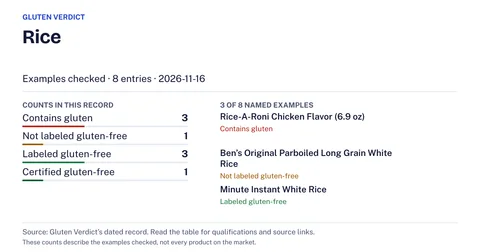 RiceNaturally gluten-free3 of 8 products we checked contain gluten: Rice-A-Roni Chicken Flavor (6.9 oz), Near East Original Rice Pilaf, and Ben’s Original Ready Rice Rice PilafBuy it labeled gluten-freechecked Nov 16, 2026
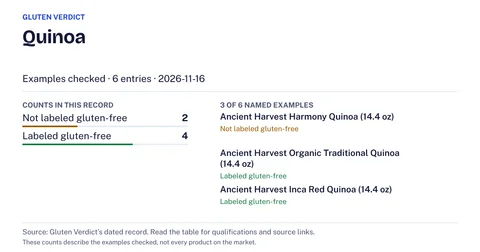 QuinoaNaturally gluten-freeBuy it labeled gluten-freechecked Nov 16, 2026
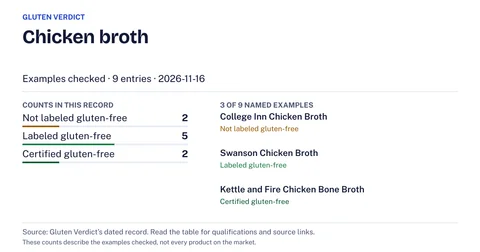 Chicken brothDepends on the productchecked Nov 16, 2026
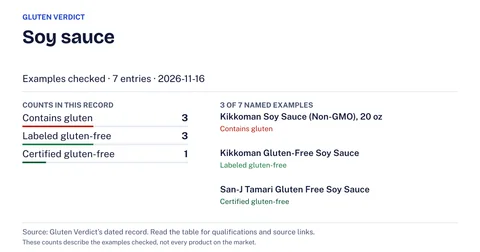 Soy sauceDepends on the product3 of 7 products we checked contain gluten: Kikkoman Soy Sauce (Non-GMO), 20 oz; San-J Organic Shoyu Soy Sauce; and Lee Kum Kee Premium Soy Sauce (No Preservatives Added)checked Nov 16, 2026
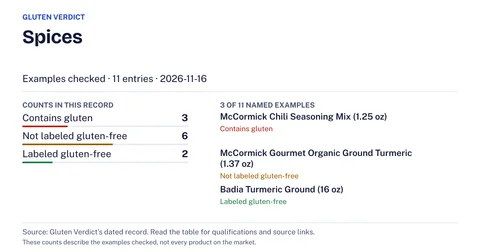 SpicesDepends on the product3 of 11 products we checked contain gluten: McCormick Chili Seasoning Mix (1.25 oz), Lawry’s Chili Spices & Seasonings Mix (1.48 oz), and McCormick Cheesy Taco Seasoning Mix (1.12 oz)checked Nov 16, 2026
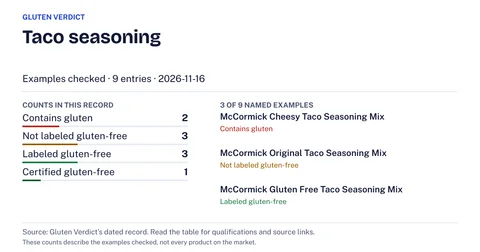 Taco seasoningDepends on the product2 of 9 products we checked contain gluten: McCormick Cheesy Taco Seasoning Mix and Lawry’s Taco Seasoning Mixchecked Nov 16, 2026
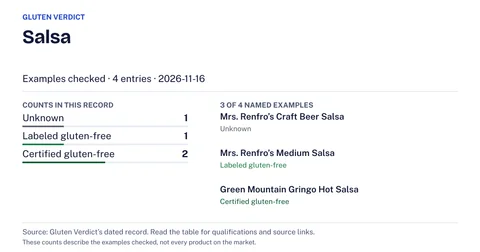 SalsaDepends on the productchecked Nov 16, 2026
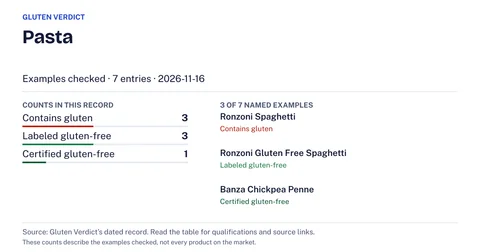 PastaContains glutenchecked Nov 16, 2026
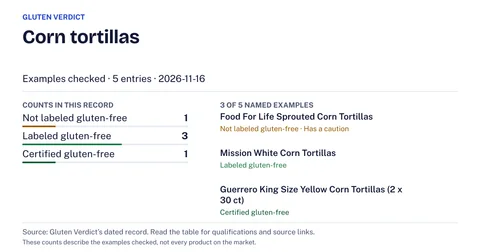 Corn tortillasDepends on the productchecked Nov 16, 2026
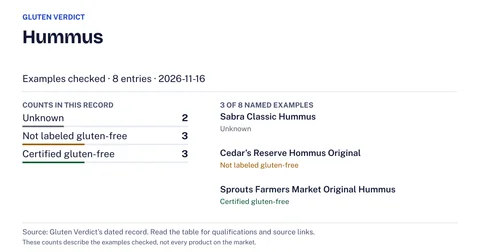 HummusDepends on the productchecked Nov 16, 2026
Questions people ask
Can I prep gluten-free food and regular food in the same session?
Two charities give an order for specific tasks. Celiac Canada says to prepare gluten-free pasta first when both are made at one meal3, and Coeliac Australia says to prepare the gluten-free food first or wipe down a shared chopping board4. The National Celiac Association advises against preparing gluten-free and flour-containing items at the same time5.
How long does gluten-free meal prep last in the refrigerator?
USDA FSIS says to use most cooked leftovers within 3 to 4 days10. Its chart has shorter and longer times for some foods, such as hard-cooked eggs at 1 week39. GIG gives 3–4 days for cooked rice and other grains40.
Do I have to wash pots with soap before cooking gluten-free food?
Coeliac UK says to clean pots, pans and utensils with hot soapy water18. One small study found that rinsing pots with water alone after cooking gluten-containing pasta was as effective as scrubbing with soap and water at preventing detectable gluten transfer20.
What should be written on a meal prep container?
GIG says to label the contents and include a date, either the date you cooked it or the use-by date9.
More in Grocery shopping and meal planning
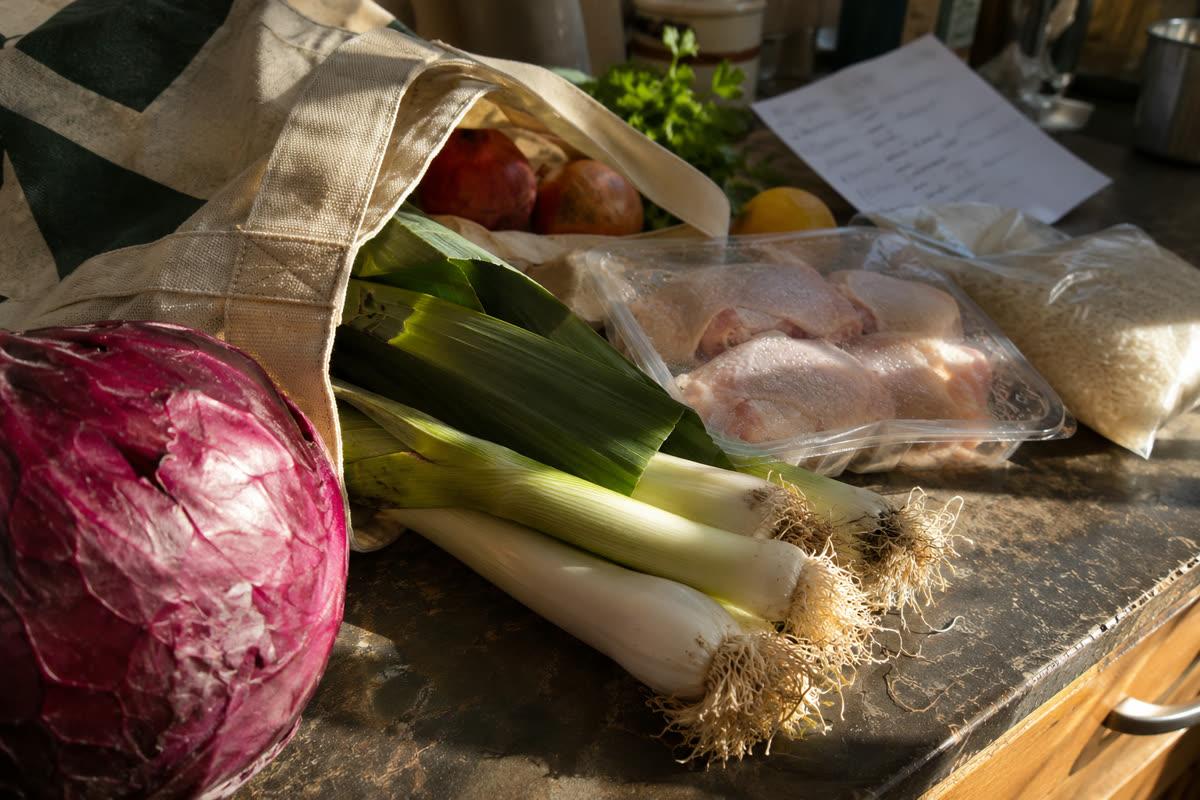 A gluten-free meal plan as a shopping template, by meal slotA weekly gluten-free shopping template: staples for each meal slot, the check each packaged item needs, and a ledger of when you last read each label.
 Gluten-free grocery shopping: what to check at the shelf, the bulk bins and the checkoutOne reading order for any US supermarket pack, plus what to do about bulk bins, frozen cases, wheat starch and storage once the bags are home.
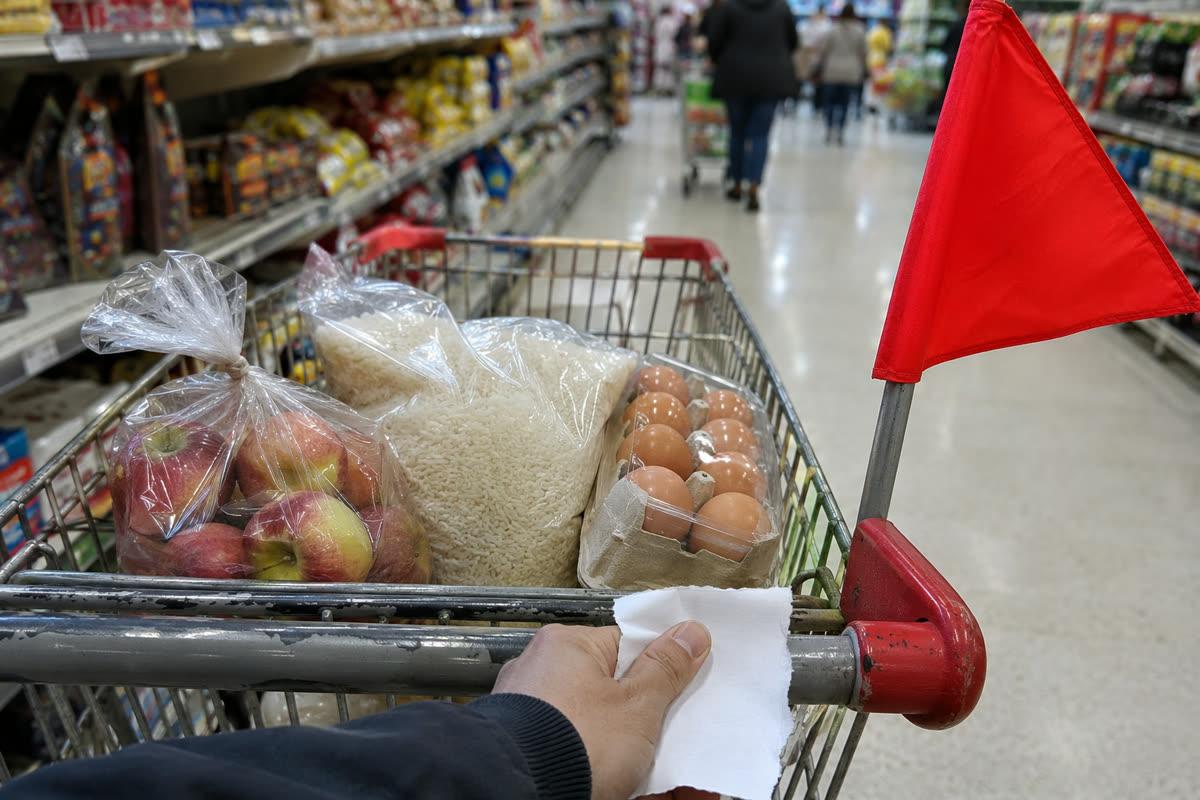 A gluten-free grocery list by aisle for US supermarketsAn aisle-by-aisle gluten-free grocery list for US stores: what needs no label, what needs a check, and what stays off the list.
 Store-brand gluten-free: what the tag, claim or seal rests onSort a store-brand item into certified, maker-stated or ingredient-only, see what each lets you conclude, and know what to ask the store.
 A starter gluten-free pantry: 30 shelf items and the label check for eachThirty shelf items for a first gluten-free pantry, tagged by the label check each needs, plus how to keep jars, toaster and colander apart at home.
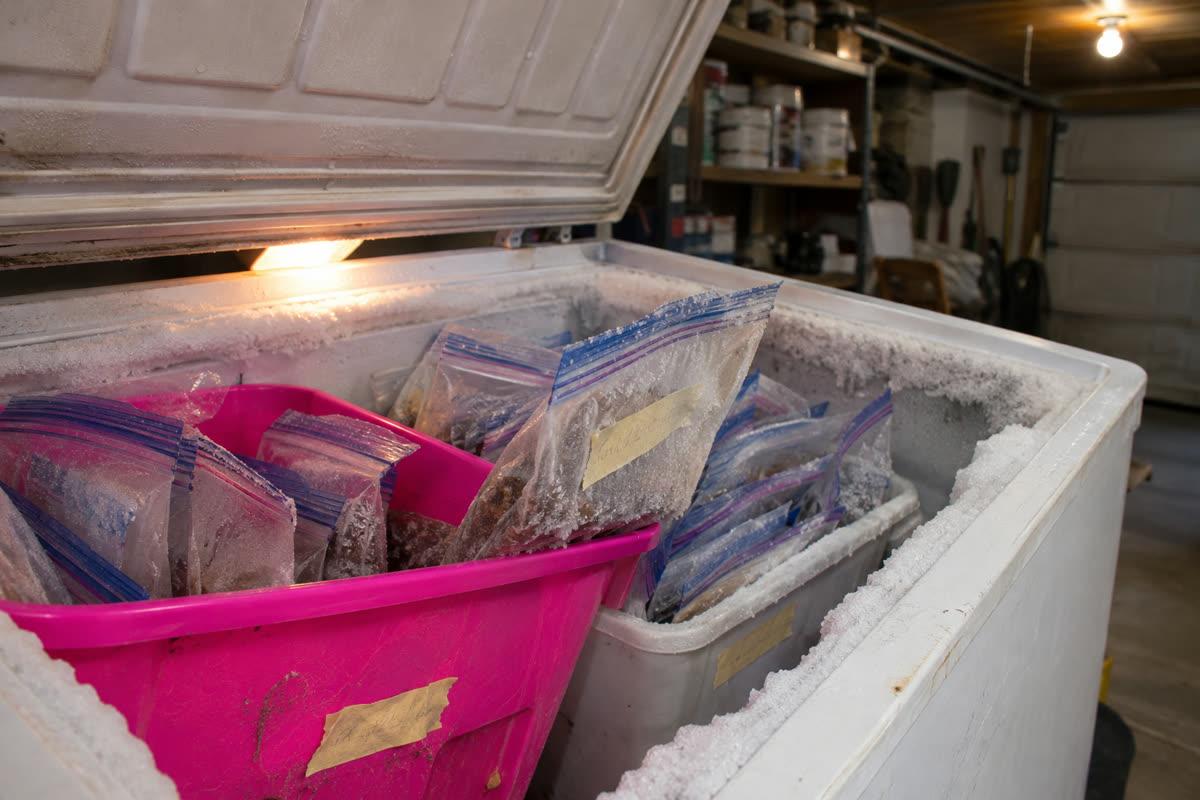 Freezing gluten-free food: what holds up, how to thaw it and how to keep it apartHow to freeze, label and thaw gluten-free food, which foods lose texture, and how to keep gluten-free packages apart in a shared freezer.
Related guides
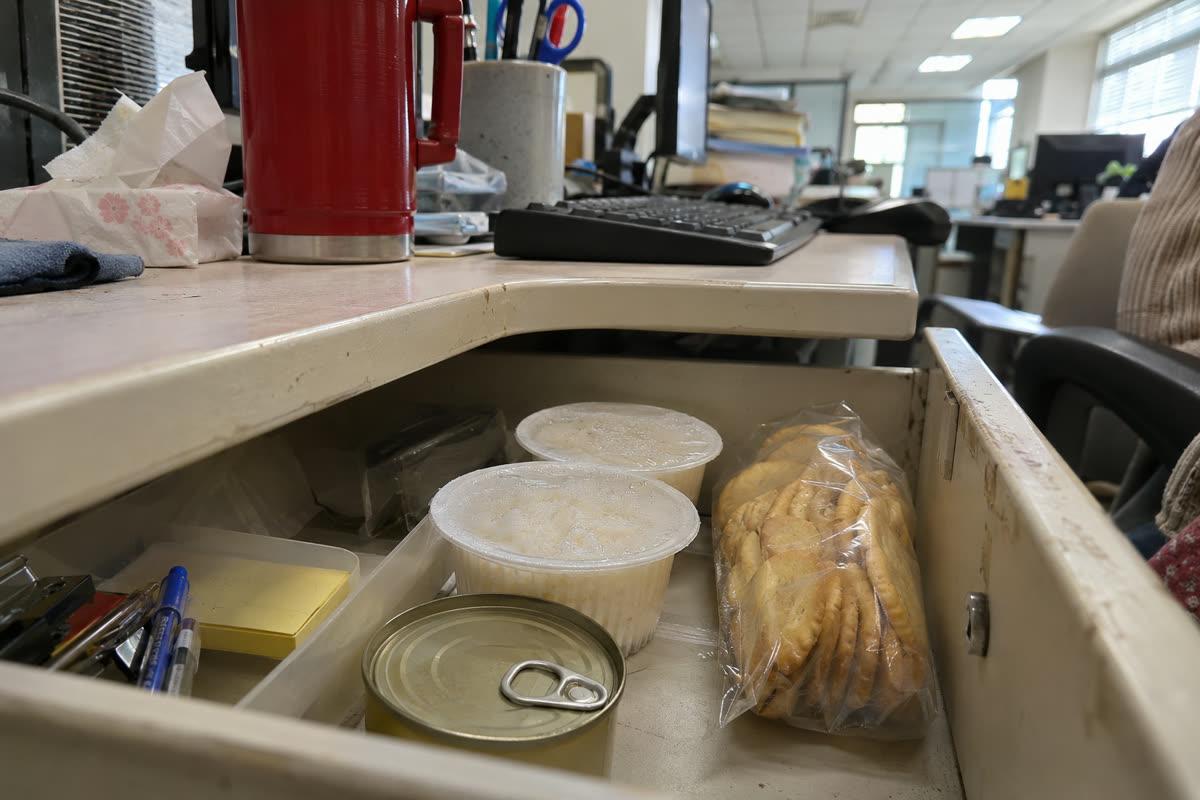 Packing a gluten-free work lunch from shelf-stable foodsWhat to pack for a gluten-free office lunch, which packaged items to label-check once, and how to use a shared fridge, microwave and toaster.
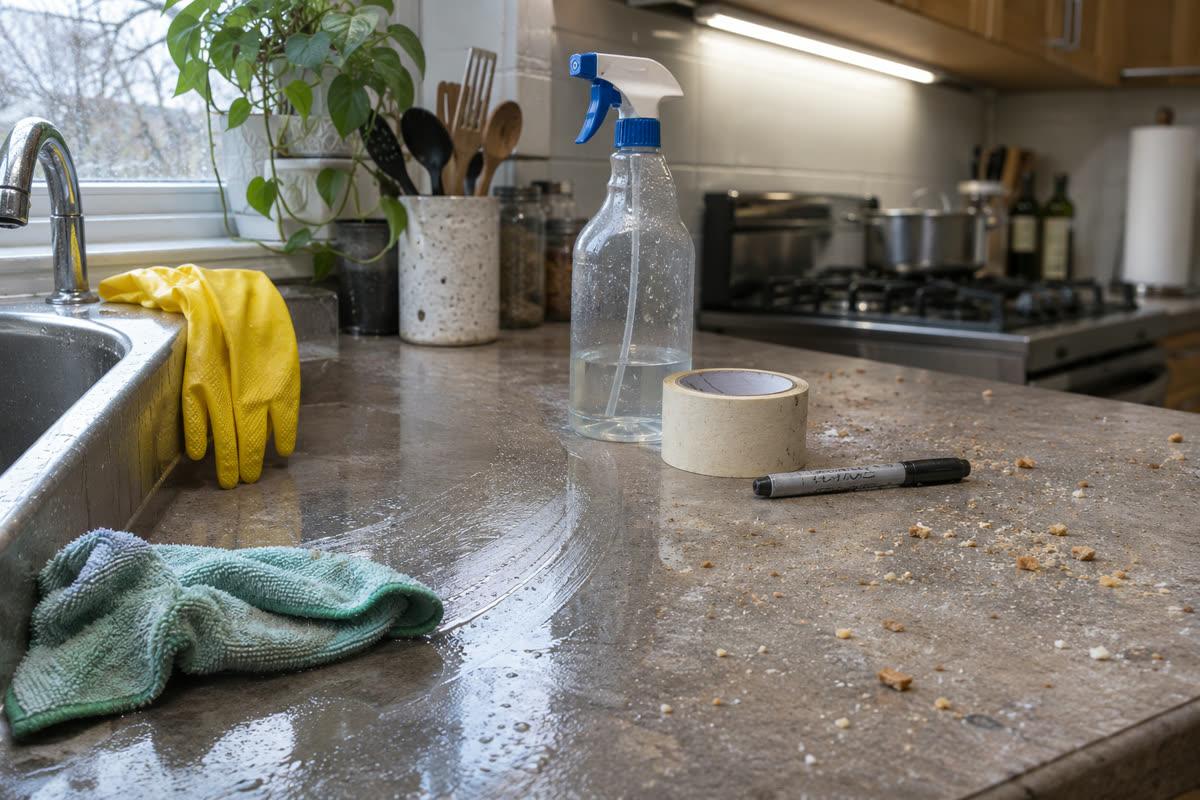 A weekly gluten-free kitchen routine: wipe, label, restock, re-checkA one-page weekly pass for a gluten-free kitchen: what to wipe, label, restock and do with leftovers, and where the charities and small studies differ.
 Cooking gluten-free pasta in a kitchen that also cooks regular pastaSet up a pasta night where gluten-free and regular pasta share a kitchen: what one small study found on shared water and pots, and what charities advise.
 Storing gluten-free food in a shared fridge, pantry and freezerWhere gluten-free food goes in a shared fridge, pantry and freezer, how to label it so everyone follows, and what the sources say and leave out.
Sources
- [1, 3, 15, 22, 23, 45] Canadian Celiac Association (Celiac Canada), Cross-Contact, checked Nov 17, 2026.
- [2, 4, 32] Coeliac Australia, Managing Cross Contact at home, checked Nov 17, 2026.
- [5, 12, 28, 35, 46] National Celiac Association, Dedicated Gluten-Free Kitchen, checked Nov 17, 2026.
Read on 2026-11-17: the list under "Below are items that are too hard to clean or porous, and we recommend using a dedicated gluten-free version:" names strainer/colander; sifter; cast iron pans; bread maker/sandwich maker/waffle iron; fryolator/air fryer; and toaster (or use foil in a toaster oven).
- [6, 7, 8, 11, 38, 43, 47, 49] US Department of Agriculture, Food Safety and Inspection Service, Leftovers and Food Safety, checked Nov 17, 2026.
- [9, 31, 36, 40, 41, 42] Gluten Intolerance Group, Batch Cook Your Way to an Easier Week, checked Nov 17, 2026.
- [10, 13, 37, 39] US Department of Agriculture, Food Safety and Inspection Service, Food Safety Basics (storage, leftovers and cold storage chart), checked Nov 17, 2026.
Read on 2026-11-17: the table headed "Cold Storage Chart" gives, for refrigerator (40 °F) and freezer (0 °F): leftovers including casseroles of beef, lamb, pork or veal, 3-4 days and 2-3 months; poultry leftover casseroles, 3-4 days and 4-6 months; poultry pieces, plain or fried, 3-4 days and 4 months; poultry pieces in broth or gravy, 3-4 days and 6 months; egg leftovers casserole, quiche, omelet, 3-4 days and 2 months; hard-cooked eggs, 1 week and does not freeze well; fish and shellfish leftovers, 3-4 days and 3 months; gravy and meat broth, 3-4 days and 2-3 months; soups and stews, 3-4 days and 2-3 months; egg, chicken, ham, macaroni, tuna salads (store-prepared, homemade), 3-5 days and does not freeze well. The table has no row for cooked rice, other grains or vegetables.
- [14] Gluten Intolerance Group, Spring Cleaning Your Gluten-Free Kitchen, checked Nov 17, 2026.
- [16, 30, 34] Gluten Intolerance Group, Your Kitchen, Their Kitchen, Our Kitchen: Navigating Gluten-Free Cohabitation, checked Nov 17, 2026.
- [17, 19, 25, 33, 44] Gluten Intolerance Group, 25 Ways Cross-Contact Could Happen (And How to Avoid It), checked Nov 17, 2026.
- [18, 26, 29] Coeliac UK, Cross-contamination (cooking at home), checked Nov 17, 2026.
- [20, 21, 24] Gastroenterology (Weisbrod et al., via PubMed Central), Preparation of Gluten-Free Foods Alongside Gluten-Containing Food May Not Always Be as Risky for Celiac Patients as Diet Guides Suggest, checked Nov 17, 2026.
- [27] Gluten Intolerance Group, The Tools to Replace in Your Gluten-Free Kitchen, checked Nov 17, 2026.
- [48] US Food and Drug Administration, Gluten and Food Labeling, checked Nov 17, 2026.