The gut microbiome and celiac disease: what studies have measured
Short answer
Studies report differences in gut bacteria in celiac disease, but a 2025 review calls the data heterogeneous and inconsistent1, and a 2015 review said prospective studies in at-risk infants were underway to improve understanding of whether the differences are cause or consequence2. NIDDK says that for most people the gluten-free diet is what heals damage in the small intestine3. The 2023 Academy of Nutrition and Dietetics guideline does not support a recommendation for probiotic or prebiotic supplements4.
Part of Gut science, healing and treatment research, 11 guides
Key points
- Three kinds of statement get blended in microbiome claims: a difference between groups, a change over time, and a trial result. Each shows something different.
- A 2025 review of 22 articles reported significant differences in bacteria across 17 studies, and other studies found no significant distinction between groups of children with and without celiac disease5, 6.
- The one before-diagnosis study cited here followed 10 at-risk infants who developed celiac disease and 10 who did not7; its authors describe it as a road map for further prospective studies8.
- A 2015 review says the gluten-free diet itself influences gut bacteria composition, which complicates studies of people who already follow it9.
- One meta-analysis of probiotic trials rated the certainty of its evidence very low to low10.
What is the microbiome, and how do studies measure it?
The National Center for Complementary and Integrative Health (NCCIH) describes the microbiome as the community of microorganisms that lives on us and in us, and calls it a hot topic for research11. In celiac disease studies, researchers have analyzed that community in fecal samples, in duodenal samples, or in both5.
Three terms recur below. Dysbiosis is the word researchers use for alterations in the intestinal microbiota12. A probiotic is a live microorganism intended to have health benefits13. A prebiotic is a nondigestible food component that selectively stimulates the growth or activity of desirable microorganisms14.
What have studies found in people with celiac disease?
A 2025 systematic review covered 22 articles: nine on fecal microbiota, six on duodenal microbiota and seven on both5. It reported significant differences in bacterial prevalence across 17 studies, with an increase in what the authors call pathogenic bacteria and a decrease in what they call beneficial bacteria, such as Bifidobacterium and Lactobacillus, compared to healthy controls6.
The same abstract adds that other studies showed no significant distinction between groups of children with and without celiac disease6, and concludes that current data are characterized by considerable heterogeneity and inconsistency1. A 2018 review describes the imbalances reported in several studies as mainly an increased abundance of Bacteroides and a decrease in Bifidobacterium15.
A 2018 review says that, despite gluten being the trigger in celiac disease, evidence indicates the intestinal microbiota is somehow involved in its pathogenesis, progression and clinical presentation16.
A difference between groups describes the bacteria people have. Whether intestinal dysbiosis is a cause or a consequence of celiac disease is the question that, a 2015 review said, prospective studies in healthy at-risk infants were underway to help understand2.
What did the study that followed at-risk infants find?
To see bacteria before the disease starts, one prospective study analyzed gut microbiota, functional pathways and metabolites starting 18 months before onset, in 10 infants who developed celiac disease and 10 matched infants who did not7.
- At onset, it identified altered abundance of six microbial strains and several metabolites between cases and controls, but no change in microbial species or pathway abundance17.
- Looking back over time, several species, strains, pathways and metabolites were in increased abundance and detected before onset18.
- Others were in decreased abundance before onset, including Streptococcus thermophilus, Faecalibacterium prausnitzii and Clostridium clostridioforme19.
The group was small: 10 and 107. The authors describe the work as a road map for prospective longitudinal study designs to better understand the role of gut microbiota in the disease8.
A 2015 review noted that prospective studies in healthy infants at family risk of celiac disease were underway to improve understanding of whether dysbiosis is a cause or a consequence of the disease2.
What does a gluten-free diet do to the bacteria?
A 2022 systematic review included 13 papers, comparing 212 people with celiac disease on a gluten-free diet with 174 healthy individuals and 176 people with untreated celiac disease20. Bifidobacterium was less abundant in the people on the diet than in both comparison groups, and Bacteroides was more abundant in the group on the diet21.
The review concluded that the diet was not able to fully restore commensal microorganism abundance, but was associated with greater abundance of selected beneficial bacteria and lower presence of pathogenic bacteria associated with worsening of symptoms22.
That makes the diet a confounder. A 2015 review states that the gluten-free diet itself influences gut microbiota composition, so it is an inevitable confounding factor in studies of people with celiac disease9. A difference seen in someone already on the diet may reflect the disease, the diet, or both.
What heals the gut, according to NIDDK, is the diet: for most people, following a gluten-free diet will heal damage in the small intestine and prevent more damage3.
What have probiotic trials in celiac disease found?
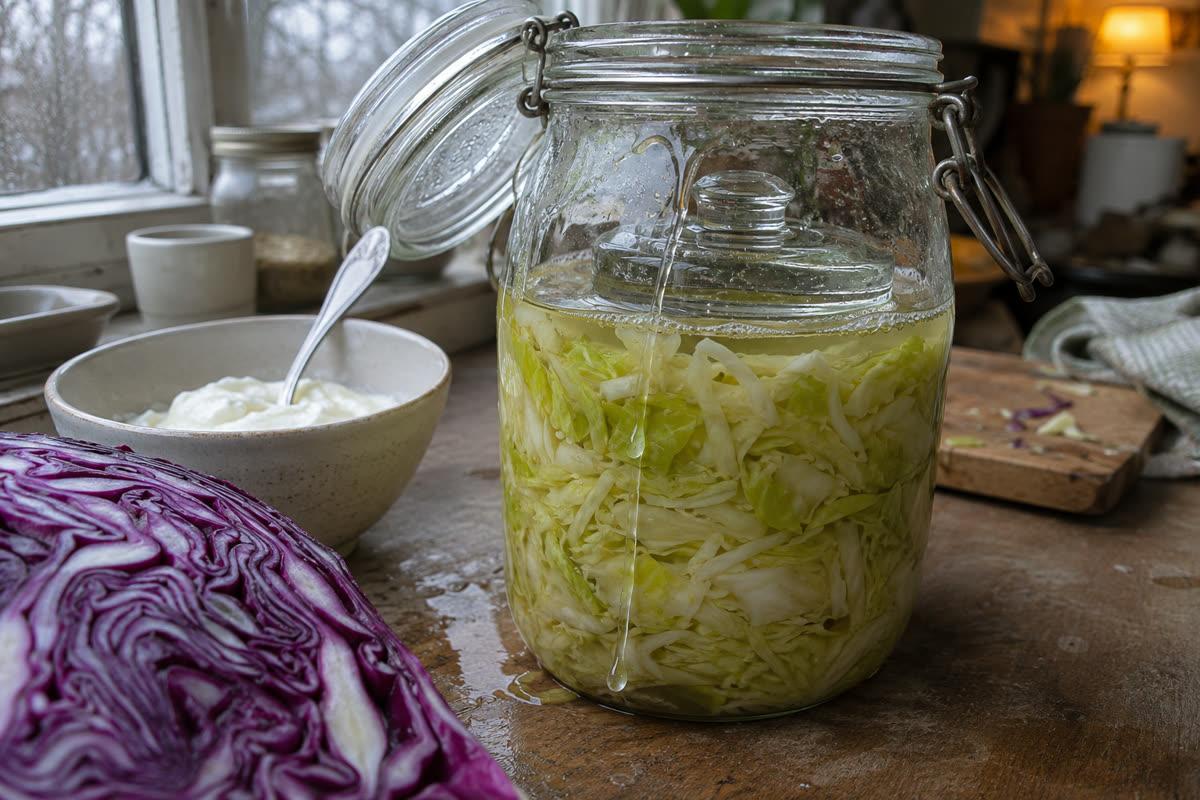
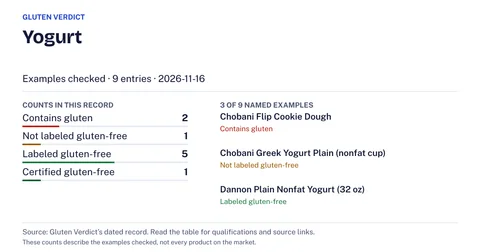
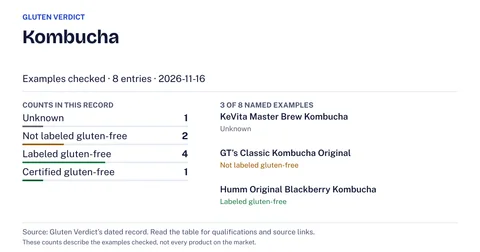
NCCIH notes that probiotics can be found in yogurt and other fermented foods, dietary supplements and beauty products13. Whether a given yogurt or kombucha contains gluten is a label question that our verdicts cover; the table is about the trials.
| Review | What it pooled | What it reported | What its authors say is still needed |
|---|---|---|---|
| Seiler et al., 2020 (American Journal of Gastroenterology) | 6 randomized trials, 279 participants23 | GI symptoms improved on the GI Symptoms Rating Scale24; there was no difference when different questionnaires were pooled25; Bifidobacteria levels increased after probiotics26 | Certainty of the evidence ranged from very low to low10; high-quality trials are needed27 |
| Mozafarybazargany et al., 2023 (Clinical and Experimental Medicine) | 14 articles in the qualitative analysis, 5 in the quantitative analysis28 | Probiotics might alleviate GI symptoms and immune response and improve dysbiosis in celiac disease and celiac disease autoimmunity patients29 | High-quality clinical trials; the most suitable combination of probiotics is yet to find29, 30 |
| Jedwab et al., 2021 (Revista Paulista de Pediatria), children | 4 articles on randomized trials in people aged 1 to 1931 | A positive correlation between probiotics and fecal microbiota and serological markers32 | Larger multicenter studies with a longer follow-up32 |
Read the middle column as separate measurements. The Seiler review collected data on GI symptoms, quality of life, adverse events, tumor necrosis factor-α, intestinal permeability and microbiota composition33. A rise in Bifidobacteria is a measured change in bacteria; the symptom result depended on the questionnaire24, 25.
For probiotics in general, NCCIH says different types may have different effects34, and that in most instances we still do not know which probiotics are helpful and which are not35.
How are probiotic products and microbiome tests regulated and judged?
NCCIH explains that many probiotics are sold as dietary supplements, which do not require FDA approval before they are marketed36. Supplement labels may describe effects on the structure or function of the body, but may not make health claims, such as saying the supplement lowers the risk of a disease, without the FDA’s consent37.
Consumer microbiome tests are a separate question. A 2025 international consensus statement, from an international multidisciplinary expert panel38, says evidence supporting the clinical usefulness of the gut microbiome as a diagnostic tool is scarce39. It adds that an increasing number of commercial providers offer direct-to-consumer microbiome diagnostic tests without any consensus on their regulation or any proven value in clinical practice40.
Celiac disease itself is diagnosed another way. The American College of Gastroenterology’s 2023 guideline describes detection of celiac-specific antibodies in serum as very helpful for initial screening, with an intestinal biopsy required in most patients to confirm the diagnosis41.
What do guidelines and celiac charities say?
- American College of Gastroenterology (2023): celiac disease is defined as a permanent immune-mediated response to gluten present in wheat, barley and rye42, and current treatment requires strict adherence to a gluten-free diet and lifelong medical follow-up43.
- NIDDK: its treatment page covers the gluten-free diet, hidden sources of gluten, treatment of symptoms, and follow-up. It does not mention probiotics or the microbiome44.
- Academy of Nutrition and Dietetics (2023): pro- and prebiotics were one of six topics evaluated45. The guideline does not support a recommendation for prebiotic or probiotic supplementation (graded 2D, Conditional)4.
- Coeliac UK, a UK charity: there is very little evidence to support health claims made about probiotics and prebiotics in general46. Some studies on celiac disease suggested positive effects on symptoms, but it says there is not enough evidence to recommend probiotics47. It also notes that some over-the-counter probiotics and prebiotics could contain gluten, so it is important to always check the label48.
If symptoms continue on the diet, what does NIDDK list?
NIDDK says continuing symptoms may be caused by consuming small amounts of gluten, other health problems, or refractory celiac disease49. The other health problems it names include irritable bowel syndrome, lactose intolerance, microscopic colitis, problems with the pancreas and small intestinal bacterial overgrowth50. Its advice in that situation is to talk with a doctor or a registered dietitian, who can help find the cause51.
How can you sort a microbiome claim?
| Kind of statement | Example from the studies | What it does not settle |
|---|---|---|
| A difference between groups | Significant differences in bacterial prevalence across 17 studies in one review6 | The data are described as inconsistent1, and a 2015 review said prospective studies in at-risk infants were underway to improve understanding of cause versus consequence2 |
| A change over time before diagnosis | Some species and metabolites in increased abundance and others in decreased abundance before onset, in 10 infants who developed celiac disease and 10 who did not7, 18, 19 | Whether those bacteria matter for the disease: the authors describe the work as a road map for prospective study designs8 |
| A change after the diet starts | A 2022 review: the diet was associated with greater abundance of selected beneficial bacteria, without full restoration of commensal abundance22 | What the disease did versus what the diet did: the diet is a confounder9 |
| A trial result | GI symptoms improved on one scale, with no difference when questionnaires were pooled24, 25 | A settled benefit: the certainty of the evidence was rated very low to low10 |
| A product or test claim | In the US, supplement labels may not make disease health claims without the FDA’s consent37; direct-to-consumer microbiome diagnostic tests are offered without any consensus on their regulation or any proven value in clinical practice40 | That a given product helps: NCCIH says in most instances we still do not know which probiotics are helpful35 |
Questions to put to any claim: which people were studied and how many; whether bacteria, symptoms or intestinal damage were measured; whether the people were already on the gluten-free diet; whether the comparison was against a placebo; and who is selling the product or the test.
Verdicts in this guide
Questions people ask
Does celiac disease change the gut microbiome?
A 2015 review says most studies report intestinal dysbiosis in people with celiac disease compared with healthy controls52, but a 2025 review describes the data as characterized by considerable heterogeneity and inconsistency1. The 2015 review described prospective studies in healthy at-risk infants as underway to learn whether the differences are a cause or a consequence2.
Do probiotics heal the gut in celiac disease?
The Seiler review of randomized trials rated the certainty of its evidence very low to low10, and the Academy of Nutrition and Dietetics guideline does not support a recommendation for prebiotic or probiotic supplementation4. NIDDK says that for most people the gluten-free diet is what heals damage in the small intestine3.
Are probiotic supplements gluten-free?
Coeliac UK says some over-the-counter probiotics and prebiotics could contain gluten, so it is important to always check the label48.
Can a microbiome test diagnose celiac disease?
The American College of Gastroenterology guideline describes antibody detection in serum for initial screening and says an intestinal biopsy is required in most patients to confirm the diagnosis41. A 2025 consensus statement says evidence for the clinical usefulness of the gut microbiome as a diagnostic tool in medicine is scarce39.
More in Gut science, healing and treatment research
 What a mail-in gut microbiome or leaky-gut test can say about glutenWhat microbiome, stool and zonulin kits measure, what the NIDDK, a regulator and reviews say about them, and what to ask a seller before paying.
 Leaky gut and gluten: what the studies measured, and in whomIs “gluten causes leaky gut” true? Sort the claims by evidence: cell and biopsy studies, trials in people, zonulin tests, and what to ask a test seller.
 What gluten does in the gut: celiac disease, wheat allergy and gluten sensitivity comparedHow celiac disease, wheat allergy and non-celiac gluten sensitivity differ in the gut, and why testing comes before cutting out gluten.
 How long celiac healing takes: symptoms, antibodies and the gut liningWhat studies report on how long symptoms, blood antibodies and the intestinal lining take to recover on a gluten-free diet, and what to ask your care team.
 How much gluten causes damage: what dose studies show and what 20 ppm meansWhat dose studies in celiac disease measured, how 20 ppm converts to milligrams for a real portion, and what FDA’s limit is and is not.
 Can someone with celiac disease eat gluten again?What NIDDK, the ACG guideline and studies say about eating gluten again with celiac disease, why feeling well is not healing, and who runs a challenge.
All 11 guides in Gut science, healing and treatment research
Related guides
 What happens when you stop eating gluten, condition by conditionWhat a gluten-free diet does in celiac disease, dermatitis herpetiformis, wheat allergy, gluten sensitivity and with no diagnosis, with the trials.
 Probiotics and celiac disease: what reviews say and how to check the labelWhat published reviews and celiac charities say about probiotics in celiac disease, and how to check a probiotic for gluten on the label.
 What to eat after a celiac diagnosis: what the sources document and what they do notBone broth, collagen, glutamine or plain staples? What NIDDK, ACG and celiac charities document after a diagnosis, and what no page we read names.
 Celiac disease and bone density: who is scanned, how to read the report and what recovery looks likeWhen guidelines advise a bone density scan in celiac disease, how a T-score or Z-score is read by age, and what published studies show about recovery.
Sources
- [1, 5, 6, 12] Gastroenterology and Hepatology From Bed to Bench, Variations in gut microbiota in celiac disease patients: a systematic review (2025), checked Nov 17, 2026.
- [2, 9, 52] Nutrients, Intestinal Microbiota and Celiac Disease: Cause, Consequence or Co-Evolution? (2015 review), checked Nov 17, 2026.
- [3, 44, 49, 50, 51] National Institute of Diabetes and Digestive and Kidney Diseases, Treatment for Celiac Disease, checked Nov 17, 2026.
Read on 2026-11-17: the page “Treatment for Celiac Disease” covers the gluten-free diet, avoiding medicines and other products that may contain gluten, treatments for symptoms or complications, follow-up, and what to do if a gluten-free diet is not working. The words “probiotic” and “microbiome” do not appear on it.
- [4, 45] Journal of the Academy of Nutrition and Dietetics, Celiac Disease: An Academy of Nutrition and Dietetics Evidence-Based Nutrition Practice Guideline (2023), checked Nov 17, 2026.
- [7, 8, 17, 18, 19] Proceedings of the National Academy of Sciences, Microbiome signatures of progression toward celiac disease onset in at-risk children (Leonard et al., 2021), checked Nov 17, 2026.
- [10, 23, 24, 25, 26, 27, 33] American Journal of Gastroenterology, Probiotics for Celiac Disease: A Systematic Review and Meta-Analysis of Randomized Controlled Trials (2020), checked Nov 17, 2026.
- [11, 13, 14, 34, 35, 36, 37] National Center for Complementary and Integrative Health, Probiotics (NCCIH health information), checked Nov 17, 2026.
- [15, 16] Nutrients, Probiotics in Celiac Disease (2018 review), checked Nov 17, 2026.
- [20, 21, 22] Nutrients, Influence of gluten-free diet on gut microbiota composition in patients with coeliac disease: a systematic review (2022), checked Nov 17, 2026.
- [28, 29, 30] Clinical and Experimental Medicine, The effects of probiotics on gastrointestinal symptoms and microbiota in patients with celiac disease: a systematic review and meta-analysis on clinical trials (2023), checked Nov 17, 2026.
- [31, 32] Revista Paulista de Pediatria, The role of probiotics in the immune response and intestinal microbiota of children with celiac disease: a systematic review (2021), checked Nov 17, 2026.
- [38, 39, 40] The Lancet Gastroenterology & Hepatology, International consensus statement on microbiome testing in clinical practice (2025), checked Nov 17, 2026.
- [41, 42, 43] American Journal of Gastroenterology, American College of Gastroenterology Guidelines Update: Diagnosis and Management of Celiac Disease (2023), checked Nov 17, 2026.
- [46, 47, 48] Coeliac UK, Probiotics and prebiotics, checked Nov 17, 2026.