Teal pumpkins, non-food treats and candy swaps for a gluten-free Halloween
Short answer
Three steps cover most of Halloween for a gluten-free child:
- Put out a teal pumpkin, which tells trick-or-treaters you have non-food treats such as glow sticks or small toys, and keep those treats in a separate bowl from any candy1, 2.
- Agree on a swap before the haul comes home, so candy the child cannot eat is traded for a replacement the child has a say in3, 4.
- Send a host a short note ahead of time, and read the label on any candy the child will eat5.
Part of Holidays, weddings and celebrations, 16 guides

Key points
- A teal pumpkin means a house has non-food treats available1, and FARE, which runs the project, lists celiac disease among the conditions non-food treats can help6.
- A non-food treat is not automatically free of gluten: FARE warns that some brands of moldable clay contain wheat7.
- Wrapped minis can arrive with no ingredient list on the piece8, and fun-size or seasonal versions can be made differently from the full-size ones9.
- GIG suggests giving the child a say in the replacement in a candy swap4.
- In the US a “gluten-free” label requires, among other things, less than 20 parts per million of gluten10; wheat is on US law’s list of major food allergens11, and GIG notes that barley, rye and malt are not required to be called out as allergens12.
What does a teal pumpkin mean?
The Teal Pumpkin Project is run by Food Allergy Research & Education (FARE), which describes it as a worldwide movement to create a more fun and welcoming Halloween for all kids13. A teal pumpkin on the doorstep, or a teal pumpkin sign on the door or in a window, means the house has non-food treats available, such as glow sticks or small toys1.
It began with one East Tennessee family whose son has a severe food allergy: they offered non-food treats and put a teal-painted pumpkin outside as a visible signal that those treats were available14. FARE adopted the idea nationally in 201415.
Is it only for food allergy?
The project grew out of food allergy, but FARE’s own list of children who can benefit from non-food treats includes celiac disease6. The Gluten Intolerance Group (GIG) describes a teal pumpkin as a sign of food allergy-friendly or non-food treats16. FARE’s definition is the narrower one, so go by it.
A teal pumpkin house can still hand out candy: FARE says it can, and asks that food and non-food treats go in separate bowls2. FARE says the goal is not to exclude candy from the Halloween tradition17. At such a house, the non-food bowl is the one meant for your child, and any candy in the other bowl still needs its label read.
Taking part yourself
If there is no time to paint a pumpkin, FARE says you can print a free sign for the door, or buy a teal pumpkin online or in local shops18. You can also add your address to FARE’s Teal Pumpkin Project Map, so children looking for non-food treats can plan their routes19.
What goes in the second bowl?
FARE’s own examples are glow sticks and small toys1. GIG’s suggested replacements for a swap add stickers3. FARE says all kids love non-food treats like these20.
| What to check | What FARE says |
|---|---|
| Does the item contain a food ingredient? | Some non-food items still contain food allergens. For example, some brands of moldable clay contain wheat7. |
| Latex | FARE suggests choosing latex-free items, because some children have latex allergies21. |
| Mixed with candy? | FARE asks that food treats and non-food treats go in separate bowls2. |
We have not checked any toy or clay brand. FARE’s warning about wheat in moldable clay is the reason to read the materials or ingredients line on any dough or putty before it goes in the bowl7.
How does a candy swap work?
GIG describes the swap as a “trade-in”: candy that does not suit the child is exchanged for gluten-free treats or non-food surprises such as stickers or small toys3. The routine below is built from GIG’s suggestions; the order is ours.
- Before Halloween, explain it plainly. GIG suggests telling the child that some candies have hidden gluten that can make them sick22, and talking ahead of time about only eating candy after it has been checked5.
- Give the child a say in the replacement. GIG’s advice is to ask what they would like instead4.
- After trick-or-treating, sort the haul together. GIG’s example is to sort and graph it, counting the gluten-free options against the rest23.
- Make the trade a tradition. GIG’s examples are a visit from the Gluten-Free Fairy or a surprise treat bag the child opens after sorting24. Its 2023 article passes on a rumor about a Switch Witch: leave the gluten-filled candy on the kitchen table overnight, and by morning she has swapped it for gluten-free candy or non-food treats25.
GIG also suggests a trunk-to-trunk Trunk or Treat for a local gluten-free group, where each family brings gluten-free candy, chocolate, treats or non-food items26.
GIG’s view on tone: a child takes cues from the parent, and when a parent shows calm confidence about gluten-free living, the child will mirror it27.
Where does candy still show up?
Parties, school events and fall festivals all tend to have candy, because they fall near October 31, GIG notes28.
Wrapped minis are the weak spot. GIG says individually wrapped candies often have no ingredients listed on the wrapper, because the list is on the bigger package only8. FARE says many miniature or fun-size versions contain different ingredients than their full-size counterparts, and some miniature candies may not have labels29. GIG adds that specialty shapes and seasonal versions can be made differently from the full-size ones9.
For anything with no label, GIG’s rule is “When in doubt, leave it out”: if there is no label or the ingredients cannot be confirmed, it is not worth the risk30.
Homemade and unwrapped items
GIG’s advice is to skip anything homemade31. FDA’s Halloween food page for parents says, in its food allergy item, that a child with a food allergy should not be allowed to eat any home-baked goods received32, and separately tells parents to tell children not to accept anything that is not commercially wrapped33.
For school events specifically, see school lunch and classroom snacks.
A short note for a classroom or party host
The note asks a host for one small thing and offers to cover the rest. Copy it and fill in the brackets.
Hello [name], [child] has celiac disease, so any candy or baked food at the [party / class] has to have its label read before [child] can eat it. If you are planning treats, a non-food option such as glow sticks, stickers or small toys would let [child] join in with everyone else. If you do hand out candy, could you keep the original bag or box so we can read the ingredients? Either way, we will bring a replacement treat for [child]. Thank you!
Why each line is there
- Non-food option: FARE’s examples are glow sticks and small toys1; GIG’s add stickers3.
- Keep the bag or box: GIG says individually wrapped candies often have no ingredients listed on the wrapper8.
- We bring a replacement: GIG’s swap idea gives the child a say in the replacement4.
- If the host hands out candy as well: FARE asks that food and non-food treats go in separate bowls2.
More on asking hosts and relatives for help: telling hosts and relatives about celiac disease.
If your child will eat some of the candy
Whether a candy with no gluten ingredient and no gluten-free claim suits a child is, in GIG’s words, a conversation to have with the medical team34. For the label itself, three points matter. A US “gluten-free” label requires, among other things, less than 20 parts per million of gluten10; GIG adds that third-party certification such as GFCO goes a step further, with products tested to less than 10 ppm35. Wheat is on US law’s list of major food allergens11, but GIG notes that barley, rye and malt are not required to be called out as allergens12. And a “made in a facility that also processes wheat” line is voluntary36.
GIG says to be extra careful with candies that have a crunchy, cookie, pretzel or wafer component, and with licorice-style or chewy candies made with wheat flour37. Our guide to how to read a US food label for gluten covers each place to look.
Our dated verdicts for common Halloween candy
Each verdict below records what the maker’s own pages said on the date we read them, 2026-11-16. They describe the products named on those pages, and fun-size or seasonal versions can differ9, so the label in your hand has the final word.
- M&M’s: no gluten-free claim on the pages we read, and some flavors list wheat.
- Skittles: no gluten-free claim on Mars’s pages; the ingredient lists we read name no gluten grain.
- Reese’s: a GLUTEN FREE mark on Hershey’s page for some products, wheat listed on others.
- Snickers: no gluten-free claim on Mars’s pages; the ingredient lists we read name no gluten grain.
- Twizzlers: every product we checked lists enriched wheat flour.
- Chewing gum: depends on the brand.
What this page does not cover
FARE’s list of children who can benefit from non-food treats names several conditions besides celiac disease6. This page covers gluten: wheat, barley, rye and malt in candy and in the non-food bowl. For other allergens, FARE’s pages are the place to start; FARE notes that many popular Halloween candies contain nuts, milk, egg, soy or wheat38.
Verdicts in this guide
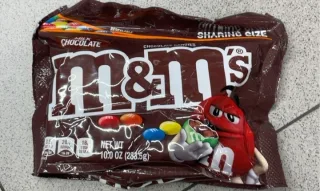 M&M’sNot labeled gluten-free1 of 9 varieties we checked contains gluten: M&M’s PretzelMars: some flavors “either contain or may contain” wheatMars Wrigley · checked Nov 16, 2026
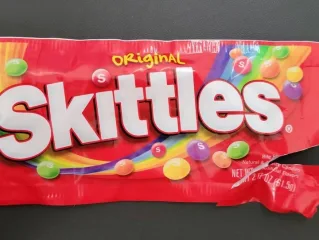 SkittlesNot labeled gluten-freeMars Wrigley · checked Nov 16, 2026
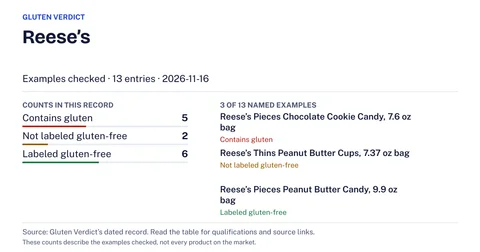 Reese’sLabeled gluten-free5 of 13 varieties we checked contain glutenThe Hershey Company · checked Nov 16, 2026
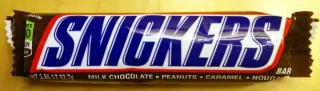 SnickersNot labeled gluten-freeWheat warning on 1 of 7 varieties we checkedMars Wrigley · checked Nov 16, 2026
 TwizzlersContains glutenThe Hershey Company · checked Nov 16, 2026
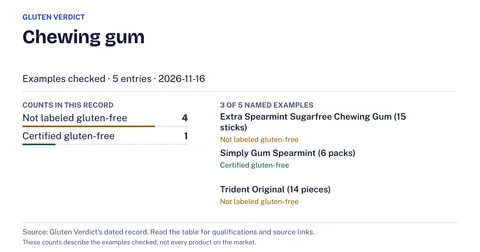 Chewing gumDepends on the productchecked Nov 16, 2026
Questions people ask
Is a teal pumpkin the same as a gluten-free house?
No. FARE defines it as a house with non-food treats available1, and says such a house can still hand out candy in a separate bowl2.
Do I have to paint a pumpkin teal?
No. FARE says you can print a free sign for the door, or buy a teal pumpkin online or at local shops18.
Can a non-food treat contain gluten?
Yes. FARE says some non-food items still contain food allergens, for example some brands of moldable clay that contain wheat7.
More in Holidays, weddings and celebrations
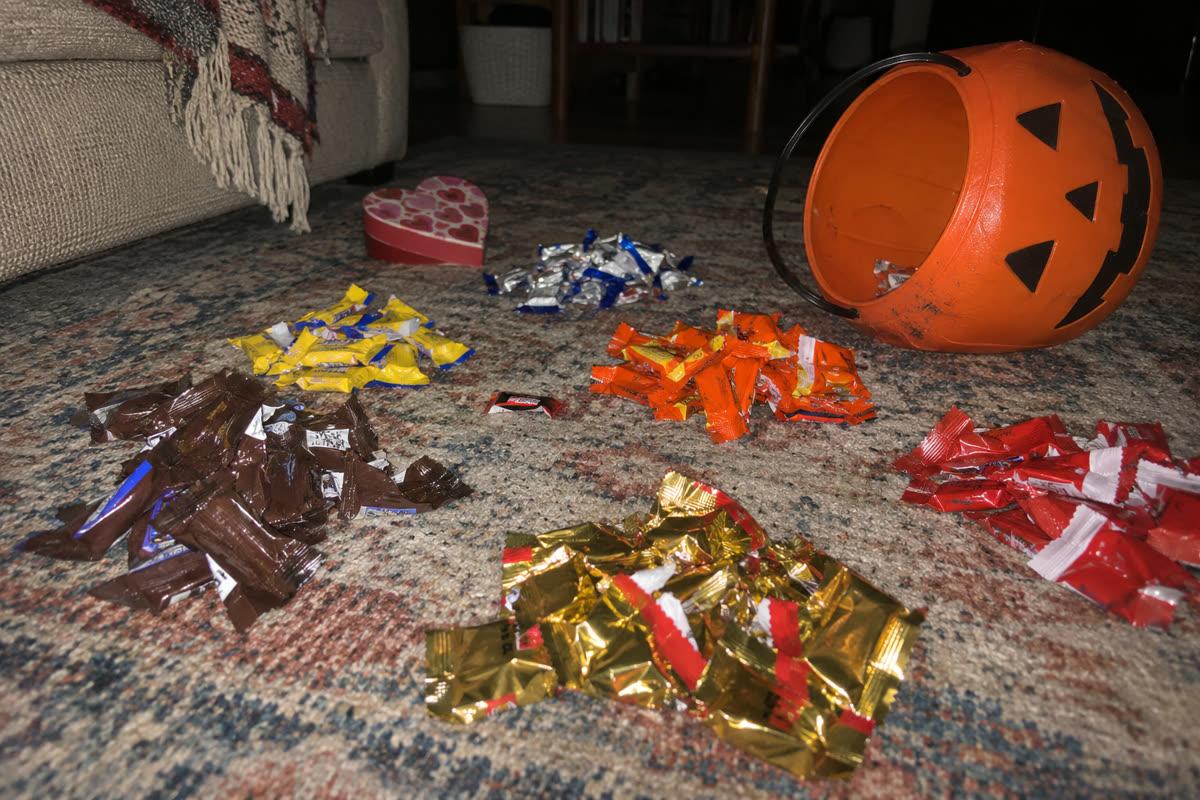 Holiday candy and gluten: how to check each piece, Halloween to Valentine’s DayA holiday shape or fun-size bag can differ from the full-size candy. Check seasonal candy against its wrapper, maker page and certifier, with dated cases.
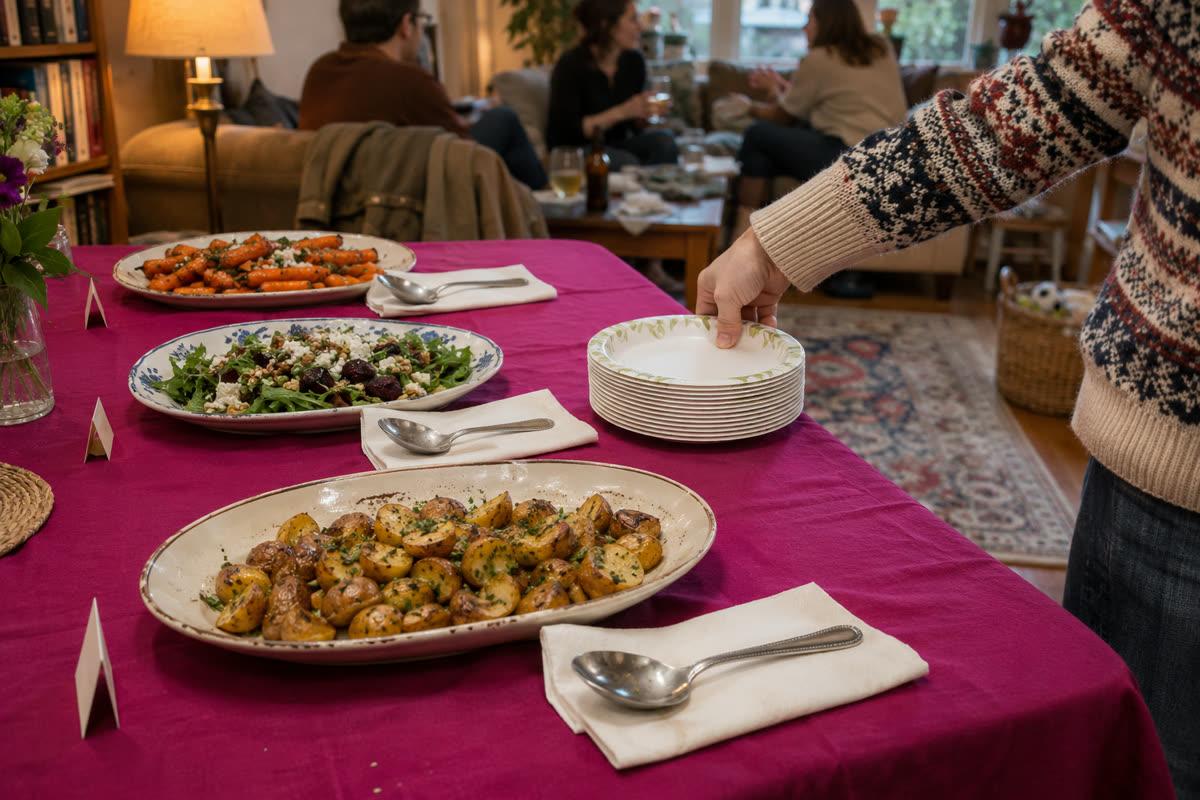 Hosting a gluten-free party: a menu and cross-contact planPlan a mixed party table for a guest with celiac disease: what to ask, which store-bought items to check, and how to keep dishes apart.
 Gifts for someone with celiac disease: what to give and what to write on the cardNon-food gift ideas, gift cards, the one check for a food gift and card wording that makes no health claim, with the sources linked.
 Super Bowl and tailgate food: label checks for dips, wings, chips and bunsCheck dips, chips, wings, sauces and buns for gluten before game day, ask the right questions about wings, and keep one dish apart on a shared table.
 Ordering a gluten-free birthday cake: what to ask the bakeryBakery, labeled packaged cake or your own? The questions to ask a bakery that also bakes wheat, and how to cut and serve the cake at the party.
 Gluten-free at a holiday dinner, potluck or cookout as a guestHow a guest with celiac disease can message the host, bring a dish, serve first at a buffet and decide when to eat only their own food.
Related guides
 How to read a US food label for glutenWhere gluten shows up on a US food label: the gluten-free claim, the Contains line, the ingredient list and may-contain lines, and what each means.
 Still having symptoms on a gluten-free diet? Where gluten can still get inA checklist of label, kitchen, restaurant, product and medicine sources of gluten, and what the sources say about when to see a doctor.
 What “may contain wheat” and “made in a facility with wheat” mean on a US labelHow to read “may contain wheat”, shared-facility and shared-equipment lines on US labels, with and without a gluten-free claim, and what to check next.
 Natural flavors, caramel color and modified food starch: which can carry glutenWhich additives on a US label can come from a gluten grain, which sources describe as gluten free, and what the maker has to disclose.
Sources
- [1, 2, 6, 7, 13, 17, 18, 20, 21, 29, 38] Food Allergy Research & Education (FARE), About the Teal Pumpkin Project, checked Nov 17, 2026.
Read on 2026-11-17: the list under “What children can benefit from non-food treats?” names food allergies, food intolerances, eosinophilic esophagitis (EoE), celiac disease, food protein-induced enterocolitis syndrome (FPIES), diabetes, children with feeding tubes and any child on a special diet.
- [3, 4, 22, 24, 27] Gluten Intolerance Group, Halloween Fun & Gluten-Free Confidence: A Parent’s Guide to Safe Celebrations, checked Nov 17, 2026.
- [5, 9, 12, 23, 28, 30, 31, 34, 35, 37] Gluten Intolerance Group, Halloween Candy Safety: What to Look For While You Trick-or-Treat, checked Nov 17, 2026.
- [8, 16, 25, 26] Gluten Intolerance Group, Not So Spooky Halloween Ideas, checked Nov 17, 2026.
- [10, 36] US Food and Drug Administration, Questions and Answers on the Gluten-Free Food Labeling Final Rule, checked Nov 17, 2026.
- [11] US Food and Drug Administration, Food Allergen Labeling and Consumer Protection Act of 2004 (FALCPA), checked Nov 17, 2026.
- [14, 15, 19] Food Allergy Research & Education (FARE), Teal Pumpkin Project, checked Nov 17, 2026.
- [32, 33] US Food and Drug Administration, Halloween Food Safety Tips for Parents, checked Nov 17, 2026.