Miso, gochujang and other fermented pastes: where barley and wheat are used
Short answer
The grain a fermented paste is made with decides it, and it differs from jar to jar1, 2. Check three things on the jar or the maker’s page:
- The ingredient list, for barley, wheat or a koji grain: Hikari’s barley miso lists organic barley5, and the bibigo gochujang we read lists wheat flour and wheat koji18.
- The allergen line, which can leave barley out: Hikari’s instant Akadashi soup lists roasted barley flour in its miso paste, while its Contains line names fish and soybeans14, 15.
- A gluten-free statement or certification: for a fermented food, FDA’s rule makes the maker keep records behind the claim25.
Part of Hidden gluten in ingredients, sauces and processed foods, 21 guides
Key points
- Koji is a starter culture that can be grown on rice, barley, wheat or soybeans, so two misos can differ in gluten2, 3.
- Of the Hikari and Marukome miso jars we read, one lists barley by name, and the other four list rice, brown rice or chickpeas instead5, 7, 8, 9, 10.
- The Gluten Intolerance Group says gochujang usually contains wheat or barley but may be made with rice16.
- A Contains line is not a full check: one miso soup packet lists roasted barley flour in its paste without naming barley on the Contains line14, 15.
- A gluten-free claim on a fermented food rests on the maker’s records, because gluten tests do not adequately detect gluten in these foods25.
What the koji grain changes
Hikari Miso describes miso as traditionally made by fermenting cooked soybeans with salt and koji, a starter culture that ferments the proteins and starches in the beans3. The issue it points to is the koji: it can be grown on rice, barley, wheat or soybeans2.
Soybeans and rice are naturally gluten-free, but Hikari says some miso pastes are made with barley or wheat koji, which do contain gluten1. The Gluten Intolerance Group (GIG) says much the same for people eating gluten-free: miso is fermented with koji made from cultured grains such as barley or rice, and versions made with barley must be avoided13.
Hikari’s own advice is to check the ingredient label for these grains4. Gochujang, the Korean chili paste, raises the same question with wheat or barley, covered below16.
Miso: what makers’ pages list
These are the ingredient lines printed on the makers’ own US product pages when we read them on 2026-11-17. Lists change, so the jar in your hand has the final word.
| Jar | Ingredient list as the maker prints it | Grain named |
|---|---|---|
| Hikari Organic Miso, Barley Miso | Water, Organic Barley, Organic Soybeans, Salt, Yeast, Koji Culture; the page’s Contains line reads “Soybeans, Barley”5, 6 | Barley |
| Hikari Organic Miso, White Miso | Water, Organic Soybeans, Organic Rice, Salt, Yeast, Koji Culture7 | Rice |
| Hikari Organic Miso, Brown Rice Miso | Water, Organic Soybeans, Organic Brown Rice, Salt, Yeast, Koji Culture8 | Brown rice |
| Hikari Organic Miso, Chickpea Miso | Organic Rice, Water, Organic Chickpea, Salt, Yeast, Koji Culture9 | Rice and chickpeas |
| Marukome Organic 375g Miso paste | Filtered Water, Organic Soybeans, Organic Rice, Sea Salt, Organic Alcohol10 | Rice |
Where a list says only “koji culture”, it does not name the grain the koji was grown on, and Hikari says koji can be grown on rice, barley, wheat or soybeans2. That is a question for the maker if the list leaves you unsure.
Some makers add their own statement. Miso Master’s page describes its Organic Traditional Red Miso as “gluten-free”11 and carries the line “Certified Gluten Free by NSF International”12.
Our miso verdict shows which of the US products we checked carry a maker’s claim or a certifier listing, with the date we read each page.
Miso soup packets: read the paste inside
A soup packet is a different product from a tub of paste, and its list can name a grain the tub does not. Hikari’s instant Akadashi soup lists its miso paste as “Soybean Paste (Soybeans, Water, Salt, Alcohol, Roasted Barley Flour)”14. The Contains line on the same page reads “Anchovy, Bonito, Frigate Mackerel, Soybeans”15.
Barley sits in the paste, and the Contains line does not say so14, 15. Why a Contains line can skip barley is covered in our guide to the allergen line. For any packet, read the whole ingredient list, including what sits inside the paste.
Gochujang: wheat is common, rice versions exist
GIG describes gochujang as an intense spicy, sweet and savory condiment made from chili and fermented soybean, which bibimbap usually contains17. Its caution: gochujang usually contains wheat or barley but may also be made using rice, and gluten-free gochujang is available16.
The jar we read matches the caution. bibigo’s Gochujang Korean Hot Pepper Paste lists “WHEAT FLOUR, CORN SYRUP, WATER, HOT PEPPER POWDER, SALT, WHEAT, CONTAINS 2% OR LESS OF ALCOHOL (FOR FRESHNESS), DEFATTED SOYBEAN POWDER, WHEAT KOJI”18, and its Contains line reads “Wheat, Soy”19.
A gochujang sauce can add wheat from more than one place. bibigo’s Gochujang Sauce Hot & Sweet lists a hot pepper paste with wheat flour, wheat and koji, followed by a soy sauce made from water, soybeans, wheat and salt20. FDA’s general position is that a soy sauce made from soybeans and wheat may not bear a “gluten-free” claim30.
Gochujang products with a certification listing exist. A search of the Gluten-Free Certification Organization (GFCO) product finder for “gochujang” lists products from O`Food and Chung Jung One, among them two entries named “Gluten Free Gochujang”, listed in 17 kg and 200 kg sizes21. That directory is a list, not a page about each jar, so check the maker’s own page for the jar you buy.
For eating out, our South Korea travel guide covers the country’s rules and its celiac society.
Doenjang, tempeh, natto and other fermented soy foods
We did not find a maker’s page for doenjang (Korean soybean paste), tempeh, natto or fermented tofu that we could open and read on 2026-11-17, so this guide makes no claim about their ingredients. The GFCO product finder returned no products for a search on “doenjang”22.
The check does not change: read the ingredient list for barley, wheat, rye and malt, and look at what the maker says about gluten. Our verdicts on soy sauce and kimchi show how two other fermented foods vary from product to product.
What FDA’s rule on fermented foods asks of a maker
In August 2020 FDA issued a final rule on gluten-free labeling of fermented and hydrolyzed foods and of foods that contain fermented or hydrolyzed ingredients23. FDA says gluten proteins in these foods are no longer intact and currently cannot be adequately detected and quantified by testing, so it checks compliance against records the manufacturer keeps to show the food was gluten-free before fermentation or hydrolysis24.
FDA’s Q&A sets out what the records must show: the food met the gluten-free definition, including less than 20 parts per million of gluten, before fermentation; the maker evaluated its process for gluten cross-contact; and where cross-contact was possible, the maker put measures in place to prevent it25, 31, 32.
FDA says fermentation is not considered a process to remove gluten27. A fermented food made from a gluten grain therefore may not bear a “gluten-free” claim unless the grains were processed to remove gluten and the ingredient left less than 20 ppm of gluten in the food before fermentation26. The makers must keep the records for at least 2 years28.
The National Celiac Association says that with no reliable test for gluten in hydrolyzed and fermented foods, manufacturers have to make sure ingredients are gluten-free before fermentation or hydrolyzation29. For the full rule, see FDA’s gluten-free labeling rule and how to read food labels.
Reading the jar, step by step
- Read the whole ingredient list for barley, wheat, wheat flour, rye and malt. A barley miso such as Hikari’s names organic barley5, and a gochujang can name wheat flour and wheat koji18.
- If the list says only “koji” or “koji culture”, the grain is not named7. Koji can be grown on rice, barley, wheat or soybeans2, so look for a statement from the maker.
- Look at the Contains line, then keep reading. Barley can sit in a paste without appearing there14, 15.
- Look for a gluten-free statement on the jar or the maker’s page and note who is making it: a maker’s own wording, as on Miso Master’s page11, or a certifier’s listing, as in the GFCO directory21.
- For a sauce, read every ingredient, including a soy sauce made with wheat20.
- If the jar and the page leave a gap, ask the maker which grain the koji was grown on.
Verdicts in this guide
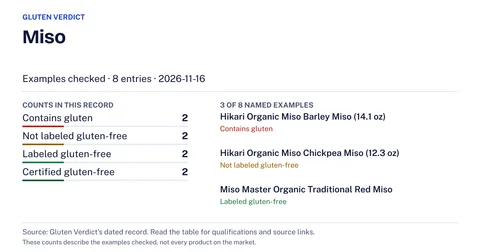 MisoDepends on the product2 of 8 products we checked contain gluten: Hikari Organic Miso Barley Miso (14.1 oz) and Hikari Miso Soup Akadashi (12 servings, 7.0 oz)checked Nov 16, 2026
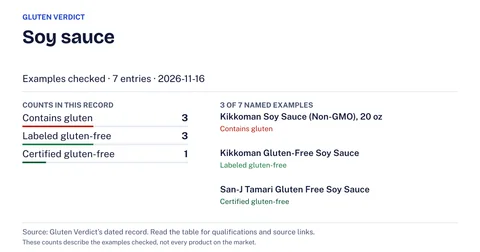 Soy sauceDepends on the product3 of 7 products we checked contain gluten: Kikkoman Soy Sauce (Non-GMO), 20 oz; San-J Organic Shoyu Soy Sauce; and Lee Kum Kee Premium Soy Sauce (No Preservatives Added)checked Nov 16, 2026
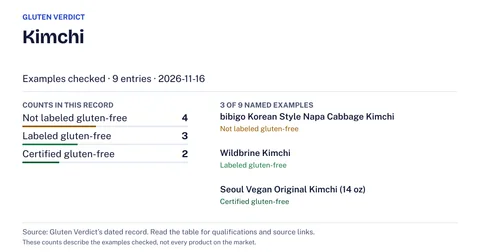 KimchiDepends on the productchecked Nov 16, 2026
Questions people ask
Is miso gluten-free?
It depends on the koji grain. Hikari says some miso pastes are made with barley or wheat koji, which do contain gluten, while soybeans and rice are naturally gluten-free1. Its barley miso lists organic barley5; its white miso lists soybeans, rice and koji culture7.
Is gochujang gluten-free?
It depends on the jar. The Gluten Intolerance Group says gochujang usually contains wheat or barley but may also be made using rice16, and the bibigo jar we read lists wheat flour and wheat koji18. GFCO’s directory lists gochujang products, among them two entries named “Gluten Free Gochujang”, listed in 17 kg and 200 kg sizes21.
More in Hidden gluten in ingredients, sauces and processed foods
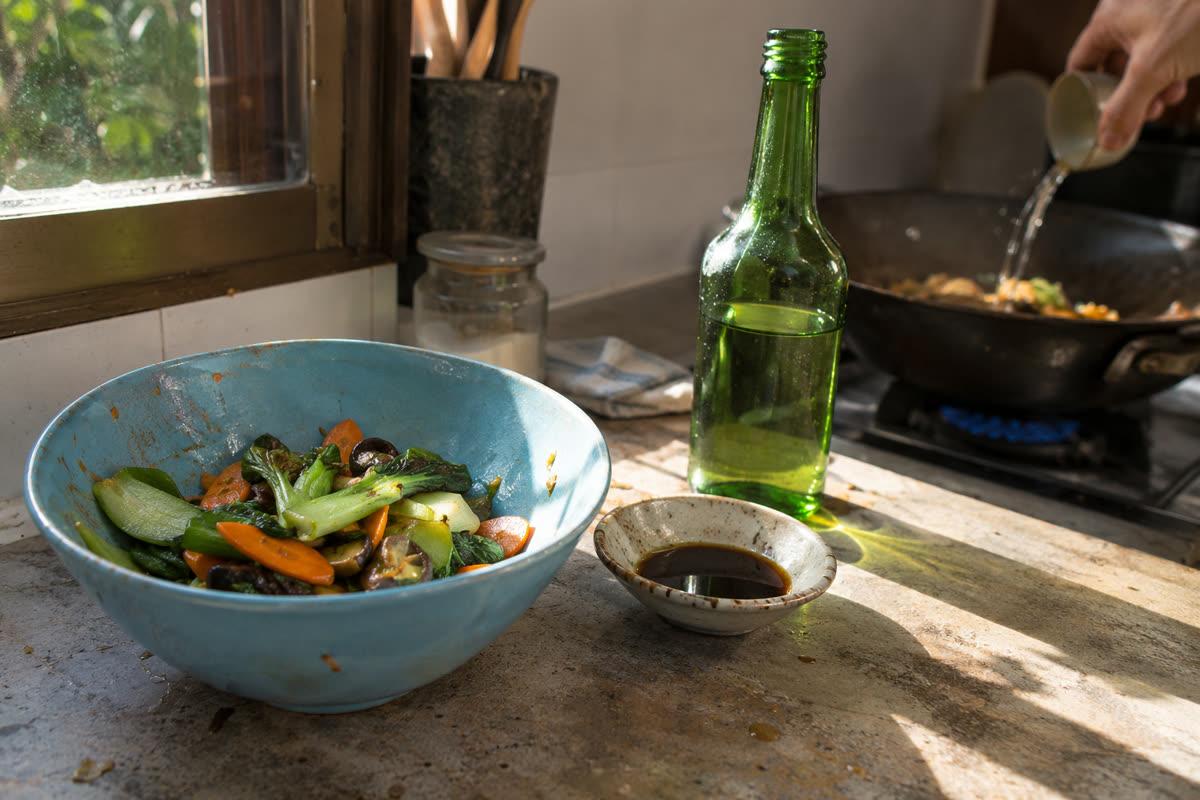 What to use instead of soy sauce when you eat gluten-freeTamari, gluten-free soy sauce, coconut aminos and liquid aminos: what each maker says, how to confirm it on the bottle, and what changes when you cook.
 Hydrolyzed protein, yeast extract and wheat starch on a US food labelWhich grain is behind hydrolyzed protein, yeast extract and wheat starch, what a US label must name, and what to ask the maker.
 Where wheat, barley and rye hide in processed food: 15 places to checkFifteen processed foods where wheat, barley or rye turn up, the label step that catches each, and what US allergen law does and does not flag.
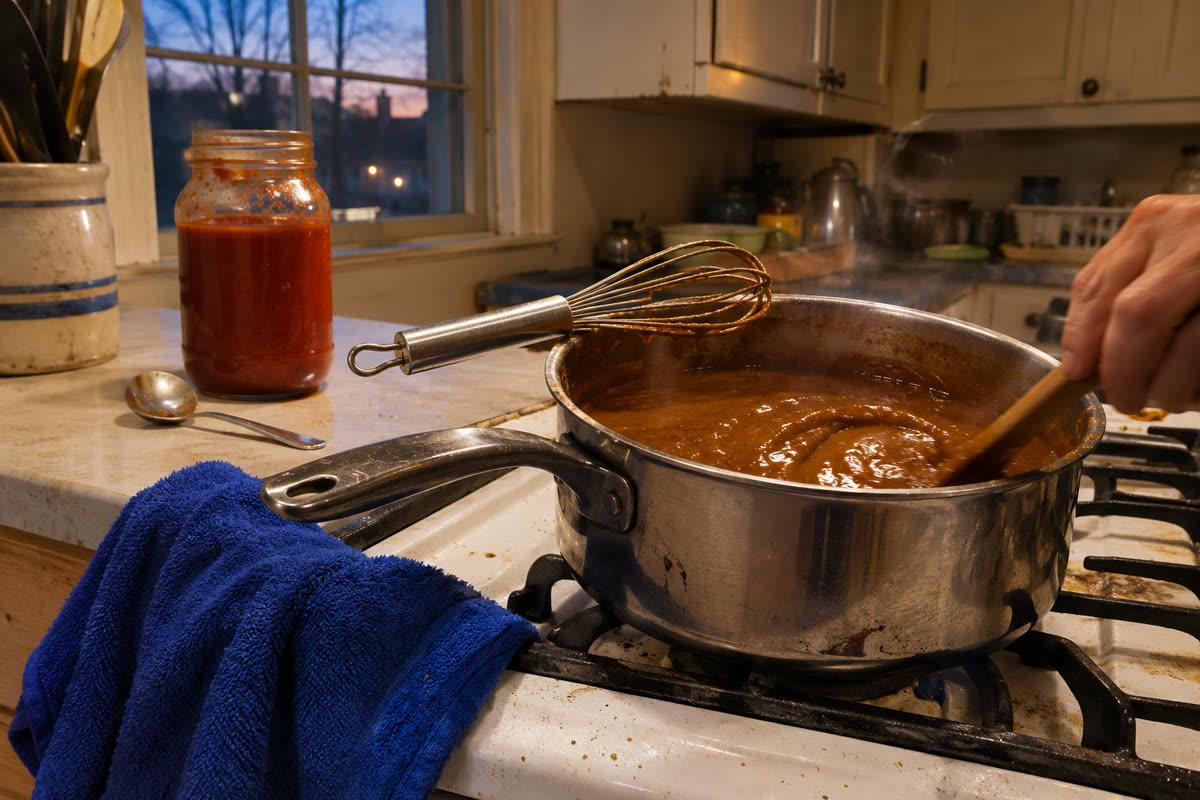 Gravy, jarred pasta sauce and cheese sauce: where flour and starch thicken the potHow to read a gravy packet, gravy jar, cheese sauce or pasta sauce for wheat flour, wheat gluten and starch, with maker pages read on 2026-11-17.
 Soy, hoisin, oyster, teriyaki and fish sauce: which bottles carry wheatSoy, hoisin, oyster, teriyaki and fish sauce compared by the ingredient lists of Kikkoman, Lee Kum Kee, San-J and Red Boat, plus what to ask at a counter.
 Plant-based meat, tofu and seitan: finding the wheat glutenSeitan and some meat substitutes are made from wheat gluten. How to spot it on a plant-based label, with ingredient lists from maker pages.
All 21 guides in Hidden gluten in ingredients, sauces and processed foods
Related guides
 Fermented, hydrolyzed and distilled foods: how a gluten-free claim is checkedHow FDA’s 2020 rule checks a gluten-free claim on fermented, hydrolyzed and distilled foods, why a test cannot settle it, and where TTB takes over.
 The Contains line names wheat, not barley or rye: what US allergen labels coverWhat the US allergen Contains line covers, why it names wheat but not barley or rye, and which ingredient-list names stand in for them.
 The FDA gluten-free rule: what 21 CFR 101.91 requires and what 20 ppm measuresWhat FDA’s gluten-free rule requires, which claim words it covers, what 20 ppm means for a portion of food, and how FDA checks that a claim holds.
 How to read a US food label for glutenWhere gluten shows up on a US food label: the gluten-free claim, the Contains line, the ingredient list and may-contain lines, and what each means.
Sources
- [1, 2, 3, 4] Hikari Miso, Is Miso Gluten-Free?, checked Nov 17, 2026.
- [5, 6] Hikari Miso, Organic Miso Barley Miso, 14.1 oz, checked Nov 17, 2026.
- [7] Hikari Miso, Organic Miso White Miso, 17.6 oz, checked Nov 17, 2026.
- [8] Hikari Miso, Organic Miso Brown Rice Miso, 14.1 oz, checked Nov 17, 2026.
- [9] Hikari Miso, Organic Miso Chickpea Miso, 12.3 oz, checked Nov 17, 2026.
- [10] Marukome USA, Organic 375g Miso paste, checked Nov 17, 2026.
- [11, 12] Great Eastern Sun (Miso Master), Organic Traditional Red Miso, checked Nov 17, 2026.
- [13] Gluten Intolerance Group, Japanese Cuisine When You’re Eating Gluten-Free, checked Nov 17, 2026.
- [14, 15] Hikari Miso, Hikari Miso Soup Akadashi, 12 servings, 7.0 oz, checked Nov 17, 2026.
- [16, 17] Gluten Intolerance Group, Gluten-Free Korean Cuisine, checked Nov 17, 2026.
- [18, 19] bibigo USA (CJ Foods), Gochujang Korean Hot Pepper Paste, checked Nov 17, 2026.
- [20] bibigo USA (CJ Foods), Gochujang Sauce Hot & Sweet (12.16 oz), checked Nov 17, 2026.
- [21] Gluten-Free Certification Organization (GFCO), GFCO Product Finder search for gochujang, checked Nov 17, 2026.
Read on 2026-11-17: the product finder’s results for “gochujang” list, among other items, O`Food entries named “Gluten Free Gochujang” (listed with sizes of 17kg and 200kg, sales regions US and Canada) and “GOCHUJANG Korean Chili Sauce” (sales regions including US and Canada), a CHUNG JUNG ONE “GOCHUJANG Korean Chili Sauce”, and snacks flavored with gochujang from Kettle Brand, Sahale Snacks, Hippie Snacks and gimMe.
- [22] Gluten-Free Certification Organization (GFCO), GFCO Product Finder search for doenjang, checked Nov 17, 2026.
Read on 2026-11-17: the product finder’s results for “doenjang” read “No products found”.
- [23, 24] US Food and Drug Administration, FDA Issues Final Rule on Gluten-Free Labeling of Fermented and Hydrolyzed Foods, checked Nov 17, 2026.
- [25, 26, 27, 30, 31, 32] US Food and Drug Administration, Questions and Answers on the Gluten-Free Food Labeling Final Rule, checked Nov 17, 2026.
- [28] US Food and Drug Administration (eCFR), 21 CFR 101.91, Gluten-free labeling of food, checked Nov 17, 2026.
- [29] National Celiac Association, Labeling fermented and hydrolyzed foods, checked Nov 17, 2026.