The Contains line names wheat, not barley or rye: what US allergen labels cover
Short answer
The Contains line comes from the US allergen law, and that law’s list of major allergens names wheat but not barley or rye1, 2. A food can therefore hold barley or rye gluten, malt for example, with no Contains entry for it3, 43, so read the ingredient list too and look for a gluten-free claim, the statement that carries FDA’s gluten rule4.
Part of Label reading and gluten-free claims, 17 guides

Key points
- When a pack prints a Contains line, it names the major allergens in the food14. Of the three gluten grains, wheat is the only one on the US list1, 5.
- FDA’s allergen guidance counts spelt, einkorn, emmer, Khorasan and triticale as wheat6.
- Barley and rye are not allergens under the law, so malt and other barley names need not say barley3.
- Cross-contact is not declared in the Contains line7; a may-contain line is voluntary and separate41.
- The allergen rules cover FDA-regulated packaged food, except most meat and poultry8, and TTB says its current regulations do not require major food allergens to be disclosed on alcohol labels9.
What the Contains line is, and where it sits
The Contains line exists because of the Food Allergen Labeling and Consumer Protection Act of 2004, known as FALCPA10. It gives a maker two ways to name a major allergen. One is a line starting with the word “Contains”, printed right after or next to the ingredient list10. The other is to follow the ingredient’s name in the list with the allergen’s food source in parentheses11.
FDA’s sesame page shows both in one example label: “spices (sesame, wheat)” in the ingredient list and “CONTAINS: Wheat, Sesame” under it12. A maker may use either way, and each pack has to use one13.
When a pack does print a Contains line, FDA’s guidance says it is to name every major allergen that is in the food or in an ingredient of the food14. That matters in one direction: wheat can appear only in the Contains line. FDA gives the example of wheat flour used on a processing belt for rice crackers; if the ingredient list does not say wheat, the Contains line must15. So for wheat, read both.
GIG describes the wheat statements as required “to alert wheat-allergic consumers”16.
The nine major allergens, and where the gluten grains sit
FDA lists the major food allergens as milk, egg, fish, Crustacean shellfish, tree nuts, wheat, peanuts, soybeans and sesame1. Sesame is the newest: it has had to be labeled on packaged foods since January 1, 202317. Wheat has been on the list since the 2004 Act, which said eight foods account for 90 percent of food allergies18, 19.
| Grain | On the major-allergen list? | What that means on the label |
|---|---|---|
| Wheat | Yes1 | Named as “wheat” in the Contains line or in parentheses in the ingredient list10, 11. |
| Barley | No2 | Barley is not on the list1, and FDA’s guidance says the Contains statement is reserved for major food allergens43. Malt made from barley need not say barley3. See our barley verdict. |
| Rye | No2 | Rye is not on the list1, and the Contains statement is reserved for major food allergens43. GIG says barley and rye are not given the same treatment on ingredient labels20. |
| Triticale (a wheat and rye cross) | Counted as wheat for this purpose6 | The gluten-free rule describes it as a cross between wheat and rye21. |
| Oats | No1 | FDA’s Q&A on the gluten-free rule says oats labeled gluten-free must contain less than 20 ppm gluten, as with any other non-gluten-containing grain22. See oatmeal. |
The same 2004 Act is where gluten gets its own track. Section 206 told the Secretary of Health and Human Services to define, and permit the use of, the term “gluten-free” on food labels23. That is why the Contains line and the gluten-free claim answer different questions, and why our guide to reading a US food label for gluten starts with the claim.
What counts as “wheat” on the line
For the allergen rules, FDA’s guidance says “wheat” means any species in the genus Triticum24. Its list of examples includes durum, spelt, semolina, einkorn, emmer, khorasan and triticale6. A pack that contains any of them names wheat in one of the two ways above6, 13. Our guide to wheat grains with other names goes through them.
The gluten-free rule draws a wider circle. In 21 CFR 101.91, a “gluten-containing grain” is wheat, rye or barley, or a crossbred hybrid of them5, 21. So the allergen law names one of those three grains, and the gluten-free rule names all three1, 5. Our guide to the FDA gluten-free rule covers what the 20 ppm limit measures.
Barley and rye: what the line leaves to the ingredient list
The Gluten Intolerance Group (GIG) explains the gap this way: in the US gluten is not considered a top allergen (wheat is, but barley and rye are not), so it is easy for gluten to “hide” behind other names in ingredient lists2. GIG’s label-reading article adds that anything derived from barley or rye in an ingredient list, such as malt from barley, does not need to say where it came from3.
That is why the ingredient list has to be read word by word. These are the names that stand in for barley or rye, with the sources that name them:
| Name on the label | What the sources say |
|---|---|
| Malt, malt extract, malt syrup, malt flavoring, malted barley flour | FDA says malt extract and malt syrup are derived from barley that has not been processed to remove gluten25. The Celiac Disease Foundation lists malt in these forms among gluten sources26. See malt extract and our guide to malt on labels. |
| Malt vinegar | Listed by the Celiac Disease Foundation as one of the forms of malt26. |
| Brewer’s yeast | On the Celiac Disease Foundation’s list of gluten-containing grains and their derivatives27. |
| Yeast extract | GIG says some yeast extract is made from spent brewer’s yeast and could contain residual barley gluten, and that in the US the source may not be clear because barley is not a major allergen28. |
| Natural flavor | GIG says wheat must be declared when present in a natural flavor, but US labels may not always identify barley or rye the same way29. |
| Beer, ale, lager | GIG lists them among barley-derived sources unless specifically brewed gluten-free30. |
An example from our records: Rice Krispies
Our Rice Krispies verdict shows the gap on a real product. WK Kellogg’s SmartLabel page for the 9 oz cereal lists rice, sugar, salt and malt flavor31, and its allergen section reads “Does not contain Declaration Obligatory Allergens”32. The maker’s own FAQ says the cereal does not list wheat as an allergen but is not labeled gluten free because it contains malt, and that the malt comes from barley and may contain gluten33. No allergen is declared on the SmartLabel page, yet the maker says the malt in its ingredient list comes from barley32, 33.
Canada draws the line differently. GIG says Canadian labels are especially helpful for finding barley and rye, which do not get the same mandatory source declaration in the United States34. Our guide to gluten source declaration by country compares the rules.
What the Contains line does not cover
- Cross-contact. FDA’s guidance says allergens present because of cross-contact are not to be declared in the ingredients list or the Contains statement7. Statements about shared equipment, such as “may contain wheat”, are voluntary in the US41; our guide to may-contain wheat labels explains them.
- Foods outside FDA’s rule. The allergen requirements apply to packaged foods subject to FDA regulation, except most meat, poultry, catfish and certain processed egg products8. GIG says packaged meats are USDA-regulated and most, but not all, also comply with FALCPA35.
- Alcohol. TTB’s FAQ says current regulations under the Federal Alcohol Administration Act do not require major food allergens to be disclosed on alcohol labels9. Under TTB’s interim rule a maker may declare them but need not42; if it declares any one, it must list all that were used in production36.
- Oats. They are not an allergen on the list1, and GIG says the cross-contact risk with gluten is high for oats, so it advises looking for a certification on oat products37.
Wheat on a gluten-free pack
A pack can name wheat and still carry a gluten-free claim, but only with a required statement. Under 21 CFR 101.91(b)(3), when “wheat” appears in the ingredient list or in a Contains wheat line and the pack also says gluten-free, the word “wheat” has to be followed by an asterisk that points to this wording near the ingredient statement: “The wheat has been processed to allow this food to meet the Food and Drug Administration (FDA) requirements for gluten-free foods.” Without it the food is deemed misbranded38.
So “wheat” in a Contains line on a pack that also says gluten-free is not a contradiction: the required statement says the wheat has been processed so the food meets FDA’s gluten-free requirements38. The asterisk statement applies only to a pack that also makes the gluten-free claim38, and in FDA’s gluten-free rule wheat is one of the gluten-containing grains21. Our guide to hidden sources of gluten and guide to wheat, barley and rye names list what else to look for.
A reading routine for the Contains line
- Look for a gluten-free claim first. On an FDA-regulated food it has to meet the rule in 21 CFR 101.914.
- Read the Contains line. FDA’s guidance counts spelt, einkorn, emmer, Khorasan and triticale as wheat6. No “wheat” there is not a statement about barley or rye2.
- Read the whole ingredient list, not just the Contains line39, and stop at malt, malt extract, malt flavoring, brewer’s yeast, yeast extract, rye and barley.
- Treat a may-contain line as a separate, voluntary note41; see may-contain wheat labels.
- If the pack has no claim and the list is unclear, check our verdict A to Z for the product, or paste the label into our gluten scanner. The maker has the final word on its own recipe.
Verdicts in this guide
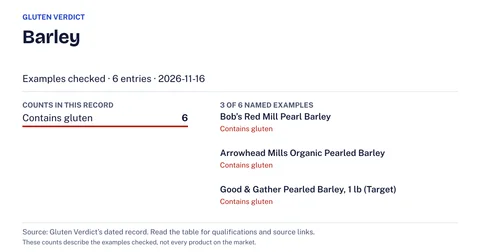 BarleyContains glutenchecked Nov 16, 2026
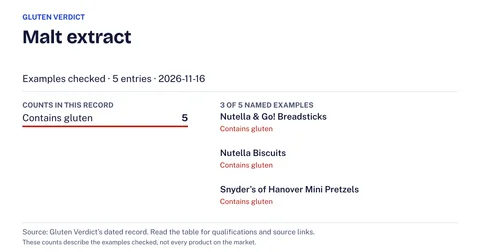 Malt extractContains glutenchecked Nov 16, 2026
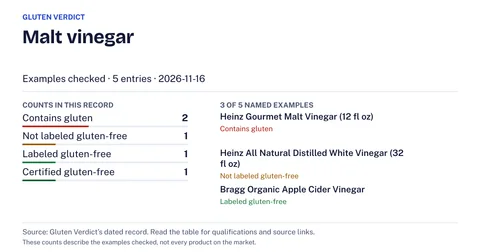 Malt vinegarContains glutenchecked Nov 16, 2026
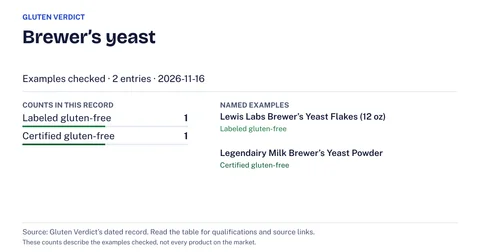 Brewer’s yeastDepends on the productchecked Nov 16, 2026
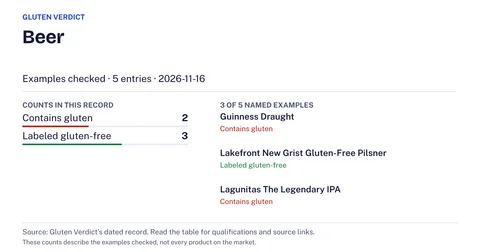 BeerDepends on the product2 of 5 products we checked contain gluten: Guinness Draught and Lagunitas The Legendary IPAchecked Nov 16, 2026
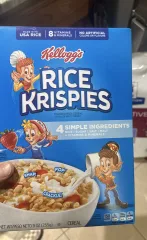 Rice KrispiesContains glutenWK Kellogg Co · checked Nov 16, 2026
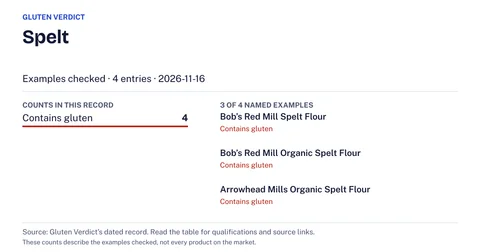 SpeltContains glutenchecked Nov 16, 2026
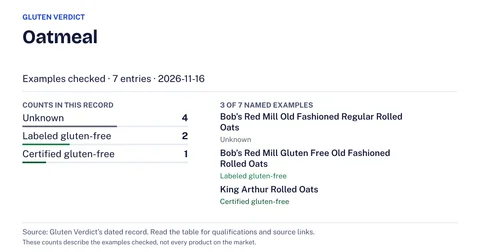 OatmealDepends on the productchecked Nov 16, 2026
Questions people ask
If a food has no “Contains wheat” line, is it gluten-free?
Not on that evidence alone. The line names wheat but not barley or rye2, so a food with malt can have no wheat entry. A gluten-free claim is what carries FDA’s rule4.
Does “Contains wheat” mean the food has gluten?
Wheat is a gluten-containing grain in FDA’s gluten-free rule21. The exception is a pack that also makes a gluten-free claim and carries the required asterisk statement about processed wheat38.
Why does the line not list barley when malt comes from barley?
Barley is not a major allergen, so GIG says malt from barley does not need to name its source3. FDA says malt extract and malt syrup are derived from barley25.
Is “wheat-free” the same as gluten-free?
No. The Celiac Disease Foundation says a wheat-free product may still contain spelt, rye or barley-based ingredients40.
More in Label reading and gluten-free claims
 How to read a US food label for glutenWhere gluten shows up on a US food label: the gluten-free claim, the Contains line, the ingredient list and may-contain lines, and what each means.
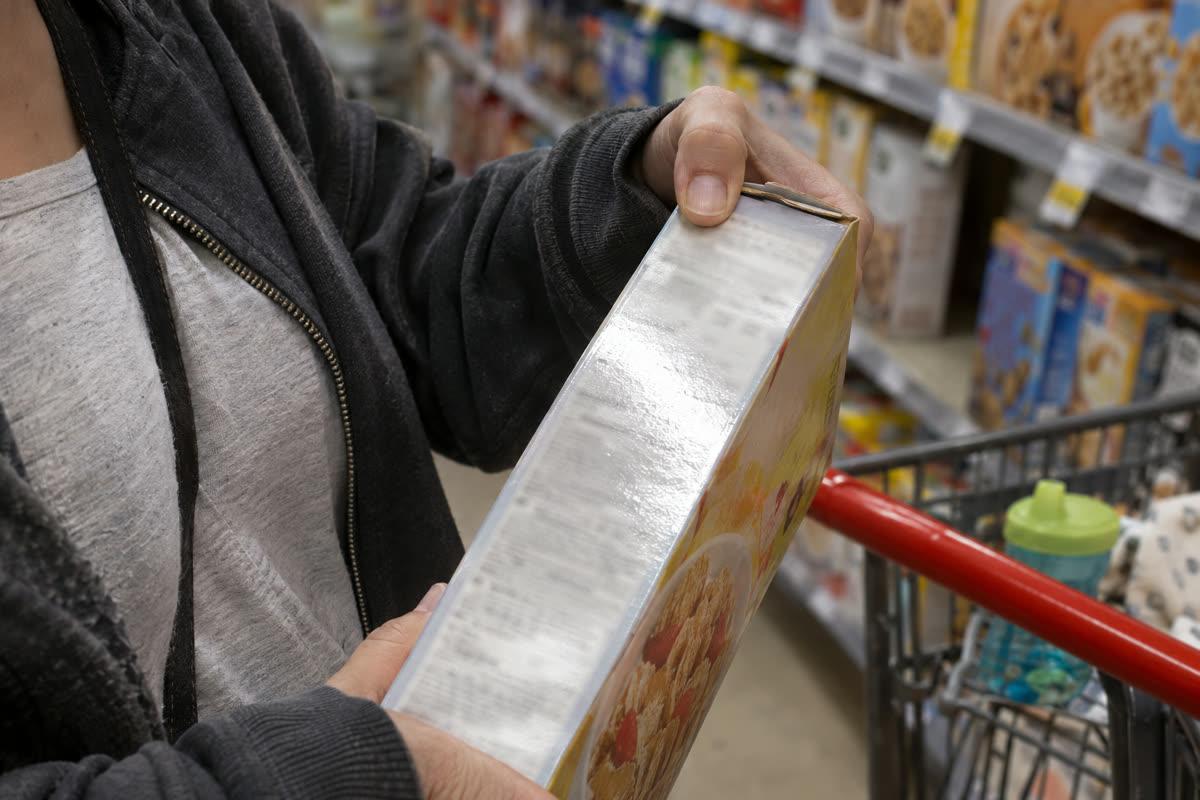 How to check whether a packaged food is gluten-freeA four-step check for one packaged food: the claim, the ingredient and allergen lines, the maker’s dated page and the certifier’s directory.
 Wheat-free, gluten-free and “no gluten ingredients”: what each label statement covers“Wheat-free”, “gluten-free” and “made with no gluten-containing ingredients” are three different statements. What each covers, and what to check.
 When a gluten-free label looks wrong: what to keep, who to tell, where to lookFound wheat, barley or malt in a food labeled gluten-free? What to keep, whom to tell, which US agency takes the report, and where recalls are listed.
 Fermented, hydrolyzed and distilled foods: how a gluten-free claim is checkedHow FDA’s 2020 rule checks a gluten-free claim on fermented, hydrolyzed and distilled foods, why a test cannot settle it, and where TTB takes over.
 Certified or naturally gluten-free: when a seal mattersWhich naturally gluten-free foods are worth buying with a claim or seal: produce, grains, flours, oats and processed foods, with FDA rules and test data.
Related guides
 What “may contain wheat” and “made in a facility with wheat” mean on a US labelHow to read “may contain wheat”, shared-facility and shared-equipment lines on US labels, with and without a gluten-free claim, and what to check next.
 Where wheat, barley and rye hide in processed food: 15 places to checkFifteen processed foods where wheat, barley or rye turn up, the label step that catches each, and what US allergen law does and does not flag.
 Wheat, barley and rye on an ingredient list: the names to look forLook up wheat, barley and rye names on a US ingredient list, from durum to malt, and sort each as contains gluten, depends on the maker, or lookalike.
 Which gluten grains a pack’s allergen line must name, by countryWhether the allergen line must name barley, rye and oats, country by country: US, Canada, EU, UK, Australia and New Zealand, Brazil, Japan.
Sources
- [1] US Food and Drug Administration, Frequently Asked Questions: Food Allergen Labeling Guidance for Industry, checked Nov 17, 2026.
- [2, 28, 29, 30, 34, 37, 39, 41] Gluten Intolerance Group, Advanced Label-Reading Tips, checked Nov 17, 2026.
- [3] Gluten Intolerance Group, 3 Tips for Gluten-Free Label Reading, checked Nov 17, 2026.
- [4, 5, 21, 38] US Food and Drug Administration, 21 CFR 101.91: Gluten-free labeling of food (eCFR), checked Nov 17, 2026.
Read on 2026-11-17: the definition of “gluten-containing grain” in 21 CFR 101.91(a)(1) lists three grains: wheat (any species of the genus Triticum), rye (any species of the genus Secale) and barley (any species of the genus Hordeum).
- [6, 7, 8, 13, 14, 15, 24, 43] US Food and Drug Administration, Questions and Answers Regarding Food Allergens, Including the Food Allergen Labeling Requirements of the FD&C Act (Edition 5): Guidance for Industry, checked Nov 17, 2026.
- [9, 36, 42] Alcohol and Tobacco Tax and Trade Bureau (TTB), Major Food Allergen Labeling for Wines, Distilled Spirits, and Malt Beverages (TTB FAQ), checked Nov 17, 2026.
- [10, 11, 18, 19, 23] US Food and Drug Administration, Food Allergen Labeling and Consumer Protection Act of 2004 (FALCPA), checked Nov 17, 2026.
- [12, 17] US Food and Drug Administration, The FASTER Act: Sesame Is the Ninth Major Food Allergen, checked Nov 17, 2026.
- [16, 20, 35] Gluten Intolerance Group, Wheat Mentions on Gluten-Free Food Labels, checked Nov 17, 2026.
- [22, 25] US Food and Drug Administration, Questions and Answers on the Gluten-Free Food Labeling Final Rule, checked Nov 17, 2026.
- [26, 27, 40] Celiac Disease Foundation, Sources of Gluten, checked Nov 17, 2026.
Read on 2026-11-17: the list headed “Gluten-Containing Grains and Their Derivatives” names wheat (with wheatberries, durum, emmer, semolina, spelt, farina, farro, graham, KAMUT® khorasan wheat and einkorn wheat); rye; barley; triticale; malt in various forms; brewer’s yeast; and wheat starch that has not been processed to remove gluten to below 20 ppm.
- [31, 32] WK Kellogg Co, Kellogg’s Rice Krispies cereal 9 oz, SmartLabel page (ingredients), checked Nov 17, 2026.
Read on 2026-11-17: the Ingredients list on the page names rice, sugar, “contains 2% or less of salt”, malt flavor, and vitamins and minerals; it names no wheat, barley or rye.
- [33] WK Kellogg Co, WK Kellogg Co FAQs (gluten free products), checked Nov 17, 2026.