Fermented, hydrolyzed and distilled foods: how a gluten-free claim is checked
Short answer
For a fermented or hydrolyzed food that carries a gluten-free claim, FDA’s rule has the maker keep records that the food was gluten-free before fermentation or hydrolysis, because FDA knows of no scientifically valid method that detects and quantifies the gluten in these foods with precision, in terms of equivalent amounts of intact gluten11, 15, 16. How a claim is checked depends on the food:
- Fermented or hydrolyzed foods, such as yogurt, sauerkraut and hydrolyzed plant proteins: a maker who prints the claim keeps records15, and a food made from a gluten grain cannot carry the claim unless the grain was processed to remove gluten first24.
- Distilled foods, such as some vinegars29: FDA will verify the absence of protein in the distilled component32.
- Beer, wine and spirits: TTB, not FDA, regulates the labeling of all distilled spirits, wines of 7 percent or more alcohol by volume, and malted beverages made with both malted barley and hops36.
Part of Label reading and gluten-free claims, 17 guides
Key points
- The 2020 rule did not change what gluten-free means; it added compliance requirements for fermented and hydrolyzed foods and compliance information for distilled foods4.
- The records must also show the maker evaluated its processing for gluten cross-contact and, where a risk was found, put measures in place to prevent it16; they must be kept for at least 2 years18.
- A fermented or hydrolyzed food made from a gluten grain cannot carry the claim unless the grain was processed to remove gluten first, leaving under 20 ppm gluten in the food before fermentation or hydrolysis24.
- FDA treats properly done distillation as able to remove all protein and checks distilled foods by looking for protein; malt vinegar, which Gluten Intolerance Group says is not distilled, cannot be used in a claimed food30, 32, 34, 27.
- TTB regulates all distilled spirits, wines of 7 percent or more alcohol by volume and malted beverages made with both malted barley and hops36: spirits from gluten grains can say gluten-free when good manufacturing practices are followed, while malt beverages fermented from gluten grains may carry a processed-to-remove-gluten claim with a qualifying statement36, 39, 43.
What the 2020 rule covers
FDA published its final rule on gluten-free labeling of fermented, hydrolyzed and distilled foods on August 13, 20201, and set a compliance date of August 13, 20213.
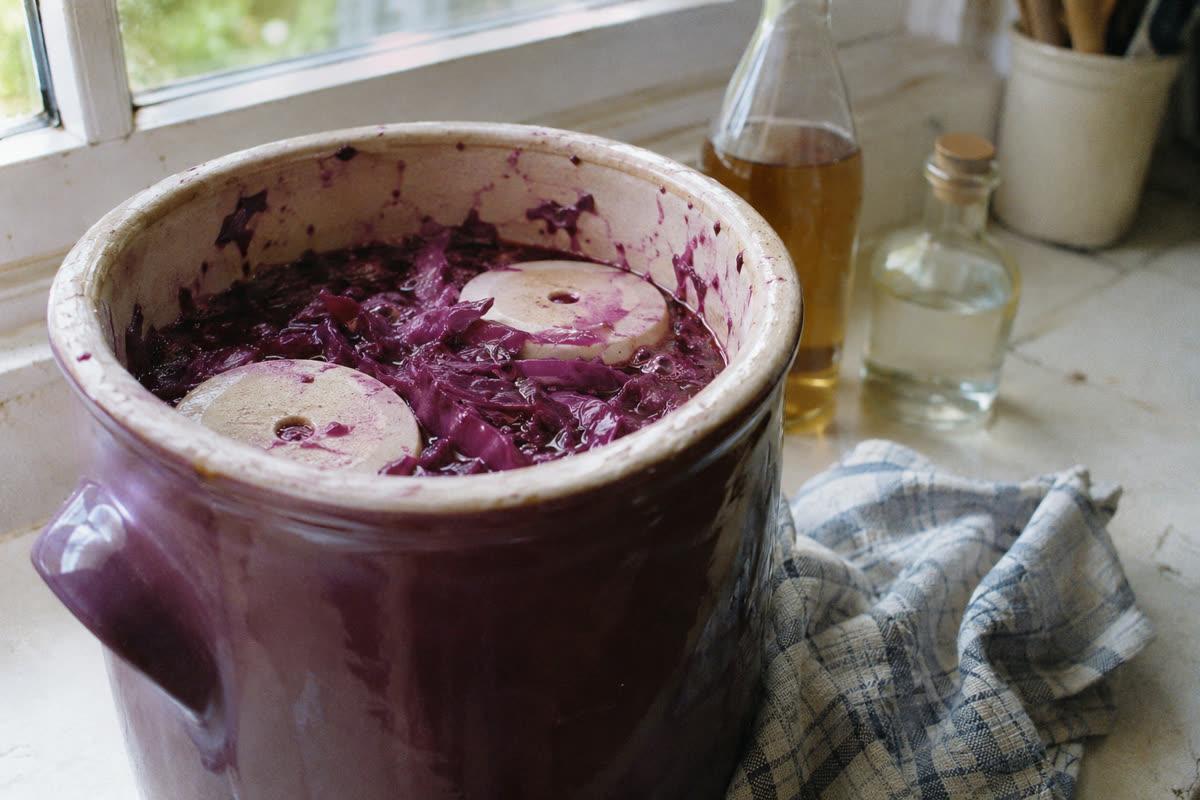
FDA’s own examples of covered foods are yogurt, sauerkraut, pickles, cheese, green olives, FDA-regulated beers and wines, and hydrolyzed plant proteins used in soups, sauces and seasonings2. The rule also pertains to distilled foods such as distilled vinegar37.
It did not change what gluten-free means. FDA says the rule does not change the 2013 definition and only adds compliance requirements for hydrolyzed or fermented foods and compliance information for distilled foods4: unavoidable gluten still has to be below 20 parts per million5.
The claim itself is voluntary6. The rule governs a maker who chooses to print it: a food that carries the claim without meeting the requirements is misbranded7.
Why a gluten test cannot settle these foods
FDA describes fermentation as breaking proteins apart into peptides, and says fermentation is not a process that removes gluten8. It says the same of hydrolysis, and names hydrolyzed soy protein and hydrolyzed wheat protein as examples of hydrolyzed foods9.
The usual laboratory test is the obstacle. FDA says the sandwich ELISA methods it uses do not adequately detect gluten in fermented and hydrolyzed foods10, and that it knows of no scientifically valid analytical method effective in detecting and quantifying with precision their gluten protein content in terms of equivalent amounts of intact gluten11.
Beer shows what that means in practice. In the rule’s preamble, FDA says multiple research groups have used mass spectrometry to detect gluten peptides in conventionally brewed beer and in beer brewed with an added enzyme (PEP) that had tested negative on an ELISA, because the gluten was below the kits’ limit of detection12. FDA adds that failing to detect certain known fragments does not mean all fragments related to celiac disease are absent13. Gluten Intolerance Group gives the same explanation for gluten-removed beer: a test kit may not see the fragments it is designed to identify once enzymes have broken them down14.
So the rule asks for records about the food before fermentation or hydrolysis16, and does not require a gluten test of the finished food21.
What a maker has to keep
To put the claim on a fermented or hydrolyzed food, a maker must make and keep records that give adequate assurance of three things15:
- The food was gluten-free, as the rule defines it, before fermentation or hydrolysis16.
- The maker has adequately evaluated its processing for any potential for gluten cross-contact16.
- Where a potential for cross-contact was identified, the maker has put measures in place to prevent gluten from entering the food during manufacturing16.
A food that carries the claim and contains a fermented or hydrolyzed ingredient needs the same kind of records showing the ingredient is gluten-free in this sense17. FDA says the requirements apply even if the food was inherently gluten-free22.
Records can include test results from the maker or an ingredient supplier, a certificate of analysis, or other appropriate verification documentation for the food or each ingredient19. In the preamble FDA adds that the assurance can come from tests on the food itself before fermentation or hydrolysis20.
The records must be kept for at least 2 years after the food enters interstate commerce, and the maker must provide them to FDA for examination and copying during an inspection upon request18. The rule does not require makers to test their ingredients or finished foods for gluten21. FDA says it enforces the labeling rule through routine post-market monitoring, including inspections, label reviews and follow-up on complaints23.
The National Celiac Association summarizes the change this way: manufacturers keep records that fermented and hydrolyzed foods and ingredients are free from wheat, barley and rye, and evaluate cross-contact28.
Fermented and hydrolyzed foods FDA names
| Food | What FDA says |
|---|---|
| Soy sauce made from soybeans and wheat or another gluten grain | In general it may not bear a gluten-free claim25. |
| Soy sauce made without wheat or any other gluten grain | It can bear the claim25. |
| Soy sauce made from a gluten grain processed to remove gluten, with less than 20 ppm before fermentation | It can bear the claim26. |
| Malt vinegar | It cannot be used in a food that bears the claim: it comes from barley, undergoes fermentation and has not been processed to remove gluten27. |
| Hydrolyzed soy protein and hydrolyzed wheat protein (hydrolyzed vegetable protein) | FDA’s examples of hydrolyzed foods; hydrolysis is not a process that removes gluten9. |
| Fermented foods made from gluten-containing grains | A fermented food made from gluten-containing grains cannot bear the claim unless the grains were processed to remove gluten, with under 20 ppm in the food, before fermentation24. |
| Yogurt, sauerkraut, pickles, cheese, green olives | Named as covered foods2. A maker who adds the claim follows the same record requirements even if the food was inherently gluten-free22. |
The grain used before fermentation is what separates two soy sauces that look alike on a shelf25, 26. Read the ingredient list for wheat. For miso, see our miso verdict and the miso, gochujang and fermented pastes guide.
Distilled foods: vinegar and the protein check
FDA names some vinegars and distilled water as examples of distilled foods29. Its position is that distillation, if done properly, is capable of removing all proteins including gluten, so an ingredient from a gluten grain that has been properly distilled can be used in a food with a gluten-free claim30. That depends on how well the distillation was done: FDA’s example of a failure is gluten transferring into the distillate under poor manufacturing practices31.
The check differs from the fermented case. For a distilled food, FDA will verify the absence of protein, including protein fragments, in the distilled component using scientifically valid analytical methods32. It does not require makers to test distilled foods for gluten33.
Malt vinegar is the exception. Gluten Intolerance Group says it is the one vinegar to avoid, because it is not distilled and malt comes from barley34; FDA says it cannot be used in a food bearing the claim27. The same group notes that on a product that is not certified or labeled gluten-free, the plain word “vinegar” could mean malt vinegar35.
Our verdicts: apple cider vinegar and malt vinegar. The vinegar and flavor extracts guide covers the label side.
Beer, wine and spirits: where TTB takes over
FDA says its regulation does not apply to foods whose labeling TTB regulates. TTB regulates most alcoholic beverages, including all distilled spirits, wines with 7 percent or more alcohol by volume, and malted beverages made with both malted barley and hops36. Beers outside that definition, such as sorghum beer, fall under FDA’s labeling requirements38.
Spirits
TTB Ruling 2020-2 permits a gluten-free claim on distilled spirits made from gluten-containing grains, as long as good manufacturing practices are followed that prevent any gluten-containing material from entering the final product39. The ruling points to FDA’s explanation that distillation removes all protein (including gluten) if good manufacturing practices are followed41.
Ingredients added after distillation change the question. If a spirit combines a grain distillate with protein-containing ingredients added afterward, the finished label may carry the claim if the maker is prepared to substantiate, upon request, the absence of protein in the distillate, the absence of gluten in the added ingredients, and the precautions taken against cross-contact, including from storage materials40. Gluten Intolerance Group also notes that a spirit could still encounter gluten after distillation, such as whiskey aged in a beer barrel47.
Our verdicts: whiskey and vodka. The maker statements and flavors guide goes through the wording on a bottle.
Beer and other malt beverages
Gluten Intolerance Group puts the difference simply: if alcohol starts from a gluten-containing substance, fermentation might break down some gluten proteins, but it does not remove all the gluten45. TTB’s 2020 ruling does not change its policy on malt beverages fermented from gluten-containing grains42. Those products may carry a claim that they were processed (or treated or crafted) to remove gluten, if the claim includes an appropriate qualifying statement and the documentation is available43. The ruling recounts that TTB had determined a gluten-free claim on a beverage made from gluten-containing ingredients and processed to remove gluten would be inherently misleading without a means to verify it50.
FDA’s preamble confirms who handles a gluten-reduced beer: TTB is responsible for beers that meet the malt beverage definition44. For the certification side, Gluten Intolerance Group says the Gluten-Free Certification Organization can certify distilled alcoholic products that pass its process, and that GFCO’s current position is that a drink from gluten-containing grains that is not distilled cannot be certified gluten-free46.
Our beer verdict, the gluten-removed beer guide and the guide to low-gluten and gluten-removed labels go further.
Hydrolyzed proteins and yeast extracts on an ingredient list
A hydrolyzed ingredient follows the same logic as a fermented one: hydrolysis is not a process that removes gluten9, and a food that carries the claim and contains a hydrolyzed ingredient needs the maker’s records for that ingredient17.
Where a food carries no claim, the rule’s conditions do not come into play, because they attach to the claim6, 7, 15. The source of a hydrolyzed protein is then a question for the maker, and the hydrolyzed vegetable protein verdict shows what we found.
For yeast extract, Gluten Intolerance Group’s advice is to look for yeast extracts and products labeled or third-party certified as gluten-free48. The same article says brewer’s yeast is likely to be sourced from beer during the brewing process and contain wheat or barley gluten49. See our yeast extract verdict and the guide to hydrolyzed protein, yeast extract and wheat starch.
What to ask the maker
These questions are our suggestions, for a label with no claim or for a claim on a fermented or hydrolyzed food where you want more than the label:
- Does the label carry a gluten-free claim, or only a line about ingredients?
- Which grain does the fermented or hydrolyzed ingredient start from?
- Was that ingredient gluten-free before fermentation or hydrolysis, and does the maker hold the records the rule asks for15, 17?
- For vinegar: is it malt vinegar or a distilled vinegar?
- For a spirit: was anything added after distillation40?
The guide to asking a manufacturer about gluten has wording for the contact itself, and the guide to who regulates gluten-free claims sets out the FDA, USDA and TTB split.
Verdicts in this guide
 Soy sauceDepends on the product3 of 7 products we checked contain gluten: Kikkoman Soy Sauce (Non-GMO), 20 oz; San-J Organic Shoyu Soy Sauce; and Lee Kum Kee Premium Soy Sauce (No Preservatives Added)checked Nov 16, 2026
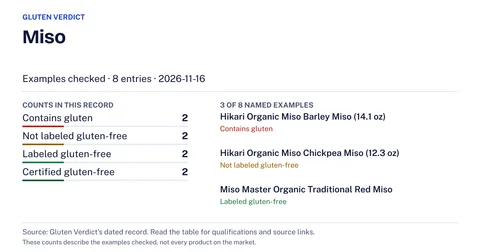 MisoDepends on the product2 of 8 products we checked contain gluten: Hikari Organic Miso Barley Miso (14.1 oz) and Hikari Miso Soup Akadashi (12 servings, 7.0 oz)checked Nov 16, 2026
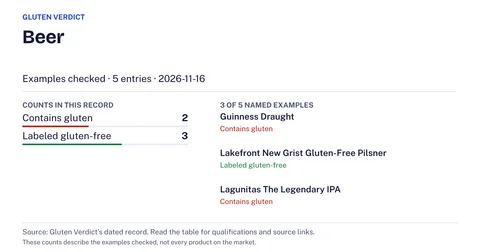 BeerDepends on the product2 of 5 products we checked contain gluten: Guinness Draught and Lagunitas The Legendary IPAchecked Nov 16, 2026
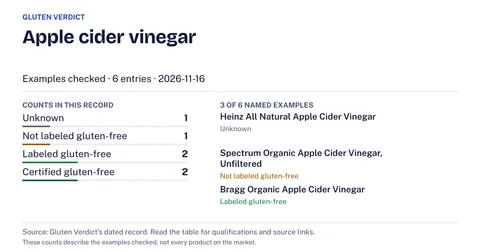 Apple cider vinegarNaturally gluten-freechecked Nov 16, 2026
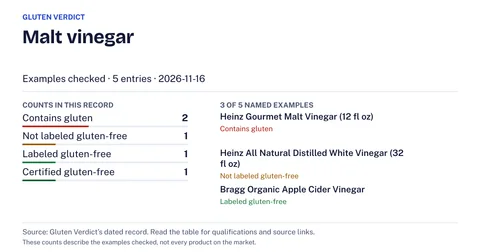 Malt vinegarContains glutenchecked Nov 16, 2026
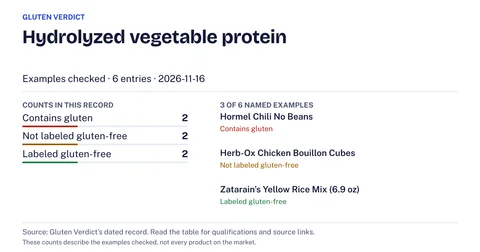 Hydrolyzed vegetable proteinDepends on the product2 of 6 products we checked contain gluten: Hormel Chili No Beans and Pioneer Brown Gravy Mix (1.61 oz)checked Nov 16, 2026
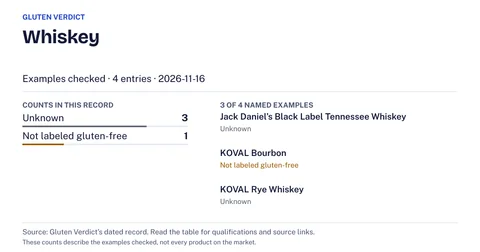 WhiskeyDepends on the productchecked Nov 16, 2026
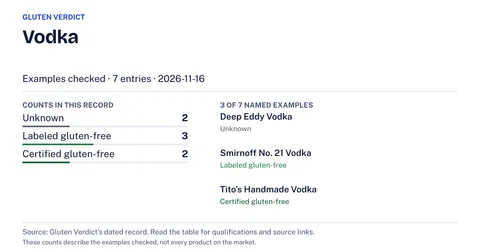 VodkaDepends on the productchecked Nov 16, 2026
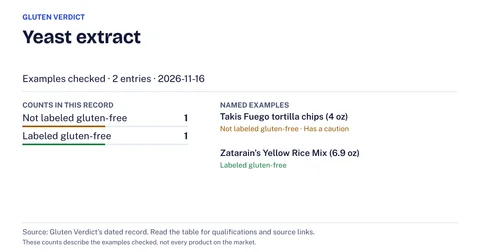 Yeast extractDepends on the productchecked Nov 16, 2026
Questions people ask
Does distilling a drink made from wheat, barley or rye remove the gluten?
FDA says distillation done properly is capable of removing all proteins, including gluten30, but that depends on the adequacy of the process31. Gluten Intolerance Group notes that a spirit could still encounter gluten after distillation, such as whiskey aged in a beer barrel47.
Can a fermented food made from wheat or barley be labeled gluten-free?
Not unless the grains were processed to remove gluten, with under 20 ppm gluten in the food, before fermentation or hydrolysis24.
Do makers have to test a fermented food for gluten?
FDA says the regulation does not require manufacturers to test21. For fermented and hydrolyzed foods it requires records instead15.
More in Label reading and gluten-free claims
 “Low gluten”, “gluten removed” and “gluten friendly” on a labelWhat “low gluten”, “gluten removed” and “gluten friendly” mean on a US label, which phrases FDA or TTB define, and what to ask the maker.
 How to read a US food label for glutenWhere gluten shows up on a US food label: the gluten-free claim, the Contains line, the ingredient list and may-contain lines, and what each means.
 Who regulates a gluten-free claim: FDA, USDA or TTBWhich agency sets the rules for a gluten-free claim on packaged food, meat, eggs, beer, wine and spirits, and what to check when a label is unclear.
 The FDA gluten-free rule: what 21 CFR 101.91 requires and what 20 ppm measuresWhat FDA’s gluten-free rule requires, which claim words it covers, what 20 ppm means for a portion of food, and how FDA checks that a claim holds.
 When a gluten-free label looks wrong: what to keep, who to tell, where to lookFound wheat, barley or malt in a food labeled gluten-free? What to keep, whom to tell, which US agency takes the report, and where recalls are listed.
 The Contains line names wheat, not barley or rye: what US allergen labels coverWhat the US allergen Contains line covers, why it names wheat but not barley or rye, and which ingredient-list names stand in for them.
Related guides
 Where wheat, barley and rye hide in processed food: 15 places to checkFifteen processed foods where wheat, barley or rye turn up, the label step that catches each, and what US allergen law does and does not flag.
 Hydrolyzed protein, yeast extract and wheat starch on a US food labelWhich grain is behind hydrolyzed protein, yeast extract and wheat starch, what a US label must name, and what to ask the maker.
 Vinegar, vanilla and other flavor extracts: what to check on the bottleSort a bottle of vinegar or extract into ordinary, check the label or avoid, using the ingredient line and what the charities and makers say.
 Gluten-removed beer: what the treatment does, why the tests are disputed and what the TTB statement saysWhat “crafted to remove gluten” means on a barley beer, why lab results on it are disputed, and what TTB, NCA and GIG say, for your clinician talk.
Sources
- [1, 6, 8, 9, 10, 19, 21, 22, 23, 24, 25, 26, 27, 29, 30, 31, 33, 36, 37, 38] US Food and Drug Administration, Questions and Answers on the Gluten-Free Food Labeling Final Rule, checked Nov 17, 2026.
- [2] US Food and Drug Administration, FDA Issues Final Rule on Gluten-Free Labeling of Fermented and Hydrolyzed Foods, checked Nov 17, 2026.
- [3, 4] US Food and Drug Administration, FDA Compliance Date for the Final Rule on Gluten-Free Labeling of Fermented and Hydrolyzed Foods Approaching, checked Nov 17, 2026.
- [5, 7, 15, 16, 17, 18, 32] Electronic Code of Federal Regulations, 21 CFR 101.91 Gluten-free labeling of food, checked Nov 17, 2026.
- [11, 12, 13, 20, 44] US Food and Drug Administration (Federal Register, 85 FR 49240, via GPO govinfo), Food Labeling; Gluten-Free Labeling of Fermented or Hydrolyzed Foods (final rule, August 13, 2020), checked Nov 17, 2026.
- [14, 45, 46, 47] Gluten Intolerance Group, Does Fermentation or Distillation Make a Product Gluten-Free?, checked Nov 17, 2026.
- [28] National Celiac Association, Labeling fermented and hydrolyzed foods, checked Nov 17, 2026.
- [34, 35] Gluten Intolerance Group, Should a person with celiac disease avoid vinegar and products containing vinegar? (GIG FAQ, October 14, 2019), checked Nov 17, 2026.
- [39, 40, 41, 42, 43, 50] Alcohol and Tobacco Tax and Trade Bureau (TTB), TTB Ruling 2020-2: Gluten Content Statements in the Labeling and Advertising of Wine, Distilled Spirits, and Malt Beverages, checked Nov 17, 2026.
- [48, 49] Gluten Intolerance Group, Are Maltose, Maltodextrin, Glucose Syrup, Yeast Extracts, and Wheat Starch Gluten-Free?, checked Nov 17, 2026.