Gluten-free with type 2 diabetes or high cholesterol: where the plans overlap
Short answer
The two plans overlap on whole, minimally processed foods that are naturally gluten-free, and packaged gluten-free foods can cut across them1, 10. Three places to check:
- Your plate: vegetables, fruit, legumes, nuts, fish and whole grains appear in the diabetes and heart-health guidance, and GIG names gluten-free versions of them2, 18, 3.
- Packaged gluten-free foods, which NIDDK says may be higher in fat and sugar than the same foods with gluten, and the ADA asks people with diabetes to minimize refined grains and processed foods in general1, 2.
- The Nutrition Facts panel, where FDA lists saturated fat, sodium and added sugars as nutrients to get less of and dietary fiber as one to get more of4, 5.
Part of Nutrition and combining diets, 24 guides

Key points
- The ADA says there is no one-size-fits-all eating pattern for diabetes and that meal planning should be individualized6; the ADA and NIDDK both point to a registered dietitian for medical nutrition therapy61, 7.
- FDA defines “gluten-free” by gluten8; fiber, added sugars, saturated fat and sodium are read from the Nutrition Facts panel4.
- The ADA’s Standards name at least 14 g of fiber per 1,000 kcal for people with diabetes9, and the National Celiac Association says gluten-free baked goods and flour mixes are often lower in fiber and higher in sugar and starches than regular ones10.
- FDA’s heart-health claim for soluble fiber names whole oats or barley (and psyllium seed husk) as sources11, and barley is a grain a gluten-free food cannot be intentionally made with12: a heart claim on the box says nothing about gluten.
- The Gluten Intolerance Group says celiac disease has a genetic link with type 1 diabetes and no connection with type 213.
What each plan asks for
None of these plans is a single menu. The American Diabetes Association (ADA) says in its Standards of Care that there is no one-size-fits-all eating pattern for individuals with diabetes and that meal planning should be individualized6. It lists Mediterranean, DASH, low-fat, carbohydrate-restricted, vegetarian and vegan patterns as the evidence-based ones most frequently recommended14. Its recommendation 5.14 asks that eating patterns emphasize nonstarchy vegetables, whole fruits, legumes, lean proteins, whole grains, nuts and seeds, and low-fat dairy or nondairy alternatives, and minimize red meat, sugar-sweetened beverages, sweets, refined grains, and processed and ultraprocessed foods2.
NIDDK’s page for people with diabetes lists what a healthy meal plan may include: dairy or plant-based dairy products, fruits, nonstarchy vegetables, protein foods and whole grains15. It suggests meals and snacks with fewer foods high in saturated fat, foods high in sodium, and sugary foods and drinks16, and says healthy foods and drinks can help keep blood glucose, blood pressure and cholesterol in the ranges a health care professional recommends17.
The American Heart Association (AHA) describes the same shape for heart health: vegetables and fruits, whole grains, plant proteins and fish, liquid plant oils in place of saturated fat, minimally processed foods, little added sugar and low sodium18.
The celiac side adds one fixed rule. NIDDK says people with celiac disease need to follow a gluten-free diet for life19.
This page reports what these organizations publish. It is not a plan for any one person: the targets for blood glucose, blood pressure and cholesterol come from your own health care professional17.
Where they agree: naturally gluten-free whole foods
Much of what both plans emphasize needs no gluten-free substitute. NIDDK lists meat, fish, fruits, vegetables, rice and potatoes, without additives or some seasonings, as naturally gluten-free20. The Gluten Intolerance Group (GIG) tells readers to focus on whole foods that are naturally free of gluten instead of relying on processed gluten-free products3.
| Food group | What the diabetes and heart plans say | Gluten notes |
|---|---|---|
| Beans, lentils, chickpeas | Legumes are in the ADA’s core list2. The AHA shifts protein from meat toward plant sources such as beans, peas and lentils18, and NIDDK’s plate method counts beans among high-fiber carb foods21. | The National Celiac Association (NCA) says legumes risk cross-contact with gluten-containing grains, so pick through them even when labeled gluten-free22. Our verdicts: lentils, chickpeas. |
| Gluten-free whole grains | Whole grains are in the ADA’s core list2 and in NIDDK’s plate method as high-fiber carb foods21. | GIG names quinoa, brown rice, buckwheat and millet as gluten-free whole grains23. NCA adds that they should be labeled gluten-free because many have had cross-contact with gluten-containing grains24. Our verdicts: quinoa, rice. |
| Vegetables and fruit | Nonstarchy vegetables and whole fruits head the ADA’s list2; NIDDK’s plate method makes nonstarchy vegetables half the plate21. | NIDDK lists fruits and vegetables among naturally gluten-free foods, without additives or some seasonings20. |
| Nuts, seeds, avocado, olive oil | The ADA names nuts and seeds2 and a Mediterranean pattern rich in fatty fish, nuts and seeds25. The AHA asks for non-tropical liquid plant oils in place of saturated fat18. | GIG lists healthy fats from nuts, seeds, avocado and olive oil26. Our verdicts: avocado, olive oil. |
| Fish and lean protein | The AHA asks for regular fish and seafood and, for meat eaters, skinless lean cuts18; the ADA lists lean proteins2. | NIDDK lists meat and fish among naturally gluten-free foods, without additives or some seasonings20. |
One National Celiac Association answer to a reader’s question about fiber and cholesterol points to a gluten-free Mediterranean-style pattern27, and the ADA asks clinicians to counsel people with diabetes to consider an eating plan emphasizing elements of a Mediterranean pattern25.
Where packaged gluten-free foods cut across a diabetes or heart plan
NIDDK says some packaged gluten-free foods may be higher in fat and sugar than the same foods that contain gluten1. NCA says gluten-free baked goods and flour mixes are often lower in fiber and higher in sugar and starches than their regular counterparts10. GIG’s heart bulletin says some gluten-free packaged goods are high in fat, sugar, salt and calories, and that while they are fine on occasion, over-reliance may contribute to weight gain, high cholesterol, insulin resistance and high blood pressure28.
Two 2021 papers in the journal Nutrients describe the pattern in people with celiac disease. One, of nutritional imbalances in adults following a gluten-free diet, describes low complex carbohydrate and fiber intakes and high fat (especially saturated fat) and sugar intakes, which it relates to gluten-free products and their nutritional composition along with unbalanced dietary habits29. The other, a narrative review, concludes that an inadequately balanced gluten-free diet can increase the risk of obesity, negatively affect glucose and lipid metabolism, and increase the risk of metabolic syndrome30.
The ADA’s guidance approaches the same foods from the diabetes side. It asks to minimize refined grains and processed and ultraprocessed foods2, and says limiting processed foods is an effective way to reduce carbohydrate intake for some adults with diabetes31. Neither sentence mentions gluten, so a gluten-free product that is a refined, processed food falls under them as its wheat version does. The ADA also notes that when foods high in saturated fat are cut back, they should be replaced with foods high in unsaturated fats and not with refined carbohydrate foods32.
The sources use hedges: “may be”, “often”, “can sometimes be”1, 10, 33. Not every packaged gluten-free food is a poor fit, and the panel on the box in your hand settles it.
The research on gluten-free diets and cardiovascular risk does not point one way. A 2024 systematic review and meta-analysis that pooled 19 articles reported a significantly beneficial effect of gluten-free diets on HDL cholesterol, systolic blood pressure and C-reactive protein34. The same abstract also reports that in celiac patients, and in interventions longer than 48 weeks, a gluten-free diet increased total cholesterol and HDL compared with non-celiac patients and shorter interventions, respectively66. Our guide to what each gluten-free and blood sugar study measured reads those studies one by one, and is a gluten-free diet healthy without celiac disease covers the question for people who do not have it.
Our verdict pages answer whether a food contains gluten, not whether it fits a diabetes or heart plan. For the staples where gluten-free versions exist, start with the verdicts for bread, pasta, cereal and oatmeal, then read the panel.
Reading the Nutrition Facts panel for both plans
FDA’s gluten-free rule is about gluten: no gluten-containing grain ingredients (unless processed to remove gluten) and any unavoidable gluten below 20 parts per million8. Most of what a diabetes or heart plan watches is listed on the Nutrition Facts panel, which FDA explains on its label page4. The AHA also tells readers to read the Nutrition Facts and ingredient list on packaged foods to choose those with less sodium, added sugars and saturated fat35.
| Line on the panel | What the sources say |
|---|---|
| Serving size | FDA: pay attention to the serving size, especially how many servings are in the package36. |
| Total carbohydrate | NIDDK: the body turns carbs from food into glucose, which can raise blood glucose37. Carb counting and the plate method are two common ways to plan how much to eat, and the health care team helps pick one38. |
| Dietary fiber | FDA lists fiber as a nutrient to get more of5 and says a diet high in dietary fiber can lower blood glucose and cholesterol levels39. FDA’s Daily Value is 28g on a 2,000 calorie diet40. The ADA’s Standards name at least 14 g of fiber per 1,000 kcal for people with diabetes9. |
| Added sugars | FDA lists added sugars as a nutrient to get less of4 and notes that Total Sugars also counts sugars naturally in milk and fruit41. FDA’s Daily Value for added sugars is 50g40. |
| Saturated fat | FDA: get less of it4; its Daily Value is 20g40. The ADA counsels people with diabetes to limit foods high in saturated fat to help reduce cardiovascular disease risk42. |
| Trans fat | FDA cites the Dietary Guidelines for Americans: diets higher in trans fat are associated with increased blood levels of LDL cholesterol, which are associated with increased cardiovascular disease risk43. |
| Sodium | FDA: get less of it4; its Daily Value is 2,300mg40. The ADA counsels people with diabetes to limit sodium to less than 2,300 mg/day, as clinically appropriate44. GIG’s heart bulletin suggests choosing foods with a sodium Daily Value of less than 10%45. |
FDA’s rule of thumb for the percent Daily Value column: 5% or less of a nutrient per serving is low, and 20% or more is high46. Fiber that counts toward your plan has to come from foods you can eat: fiber on a gluten-free diet lists the gluten-free sources the charities name, and how to read a US food label for gluten covers the gluten side of the same package.
Certified oats and soluble fiber: what the sources say
Oats are where the two plans seem to meet most directly. GIG’s heart tips list certified gluten-free oats among foods that help reduce cholesterol47, and GIG’s heart bulletin explains that soluble fiber forms a substance in the intestines that helps block cholesterol absorption48.
FDA has an authorized health claim on soluble fiber and heart disease. A claim has to say that diets low in saturated fat and cholesterol that include soluble fiber from certain foods “may” or “might” reduce the risk of heart disease49. The daily intake the rule names for beta-glucan soluble fiber is 3 g or more per day from whole oats or barley, or a combination of the two11.
The catch for a reader with celiac disease is the second grain in that rule. The rule’s daily intake for beta-glucan covers whole oats or barley11, and a food labeled gluten-free cannot be intentionally made with barley12. A heart-health claim on a box therefore says nothing about gluten; the gluten-free claim is a separate statement.
On the gluten side, FDA says oats labeled gluten-free must contain less than 20 ppm gluten and do not have to be certified50. GIG advises oats that are labeled, or preferably certified, gluten-free51. NIDDK says to talk with a doctor or registered dietitian about whether to include oats and how much52. Our guides on oats and celiac disease and gluten-free versus regular oats go further, and so does the oatmeal verdict.
Why this page is about type 2, not type 1
GIG says there is a genetic link between type 1 diabetes and celiac disease and no connection between type 2 diabetes and celiac disease13. Coeliac UK says between 4 and 9% of people with type 1 diabetes also have a diagnosis of coeliac disease, compared with 1% in the general population53, and that there is no recognised link between coeliac disease and type 2 diabetes54.
For type 1 diabetes and celiac disease together, read celiac disease and type 1 diabetes.
What celiac charities and one large cohort say about heart health
Three celiac charities publish heart-health advice for people on a gluten-free diet. Each row is that charity’s advice, not a rule, and the Celiac Disease Foundation page is dated 201556.
| Charity | What it says |
|---|---|
| Gluten Intolerance Group | Focus on whole foods that are naturally free of gluten rather than relying on processed gluten-free products3. Good gluten-free fiber sources include vegetables, fruits, legumes and gluten-free whole grains55. |
| Celiac Disease Foundation | Limit sodium and simple sugars; the most effective way to limit both is to eat more whole foods and reduce packaged foods56. |
| National Celiac Association | Eat fewer processed gluten-free foods and more gluten-free whole grains, labeled gluten-free because many have had cross-contact with gluten-containing grains24. |
A 2023 prospective analysis of UK Biobank data, published in BMJ Medicine, followed 469,095 adults aged 40 to 69, 2,083 of whom had coeliac disease57. Coeliac disease was associated with an increased risk of cardiovascular disease, with a hazard ratio of 1.27 (95% confidence interval 1.11 to 1.45)58. The authors report that people with coeliac disease had a lower prevalence of traditional cardiovascular risk factors but a higher risk of developing cardiovascular disease59, and conclude that risk scores used in clinical practice might not capture the excess risk and that clinicians should be aware of the need to optimise cardiovascular health in this population60.
That study reports an association in a cohort. It does not test any particular gluten-free food or product57.
Questions to bring to a dietitian or clinician who knows both
Both the ADA and NIDDK point to a registered dietitian for this work. The ADA recommends individualized medical nutrition therapy by referral to a registered dietitian nutritionist for people with prediabetes or diabetes61. NIDDK says a registered dietitian can provide medical nutrition therapy, including counseling to create and follow a meal plan, and suggests asking your insurance company whether benefits include it7. NIDDK’s celiac page says a doctor and a registered dietitian can help plan a healthy, balanced gluten-free diet62.
- Which eating pattern are we building on, and how should my gluten-free bread, pasta and cereal look on the panel?
- Do I need to count carbohydrates, or is the plate method enough? NIDDK lists both as common ways to plan portions38.
- What fiber target fits my calorie level, and which gluten-free foods get me there? The ADA’s Standards name at least 14 g per 1,000 kcal for people with diabetes9.
- Should oats be part of my plan, which labeled or certified gluten-free ones, and how much? NIDDK says to ask both52.
- Do my medicines change when I should eat? NIDDK says to talk with your team about when to eat or drink63.
- Which packaged gluten-free foods can be everyday foods and which occasional ones? GIG says some are fine on occasion28.
- Which numbers are we tracking, how often, and what would change the plan?
- Does my insurance cover medical nutrition therapy? NIDDK suggests asking7.
To find a dietitian who knows celiac disease, see finding a celiac dietitian; for coverage questions, insurance coverage for celiac testing and a dietitian.
Verdicts in this guide
 OatmealDepends on the productchecked Nov 16, 2026
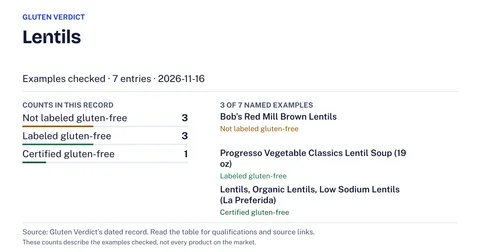 LentilsDepends on the productchecked Nov 16, 2026
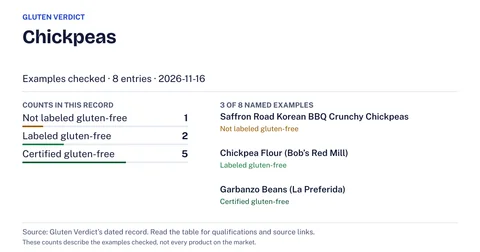 ChickpeasNaturally gluten-freechecked Nov 16, 2026
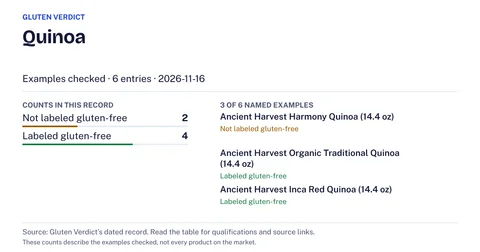 QuinoaNaturally gluten-freeBuy it labeled gluten-freechecked Nov 16, 2026
 BreadContains glutenchecked Nov 16, 2026
 PastaContains glutenchecked Nov 16, 2026
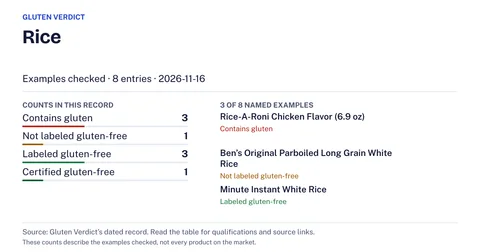 RiceNaturally gluten-free3 of 8 products we checked contain gluten: Rice-A-Roni Chicken Flavor (6.9 oz), Near East Original Rice Pilaf, and Ben’s Original Ready Rice Rice PilafBuy it labeled gluten-freechecked Nov 16, 2026
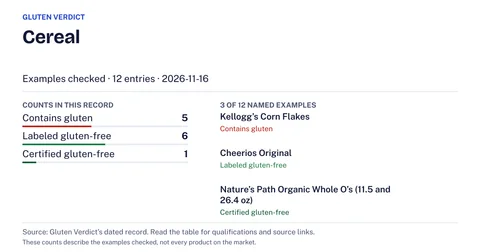 CerealDepends on the product5 of 12 products we checked contain glutenchecked Nov 16, 2026
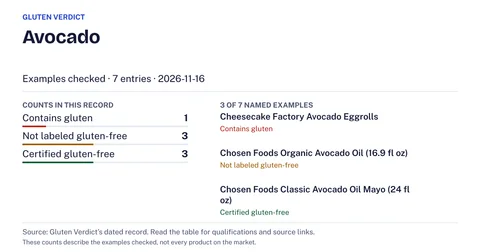 AvocadoNaturally gluten-free1 of 7 products we checked contains gluten: Cheesecake Factory Avocado Eggrollschecked Nov 16, 2026
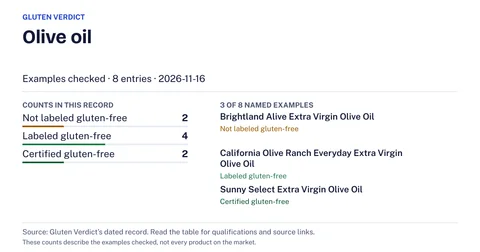 Olive oilUnknownchecked Nov 16, 2026
Questions people ask
Does the American Diabetes Association recommend a gluten-free diet for type 2 diabetes?
Not in the nutrition section we read. It lists Mediterranean, DASH, low-fat, carbohydrate-restricted, vegetarian and vegan patterns as the ones most frequently recommended14, and the word gluten does not appear on that page64. For people with celiac disease, NIDDK says a gluten-free diet is needed for life19.
Can a Mediterranean-style eating pattern be gluten-free?
The ADA describes the Mediterranean pattern as fresh fruits and vegetables, whole grains, beans, and nuts and seeds, with olive oil as the primary fat and low to moderate amounts of fish, eggs and poultry65. The grains would have to be gluten-free ones, such as the quinoa, brown rice, buckwheat and millet GIG lists23. A National Celiac Association answer recommends a gluten-free Mediterranean diet for fiber and cholesterol27.
Does a heart-health claim on an oat product mean it is gluten-free?
No. FDA’s soluble fiber claim names whole oats or barley as beta-glucan sources11, and a food labeled gluten-free cannot be intentionally made with barley12. Gluten-free is its own claim, defined by gluten content8.
More in Nutrition and combining diets
 Does a gluten-free diet change blood sugar? What each study measuredRead the BMJ heart-disease cohort, the type 2 diabetes cohort, a pasta glucose trial and celiac and type 1 diabetes sources by what each measured.
 Fiber on a gluten-free diet: where it drops and what fills the gapCheck the fiber on gluten-free breads and pastas against the US Daily Value, and see which gluten-free whole foods charities list to add more.
 Is a gluten-free diet healthy if you do not have celiac disease?What a gluten-free label promises, what studies of gluten-free products and eaters report, and why testing comes before cutting gluten.
 Does a gluten-free diet help you lose weight?What reviews, NIDDK and celiac charities report about a gluten-free diet and weight outside celiac disease, and what the substitute foods contain.
 What to eat after a celiac diagnosis: what the sources document and what they do notBone broth, collagen, glutamine or plain staples? What NIDDK, ACG and celiac charities document after a diagnosis, and what no page we read names.
 Iron, B12 and B6 on a gluten-free diet: where they come from and how to check a labelWhich foods supply iron, B12 and B6, what US enrichment standards name, and how to check whether a gluten-free flour, bread or cereal is fortified.
Related guides
 Type 1 diabetes and celiac disease: the overlap and the screening guidelinesWhy celiac disease is more common with type 1 diabetes, what the ADA, ISPAD and ACG say about screening and timing, and what to ask the care team.
 Oats and celiac disease: what a gluten-free oat label does and does not tell youWhat FDA’s rule covers for oats, how makers get oats to the gluten-free limit, what avenin studies found, and what to ask your doctor.
 A 504 plan and school meal rules for celiac disease: what to ask for and where to complainMeal substitution or a 504 plan for a child with celiac disease: what each rule says, what the medical statement must hold, and where to complain.
 Certified or naturally gluten-free: when a seal mattersWhich naturally gluten-free foods are worth buying with a claim or seal: produce, grains, flours, oats and processed foods, with FDA rules and test data.
Sources
- [1, 19, 20, 52, 62] National Institute of Diabetes and Digestive and Kidney Diseases (NIDDK), Eating, Diet, & Nutrition for Celiac Disease, checked Nov 17, 2026.
- [2, 6, 9, 14, 25, 31, 32, 42, 44, 61, 64, 65] American Diabetes Association Professional Practice Committee, Standards of Care in Diabetes-2026, section 5: Facilitating Positive Health Behaviors and Well-being to Improve Health Outcomes (Diabetes Care 2026;49 Suppl 1), checked Nov 17, 2026.
Read the full text of section 5 on 2026-11-17: the word “gluten” does not appear anywhere on the page.
- [3, 23, 26, 33, 47] Gluten Intolerance Group, I Heart My Gluten-Free Heart: Tips for Keeping Your Heart Healthy on a Gluten-Free Diet, checked Nov 17, 2026.
- [4, 5, 36, 39, 40, 41, 43, 46] US Food and Drug Administration, How to Understand and Use the Nutrition Facts Label, checked Nov 17, 2026.
Read on 2026-11-17: the table “Examples of DVs versus %DVs”, based on a 2,000 calorie diet, lists saturated fat 20g (goal: less than), sodium 2,300mg (less than), dietary fiber 28g (at least) and added sugars 50g (less than).
- [7, 15, 16, 17, 21, 37, 38, 63] National Institute of Diabetes and Digestive and Kidney Diseases (NIDDK), Healthy Living with Diabetes, checked Nov 17, 2026.
Read on 2026-11-17: under “Choose healthy foods and drinks”, the list of what healthy meal plans for people who have diabetes may include names dairy or plant-based dairy products, fruits, nonstarchy vegetables, protein foods and whole grains.
Read on 2026-11-17: under “Try to plan meals and snacks that have fewer”, the list names foods high in saturated fat, foods high in sodium, and sugary foods and sweet drinks (cookies, cakes, soda, juice, flavored coffee and sports drinks).
- [8, 12, 50] US Food and Drug Administration, Questions and Answers on the Gluten-Free Food Labeling Final Rule, checked Nov 17, 2026.
- [10, 22, 24, 27] National Celiac Association, What can I eat to increase my fiber intake and lower my cholesterol?, checked Nov 17, 2026.
- [11, 49] US Food and Drug Administration (21 CFR 101.81, via eCFR), Health claims: Soluble fiber from certain foods and risk of coronary heart disease (CHD), checked Nov 17, 2026.
- [13, 51] Gluten Intolerance Group, Diabetes and Celiac Disease, checked Nov 17, 2026.
- [18, 35] American Heart Association, The American Heart Association Diet and Lifestyle Recommendations, checked Nov 17, 2026.
Read on 2026-11-17: under “Eat an overall healthy dietary pattern that includes”, the list names a wide variety of vegetables and fruits; whole grains rather than refined grains; healthy sources of protein (a shift from meat to plant sources like beans, peas, lentils and nuts, regular fish and seafood, low-fat or fat-free dairy, skinless and lean meat cuts); non-tropical liquid plant oils in place of saturated fat sources such as coconut oil, butter and fatty meats; whole and minimally processed foods instead of ultraprocessed foods; minimized added sugars; and foods low in sodium.
- [28, 45, 48, 55] Gluten Intolerance Group, Heart Healthy Gluten-Free Diet, checked Nov 17, 2026.
- [29] Cardo et al., University of the Basque Country (PubMed abstract), Nutritional Imbalances in Adult Celiac Patients Following a Gluten-Free Diet (Nutrients 2021), checked Nov 17, 2026.
- [30] Marciniak et al., Poznan University of Medical Sciences (PubMed abstract), Multidimensional Disadvantages of a Gluten-Free Diet in Celiac Disease: A Narrative Review (Nutrients 2021), checked Nov 17, 2026.
- [34, 66] Rohani et al., Tehran University of Medical Sciences (PubMed abstract), Impact of gluten-free diet (GFD) on some of cardiovascular risk factors: a systematic review and meta-analysis (J Nutr Sci 2024), checked Nov 17, 2026.
- [53, 54] Coeliac UK, Media today on Type 2 diabetes and gluten free, checked Nov 17, 2026.
- [56] Celiac Disease Foundation, Take Care of Your Heart, checked Nov 17, 2026.
- [57, 58, 59, 60] Conroy et al., University of Oxford (PubMed abstract), Association between coeliac disease and cardiovascular disease: prospective analysis of UK Biobank data (BMJ Medicine 2023), checked Nov 17, 2026.