Spelt, Kamut, Durum and Einkorn: Every Kind of Wheat Has Gluten
Short answer
Every kind of wheat counts as a gluten-containing grain: FDA’s rule defines wheat as any species of the genus Triticum and lists it with rye, barley and their crossbred hybrids1, 2. The Gluten Intolerance Group names durum, spelt, semolina, emmer, farina, farro and einkorn as varieties and forms of wheat8, and NIDDK names durum, emmer, semolina and spelt9. “Ancient” or “easier to digest” on a package does not change that15, 22.
Part of Gluten basics and myths, 13 guides
Key points
- FDA’s gluten-free rule counts wheat (any species of the genus Triticum), rye, barley and their crossbred hybrids as gluten-containing grains1, 2, 3, 4.
- The Gluten Intolerance Group and NIDDK both name durum, semolina, spelt and emmer as wheat; the Gluten Intolerance Group also names einkorn, farro and farina8, 9.
- Makers of ancient wheats say so on their own pages: Bob’s Red Mill writes that spelt is not gluten free, and Jovial writes that einkorn has as much gluten as modern wheat15, 18.
- Jovial’s “0 on the gluten index” for einkorn is, as the company describes it, a dough-stretching strength value19, 20.
What counts as wheat under the US rule
FDA’s gluten-free rule begins with a definition. A “gluten-containing grain” is wheat, rye or barley, or a crossbred hybrid of them, with triticale named as the example1, 2, 3, 4.
The definition works by genus, not by a list of varieties. Wheat is “any species belonging to the genus Triticum”1, rye is any species of the genus Secale3 and barley any species of the genus Hordeum4. The rule’s own example of a gluten-containing grain that cannot be an ingredient in a gluten-free food is spelt wheat5.
In plain terms, a food labeled “gluten-free” cannot be intentionally made with any amount of one of these grains, or with an ingredient derived from one that was not processed to remove gluten7.
A check on the names: the research papers we read call einkorn Triticum monococcum25 and durum Triticum durum26. Both begin with the genus the rule names.
Wheat words on a label, decoded
Each word below is followed by what the sources say about it. Where we have a verdict page for the food, it is linked.
| Word on the label | What the sources say |
|---|---|
| Durum, semolina | The Gluten Intolerance Group names both as varieties and forms of wheat8, and NIDDK names both among the types of wheat in which gluten occurs naturally9. |
| Farina | The Gluten Intolerance Group names farina among the varieties and forms of wheat8. |
| Graham | The Celiac Disease Foundation lists graham among the varieties and derivatives of wheat30. |
| Spelt | Named as a variety or form of wheat by the Gluten Intolerance Group8 and NIDDK9, and used by FDA’s rule as its example of a gluten-containing grain5. |
| Farro | The Gluten Intolerance Group lists farro among the varieties of wheat8. Bob’s Red Mill’s farro page says “Although not gluten free”16. |
| Einkorn, emmer | Both named among the varieties and forms of wheat by the Gluten Intolerance Group8; NIDDK also names emmer9. |
| Kamut | The Celiac Disease Foundation lists “KAMUT® khorasan wheat” among the varieties and derivatives of wheat30, and EU Regulation 1169/2011 (EU law, not the US rule) names kamut among the cereals containing gluten28. The US rule and the FDA pages cited here do not name it. |
| Bulgur | Bob’s Red Mill says bulgur is made from wheat and therefore contains gluten11. |
| Couscous | The National Celiac Association says couscous is made from semolina, which comes from durum wheat10. |
| Triticale | A hybrid of wheat and rye12, 13; the rule names it as its example of a crossbred hybrid2. |
| Rye, barley | The other two gluten-containing grains in the rule3, 4. |
“Ancient”, “easier to digest” and “low gluten index”
A review in Nutrition Bulletin notes that there is no clear definition of “ancient grains”; the term usually includes einkorn, emmer, spelt and Khorasan wheat21. What makers of these wheats say about gluten on their own pages:
- Bob’s Red Mill’s spelt flour page says spelt can be more easily digested than other forms of wheat and that some people with wheat intolerances may be able to tolerate it, and continues: “however, spelt is not gluten free”15.
- Coeliac UK, a UK charity, reported in 2013 that a magazine feature had wrongly called spelt a gluten-free grain; the correction identified it as not suitable for those with coeliac disease14.
- Jovial’s einkorn spaghetti page calls einkorn “the original wheat” and says it is becoming the wheat of choice among the gluten sensitive because of its very weak gluten17. Another Jovial page says einkorn has as much gluten as modern wheat but is free of the high molecular weight proteins that are hard to digest18.
What a gluten index of 0 means
Jovial describes the Gluten Index as a test in which a simple dough of flour and water is stretched and given a strength value19. It says einkorn registers 0 on that index and that the dough tears and will not stretch because the gluten is so weak20. As Jovial describes it, that number records how a dough behaves19, and the same company says einkorn has as much gluten as modern wheat18.
What the research says
The Nutrition Bulletin review states that gluten is present in all wheat grains22. Its authors report that, compared with bread wheat, ancient wheats contain more protein and gluten and more of many celiac-active epitopes, and they conclude that no single wheat type can be recommended as better for reducing the risks of, or mitigating the severity of, coeliac disease23.
One laboratory study (Asledottir and colleagues, 2020) digested einkorn, spelt and emmer with human gastrointestinal juices and found they released fewer T cell epitope-containing peptides than four common wheat varieties. Its authors still write that the ancestral wheats are “still highly toxic to celiac patients”24.
For a label, the deciding test is the rule: a food intentionally made with a wheat grain, or an ingredient from it that was not processed to remove gluten, cannot be labeled gluten-free7, whatever the package says about age or digestibility.
The allergen line and “wheat” on a gluten-free food
The US allergen law of 2004 (FALCPA) lists wheat among the major food allergens; barley and rye are not on that list27. So a Contains line covers wheat but not those two grains; for any of the wheat words above, read the full ingredient list. Our guide to how to read a food label covers the rest of the label.
A “wheat-free” label is a separate matter, covered in our guide to wheat-free versus gluten-free labels.
Wheat can appear on a food that is labeled gluten-free. When a food carries a gluten-free claim and also lists wheat, the rule treats it as misbranded unless the word “wheat” in the ingredient list or Contains statement is followed by an asterisk that points to a statement: “The wheat has been processed to allow this food to meet the Food and Drug Administration (FDA) requirements for gluten-free foods.”6 The rule’s own example of such an ingredient is wheat starch29.
Outside the US the lists differ. EU Regulation 1169/2011 names the cereals containing gluten as wheat, rye, barley, oats, spelt, kamut or their hybridised strains28.
Our verdicts for wheat foods
Each page lists the sources we read and the date we read them: spelt, farro, bulgur, couscous, seitan, flour, pasta, bread, egg noodles, udon, graham crackers, barley and wheat starch. The package in your hand has the final word.
Verdicts in this guide
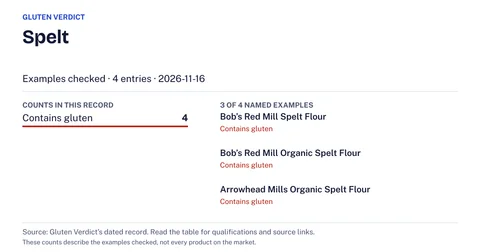 SpeltContains glutenchecked Nov 16, 2026
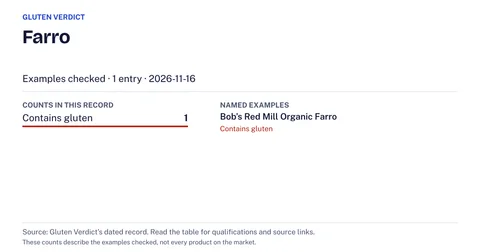 FarroContains glutenchecked Nov 16, 2026
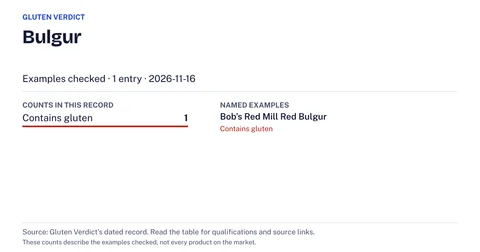 BulgurContains glutenchecked Nov 16, 2026
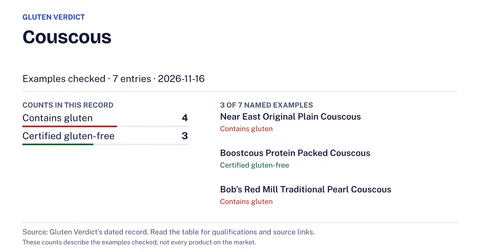 CouscousContains glutenchecked Nov 16, 2026
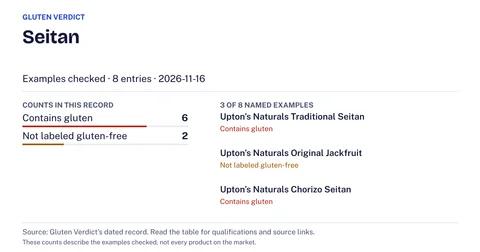 SeitanContains glutenchecked Nov 16, 2026
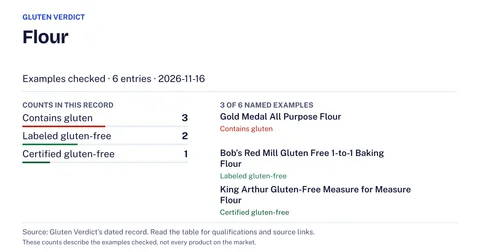 FlourContains glutenchecked Nov 16, 2026
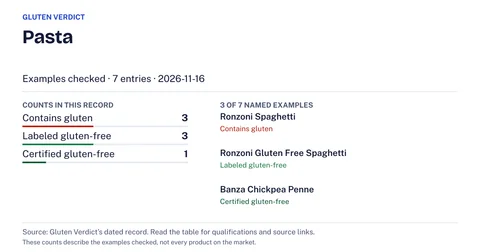 PastaContains glutenchecked Nov 16, 2026
 BreadContains glutenchecked Nov 16, 2026
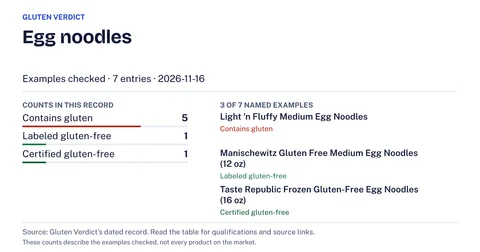 Egg noodlesContains glutenchecked Nov 16, 2026
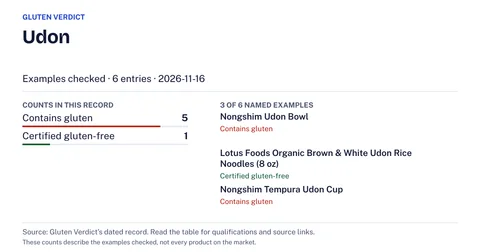 UdonContains glutenchecked Nov 16, 2026
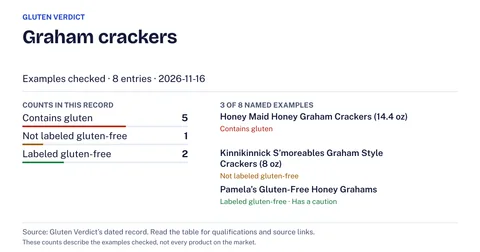 Graham crackersContains glutenchecked Nov 16, 2026
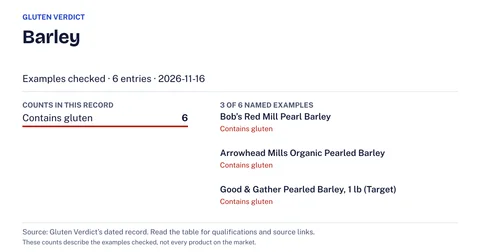 BarleyContains glutenchecked Nov 16, 2026
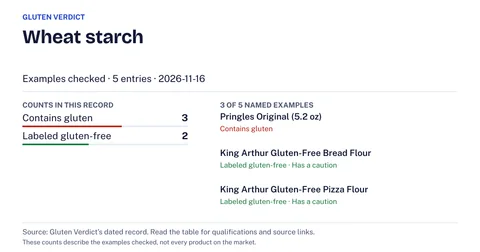 Wheat starchDepends on the product3 of 5 products we checked contain gluten: Pringles Original (5.2 oz), Jiffy Corn Muffin Mix, and Chex Mix Bold Garlic and Herbchecked Nov 16, 2026
Questions people ask
Is einkorn gluten free?
No. The Gluten Intolerance Group lists einkorn under wheat8. Jovial, which sells einkorn pasta17, says einkorn has as much gluten as modern wheat18.
Is spelt gluten free?
No. The Gluten Intolerance Group lists spelt under wheat8, and FDA’s rule uses spelt wheat as its example of a gluten-containing grain5. Bob’s Red Mill’s own page says spelt is not gluten free15.
Does kamut contain gluten?
Yes, it is listed with the wheats. The Celiac Disease Foundation lists “KAMUT® khorasan wheat” among the varieties and derivatives of wheat30, and EU law names kamut among the cereals containing gluten28. FDA’s rule and the FDA pages cited here do not name kamut.
Are durum wheat and semolina gluten free?
No. NIDDK names durum and semolina among the types of wheat in which gluten occurs naturally9, and the National Celiac Association says semolina comes from durum wheat10.
More in Gluten basics and myths
 Did modern wheat get worse? What the variety studies show on glutenWhat studies of old and modern wheat varieties show on gluten, and what they say about spelt, einkorn and ancient wheats and celiac disease.
 What in wheat bothers people if it is not gluten?The non-gluten candidates for wheat symptoms (fructans, ATIs, wheat allergy), the trial or review behind each, and what limits it.
 Glyphosate, lectins and “wheat belly”: three wheat claims checkedWhere the glyphosate, wheat lectin and “wheat belly” claims come from, what the reviews found, and what NIDDK and FDA’s gluten-free rule say.
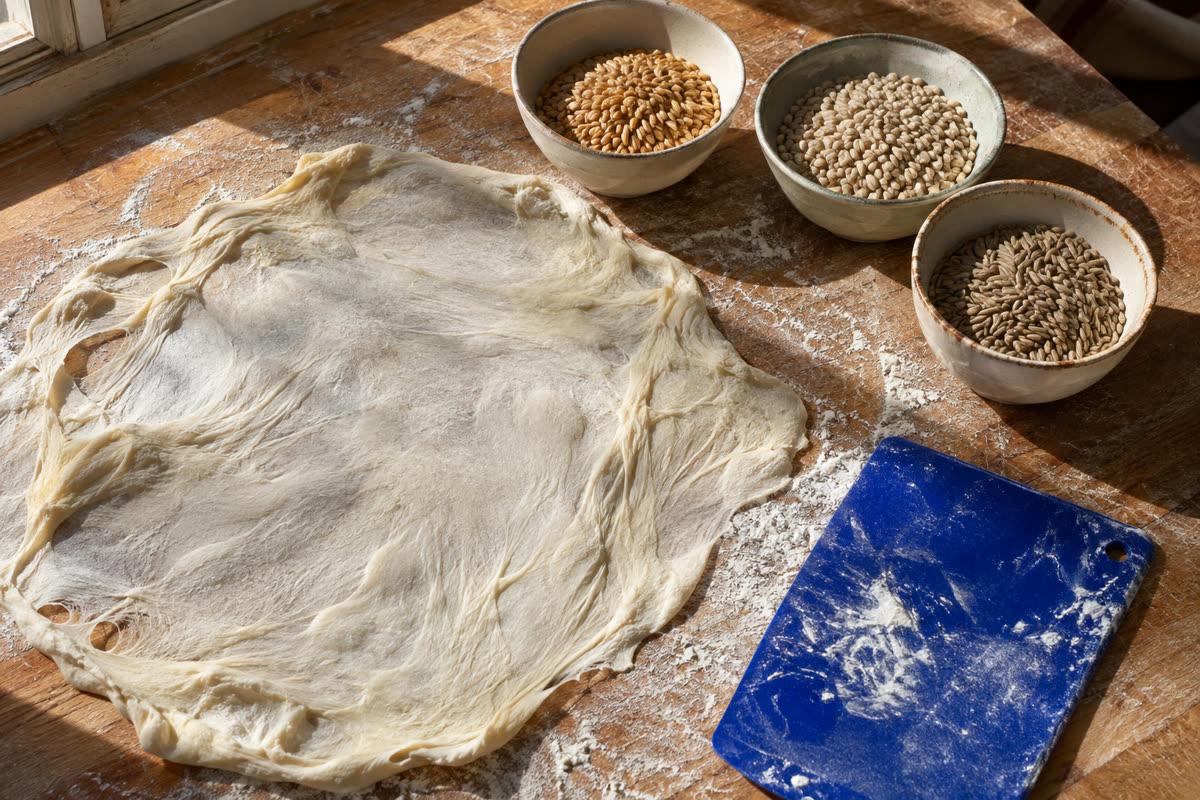 What gluten is, which grains carry it and what “gluten-free” meansA plain definition of gluten, the grains that carry it, look-alike words such as malt and wheat starch, and what a US gluten-free label means.
 Fine on bread in Europe? What it does and does not showWhat a trip where bread felt fine does and does not show about celiac disease, and how EU and US gluten-free label rules compare.
 Gluten-free myths about labels and food, checked against the rulesNatural, organic, zero gluten, fermenting and oats: each gluten-free myth checked against the page that states the rule, with the wording and read date.
Related guides
 Wheat-free, gluten-free and “no gluten ingredients”: what each label statement covers“Wheat-free”, “gluten-free” and “made with no gluten-containing ingredients” are three different statements. What each covers, and what to check.
 How to read a US food label for glutenWhere gluten shows up on a US food label: the gluten-free claim, the Contains line, the ingredient list and may-contain lines, and what each means.
 Where wheat, barley and rye hide in processed food: 15 places to checkFifteen processed foods where wheat, barley or rye turn up, the label step that catches each, and what US allergen law does and does not flag.
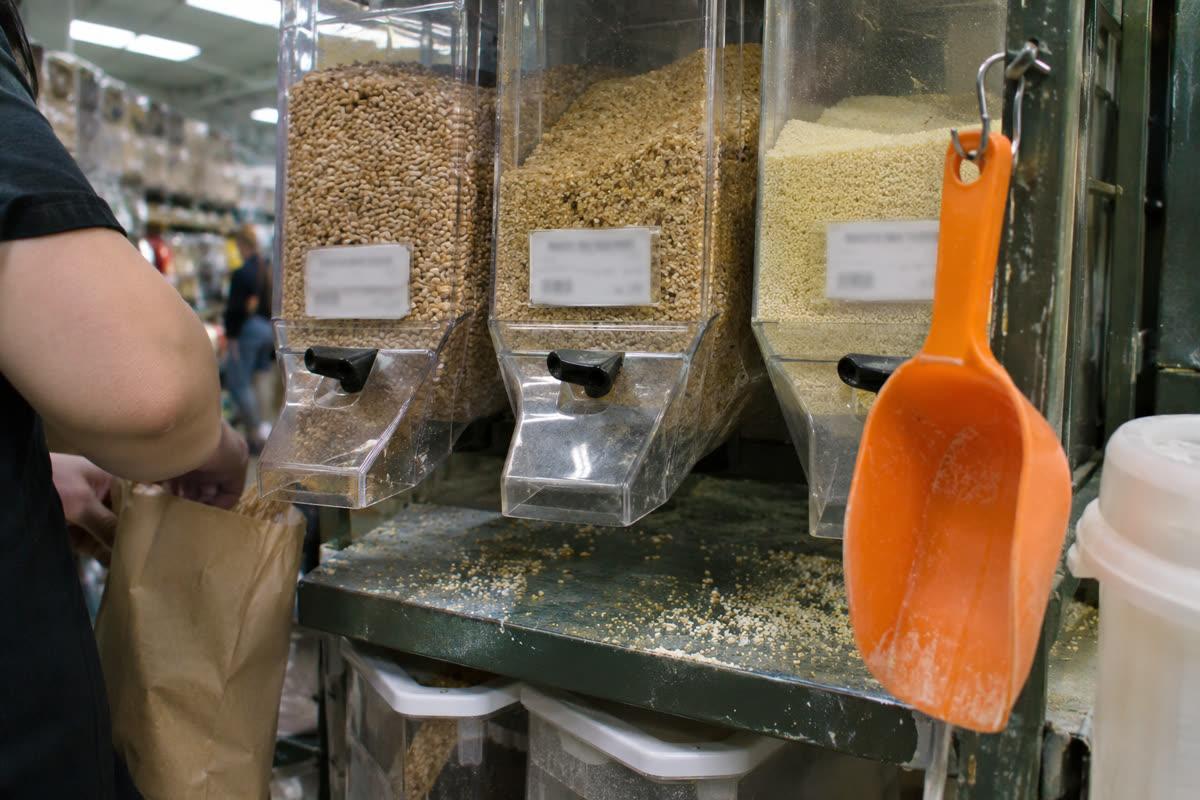 Spelt, farro, Kamut, bulgur, couscous and freekeh: wheat under other namesWhich shop and menu names are wheat: spelt, farro, Kamut, einkorn, bulgur, couscous, freekeh and more, and what FDA’s rules say about them.
Sources
- [1, 2, 3, 4, 5, 6, 29] US Government Publishing Office (Code of Federal Regulations, 2024 annual edition), 21 CFR 101.91 Gluten-free labeling of food (CFR edition of 1 April 2024), checked Nov 17, 2026.
- [7] US Food and Drug Administration, Questions and Answers on the Gluten-Free Food Labeling Final Rule, checked Nov 17, 2026.
- [8, 12] Gluten Intolerance Group, Getting Started on a Gluten-Free Diet, checked Nov 17, 2026.
- [9, 13] National Institute of Diabetes and Digestive and Kidney Diseases (NIDDK), Eating, Diet, & Nutrition for Celiac Disease, checked Nov 17, 2026.
- [10] National Celiac Association, Couscous: Is couscous gluten-free?, checked Nov 17, 2026.
- [11] Bob's Red Mill, Red Bulgur, checked Nov 17, 2026.
- [14] Coeliac UK, Good Food magazine corrects statement about spelt being gluten-free (news item, 9 May 2013), checked Nov 17, 2026.
- [15] Bob's Red Mill, Organic Spelt Flour, checked Nov 17, 2026.
- [16] Bob's Red Mill, Organic Farro, checked Nov 17, 2026.
- [17] Jovial Foods, Organic Einkorn Traditional Spaghetti, checked Nov 17, 2026.
- [18, 19, 20] Jovial Foods, A Good Gluten, checked Nov 17, 2026.
- [21, 22, 23] Nutrition Bulletin (Brouns et al., 2022), via PubMed, Do ancient wheats contain less gluten than modern bread wheat, in favour of better health?, checked Nov 17, 2026.
- [24] Foods (Asledottir et al., 2020), via PubMed, Ancestral Wheat Types Release Fewer Celiac Disease Related T Cell Epitopes than Common Wheat upon Ex Vivo Human Gastrointestinal Digestion, checked Nov 17, 2026.
- [25, 26] Frontiers in Nutrition (Di Stasio et al., 2020), via PubMed, Comparative Analysis of in vitro Digestibility and Immunogenicity of Gliadin Proteins From Durum and Einkorn Wheat, checked Nov 17, 2026.
- [27] US Food and Drug Administration, Food Allergen Labeling and Consumer Protection Act of 2004 (FALCPA), checked Nov 17, 2026.
- [28] European Union (EUR-Lex), Regulation (EU) No 1169/2011 on the provision of food information to consumers, Annex II, checked Nov 17, 2026.
- [30] Celiac Disease Foundation, Sources of Gluten, checked Nov 17, 2026.
Read on 2026-11-17: the list headed “Gluten-Containing Grains and Their Derivatives” names wheat, then “Varieties and derivatives of wheat such as” wheatberries, durum, emmer, semolina, spelt, farina, farro, graham, KAMUT® khorasan wheat and einkorn wheat, then rye, barley and triticale.