Gluten-free on a road trip: stops, snacks, cooler and hotel nights
Short answer
Plan each driving day in four layers, in this order:
- Bring your own food: Gluten Intolerance Group (GIG) calls it probably its most helpful road tip, because you are in control and know exactly what you are eating1.
- Read a chain's own allergen page before you order: Chipotle says its chart does not reflect foods touching during preparation, and Wendy's says cross contact is possible39, 40.
- At a gas station, read the label: on a US food label, a “gluten-free” claim means the food must contain less than 20 parts per million of gluten22, and no claim does not by itself mean gluten, since fruits, vegetables and eggs are naturally gluten-free24.
- Keep perishables in a cooler with ice, and discard food left out more than 2 hours, or 1 hour above 90 °F29, 35.
Part of Travel planning and logistics, 22 guides
Key points
- GIG's first road tip is to bring your own food, so you know exactly what you are eating1.
- Read the box in your hand: Clif's chocolate chip bar lists barley malt extract42, while KIND says its Dark Chocolate Nuts & Sea Salt bar is also gluten free41.
- FSIS says to discard food left out more than 2 hours, or 1 hour above 90 °F35.
- CDF advises calling your hotel to ask whether a refrigerator and microwave are available in the room21.
Plan by the gaps between towns, not by restaurant
The Celiac Disease Foundation (CDF) notes that finding something to eat in transit is typically harder than eating at the destination18. On a drive, mark each gap between towns on your route and give it a plan: a chain stop, a grocery store, or food you carry.
Gluten Intolerance Group (GIG) suggests looking up gluten-free restaurants along the way before you leave, and calling to ask about their options yourself2, 3. It also suggests adding grocery stores to the research, since your only option on some routes may be convenience stores, yet virtually every town has a local grocer4, 5.
GIG's first tip for the road is to bring your own food: you are then in control and know exactly what you are eating1.
Chain stops: read the chain's own page, then our verdict
A chain's allergen page can be opened from the car before you order. Treat it as one input, and ask at the counter about the kitchen.
Chipotle's page says that if you avoid gluten, you should not eat its flour tortillas36, and that individual foods may come into contact with one another during preparation, which its chart does not reflect39. It also says customers highly sensitive to gluten who want a glove change can say so at the start of the order37, and that items containing corn, including chips, may have trace amounts of gluten from potentially co-mingling with gluten-containing grains in the field38.
Wendy's page says cross contact is possible because of common handling and preparation areas in its restaurants, and that it cannot guarantee any menu item is completely free of allergens40.
| Stop | What our verdict page concludes |
|---|---|
| Chipotle | Depends on the order: its chart marks gluten only on the flour tortillas, and the chain says foods can touch during preparation. |
| Panera | Depends on the order: wheat and gluten are marked on breads, sandwiches, mac and cheese and most soups, and we found no gluten-free claim for any item. |
| Five Guys | Depends on the order: its FAQ names the buns and the malt vinegar condiment as its gluten items (plus items sold only in Canada or the UK), its September 2026 PDF also marks wheat on two shake mix-ins, and the chain says there is always a risk of cross-contact. |
| Wendy's | No gluten-free claim found; wheat is listed in the buns, breaded chicken, tortilla, croutons, crispy onions and cookie. |
| Burger King fries | Unsettled: no gluten-free claim, no wheat shown as contained, but every size is marked as possibly containing wheat through shared equipment. |
| Arby's curly fries | Contain gluten: the ingredient guide lists wheat flour. |
| Popeyes red beans and rice | Not labeled gluten-free; its allergen guide marks no wheat for it, while Cajun Rice, the biscuit and the fried chicken do. |
FDA says a restaurant's use of “gluten-free” should be consistent with the federal definition25, but the page describes the federal definition as one for manufacturers that voluntarily label FDA-regulated foods23. A gluten-free mark on a menu is therefore a reason to ask more, not a finish line. Our restaurant verdicts list the other chains we have read.
Gas stations and convenience stores: reading labels fast
GIG says convenience stores have come a long way, and suggests looking for string cheese, fruit, vegetable trays, chips and jerky while checking ingredients when possible6. CDF adds that cheese, fruit, vegetables and nuts are naturally gluten-free and widely available20.
- Look for a “gluten-free” claim. FDA's rule says a food carrying one must contain less than 20 parts per million (ppm) of gluten22, and the claim is voluntary23.
- No claim does not mean gluten. FDA notes that foods such as fruits, vegetables and eggs are naturally gluten-free24, so whole fruit needs no label. For anything processed with no claim, read the full ingredient list: our food-label guide shows the words to look for.
- For snacks with a flavor or a marinade, read the exact flavor in your hand. Our beef jerky verdict depends on brand and flavor, our popcorn verdict separates plain popcorn from flavored ones and mixes, and for Gatorade we found no wheat in the ingredients but no gluten-free claim either.
Shelf-stable snacks: the same brand can sell both boxes
GIG suggests small, compact, shelf-stable snacks you carry at all times15, such as individual packages of nuts, protein bars and crackers16. CDF suggests non-perishable backup food such as bars, trail mix, chips and cereal, for a place with no gluten-free options19. GIG also names plain corn chips, popcorn and rice cakes among minimally processed options11.
A brand name does not settle a bar or a cracker. These are snack verdicts from our records:
| Snack | What we found |
|---|---|
| KIND Dark Chocolate Nuts & Sea Salt | KIND's page says this nut bar is also gluten free41. |
| CLIF BAR Chocolate Chip | Clif's page lists barley malt extract in the soy rice crisps42. |
| Goldfish | Regular Goldfish list wheat; the one exception we found is a separate Gluten Free Cheddar box. |
| Cheez-It | Cheez-It Original contains wheat; a separate Cheez-It Original Gluten Free box exists, and we read only retailer listings for it. |
Checking the box in your hand takes seconds at the register and is the step that works anywhere.
Cooler packing and the USDA time limits
GIG's cooler suggestions include individually packaged plain yogurt, aged cheese, hard-boiled eggs, gluten-free deli meats, pre-cut hardy vegetables, hummus, bean dip, fresh salsa and gluten-free wraps7. Whatever you pack, the USDA's FSIS travel leaflet, revised December 2010, sets the handling:
- Put perishable food in a cooler with ice or freezer packs29.
- Pack it directly from the refrigerator or freezer into the cooler30, and fill the space: a full cooler keeps its cold longer than a partly filled one31.
- For long trips to the shore or the mountains, FSIS says to take two coolers, one for the day's immediate food needs such as lunch, drinks or snacks and one for perishable foods to use later32. It suggests considering a separate cooler for drinks so the food cooler is not opened frequently33, and to limit the times the cooler is opened34.
- Discard food left out more than 2 hours, or 1 hour if the temperature is above 90 °F35.
FDA says a refrigerator should be kept at 40 °F or below26, and, after naming perishables such as raw meat, poultry, seafood, eggs and produce that requires refrigeration, warns that a car is probably hotter than room temperature, so groceries should not stay in it longer than absolutely necessary and never more than 2 hours, or 1 hour on a hot day28. That is the clock to keep in mind at a long lunch stop or a scenic overlook.
Hotel rooms: call about the fridge and microwave
CDF's advice is to call your hotel and ask whether a refrigerator and a microwave are available in the room21. GIG ties the two together: some of its cooler and pantry ideas suit a roadside park, others a hotel with a microwave10.
- Is there a refrigerator in the room, and a microwave? CDF's advice is to call and ask21.
- Can you bring your own thermometer? FDA notes that few refrigerator controls show actual temperatures, and that an inexpensive appliance thermometer lets you monitor them27. Compare the reading with the 40 °F or below FDA gives for a refrigerator26.
- Treat the cooler like the rest of your food: carry perishables into the room rather than leaving them in a hot car28.
Eating in small towns: call ahead and ask three things
When the only restaurant in town is not a chain, GIG's advice is to speak directly with staff to confirm the ingredients and find out whether practices exist to avoid cross-contact12. Its list of questions starts with whether separate cutting boards, utensils, fryers and toasters are used13.
- Call before you detour; GIG says opening hours can change often17.
- Ask about the cutting boards, utensils, fryers and toasters13.
- Ask about swaps: GIG's examples are corn tortillas in place of flour tortillas, and gluten-free tamari in place of soy sauce14.
If the answers do not sound right, a grocery store or the food in your car is the fallback.
What to keep in the car
- A dry-goods tote. GIG lists canned beans, canned gluten-free soup, canned fish, whole fruit, avocados, nuts and seeds, dried fruit, gluten-free granola, quick-cook brown rice, corn chips, popcorn, rice cakes, nut butter, jam and whole-grain gluten-free bread8.
- A can opener, plus salt and pepper9.
- Non-perishable backup food such as bars, trail mix, chips and cereal19, each checked against its label.
- A cooler with ice or freezer packs for anything perishable29.
Verdicts in this guide
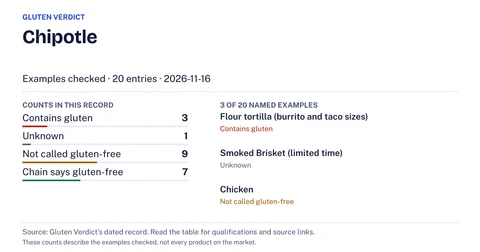 ChipotleDepends on the order3 of 20 menu items we checked contain gluten: Flour tortilla (burrito and taco sizes), Burrito, and QuesadillaChipotle Mexican Grill · checked Nov 16, 2026
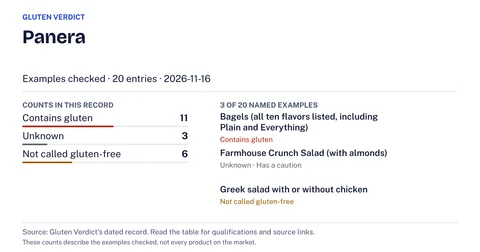 PaneraDepends on the order11 of 20 menu items we checked contain glutenPanera Bread · checked Nov 16, 2026
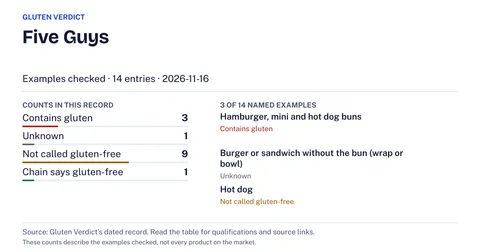 Five GuysDepends on the order3 of 14 menu items we checked contain gluten: Hamburger, mini and hot dog buns; Malt vinegar (fry condiment); and Oreo® Cookie Pieces shake mix-inFive Guys · checked Nov 16, 2026
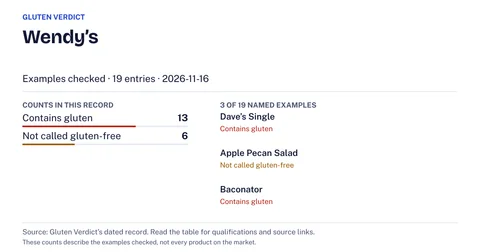 Wendy’sDepends on the order13 of 19 menu items we checked contain glutenWendy’s · checked Nov 16, 2026
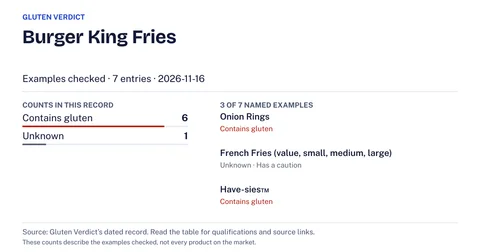 Burger King FriesUnknown6 of 7 menu items we checked contain glutenBurger King · checked Nov 16, 2026
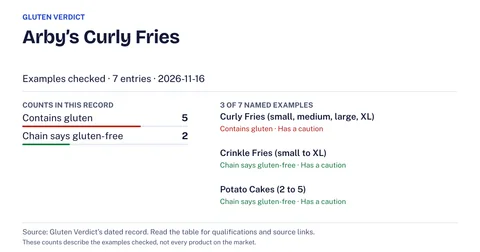 Arby’s Curly FriesContains glutenArby’s · checked Nov 16, 2026
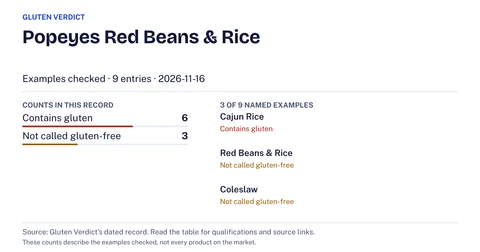 Popeyes Red Beans & RiceNot called gluten-free6 of 9 menu items we checked contain glutenPopeyes · checked Nov 16, 2026
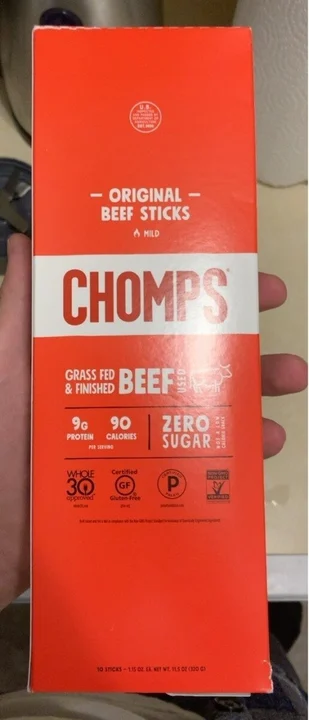 Beef jerkyDepends on the product3 of 8 products we checked contain gluten: Jack Link’s Original Beef Jerky, Jack Link’s Teriyaki Beef Jerky, and Old Trapper Teriyaki Beef Jerky (bulk)checked Nov 16, 2026
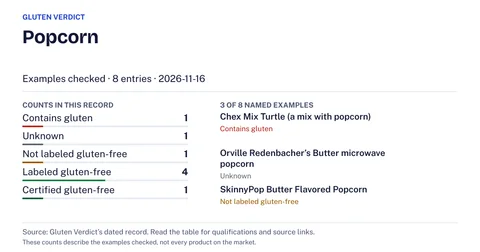 PopcornNaturally gluten-free1 of 8 products we checked contains gluten: Chex Mix Turtle (a mix with popcorn)checked Nov 16, 2026
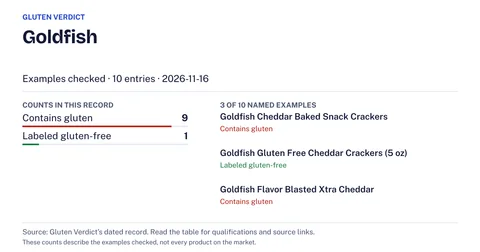 GoldfishContains glutenPepperidge Farm · checked Nov 16, 2026
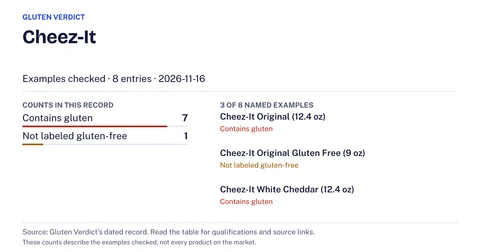 Cheez-ItContains glutenCheez-It · checked Nov 16, 2026
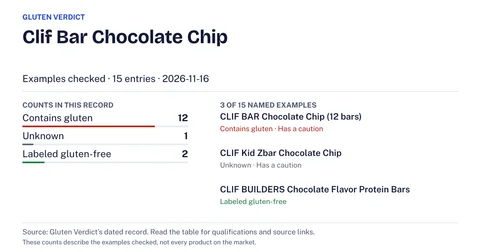 Clif Bar Chocolate ChipContains glutenClif Bar & Company · checked Nov 16, 2026
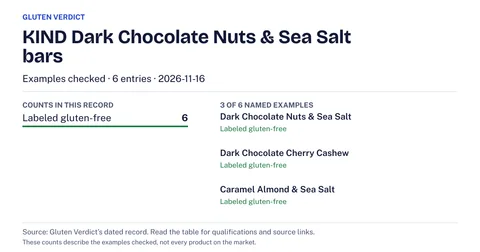 KIND Dark Chocolate Nuts & Sea Salt barsLabeled gluten-freeKIND (Mars) · checked Nov 16, 2026
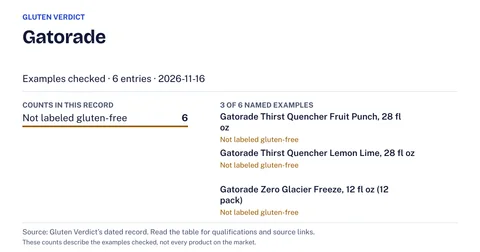 GatoradeNot labeled gluten-freePepsiCo · checked Nov 16, 2026
Questions people ask
More in Travel planning and logistics
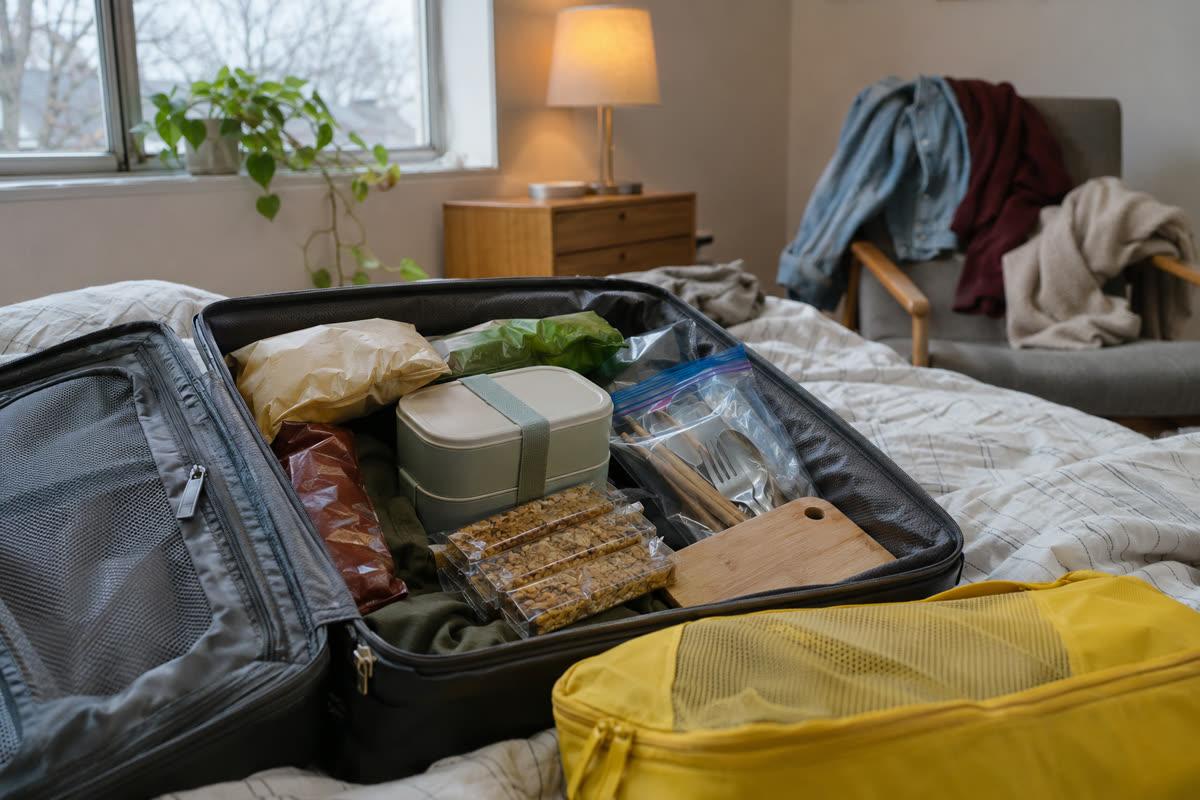 Gluten-free travel packing checklist by trip typeWhat to pack for a flight, hotel, rental kitchen or road trip, with TSA and airline limits and what sensors and enzyme pills do not show.
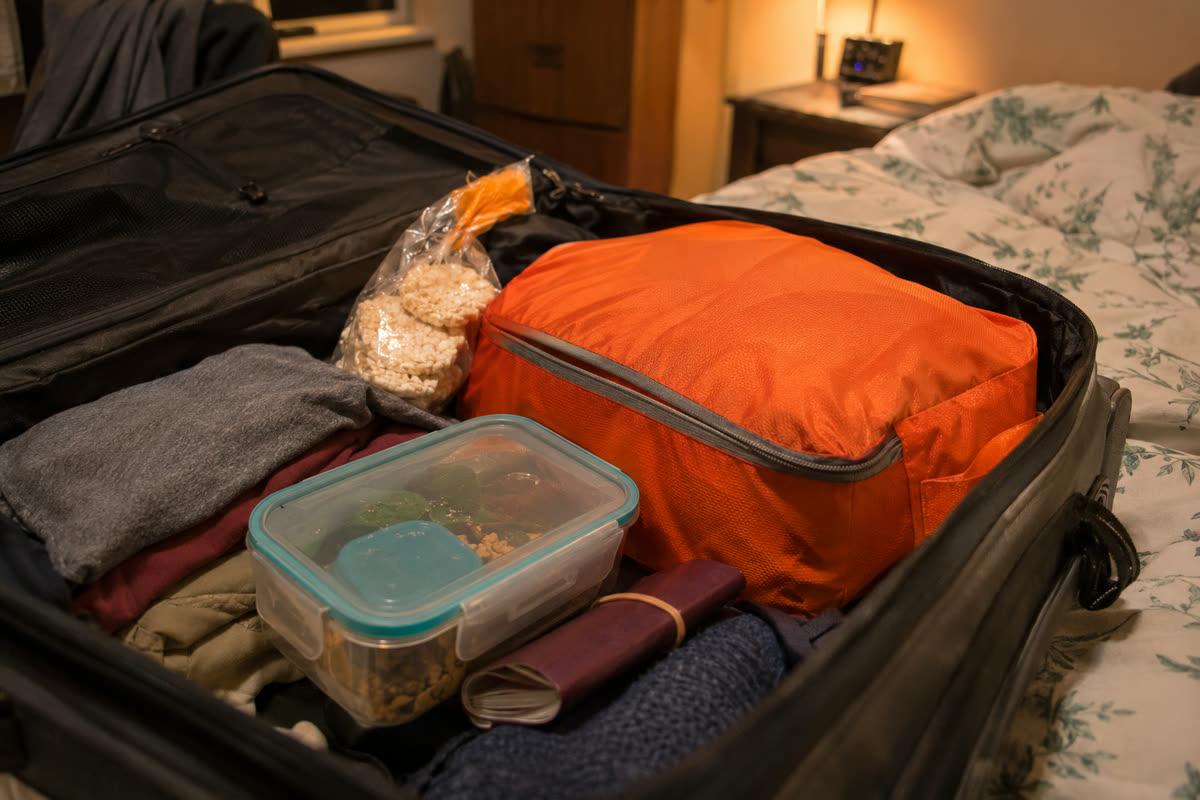 Planning a gluten-free trip: what to arrange, in orderA gluten-free trip in order: how you will eat, what to tell hotels and airlines, which cards and notes to carry, and what food to pack.
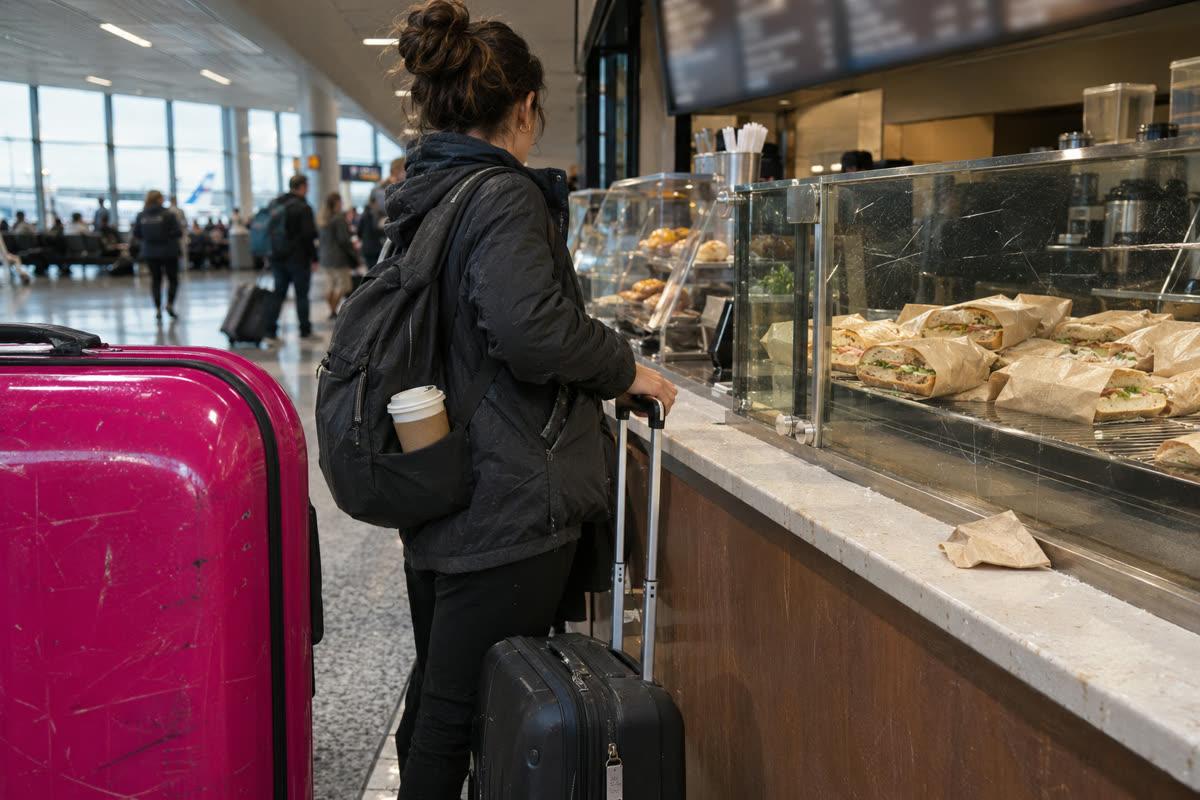 Gluten-free food at the airport: what to check first and what to ask at the counterHow to judge an airport food counter for gluten: what airport and chain pages can tell you, the questions to ask, and when to eat what you packed.
 How to judge a city for celiac disease: three signals you can checkSize up any US city for celiac disease with three checks: a hospital celiac program, the state’s restaurant allergy law and validated restaurants.
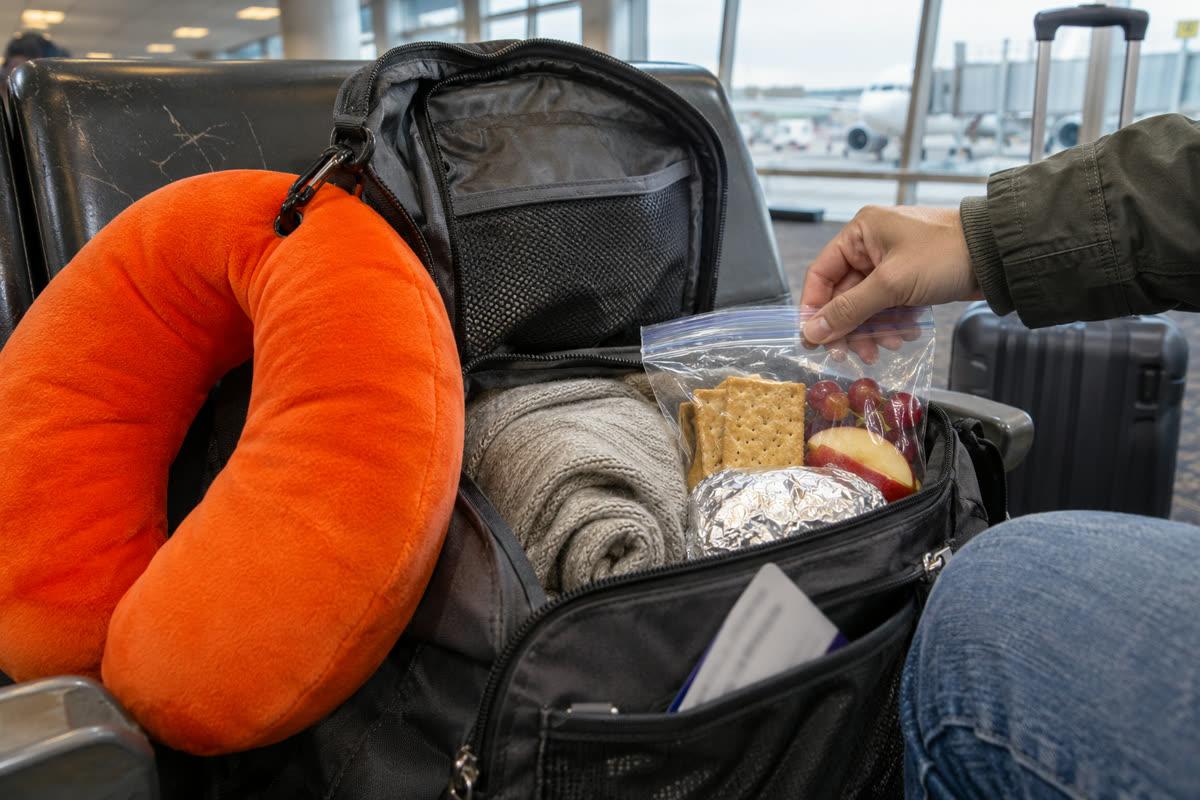 Flying gluten-free: what to arrange, pack and ask, from booking to landingA gluten-free flight in order: the airline's special-meal request, what TSA allows through the checkpoint, and the food to carry as a backup.
 Gluten-free on long-distance trains and buses: your own food, onboard menus and stopsWhat Amtrak, Greyhound and FlixBus say about your own food, gluten-free meals and stops, and how to pack for a long train or bus day.
Related guides
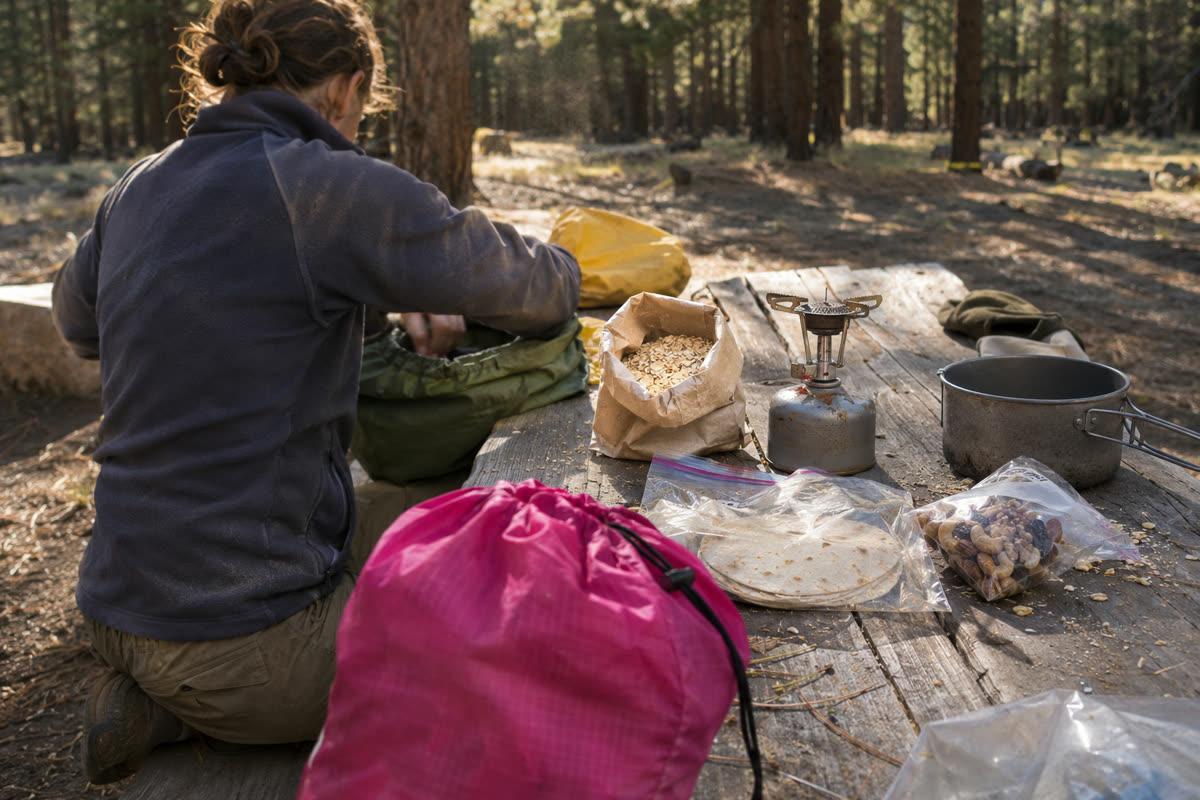 Gluten-free food for camping and hiking: pack lists and label checksPack gluten-free camping and hiking food by trip length, check pouch meals and bars against their labels, and run a shared camp kitchen.
 Gluten-free hotel breakfast: what to email ahead and what to ask at the buffetA hotel breakfast buffet can mean shared utensils, toasters and waffle irons. What to write the hotel before you arrive, and what to ask at each station.
 Setting up a gluten-free kitchen in a vacation rentalAsk the host, pack the few items that hold gluten, and wash a rental kitchen with soap and water, with each step tied to a source.
 If you think you were glutened: what the celiac organizations say to doWhat the celiac charities, FDA and NIDDK say to do after accidental gluten exposure, when to contact a clinician, and how to trace the cause.
Sources
- [1, 2, 3, 4, 5, 6] Gluten Intolerance Group, Summer Vacation Roadstop Smarts, checked Nov 17, 2026.
- [7, 8, 9, 10, 11, 12, 13, 14] Gluten Intolerance Group, Traveling Gluten-Free (educational bulletin), checked Nov 17, 2026.
- [15, 16, 17] Gluten Intolerance Group, Traveling Gluten-Free with Confidence, checked Nov 17, 2026.
- [18, 19, 20, 21] Celiac Disease Foundation, Tips for Traveling Gluten-Free, checked Nov 17, 2026.
- [22, 23, 24, 25] US Food and Drug Administration, Gluten and Food Labeling, checked Nov 17, 2026.
- [26, 27, 28] US Food and Drug Administration, Refrigerator Thermometers: Cold Facts about Food Handling, checked Nov 17, 2026.
- [29, 30, 31, 32, 33, 34, 35] USDA Food Safety and Inspection Service, Food handling on the road (FSIS leaflet, revised December 2010), checked Nov 17, 2026.
- [36, 37, 38, 39] Chipotle Mexican Grill, Allergens & Special Diet, checked Nov 17, 2026.
- [40] Wendy’s, Nutrition & Food Allergens, checked Nov 17, 2026.
- [41] KIND Snacks, Dark Chocolate Nuts & Sea Salt bars, checked Nov 17, 2026.
- [42] Clif Bar & Company, CLIF BAR Chocolate Chip, checked Nov 17, 2026.