Gluten-free on long-distance trains and buses: your own food, onboard menus and stops
Short answer
Plan to bring your own food: Amtrak lets you eat it at your seat or in a sleeper room1, Greyhound sells no food on its buses17, and Amtrak says it offers no meals designated gluten free4.
- Pack your own meals and snacks, and more than the trip needs: Amtrak points to delays, and Coeliac UK to delays and cancellations3, 35.
- Read the operator’s own page for your route: Amtrak’s menus vary by route11, and a FlixBus ride run by an external operator might have different travel policies29.
- Plan the stops: a Greyhound meal stop is usually around 30 minutes20, and FlixBus schedules no breaks beyond driver breaks28.
Part of Travel planning and logistics, 22 guides

Key points
- Amtrak allows your own food at your seat or in your sleeper room, but its staff will not handle, heat or store it1, 2.
- Amtrak says it does not offer meals designated gluten free, and its Flexible Dining menu carries a notice that food may have come in contact with wheat4, 7.
- Greyhound sells no food or drink on its buses and tells riders to stock up before boarding17.
- Greyhound and FlixBus’s joint list bans alcohol from carry-on and checked bags, and bars glass containers and metal cutlery from carry-on26.
- Coeliac UK notes that gluten free choices can be limited at some train stations and motorway service stations, so it advises taking snacks33.
What each operator says about bringing your own food
Amtrak says you may bring your own food and beverages onboard to eat at your seat or in your private Sleeping Car accommodations. Food bought in the Dining and Lounge Cars can only be eaten in those cars, and personal food is allowed in the upper level of Superliner Sightseer Lounges1.
Amtrak’s staff will not handle a packed meal: federal health regulations prohibit Amtrak personnel from handling your food, heating it in the ovens or storing it in the refrigerators2. Staff will not store it, so a meal that has to stay cold has to be kept cold by you, for example in an insulated bag with cold packs.
| Operator | What its page says |
|---|---|
| Amtrak (US) | Own food allowed at your seat or in a sleeper room; staff will not handle, heat or store it1, 2. |
| Greyhound (US) | No food or drink sold on its buses; riders are told to stock up before boarding, and alcoholic drinks are not allowed17. |
| FlixBus (US) | Some buses have refreshments and snacks27. A ride run by an external operator might have different travel policies29. |
| Eurostar | You can bring your own food on European and London routes40. |
| UK trains (National Rail) | You can bring your own food and drink; whether a train has catering depends on the train company43, 42, 45. |
Policies change and differ by route. The page for your own train or bus line has the final word, and the dates in our sources show when we read each one.
Amtrak: dining car, Cafe and what it says about gluten
Most Amtrak routes have Cafe service selling meals, snacks and beverages, open to customers in all classes of service10. Menus vary by route11.
On gluten, Amtrak is plain. It states that it does not offer meals specifically designated as gluten free or wheat free4. It adds that most dinner entrees are not prepared on the dining car, and that the gluten and wheat content may vary and cannot be controlled or modified by the chef5.
Its Flexible Dining menu carries a notice that food prepared on Amtrak trains may contain or have come in contact with milk, eggs, wheat, soy, shellfish, peanuts, tree nuts and/or fish7. Amtrak also says it is unable to guarantee a peanut-free or allergen-free trip, and encourages passengers with life-threatening or severe allergies to take all necessary medical precautions6.
Amtrak’s Onboard Dining page points to Amtrak Food Facts, which it describes as showing nutritional content, caloric information and food allergens for items on its menus9. The Food Facts page itself says its list is compiled from information provided by Amtrak approved food suppliers, that ingredient changes may occur before the list is updated, and that Amtrak makes no guarantees regarding its accuracy8. An allergen list that names wheat is not the same as a gluten check, so read it alongside our guide to the Contains line.
Amtrak’s own advice for riders with special dietary requirements is to carry sufficient food to meet their needs in the event of a delay or other contingency3.
Greyhound and FlixBus: no food on board, and the stops
Greyhound says it does not sell food or drink on its buses, so riders should stock up before boarding. If you forget, it says the bus stops frequently and some stops will have places to buy food17. Your itinerary lists the scheduled stops25.
- Rest stop: a quick break of around 15 minutes, at a highway rest area, a truck stop, a service center or a Greyhound station21.
- Meal stop: usually around 30 minutes, which Greyhound says is enough time to get a meal from a fast food restaurant along the route20.
- Length varies: how long a stop lasts depends partly on whether the bus needs to be serviced24.
Thirty minutes at a fast food counter leaves little room for a careful order, so plan the main meal from your bag and treat a stop as a top-up. For how chains handle allergen questions, see our guides to burger and chicken chain allergen policies and buffets, food courts and food trucks.
FlixBus says some of its trips have breaks planned for the drivers’ rest, and that it does not schedule any other type of break28. Some of its buses have refreshments and snacks27. It also says rides run by an external operator might have different travel policies29, so check who runs your ride before you rely on a rule from this page.
Packing for a train or bus day
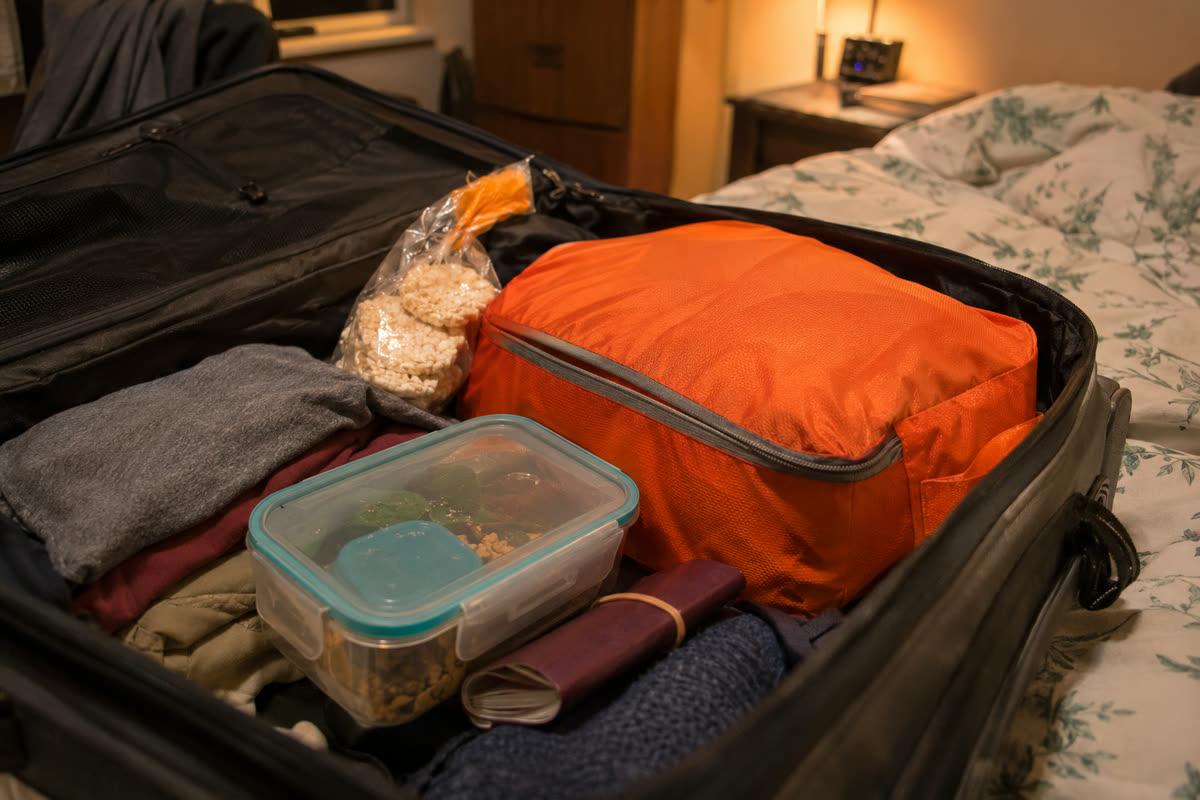
The Celiac Disease Foundation says finding something to eat in transit is typically more difficult than eating at your final destination, and that airlines, airports and trains still have a ways to go31. It advises always traveling with non-perishable “backup” food, such as bars, trail mix, chips and cereal, in case you are caught in a place without gluten-free options30. For when options run out, it says to stick to simple foods and names cheese, fruit, vegetables and nuts as naturally gluten-free and widely available32.
The National Celiac Association’s list of good snacks to carry names gluten-free fruit and nut bars, cheese sticks, whole fruits, cut veggies, gluten-free sandwiches, gluten-free crackers and rice cakes, gluten-free beef jerky, and rolled up cheese and ham37. Beyond Celiac CEO Alice Bast’s travel tips advise packing a few filling gluten-free snacks39.
| Food | What to check before you pack it |
|---|---|
| Granola bars | Not gluten-free by default: oats, barley malt extract and wheat flour all turn up. Pack bars whose maker calls them gluten-free. |
| Crackers | Wheat crackers are out; some rice, seed or almond-flour crackers carry a gluten-free claim. |
| Pretzels | Wheat-flour pretzels are not gluten-free; pretzels sold as gluten-free use other flours. |
| Popcorn | Plain popcorn is naturally gluten-free, flavored popcorn needs its ingredient list read, and mixes can add wheat. |
| Beef jerky | The marinade decides it: check each flavor. |
| Hummus | Depends on the tub, and the dippers differ. If it has to stay cold, you keep it cold yourself: Amtrak staff will not store it2. |
| Chex Mix | The snack mixes we read contain gluten. |
Keep the food with you
Amtrak warns riders to carry medication aboard rather than pack it in checked baggage, because they will not have access to their checked bags or vehicle during the journey13. Food works the same way. Greyhound tells riders to stow a bag they are checking under the bus when they board46, so the food you want on the ride belongs in a bag you keep with you.
What the buses will not allow
The joint Greyhound and FlixBus list of permitted and prohibited items has a Food and Beverage section. Alcohol is barred from carry-on and checked bags; glass bottles or containers and metal cutlery (forks and knives) are barred from carry-on but allowed in checked bags; plastic cutlery is allowed in both26. Pack plastic cutlery and leave the glass jar out of your carry-on.
Amtrak lets you bring private-stock alcohol, but you may consume it only in the Sleeping Car accommodations for which you have a valid ticket47.
Station stops and platform food
The only Amtrak page we cite that mentions platform stops is its smoking policy, so it says nothing about how long a stop is for food. What it does say is that passengers may smoke on station platforms at longer stops only as announced by train crews14; that they must remain next to the train, ready to re-board immediately on hearing the locomotive horn and the all aboard calls15; and that smoking stops may be shortened or eliminated entirely if the train is operating late16. For a meal plan, treat a platform stop as unreliable: do not count on it for a meal, and count anything you buy at one as a bonus.
Greyhound describes a layover as a longer break at a Greyhound station, or another partner station on your route, while the driver takes the bus to be serviced and cleaned. You can use the station facilities, and it reminds riders to take their carry-on baggage off the bus22. Most Greyhound stations have fast food restaurants, vending machines or convenience stores19.
Curbside stops have limited facilities: some are just a marked sign, others have a waiting area23. Greyhound says a rest stop along the route might have shops or food stalls that accept only cash, so it suggests carrying some real money as well as cards18.
At a station or food court, ask about ingredients and preparation before you order. Our guide to buffets, food courts and food trucks covers the questions.
Overnight trains and sleeper options
Amtrak Vacations says customers in Private Sleeping Rooms on its traditional dining routes enjoy complimentary meals throughout their journey12. That covers who pays for the meal, not what is in it: Amtrak does not offer meals designated as gluten free4, and you may eat your own food in your private Sleeping Car accommodations1.
On an overnight bus, work from the itinerary Greyhound gives you25, and pack for the longest gap between stops. FlixBus says it schedules no breaks beyond the drivers’ rest28.
Trains in Europe and the UK
Eurostar says you can bring your own food on its European and London routes40, and asks passengers with additional dietary requirements to tell it at least 48 hours before departure through Manage my booking41.
The UK’s National Rail says many train companies have onboard catering, such as trolley services, counter buffets and restaurant cars, and that the longer the journey, the more likely there is food and drink on board42. Its page also lists train companies that offer no onboard catering45. On allergens, it says a list of allergen ingredients will always be available from the train company, but nothing can be called “free from” an allergen, only not containing it as an ingredient44. For the rest of a UK trip, see our UK guide.
Coeliac UK says gluten free choices can be limited at some train stations and motorway service stations, so it advises preparing food or taking snacks for the journey33. When booking a flight, train, coach or ferry, it advises asking for gluten free meals at the time of booking34.
If you cross a border with packed food, Coeliac UK says some countries are extremely strict on what plant-based products you can bring in, so check in advance36. The National Celiac Association adds that you may not be allowed to travel with meats or other foods internationally38. Our guide to bringing gluten-free food across borders goes through it.
If onboard food is the only option
Coeliac UK advises always having emergency snacks in case of delays or cancellations35. If the bag runs out, the Celiac Disease Foundation’s fallback is simple foods such as cheese, fruit, vegetables and nuts32.
Packaged items on a cafe counter carry an ingredient list, and the full list matters more than any single line. Our guide to how to read a US food label for gluten shows where to look. Amtrak says the gluten and wheat content of its dinner entrees cannot be controlled or modified by the chef5.
If the trip also includes a flight, see what carries through TSA, flying gluten-free and airport dining. For the drive to the station, there is a guide to a gluten-free road trip, and planning a gluten-free trip covers the rest in order.
Verdicts in this guide
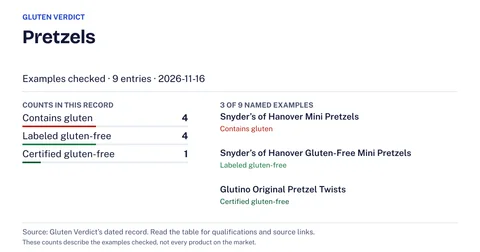 PretzelsDepends on the product4 of 9 products we checked contain glutenchecked Nov 16, 2026
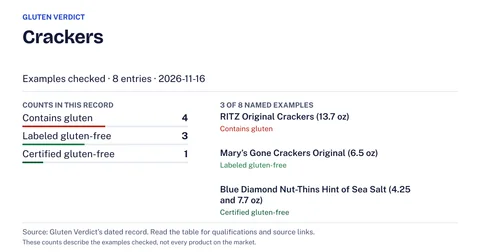 CrackersDepends on the product4 of 8 products we checked contain glutenchecked Nov 16, 2026
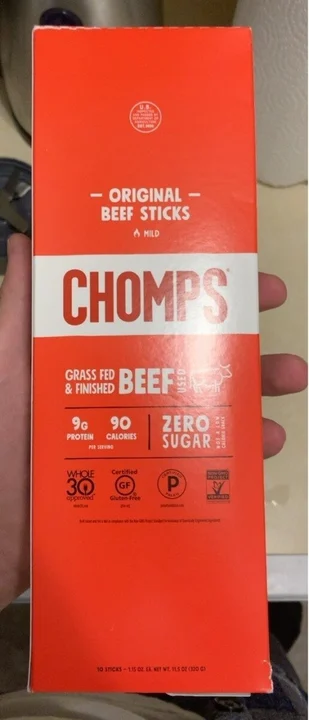 Beef jerkyDepends on the product3 of 8 products we checked contain gluten: Jack Link’s Original Beef Jerky, Jack Link’s Teriyaki Beef Jerky, and Old Trapper Teriyaki Beef Jerky (bulk)checked Nov 16, 2026
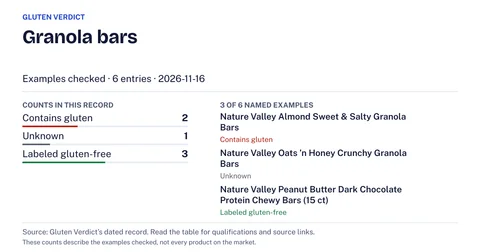 Granola barsDepends on the product2 of 6 products we checked contain gluten: Nature Valley Almond Sweet & Salty Granola Bars and Nature Valley Cinnamon Brown Sugar Soft-baked Oatmeal Squareschecked Nov 16, 2026
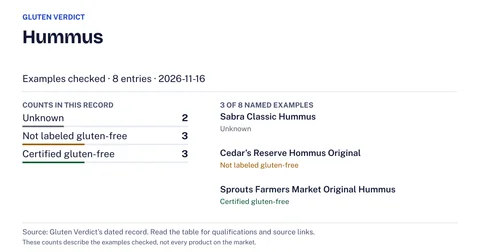 HummusDepends on the productchecked Nov 16, 2026
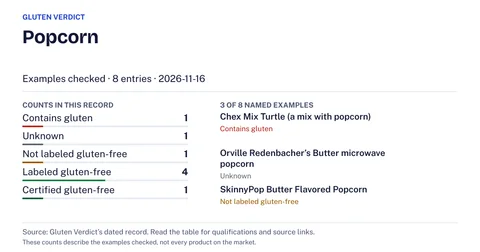 PopcornNaturally gluten-free1 of 8 products we checked contains gluten: Chex Mix Turtle (a mix with popcorn)checked Nov 16, 2026
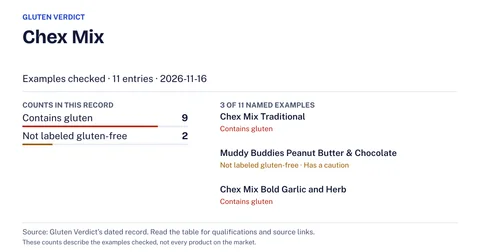 Chex MixContains glutenGeneral Mills · checked Nov 16, 2026
Questions people ask
Can I bring my own food on Amtrak?
Yes. Amtrak says you may bring your own food and beverages onboard to eat at your seat or in your private Sleeping Car accommodations1. Staff will not heat or store it2.
Does Amtrak serve gluten-free meals?
Amtrak says it does not offer meals specifically designated as gluten free or wheat free, and that gluten and wheat content may vary and cannot be controlled or modified by the chef4, 5.
More in Travel planning and logistics
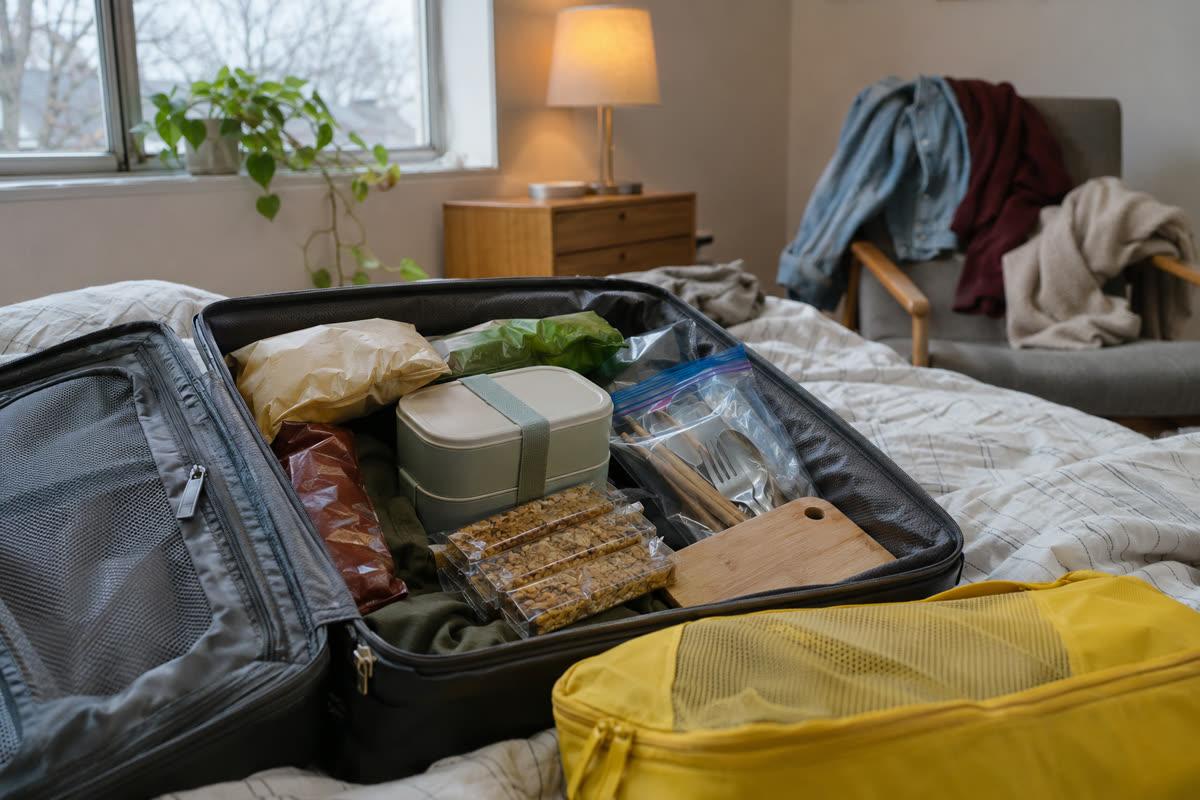 Gluten-free travel packing checklist by trip typeWhat to pack for a flight, hotel, rental kitchen or road trip, with TSA and airline limits and what sensors and enzyme pills do not show.
 Planning a gluten-free trip: what to arrange, in orderA gluten-free trip in order: how you will eat, what to tell hotels and airlines, which cards and notes to carry, and what food to pack.
 Gluten-free airline meals: what each airline’s own page says and how to request oneWhat Delta, American, Air Canada, Qantas, Virgin Atlantic and JetBlue say on their own pages about gluten-free meals: where to ask and by when.
 Gluten-free food through TSA security: what carries on and what goes in a checked bagWhich gluten-free foods go in a carry-on or checked bag under TSA’s own pages, and how the 3.4-ounce liquid limit applies to spreads, soups and dips.
 Traveling with a gluten-free child: TSA’s rules for children’s food and what to packWhat TSA says about a child’s food and screening, how to pack the snack bag, and how to brief the adults who will feed a gluten-free child.
 Gluten-free on a road trip: stops, snacks, cooler and hotel nightsPlan each driving day: chain stops with dated verdicts, snacks read at the gas station, a cooler packed to USDA time limits and hotel fridge questions.
Related guides
 Gluten-free on a trip through several European countries: borders, trains, hostels and supermarketsA packing and shopping plan for a multi-country Europe trip: what each border lets you carry, what the EU label rule covers, and a check for each stop.
 Gluten-free at dollar stores, drugstores and small chains: what the chain says and what the pack saysWhat Dollar General, Dollar Tree, Five Below, CVS, Walgreens, Lidl, The Fresh Market and Natural Grocers say about gluten, and how to read a pack.
 Super Bowl and tailgate food: label checks for dips, wings, chips and bunsCheck dips, chips, wings, sauces and buns for gluten before game day, ask the right questions about wings, and keep one dish apart on a shared table.
 Packing a gluten-free work lunch from shelf-stable foodsWhat to pack for a gluten-free office lunch, which packaged items to label-check once, and how to use a shared fridge, microwave and toaster.
Sources
- [1, 2, 3, 13, 47] Amtrak, Personal Food, Beverages and Medication, checked Nov 17, 2026.
- [4, 5, 6] Amtrak, Special Menus and Dietary Requirements, checked Nov 17, 2026.
- [7] Amtrak, Amtrak Flexible Dining Menu (PDF), checked Nov 17, 2026.
- [8] Amtrak, Amtrak Food Facts, checked Nov 17, 2026.
- [9] Amtrak, Onboard Dining, checked Nov 17, 2026.
- [10, 11] Amtrak, Cafe, checked Nov 17, 2026.
- [12] Amtrak Vacations, Meals and dining, checked Nov 17, 2026.
- [14, 15, 16] Amtrak, Smoking Policy, checked Nov 17, 2026.
- [17, 18, 24, 46] Greyhound, Bus Travel Tips and FAQs, checked Nov 17, 2026.
- [19, 20, 21, 22, 23, 25] Greyhound, Stations and Stops, checked Nov 17, 2026.
- [26] Greyhound Lines and FlixBus (co-branded), Permitted and Prohibited Items On Board Coaches (PDF), checked Nov 17, 2026.
Read on 2026-11-17: the table headed “Food and Beverage” in the co-branded Greyhound and FlixBus document (file name dated Dec 2022) lists Alcohol / Alcoholic Beverages (carry-on: No, checked: No); Glass Bottles / Containers (carry-on: No, checked: Yes); Metal Cutlery (forks & knives) (carry-on: No, checked: Yes); and Plastic Cutlery (carry-on: Yes, checked: Yes).
- [27, 28, 29] FlixBus, Travel Information (US help centre), checked Nov 17, 2026.
- [30, 31, 32] Celiac Disease Foundation, Tips for Traveling Gluten-Free, checked Nov 17, 2026.
- [33, 34, 35, 36] Coeliac UK, Travelling with coeliac disease, checked Nov 17, 2026.
- [37, 38] National Celiac Association, Eating GF when traveling abroad, checked Nov 17, 2026.
Read on 2026-11-17: the list headed “Good Snacks to Carry:” names GF fruit and nut bars, cheese sticks, whole fruits, cut veggies, GF sandwiches, GF crackers/rice cakes, GF beef jerky, and rolled up cheese and ham.
- [39] Beyond Celiac, Alice’s Tips for Traveling with Celiac Disease, checked Nov 17, 2026.
- [40, 41] Eurostar, Is food and drink available on board?, checked Nov 17, 2026.
- [42, 43, 44, 45] National Rail, Food and Drink on the Train, checked Nov 17, 2026.
Read on 2026-11-17: the list headed “The following train companies and services do not offer onboard catering:” names c2c, Chiltern Railways, Elizabeth line, Gatwick Express, Great Northern, Heathrow Express, London Northwestern Railway, London Overground, Merseyrail, Northern, South Western Railway, Southeastern, Southern, Stansted Express, Thameslink and West Midlands Railway.