Setting up a gluten-free kitchen in a vacation rental
Short answer
You can cook gluten-free in a rental kitchen you did not set up if you deal with the items that hold gluten, in this order:
- Ask the host before you book about the items that are hard to clean: wooden utensils, scratched boards and non-stick pans, colanders and the toaster, which GIG flags as items where gluten can linger3, 2, 9, 4, 12.
- Pack your own version of the few you will use: a cutting board, a spoon that is not wood, a colander and toaster bags2, 3, 4, 5.
- On arrival, wash what you will use with soap and water or run it through the dishwasher6, 7. For a grill, the Gluten Intolerance Group says gluten cannot be “burned” off by high temperature8.
Part of Travel planning and logistics, 22 guides
Key points
- Coeliac UK and the Gluten Intolerance Group (GIG) describe washing as the method: Coeliac UK says standard washing up liquid or a dishwasher will remove gluten6, and GIG says soap and water is sufficient for most items7.
- GIG calls out wooden utensils, pitted or scratched boards, colanders and scratched non-stick pans as items where gluten can linger3, 2, 4, 9.
- One study found no quantifiable gluten (under 20 mg/kg) in food made with shared utensils that were cleaned right after use10, 11. The packing list is a precaution for a kitchen with a history you cannot check, not proof that every shared utensil passes gluten on.
- GIG says crumbs in a shared toaster can end up on gluten-free bread12, and in one study mayonnaise and peanut butter spread with a knife used on gluten-containing bread tested above 20 ppm13, 14.
What can a rental kitchen hold that you cannot see?
A kitchen lets you cook your own food. GIG describes booking a vacation rental with a kitchen as a way to make family meal preparation part of the routine15, and the Canadian Celiac Association suggests renting an Airbnb or a hotel room with a kitchenette, noting that cooking your own food means more work16.
The catch is history. You cannot see what earlier guests cooked, so the useful question is which items could still hold gluten. NIDDK defines cross-contact as foods that contain gluten coming into contact with gluten-free foods17, and GIG says that inspecting and cleaning “can only go so far” with some hard-to-clean items1.
| Item | What the sources say | In a rental |
|---|---|---|
| Wooden spoons and spatulas | GIG: wood can be tricky to clean, and wood fibers could harbor gluten particles3. | Pack a spoon that is not wood; leave the wooden ones in the drawer. |
| Cutting boards | GIG: if a board is pitted or scratched, gluten could settle into crevices2. | Pack a small board. |
| Colanders, strainers, sifters | GIG: removing gluten from tiny, mesh-like strainers can be very difficult4, and colanders and sifters should not be shared between gluten-free and other use if possible18. | Pack a colander if you will drain pasta or rice. |
| Non-stick pans | GIG: scratched non-stick surfaces can develop grooves where gluten could remain9. | Ask the host about scratches before you book. |
| Cast iron | GIG: the jury is still out on whether gluten clings to cast iron19. | Choose another pan when you can. |
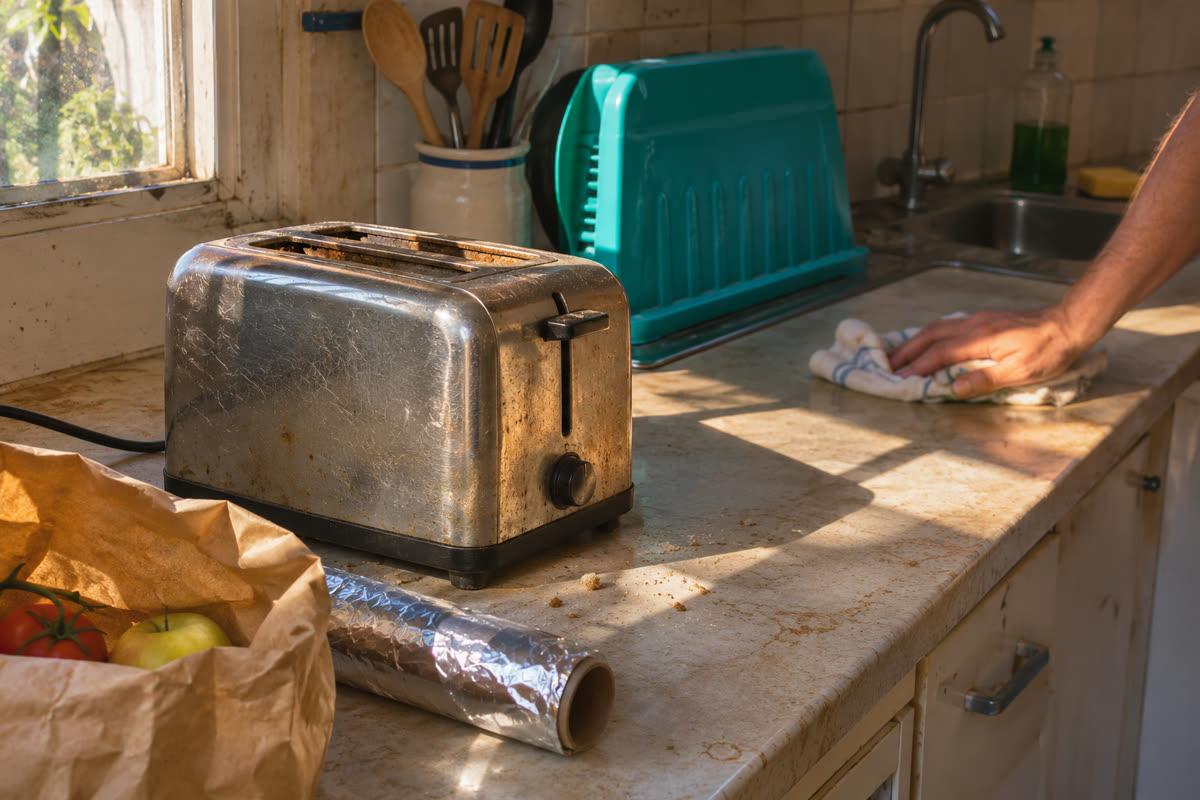
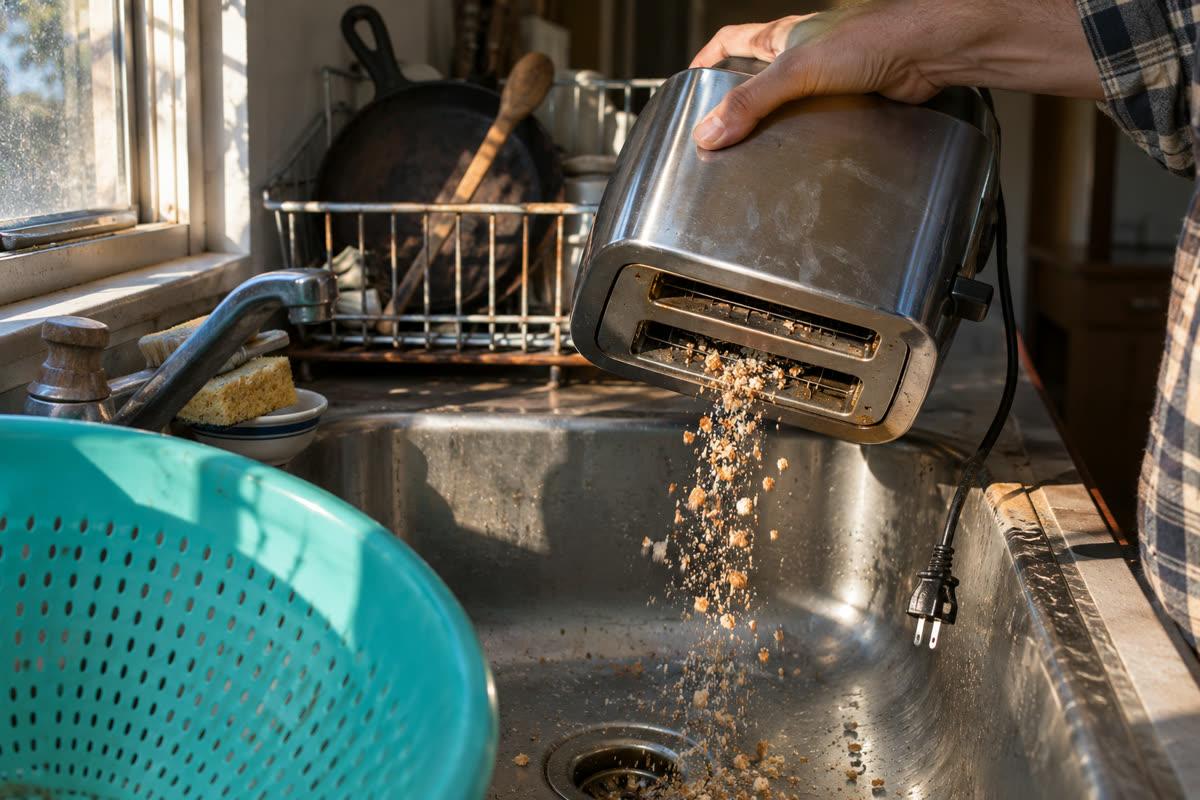
| Toaster | GIG: gluten crumbs can end up on gluten-free bread12. Coeliac UK suggests toaster bags or a separate toaster5. | Pack toaster bags, or skip toast. |
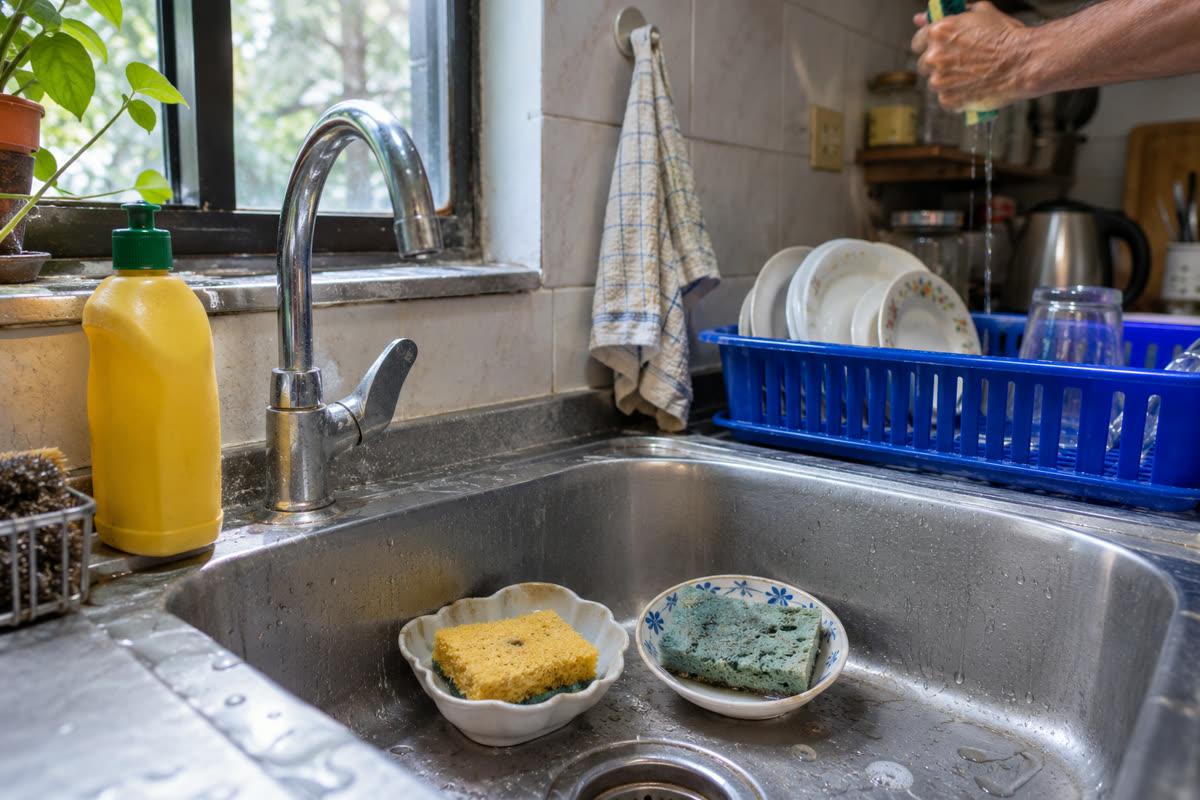
| Sponges and scrubbers | In one lab study, wheat allergens moved from a batter-coated bowl to an unused bowl through sponge scrubbing with a positive rate of approximately 80%20. Coeliac UK says you do not need separate cloths or sponges at home21. | You cannot know what the rental’s sponge has scrubbed, so pack a new one. |
| Dish towels and oven mitts | GIG: the risk from kitchen towels is “minimal to none” if they are used only on thoroughly washed dishes and hands; otherwise it suggests separate or paper towels22. Potholders should be washed first or kept separate23. | Use paper towels or your own towel. |
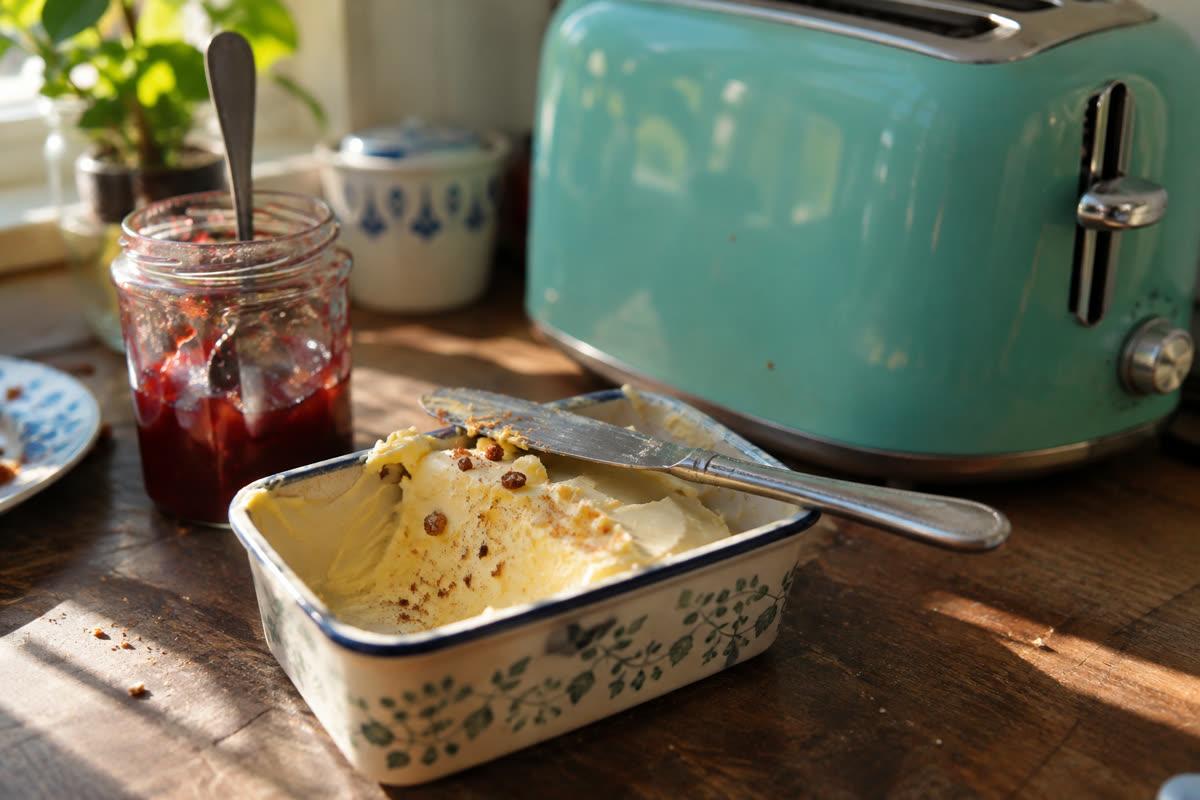
| Opened jars of butter, jam, mayonnaise | GIG: double-dipping with a shared utensil is one of the most common ways gluten crumbs get into gluten-free food24. | Buy new, sealed jars. |
| Oven, microwave and grill | GIG: cover food in a convection oven, because particles from earlier cooking may be blown onto it25; wipe a shared microwave26; clean a grill with soap, water and a metal scrubber8. | Cover, wipe and scrub as described below. |
What should you ask the host before you book?
GIG advises telling your accommodation about your gluten-free needs ahead of time, and names a vacation rental among the places to tell27. Asking before you book is better still, because the answers decide how much you will need to pack. Ask:
- Is there a dishwasher, and does it work well?
- Is there a toaster, and do other guests share it? If yes, plan on toaster bags5.
- Are the non-stick pans scratched, and are there wooden utensils or boards? GIG flags all three9, 3, 2.
- Is there a colander or a sifter? GIG says these are more difficult to clean thoroughly18.
- Is the oven a convection oven? In one, GIG says the fan can blow particles from earlier cooking onto your food, so cover it25.
- Are there condiments, oils or spices left by earlier guests? Plan to buy your own sealed ones, since a shared utensil in a jar is a common route for crumbs24.
A message you can adapt: “Hello, I need to avoid gluten for medical reasons and will cook most meals in the rental. Could you tell me whether the kitchen has a dishwasher, a toaster shared with other guests, scratched non-stick pans, wooden utensils or a colander? I will bring my own cutting board and a few utensils, so you do not need to buy anything.”
If the host cannot say, treat the answer as unknown and pack for it.
What should you pack?
Pack for the items in the table that cannot be washed clean, not for the whole kitchen. The kit fits in a bag:
- A small cutting board, because scratched boards can hold gluten2.
- A spoon and spatula that are not wood3.
- A colander, if you will drain pasta or rice4.
- Toaster bags, which Coeliac UK suggests (it also suggests a separate toaster)5.
- Dish soap and a new sponge. In one lab study, a scrubbing sponge carried wheat allergens from one bowl to another20.
- Foil, to put food on when you use a grill: GIG suggests it, and says to bring your own foil when going to someone else’s barbecue28.
- Paper towels or a dish towel of your own, since GIG treats paper towels as an option22.
- A few shelf-stable foods for the first night. The Celiac Disease Foundation advises always traveling with non-perishable backup food29.
Flying with the kit? Check what can go through security first: see our TSA food rules guide.
How do you wash a rental kitchen when you arrive?
- Set aside what you will not use: wooden utensils, worn boards, scratched non-stick pans and a shared toaster3, 2, 9.
- Run the pots, pans and utensils you will use through the dishwasher if there is a working one. GIG says a functional dishwasher that cleans thoroughly can take a shared load30, and Coeliac UK says using a dishwasher will remove gluten6.
- Hand-wash everything else with hot soapy water and your own sponge. Coeliac UK’s advice is to clean pots, pans and cooking utensils with hot soapy water31, and GIG calls soap and water sufficient for most items7.
- Wipe the counter you will use. GIG says to wipe food prep surfaces often32. Wipe the microwave too, since GIG advises wiping a shared one after each use26.
- Choose one counter area for your food and keep your kit there33. Keeping your own utensils and boards for gluten-free use is GIG’s advice for a shared house34.
- In a convection oven, cover the food, even if it is the only thing in there25. For a grill, scrub it with soap, water and a metal grill scrubber, because high temperature does not burn gluten off8.
- Dry with paper towels or your own towel22.
For the same steps at home, see our guides on cleaning a kitchen after wheat-flour exposure and gluten-free kitchen setup.
How well does washing work?
The studies below add detail to the charities’ washing advice, and none of them tested a rental kitchen.
- Utensils. A 2018 study used a wooden spoon, colander, ladle and knife that had been used with gluten-containing food to prepare gluten-free bread and pasta35. The utensils were cleaned directly after the gluten-containing food was prepared11, and gluten was not detected in relevant and quantifiable amounts (under 20 mg/kg)10. The authors suggested that shared ladles might carry more risk than wooden spoons, colanders or knives36, and concluded that kitchen utensils used for preparing gluten-containing pasta and cutting gluten-containing bread should not pose a relevant problem at least in a domestic environment37.
- Machine or hand washing. A 2026 study by authors including FDA scientists contaminated lab coupons of stainless steel, polyethylene and ceramic with foods that included wheat flour and batter38. Mechanical washing was significantly more effective than manual washing at removing the food soils39, and the authors say some allergenic food soils, particularly pastes such as tahini and almond butter, need more extensive or specialized washing40. It tested retail and food service warewashing, not home kitchens38.
- Sponges. In a 2022 study, even with sponge rinsing added to the protocol, complete removal of wheat allergen was difficult41.
- Toasters and spreads. A 2021 study examined fryers, toasters and spreads applied with a knife used on gluten-containing bread13. Most results showed no significant cross-contact, though some small amounts were found42, and the mayonnaise and peanut butter samples were above the 20 ppm limit14.
Why pack anything, then? The utensil study cleaned items right after use. A rental’s items have a history you cannot check, so the kit covers the few things you cannot verify. It is a precaution, not a finding that every shared utensil passes gluten on. For more studies, see our guide to the evidence on shared kitchens.
What should you buy on the first grocery run?
The Canadian Celiac Association suggests researching and shopping at your destination rather than bringing all your food43. Shop before you cook, and read labels the way you would at home.
In the US, “gluten-free” is a voluntary claim, and FDA’s rule says a food carrying it must contain less than 20 parts per million of gluten44, 45. Our guide to how to read food labels covers the rest of the label.
- Buy new, sealed jars of anything spread or dipped. GIG calls double-dipping one of the most common routes for gluten crumbs24. Our guide to shared butter, jam and spreads has more.
- Skip the bulk bins: GIG says gluten-containing ingredients could linger on scoops or surrounding bins46.
- If you share the fridge or cupboard with other guests, GIG says to put gluten-free packages above gluten-containing ones and keep them securely packaged47.
For a first-night shop, our verdict pages show what the sources we read said about common staples, with the date we read them: bread, pasta, rice, oatmeal, butter, peanut butter, cream cheese, olive oil, soy sauce and spices. Recipes change, so the package in your hand has the final word. Our grocery list is printable, and the gluten-free grocery list guide explains it.
What changes in a hotel suite or extended-stay kitchenette?
Start with the Celiac Disease Foundation’s suggestion: call the hotel to ask if a refrigerator and microwave are available in the room48. Then ask the same questions as for a rental, where they apply.
- Microwave: GIG advises wiping a shared one after each use, so wipe it before yours goes in26.
- Toaster at the breakfast area or in the suite: bring toaster bags5.
- Hotel breakfast: the Canadian Celiac Association suggests speaking to the manager or chef to find out what is gluten free49.
- Dishes and sponge: wash what you will use with hot soapy water and your own sponge31.
What should you do before you leave?
- Wash what you used and put the host’s items back where you found them.
- Take your own kit home, and finish or take opened food you bought rather than leaving it in a shared pantry.
- Tell the host which items were a problem, such as a shared toaster or scratched pans, so the next guest who asks can be told.
Verdicts in this guide
 BreadContains glutenchecked Nov 16, 2026
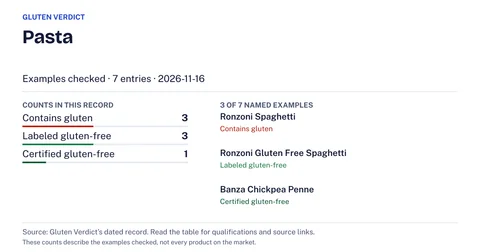 PastaContains glutenchecked Nov 16, 2026
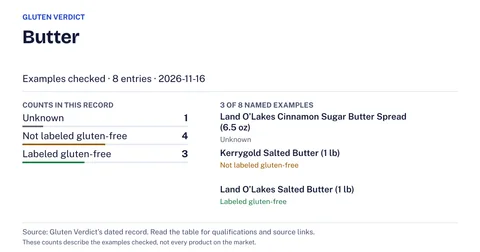 ButterNaturally gluten-freechecked Nov 16, 2026
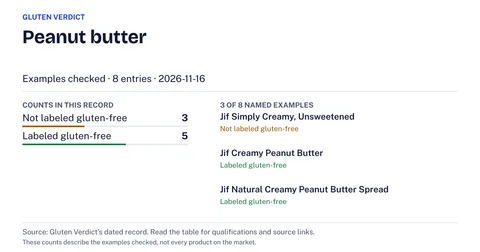 Peanut butterDepends on the productchecked Nov 16, 2026
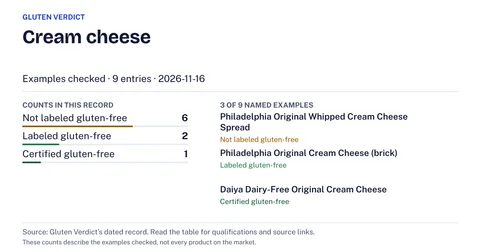 Cream cheeseNaturally gluten-freechecked Nov 16, 2026
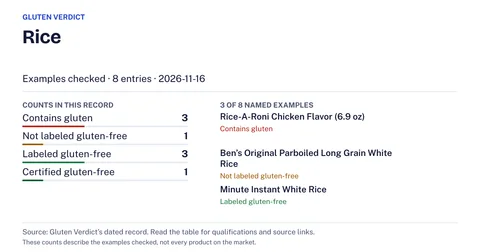 RiceNaturally gluten-free3 of 8 products we checked contain gluten: Rice-A-Roni Chicken Flavor (6.9 oz), Near East Original Rice Pilaf, and Ben’s Original Ready Rice Rice PilafBuy it labeled gluten-freechecked Nov 16, 2026
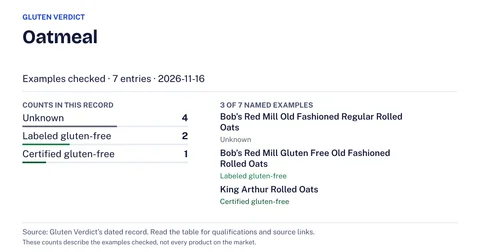 OatmealDepends on the productchecked Nov 16, 2026
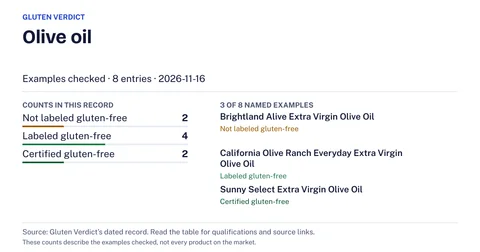 Olive oilUnknownchecked Nov 16, 2026
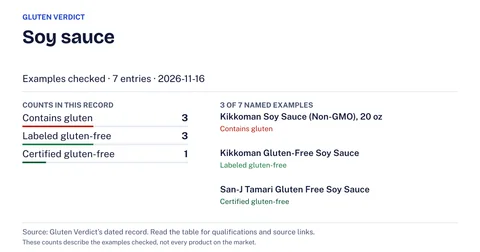 Soy sauceDepends on the product3 of 7 products we checked contain gluten: Kikkoman Soy Sauce (Non-GMO), 20 oz; San-J Organic Shoyu Soy Sauce; and Lee Kum Kee Premium Soy Sauce (No Preservatives Added)checked Nov 16, 2026
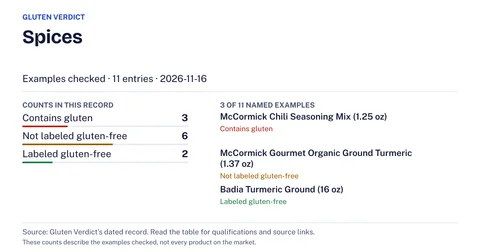 SpicesDepends on the product3 of 11 products we checked contain gluten: McCormick Chili Seasoning Mix (1.25 oz), Lawry’s Chili Spices & Seasonings Mix (1.48 oz), and McCormick Cheesy Taco Seasoning Mix (1.12 oz)checked Nov 16, 2026
Questions people ask
Can I use the rental’s dishwasher for my gluten-free dishes?
GIG says a functional dishwasher that cleans thoroughly can take a shared load30, and Coeliac UK says a dishwasher will remove gluten6. If you doubt the machine works, hand-wash with hot soapy water31.
Will a hot grill burn gluten off?
GIG, writing about grills, says gluten cannot be “burned” off by high temperature but can be removed by a thorough cleaning with soap, water and a metal grill scrubber8.
Do I need to bring my own toaster?
Coeliac UK suggests toaster bags or a separate toaster5, and GIG says crumbs in a toaster can end up on gluten-free bread12.
Are scratched non-stick pans a problem?
GIG says non-stick surfaces can get scratched and develop grooves where gluten could remain9. Ask the host, or use a pan you brought.
More in Travel planning and logistics
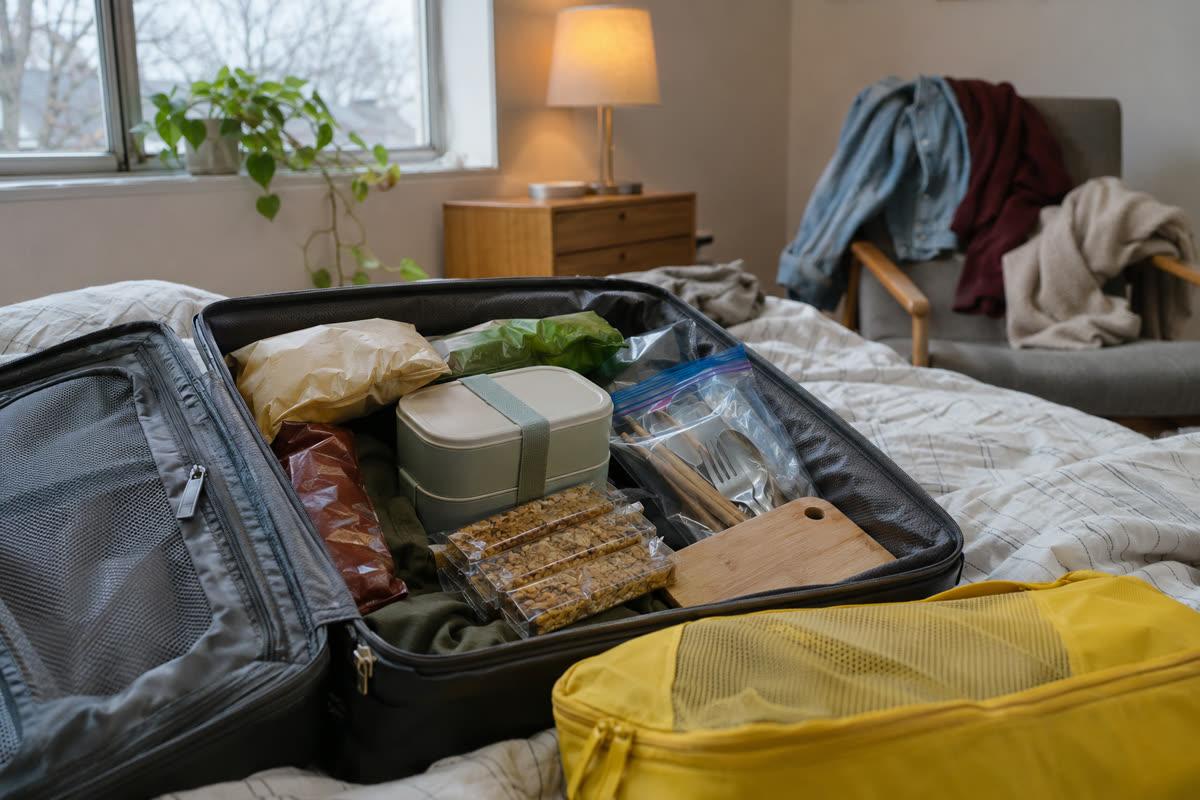 Gluten-free travel packing checklist by trip typeWhat to pack for a flight, hotel, rental kitchen or road trip, with TSA and airline limits and what sensors and enzyme pills do not show.
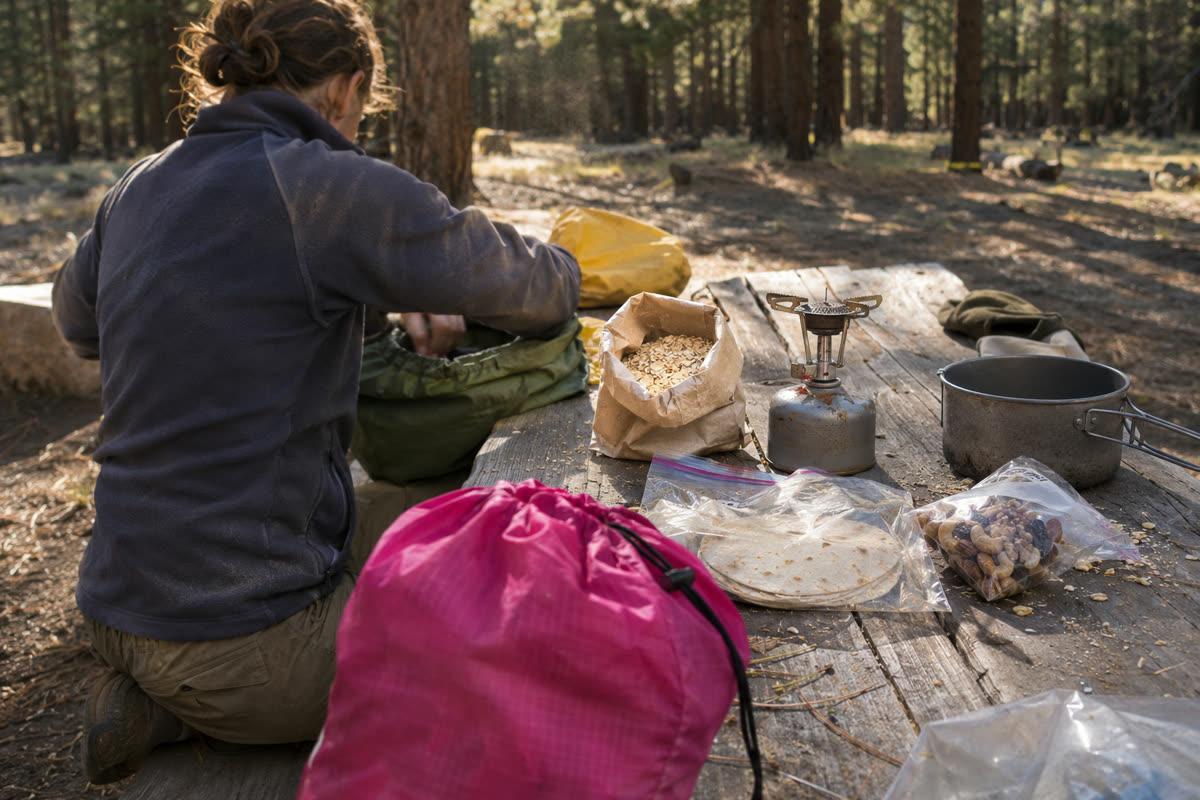 Gluten-free food for camping and hiking: pack lists and label checksPack gluten-free camping and hiking food by trip length, check pouch meals and bars against their labels, and run a shared camp kitchen.
 Gluten-free dining cards in other languages: where the wording comes fromWhich gluten-free card wording comes from EU law or a celiac society, which cards are members-only, and how to hand one to a server.
 Gluten-free cruising: request channels, notice windows and port daysHow six cruise lines take a gluten-free request, the notice each page states, and what to plan around for buffets, snacks and port days.
 Gluten-free food through TSA security: what carries on and what goes in a checked bagWhich gluten-free foods go in a carry-on or checked bag under TSA’s own pages, and how the 3.4-ounce liquid limit applies to spreads, soups and dips.
 Gluten-free hotel breakfast: what to email ahead and what to ask at the buffetA hotel breakfast buffet can mean shared utensils, toasters and waffle irons. What to write the hotel before you arrive, and what to ask at each station.
Related guides
 Setting up a gluten-free kitchen: what to replace, wash or shareWalk each kitchen zone and decide, item by item, what to replace, what to wash and what a mixed household can keep sharing, with charity sources.
 Toasters, colanders, cast iron, wood and air fryers: which can be cleanedWhich kitchen items the charities say to keep, wash or replace after going gluten-free, item by item, with what the studies we found measured.
 Dishes, sponges, dishwashers and towels in a mixed householdWhat GIG, Beyond Celiac, Coeliac UK and published tests say about sponges, dish towels, hand washing and the dishwasher in a mixed home.
 Gluten cross-contact at home: where it happens and what to do about itHow gluten reaches gluten-free food at home, whether to separate, wash or ask for each route, and which rules have lab data behind them.
Sources
- [1, 2, 3, 4, 9, 19, 23] Gluten Intolerance Group, The Tools to Replace in Your Gluten-Free Kitchen, checked Nov 17, 2026.
- [5, 6, 21, 31] Coeliac UK, Cross contamination (cooking at home), checked Nov 17, 2026.
- [7, 18, 24, 32, 46, 47] Gluten Intolerance Group, 25 Ways Cross-Contact Could Happen (And How to Avoid It), checked Nov 17, 2026.
- [8, 12, 25, 26, 28, 30] Gluten Intolerance Group, Appliances: Risks of Cross-Contact, checked Nov 17, 2026.
- [10, 11, 35, 36, 37] Journal of Food Protection (PubMed record), Cross-Contamination with Gluten by Using Kitchen Utensils: Fact or Fiction? (Studerus and colleagues, 2018), checked Nov 17, 2026.
- [13, 14, 42] Clinical Nutrition (PubMed record), Gluten cross-contact from common food practices and preparations (Parsons and colleagues, 2021), checked Nov 17, 2026.
- [15] Gluten Intolerance Group, Traveling Gluten-Free with Confidence, checked Nov 17, 2026.
- [16, 43, 49] Canadian Celiac Association, Gluten Free Travel, checked Nov 17, 2026.
- [17] National Institute of Diabetes and Digestive and Kidney Diseases (NIDDK), Eating, Diet, & Nutrition for Celiac Disease, checked Nov 17, 2026.
- [20, 41] Shokuhin Eiseigaku Zasshi (PubMed record), Secondary Contamination by Wheat Allergens across Cooking Bowls through the Use of Sponge Scourers (Hashimoto and colleagues, 2022; abstract in English), checked Nov 17, 2026.
- [22] Gluten Intolerance Group, FAQ: Should I be concerned about using the same dish/hand towels and pot holders as family members who handle gluten-containing food?, checked Nov 17, 2026.
- [27] Gluten Intolerance Group, Travel Made Easy: Embracing Your Adventures Gluten-Free, checked Nov 17, 2026.
- [29, 48] Celiac Disease Foundation, Tips for Traveling Gluten-Free, checked Nov 17, 2026.
- [33, 34] Gluten Intolerance Group, Sharing a Vacation House: Navigating Gluten-Free Needs with Non-Gluten-Free Guests, checked Nov 17, 2026.
- [38, 39, 40] Journal of Food Protection (PubMed record), Effectiveness of Manual and Mechanical Warewashing Methods for Removing Allergen- and Gluten-Containing Foods from Food-Contact Surfaces Used in Retail and Food Service Operations (Kidd and colleagues, 2026), checked Nov 17, 2026.
- [44, 45] US Food and Drug Administration, Gluten and Food Labeling, checked Nov 17, 2026.