Gluten-free in a college dorm: the fridge, microwave, toaster and roommate rules
Short answer
For a shared dorm room or kitchen, charity advice (mostly from the Gluten Intolerance Group, GIG) and a 2026 expert panel point to this order1, 5, 40:
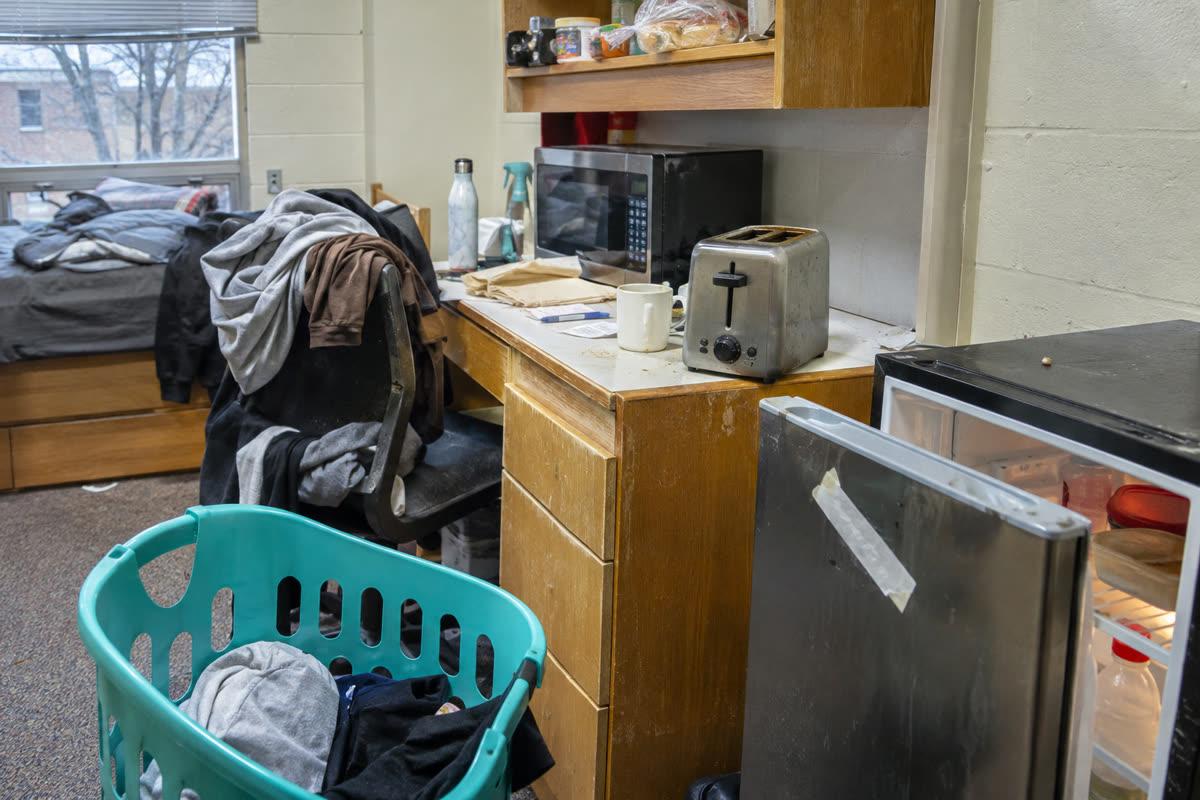
- Agree the rules with your roommate first, starting with which half of the fridge is yours31, 5.
- Keep gluten-free food on a labeled shelf, in the upper section if the fridge is big enough, and your own utensils, cookware and containers in a closable box5, 3, 4.
- Skip the shared toaster, and in a shared microwave heat one item at a time and wipe it down after each use7, 12, 11.
- Use paper towel or your own dish towels instead of the sponges and towels already in the kitchen9.
- Ask campus disability services about housing help: a 2026 expert panel listed six housing items, such as priority placement and roommate considerations40.
Part of Kids, school, college and family, 21 guides
Key points
- GIG advises labeling a gluten-free shelf and keeping it in the upper part of the fridge, so gluten-containing crumbs and spills do not fall onto it5.
- GIG says shared toasters always need to be avoided7. One study found low gluten transfer through a shared toaster, so the advice and the study differ24.
- A shared microwave comes with two GIG conditions: heat items one at a time and wipe it after each use12, 11.
- The CDF panel’s 2026 recommendations are expert consensus for colleges, not a rule: they list six housing items, including priority placement, roommate considerations and kitchen appliances40, 39.
- The 2012 Lesley University agreement describes disability services meeting the student individually to build a plan43.
Where gluten reaches your food in a dorm
The table lists each place in a shared room or kitchen where the sources we read say gluten can reach your food, whose advice it is, and what to do about it.
| Where | What the sources say | What to do |
|---|---|---|
| Fridge and pantry shelves | GIG says to keep your gluten-free items in the upper section of a fridge, so gluten-containing spills or crumbs do not fall onto them5. | Label a top shelf and ask your roommate to wrap their gluten-containing food2. |
| Condiments | GIG says squeezable versions remove the risk of double-dipping utensils6. | Buy your own squeeze bottles. |
| Plates, utensils and cookware | GIG says to assume any surface or cookware could have touched gluten10. | Bring your own set and keep it in a closable box3, 4. |
| Colander | GIG says colanders cannot be sufficiently washed8. | If you cook pasta, own a colander. |
| Toaster | GIG says shared toasters always need to be avoided7; one study found only low gluten transfer through a shared toaster24. | Skip the shared toaster. GIG suggests toaster bags or a toaster only you use13. |
| Microwave | GIG says items heated together can spill onto each other, and splatter from earlier food can land on yours12, 11. | Heat one item at a time and wipe the microwave after each use. |
| Sponges and dish towels | GIG says the ones in a shared kitchen could hold gluten from earlier use9. | Use paper towel or your own towels. |
| Air fryer, blender | GIG puts air fryers and blenders on its list of appliances to designate gluten-free only16. | Do not borrow them. |
| Kettle | GIG’s appliance page does not name a kettle15. | We have no sourced advice on kettles. |
Each row has its own section below. The same ideas for a whole home kitchen are in our guides on cross-contact at home and setting up a gluten-free kitchen.
Fridge and pantry: shelves, bins and labels
Ask your roommate which half of the fridge or pantry is yours, and label your shelf Gluten-Free. GIG puts gluten-free items in the upper section when the fridge is big enough, so gluten-containing spills or crumbs do not fall onto them5.
Ask your roommate to wrap any gluten-containing food in the fridge very thoroughly, so crumbs or spills stay out of the fridge2.
For mustard, mayo or ketchup, GIG recommends squeezable versions, which remove the risk of double-dipping utensils, and says others should not touch the bottle tips to their bread6.
Outside the fridge, GIG says to keep your food storage, prep and eating supplies in a closable container on the top shelf of a cupboard or pantry, away from gluten-containing food or crumbs4.
A student GIG interviewed said she and her sister each had a mini fridge in their rooms, even in dorms or houses with communal kitchens26. Check your housing rules before you buy one.
Microwave, toaster and other small appliances
Microwave
GIG’s appliance page says not to heat gluten-free and gluten-containing items together: a microwave is small, items can spill onto each other, and the extra time to heat items one at a time is hardly noticeable12. If the microwave is shared with gluten-containing food, GIG recommends wiping it down after each use, because splatter from earlier food can land on your items11.
Toaster
GIG says shared toasters always need to be avoided7. Its appliance page says crumbs in a toaster can end up on gluten-free bread, and suggests toaster bags or a toaster used only for gluten-free toasting13. In its article “Your Kitchen, Their Kitchen, Our Kitchen”, GIG lists toasters, air fryers and blenders among the appliances to designate gluten-free only, because grooves, vents and hard-to-reach areas trap crumbs16.
One study points the other way. In a study in Gastroenterology, gluten-free bread was toasted in toasters also used for gluten-containing bread: four samples had detectable gluten, at 5.1 to 8.3 ppm, and none was above 20 ppm24. In its Table 1, the four samples came from 20 slices toasted in communal rolling toasters in a hospital cafeteria; none of 20 slices from shared pop-up toasters had detectable gluten49. That is one study, and it does not change the charities’ advice.
Air fryer
GIG says not to use the same air fryer for gluten-free and gluten-containing cooking, because its fan can blow particles of earlier food onto what you are cooking14.
Kettle
GIG’s appliance page names a dishwasher, ovens, a toaster, a microwave and several other appliances, but not a kettle15.
Dishes, sponges and the shared sink
GIG’s advice for a common kitchen is to assume any surface or cookware could have touched gluten, clean what will touch your food, and bring your own cookware and utensils10. If you cannot have your own, wash everything, including surfaces, well with soap and water28.
Gluten is a protein that heat and most cleaning sprays do not destroy, according to GIG, so it has to be physically removed17. Most standard dish soaps remove it when used with hot water and proper scrubbing18.
Sponges and towels
GIG’s dorm bulletin says not to use the dish towels or sponges already in a shared kitchen, since they could contain gluten from earlier use, and to use paper towel or your own towels9. GIG’s article “Your Kitchen, Their Kitchen, Our Kitchen” adds that shared sponges and dish rags should be replaced or laundered frequently, because they can transfer gluten18.
Charities do not all say the same. Coeliac UK, a UK charity, lists that you do not need to use separate cloths or sponges among its simple steps at home20. GIG’s FAQ, written for a household, says that if others use kitchen towels only on thoroughly washed dishes or hands, the risk is minimal to none; otherwise it suggests separate towels or paper towels21. For a shared dorm kitchen, GIG’s dorm bulletin gives the stricter advice above9.
Pots, pans and colanders
GIG says pots and pans can generally be shared if washed thoroughly with hot soapy water, with exceptions: scratched or worn non-stick pans can trap gluten in the damaged coating, and cast iron is porous and nearly impossible to fully rid of gluten residue19. Keep your own pan if you use either. If you will cook pasta, GIG’s dorm bulletin says to add a colander to your own supplies, because colanders cannot be sufficiently washed8.
One study cooked gluten-free pasta in water already used for gluten-containing pasta and found gluten in every sample, at 33.9 to 115.7 ppm22. So use fresh water in your own pot. In the same study, with six samples for each method, rinsing a pot with water alone was as effective as scrubbing it with soap and water at preventing detectable gluten transfer to fresh boiling water23, 49.
A student interviewed by GIG recommended keeping your own utensils, pots and pans in a separate cabinet or in your room27.
What to say to your roommate
GIG’s dorm bulletin says to make sure your roommate understands how seriously you need to keep your food gluten-free and how even a tiny amount of gluten can cause problems1. Its college guide adds that many people do not know what eating gluten-free means or how important it is for some people’s health, and the more they know, the more they can help25.
GIG’s article “Dorms, Dining Halls, and Gluten-Free Living” suggests settling the ground rules first: whether the kitchen is completely free of gluten, or only some appliances and dishes31. A short script built from the advice above:
- Say what it is: I have celiac disease, and even a tiny amount of gluten can cause problems for me1.
- Ask for the shelf: can the top half of the fridge and pantry be mine, labeled Gluten-Free5?
- Ask for wrapped food: could you wrap your bread, crackers and leftovers well, so crumbs and spills stay off my food2?
- Name the squeeze-bottle rule: my condiments stay in squeeze bottles, and the tips should not touch bread6.
- Say what you will do: I will use my own utensils, cookware and towels, and I will not use the shared toaster3, 9, 7.
Write the agreement down once you have it, so the shelf, the toaster and the microwave rules are not remembered differently in October.
Dorm staples: which verdicts to read first
GIG’s article “Dorms, Dining Halls, and Gluten-Free Living” lists rice, lentils, quinoa, beans, canned fruit and vegetables, and often potato chips and gummies as foods that are gluten-free, and tells readers to check labels every time for cross-contact or hidden ingredients32. It also notes that even brands you eat regularly can change their formulas33.
Our verdicts cover several foods that end up in a dorm room. Each shows what the maker’s pages and ingredient list said, with the date we read them:
- Oatmeal: FDA says oats labeled gluten-free must contain less than 20 ppm of gluten, and they do not have to be certified to carry the claim34. The verdict shows which oats we found with a claim.
- Ramen and pasta: the verdicts separate wheat noodles from those a maker labels gluten-free. If you cook either, use your own pot, fresh water and your own colander.
- Rice: the verdict separates plain rice from seasoned mixes and pilafs.
- Pizza: the verdict separates the usual wheat crusts from pizzas sold with a gluten-free crust.
Asking for housing or kitchen help
The Celiac Disease Foundation (CDF) panel’s 2026 paper says celiac disease qualifies as a disability under the Americans with Disabilities Act35. It also says students are legally entitled to disability accommodations under the ADA and Section 504 of the Rehabilitation Act, but that implementation across institutions is inconsistent and students frequently report inadequate support36.
The paper describes itself as the first set of national, expert-informed recommendations focused on students with celiac disease in higher education48. CDF convened a panel of 40 stakeholders, including physicians, dietitians, disability rights experts, foodservice leaders, administrators, students and parents37. After a six-month process the panel adopted 24 accommodations in four areas38: academics, housing, dining and campus life. The paper says the recommendations rest on expert consensus informed by published literature, disability law and institutional policy precedent, because interventional or comparative studies are scarce39.
Housing is one of the four areas, with six items40:
| Item | In plain words |
|---|---|
| Priority housing40 | Being considered for early or prioritized selection of housing that supports gluten-free living |
| Roommate considerations | Being able to request or be matched with roommates who understand and support dietary needs |
| Dining proximity | Housing near gluten-free dining |
| Bathroom access | A nearby single or low-use bathroom is preferred |
| Kitchen appliances | Reliable access to food storage and preparation appliances, in line with university housing and electrical regulations |
| Transportation flexibility | Car access exemptions for food shopping and medical appointments |
These are recommendations for colleges. The paper says accommodations should be individualized, as not every recommended modification is necessary or appropriate for every student41. Check your college’s disability services page for its forms and deadlines before move-in.
What the process can look like
In December 2012 the Justice Department entered into an agreement with Lesley University to ensure its students with celiac disease and other food allergies can fully and equally enjoy its food services44. In it, the university’s Disability Services office agreed to meet each student individually and work with them cooperatively on an individualized plan, an interactive process43. The agreement states it is not an admission by Lesley that it violated the ADA45. It covers one university, so it is an example of how a request can work, not a rule for yours.
If the request stalls
The 2026 paper recommends a tiered path. First work with disability services to revise your plan. A treating physician’s or registered dietitian’s documentation can support requests. If barriers persist, patient advocacy organizations can help, and as a last resort a disability rights attorney who specializes in postsecondary access42.
When the shared kitchen is not workable
Sometimes a kitchen cannot be made to work with sponges, shelves and labels alone. The Lesley agreement shows one kind of accommodation: a restricted room next to a dining hall, with card access for students with food allergies who had gone through the interactive process46. The agreement lists what the room holds: a sink and counter area, a refrigerator and freezer, cabinet space and separate appliances including a microwave and toaster47.
Short of that, the options in the sources are smaller: a mini fridge in your room26, your own utensils, pots and pans kept in a separate cabinet or in your room27, and ground rules for which appliances and dishes stay gluten-free31. If none of those is workable where you live, the housing items above are what to raise with disability services40.
Parties and drinks
A student GIG interviewed said to always know what is in your drink, alcoholic or not, because drinks are sometimes flavored or mixed with something that contains gluten29. She recommends bringing your own snacks to parties, and another student suggests introducing friends to gluten-free snacks you enjoy30.
Our verdicts on beer, cider and hard seltzer show what each maker says about its drinks, with the date we read it.
Verdicts in this guide
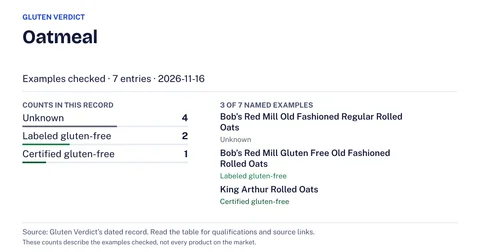 OatmealDepends on the productchecked Nov 16, 2026
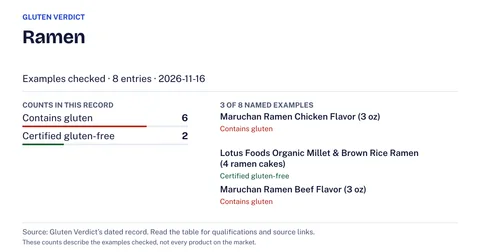 RamenContains glutenchecked Nov 16, 2026
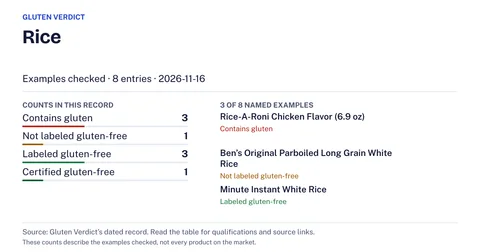 RiceNaturally gluten-free3 of 8 products we checked contain gluten: Rice-A-Roni Chicken Flavor (6.9 oz), Near East Original Rice Pilaf, and Ben’s Original Ready Rice Rice PilafBuy it labeled gluten-freechecked Nov 16, 2026
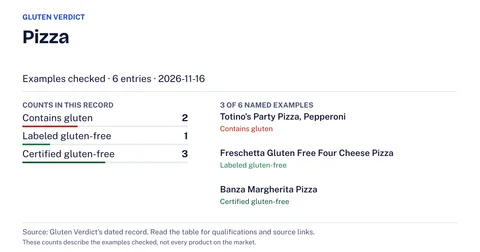 PizzaContains glutenchecked Nov 16, 2026
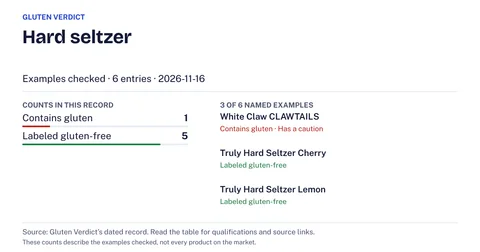 Hard seltzerDepends on the product1 of 6 products we checked contains gluten: White Claw CLAWTAILSchecked Nov 16, 2026
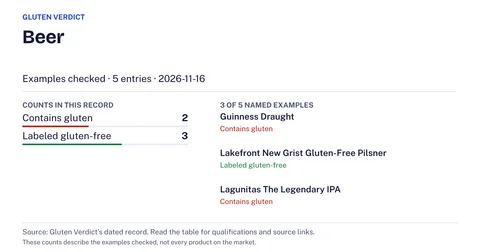 BeerDepends on the product2 of 5 products we checked contain gluten: Guinness Draught and Lagunitas The Legendary IPAchecked Nov 16, 2026
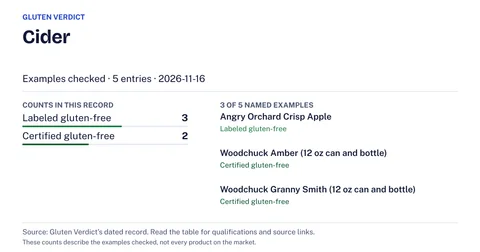 CiderNaturally gluten-freechecked Nov 16, 2026
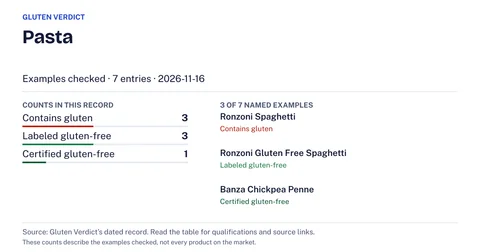 PastaContains glutenchecked Nov 16, 2026
Questions people ask
Can I share a microwave with a roommate who eats gluten?
GIG’s appliance page gives conditions for a shared microwave: do not heat items together, and wipe it down after each use12, 11.
Does research support the charities’ advice on toasters?
GIG says shared toasters always need to be avoided7. One study found detectable gluten in four shared-toaster samples, at 5.1 to 8.3 ppm, and none above 20 ppm24. The charity’s advice and that single study differ, so the advice is the cautious option.
Does my college have to give me a different room or kitchen?
The CDF panel’s paper says students with celiac disease are legally entitled to disability accommodations under the ADA and Section 50436. It also says its recommended accommodations should be individualized41. What your college approves comes from its own disability services process.
What if my request is turned down or ignored?
The 2026 paper’s tiered path starts with revising the plan with disability services, then documentation from a treating physician or registered dietitian, then patient advocacy organizations, and last a disability rights attorney42.
More in Kids, school, college and family
 Going gluten-free as a family: choose the household rule, then fix the kitchenAll gluten-free, shared with rules or split: what NIDDK, the charities and one small study say, plus rules for siblings and visiting relatives.
 Your child has celiac disease: a first-week plan for the kitchen, labels, school and talking to your childThe first week after a child’s celiac diagnosis, in order: the diet plan, first labels, kitchen, two school routes, talking to your child and follow-up.
 A care sheet for the babysitter or grandparent of a child with celiac diseaseA one-page care sheet for a babysitter or grandparent: the checked foods, the kitchen cross-contact points, what to do after an exposure, and whom to call.
 A 504 plan and school meal rules for celiac disease: what to ask for and where to complainMeal substitution or a 504 plan for a child with celiac disease: what each rule says, what the medical statement must hold, and where to complain.
 Helping a gluten-free child feel included at the table, at parties, in class and at restaurantsOne plan for each place a gluten-free child gets singled out: the table, parties, class and restaurants, with a sentence the child can say.
 A gluten-free child who refuses food: what to track and when to ask the doctorHow to tell ordinary picky eating from a pattern to raise with your child’s doctor or dietitian, what ARFID is, and a one-week log to bring.
Related guides
 Gluten-free at college: disability services, meal plans and dining hallsHow a college student with celiac disease asks for accommodations, questions dining staff, weighs a meal-plan exemption and escalates.
 Gluten cross-contact at home: where it happens and what to do about itHow gluten reaches gluten-free food at home, whether to separate, wash or ask for each route, and which rules have lab data behind them.
 Setting up a gluten-free kitchen: what to replace, wash or shareWalk each kitchen zone and decide, item by item, what to replace, what to wash and what a mixed household can keep sharing, with charity sources.
 Celiac disease in teenagers: friends, eating out and taking over their own careWhat research and celiac charities say about teenagers with celiac disease: telling friends, eating out, taking over care and clinic follow-up.
Sources
- [1, 2, 3, 4, 5, 6, 7, 8, 9, 10] Gluten Intolerance Group, College: Navigating Shared Housing & Kitchens, checked Nov 17, 2026.
- [11, 12, 13, 14, 15] Gluten Intolerance Group, Appliances: Risks of Cross-Contact, checked Nov 17, 2026.
Read on 2026-11-17: the page’s appliance headings are Dishwasher, Oven (standard), Oven (convection), Toaster, Microwave, Grill, Air Fryer, Bread Machine, Crock Pot or Instant Pot, Food Processor, Blender, Stand Mixer and Waffle Iron. A kettle is not named anywhere on the page.
- [16, 17, 18, 19] Gluten Intolerance Group, Your Kitchen, Their Kitchen, Our Kitchen: Navigating Gluten-Free Cohabitation, checked Nov 17, 2026.
- [20] Coeliac UK, Cross-contamination (cooking at home), checked Nov 17, 2026.
- [21] Gluten Intolerance Group, FAQ: Should I be concerned about using the same dish/hand towels and pot holders as family members who handle gluten-containing food?, checked Nov 17, 2026.
- [22, 23, 24, 49] Weisbrod and colleagues, Gastroenterology, Preparation of Gluten-Free Foods Alongside Gluten-Containing Food May Not Always Be as Risky for Celiac Patients as Diet Guides Suggest (Gastroenterology, 2019), checked Nov 17, 2026.
Read on 2026-11-17: Table 1 of the paper lists n=20 for GF bread toasted in a communal rolling toaster (4 with gluten detected at 5 to 10 ppm, none above 10 ppm) and n=20 for a shared pop-up toaster (all 20 below 5 ppm), and n=6 each for a shared pot washed with soap and water and a shared pot rinsed with water (all 6 below 5 ppm). The methods place the rolling toasters in a busy hospital cafeteria.
- [25, 26, 27, 28, 29, 30] Gluten Intolerance Group, Guide to a Gluten-Free College Experience, checked Nov 17, 2026.
- [31, 32, 33] Gluten Intolerance Group, Dorms, Dining Halls, and Gluten-Free Living, checked Nov 17, 2026.
- [34] US Food and Drug Administration, Questions and Answers on the Gluten-Free Food Labeling Final Rule, checked Nov 17, 2026.
- [35, 36, 39, 40, 41, 42, 48] Weisbrod and colleagues, Nutrients, Accommodating Celiac Disease in Higher Education: Evidence-Informed National Recommendations (Nutrients, 2026), checked Nov 17, 2026.
Read on 2026-11-17: Table 1 of the paper lists six Housing items: H1 Priority Housing (considered for early or prioritized selection for housing that supports gluten-free living); H2 Roommate Considerations (ability to request or match with roommates who understand and support dietary needs); H3 Dining Proximity (housing near gluten-free dining options); H4 Bathroom Access (access to a nearby single or low-use bathroom is preferred); H5 Kitchen Appliances (reliable access to food storage and preparation appliances, in accordance with university housing and electrical regulations); H6 Transportation Flexibility (car access exemptions for food shopping and medical appointments).
- [37, 38] Celiac Disease Foundation, Celiac Disease Foundation Publishes First-Ever Evidence-Informed National Recommendations to Support College Students with Celiac Disease, checked Nov 17, 2026.
- [43, 45, 46, 47] US Department of Justice, Settlement Agreement Between the United States of America and Lesley University (2012), checked Nov 17, 2026.
Read on 2026-11-17: the list of what the university will keep in the dedicated area names a sink and counter area, dish rack and kitchen supplies; a refrigerator and freezer for perishable items; cabinet space for non-perishable items; separate appliances, including a microwave and toaster; and a food warmer.
- [44] US Department of Justice (ADA.gov), Questions and Answers about the Lesley University Agreement and potential implications for individuals with Food Allergies, checked Nov 17, 2026.