A 504 plan and school meal rules for celiac disease: what to ask for and where to complain
Short answer
Two separate federal routes cover a child with celiac disease at school, and a parent can use both: a meal modification under USDA’s school meal rules, and a Section 504 plan for the rest of the school day.
- Meals: a school food authority must modify meals for a child whose disability restricts the diet, at no additional cost1. When a modified meal does not meet the meal pattern, reimbursement requires a written medical statement from a State licensed healthcare professional2.
- Everything else at school (classroom food, parties, trips, a named adult): a 504 plan, which the Gluten Intolerance Group (GIG) calls the right tool for most students with celiac disease and which the school team decides case by case3, 4.
- Make each request in writing, quote the rule, and keep dated copies5, 6.
- If the school refuses: the district’s grievance procedure, then a written complaint to USDA or the Education Department, filed within 180 days of the alleged discrimination unless the agency extends the time7, 8, 9.
Part of Kids, school, college and family, 21 guides

Key points
- A 504 plan is not one of the meal rule’s conditions, which are a disability that restricts the diet, a related request, no additional cost and, for reimbursement of meals outside the meal pattern, a medical statement1, 2.
- A registered dietitian’s statement must also be accepted, in addition to one from a State licensed healthcare professional2.
- The statement must give “foods to be omitted and recommended alternatives, if appropriate”10.
- A 504 plan is not always granted, and each request is considered case by case11, 4.
- Both USDA and the Education Department set a 180-day window for a written discrimination complaint8, 9.
Two federal routes: a meal substitution and a 504 plan
A parent can make a school lunch or breakfast request and a 504 request together, but they rest on different rules. The table sets them side by side.
| Meal modification (USDA) | 504 plan (Education Department rules) | |
|---|---|---|
| What it covers | Substitutions in school lunches and afterschool snacks for a child whose disability restricts the diet1. The breakfast rule applies the same paragraph12. | What the school team agrees to write down. GIG lists meals, classroom materials, parties, trips, bathroom access and staff training13. |
| What the school must do | “must make meal modifications” at no additional cost to the child or household1 | Provide nonacademic and extracurricular activities so students with disabilities have an equal opportunity to take part14 |
| Paperwork the rule names | For reimbursement of a modified meal outside the meal pattern: a written medical statement signed by a State licensed healthcare professional; a registered dietitian’s statement must also be accepted2 | A placement decision made by a group that includes people knowledgeable about the child15. GIG advises bringing a doctor’s letter16. |
| Who decides | The school food authority applies the rule and must tell families the procedure for requesting a modification17 | The school team, case by case4 |
| Cost to the family | No additional cost1 | The Education Department’s rule defines a free education as services “without cost” to the child or parents, apart from fees charged to other students18 |
| If it is refused | District grievance procedure7; written complaint to USDA within 180 days8 | Procedural safeguards including an impartial hearing19; written complaint to the Education Department within 180 days9 |
Read the meal rule closely and the conditions are these: a child with a disability whose disability restricts the diet, a request related to the disability, no additional cost and, for reimbursement of meals outside the meal pattern, the medical statement. A 504 plan is not among them1, 2.
Which schools and children the rules reach
The rules attach to federal money20, 21. USDA’s Section 504 rule bars discrimination “under any program or activity receiving assistance from this Department”20. GIG says public school students’ rights are protected because public schools are funded by the Department of Education21, and that private schools receiving some federal funding may also be required to comply22. For a private school, a child care center or a college, the first question is whether it receives federal assistance20, 22.
USDA’s rule uses the older word “handicapped” for a person with a disability: someone with an impairment that substantially limits one or more major life activities23. Its list of body systems includes the digestive system24. The list of example conditions is open-ended (“includes, but is not limited to”) and does not name celiac disease25. The Justice Department’s ADA rule for state and local government services lists eating among major life activities26.
Whether a given child qualifies is decided on that child’s facts: GIG says each child requesting a plan is considered case by case4. NIDDK, the National Institute of Diabetes and Digestive and Kidney Diseases, says people with celiac disease need to follow a gluten-free diet for life27.
What the meal rule says
These are the sentences to quote, with where each comes from.
- 7 CFR 210.10(m)(1): a school food authority “must make meal modifications, including substitutions in lunches and afterschool snacks, for children with a disability and whose disability restricts their diet”1.
- The request must be related to the disability, and the modified meal must be offered at no additional cost to the child or household1.
- Breakfast: 7 CFR 220.8(m) applies the same paragraph to the school breakfast rule12.
- USDA’s Section 504 rule says the same about food: recipients serve special meals, at no extra charge, to students whose handicap restricts their diet, and may require medical certification28.
- Reimbursement: when a modified meal does not meet the meal pattern, the school food authority must obtain a written medical statement signed by a State licensed healthcare professional, and must also accept one signed by a registered dietitian (the rule’s date for that was July 1, 2025)2.
- A modified meal that meets the meal pattern is reimbursable with or without a medical statement10.
- Expenses above program reimbursement rates are paid by the school food authority, which may use its nonprofit food service account29.
- Families must be given notice of the procedure for requesting a modification and of the process for procedural safeguards, and the same paragraph points to 7 CFR 15b.6(b) and 15b.2517.
The school food authority has the duty1, and the family has the right to be told the procedure17. Ask the office for its procedure and any form in writing.
Who pays for the substitute meal
Not the family, as the rule is written. The modification has to be offered at no additional cost to the child or household54, and the Section 504 rule for USDA programs says special meals are served at no extra charge28.
Where a modification costs more than the program reimburses, the rule puts the expense on the school food authority, which may pay it from the nonprofit food service account29.
A 504 plan is separate: the Department of Education’s rule defines a free education as educational and related services without cost to the student or parents, except for fees imposed on non-disabled students or their parents55.
Packing lunch yourself is a separate choice. Wisconsin’s guidance says no medical statement is needed if no meal accommodation is requested, for example when food is sent from home56.
What the medical statement needs to hold
The rule says the statement “must provide sufficient information about the child's dietary restrictions, such as foods to be omitted and recommended alternatives, if appropriate”10. It is signed by a State licensed healthcare professional, and a registered dietitian’s signature must also be accepted2. GIG adds that a letter outlining the child’s specific limitations and risks, not just the diagnosis, can make a big difference16.
For a child with celiac disease, that suggests asking the clinician to put these in the statement:
- the diagnosis, the signer’s name and license type, the signature and the date;
- that gluten must be left out of the child’s meals, and which foods or ingredients the school should treat as containing it, named in plain words;
- the alternatives the child can eat, where the clinician wants to name them;
- whether it covers breakfast, lunch and afterschool snacks;
- whether it covers how food is prepared and served, and not only which foods are chosen.
The last item matters because NIDDK defines cross-contact as foods or products that contain gluten coming into contact with gluten-free foods30, and says it can occur at any time, including when foods are stored, prepared or served31. If the clinician wants preparation and serving covered, the statement is the place to say so.
Bring the statement with the written request so the school has everything the rule asks for in one document, and keep a dated copy.
Three points that trip up requests
- A modified meal that meets the meal pattern is reimbursable with or without a statement10, and USDA’s guidance, as the 2024 rule describes it, lets operators accommodate such requests without one and encourages that where possible57. The same guidance says operators may choose to obtain a statement for every disability modification, even those within the meal pattern58, so a school may still ask for one.
- A statement without recommended alternatives is not a reason to stall. A footnote to the 2024 rule says operators should not deny or delay a modification because the statement does not provide recommended alternatives, and should work with the parent or guardian to get a supplemental statement59.
- USDA reminds schools that their obligation is to provide a meal modification to accommodate the disability, not to provide an exact product listed on the statement60. If the school has concerns about a request, it is responsible for working with the parent or guardian on an appropriate modification61.
Clinical content of the statement is for your child’s clinician. This guide reports what the rule asks the document to contain, not what it should say about your child’s care.
What a 504 plan is and how the school decides
GIG describes a 504 plan as a legal document protected under Section 504 of the Rehabilitation Act32, and says that for most students with celiac disease or gluten sensitivity it is the right tool because it needs no learning disability diagnosis and covers everything from the classroom to field trips3.
GIG separates it from two other documents. An IEP requires eligibility under special education law, which GIG says celiac disease and gluten sensitivity typically do not meet on their own33. A school health plan is not a legal document the school is bound to follow the way it is with a 504 plan34.
USDA’s rule lists food services among the nonacademic and extracurricular services a school provides35, and the Education Department’s parallel rule requires an equal opportunity to take part in nonacademic and extracurricular services and activities14. Public elementary and secondary programs must provide a free appropriate public education to each qualified student with a disability36.
How the decision is made
The Education Department’s rule says a placement decision is made by a group of persons, including persons knowledgeable about the child15. GIG suggests that anyone with a role in the child’s day be there or informed: the general education teacher, school nurse, cafeteria staff, PE and activity teachers, and a special education coordinator37.
A request is not always granted11. GIG also notes that simply talking with teachers, the school nurse, administrators and food service staff can sometimes be enough, and a 504 plan can be the next step if not38.
Procedural safeguards apply to decisions on identification, evaluation or placement: notice, a chance to examine records, an impartial hearing and a review procedure19. A school the rule covers must also have procedures for periodic reevaluation of students who have been provided special education and related services39, and GIG says a plan should be reviewed every year5.
What to ask for in a plan, and what to ask the cafeteria
GIG’s lists give a starting menu. Keep the areas your child’s day touches and write each one into the plan.
| Area | What GIG lists |
|---|---|
| School meals and storage | Gluten-free meal options, and access to a refrigerator, freezer and microwave to store and prepare gluten-free meals13 |
| Classroom materials | Playdough, certain glues, finger paints and occasionally science experiment materials often contain gluten40; gluten-free art supplies are on GIG’s list13 |
| Parties, trips and activities | Field trips, extracurriculars and classroom parties or events41; gluten-free options at activities that involve food13 |
| Bathroom access and emergencies | Bathroom access throughout the day and what steps to take in a gluten-related emergency42 |
| Staff and a named adult | Training for school staff13; a trusted adult named for the year who understands the accommodations43 |
| Substitute teachers | A clear process for informing substitutes of the child’s accommodations before they enter the classroom44 |
Questions for the food service director
These follow NIDDK’s point that cross-contact can occur when foods are stored, prepared or served31. Ask for the answers in writing.
- Which items will my child be served each day, and who prepares and serves them?
- Are gluten-free items prepared, served and stored with utensils, surfaces and containers kept apart from gluten-containing food? Is that procedure written down?
- Where are the ingredient labels for the products served kept, and can I see them?
- Who serves my child when the usual staff member is out?
- What happens on party days, trip days and any day the cafeteria is not serving?
Classroom food, parties and field trips
GIG points out that school meals, classroom parties and field trips are situations where a parent cannot be there to help monitor what a child eats62, and it names field trips, extracurriculars and classroom parties or events as significant risks that a plan can address41.
Food is not the only item. GIG lists common classroom items that often contain gluten, including playdough, certain glues, finger paints and occasionally science experiment materials40, and art supplies are one of the provisions a plan can name63. Our guides on play dough, paste and art supplies and birthday parties go through those one by one.
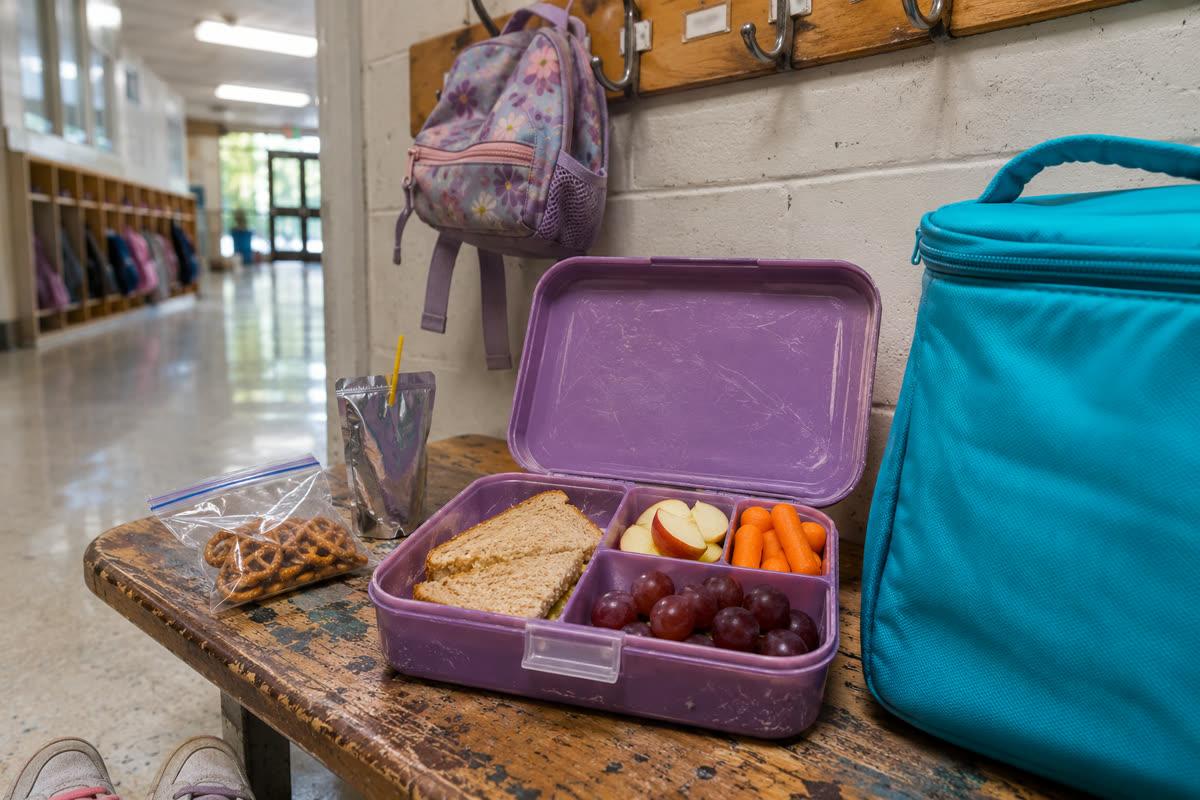
GIG publishes letter templates for teachers, the school nurse and field trips, which explain the foods to avoid and why cross-contact matters64. For lunchbox and classroom snack ideas, see gluten-free school lunch and classroom snacks.
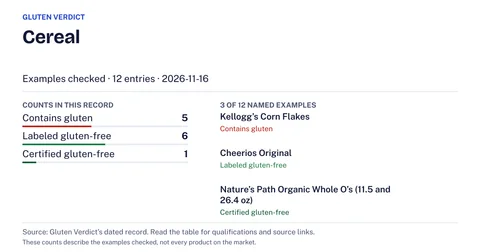
For what bread, pasta and cereal contain, see our verdicts on bread, pasta and cereal; each lists the sources we read and the date we checked them.
Putting the request in writing
- Ask for the procedure. The meal rule requires families to be given notice of how to request a modification17. GIG suggests asking to be connected with the person who handles 504 plans and requesting the list of requirements45.
- Get the medical statement signed, with the contents described above2, 10.
- Send one dated letter or email that names the child, states the diagnosis, attaches the statement, asks for the meal modification under 7 CFR 210.10(m)(1) and, if you want a plan, asks for a 504 meeting listing the areas you chose. GIG says to always request the plan in writing so there is a clear paper trail5.
- Include the school nurse and the teachers in the discussion; GIG lists who it suggests37.
- When a plan is agreed, make sure all stakeholders have a copy46, and expect an annual review5.
- Follow up. If there are compliance issues, GIG says to document everything and send a letter to the stakeholders47, and to keep records of everything, including the signed plan and emails6.
Two sentences to quote
- 7 CFR 210.10(m)(1): “School food authorities must make meal modifications, including substitutions in lunches and afterschool snacks, for children with a disability and whose disability restricts their diet.”1
- 7 CFR 15b.26(d)(1): “Recipients shall serve special meals, at no extra charge, to students whose handicap restricts their diet.”28
If the school says no
Ask for the refusal in writing and for the rule the school relies on. Then work up the ladder.
- The district’s grievance procedure. USDA’s rule requires a recipient with fifteen or more employees to adopt grievance procedures that provide for prompt and equitable resolution of complaints7. For a decision about a plan, the Education Department’s rule requires procedural safeguards, including an impartial hearing19.
- A written complaint to USDA about the meal program. 7 CFR 15b.42 applies the Title VI procedures48, and 7 CFR 15.6 lets a person file a written complaint with the Secretary or any Agency, not later than 180 days from the date of the alleged discrimination unless the time is extended8.
- A written complaint to the Education Department. 34 CFR 104.61 applies the Title VI procedures49, and 34 CFR 100.7(b) sets the same 180 days9. GIG says that when a plan is not followed as written a parent can file with the appropriate regional Office for Civil Rights50.
Both rules also prohibit intimidating or discriminating against someone for making a complaint51, 52.
Check each agency’s own complaint page for where to send the letter and what to include; the 180-day window above comes from the regulations, and each rule lets the agency extend the time for filing8, 9.
Verdicts in this guide


Questions people ask
Does my child need a 504 plan to get a gluten-free school lunch?
The meal rule’s conditions are a disability that restricts the diet, a related request, no additional cost and, for reimbursement of meals outside the meal pattern, a medical statement. A 504 plan is not among them1, 2.
Can the school charge extra for the modified meal?
The rule says the modification must be offered at no additional cost to the child or household1, and USDA’s Section 504 rule says special meals are served at no extra charge28.
Can the school ask for a doctor’s note?
USDA’s Section 504 rule says recipients may require medical certification that special meals are needed28, and the meal rule requires a written medical statement for reimbursement when a modified meal does not meet the meal pattern2.
Does a dietitian’s signature count?
The meal rule says school food authorities must also accept a medical statement signed by a registered dietitian, with July 1, 2025 as its date2.
Is a 504 plan the same as an IEP?
No. GIG says an IEP needs eligibility under special education law, which celiac disease and gluten sensitivity typically do not meet on their own33.
Does a 504 plan follow my child to college?
GIG says a 504 plan does not automatically transition to college53.
What about a private school?
GIG says private schools that receive some federal funding may also be required to comply with Section 50422. Ask the school whether it receives federal assistance.
Does the school have to serve the brand named on the statement?
USDA reminds schools that the obligation is to provide a meal modification to accommodate the disability, not an exact product listed on the statement60.
More in Kids, school, college and family
 Your child has celiac disease: a first-week plan for the kitchen, labels, school and talking to your childThe first week after a child’s celiac diagnosis, in order: the diet plan, first labels, kitchen, two school routes, talking to your child and follow-up.
 A gluten-free child who refuses food: what to track and when to ask the doctorHow to tell ordinary picky eating from a pattern to raise with your child’s doctor or dietitian, what ARFID is, and a one-week log to bring.
 Going gluten-free as a family: choose the household rule, then fix the kitchenAll gluten-free, shared with rules or split: what NIDDK, the charities and one small study say, plus rules for siblings and visiting relatives.
 A care sheet for the babysitter or grandparent of a child with celiac diseaseA one-page care sheet for a babysitter or grandparent: the checked foods, the kitchen cross-contact points, what to do after an exposure, and whom to call.
 A gluten-free care plan for daycare and preschoolWrite a one-page gluten-free care plan for daycare or preschool, ask the right questions on a tour, and see which government rule covers each program.
 Talking to your child’s teacher about celiac disease: a script, a one-page sheet and the classroom questionsA two-minute script, a one-page sheet, a template email and the classroom questions about snacks, crafts and trips, drawn from US celiac charity guidance.
Related guides
 Gluten-free school lunches and classroom snacks: a checklist for parentsHow to prove each lunchbox item, read a snack label for oats, malt and wheat, brief the teacher, and when the school cafeteria is the better route.
 Your child ate gluten at school: what to record, what to email, what to ask forWhat the sources say about a school gluten exposure: celiac versus wheat allergy, what to record, a follow-up email template and what to ask for.
 Gluten-free at college: disability services, meal plans and dining hallsHow a college student with celiac disease asks for accommodations, questions dining staff, weighs a meal-plan exemption and escalates.
 Sleepaway camp, Scouts and school trips for a gluten-free child: what to ask and what to sendWhat to ask a camp, Scout unit or school in writing, what goes on the health form, what food to send, and where gluten-free camps run.
Sources
- [1, 2, 10, 17, 29, 54] US Department of Agriculture (rule text via eCFR), 7 CFR 210.10, Meal requirements for lunches and requirements for afterschool snacks, checked Nov 17, 2026.
- [3, 5, 6, 11, 16, 32, 33, 34, 37, 40, 41, 42, 43, 44, 50, 53] Gluten Intolerance Group, From Diagnosis to Documentation: Securing a 504 Plan for Your Child with Celiac Disease, checked Nov 17, 2026.
- [4, 13, 21, 22, 38, 45, 46, 47, 63] Gluten Intolerance Group, Your Child’s 504 Plan (school page, updated July 15, 2021), checked Nov 17, 2026.
Read on 2026-11-17: the list headed “Some possible accommodations for your child could include:” names gluten-free meal options for school-served meals; access to a refrigerator, freezer, and microwave to store and prepare gluten-free meals; gluten-free options at school activities that involve food, including parties and field trips; ability to go to the bathroom without restrictions or limitations, as needed; access to gluten-free school art supplies; and training for school staff about celiac disease and gluten sensitivity.
- [7] US Department of Agriculture (rule text via eCFR), 7 CFR 15b.6, Responsible employee and grievance procedures, checked Nov 17, 2026.
- [8] US Department of Agriculture (rule text via eCFR), 7 CFR 15.6, Complaints, checked Nov 17, 2026.
- [9, 52] US Department of Education (rule text via eCFR), 34 CFR 100.7, Conduct of investigations, checked Nov 17, 2026.
- [12] US Department of Agriculture (rule text via eCFR), 7 CFR 220.8, Meal requirements for breakfasts, checked Nov 17, 2026.
- [14] US Department of Education (rule text via eCFR), 34 CFR 104.37, Nonacademic services, checked Nov 17, 2026.
- [15, 39] US Department of Education (rule text via eCFR), 34 CFR 104.35, Evaluation and placement, checked Nov 17, 2026.
- [18, 36, 55] US Department of Education (rule text via eCFR), 34 CFR 104.33, Free appropriate public education, checked Nov 17, 2026.
- [19] US Department of Education (rule text via eCFR), 34 CFR 104.36, Procedural safeguards, checked Nov 17, 2026.
- [20] US Department of Agriculture (rule text via eCFR), 7 CFR 15b.4, Discrimination prohibited, checked Nov 17, 2026.
- [23, 24, 25] US Department of Agriculture (rule text via eCFR), 7 CFR 15b.3, Definitions, checked Nov 17, 2026.
- [26] US Department of Justice (rule text via eCFR), 28 CFR 35.108, Definition of “disability”, checked Nov 17, 2026.
- [27, 30, 31] National Institute of Diabetes and Digestive and Kidney Diseases (NIDDK), Eating, Diet, & Nutrition for Celiac Disease, checked Nov 17, 2026.
- [28, 35] US Department of Agriculture (rule text via eCFR), 7 CFR 15b.26, Nonacademic services (food services), checked Nov 17, 2026.
- [48] US Department of Agriculture (rule text via eCFR), 7 CFR 15b.42, Procedures, checked Nov 17, 2026.
- [49] US Department of Education (rule text via eCFR), 34 CFR 104.61, Procedures, checked Nov 17, 2026.
- [51] US Department of Agriculture (rule text via eCFR), 7 CFR 15.7, Intimidatory or retaliatory acts prohibited, checked Nov 17, 2026.
- [56] Wisconsin Department of Public Instruction, School Nutrition in a Nutshell: Special Dietary Needs (July 2026), checked Nov 17, 2026.
- [57, 58, 59, 60, 61] US Department of Agriculture (final rule, Federal Register 2024-04-25), Child Nutrition Programs: Meal Patterns Consistent With the 2020-2025 Dietary Guidelines for Americans (final rule), checked Nov 17, 2026.
- [62, 64] Gluten Intolerance Group, School Letters (templates for teachers, nurse and field trips), checked Nov 17, 2026.