Your child has celiac disease: a first-week plan for the kitchen, labels, school and talking to your child
Short answer
After a confirmed diagnosis, NIDDK says the treatment is a gluten-free diet for life, guided by the child’s doctor or a registered dietitian1, 2. The first week comes down to five jobs, in this order:
- Get the diet explained by the child’s doctor, who may refer you to a registered dietitian who specializes in celiac disease3.
- Start with foods NIDDK lists as naturally gluten-free, and read the label on everything else4, 5.
- Look at the kitchen items where crumbs collect, such as the toaster, the colander and shared condiment jars6, 7, 8.
- Put the school request in writing: a Section 504 plan and a USDA school meal modification are two separate routes9, 10.
- Explain celiac disease to your child in terms that fit their age, and keep the tone positive11, 12.
Part of Kids, school, college and family, 21 guides
Key points
- NIDDK says people with celiac disease need to follow a gluten-free diet for life to prevent symptoms and intestinal damage from coming back2.
- NIDDK says a US product labelled gluten-free must have less than 20 parts per million of gluten13, but the 2004 allergen law’s list of major food allergens names wheat and not barley or rye, so the ingredient list still needs reading14, 5.
- A Section 504 plan and a USDA meal modification come from different rules: GIG describes a 504 plan as a legal document, while the USDA rule asks the household for a written medical statement when a modified meal does not meet the meal pattern9, 15. USDA’s 2017 guidance adds that a 504 plan holding the same information can stand in for a separate statement74.
- NIDDK says that if you avoid gluten before testing, the test results may not be accurate, and that blood relatives of people with celiac disease should talk with their doctor about their chances of getting it, to see if they should be tested16, 17.
What the care team covers, and what you do around it
NIDDK says doctors treat celiac disease by helping people to follow a gluten-free diet1, and that the diet is for life, to keep symptoms and intestinal damage from coming back2. NASPGHAN’s 2005 pediatric guideline describes celiac disease as an immune-mediated enteropathy caused by a permanent sensitivity to gluten in genetically susceptible individuals18, and recommends a strict gluten-free diet for children whose intestinal biopsy shows the characteristics of celiac disease19.
NIDDK says the doctor will explain the diet and may refer you to a registered dietitian who specializes in celiac disease3. It lists what that dietitian helps with: checking food and product labels for gluten, everyday meal plans and healthy food choices20.
The Academy of Nutrition and Dietetics gives the reason a dietitian matters for a child: many foods fortified with vitamins and minerals, such as cereals, bread and pasta, contain gluten, so restricting gluten can affect a child’s nutrition21. It says a dietitian can work with you and your child on a gluten-free, balanced eating plan22.
Questions about nutrition go to the child’s doctor or dietitian. The Gluten Intolerance Group (GIG) says to talk to them about assessing the nutritional adequacy of the child’s diet, and that if supplements are recommended, to be sure to confirm that they are gluten-free23.
Days 1 to 3: what the child can eat while you learn the labels
NIDDK lists meat, fish, fruits, vegetables, rice and potatoes, without additives or some seasonings, as naturally gluten-free4. It lists baked goods, baking mixes, breads, cereals and pastas among the foods made with gluten grains24.
GIG suggests starting with gluten-free versions of foods the child already enjoys, then widening the diet over time25. It says many kid favorites such as yogurt, cheese and ice cream are typically gluten-free, but that the labels need reading for flavorings or added ingredients that may contain gluten26.
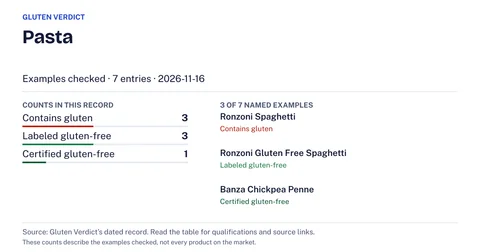
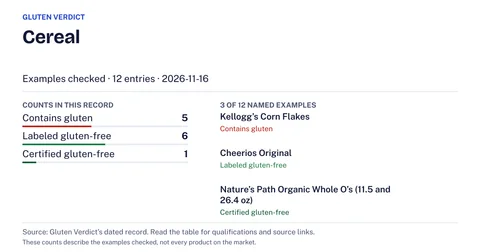
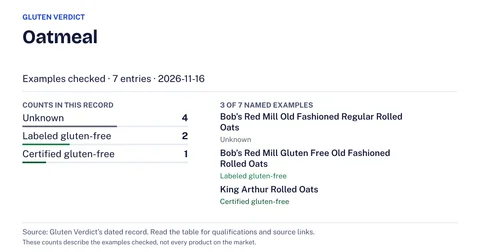
Our verdicts for bread, pasta, cereal and oatmeal show the exact products we checked, what each maker’s own pages say and the date we read them.
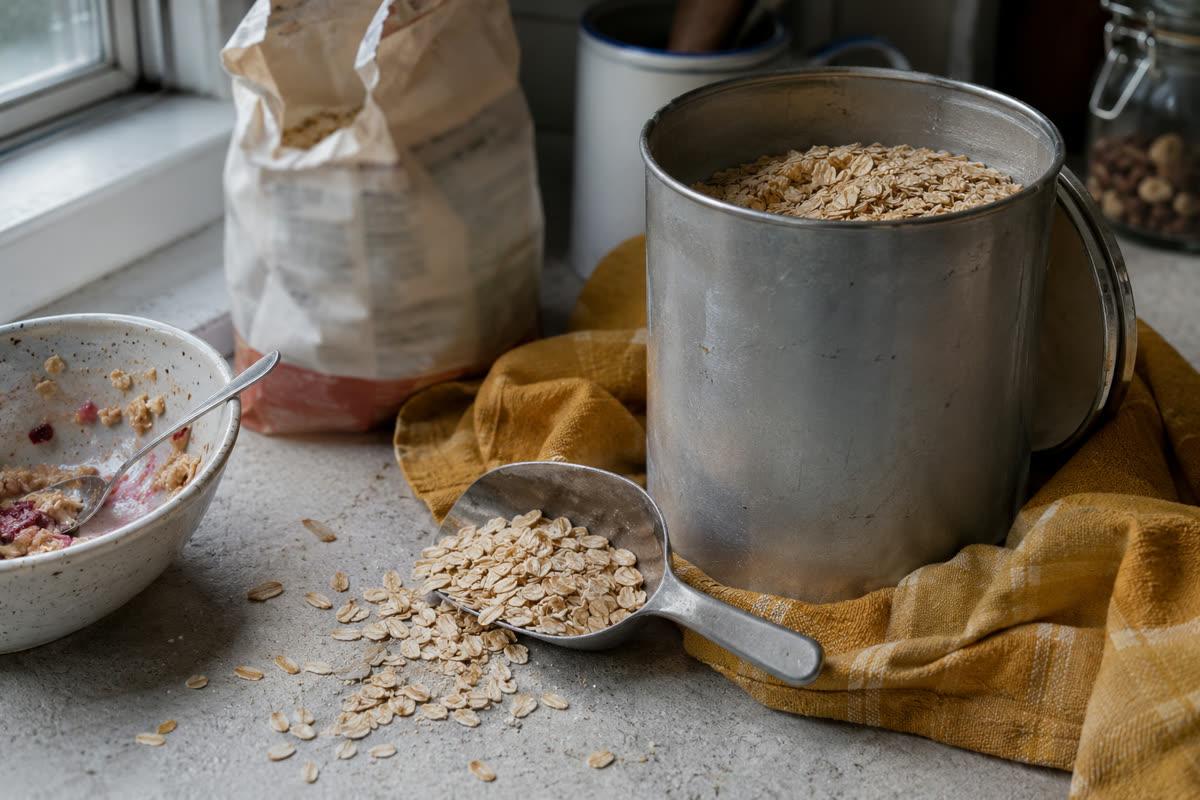
Oats are the grain to ask about: NIDDK says to talk with the doctor or a registered dietitian about whether oats belong in the diet and how much27.
Gluten is not only in food. NIDDK lists children’s modeling dough, such as Play-Doh, among products that may contain gluten28. GIG’s sheet for childcare lists craft supplies that contain wheat unless the package says otherwise: playdough, finger paint, paper mache, craft paste, macaroni and bird seed29.
Reading the first labels
Four places on a US package matter in the first week, and each tells you something different. This is the first-week version; our full guide to reading a food label for gluten goes line by line.
| On the package | What the sources say |
|---|---|
| A “gluten-free” claim | FDA calls it a voluntary claim that a maker may use if the food meets the regulation30. NIDDK says that in the United States a product labelled gluten-free must have less than 20 parts per million of gluten13. |
| A Contains line | Under the allergen law, one way to declare a major allergen is a line that starts with the word Contains and sits immediately after or next to the ingredient list31. The 2004 allergen law’s list of major food allergens names wheat, and does not name barley or rye14. |
| The ingredient list | NIDDK says to read food labels for the grains that contain gluten, such as wheat, barley and rye, and for ingredients or additives made from those grains5. |
| No claim, and you are unsure | NIDDK says not to eat a food if you aren’t sure whether it contains gluten, and to contact the maker or visit its website if possible32. |
Our gluten scanner looks for gluten ingredient names in a photo of a label or in pasted text. Read the package in your hand as well, since the scan only sees what you give it.
Kitchen changes that matter first
GIG says that even the smallest amount of gluten can cause damage to the small intestine without causing obvious symptoms, which is why it calls preventing cross-contact imperative33. NIDDK says to store and prepare gluten-free foods separately from other family members’ gluten foods34. GIG notes that some households with a gluten-free child remove gluten entirely and others keep eating it, and that in the second case taking steps against cross-contact is essential35.
| Item | What GIG says |
|---|---|
| Toaster | GIG says crumbs can end up on gluten-free bread; it suggests toaster bags, or a separate toaster used only for gluten-free toasting6. |
| Colander, sifter, waffle iron | GIG says these are harder to clean thoroughly and should not be shared between gluten-free and gluten use if possible; if they are, clean thoroughly between every use7. |
| Condiment jars | GIG gives a knife dipped back into the mayonnaise jar after spreading it on wheat bread as a cross-contact warning8, and suggests separate condiments or squeeze bottles36. |
| Cutting boards and wooden utensils | GIG says gluten could settle in the crevices of a pitted or scratched cutting board37, and that wood fibers could harbor gluten particles38. |
| Pantry, fridge and counter | GIG suggests a separate area for gluten-free ingredients on an upper shelf of the pantry or refrigerator and one counter area for gluten-free preparation39. |
For most other cooking equipment and utensils, GIG says thorough cleaning with soap and water is sufficient40. Our gluten-free kitchen setup guide goes further, item by item.
Telling school: two separate routes
Two different federal rules can apply to a child with celiac disease at school9, 73.
Route 1: a Section 504 plan
GIG describes a 504 plan as a legal document under Section 504 of the Rehabilitation Act, and says that when a child has a diagnosed medical condition that affects full participation in school, the school is legally required to make adjustments9. The Department of Education’s regulation requires a public school to provide a free appropriate public education to each qualified student with a disability, in the rule’s older wording “handicapped person”, regardless of the nature or severity of the disability41. For actions on identification, evaluation or educational placement, it also requires procedural safeguards: notice, a chance for parents to examine records, an impartial hearing and a review procedure42.
GIG says that for most students with celiac disease a 504 plan is the right tool, and also that a request for one is not always granted43. It says an IEP, which needs eligibility under special education law, is typically not open to a child with celiac disease on its own44. The Academy of Nutrition and Dietetics likewise tells parents to complete a 504 plan so that teachers and other school staff know about the child’s diet45. Our 504 plan guide covers the process.
What GIG says to prepare and to put in the plan:
- Medical documentation: a doctor’s letter that outlines the child’s specific limitations and risks, not just the diagnosis46.
- Everyone in the child’s school day: GIG lists the classroom teacher, school nurse, cafeteria staff, PE and activity teachers and a special education coordinator as staff who should attend or at least be informed47.
- Meals and cross-contact: GIG calls meal accommodations and cross-contact prevention the basics48.
- Classroom items: GIG says playdough, certain glues, finger paints and occasionally science experiment materials often contain gluten49.
- The plan in writing, so there is a paper trail50.
Route 2: a meal modification under the USDA school meal rules
For the school lunch itself, the National School Lunch Program rule says school food authorities must make meal modifications, including substitutions, for children with a disability whose disability restricts their diet, at no additional cost to the child or household, and the change must relate to the disability10. USDA’s 2017 guidance lists celiac disease among the conditions it considers disabilities that may require reasonable modifications73.
When a modified meal does not meet the meal pattern, the school food authority must obtain a written medical statement from the household, signed by a State licensed healthcare professional, to receive federal reimbursement. The rule also requires schools to accept a statement signed by a registered dietitian by July 1, 2025, and says the statement must give enough information about the child’s dietary restrictions, such as foods to be omitted and recommended alternatives15. USDA’s separate nondiscrimination rule (7 CFR part 15b) says recipients shall serve special meals at no extra charge to students whose handicap restricts their diet, and may require medical certification51. The same guidance says that if a child’s 504 plan includes the information the medical statement needs, the school food authority does not have to obtain a separate statement74.
GIG reports that in practice some school cafeterias are equipped for allergen-free cooking and others have limited resources and will not be able to accommodate a child52, and says preparing lunches at home is often the best option for the most assurance53. Whichever you choose, GIG says to discuss the diet with the child’s teachers, principal and school nurse54.
Celebrations come up quickly. GIG suggests asking the teacher for a schedule of celebrations or advance notice of parties, so you can send an alternative treat55, and asking the teacher to store shelf-stable gluten-free treats at school for unexpected ones56. Our guides to school lunch and classroom snacks and to the school plan for teachers go further.
What to tell your child, by age
GIG says kids pick up on cues from the family, so it recommends a positive, encouraging tone, with the focus on the wide variety of foods the child can eat rather than only on what must be avoided12. It says to explain celiac disease in simple, age-appropriate terms: comprehension may be limited in younger children, but they can build an understanding over time11. We did not find a pediatric society’s script for this conversation, so this section rests on GIG, a celiac charity.
| Age | What GIG says |
|---|---|
| Toddler and preschool | GIG says adults in charge of children are their biggest advocates, and adds that many kids will not be able to properly articulate if they feel ill and will not think twice about telling you about a leftover cracker they ate off the snack table57. It says childcare workers should make sure other children do not “feed” the gluten-free child their meals and snacks58. |
| School age | GIG suggests telling the child that gluten makes them unwell even when they don’t feel sick59, and using stories or games with younger children60. It says to teach children from a young age to explain celiac disease, why cross-contact matters and how to state their needs to adults and peers61. |
| Teens | GIG’s party tips for teens include practicing a few polite ways to ask what is in food or where it was prepared62. Its tip for parents is to talk before the party about what to expect and how to handle offers from others63. |
Family, caregivers and other parents
GIG says gaining support from the entire household is crucial, and that everyone in it should understand the child’s condition and know the sources of gluten64.
GIG says the genes responsible for celiac disease are inherited, so it occurs at a significantly higher rate among first-degree relatives: parents, children and siblings65. NIDDK says blood relatives of people with celiac disease should talk with their doctor about their chances of getting it, to see if they should be tested17. It also says that if you avoid gluten before testing, the results may not be accurate16.
For anyone else who feeds your child, GIG’s childcare sheet says daycare workers should preferably prepare gluten-free children’s snacks and meals before others, or at the very least change their gloves before touching the gluten-free child’s meal66. Our guide to explaining celiac disease to friends and family helps with the conversations that come next.
GIG says children with celiac disease are able to take part in sports, band, academic clubs and other hobbies, and that coaches, club sponsors, teachers and other parents should be told about the need to avoid gluten67. NIDDK says support groups may be helpful as a family learns about and adjusts to the diet68.
Follow-up visits and what to expect
NIDDK says symptoms greatly improve for most people with celiac disease who stick to the diet, that the diet will heal intestinal damage for most people, and that many see symptoms improve within days to weeks69. That is NIDDK’s statement for people with celiac disease in general, not a timetable for any one child.
NIDDK says a doctor may recommend regular follow-up visits to check that symptoms and health problems are improving on the diet, and that follow-up may include blood tests for antibodies that are higher in untreated celiac disease and typically return to normal after treatment70.
What can wait until week two
These are real tasks that can follow once labels, kitchen and school are in hand:
Verdicts in this guide

More in Kids, school, college and family
 A gluten-free child who refuses food: what to track and when to ask the doctorHow to tell ordinary picky eating from a pattern to raise with your child’s doctor or dietitian, what ARFID is, and a one-week log to bring.
 A 504 plan and school meal rules for celiac disease: what to ask for and where to complainMeal substitution or a 504 plan for a child with celiac disease: what each rule says, what the medical statement must hold, and where to complain.
 Teaching a child to read gluten-free labels, one skill at a timeFour label skills to teach a gluten-free child in order, a cupboard practice game, and the questions an adult still answers.
 A care sheet for the babysitter or grandparent of a child with celiac diseaseA one-page care sheet for a babysitter or grandparent: the checked foods, the kitchen cross-contact points, what to do after an exposure, and whom to call.
 Going gluten-free as a family: choose the household rule, then fix the kitchenAll gluten-free, shared with rules or split: what NIDDK, the charities and one small study say, plus rules for siblings and visiting relatives.
 A gluten-free care plan for daycare and preschoolWrite a one-page gluten-free care plan for daycare or preschool, ask the right questions on a tour, and see which government rule covers each program.
Related guides
 Your first 30 days after a celiac diagnosis: a week-by-week planA week-by-week plan for the first month after a celiac diagnosis: label rules, kitchen changes, a dietitian, follow-up tests and questions for your doctor.
 Oats and celiac disease: what a gluten-free oat label does and does not tell youWhat FDA’s rule covers for oats, how makers get oats to the gluten-free limit, what avenin studies found, and what to ask your doctor.
 Pediatric celiac clinic visits: what to bring and what to askWhat to bring to a child’s celiac follow-up and the questions for the gastroenterologist and dietitian, drawn from the Celiac Disease Foundation checklist.
 Diagnosing celiac disease in children without a biopsy: what the ESPGHAN guideline requiresThe conditions ESPGHAN sets for diagnosing celiac disease in a child without a biopsy, what must be confirmed first, and how US guidance differs.
Sources
- [1, 3, 13, 20, 28, 69, 70] US National Institute of Diabetes and Digestive and Kidney Diseases (NIDDK), Treatment for Celiac Disease, checked Nov 17, 2026.
Read on 2026-11-17: under “Gluten-free diet” NIDDK says the dietitian will teach you how to avoid gluten while following a healthy diet and recommend substitutes for foods that contain gluten, and lists three ways the dietitian will help: check food and product labels for gluten; design everyday meal plans; make healthy choices about foods and drinks.
Read on 2026-11-17: under “Avoiding medicines and other products that may contain gluten” NIDDK says your doctor will want you to avoid all hidden sources of gluten, says to ask a pharmacist about ingredients in herbal and nutritional supplements, prescription and over-the-counter medicines, and vitamin and mineral supplements, and lists products that may contain gluten: children’s modeling dough, such as Play-Doh; cosmetics; lipstick, lip gloss, and lip balm; skin and hair products; toothpaste and mouthwash; communion wafers.
- [2, 4, 5, 16, 24, 27, 32, 34, 68] US National Institute of Diabetes and Digestive and Kidney Diseases (NIDDK), Eating, Diet, & Nutrition for Celiac Disease, checked Nov 17, 2026.
- [6] Gluten Intolerance Group, Appliances and the Risk of Cross-Contamination, checked Nov 17, 2026.
- [7, 8, 40] Gluten Intolerance Group, 25 Ways Cross-Contact Could Happen and How to Avoid It, checked Nov 17, 2026.
- [9, 43, 44, 46, 47, 48, 49, 50, 61] Gluten Intolerance Group, From Diagnosis to Documentation: Securing a 504 Plan for Your Child with Celiac Disease, checked Nov 17, 2026.
- [10, 15] US Department of Agriculture (rule text via eCFR), 7 CFR 210.10 Meal requirements for lunches, checked Nov 17, 2026.
- [11, 12, 25, 26, 35, 39, 52, 53, 54, 55, 56, 59, 60, 64, 71, 72] Gluten Intolerance Group, Transitioning Your Child to a Gluten-Free Diet, checked Nov 17, 2026.
- [14, 31] US Food and Drug Administration, Food Allergen Labeling and Consumer Protection Act of 2004 (FALCPA), checked Nov 17, 2026.
- [17] US National Institute of Diabetes and Digestive and Kidney Diseases (NIDDK), Diagnosis of Celiac Disease, checked Nov 17, 2026.
- [18, 19] NASPGHAN (J Pediatr Gastroenterol Nutr, 2005), via PubMed, Guideline for the diagnosis and treatment of celiac disease in children, checked Nov 17, 2026.
- [21, 22, 45] Academy of Nutrition and Dietetics, Does My Child Need a Gluten-Free Diet?, checked Nov 17, 2026.
- [23, 33, 36, 65, 67] Gluten Intolerance Group, Celiac Disease in Children, checked Nov 17, 2026.
- [29, 57, 58, 66] Gluten Intolerance Group, Pre-School, Childcare, and Gluten Risks, checked Nov 17, 2026.
Read on 2026-11-17: the list headed “Craft Supplies That Contain Wheat (Unless otherwise stated on package)” names playdough, finger paint, paper mache, craft paste, macaroni and bird seed.
- [30] US Food and Drug Administration, Gluten-Free Labeling of Foods, checked Nov 17, 2026.
- [37, 38] Gluten Intolerance Group, The Tools to Replace in Your Gluten-Free Kitchen, checked Nov 17, 2026.
- [41] US Department of Education (rule text via eCFR), 34 CFR 104.33 Free appropriate public education, checked Nov 17, 2026.
- [42] US Department of Education (rule text via eCFR), 34 CFR 104.36 Procedural safeguards, checked Nov 17, 2026.
- [51] US Department of Agriculture (rule text via eCFR), 7 CFR 15b.26 Nonacademic services, checked Nov 17, 2026.
- [62, 63] Gluten Intolerance Group, Supporting Gluten-Free Kids at Parties: What Teens and Parents Need to Know, checked Nov 17, 2026.
- [73, 74] US Department of Agriculture, Food and Nutrition Service, SP 26-2017 Accommodating Disabilities in the School Meal Programs: Guidance and Q&As, checked Nov 17, 2026.