A gluten-free child who refuses food: what to track and when to ask the doctor
Short answer
Many children go through phases of picky or selective eating1. Three signs that the National Eating Disorders Association (NEDA) and the American Psychiatric Association (APA) list for restrictive eating are worth raising with the pediatrician or a celiac dietitian instead of waiting them out:
- The list of foods the child accepts keeps getting narrower, not just different2.
- Weight loss, faltering growth or a significant nutritional deficiency appears3, 4.
- Eating comes with fear of choking or vomiting, a limit to certain textures, or problems with social functioning, such as an inability to eat with others5, 4.
Part of Kids, school, college and family, 21 guides

Key points
- Picky eating is often the norm for toddlers6. ARFID is a diagnosis for eating so limited that it causes medical, nutritional or psychosocial problems, and it is not driven by body image1, 7.
- ESPGHAN’s pediatric follow-up paper says to review a child with celiac disease sooner when there are concerns about how the family is coping with the diet, ongoing growth issues or persistent symptoms8.
- In one cross-sectional study of 101 children and adolescents with biopsy-confirmed celiac disease at one center, the ARFID prevalence was 42.6%9, 10. That is one study, not a rate for every child.
- The diet stays in place while you ask: NIDDK says people with celiac disease need to follow a gluten-free diet for life11.
- For ordinary picky eating in toddlers, the AAP’s advice is to provide the food and let the child decide whether to eat it, without pressure or bribes12, 13.
Phase or pattern: what separates them
The American Academy of Pediatrics (AAP) says picky eating is often the norm for toddlers6, and that for weeks a toddler may eat one or two preferred foods and nothing else14. The American Psychiatric Association (APA) lists “developmentally normal behaviors, such as toddlers who are picky eaters” among the things ARFID does not include15.
The National Eating Disorders Association (NEDA) draws its line this way: many children go through phases of picky or selective eating, while a person with ARFID has a diet so limited that it leads to medical, nutritional or psychosocial problems1. NEDA adds that children who do not outgrow normal picky eating, or in whom it is severe, appear to be more likely to develop ARFID16.
| What you see | Ordinary picky eating (AAP, written about toddlers) | What NEDA lists as signs of restrictive eating |
|---|---|---|
| The foods accepted | Favorites change, and a toddler may eat one or two foods for weeks14 | A limited range of preferred foods that becomes narrower over time2 |
| Weight and growth | A toddler’s growth rate and appetite tend to slow after infancy17 | Dramatic weight loss or faltering growth can signal restrictive eating; weight loss is not always present3 |
| Reaction to food | Toddlers are still learning to handle new tastes, textures and smells18 | Only certain textures eaten; fears of choking or vomiting5 |
The AAP pages cited here are about toddlers and preschoolers, so read the middle column as a picture of how common the behavior is, not as a rule for an older child.
Why a gluten-free version may be refused
A food-science review says the absence of gluten is critical to the structure of gluten-free bread19, and that ingredients called hydrocolloids are frequently used in gluten-free recipes, mimicking some rheological properties of gluten20. Mimicking some properties is not the same as matching the food a child knew, so a swapped bread, pasta or breading may be noticed. We did not find a study that compares children’s acceptance of gluten-free and regular versions of the same food, so treat texture as a possible factor, not a finding.
Refusal is not only about texture. APA says avoidance in ARFID is generally one of three types: lack of interest in eating21, sensory-based avoidance of texture, appearance, color or smell22, or fear of consequences such as choking, nausea or vomiting23.
One survey in Brazil measured food neophobia, described as resistance to new foods24, in children aged 4 to 11 with gluten-related disorders25. Of its 209 children, 83.7% were diagnosed with celiac conditions and 43.1% had moderate total food neophobia26. The paper reports that, regarding food neophobia, total and by domain, children with and without gluten-related disorders do not differentiate64. It measured neophobia on a questionnaire, not how a child reacts to a gluten-free swap of a familiar food.
When refusal can point to something else
Not every refusal is a preference. NIDDK says that in about 20 percent of people with celiac disease, symptoms continue or come back even on a gluten-free diet, and that a person with continuing symptoms should talk with a doctor or registered dietitian who can help find the cause27. One possible cause NIDDK names is still eating or drinking a small amount of gluten28.
A child who links eating with a stomachache may start to avoid eating. The Gluten Intolerance Group (GIG), summarizing a literature review of young people with diet-related chronic conditions, reports that preoccupation with dietary management and fear of abdominal discomfort caused by food are potential factors that increase the risk of disordered eating patterns in people with celiac disease29.
The European society for pediatric gastroenterology (ESPGHAN) recommends a first follow-up visit 3–6 months after diagnosis, with sooner review if there are concerns about how the family is coping with the diet, ongoing growth issues or persistent symptoms8. That is why the first call is to the child’s doctor: the question is whether the refusal has a medical cause, a feeding problem, or both.
ARFID in plain terms
NEDA describes ARFID as a diagnosis in which people limit the volume or variety of the food they eat, but, unlike other eating disorders, the restriction is not related to fears of fatness or distress about body shape, size or weight7. APA describes an ongoing severe pattern of avoiding foods or selective eating that results in not meeting nutritional needs30.
APA says a diagnosis requires one or more of these four4:
- Significant weight loss, or failure to achieve expected weight gain in children4
- Significant nutritional deficiency4
- Reliance on a feeding tube or oral nutritional supplements to maintain sufficient nutrition4
- Problems with social functioning, such as inability to eat with others4
Whether a child meets these criteria is a clinician’s judgment, which is why this page stops at what to bring to one. NEDA says treatment involves a multidisciplinary team of health and mental health professionals31, and that it is essential to seek professional help as soon as possible32.
How often does it show up with celiac disease?
NEDA says there is limited research on the prevalence of ARFID, and that studies have found 0.5%-5% of children and adults in the general population have it33. For celiac disease, a 2025 scoping review reports that recent studies put the share of individuals with celiac disease who may meet ARFID criteria at 14–57%, depending on the population and the screening tools used34.
One cross-sectional study at a tertiary-care center assessed 101 children and adolescents aged 8–17 with biopsy-confirmed celiac disease9. Two child and adolescent psychiatrists made the ARFID diagnosis through a DSM-5-guided clinical evaluation35, and the prevalence in that group was 42.6%10. Children with ARFID had significantly lower weight and BMI z-scores36, and gastrointestinal symptoms and higher anxiety scores were independently associated with ARFID37. The authors say longitudinal studies are needed to clarify the clinical course38.
One center’s figure is not a rate for every child with celiac disease; the review’s range shows the number moves with who is studied and how34. The review lists factors that may contribute: ongoing gastrointestinal symptoms, anxiety over gluten exposure, negative conditioned responses to food, social challenges with the diet, and psychiatric co-morbidities39.
A one-week log to bring to the visit
When symptoms continue, NIDDK’s advice is to keep a food journal and talk with the doctor and a registered dietitian28. For this question the log can be small:
- Each meal and snack: what was offered, how much was eaten (a few bites, half, all, nothing), and the brand and gluten-free claim of any packaged food.
- How the child reacted: refused on sight, gagged, cried, asked for something else, said their stomach hurt, named a fear.
- Symptoms and their timing: stomach pain, vomiting, constipation or diarrhea, and how long after eating.
- Any food dropped from the accepted list this week, and when the child last ate it.
- Anything that changed: an illness, a known gluten exposure, a new school. APA notes that ARFID may develop in response to a specific event, such as an episode of choking or food poisoning40.
Leave the weighing to the clinic: ESPGHAN lists anthropometric measurements and growth parameters, along with gastrointestinal and extraintestinal signs and symptoms, among what follow-up visits assess41. The log is for what happened at the table.
What pediatric sources suggest at the table
These tips come from the AAP’s pages on ordinary picky eating in toddlers and preschoolers. For a child with the signs in the first section, NEDA says it is essential to seek professional help as soon as possible32.
- Split the jobs. The AAP puts it as the parent’s responsibility to provide food and the child’s decision to eat it; pressuring kids to eat, or punishing them, can make them actively dislike foods they may otherwise like12.
- Skip bribes. The AAP says to try not to bribe children with treats for eating other foods13.
- Repeat, without pressure. The AAP says it can take as many as 10 or more tastes before a toddler’s taste buds accept a food42; another AAP page says 13 or more exposures43, and that an exposure can be having the food on the plate, touching it, smelling it or licking it44.
- Put one familiar food on the plate. The AAP says to include at least one food the child likes with each meal and keep providing a balanced meal, whether the child eats it or not45.
- Limit choices to two46.
- Build bridges. Once a food is accepted, the AAP describes “food bridges”: introducing others with similar color, flavor and texture47.
- Praise curiosity, not how much was eaten48.
For ARFID, APA describes methods that treatment teams use: reversing negative associations with feared foods by pairing them with positive experiences49, and food chaining, which slowly introduces new foods by making small changes50. NEDA says most outpatient treatment includes some form of family-based therapy, cognitive behavioral therapy or parent-based behavioral approaches51. A clinician delivers these; this page does not teach them.
What not to relax while the child narrows
NIDDK states that people with celiac disease need to follow a gluten-free diet for life to prevent symptoms and intestinal damage from coming back, and that a doctor or registered dietitian can guide what to eat to maintain a balanced diet11.
A change to the diet to get a child eating, even a brief one, is a question for the child’s doctor and dietitian, the people NIDDK names to guide what to eat11. The ESPGHAN follow-up paper says follow-up visits are preferably carried out by a physician or dietitian experienced in managing celiac disease, and that self-care treatment without access to adequate health care and dietitians is not recommended52.
When a child lives on a few packaged foods, the nutrition label matters too. NIDDK notes that some packaged gluten-free foods may be higher in fat and sugar than the same foods that contain gluten53, and NEDA says a highly selective diet may lead to significant deficiencies of key nutrients54. Ask the dietitian what the accepted foods are missing instead of guessing.
Labels for the few foods the child accepts
A child who eats a handful of packaged foods makes every label count. NIDDK’s advice is that when a label does not tell you what is in a product, you ask the company for an ingredients list55. What “gluten-free” means on a US label is in our label-reading guide, and teaching kids to read gluten-free labels covers handing the job to the child. Gluten-free swaps for lunchbox staples covers the foods children tend to ask for.
For the foods that come up most in these households, each verdict lists the sources we read and the date we checked them: bread, pasta, mac and cheese, chicken nuggets, pancakes and cereal. Recipes change, so when an accepted brand changes its package, read the new label before it goes in the cart. A photo of each accepted food’s ingredient list in the log makes a change easy to spot.
Questions to bring to the care team
- Are my child’s weight and growth where you would expect, and what will you track at the next visit?
- Could ongoing small gluten exposures, or another condition, explain the symptoms around meals?
- Do the accepted foods leave gaps in nutrients that blood work or a dietitian’s review should check?
- Can a registered dietitian who works with celiac disease review what my child eats?
- Should a psychologist, psychiatrist or feeding specialist look at the refusal, and what would make you consider ARFID?
- What should the log show before the next visit, and when should we call sooner?
More question lists: what to ask at pediatric celiac clinic visits and how to find a celiac dietitian. For what celiac disease can look like in children, see celiac symptoms in children.
School, parties and family while the child is refusing
Meals away from home are where a narrow list gets tested. The Celiac Disease Foundation says a 504 Plan can be filed in federally funded schools to arrange accommodations for a child with celiac disease56. Our guides cover school lunch and classroom snacks, a school plan for teachers and birthday parties.
Anyone who feeds the child can use the same low-pressure approach. The AAP’s advice when a toddler refuses a meal is to avoid fussing over it57.
Where to get help
Start with the child’s pediatrician, gastroenterologist or celiac dietitian. ESPGHAN recommends emotional and practical support from other people with celiac disease, including parent support groups and patient organizations, to reduce feelings of social isolation58, and says patients, especially adolescents, who find the gluten-free diet and emotional coping difficult warrant particular attention and support59.
For eating-disorder support, NEDA’s resource center describes itself as connecting individuals and loved ones with knowledge and lived experience to find help and support60. If a child or teen is in emotional distress, the 988 Suicide & Crisis Lifeline says you can call, text or chat with a counselor for help during difficult moments anytime, day or night61, and that conversations are free and confidential62.
What this page does not cover
This page does not diagnose, choose a treatment, advise on supplements or cover infants and tube feeding. It reports what the sources named above say, with the date we read each one. Your child’s doctor and dietitian decide what applies to your child.
Verdicts in this guide
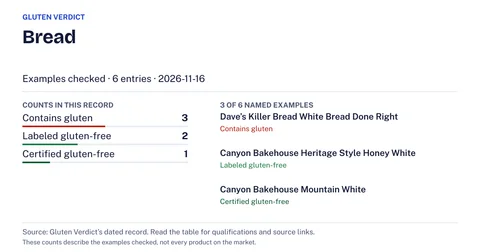 BreadContains glutenchecked Nov 16, 2026
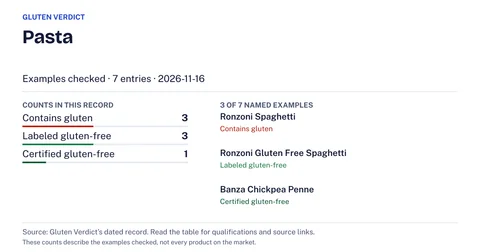 PastaContains glutenchecked Nov 16, 2026
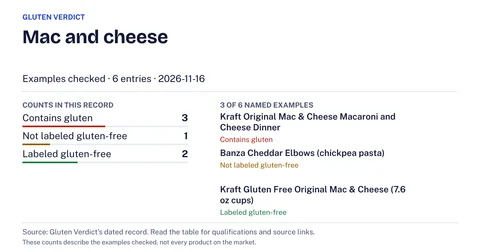 Mac and cheeseContains glutenchecked Nov 16, 2026
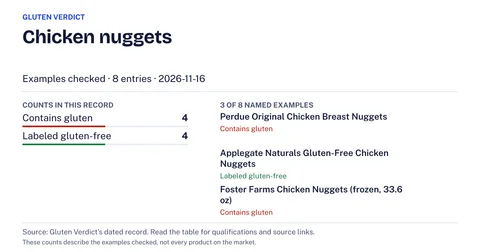 Chicken nuggetsDepends on the product4 of 8 products we checked contain glutenchecked Nov 16, 2026
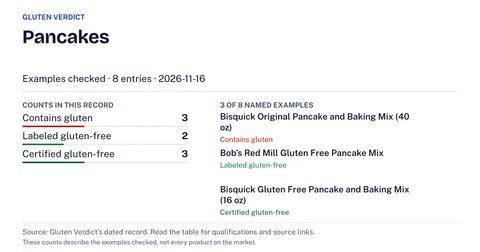 PancakesContains glutenchecked Nov 16, 2026
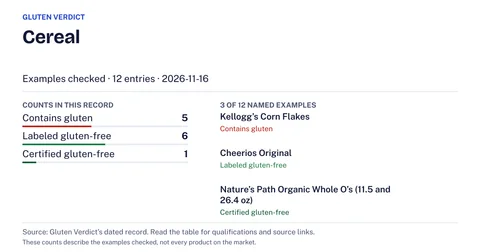 CerealDepends on the product5 of 12 products we checked contain glutenchecked Nov 16, 2026
Questions people ask
Is it normal for a child to refuse gluten-free versions of foods they used to eat?
We found no study that compares children’s acceptance of gluten-free and regular versions of the same food. What the sources do say is that picky eating is often the norm for toddlers6, and that gluten-free recipes use hydrocolloids that mimic some rheological properties of gluten20. A narrowing list of accepted foods and weight loss are both among the signs NEDA lists for restrictive eating2, 3, and worth raising with the care team.
Does celiac disease cause ARFID?
The sources cited here show an overlap, not a cause. One is a scoping review of the emerging intersection between ARFID and celiac disease63, which lists factors that may contribute, including ongoing gastrointestinal symptoms and anxiety over gluten exposure39. The other is a cross-sectional study9 that found gastrointestinal symptoms and higher anxiety scores independently associated with ARFID37.
Should I stop the gluten-free diet if my child will not eat?
NIDDK says people with celiac disease need to follow a gluten-free diet for life11, and that a doctor or registered dietitian can guide what to eat and drink to maintain a balanced diet11. The ESPGHAN follow-up paper says self-care treatment without access to adequate health care and dietitians is not recommended52.
How many times should I offer a food the child refuses?
The AAP says it can take as many as 10 or more tastes for a toddler42, and 13 or more exposures43; an exposure can be having the food on the plate, touching it, smelling it or licking it44. For a child with weight loss or fear around food, ask the care team before relying on repetition.
Is ARFID the same as anorexia?
No. NEDA says that, unlike the other eating disorders, food avoidance or restriction in ARFID is not related to fears of fatness or distress about body shape, size or weight7.
More in Kids, school, college and family
 Your child has celiac disease: a first-week plan for the kitchen, labels, school and talking to your childThe first week after a child’s celiac diagnosis, in order: the diet plan, first labels, kitchen, two school routes, talking to your child and follow-up.
 A care sheet for the babysitter or grandparent of a child with celiac diseaseA one-page care sheet for a babysitter or grandparent: the checked foods, the kitchen cross-contact points, what to do after an exposure, and whom to call.
 A 504 plan and school meal rules for celiac disease: what to ask for and where to complainMeal substitution or a 504 plan for a child with celiac disease: what each rule says, what the medical statement must hold, and where to complain.
 Going gluten-free as a family: choose the household rule, then fix the kitchenAll gluten-free, shared with rules or split: what NIDDK, the charities and one small study say, plus rules for siblings and visiting relatives.
 Helping a gluten-free child feel included at the table, at parties, in class and at restaurantsOne plan for each place a gluten-free child gets singled out: the table, parties, class and restaurants, with a sentence the child can say.
 Teaching a child to read gluten-free labels, one skill at a timeFour label skills to teach a gluten-free child in order, a cupboard practice game, and the questions an adult still answers.
Related guides
 Pediatric celiac clinic visits: what to bring and what to askWhat to bring to a child’s celiac follow-up and the questions for the gastroenterologist and dietitian, drawn from the Celiac Disease Foundation checklist.
 Why Goldfish, Cheez-It and Nutri-Grain contain gluten, and what a swap has to showSee the wheat ingredient in Goldfish, Cheez-It and Nutri-Grain in each maker's words, then check any swap against a gluten-free claim or certifier mark.
 Celiac disease and eating disorders: what the research and clinicians reportWhat studies link celiac disease and eating disorders, how a required diet connects to disordered eating, the cautions clinicians raise, and US help lines.
 Celiac disease symptoms in children, and who pediatric guidelines say to testTypical and less typical celiac signs in children, who pediatric guidelines say to test, and why the child keeps eating gluten until testing ends.
Sources
- [1, 2, 3, 5, 7, 16, 31, 32, 33, 51, 54] National Eating Disorders Association, Avoidant Restrictive Food Intake Disorder (ARFID), checked Nov 17, 2026.
Read on 2026-11-17: the list headed “Behavioral and psychological signs” includes “Dramatic restriction in types or amount of food eaten”, “Will only eat certain textures of food”, “Fears of choking or vomiting” and “Lack of appetite or interest in food”.
- [4, 15, 21, 22, 23, 30, 40, 49, 50] American Psychiatric Association, What are Eating Disorders? (ARFID section), checked Nov 17, 2026.
Read on 2026-11-17: the list under “The diagnosis of ARFID requires one or more of the following” names significant weight loss (or failure to achieve expected weight gain in children); significant nutritional deficiency; the need to rely on a feeding tube or oral nutritional supplements to maintain sufficient nutrition intake; and problems with social functioning (such as inability to eat with others).
- [6, 12, 13, 14, 17, 42, 45, 47, 57] American Academy of Pediatrics (HealthyChildren.org), 10 Tips for Parents of Picky Eaters, checked Nov 17, 2026.
- [8, 41, 52, 58, 59] European Society for Paediatric Gastroenterology Hepatology and Nutrition (ESPGHAN), ESPGHAN Position Paper on Management and Follow up of Children and Adolescents With Celiac Disease (JPGN, 2022), checked Nov 17, 2026.
- [9, 10, 35, 36, 37, 38] Journal of Eating Disorders (PubMed Central), Prevalence and clinical correlates of avoidant/restrictive food intake disorder in children and adolescents with Celiac disease: a cross-sectional study (2026), checked Nov 17, 2026.
- [11, 53] National Institute of Diabetes and Digestive and Kidney Diseases (NIDDK), Eating, Diet, & Nutrition for Celiac Disease, checked Nov 17, 2026.
- [18, 43, 44, 46, 48] American Academy of Pediatrics (HealthyChildren.org), Taste, Touch, Explore: Make Nutritious Food Fun for Young Eaters, checked Nov 17, 2026.
- [19, 20] Foods (PubMed Central), The Role of Hydrocolloids in Gluten-Free Bread and Pasta; Rheology, Characteristics, Staling and Glycemic Index (2021), checked Nov 17, 2026.
- [24, 25, 26, 64] Nutrients (PubMed Central), Dietary Challenges in Children with Gluten-Related Disorders: A Study on Food Neophobia (2024), checked Nov 17, 2026.
- [27, 28, 55] National Institute of Diabetes and Digestive and Kidney Diseases (NIDDK), Treatment for Celiac Disease, checked Nov 17, 2026.
- [29] Gluten Intolerance Group, Disordered Eating and Gluten-Related Disorders, checked Nov 17, 2026.
- [34, 39, 63] Nutrients (PubMed Central), Avoidant/Restrictive Food Intake Disorder in Celiac Disease (scoping review, 2025), checked Nov 17, 2026.
- [56] Celiac Disease Foundation, Resources for K-12 Students, checked Nov 17, 2026.
- [60] National Eating Disorders Association, Grace Holland Cozine Resource Center, checked Nov 17, 2026.
- [61, 62] 988 Suicide & Crisis Lifeline, 988 Lifeline, checked Nov 17, 2026.