Celiac disease in teenagers: friends, eating out and taking over their own care
Short answer
One review reports that adolescents are more likely than adults to eat gluten on purpose, often in social situations1, and a 2016 review links poorer adherence in adolescence to an absence of immediate symptoms and difficulty eating out2. Four things are worth settling ahead of time, drawn from the sources below:
- A short script for friends, because a review reports that adolescents feel isolated in social situations3 and a Canadian survey found lower adherence at social events4.
- A plan for each place they eat: call ahead, ask about fryers and shared surfaces, and read what the chain’s own page says5, 6.
- A hand-over of care tasks one at a time, with the family and the clinic team still involved7.
- Follow-up questions about growth, bones and mood, taken to the teen’s own clinicians8.
Part of Kids, school, college and family, 21 guides

Key points
- The same 2016 review reports that better emotional support and stronger organisation skills have been associated with better adherence9.
- Chains say what they cannot promise: Buffalo Wild Wings says it does not use separate fryers and that no items are certified gluten-free10, 11.
- The Celiac Disease Foundation lists evaluating bone health and growth, and supporting mental well-being, among the things follow-up care helps to do8.
What research reports about teenagers and the diet
One review describes adolescence as an intense period of formative cognitive and social development in which people explore their identity and gain independence12. The same review reports that, in qualitative and survey studies, adolescents are more likely than adults to have (or to report) intentional gluten consumption, often in social situations1, and that across the lifespan the diet is perceived as easier to follow at home, where there is more control13.
A 2016 narrative review lists the factors associated with poor adherence in adolescence: older age, an absence of immediate symptoms, difficulties eating out and poor palatability of gluten-free foods2. It reports that better emotional support and stronger organisation skills have been associated with better adherence9, and that a number of studies find adolescents facing stigmatisation and feeling isolated in social situations and at school3.
A Canadian survey of children and teens found good adherence at home and school but lower adherence at social events4. Adolescents reported lower adherence than parents did, and their adherence in restaurants was particularly lower14, 15. Its authors say it is difficult to tell whether this is true lower adherence or a difference due to substitute report compared with self report16.
These are findings about groups of teenagers, not a verdict on any one teen. One Polish study reported that the most common causes of teenage diet failure are the absence of symptoms after consuming a small amount of gluten and, even more often, troublesome diet administration17; its authors wrote that it seems such information about celiac disease should be provided to every juvenile patient once they enter adolescence18.
Saying it once: a script for friends
The Gluten Intolerance Group (GIG) advises approaching these conversations with a serious but informal tone19, in a quiet, non-rushed place20. It also warns that a person may still not fully understand however many times you explain, so expect to explain again21.
Three lines you can adapt, based on GIG’s sample wording. Change any of them into your own words:
- “I have celiac disease. It’s an autoimmune condition, and not eating gluten is how I manage it. It’s medically prescribed.” GIG’s sample answer to the “fad diet” question uses these points22.
- “I can’t eat gluten, but it’s all good!” GIG’s party tips suggest a simple, upbeat answer like this when someone asks why you’re not eating23.
- “If it’s easier, I’ll bring my own.” GIG’s sample reply to a host offering to cook uses the same offer24.
Some people will push back. GIG’s article on self-advocacy says many people aren’t familiar with gluten issues and some think going gluten-free is a fad25, and suggests keeping a support network close for the times you need to vent26. Longer answers to the questions friends and relatives ask are in how to explain celiac disease to friends and family; for dates, see dating with celiac disease.
Parties, sleepovers and other people’s food
GIG’s tips for teens at parties, each from its page on the subject:
- Bring your own: gluten-free snacks or treats, and enough to share27.
- Have a go-to response: practise a few polite ways to ask what is in the food or where it was prepared28.
- Eat before you go: GIG notes that arriving hungry can make it harder to avoid temptations that could make you feel sick later29.
GIG’s tips for parents are quieter: talk before the party about what to expect and how to handle offers30, help pack snacks or a meal the teen will enjoy31, check in with the host if it feels right32, and afterwards acknowledge the confidence it took33.
Eating out with friends
If the group picks a chain or quick-service place, GIG’s eating-out tips say that fast food, quick-service restaurants and those with a standard menu may have little time to thoroughly check ingredients34. Its tips for the order itself:
- Call the restaurant the day before or earlier the same day5.
- Time the meal for before or after the busiest mealtime35.
- Keep the explanation short: GIG says busy servers respond best to short, direct explanations36.
- When the plate arrives, double-check with the server that it is the special meal you ordered37.
Questions that find cross-contact
GIG’s article for parents ordering for a child lists these questions. A teen ordering alone can ask the same ones.
| Ask | What it finds out |
|---|---|
| Are the french fries cooked in a dedicated fryer, or do they share oil with breaded items? | Whether fried foods share oil6. GIG lists confirmation that gluten-free foods share cooking oil or grill spaces with heavily breaded foods among its red flags38. |
| Is the gluten-free pasta boiled in fresh water, or the same water as regular pasta? | Whether cooking water is shared6. |
| Is this item cooked on a clean section of the grill or flat-top, separate from breaded foods? | Whether the cooking surface is shared6. |
| Is the seasoning blend on this dish gluten-free? | Whether a seasoning adds gluten6. |
What three chains say on their own pages
Our verdict pages read the chains’ allergen information and give the date we read it.
| Chain | What its own page says | Our verdict |
|---|---|---|
| Chipotle | Tells guests who avoid gluten not to eat its flour tortillas, and offers to change gloves for guests highly sensitive to gluten who say so at the start of the order39. | Chipotle |
| Buffalo Wild Wings | Says it does not use separate fryers, so allergen and gluten cross-contact between fried foods is possible10, and that no items are certified gluten-free11. | Buffalo Wild Wings |
| Wendy’s | Says it is unable to guarantee that any menu item can be completely free of allergens40. | Wendy’s |
We have also read the allergen pages of Five Guys, Panera, Chili’s and Sweetgreen. Open the verdict for the order itself, because the answer changes with what is ordered. For how chains handle fryers and prep, see fast-food fryer and prep policies, burger and chicken chain allergen policies and eating out with celiac disease.
Taking over their own care, and what parents keep
No source we read assigns ages to these tasks, so the table below is an order to work through, not a timetable. One scoping review found a paucity of literature on the best approaches to improve diet adherence by youth41, and the mechanisms it does identify include regular engagement of the young person and family with an experienced multidisciplinary team7.
| Task | What the sources say |
|---|---|
| Planning meals and lunches | GIG’s bulletin for parents says that once a child is familiar with the guidelines, let them try to plan their own lunches42. |
| Cooking | GIG says cooking with a child lets them develop basic cooking skills and understand how to avoid cross-contact43. |
| Ordering and party food | See the two sections above; GIG’s party tips ask the teen to have a go-to response28. |
| Speaking to clinicians | GIG’s article on self-advocacy says being your own advocate can be a major part of dealing with healthcare providers44. |
| Keeping their own records | One review recommends that all patients are given written details of their diagnosis, including the date and findings of the diagnostic biopsy and serology45. |
Parents are not out of the picture. GIG’s party advice for parents lists talking beforehand, preparing snacks together and checking in with the host30, 31, 32, and the 2016 review links better emotional support with better adherence9.
Follow-up: what the clinic covers, and questions to bring
The Celiac Disease Foundation (CDF) says that even after starting a strict gluten-free diet, regular medical follow-up is essential to support full healing and long-term health46. NIDDK says a doctor may recommend regular follow-up visits to make sure symptoms and health problems related to celiac disease are improving on a gluten-free diet47. CDF’s page lists what follow-up helps to do8. Each question below comes from one of those items; they are topics to raise, not a script for any one teen’s care.
- How are growth and bone health being checked, and what has been found? CDF lists evaluating bone health and growth8.
- Which nutrient levels are being checked, and how often? CDF lists assessing for nutrient deficiencies8.
- Is anything being screened for among associated autoimmune conditions? CDF lists screening for them8.
- How is quality of life and mental well-being being asked about? CDF lists supporting both8.
- Who is our dietitian, and when is the next dietary session? NIDDK says a dietitian teaches how to avoid gluten while following a healthy diet48.
CDF offers downloadable Adult and Pediatric Follow-Up Checklists to bring to appointments with a physician and dietitian49. A European paediatric society’s position paper formulated 37 recommendations on follow-up, including its frequency and what should be assessed, how to assess adherence, quality of life, communication with patients and parents or caregivers, and the transition to adult health care50.
A review of childhood and adolescence in celiac disease stresses expert oversight of the diet for its nutritional adequacy, particularly in adolescence when nutritional requirements are greater to support growth51.
This page reports what charities, NIDDK and published reviews say. Decisions about testing, growth, bones and treatment belong to the teen’s own clinicians. For a visit-by-visit list, see pediatric celiac clinic visits: what to bring and what to ask; related reading: bone density and osteoporosis and celiac symptoms in teens and older adults.
Mood, worry and food
CDF’s page on celiac disease in children says adolescents with celiac disease may also have mood disorders, including anxiety and depression, as well as panic attacks52. It also says that difficulty adjusting to a new diagnosis of chronic illness, adhering to a strict gluten-free diet and other aspects of management can affect a patient’s mental health53.
A systematic review of young people with celiac disease reported mixed findings on quality of life and mental health54, with social functioning an area of difficulty55. A 2026 systematic review found lower quality of life generally, particularly in emotional, social and school-related domains, and its authors say the findings should be interpreted cautiously56, 57.
One review adds that adolescents and young adults with celiac disease may be a particularly at-risk group in which the diagnosis and maintaining the diet may trigger or contribute to disordered eating58.
CDF says a protracted duration of emotional or behavioral symptoms, greater severity, or significant impairment in functioning are indicators of a potential need for mental health treatment59. Its list includes finding little or no pleasure in life, withdrawing from other people, a change in eating or sleeping patterns and wanting to harm yourself or someone else60. These are topics to raise with the teen’s own clinician; see also celiac disease, depression and anxiety.
Other teenagers with celiac disease
GIG’s Generation GF invited teens to join a Zoom chat on a page whose address is dated 202061, so check gluten.org for current sessions. Coeliac UK, in the United Kingdom, runs a Teen Virtual Club of online meet-ups for members aged 12 to 15, hosted by young volunteers62.
Looking ahead: adult care and college
A 2026 Spanish consensus says the changes of the move from childhood to adulthood may hinder adherence to a gluten-free diet among young people with celiac disease63, and its committee drafted 15 recommendations for the transition process64. A review notes that the optimal model for long-term follow-up care has not been defined65.
In a Finnish follow-up of adults diagnosed in childhood, most reported strict adherence; the authors say those with type 1 diabetes, persistent symptoms or financial issues may need attention during the move to adult care66. Keeping a written record of the diagnosis is one step a review recommends for every patient45.
Coeliac UK’s Moving On pack is for members over 18 who are leaving the family home, travelling, going to university or starting a job67. For US colleges, see gluten-free at college. Food for match days and tournaments is in gluten-free youth sports snacks and tournaments.
Verdicts in this guide
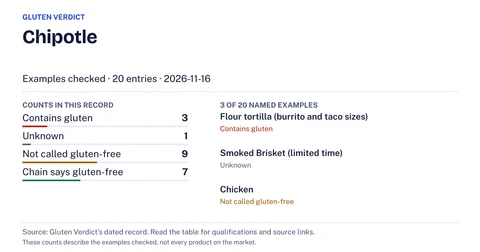 ChipotleDepends on the order3 of 20 menu items we checked contain gluten: Flour tortilla (burrito and taco sizes), Burrito, and QuesadillaChipotle Mexican Grill · checked Nov 16, 2026
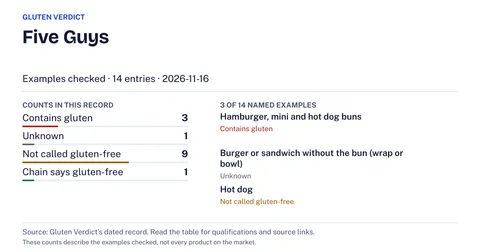 Five GuysDepends on the order3 of 14 menu items we checked contain gluten: Hamburger, mini and hot dog buns; Malt vinegar (fry condiment); and Oreo® Cookie Pieces shake mix-inFive Guys · checked Nov 16, 2026
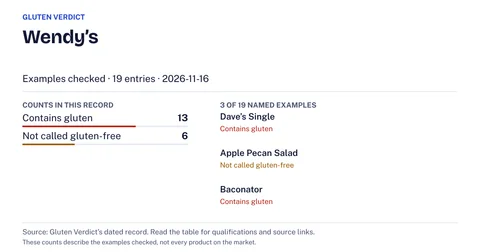 Wendy’sDepends on the order13 of 19 menu items we checked contain glutenWendy’s · checked Nov 16, 2026
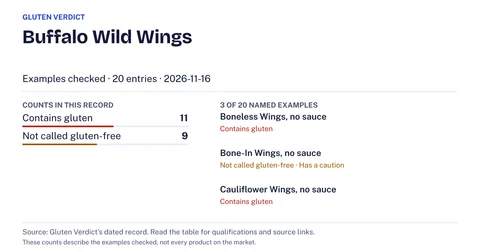 Buffalo Wild WingsDepends on the order11 of 20 menu items we checked contain glutenBuffalo Wild Wings · checked Nov 16, 2026
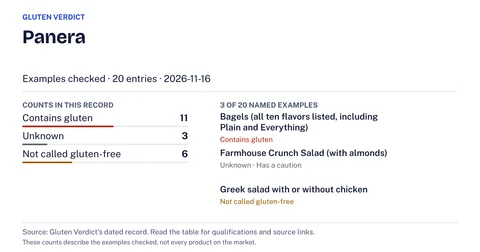 PaneraDepends on the order11 of 20 menu items we checked contain glutenPanera Bread · checked Nov 16, 2026
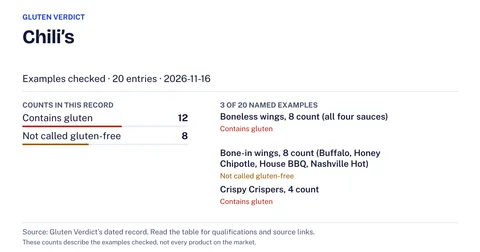 Chili’sDepends on the order12 of 20 menu items we checked contain glutenChili’s Grill & Bar · checked Nov 16, 2026
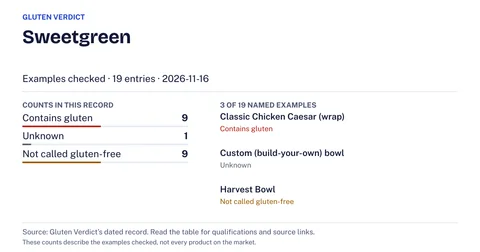 SweetgreenDepends on the order9 of 19 menu items we checked contain glutenSweetgreen · checked Nov 16, 2026
Questions people ask
What do the sources say about why some teenagers lapse on the diet?
No source we read gives a single cause. One review reports that adolescents are more likely than adults to have intentional gluten consumption, often in social situations1; another links poorer adherence in adolescence to older age, an absence of immediate symptoms, difficulties eating out and poor palatability of gluten-free foods2.
A teen feels fine after a little gluten. Does it matter?
An absence of immediate symptoms is among the factors linked with poorer adherence in adolescence2. The authors of one Polish study wrote that at this age small amounts of gluten may not cause such intestinal discomfort as previously, but it still remains detrimental to health68. What it means for a particular teen is a question for their clinician.
What does the Celiac Disease Foundation say about when mental health treatment may be needed?
CDF says a protracted duration of emotional or behavioral symptoms, greater severity of symptoms, or significant impairment in functioning are indicators of potential need for mental health treatment59. Its list is headed "When a Mental Health Referral is Necessary"60.
More in Kids, school, college and family
 Helping a gluten-free child feel included at the table, at parties, in class and at restaurantsOne plan for each place a gluten-free child gets singled out: the table, parties, class and restaurants, with a sentence the child can say.
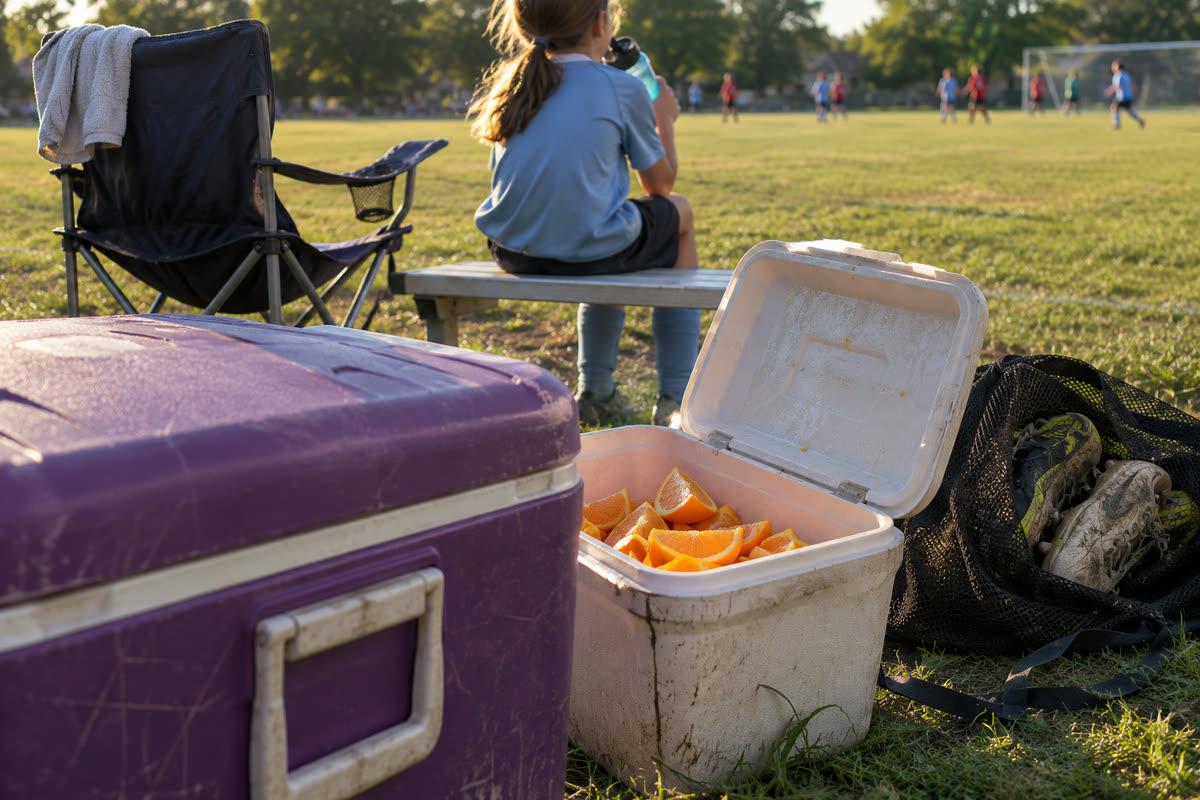 Youth sports with a gluten-free kid: team snacks, the coach and tournament weekendsA parent’s plan for team snacks, sports drinks, a coach card and tournament weekends with a gluten-free child, with a source for each claim.
 A gluten-free care plan for daycare and preschoolWrite a one-page gluten-free care plan for daycare or preschool, ask the right questions on a tour, and see which government rule covers each program.
 Pediatric celiac clinic visits: what to bring and what to askWhat to bring to a child’s celiac follow-up and the questions for the gastroenterologist and dietitian, drawn from the Celiac Disease Foundation checklist.
 Your child has celiac disease: a first-week plan for the kitchen, labels, school and talking to your childThe first week after a child’s celiac diagnosis, in order: the diet plan, first labels, kitchen, two school routes, talking to your child and follow-up.
 Gluten-free at college: disability services, meal plans and dining hallsHow a college student with celiac disease asks for accommodations, questions dining staff, weighs a meal-plan exemption and escalates.
Related guides
 Teaching a child to read gluten-free labels, one skill at a timeFour label skills to teach a gluten-free child in order, a cupboard practice game, and the questions an adult still answers.
 Celiac disease symptoms in teenagers and older adults: what changes with ageWhat NIH, celiac charities and clinical guidelines report about celiac disease in teenagers and older adults, and why diagnosis is often late.
 Celiac disease and bone density: who is scanned, how to read the report and what recovery looks likeWhen guidelines advise a bone density scan in celiac disease, how a T-score or Z-score is read by age, and what published studies show about recovery.
 Depression, anxiety and celiac disease: what studies report and when to see a clinicianWhat meta-analyses report about depression and anxiety in celiac disease, what is known about the gut-brain link, and when to contact a clinician.
Sources
- [1, 12, 13, 45, 51, 58, 65] Aliment Pharmacol Ther (Chang and colleagues, 2022), Review article: Becoming and being coeliac, special considerations for childhood, adolescence and beyond (PMC full text), checked Nov 17, 2026.
- [2, 3, 9] PubMed (J Hum Nutr Diet, White and colleagues, 2016), Coeliac disease and the gluten-free diet: a review of the burdens, factors associated with adherence and impact on health-related quality of life, with specific focus on adolescence, checked Nov 17, 2026.
- [4, 14, 15, 16] Paediatrics and Child Health (Canadian survey, PMC full text), Factors affecting adherence to a gluten-free diet in children with celiac disease, checked Nov 17, 2026.
- [5, 34, 35, 37] Gluten Intolerance Group, Eating Out: 7 Tips For Staying Gluten-Free, checked Nov 17, 2026.
- [6, 36, 38] Gluten Intolerance Group, Questions to Ask When Eating Out, checked Nov 17, 2026.
Read on 2026-11-17: the section headed “Scenario 2: The Server Who Thinks They Know (But Isn’t Sure)” lists questions on whether french fries are cooked in a dedicated fryer or share oil with breaded items, whether gluten-free pasta is boiled in fresh water or in the same water as regular pasta, whether an item is cooked on a clean section of the grill or flat-top separate from breaded foods, and whether the seasoning blend on a dish is gluten-free.
- [7, 41] PubMed (Int J Adolesc Med Health, Sample and Turner, 2019), Improving gluten free diet adherence by youth with celiac disease, checked Nov 17, 2026.
- [8, 46, 49] Celiac Disease Foundation, Adult & Pediatric Follow-Up Checklists, checked Nov 17, 2026.
Read on 2026-11-17: the list headed “Follow-up care helps to:” names confirming intestinal recovery after diagnosis; monitoring symptom improvement and addressing persistent symptoms; assessing for nutrient deficiencies; screening for associated autoimmune conditions; evaluating bone health and growth; providing ongoing dietary education and support; and supporting overall quality of life and mental well-being.
- [10, 11] Buffalo Wild Wings, Allergen & Preparation Guide (valid 11/10/2026 to 02/23/2027), checked Nov 17, 2026.
- [17, 18, 68] Nutrients (Polish clinic study, PMC full text), Adherence to Gluten-Free Diet in Children with Celiac Disease, checked Nov 17, 2026.
- [19, 20, 21, 22, 24] Gluten Intolerance Group, Talking to Friends & Family About Living Gluten-Free, checked Nov 17, 2026.
- [23, 27, 28, 29, 30, 31, 32, 33] Gluten Intolerance Group, Supporting Gluten-Free Kids at Parties: What Teens and Parents Need to Know, checked Nov 17, 2026.
- [25, 26, 44] Gluten Intolerance Group, Self-Advocating: From Diagnosis to Living with Celiac Disease, checked Nov 17, 2026.
- [39] Chipotle Mexican Grill, Allergens & Special Diet, checked Nov 17, 2026.
- [40] Wendy’s, Nutrition & Food Allergens, checked Nov 17, 2026.
- [42, 43] Gluten Intolerance Group, Transitioning Your Child to a Gluten-Free Diet, checked Nov 17, 2026.
- [47, 48] NIDDK (National Institutes of Health), Treatment for Celiac Disease, checked Nov 17, 2026.
- [50] PubMed (J Pediatr Gastroenterol Nutr, ESPGHAN position paper, 2022), ESPGHAN Position Paper on Management and Follow-up of Children and Adolescents With Celiac Disease (abstract), checked Nov 17, 2026.
- [52] Celiac Disease Foundation, Celiac Disease in Children, checked Nov 17, 2026.
- [53, 59, 60] Celiac Disease Foundation, Mental Health and celiac disease, checked Nov 17, 2026.
Read on 2026-11-17: the list headed “When a Mental Health Referral is Necessary” names, among others, finding little or no pleasure in life; withdrawing from other people; experiencing severe anxiety, panic, or fear; having big mood swings; a change in eating or sleeping patterns; and wanting to harm yourself or someone else.
- [54, 55] PubMed (J Pediatr Gastroenterol Nutr, Ho and colleagues, 2023), Examining the Psychosocial Well-Being of Children and Adolescents With Coeliac Disease: A Systematic Review (abstract), checked Nov 17, 2026.
- [56, 57] PubMed (Children, 2026), The Multidimensional Impact of Gluten-Free Diet Adherence on Quality of Life in Pediatric and Adolescent Celiac Disease: A Systematic Review (abstract), checked Nov 17, 2026.
- [61] Gluten Intolerance Group, Generation GF TEEN CHAT!, checked Nov 17, 2026.
- [62, 67] Coeliac UK, Children and Young People: Coeliac Support, checked Nov 17, 2026.
- [63, 64] PubMed (Rev Esp Enferm Dig, Spanish transition group, 2026), Recommendations for the implementation of the transition process in celiac disease (abstract), checked Nov 17, 2026.
- [66] PubMed (Front Nutr, Kivelä and colleagues, 2022), Coexisting Type 1 Diabetes, Persistent Symptoms, and Financial Issues Associate With Poorer Adherence to a Gluten-Free Diet in Celiac Disease After Transition From Pediatrics to Adult Care (abstract), checked Nov 17, 2026.