Helping a gluten-free child feel included at the table, at parties, in class and at restaurants
Short answer
Plan each place your child gets singled out before you arrive: food in hand, the host or teacher told in advance, and one sentence the child can say18, 40, 24, 14.
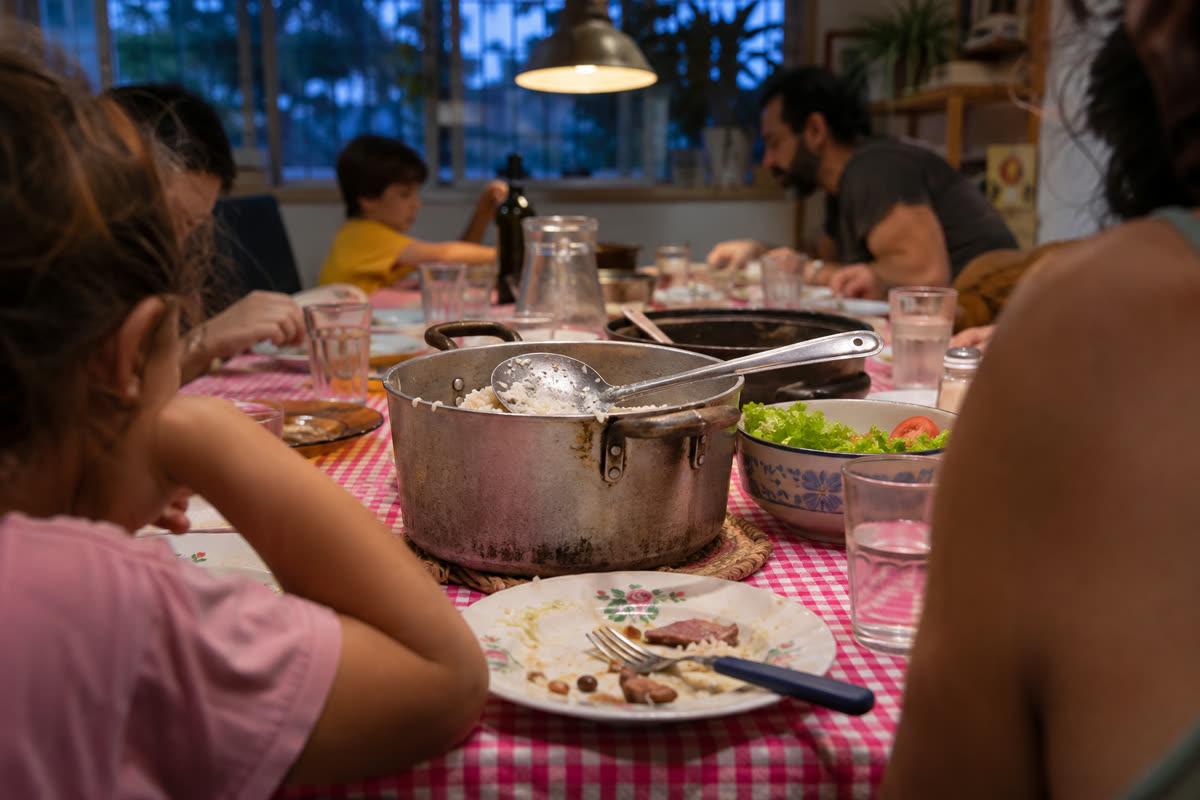
- At the table, say the label-checking out loud and give the child a job7, 9.
- At a party, tell the host, have the child eat first and send food of their own14, 17, 18.
- In class, keep gluten-free snacks at school, stored apart, and make sure the teacher knows what is planned24, 25.
- At a restaurant, call ahead, then let the child do more of the asking as they get older36, 39.
Part of Kids, school, college and family, 21 guides

Key points
- One 2026 systematic review found children with celiac disease generally reported lower quality of life, particularly in emotional, social and school-related areas1; a 2026 meta-analysis found children rated their own quality of life higher than their parents did3. Ask your child, do not assume either way.
- The charities we read describe preparation and a heads-up: packed food, eating before an event, and telling the host or school in advance18, 14, 24.
- In one study of school activities, paper mâché, cooked pasta in sensory tables and a baking project moved gluten to gluten-free bread at rates far above 20 ppm, while Play-Doh and dry pasta resulted in few transfers above 20 ppm29.
- The Celiac Disease Foundation lists protracted duration, greater severity and significant impairment in functioning as indicators of a possible need for mental health treatment47.
What do studies and charities say about how these children feel?
One 2026 systematic review of 13 studies of children and adolescents with celiac disease found they generally reported lower quality of life, particularly in emotional, social and school-related areas1. Its authors say the findings should be interpreted cautiously because the studies differed and varied in quality2.
A 2026 meta-analysis of 21 studies compared how children and their parents rated the children’s quality of life. Children reported better quality of life than their parents perceived, with self-reported scores 7% higher overall3. The authors say the clinical importance of that difference remains uncertain4.
Read together, the two reviews do not tell you how your child feels. Ask in the child’s own words, and do not assume it is fine or that it is not.
The Celiac Disease Foundation says children and adolescents typically respond well to treatment with the gluten-free diet5. The National Celiac Association says a child with celiac disease may feel anxious when dining out, may fear social isolation, or may worry about being exposed to gluten without meaning to6. Those are the moments the rest of this guide plans for.
At the family table: say the label-checking out loud
The National Celiac Association suggests that parents model the words and think aloud when a child is around, so the child learns how to handle situations. Its example: “This is a new food for us, I am going to double check the label to make sure it is gluten free. Do you want to help me look?”7
GIG’s article on cooking with gluten-free children says cooking is a chance to teach kids skills that help their transition to eating gluten-free9. Give the child a task in the meal everyone eats, such as reading the label or stirring, so the diet is something they do and not only something they avoid.
GIG also says a child takes cues from the parent: when you show calm confidence about gluten-free living, the child will mirror it10. The Canadian Celiac Association’s workbook quotes a parent who says it is more beneficial to acknowledge the challenges than to minimize, ignore or avoid them, and to look for a solution together11.
The National Celiac Association also suggests teaching a child positive self-talk, with the example “Having celiac disease can be hard and I can do hard things.”8
A family rule is yours to set. Pick one the whole household can keep and say it out loud, for example: “The gluten-free plate is served first and nobody takes food from it.” For the kitchen side (shared toasters, one household diet or two), see going gluten-free as a family.
At a party: the heads-up, the treat box and eating first
Coeliac UK says the party organiser will probably be very busy on the day, so a parent should not automatically expect them to cater for the child12. It suggests taking along gluten free alternatives for everyone to try so the child feels included13.
A parent quoted in the Canadian Celiac Association’s workbook says a heads-up email or conversation with the host means the host is not caught off guard when someone brings their own food14. GIG’s party article for teens and parents says to reach out to the host about food options if it feels right, or to offer to bring a gluten-free dish to share20. For the wording of the host text, see a gluten-free kid at a birthday party.
The treat box
Keep a box packed so the answer to an invitation is never “I will find out”. One parent in the workbook bakes and freezes cupcakes in advance and takes one out on the way to each birthday party, and it is thawed by the time the cake is served15. GIG’s party article tells parents to help a teen pack gluten-free snacks or a meal they will enjoy and to add a small treat to keep it fun19. Let the child choose what goes in: the workbook quotes a child as saying, “Sometimes I don’t mind packing my food for parties because I get to eat my favourites.”16
Check every item against the package, not the memory of last month’s version; how to read a food label covers where to look, and teaching a child to read labels covers the child’s part.
Eat first, bring a back-up
GIG’s party article, written for teens and their parents, says having a meal or snack before helps a teen avoid temptations that could make them feel sick later17. A parent in the workbook makes sure their son eats a bit first so he does not arrive extra hungry and go for the generic pizza or chicken nuggets, and brings back-up food such as cheese sticks, popcorn and nachos in case the party food is not gluten-free18.
The National Celiac Association also suggests shifting the focus away from food and toward being with friends and family and having fun23.
Halloween and candy swaps
GIG’s Halloween article suggests a candy swap in which the child has a say in what they would like as a replacement21, and making the swap an occasion, such as a visit from the “Gluten-Free Fairy” or a surprise treat bag opened after sorting22. Which candy goes in the pile is a label question: our verdict on gummy bears shows how much one candy can vary by brand.
In the classroom: snacks, treat day and craft tables
Coeliac UK says that to avoid a child feeling different from other children at snack times, you may need to provide gluten free snacks, and that staff should be told to store them separately from food that contains gluten24. GIG’s bulletin for teachers says to keep parents informed of classroom activities involving food, so that gluten-free substitutes are available and the child can take part rather than feel left out or forgotten25.
The Canadian Celiac Association’s workbook says hot dog day and pizza day are very important to children, and suggests sending a gluten-free version from home rather than asking the school to provide one26. One parent in it brings a frozen gluten-free pizza to school for pizza parties so her daughter is not left out27.
Coeliac UK also advises making sure the child knows not to swap items from a packed lunch with friends, in case they swap for something that contains gluten28. Where a snack or a craft can be made gluten-free for the whole class, ask for that; the child’s version is then everyone’s.
Craft and sensory tables
One study measured how much gluten moved from classroom activities to gluten-free bread rubbed on participants’ hands and on tables. Paper mâché, cooked pasta in sensory tables and a baking project moved gluten at rates far above 20 ppm; Play-Doh and dry pasta resulted in few transfers above 20 ppm29. Soap and water was consistently the most effective way to remove gluten, though other methods worked as well in some scenarios30. The authors conclude that for high-risk materials schools should provide gluten-free supplies and have a strategy to prevent cross-contact31.
GIG’s bulletin for teachers names paste-type glues and Play Dough as materials to investigate32. The study above is a reason to ask about the actual activity and product, not the category.
Making it official, and telling the friends
The Celiac Disease Foundation says Section 504 of the Rehabilitation Act guarantees accommodations in federally funded programs and services, and that a 504 Plan can be filed in federally funded schools to arrange accommodations for a child with celiac disease33. See the 504 plan guide and the teacher conversation guide. The Foundation’s K-12 page also lists a handout on supporting a friend with celiac disease and calls it a great one to share with the school and with friends’ families34.
At a restaurant: who asks, by age
The Celiac Disease Foundation says dining out comes down to simple steps: understand the diet, research the restaurant, ask questions, be ready not to order your first choice, and always bring a back-up snack35. It suggests looking at the menu online and calling during the restaurant’s non-busy hours36. A parent in the Canadian workbook, who asks restaurants whether they have gluten-free menu items, says people respond more favourably to answering that question clearly when it is a child37.
The National Celiac Association says to teach children that it is okay, and even important, to ask questions before eating a new food39. The table is our suggestion for handing that over in steps; the questions come from the Foundation’s own list.
| Child | What the adult does | What the child does |
|---|---|---|
| Young child | Calls ahead, tells the server, and checks the plate when it arrives | Chooses from the options the adult has already checked; the adult tells the server38 |
| Primary-school age | Calls ahead and sits next to the child | Asks the server one question from the Foundation’s list, such as “Does bread come with my dish?”41 |
| Pre-teen | Backs up if the server is unsure | Asks the fryer question: “Is the oil used for the French fries also used to make the other breaded products?”42 |
| Teen | Is available if asked | Orders and asks; GIG suggests practising a few polite ways to ask what is in the food or where it was prepared40 |
If the menu has nothing the child wants, the Foundation suggests bringing gluten-free foods such as bread, crackers or pasta, which you can ask the chef to cook in a clean pot43. For the chains our verdicts cover, each page shows what the chain’s own pages said and when we read them: Chipotle, Five Guys and Wendy’s. Read the one for the restaurant you are going to before you go.
One sentence per moment
Quoted sentences come from the source in brackets; the others are our wording to adapt. Let the child choose how much to say: a parent in the Canadian workbook says her daughter prefers not to say she has celiac but says, “I am gluten-free, so I can only eat certain things”45.
| Moment | The adult sets up | A sentence the child can say |
|---|---|---|
| Family dinner | Checks the label out loud and hands the child a job7, 9 | “Can I help look at the label?” (our wording, after the National Celiac Association’s example) |
| Party | Tells the host, packs the box, has the child eat first14, 17 | “I can’t eat gluten, but it’s all good!”44 |
| A friend offers food | Agrees the rule beforehand: ask first, do not swap28 | “I can’t eat gluten and I do not know if there is any gluten in those treats.”46 |
| Classroom | Stores snacks at school and tells staff24 | “I have my own snack for treat day.” (our wording) |
| Restaurant | Calls ahead36 | “Does bread come with my dish?”41 |
| Someone asks why | Practises a short answer at home | “No thanks, I have to be careful about gluten.”40 |
Party and snack foods we have checked
These are the foods that tend to show up at parties and lunches. Each verdict names the products we read, what the maker’s page said and the date we read it: pizza, cake, chicken nuggets, mac and cheese and gummy bears. Recipes change, so the package in your hand has the final word.
When it looks like more than a bad day
This guide is not medical advice; it reports what two charities say. The Celiac Disease Foundation says difficulty adjusting to a new diagnosis and to a strict gluten-free diet can affect a patient’s mental health, and that protracted duration of emotional or behavioral symptoms, greater severity and significant impairment in functioning are indicators of a potential need for mental health treatment47. It also says adolescents with celiac disease may have mood disorders, including anxiety and depression48.
The National Celiac Association says that if anxiety related to celiac disease is affecting a child’s daily activities, a parent may consider seeking help from a mental health professional49.
Finding other gluten-free kids
Coeliac UK offers members aged 5 to 11 a Young Champions Club information pack with activity ideas50 and the Teen Virtual Club, online meet-ups for members aged 12 to 15 hosted by young volunteers51. Its Member2Member programme puts longer-standing parent and carer members in touch with parents and carers of newly diagnosed children52. These are Coeliac UK member programmes, so check whether you can join from where you live before you count on them.
GIG’s Generation GF teen chat page invites gluten-free teens to its Zoom sessions with the line “Teen? Gluten-free? Come zoom with Generation GF.”53 The page lists session dates without a year and has 2020 in its web address54, so check GIG’s site to see whether sessions are still running.
Verdicts in this guide
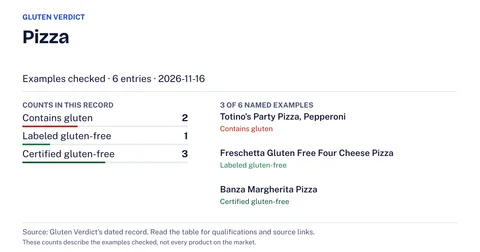 PizzaContains glutenchecked Nov 16, 2026
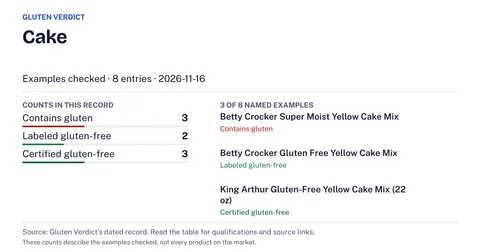 CakeContains glutenchecked Nov 16, 2026
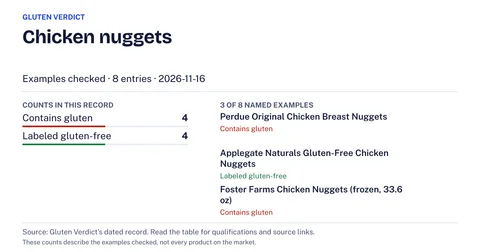 Chicken nuggetsDepends on the product4 of 8 products we checked contain glutenchecked Nov 16, 2026
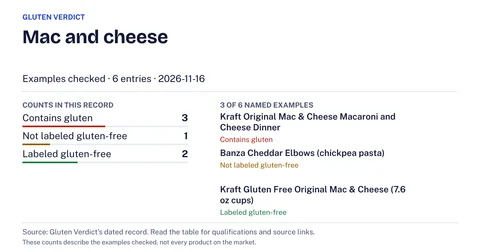 Mac and cheeseContains glutenchecked Nov 16, 2026
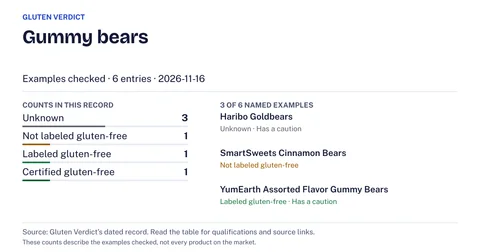 Gummy bearsDepends on the productchecked Nov 16, 2026
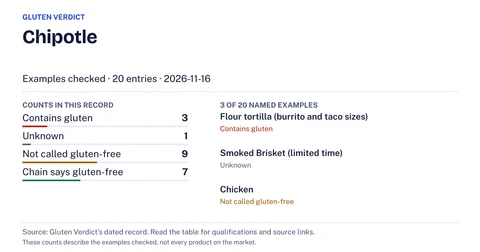 ChipotleDepends on the order3 of 20 menu items we checked contain gluten: Flour tortilla (burrito and taco sizes), Burrito, and QuesadillaChipotle Mexican Grill · checked Nov 16, 2026
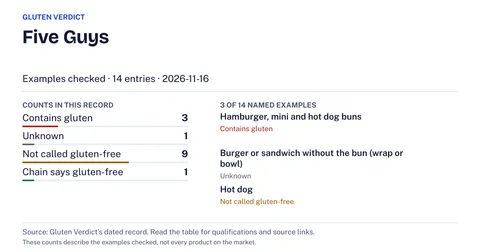 Five GuysDepends on the order3 of 14 menu items we checked contain gluten: Hamburger, mini and hot dog buns; Malt vinegar (fry condiment); and Oreo® Cookie Pieces shake mix-inFive Guys · checked Nov 16, 2026
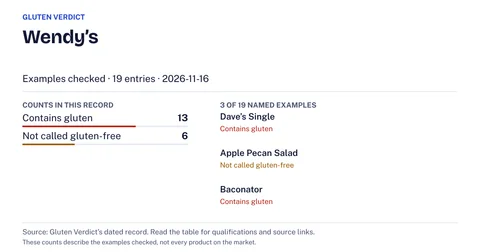 Wendy’sDepends on the order13 of 19 menu items we checked contain glutenWendy’s · checked Nov 16, 2026
Questions people ask
Should my child tell friends they have celiac disease?
That is the family’s choice. GIG’s advice for adults is that a gluten-free diet is not embarrassing or shameful and should be talked about with those around you55. A parent in the Canadian Celiac Association’s workbook says her daughter prefers not to say she has celiac and says she is gluten-free and can only eat certain things45.
More in Kids, school, college and family
 A gluten-free kid at a birthday party: the host text, the cake knife and the snack tableA parent’s plan for a celiac child at a party or sleepover: the host text, own food, cake and snack-table cross-contact, and hand washing.
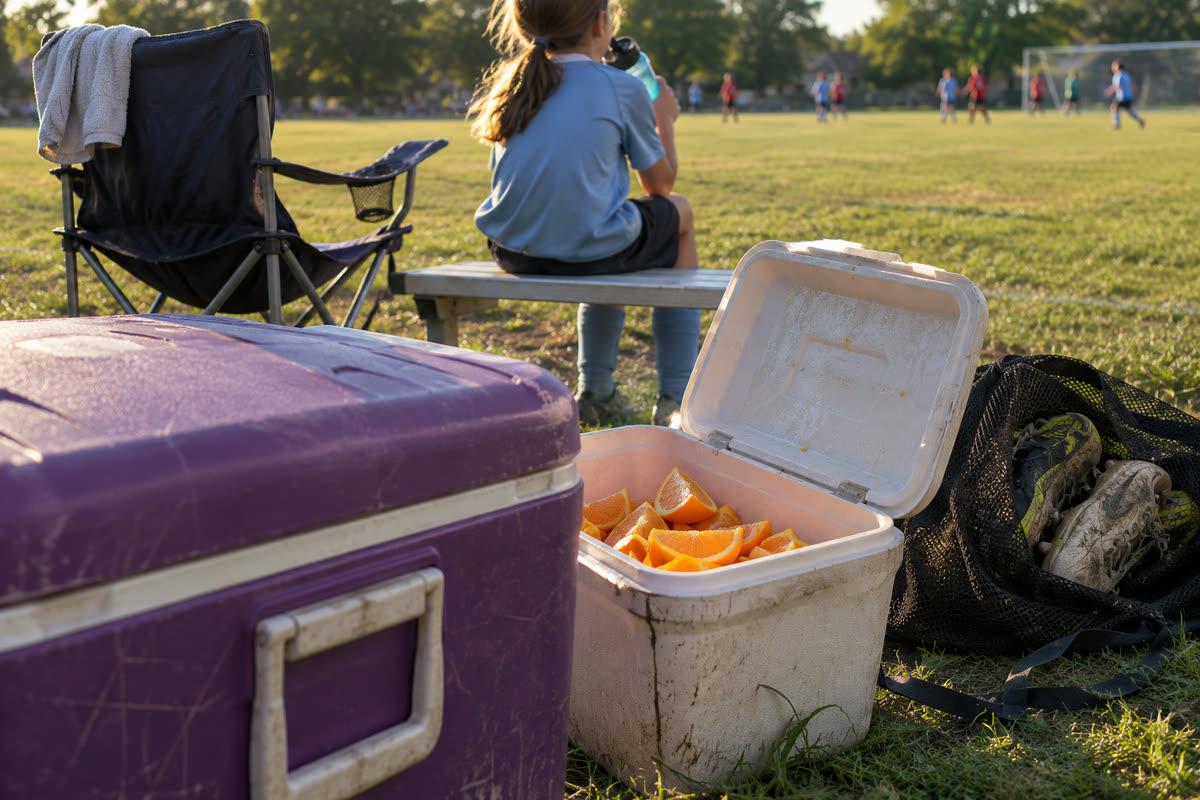 Youth sports with a gluten-free kid: team snacks, the coach and tournament weekendsA parent’s plan for team snacks, sports drinks, a coach card and tournament weekends with a gluten-free child, with a source for each claim.
 Celiac disease in teenagers: friends, eating out and taking over their own careWhat research and celiac charities say about teenagers with celiac disease: telling friends, eating out, taking over care and clinic follow-up.
 A gluten-free child who refuses food: what to track and when to ask the doctorHow to tell ordinary picky eating from a pattern to raise with your child’s doctor or dietitian, what ARFID is, and a one-week log to bring.
 A care sheet for the babysitter or grandparent of a child with celiac diseaseA one-page care sheet for a babysitter or grandparent: the checked foods, the kitchen cross-contact points, what to do after an exposure, and whom to call.
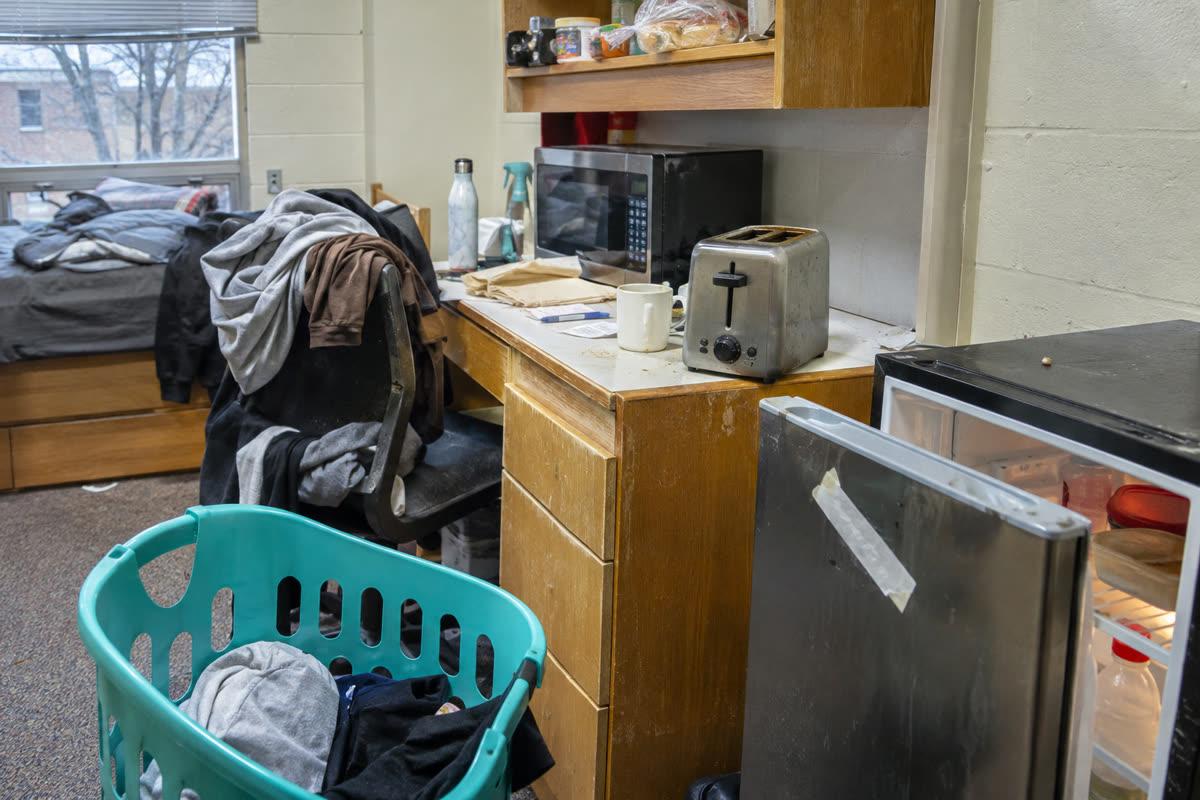 Gluten-free in a college dorm: the fridge, microwave, toaster and roommate rulesHow to set up a shared dorm room or kitchen for gluten-free living: fridge, microwave, toaster, sponges, a roommate script and how to ask for housing help.
Related guides
 Talking to your child’s teacher about celiac disease: a script, a one-page sheet and the classroom questionsA two-minute script, a one-page sheet, a template email and the classroom questions about snacks, crafts and trips, drawn from US celiac charity guidance.
 Teaching a child to read gluten-free labels, one skill at a timeFour label skills to teach a gluten-free child in order, a cupboard practice game, and the questions an adult still answers.
 Sleepaway camp, Scouts and school trips for a gluten-free child: what to ask and what to sendWhat to ask a camp, Scout unit or school in writing, what goes on the health form, what food to send, and where gluten-free camps run.
 Going gluten-free as a family: choose the household rule, then fix the kitchenAll gluten-free, shared with rules or split: what NIDDK, the charities and one small study say, plus rules for siblings and visiting relatives.
Sources
- [1, 2] PubMed (Children, 2026), The Multidimensional Impact of Gluten-Free Diet Adherence on Quality of Life in Pediatric and Adolescent Celiac Disease: A Systematic Review, checked Nov 17, 2026.
- [3, 4] PubMed (European Journal of Pediatrics, 2026), Parent-child discrepancies in health-related quality of life in pediatric celiac disease: a systematic review and meta-analysis, checked Nov 17, 2026.
- [5, 48] Celiac Disease Foundation, Celiac Disease in Children, checked Nov 17, 2026.
- [6, 7, 8, 23, 39, 49] National Celiac Association, How can I help my child handle their anxiety?, checked Nov 17, 2026.
- [9] Gluten Intolerance Group, Age-Appropriate Cooking Tasks for Gluten-Free Kids (March 2022), checked Nov 17, 2026.
- [10, 21, 22] Gluten Intolerance Group, Halloween Fun, Gluten-Free Confidence: A Parent’s Guide to Celebrations (October 2025), checked Nov 17, 2026.
- [11, 14, 15, 16, 18, 26, 27, 37, 45, 46] Canadian Celiac Association, Growing Up Celiac: a workbook for parents raising children with celiac disease (PDF, 2019), checked Nov 17, 2026.
- [12, 13, 24, 28] Coeliac UK, Nursery, playgroup and school, checked Nov 17, 2026.
- [17, 19, 20, 40, 44] Gluten Intolerance Group, Supporting Gluten-Free Kids at Parties: What Teens and Parents Need to Know (October 2025), checked Nov 17, 2026.
- [25, 32] Gluten Intolerance Group, Understanding Your Gluten-Free Student (educational bulletin for teachers), checked Nov 17, 2026.
- [29, 30, 31] PubMed (Journal of Pediatric Gastroenterology and Nutrition, 2020), A Quantitative Assessment of Gluten Cross-contact in the School Environment for Children With Celiac Disease (Weisbrod et al.), checked Nov 17, 2026.
- [33, 34] Celiac Disease Foundation, Resources for K-12 Students, checked Nov 17, 2026.
- [35, 36, 38, 41, 42, 43] Celiac Disease Foundation, Dining and Social Eating, checked Nov 17, 2026.
- [47] Celiac Disease Foundation, Mental Health and Celiac Disease, checked Nov 17, 2026.
- [50, 51, 52] Coeliac UK, Children and young people, checked Nov 17, 2026.
- [53, 54] Gluten Intolerance Group, Generation GF Teen Chat, checked Nov 17, 2026.
Read on 2026-11-17: the page lists the session dates July 23rd, August 20th and September 24th with no year, its web address contains /2020/06/02/, and a form asks “Are you (or your child) between the age of 13 – 19?”
- [55] Gluten Intolerance Group, Talking to Friends & Family About Living Gluten-Free (January 2020), checked Nov 17, 2026.