Cooking gluten-free pasta in a kitchen that also cooks regular pasta
Short answer
Cook gluten-free pasta in fresh water, because the study we read that reused regular pasta’s water found gluten above 20 parts per million in every gluten-free sample5. For the rest of the setup the evidence is thin, and the charities and studies differ:
- Water: a separate pot of fresh water for each pasta35.
- Pot: kept for gluten-free cooking, or washed first; in the study, rinsing with water was as effective as scrubbing with soap7.
- Strainer: GIG says not to share one if possible25 and the National Celiac Association recommends a dedicated one31, while one study that used a shared colander among its items found all samples below 10 mg/kg15, 16.
- Spoons and serving: GIG warns against one serving utensil in both foods27 and says wood can be tricky to clean23; one study’s results led its authors to hypothesize that shared ladles pose a higher risk17.
Part of Cross-contact and the home kitchen, 19 guides
Key points
- Shared pasta water is the one setup with a measured problem: all 12 gluten-free samples cooked in it were above 20 ppm5, 8.
- That measurement comes from one small study with six to twelve samples per scenario, and its authors call for larger studies8, 9, 10.
- A pot rinsed or washed and refilled with fresh water gave no detectable gluten in that study7.
- On the strainer, charity advice goes further than the one study that used a colander25, 31, 16, and the Studerus authors concluded that utensils used for regular pasta and bread should not pose a relevant problem at home18.
- No page read for this guide names a rice cooker or steamer, so the advice for them is an extension of the advice for other pots22, 19.
What the pasta-water study found, and how small it is
The warning about shared pasta water rests on a study by Weisbrod and colleagues. They boiled regular penne and fusilli (Barilla) in stainless steel pots, lifted it out with handheld strainers, then cooked gluten-free penne and fusilli (Dr. Schär) in the same water3.
Every gluten-free sample cooked that way contained gluten, from 33.9 to 115.7 parts per million (ppm)4. The authors called shared water the riskiest of the three scenarios they tested (cooking pasta, toasting bread and slicing cupcakes12), with levels above 20 ppm in all samples5.
Two changes brought the numbers down. When the cooked, contaminated pasta was rinsed under cold running water for 30 seconds, gluten fell below 20 ppm6, 8. And a pot that had cooked regular pasta, then been rinsed with water alone or scrubbed with soap and refilled with fresh water, gave gluten-free pasta with no detectable gluten in all six samples for each method7, 8.
How small the study is
- Twelve gluten-free pasta samples were cooked in shared water, and six samples were tested in each of the rinsed-pasta, washed-pot and rinsed-pot groups8.
- One brand of regular pasta and one of gluten-free pasta were used, in two shapes, in stainless steel pots3.
- The authors list small sample size among the limitations, say cross-contact will vary between kitchens9, and call for larger studies in home and commercial cooking10.
- The regular pasta was always cooked first and its water reused. The paper does not compare cooking orders, and it tests no pasta other than penne and fusilli12.
- Funding included gifts from the Celiac Disease Foundation, Dr. Schär USA (the maker of the gluten-free pasta used) and Bia Diagnostics11, 3.
A second study, by Studerus and colleagues, used a wooden spoon, colander, ladle and knife that had handled regular food to prepare gluten-free bread and pasta15. It found no gluten in relevant, quantifiable amounts (below 20 mg/kg), and all samples were below 10 mg/kg whichever cleaning method was used16. Weisbrod’s team describes it as a small study13.
Both are small studies9, 13. Celiac Canada notes that research suggests not all recommendations from dietitians and celiac organizations are supported by strong evidence39, and Weisbrod’s team says diet guides from professional societies, hospitals and advocacy organizations suggest dedicated toasters and give conflicting advice on dedicated utensils40, and that these recommendations are based on expert consensus with scant data14.
A pasta night, step by step
This is the order of the setup, with the source for each step. Our shared-kitchen evidence guide covers the same studies for toasters, knives and spreads.
- Put out what the gluten-free pasta will touch before you start: a pot, a strainer, a stirring spoon and a serving spoon, each either kept for gluten-free cooking or washed since its last use.
- Fill a separate pot with fresh water for the gluten-free pasta. Coeliac New Zealand says not to use the same water as pasta containing gluten35; in Weisbrod’s study, reused water gave 33.9 to 115.7 ppm4.
- Use a pot kept for gluten-free cooking, or one washed since it last cooked regular pasta. In the study, a pot rinsed with water alone worked as well as one scrubbed with soap7. Coeliac UK says to clean pots, pans and cooking utensils with hot soapy water36, and that standard washing-up liquid or a dishwasher will remove gluten37. GIG says soap and water is enough for most cookware and utensils26.
- Drain through a strainer that has not drained regular pasta if you have one. GIG says colanders should not be shared if possible and, if they are, must be cleaned thoroughly between every use25.
- Stir and serve with their own spoons. GIG says wood fibers could harbor gluten particles and enter your food with the next stir23, and double-dipping a serving utensil is one of the most common ways gluten crumbs get in27.
- No source read compares cooking orders12, so this guide gives no order rule. What the sources test is the water, the pot and the tools, so that is where the effort goes.
Pots, spoons and strainers: what each source says
The charities and the two studies do not agree on the strainer, so each source is listed with its own words and scope.
| Item | What the sources say | Whose |
|---|---|---|
| Pasta water | All 12 gluten-free samples cooked in water that had boiled regular pasta were above 20 ppm5, 8. Do not use the same water35. | Weisbrod and colleagues; Coeliac New Zealand |
| Pot | Rinsed with water or scrubbed with soap, then refilled: no detectable gluten in six samples each7, 8. Washing pots and pans with detergent and water was enough in a study the association cites30. | Weisbrod and colleagues; National Celiac Association |
| Strainer or colander | Should not be shared if possible; clean thoroughly between every use if shared25. GIG says removing traces of gluten from tiny, mesh-like strainers can be very difficult24, and a GIG shared-kitchen guide says colanders cannot be sufficiently washed29. A dedicated strainer or colander is on the association’s list31. A colander that had handled regular food was among the items used in one study, in which all samples were below 10 mg/kg15, 16. | GIG; National Celiac Association; Studerus and colleagues |
| Wooden spoon | Wood fibers could harbor gluten particles23. A wooden spoon was among the items tested in one study, with no relevant gluten found15, 16. | GIG; Studerus and colleagues |
| Ladle or serving spoon | The Studerus authors hypothesize that shared ladles pose a higher risk than shared wooden spoons, colanders or knives17. Using one serving utensil in both foods is named as a common route27. | Studerus and colleagues; GIG |
The Studerus authors concluded that utensils used for regular pasta and bread should not pose a relevant problem, at least in a domestic environment18. Charity advice goes further than the two studies, and households choose how much of it to adopt.
Sponges are a smaller disagreement: Coeliac UK says you do not need separate cloths or sponges38, while the National Celiac Association’s dietitian advises dedicated gluten-free sponges, brushes and rags for hand-washing33.
What to check on the gluten-free pasta itself
On foods FDA regulates, a “gluten-free” claim means the food is not intentionally made with a gluten grain or an ingredient from one that was not processed to remove gluten1, and any unavoidable gluten must be below 20 ppm2.
Our verdicts for pasta, Barilla pasta and Ronzoni pasta separate each regular pasta from the gluten-free line, and egg noodles, gnocchi and mac and cheese are checked product by product. The box-reading steps are in gluten-free pasta and noodles: what to read on the box.
Rice cookers, steamers and pressure cookers
None of the pages read for this guide names a rice cooker or a steamer. GIG’s appliance page covers a dishwasher, ovens, toaster, microwave, grill, air fryer, bread machine, Crock Pot or Instant Pot, food processor, blender, stand mixer and waffle iron22. The National Celiac Association’s list of items to dedicate names a strainer or colander, sifter, cast iron pans, bread maker, sandwich maker, waffle iron, fryer or air fryer, and toaster34.
The nearest advice is GIG’s for a Crock Pot or Instant Pot: treat pots with multiple components like any cooking vessel, and clean thoroughly between non-gluten-free and gluten-free use19. For the appliances in its “Other appliances” group, GIG adds that no bits of gluten-containing food should remain on non-washable parts, and that all parts should be wiped down before gluten-free use20.
Applying that to a rice cooker or steamer is our reading, not something these pages state: wash the inner pot, lid and basket as you would a pot, and wipe the base and any part that cannot go in water. For anything you cannot clean, the National Celiac Association’s dietitian recommends a dedicated item for things that are porous or difficult to clean32. Heat does not substitute for cleaning: GIG, writing about grills, says gluten cannot be “burned” off by high temperature but can be removed by a thorough cleaning21.
Our rice and rice noodles verdicts cover the food itself; the question on this page is only the appliance.
Other noodles and reused boiling water
Weisbrod’s team tested penne and fusilli only12, and Coeliac New Zealand’s advice is about pasta water35. No source read for this guide tests water that boiled egg noodles, dumplings or other wheat foods. Treating that water like regular pasta water is our extension of the same reasoning, not a finding.
Labels and the rest of the kitchen
In a mixed household, GIG suggests labels on food items, utensils and cookware to designate what is gluten-free or to be used for gluten-free food28. For wider kitchen routines, see setting up a gluten-free kitchen and a weekly gluten-free kitchen routine.
Verdicts in this guide
 PastaContains glutenchecked Nov 16, 2026
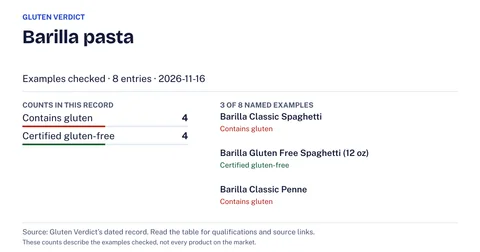 Barilla pastaContains glutenBarilla America, Inc. · checked Nov 16, 2026
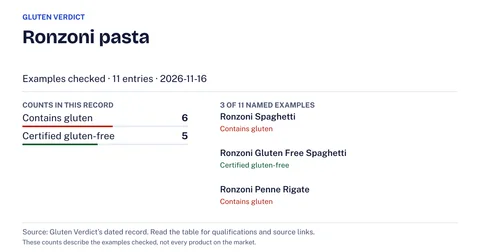 Ronzoni pastaContains glutenRonzoni · checked Nov 16, 2026
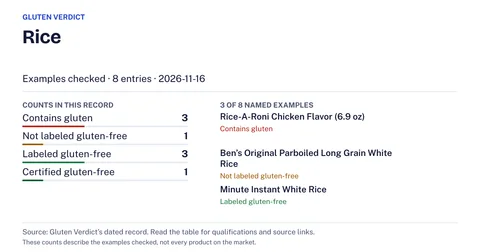 RiceNaturally gluten-free3 of 8 products we checked contain gluten: Rice-A-Roni Chicken Flavor (6.9 oz), Near East Original Rice Pilaf, and Ben’s Original Ready Rice Rice PilafBuy it labeled gluten-freechecked Nov 16, 2026
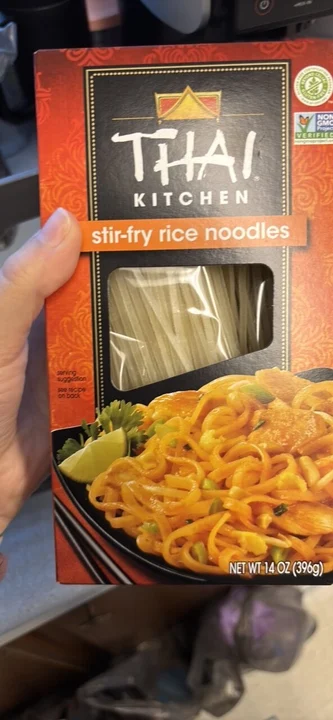 Rice noodlesNaturally gluten-free2 of 9 products we checked contain gluten: Annie Chun’s Pad Thai Noodle Bowl with Vegetables and Annie Chun’s Pho Soup Bowl with VegetablesBuy it labeled gluten-freechecked Nov 16, 2026
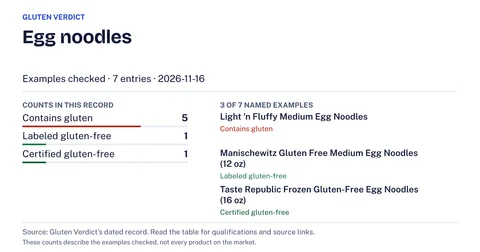 Egg noodlesContains glutenchecked Nov 16, 2026
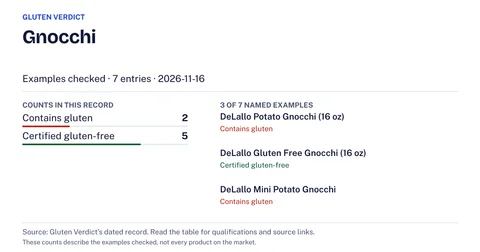 GnocchiDepends on the product2 of 7 products we checked contain gluten: DeLallo Potato Gnocchi (16 oz) and DeLallo Mini Potato Gnocchichecked Nov 16, 2026
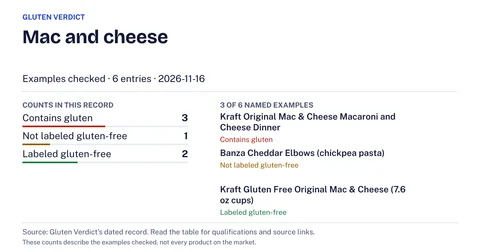 Mac and cheeseContains glutenchecked Nov 16, 2026
Questions people ask
Can gluten-free and regular pasta share the same pot of water?
The study that tried it found gluten above 20 ppm in all 12 gluten-free samples5, and Coeliac New Zealand says not to use the same water35.
Do I need a separate colander for gluten-free pasta?
GIG says colanders should not be shared if possible25, and the National Celiac Association lists a strainer or colander among items to dedicate31. In one study a colander that had handled regular food was among the items used, and all samples were below 10 mg/kg15, 16.
More in Cross-contact and the home kitchen
 What studies measured in shared kitchens: pasta water, toasters, knives and spreadsWhat four experimental studies measured when gluten-free food met shared pots, toasters, knives and spreads: samples, results, and what went untested.
 A weekly gluten-free kitchen routine: wipe, label, restock, re-checkA one-page weekly pass for a gluten-free kitchen: what to wipe, label, restock and do with leftovers, and where the charities and small studies differ.
 Setting up a gluten-free kitchen: what to replace, wash or shareWalk each kitchen zone and decide, item by item, what to replace, what to wash and what a mixed household can keep sharing, with charity sources.
 Gluten-free with roommates, partners and family: a shared-kitchen agreementHow to split a shared kitchen when one person is gluten-free: what to keep separate, what to wash and share, and how to put the rules to housemates.
 Toasters, colanders, cast iron, wood and air fryers: which can be cleanedWhich kitchen items the charities say to keep, wash or replace after going gluten-free, item by item, with what the studies we found measured.
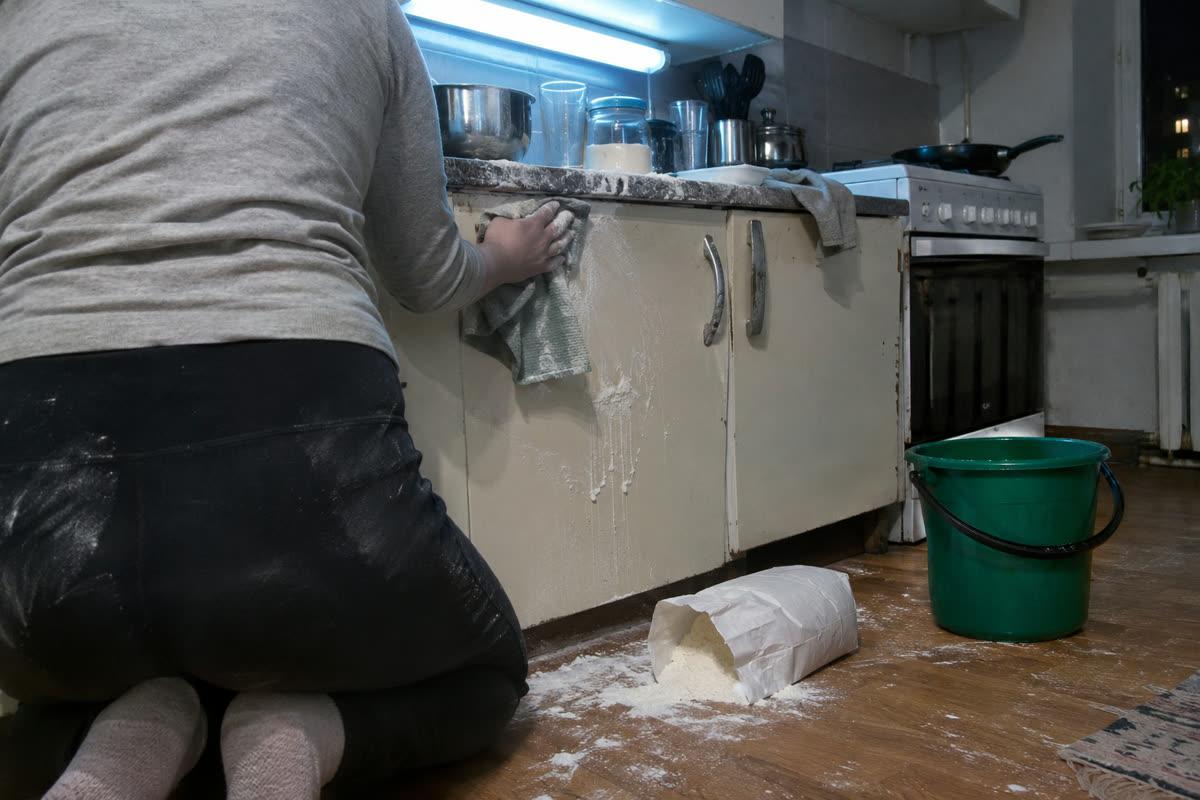 What to clean after wheat flour lands in a gluten-free kitchenThe order of jobs after wheat flour reaches a gluten-free kitchen, what charities and studies say about each item, and what no source covers.
Related guides
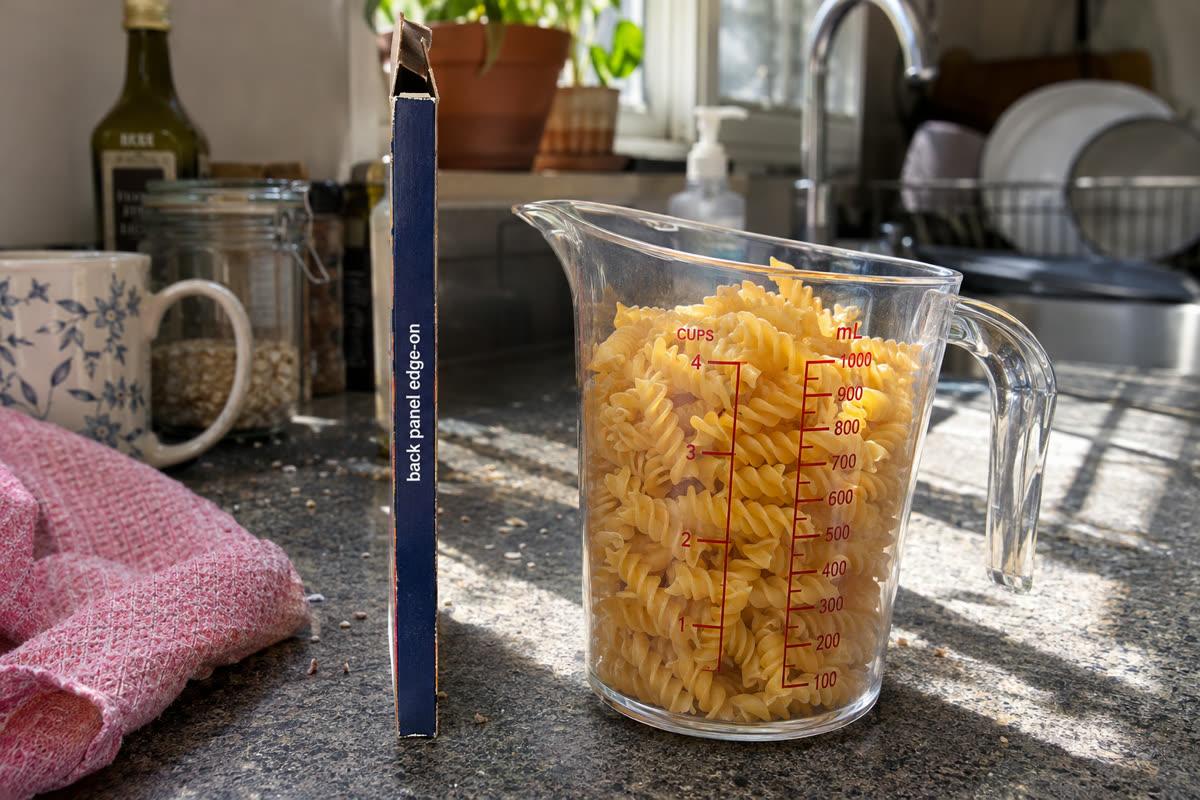 Gluten-free pasta and noodles: what to read on the boxHow to read a pasta or noodle box: the gluten-free claim, the ingredient list, same-brand wheat twins, and why soba and udon need a close read.
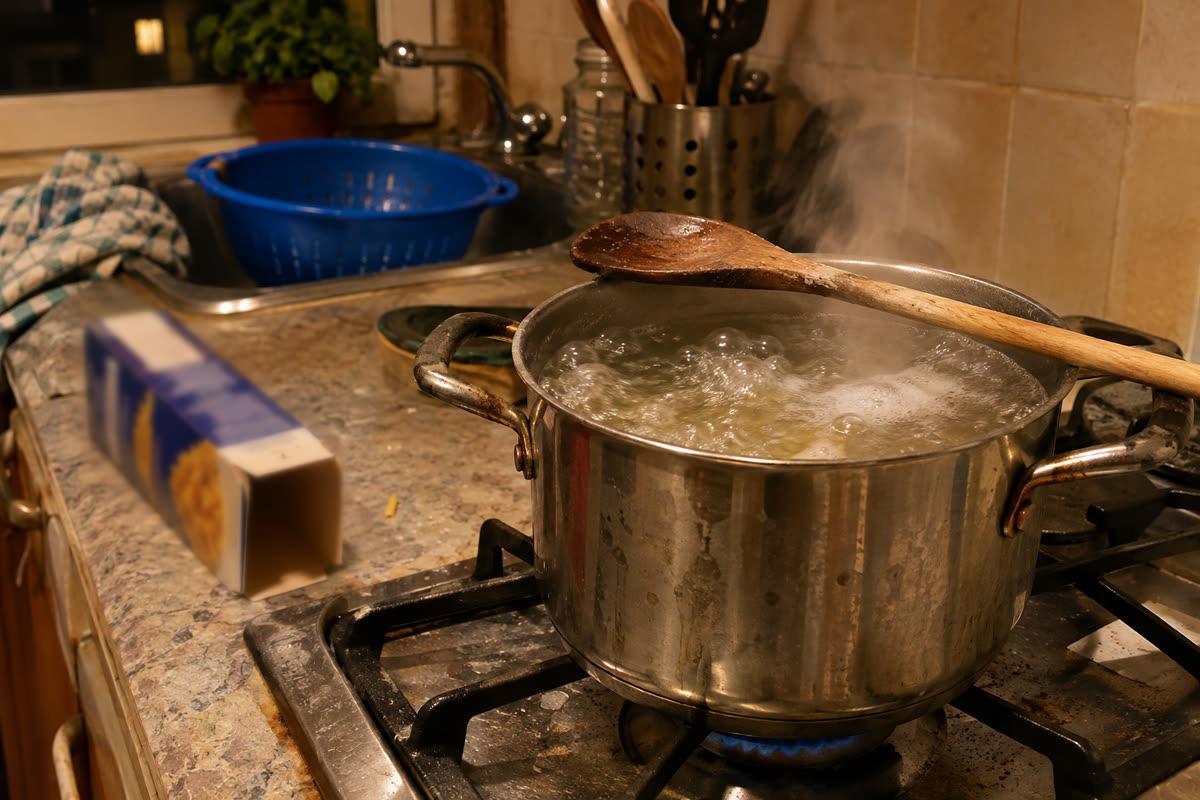 Cooking gluten-free pasta and rice noodles: what makers’ directions sayCompare what Jovial, Banza, Tinkyada, Lotus Foods and Thai Kitchen print for water, stirring, rinsing and time, then match the directions to your pasta.
 Gluten-free substitutes: the swap for each wheat ingredient and the label check it needsA lookup table of gluten-free swaps for wheat flour, pasta, bread, soy sauce, beer and more, with the one label check each swap needs.
 Ordering gluten-free at an Italian restaurantBefore you order at an Italian restaurant: where the gluten-free pasta is boiled, what thickens the sauces, and what is breaded or fried.
Sources
- [1, 2] US Food and Drug Administration, Questions and Answers on the Gluten-Free Food Labeling Final Rule, checked Nov 17, 2026.
- [3, 4, 5, 6, 7, 8, 9, 10, 11, 12, 13, 14, 40] US National Library of Medicine (PubMed Central author manuscript), Preparation of Gluten-Free Foods Alongside Gluten-Containing Food May Not Always Be as Risky for Celiac Patients as Diet Guides Suggest (Weisbrod and colleagues, Gastroenterology, 2020), checked Nov 17, 2026.
Read on 2026-11-17: Table 1 of the paper lists, for gluten-free pasta, “Cooked in shared water (n=12)” with all 12 samples above 20 ppm; “Cooked in shared water, then rinsed with cold water for 30 seconds (n=6)” with 4 undetectable, 1 at 5–10 ppm, 1 at 10–20 ppm and none above 20 ppm; “Shared pot washed with soap and water before cooking GF pasta (n=6)” and “Shared pot rinsed with water before cooking GF pasta (n=6)” with all 6 samples undetectable (below 5 ppm) in each.
Read on 2026-11-17: the Methods describe three scenarios (cooking pasta, toasting bread, slicing a cupcake); the pasta scenario boils regular penne and fusilli first, reuses the water for gluten-free pasta, and tests rinsing the pasta and washing the pot. No scenario varies the order in which the two pastas are cooked, and no pasta other than penne and fusilli is tested.
- [15, 16, 17, 18] Journal of Food Protection (PubMed), Cross-Contamination with Gluten by Using Kitchen Utensils: Fact or Fiction? (Studerus and colleagues, 2018), checked Nov 17, 2026.
- [19, 20, 21, 22] Gluten Intolerance Group, Appliances: Risks of Cross-Contact, checked Nov 17, 2026.
Read on 2026-11-17: the appliance headings are Dishwasher; Oven, Standard; Oven, Convection; Toaster; Microwave; Grill; Air Fryer; Bread Machine; Crock Pot or Instant Pot; Food Processor, Blender, Stand Mixer; Waffle Iron. No heading or sentence on the page names a rice cooker or a steamer.
- [23, 24] Gluten Intolerance Group, The Tools to Replace in Your Gluten-Free Kitchen, checked Nov 17, 2026.
- [25, 26, 27, 28] Gluten Intolerance Group, 25 Ways Cross-Contact Could Happen (And How to Avoid It), checked Nov 17, 2026.
- [29] Gluten Intolerance Group, College: Navigating Shared Housing and Kitchens, checked Nov 17, 2026.
- [30, 31, 32, 33, 34] National Celiac Association, Cross Contamination or Cross Contact (Ask the Expert), checked Nov 17, 2026.
Read on 2026-11-17: the list that follows “Below are items that are too hard to clean” names a strainer or colander, sifter, cast iron pans, bread maker, sandwich maker, waffle iron, fryer or air fryer, and toaster. It names no rice cooker, steamer or pressure cooker.
- [35] Coeliac New Zealand, Tackling Cross Contamination, checked Nov 17, 2026.
- [36, 37, 38] Coeliac UK, Avoid Gluten Free Cross Contamination at Home, checked Nov 17, 2026.
- [39] Celiac Canada, Gluten Cross-Contamination in the Kitchen: What’s the risk?, checked Nov 17, 2026.