Gluten-free pasta and noodles: what to read on the box
Short answer
Under FDA’s rule, a pasta or noodle that carries a “gluten-free” claim cannot be intentionally made with wheat, rye or barley2, so read the claim and the ingredient list together. Check five things, in this order:
- The claim: on foods FDA regulates, “gluten-free” means any unavoidable gluten is under 20 parts per million1. A certification logo is a separate, optional extra3.
- The ingredient list: wheat and its types, such as durum, semolina and spelt, are gluten grains4.
- The Contains line, when there is one: wheat is on the list of major allergens in FALCPA, the 2004 US allergen law; barley and rye are not5.
- The exact box, not the brand: Jovial and Annie’s each sell a wheat product and a gluten-free one under one name6, 7, 8, 9.
- Noodles: GIG says udon and ramen are made with wheat flour, and that some soba is a mixture of buckwheat and wheat10.
Part of Grains, flours and substitutes, 13 guides
Key points
- “Gluten-free” on a pasta or noodle box is a voluntary claim, and a food that uses it has to meet FDA’s definition, including less than 20 ppm of gluten11, 1.
- Rice, buckwheat and other non-wheat grains can carry the claim, but the grain’s name in a product name is not the claim12.
- A food labeled gluten-free cannot be intentionally made with wheat, rye or barley2; gluten-free pasta is made from other ingredients, such as rice, corn and chickpea13.
- Soba is the noodle where the ingredient list matters most: GIG says some soba is made from a mixture of buckwheat and wheat10.
What a gluten-free claim on a pasta box means
On a food FDA regulates, “gluten-free” means the food is inherently gluten free, or it contains no ingredient that is a gluten-containing grain, made from one without being processed to remove gluten, or made from one and processed but leaving 20 parts per million (ppm) or more of gluten in the food; and any unavoidable gluten must be less than 20 ppm1.
The claim is voluntary11. A food that carries it cannot be intentionally made with any amount of wheat, rye, barley or their hybrids such as triticale2, or with an ingredient made from them that was not processed to remove gluten2.
Other grains can carry the claim too. FDA says rice, buckwheat or oats can be labeled gluten-free if any unavoidable gluten from cross-contact is under 20 ppm12. So “rice” or “buckwheat” in a product name settles nothing on its own: the claim and the ingredient list do.
Pasta made from a naturally gluten-free flour, such as chickpea, falls in a category FDA describes. For foods that are by nature free of gluten but at higher risk of cross-contact, such as products made from grains, legumes and seeds, FDA says a gluten-free claim gives consumers the expectation that any gluten present is under 20 ppm in the final product14.
How to tell a wheat pasta from a gluten-free one
Gluten occurs naturally in wheat and its types, including durum, emmer, semolina and spelt, and NIDDK lists pastas among the foods made from these grains4, 15. An ingredient list that reads “Organic Durum Wheat Semolina”, as Jovial’s regular spaghetti does, is a wheat pasta6.
The Contains line is a quick second look, but it is not on every box. FALCPA lets a maker either print “Contains” and the allergen’s source right after or next to the ingredient list, or put the source in parentheses inside the list16. Wheat is on the list of major allergens in that law; barley and rye are not5, so read the whole ingredient list as well. Our guides to reading a food label and to wheat, barley and rye names on ingredient lists cover the other words to look for.
What gluten-free pasta is made from
The Gluten Intolerance Group (GIG) groups gluten-free pasta as rice and corn, buckwheat, a set of other grains (amaranth, quinoa, teff, millet, sorghum), legumes (chickpeas, lentils, peas, soybeans), cassava, sweet potato, bean thread and nut pasta13. For the other grains, GIG says the pasta most often combines two or more ingredients17.
| Made from | A box we read | What the page lists |
|---|---|---|
| Brown rice | Jovial Organic Gluten Free Brown Rice Spaghetti | Organic brown rice flour, water; the page adds that it is produced in a dedicated gluten free facility7 |
| Corn and rice | DeLallo Gluten Free Lasagna Pasta | Pasta sheets made with corn and rice flour; DeLallo says traditional lasagna noodles are made with durum wheat semolina flour18 |
| Rice, in a boxed meal | Annie’s Gluten Free Rice Pasta & Cheddar Mac | Rice pasta from white and brown rice flour, listed together with the cheese sauce ingredients9 |
| Chickpea | Banza Chickpea Elbows | Chickpeas, pea starch, tapioca, xanthan gum19 |
| Chickpea and brown rice | Explore Cuisine Chickpea Fusilli | Organic chickpea flour, organic brown rice flour20 |
| Edamame | Explore Cuisine Organic Edamame Spaghetti | Organic edamame bean flour21 |
Every one of these still gets the same two checks, the claim and the full ingredient list. For the foods themselves, see our lentils, chickpeas and rice verdicts; for flours and grains, our guides to naturally gluten-free grains and gluten-free substitutes.
Same brand, two boxes: wheat and gluten-free
Some brands sell both kinds under one name, so a brand you know for wheat pasta tells you nothing about the box beside it. Two pairs we read on the makers’ own pages:
| Brand | The wheat box | The gluten-free box |
|---|---|---|
| Jovial spaghetti | Organic Durum Semolina Spaghetti: “Organic Durum Wheat Semolina. Contains wheat.”6 | Organic Gluten Free Brown Rice Spaghetti: “Organic brown rice flour, water”7 |
| Annie’s mac and cheese | Classic Cheddar: organic pasta made from organic wheat flour; “Contains wheat and milk ingredients”8 | Gluten Free Rice Pasta & Cheddar: rice pasta from white and brown rice flour9; the page says “deliciously gluten free”22 |
Our Barilla and Ronzoni verdicts cover two more brands that sell a separate gluten-free line, with the sources each one cites and the date we read them.
A claim and a certification mark are different things
A maker may print the logo of a gluten-free certification program on a label if its use is truthful and not misleading; FDA does not endorse, accredit or recommend any particular program3. The GFCO Product Finder says a product counts as certified if it appears on its list and carries one of its marks23, and that a listed product whose packaging lacks the mark is not certified24.
On the day we read it, the Finder listed Banza Chickpea Penne and Banza Chickpea Elbows25, Lotus Foods’ Buckwheat & Brown Soba Rice Noodles26 and Jovial’s Brown Rice Spaghetti, found by searching on the brand27. Whether a box carries the logo is the maker’s choice3, so a certified product is one that is on the list and carries the mark23.
Noodles: soba, udon, ramen and rice noodles
GIG’s guide to Japanese cuisine says udon, somen and ramen noodles are made with wheat flour10. Our longer comparison is soba vs udon vs rice noodles.
| Noodle | What GIG and the makers say | Our verdict |
|---|---|---|
| Soba | GIG: soba made from buckwheat is gluten-free, but some soba is a mixture of buckwheat and wheat, so read the ingredient list10. King Soba’s noodles list buckwheat flour and water28; Lotus Foods’ soba lists brown rice flour and buckwheat flour29. | Soba noodles |
| Udon | GIG: udon is made with wheat flour10. Lotus Foods describes its udon as made gluten-free by replacing wheat with brown and white rice30. | Udon |
| Ramen | GIG: ramen noodles are made with wheat flour10. | Ramen |
| Rice noodles | Thai Kitchen’s thin rice noodles list “Rice & Water”31. | Rice noodles, pad thai |
| Egg noodles, chow mein, lo mein | Read the ingredient list; our verdicts show the boxes we read. | Egg noodles, chow mein, lo mein |
King Soba’s page says that, despite the name, buckwheat is a naturally gluten-free plant seed32.
Lasagna, gnocchi, filled pasta and boxed meals
For the other shapes and boxed meals, our verdicts list the boxes we read: gnocchi, ravioli, lasagna and mac and cheese.
After the box: the pot and the colander
A gluten-free box can still meet gluten at home. For cooking steps, see cooking gluten-free pasta and rice noodles and cooking gluten-free pasta in a mixed kitchen. GIG describes cross-contact as what happens when foods are prepared on common surfaces or with utensils and cookware that are not thoroughly cleaned after preparing gluten-containing foods33. For the colander, GIG says strainers, colanders and flour sifters hold gluten in crevices that are very difficult to clean34.
Coeliac UK, a UK charity, gives its own home tips: clean pots, pans and cooking utensils with hot soapy water35, and standard washing up liquid or a dishwasher will remove gluten36. Our guides to cross-contamination and to setting up a gluten-free kitchen go further.
Where our verdicts sit
Each verdict lists the sources it cites and the date we read them. For this topic, start with pasta, then rice noodles, soba noodles, udon and ramen.
Verdicts in this guide
 PastaContains glutenchecked Nov 16, 2026
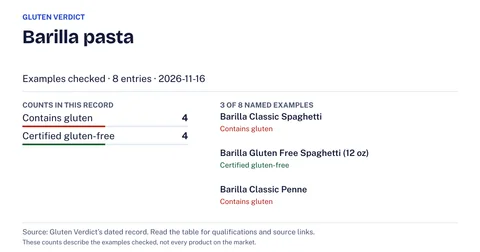 Barilla pastaContains glutenBarilla America, Inc. · checked Nov 16, 2026
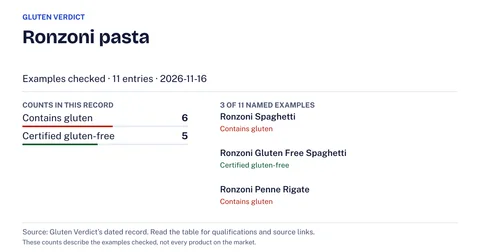 Ronzoni pastaContains glutenRonzoni · checked Nov 16, 2026
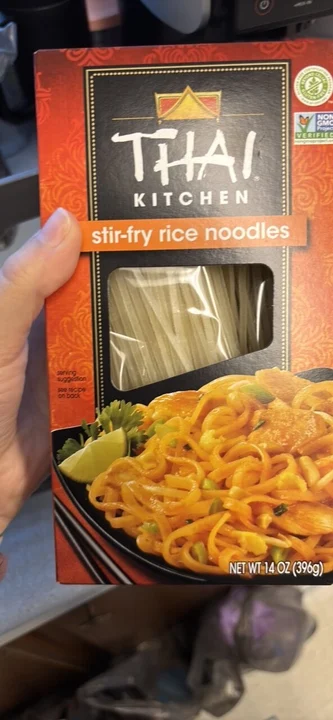 Rice noodlesNaturally gluten-free2 of 9 products we checked contain gluten: Annie Chun’s Pad Thai Noodle Bowl with Vegetables and Annie Chun’s Pho Soup Bowl with VegetablesBuy it labeled gluten-freechecked Nov 16, 2026
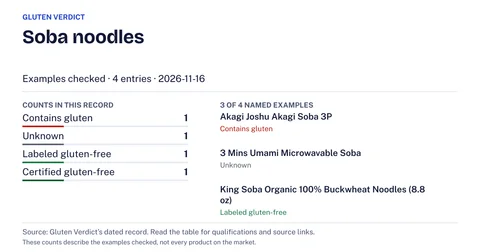 Soba noodlesDepends on the product1 of 4 products we checked contains gluten: Akagi Joshu Akagi Soba 3Pchecked Nov 16, 2026
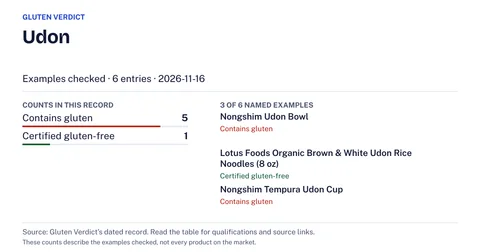 UdonContains glutenchecked Nov 16, 2026
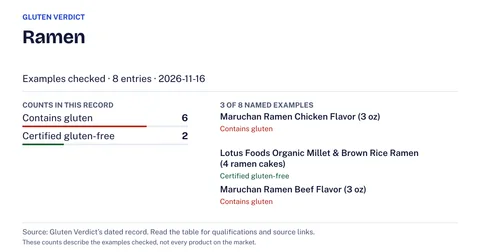 RamenContains glutenchecked Nov 16, 2026
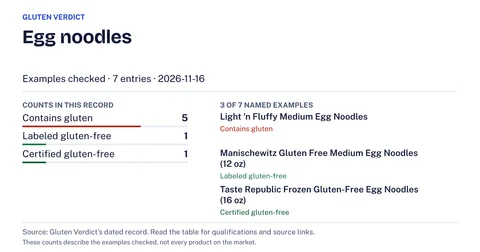 Egg noodlesContains glutenchecked Nov 16, 2026
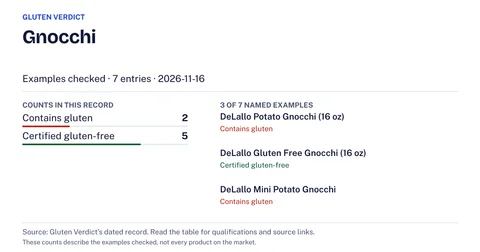 GnocchiDepends on the product2 of 7 products we checked contain gluten: DeLallo Potato Gnocchi (16 oz) and DeLallo Mini Potato Gnocchichecked Nov 16, 2026
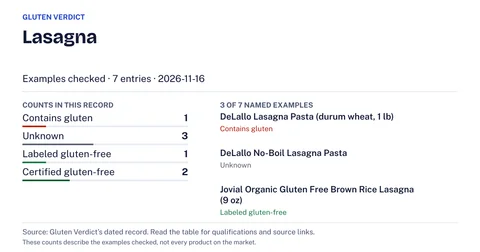 LasagnaContains glutenchecked Nov 16, 2026
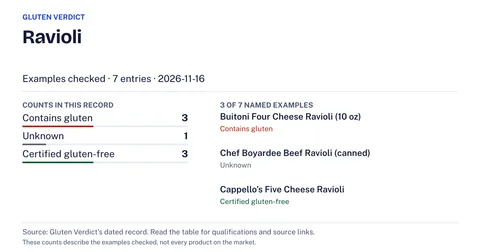 RavioliContains glutenchecked Nov 16, 2026
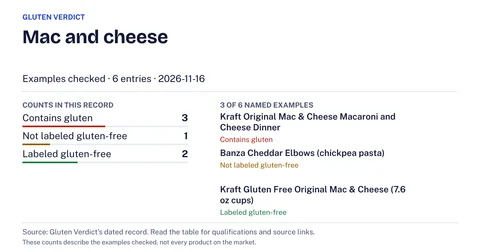 Mac and cheeseContains glutenchecked Nov 16, 2026
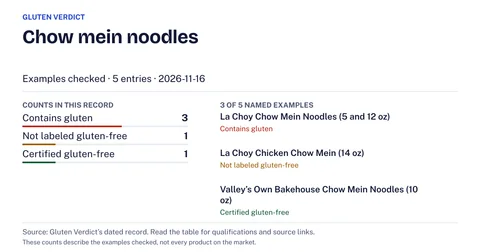 Chow mein noodlesContains glutenchecked Nov 16, 2026
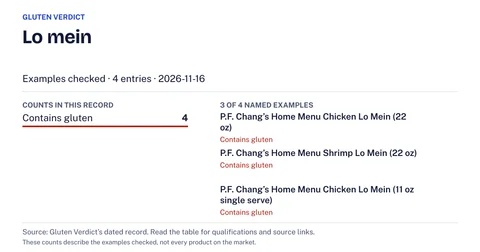 Lo meinContains glutenchecked Nov 16, 2026
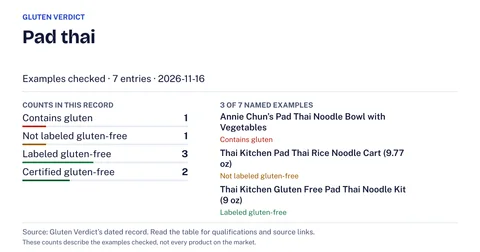 Pad thaiDepends on the product1 of 7 products we checked contains gluten: Annie Chun’s Pad Thai Noodle Bowl with Vegetableschecked Nov 16, 2026
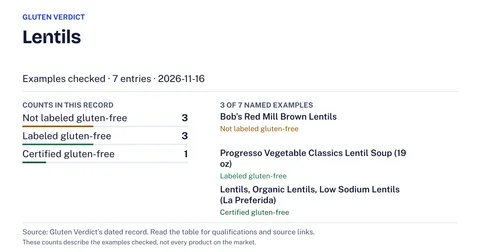 LentilsDepends on the productchecked Nov 16, 2026
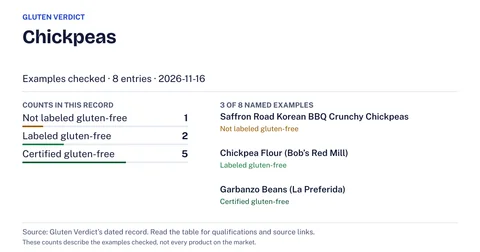 ChickpeasNaturally gluten-freechecked Nov 16, 2026
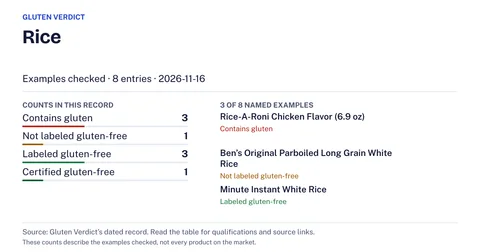 RiceNaturally gluten-free3 of 8 products we checked contain gluten: Rice-A-Roni Chicken Flavor (6.9 oz), Near East Original Rice Pilaf, and Ben’s Original Ready Rice Rice PilafBuy it labeled gluten-freechecked Nov 16, 2026
Questions people ask
Is rice pasta gluten-free?
It depends on the box. FDA says a rice product can be labeled gluten-free if any unavoidable gluten from cross-contact is under 20 ppm12. Look for the claim and an ingredient list that shows only rice flour, as Jovial’s brown rice spaghetti does7.
Is chickpea or lentil pasta gluten-free?
FDA gives “products made from grains, legumes, and seeds” as examples of foods that are by nature free of gluten but at higher risk of cross-contact, and says a gluten-free claim on such a food gives the expectation that any gluten present is under 20 ppm14. Banza’s chickpea elbows list chickpeas, pea starch, tapioca and xanthan gum19.
Is soba gluten-free?
Not always. GIG says some soba is made from a mixture of buckwheat and wheat, so read the ingredient list10.
Does gluten-free pasta have zero gluten?
Not by definition. FDA’s rule requires any unavoidable gluten to be under 20 ppm1.
More in Grains, flours and substitutes
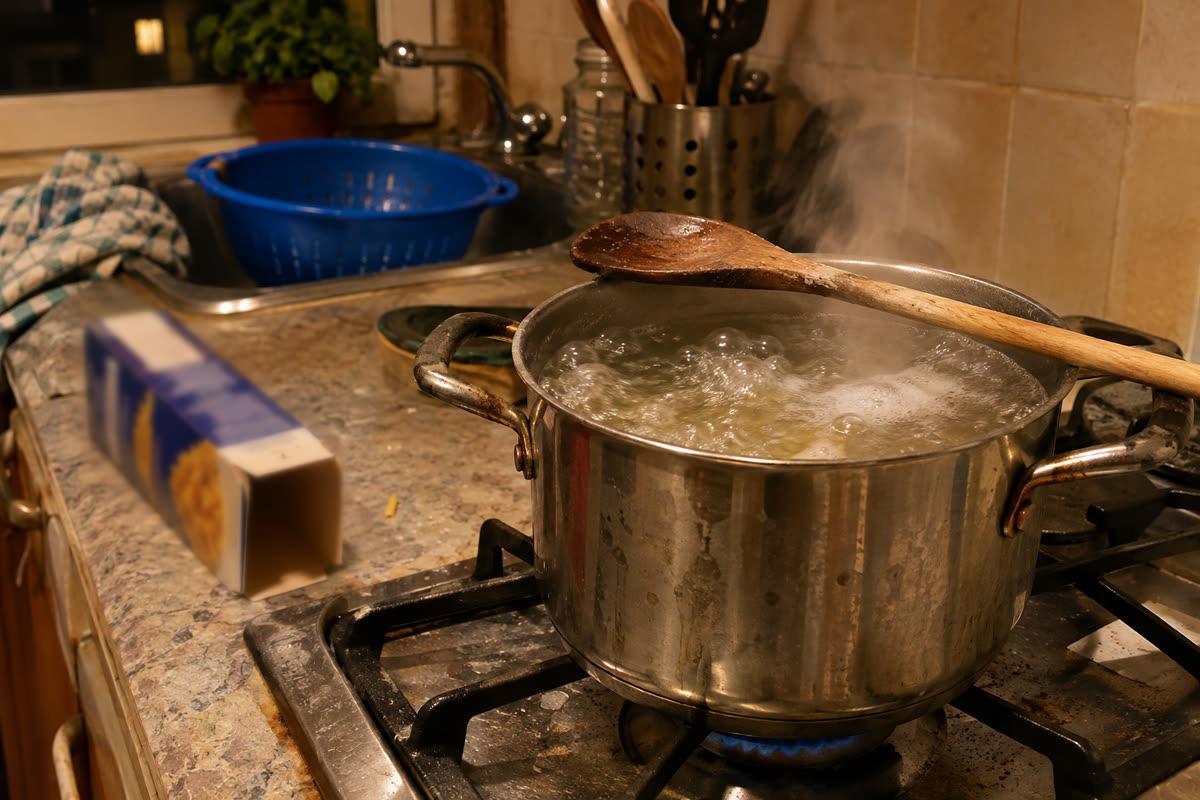 Cooking gluten-free pasta and rice noodles: what makers’ directions sayCompare what Jovial, Banza, Tinkyada, Lotus Foods and Thai Kitchen print for water, stirring, rinsing and time, then match the directions to your pasta.
 Gluten-free substitutes: the swap for each wheat ingredient and the label check it needsA lookup table of gluten-free swaps for wheat flour, pasta, bread, soy sauce, beer and more, with the one label check each swap needs.
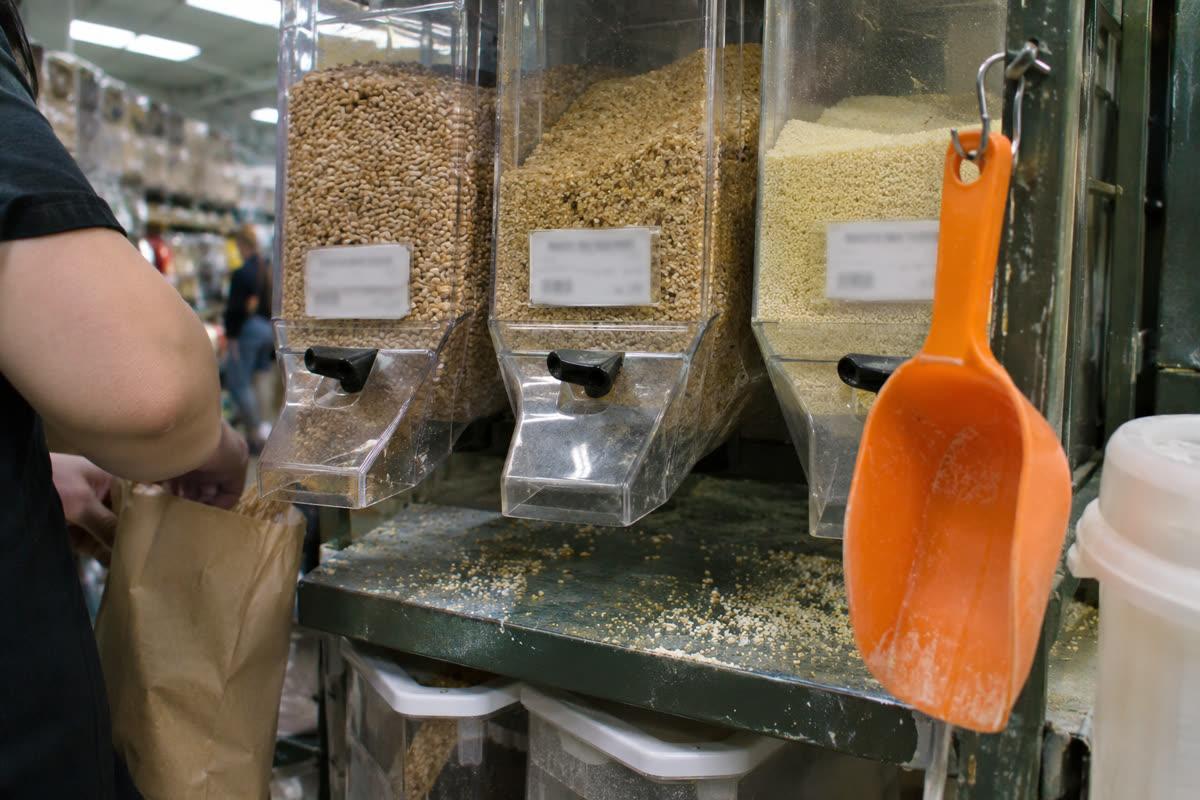 Spelt, farro, Kamut, bulgur, couscous and freekeh: wheat under other namesWhich shop and menu names are wheat: spelt, farro, Kamut, einkorn, bulgur, couscous, freekeh and more, and what FDA’s rules say about them.
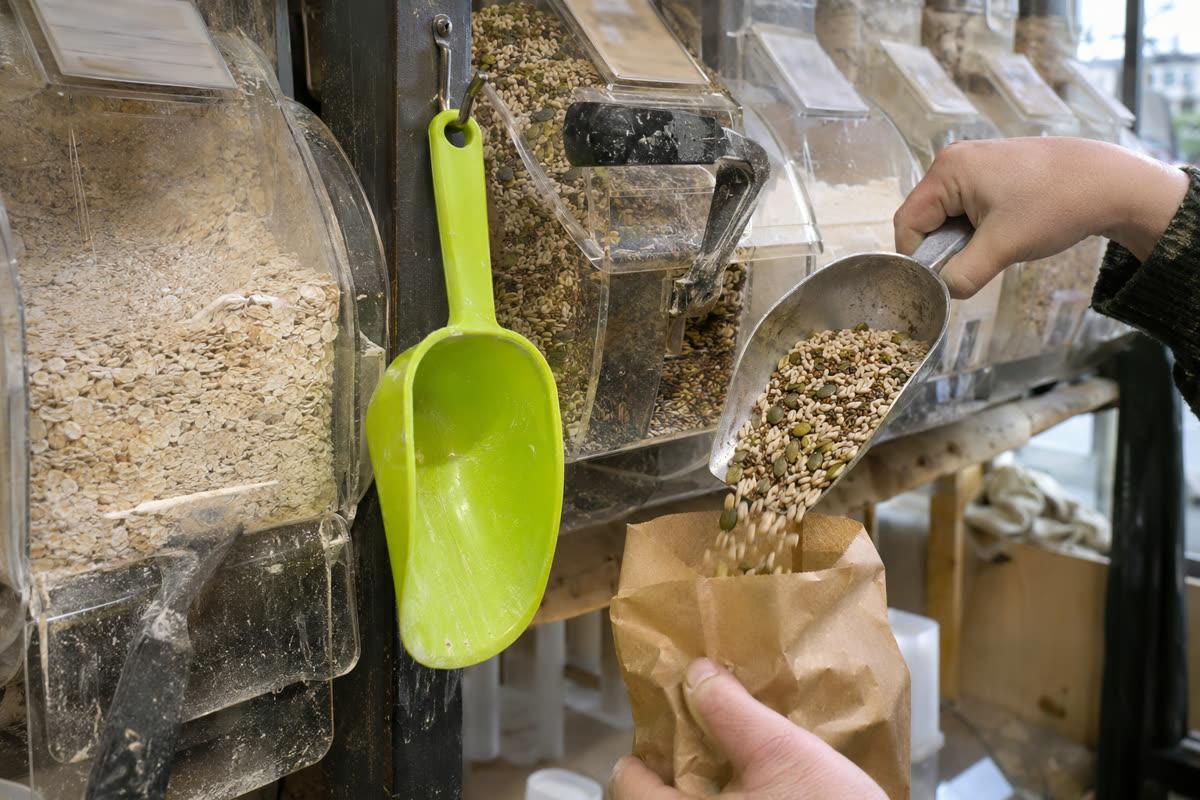 Millet, sorghum, quinoa, buckwheat, teff, amaranth and wild rice: what the bag has to sayWhich grains and seeds are gluten-free plants, what makers and certifiers say about seven of them, and the cross-contact checks for bags, bins and blends.
 Gluten-free cereal: how to check a cereal boxCheck a cereal box in order: the gluten-free claim, malt and wheat in the ingredient list, the oats, then the maker’s own page for that flavour.
 Gluten-free flours and starches: what each one is and how to read the bagWhich flours and starches are gluten-free by nature, what a claim and a certification mark on the bag each mean, and how to read a blend’s list.
Related guides
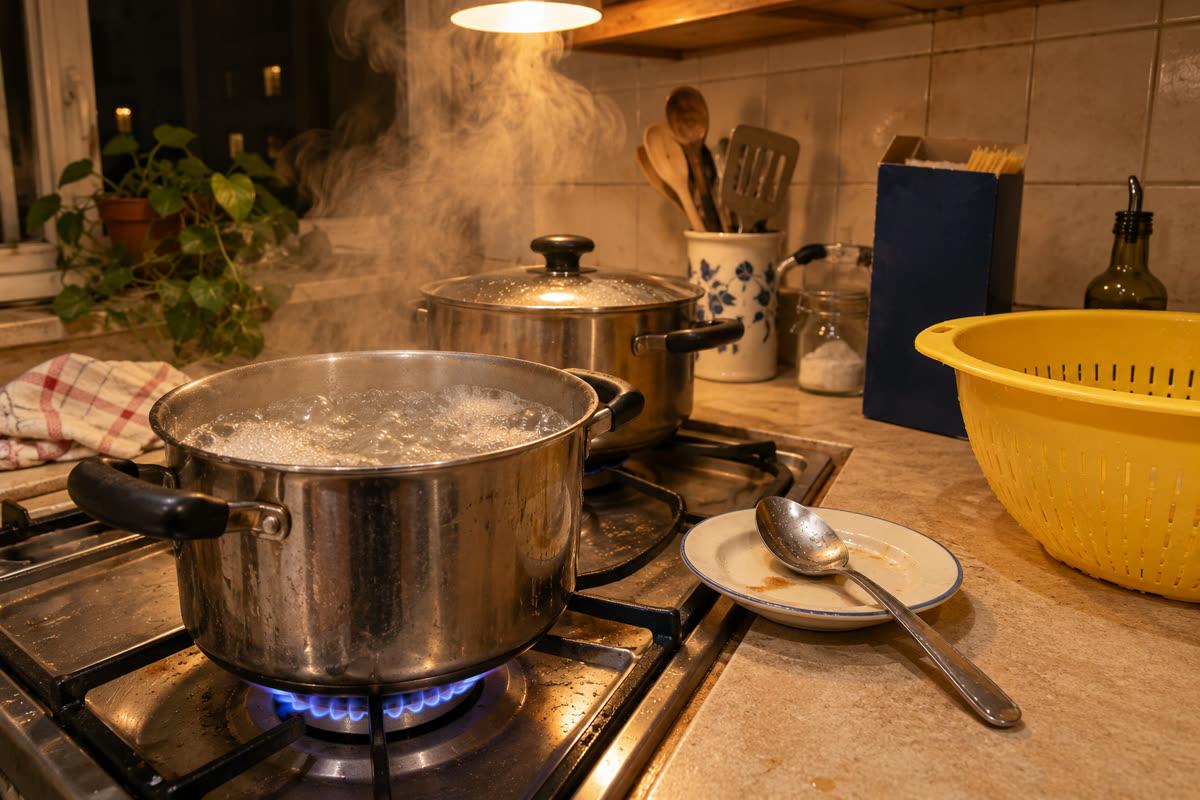 Cooking gluten-free pasta in a kitchen that also cooks regular pastaSet up a pasta night where gluten-free and regular pasta share a kitchen: what one small study found on shared water and pots, and what charities advise.
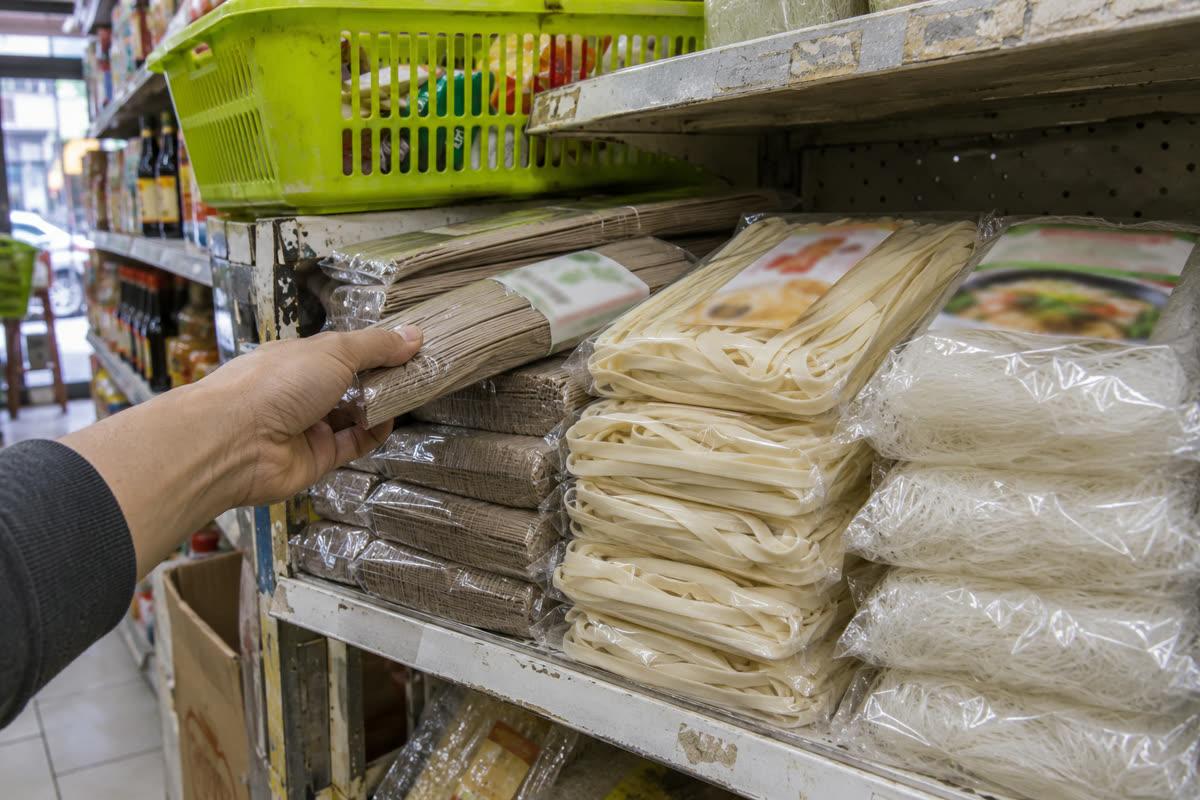 Soba vs udon vs rice noodles: which noodle holds wheatUdon is wheat, soba can be a buckwheat and wheat mix, and rice noodles are rice. How to read a package and ask about the broth and dipping sauce.
 What “may contain wheat” and “made in a facility with wheat” mean on a US labelHow to read “may contain wheat”, shared-facility and shared-equipment lines on US labels, with and without a gluten-free claim, and what to check next.
 How to check whether a packaged food is gluten-freeA four-step check for one packaged food: the claim, the ingredient and allergen lines, the maker’s dated page and the certifier’s directory.
Sources
- [1, 2, 3, 11, 12, 14, 37] US Food and Drug Administration, Questions and Answers on the Gluten-Free Food Labeling Final Rule, checked Nov 17, 2026.
- [4, 15] National Institute of Diabetes and Digestive and Kidney Diseases (NIDDK), Eating, Diet, & Nutrition for Celiac Disease, checked Nov 17, 2026.
- [5, 16] US Food and Drug Administration, Food Allergen Labeling and Consumer Protection Act of 2004 (FALCPA), checked Nov 17, 2026.
- [6] Jovial Foods, Organic Durum Semolina Spaghetti, checked Nov 17, 2026.
- [7] Jovial Foods, Organic Gluten Free Brown Rice Spaghetti, checked Nov 17, 2026.
- [8] Annie's (General Mills), Classic Cheddar Mac & Cheese, checked Nov 17, 2026.
- [9, 22] Annie's (General Mills), Gluten Free Rice Pasta & Cheddar Mac, checked Nov 17, 2026.
- [10] Gluten Intolerance Group, Japanese Cuisine: When You’re Eating Gluten-Free, checked Nov 17, 2026.
- [13, 17] Gluten Intolerance Group, Gluten-Free Pasta: Fun New Alternatives, checked Nov 17, 2026.
Read on 2026-11-17: the page groups gluten-free pasta under alternative grain pastas (rice and corn-based; buckwheat; amaranth, quinoa, teff, millet and sorghum), legumes (chickpeas, lentils, peas or soybeans), cassava pasta, sweet potato pasta, bean thread pasta and nut pasta.
- [18] DeLallo, Gluten Free Lasagna Pasta (Corn & Rice Flour), checked Nov 17, 2026.
- [19] Banza, Banza Chickpea Elbows, checked Nov 17, 2026.
- [20] Explore Cuisine, Chickpea Fusilli, checked Nov 17, 2026.
- [21] Explore Cuisine, Organic Edamame Spaghetti, checked Nov 17, 2026.
- [23, 24] Gluten Intolerance Group (GFCO), GFCO Product Finder, checked Nov 17, 2026.
- [25] Gluten Intolerance Group (GFCO), GFCO Product Finder search for Banza, checked Nov 17, 2026.
Read on 2026-11-17: the results list Banza Chickpea Penne and Banza Chickpea Elbows, among other Banza products.
- [26] Gluten Intolerance Group (GFCO), GFCO Product Finder search for soba, checked Nov 17, 2026.
Read on 2026-11-17: the results list Buckwheat & Brown Soba Rice Noodles by Lotus Foods (category Pasta; sales region US, Canada), among other soba products.
- [27] Gluten Intolerance Group (GFCO), GFCO Product Finder search by brand for Jovial, checked Nov 17, 2026.
Read on 2026-11-17: searching the brand field for Jovial returns two pages of results; the first lists Brown Rice Spaghetti, Brown Rice Elbows and other Jovial pastas.
- [28, 32] King Soba USA, Organic 100% Buckwheat Noodles, checked Nov 17, 2026.
- [29] Lotus Foods, Organic Buckwheat & Brown Soba Rice Noodles, checked Nov 17, 2026.
- [30] Lotus Foods, Organic Brown & White Udon Rice Noodles, checked Nov 17, 2026.
- [31] McCormick (Thai Kitchen), Thai Kitchen Gluten Free Thin Rice Noodles, 8.8 oz, checked Nov 17, 2026.
- [33, 34] Gluten Intolerance Group, 7 Tips for Avoiding Gluten Cross-Contact at Home, checked Nov 17, 2026.
- [35, 36] Coeliac UK, Cross contamination, checked Nov 17, 2026.