Gluten-free with roommates, partners and family: a shared-kitchen agreement
Short answer
Split the kitchen into three lists and agree them out loud before the first shared meal:
- Keep to one person: the toaster, colander, cutting boards, cast iron and scratched non-stick pans, which the charities and Stanford Medicine Children’s name for dedicated use1, 2, 3, 4, 5. The sources split on sponges; see the sponge section below.
- Share with a wash rule: stainless-steel pots and pans, knives and the oven, washed with soap and water6, 7, with foil or a clean baking sheet between a shared oven rack and gluten-free food8.
- Shelve and label: gluten-free food on the top shelf, labeled, with squeeze bottles for spreads9, 10, 11.
- Agree how slips are reported: Beyond Celiac says everyone in the household must agree on the process, and anyone who makes a mistake must feel comfortable saying so at once12, 13.
Part of Cross-contact and the home kitchen, 19 guides

Key points
- A shared kitchen does not have to be gluten-free: the National Celiac Association says a completely gluten-free kitchen is not required14.
- The charities disagree on sponges: Coeliac UK says separate ones are not needed15, while Beyond Celiac says to separate them, the National Celiac Association says to try dedicated ones, and GIG’s college bulletin says not to use the sponges already in a shared kitchen16, 17, 18.
- One small 2020 study found no gluten transfer above 20 ppm from shared toasters (four samples had detectable gluten, at 5.1 to 8.3 ppm), but 33.9 to 115.7 ppm in gluten-free pasta cooked in water used for gluten-containing pasta19, 20.
- In one study of 10 couples, 2 of 20 kisses after the partner without celiac disease ate crackers left more than 20 ppm of gluten in saliva, and none did when that partner drank 4 oz of water first21, 22.
Start with the conversation, not the cupboards
Settle the rules before the first shared meal, with everyone in the room. Beyond Celiac’s guidance for a mixed kitchen starts there: cooperation is key, and everyone in the household must agree on the process12. The people eating gluten need to feel comfortable saying so at once when they slip13, and its cross-contact guide says families or roommates should express the importance of confessing mistakes23. Nobody has to make the whole kitchen gluten-free: the National Celiac Association says a completely gluten-free kitchen is not required14.
GIG explains cross-contact with perfume: a strong scent lingers after the wearer has left the room, and gluten does not need to be visible to cause a reaction24. For children in the house, GIG suggests the same idea with glitter25.
On tone, GIG’s 2026 article on family gatherings says that starting with appreciation helps the conversation feel collaborative rather than demanding, and that the same approach works with a partner’s family, friends or roommates26, 27. For the talk itself, GIG’s cohabitation article suggests sitting down together to work out how the shared space can work for everyone28, then giving each person a dedicated role so the upkeep does not fall on one person29.
Put the result on one page: the three lists below, who does what, and what happens when someone slips. The next sections fill in each list.
What to keep to one person
The National Celiac Association recommends dedicated items for things that are porous or difficult to clean30. Stanford Medicine Children’s, writing for families of a child with celiac disease, names items with grooves or surfaces that can trap gluten or cannot be fully cleaned5. This table shows what each charity says about the usual candidates.
| Item | What the sources say |
|---|---|
| Toaster | GIG’s college bulletin says shared toasters always need to be avoided1. Beyond Celiac says experts strongly recommend a separate toaster and that toaster bags are not foolproof31, 32. GIG’s cohabitation article offers a toaster bag as a temporary step33. Coeliac UK, a UK charity, says to use toaster bags or consider a separate toaster34. See the toaster study below. |
| Colander | GIG’s college bulletin says colanders cannot be sufficiently washed2. Beyond Celiac says gluten-free pasta should be strained in a clean, preferably dedicated, colander35. |
| Cutting boards | Beyond Celiac says to buy a board used only for gluten-free foods36. GIG’s cohabitation article puts cutting boards on its color-coded list37. |
| Cast iron and worn non-stick pans | GIG says cast iron is porous and nearly impossible to fully rid of gluten residue, and that scratched or worn non-stick pans can trap gluten in the damaged coating3, 4. |
| Waffle maker, air fryer, sifter, bread maker | The National Celiac Association’s list of items too hard to clean or porous includes the sifter, cast iron pans, bread maker, sandwich maker, waffle iron, fryer and air fryer38. GIG puts air fryers and blenders with toasters at the top of its list of appliances to keep gluten-free only39. |
| Spreads a knife goes into | Coeliac UK says to have separate condiments, or at least use clean cutlery for shared butters, jams and spreads40. See the spreads section below. |
Beyond Celiac’s own list for mixed kitchens is longer: it also names rolling pins, wooden or plastic utensils, oven mitts and towels used during gluten prep41. Treat these lists as a menu. Start with the items that more than one source names above (toaster, colander, cutting board, cast iron), then add the rest as budget allows. Our setup guide sorts the whole kitchen item by item.
What can be shared with a wash rule
Stanford Medicine Children’s says you do not need to replace ovens, knives or stainless-steel pots and pans6. For tools that are not porous, the charities agree that washing does the work: Coeliac UK says standard washing-up liquid or a dishwasher will remove gluten42, the National Celiac Association says soap and water or a dishwasher should be enough for any non-porous material7, and GIG says most dish soaps remove gluten with hot water and proper scrubbing43.
They differ on sanitizing. GIG’s article lists it as a third step after rinsing and washing44, while Beyond Celiac says soap and water is sufficient and that gluten is not bacteria, so bleach or sanitizer does not kill it45. Soap and water is the step all of these sources include.
A wash rule others can follow
- Wash pots, pans, measuring cups and utensils between uses46.
- Wash counters and prep areas with hot soapy water and a clean cloth or paper towel before gluten-free preparation begins47.
- Wash hands with soap and water before preparing gluten-free food. The authors of the study described below, as the Celiac Disease Foundation reported it, named this and washing pots, pans and utensils after each use as the most important hygiene steps48.
- Before using a shared oven, wipe the racks and interior, or put down foil or a clean baking sheet as a barrier8. The National Celiac Association adds not to use the convection feature, because flour from earlier baking can recirculate in the fan49.
- Do not prepare gluten-free and gluten-containing food with flour at the same time, because flour can cover many surfaces and items50.
- Use clean water and a clean colander for gluten-free pasta35. Beyond Celiac answers the question of reusing pasta water with a plain no51.
What one small study measured
A 2020 paper in Gastroenterology tested three situations. Gluten-free pasta cooked in water used for gluten-containing pasta had detectable gluten in every sample, from 33.9 to 115.7 ppm20. Gluten-free bread toasted in shared toasters was not associated with transfer above 20 ppm, and the four samples with detectable gluten measured 5.1 to 8.3 ppm19. All three knife-washing methods the authors tried removed gluten52, and rinsing a pot with water alone worked as well as scrubbing it with soap and water53.
The authors list a small sample size among the limitations54, and the study’s senior author still recommends following your celiac care team’s guidelines while further study is done55. The toaster and pot-rinse results do not cancel the charities’ advice above; they come from one small study. Our evidence guide covers what studies have measured.
Shelves, bins and labels
Beyond Celiac recommends keeping gluten-free items on the top shelf of the pantry, refrigerator and freezer so crumbs do not fall into them9. GIG says to label gluten-free foods, give them dedicated areas of the fridge and pantry, and store them on higher shelves56. For a shared room, GIG’s college bulletin adds three habits: agree which half of the fridge or pantry is whose and label your shelf57, ask roommates to wrap gluten-containing foods very thoroughly in the fridge58, and keep your own plates, utensils and containers in a closable box on the top shelf of a cupboard59.
For labels, Beyond Celiac suggests colored tape, stickers or markers, and making sure everyone in the household understands the system10, 60. GIG’s version is a color for everything strictly gluten-free, with everyone told what the color means37. GIG also cautions that zones and color coding are a foundation and not a guarantee on their own61.
Spreads and shared jars
GIG’s college bulletin recommends squeezable condiments so utensils are never double-dipped, and says others must know not to touch the tip of a squeeze bottle to their gluten-containing bread62. Beyond Celiac makes the same point about squirt bottles11. If you do share a jar, GIG says housemates need to understand why double dipping is not an option56. Our guide to shared butter, jam and spreads compares the options.
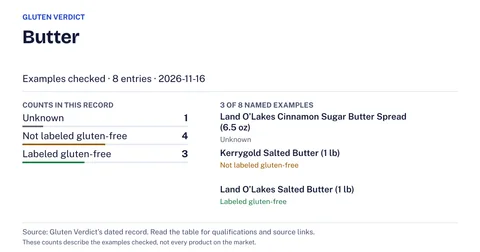
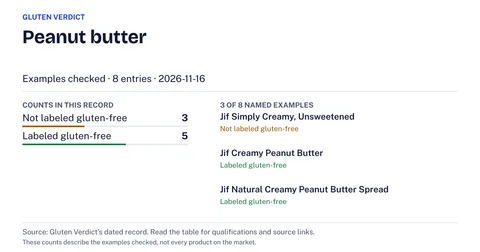
What the foods themselves contain is the job of our verdicts, for example bread, butter, peanut butter and pasta. This section is only about what happens to them on a shared shelf.
Sponges, towels and pot holders: where the sources disagree
This is the item where a house is most likely to get conflicting advice, because the charities do not agree.
| Source | What it says |
|---|---|
| Coeliac UK (UK charity) | You do not need to use separate cloths or sponges15. |
| Beyond Celiac | Keep separate sponges and dishrags for gluten-free cookware16. Its kitchen guide says gluten can hide in sponges, so designate different sponges, rags or towels63. |
| National Celiac Association | When hand-washing, try dedicated gluten-free sponges, brushes and rags17. |
| GIG, cohabitation article | Shared sponges and dish rags should be replaced or laundered often64, and a dedicated gluten-free sponge or brush is a small investment65. |
| GIG, college bulletin | In a shared kitchen, do not use the dish towels or sponges that are there, since they could contain gluten from previous uses; use paper towel or bring your own18. |
| GIG, family FAQ | Kitchen towels used only on dishes or hands that have been thoroughly washed pose minimal to no risk; otherwise use separate towels or paper towels66. For pot holders, separate ones are a good idea67. |
A labeled sponge of your own and paper towels for wiping hands and dishes is compatible with every reading in the table, and costs little. Our guide to dishes, sponges and towels goes through the disagreement in detail.
Kissing, shared plates and hands: what sources say and where they are silent
For couples, one study has measured kissing. Researchers examined gluten transfer in 10 couples, each with one partner with celiac disease and one without21. The partner without celiac disease ate 10 saltine crackers and then kissed their partner, either after waiting five minutes or, on another day, after drinking 4 ounces of water68.
The amount of gluten found in the saliva of the partners with celiac disease varied from under 5 ppm to 153.9 ppm. Two of the 20 exposures tested above 20 ppm, and none did when the partner who ate the crackers drank 4 oz of water first22. The authors concluded that there was not an increased risk of significant gluten transfer when kissing, and that drinking water first reduces it further69. It is a small study of 10 couples, reported by the study team and the American Gastroenterological Association; it is a measurement of saliva, not advice for any one person.
For hands and drinks, Stanford Medicine Children’s list of habits for all eaters in a home includes washing hands before touching food, not drinking directly from beverage cartons and not double-dipping70. For a buffet or potluck, GIG suggests asking to go first in line or setting your portion aside before other dishes go around the table71.
We did not find a rule in the pages cited in this guide for sharing a fork, plate or cup with someone who has just eaten gluten, so this guide gives none.
A dorm or a rented room with a shared kitchen
In a kitchen you cannot rearrange, GIG’s college bulletin starts from an assumption: any surface or cookware could have come into contact with gluten, so clean what will touch your food72. It suggests bringing your own plate, bowl, silverware, skillet, spatula and cutting board73, making sure your roommate understands that even a tiny amount of gluten can cause problems74, and skipping the shared toaster1. Our dorm guide covers the fridge, microwave and meal-plan questions.
When the gluten-free person is a child, and others are siblings
The National Celiac Association says that in families with young children an all gluten-free kitchen may be the way to go, while other families split the space or cook completely gluten-free meals to eat together75. Stanford Medicine Children’s says there is no perfect way, only what works best for your child and family76. Whichever you pick, it suggests shelves your child can reach77.
Other children’s habits matter too. GIG’s FAQ notes that younger children, others in the household and visitors may not be as vigilant about avoiding cross-contact as the person with celiac disease78. That is a reason to keep the rules short and visible. Our guide to going gluten-free as a family has more on the whole-household option.
When the rules keep failing
Beyond Celiac’s advice after an exposure at home starts with staying calm, because people are more inclined to follow your cues if you are79. It says to tell the person what happened, since they cannot correct a mistake they never learn about80, and gives an example of a corrective action: a new gluten-free-only toaster, clearly labeled, kept in a cabinet and taken out only when ready to use81. That article dates from 201585.
If a housemate gets defensive, GIG’s article says most of the time it comes from worry about getting it wrong, not a lack of care82. GIG also says explaining once does not mean you will not need to explain again83. For lines to use, see when family says a little won’t hurt.
If the split kitchen keeps failing, the other end of the range is a fully gluten-free kitchen, which Beyond Celiac says works best when everyone in the household can commit to it84, or gluten-free meals eaten together, with some gluten-containing items kept for the family members who can eat gluten75. That is a household decision. The sources describe it as one option among several.
Verdicts in this guide


Questions people ask
Do my roommates have to give up gluten?
Not necessarily. The National Celiac Association says a completely gluten-free kitchen is not required14.
Can we share one toaster?
Beyond Celiac advises a separate toaster31, and GIG says shared toasters always need to be avoided1 and offers a toaster bag as a temporary step33. One small 2020 study found shared toasters were not associated with gluten transfer above 20 ppm, but its authors list a small sample size among the limitations19, 54.
Do we need separate sponges?
The sources split: Coeliac UK says no15, while Beyond Celiac says yes and the National Celiac Association says to try dedicated ones16, 17.
Is kissing a gluten risk?
In one study of 10 couples, 2 of 20 kisses tested above 20 ppm of gluten in saliva, and none did when the partner who had eaten gluten first drank 4 oz of water22.
More in Cross-contact and the home kitchen
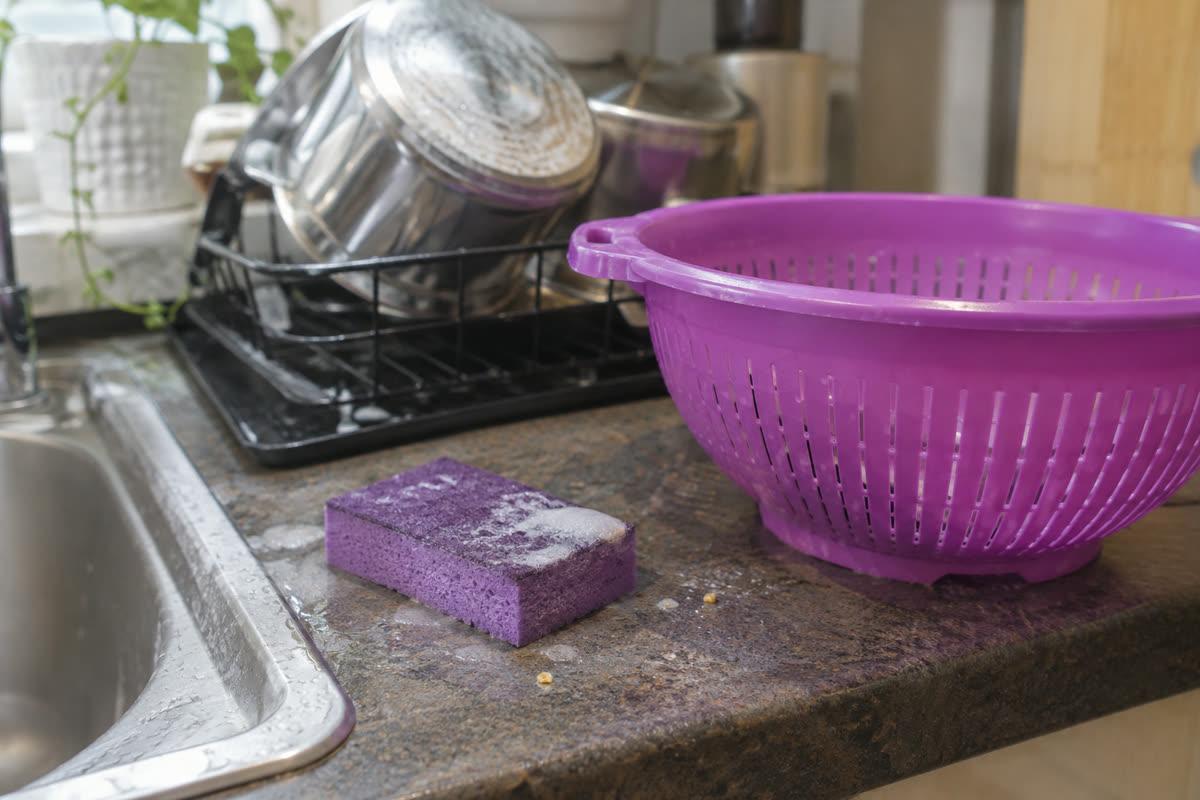 Setting up a gluten-free kitchen: what to replace, wash or shareWalk each kitchen zone and decide, item by item, what to replace, what to wash and what a mixed household can keep sharing, with charity sources.
 Storing gluten-free food in a shared fridge, pantry and freezerWhere gluten-free food goes in a shared fridge, pantry and freezer, how to label it so everyone follows, and what the sources say and leave out.
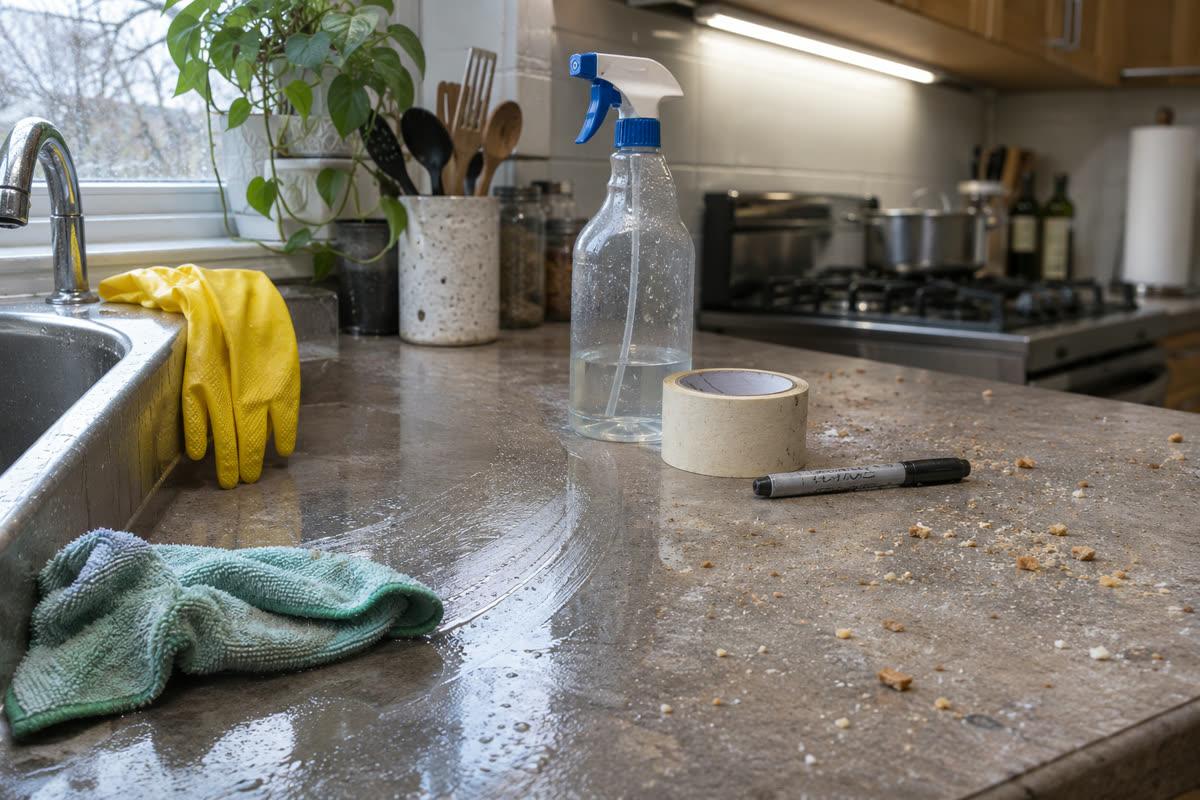 A weekly gluten-free kitchen routine: wipe, label, restock, re-checkA one-page weekly pass for a gluten-free kitchen: what to wipe, label, restock and do with leftovers, and where the charities and small studies differ.
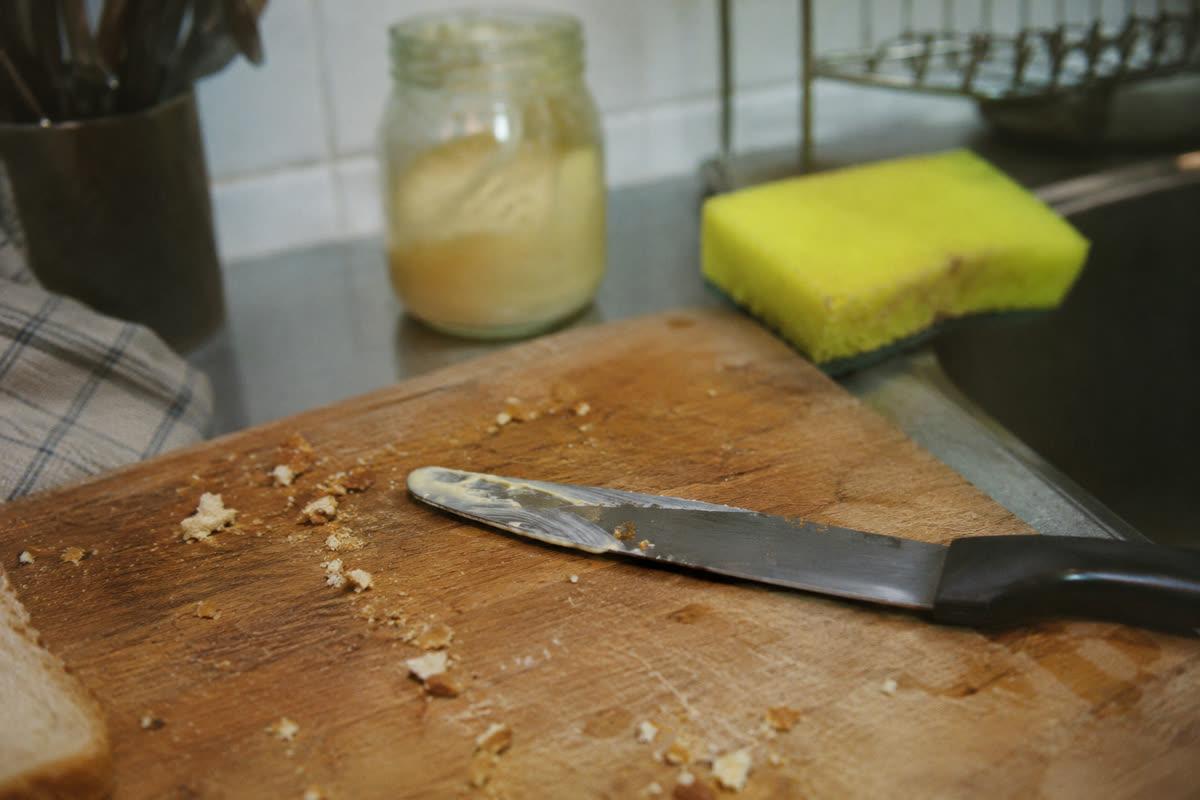 What studies measured in shared kitchens: pasta water, toasters, knives and spreadsWhat four experimental studies measured when gluten-free food met shared pots, toasters, knives and spreads: samples, results, and what went untested.
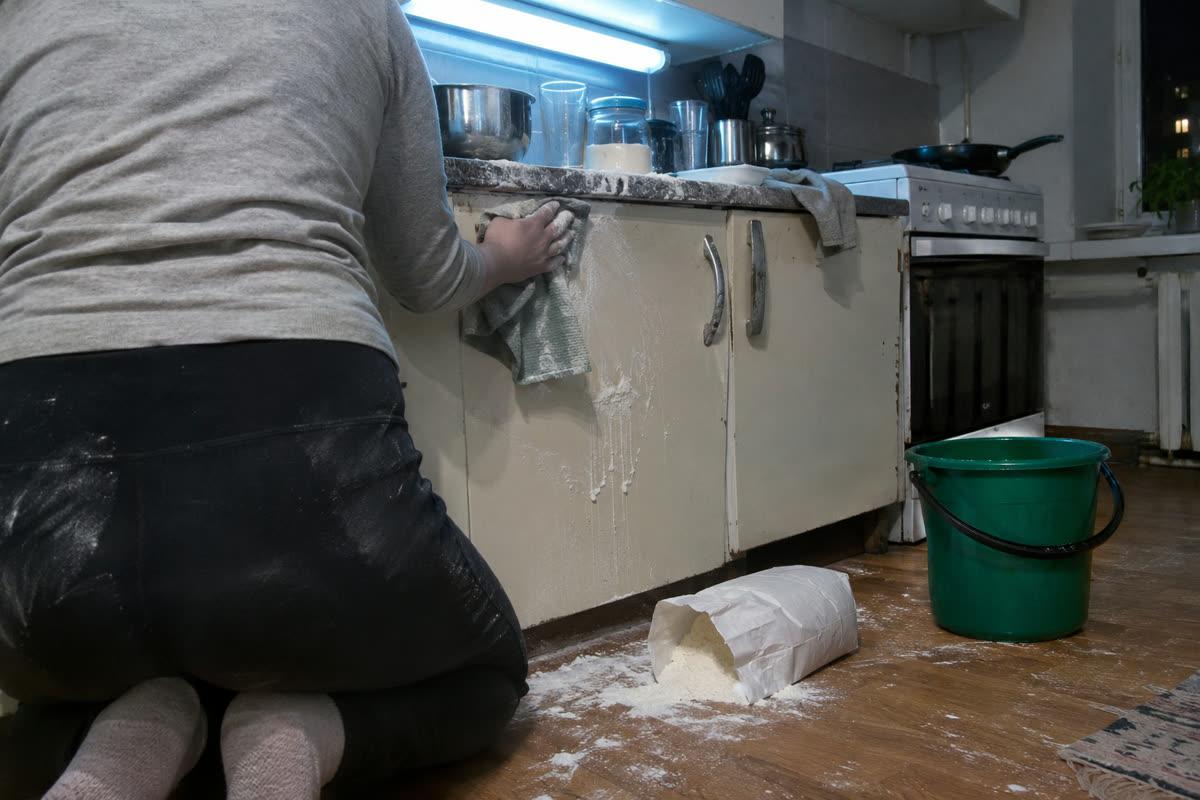 What to clean after wheat flour lands in a gluten-free kitchenThe order of jobs after wheat flour reaches a gluten-free kitchen, what charities and studies say about each item, and what no source covers.
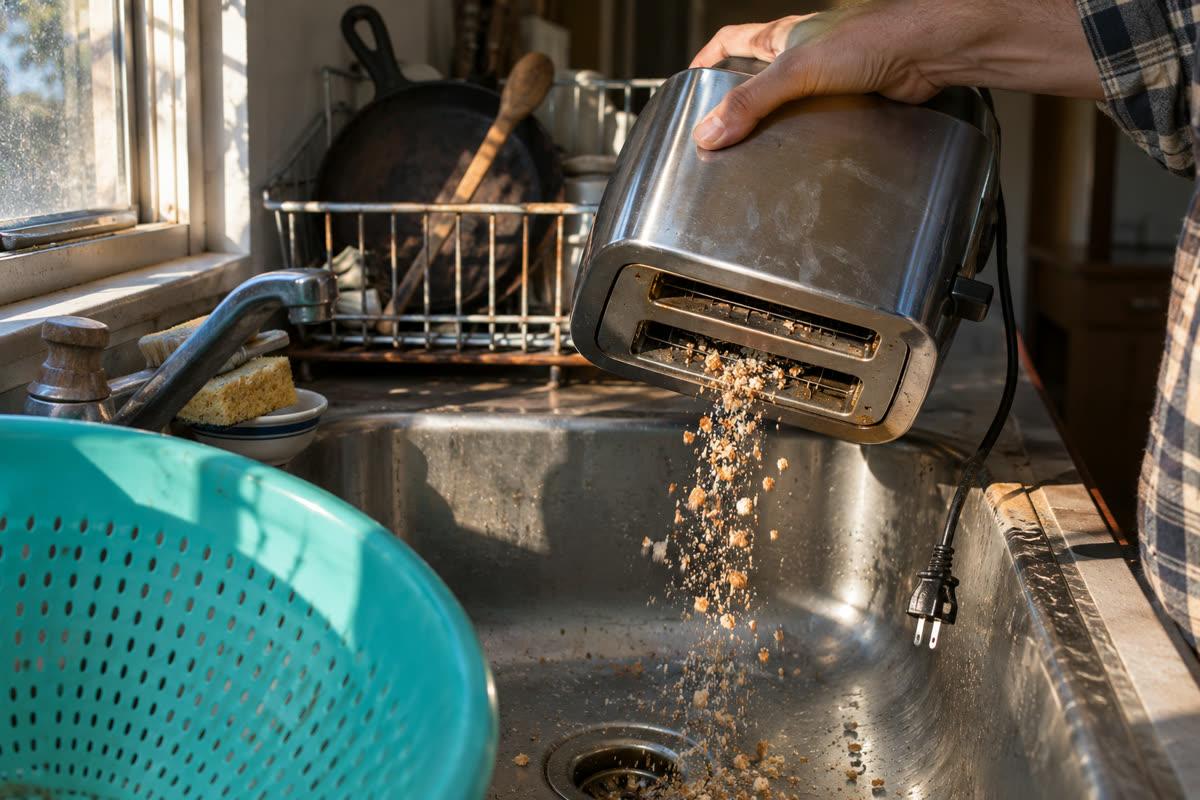 Toasters, colanders, cast iron, wood and air fryers: which can be cleanedWhich kitchen items the charities say to keep, wash or replace after going gluten-free, item by item, with what the studies we found measured.
Related guides
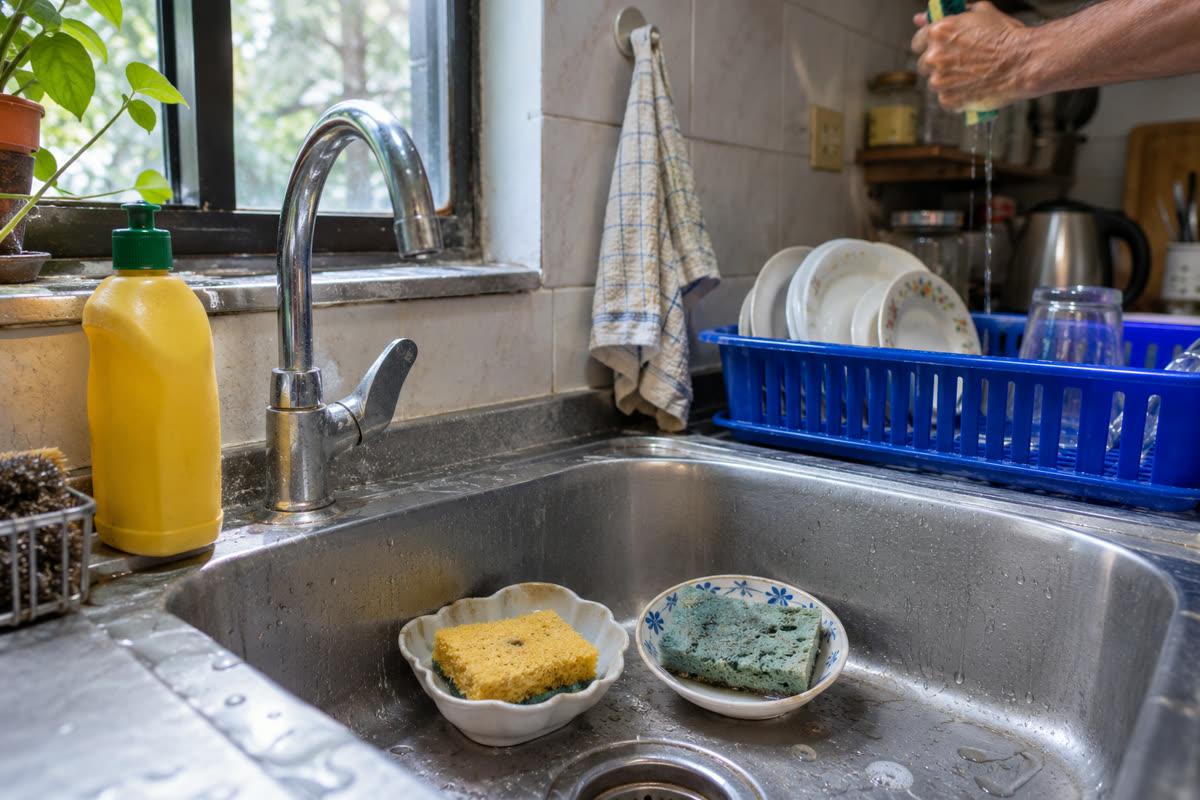 Dishes, sponges, dishwashers and towels in a mixed householdWhat GIG, Beyond Celiac, Coeliac UK and published tests say about sponges, dish towels, hand washing and the dishwasher in a mixed home.
 Sharing butter, jam and spreads with gluten eatersHow crumbs reach shared butter, jam and peanut butter, and what a second jar, squeeze bottle, knife rule or shelf each does and does not do.
 When your partner has celiac disease: gluten-free home or split kitchenChoose between a gluten-free home and a split kitchen, and find what to say at restaurants and to family, with NIH and charity sources.
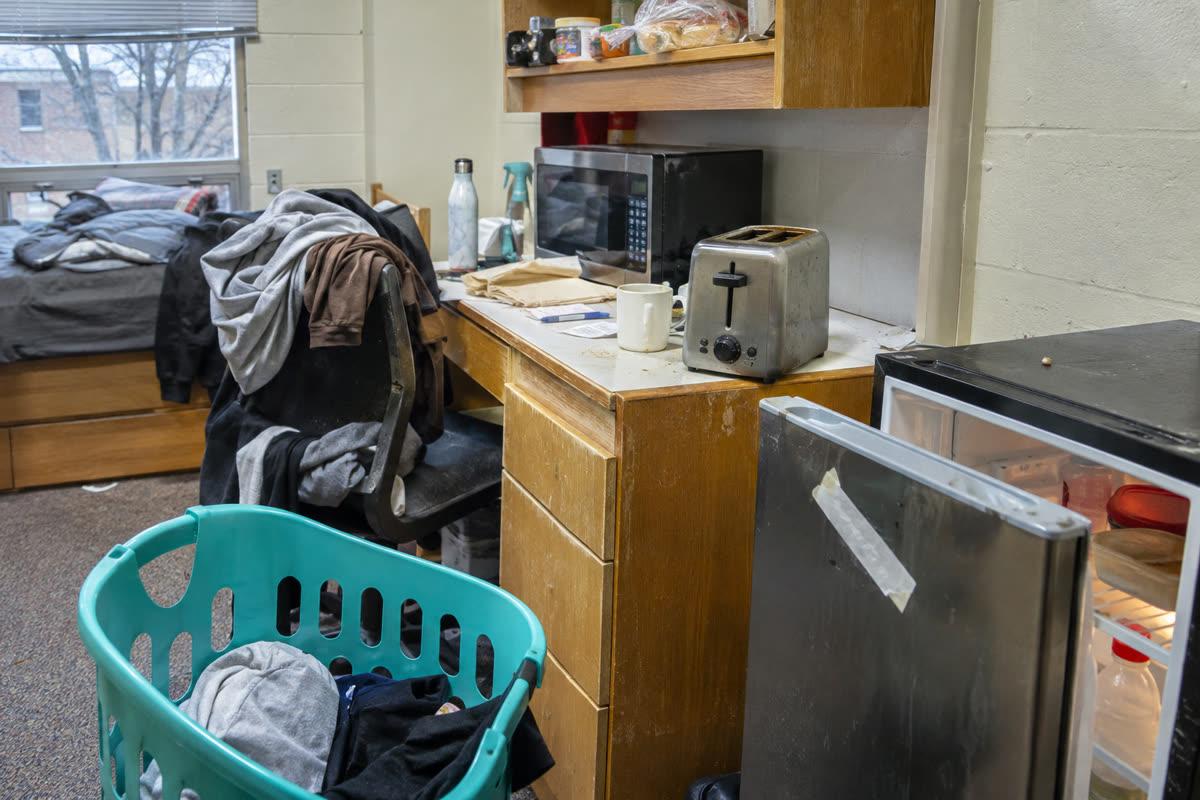 Gluten-free in a college dorm: the fridge, microwave, toaster and roommate rulesHow to set up a shared dorm room or kitchen for gluten-free living: fridge, microwave, toaster, sponges, a roommate script and how to ask for housing help.
Sources
- [1, 2, 18, 57, 58, 59, 62, 72, 73, 74] Gluten Intolerance Group, College: Navigating Shared Housing and Kitchens (October 18, 2019), checked Nov 17, 2026.
- [3, 4, 8, 24, 25, 28, 29, 33, 37, 39, 43, 44, 47, 56, 61, 64, 65] Gluten Intolerance Group, Your Kitchen, Their Kitchen, Our Kitchen: Navigating Gluten-Free Cohabitation (August 3, 2026), checked Nov 17, 2026.
Read on 2026-11-17: the closing section headed “Same Kitchen, Same Team” advises housemates to explain cross-contact and proper cleaning, then to give each person a dedicated role so that the burden of maintaining the kitchen does not fall on one person.
Read on 2026-11-17: the section headed “Sometimes Clean Enough Is Not Always Enough” names three steps for a surface or item: rinse, wash with hot soapy water, and sanitize with a food-grade sanitizer, a diluted bleach solution or a sanitizing spray applied after washing.
- [5, 6, 70, 76, 77] Stanford Medicine Children’s Health, Celiac Disease: Your Kitchen, checked Nov 17, 2026.
- [7, 14, 17, 30, 38, 46, 49, 50, 75] National Celiac Association, Dedicated Gluten-Free Kitchen (reviewed June 2026), checked Nov 17, 2026.
- [9, 11, 16, 23, 31, 32, 35, 36, 51] Beyond Celiac, Cross-Contact, checked Nov 17, 2026.
- [10, 12, 13, 41, 45, 60, 63, 84] Beyond Celiac, Creating a Gluten-Free Kitchen After Diagnosis (July 9, 2025), checked Nov 17, 2026.
Read on 2026-11-17: the list headed “Duplicate and Separate High-Risk Tools and Foods” names toasters, cutting boards, baking sheets, wooden or plastic utensils, rolling pins, oven mitts, waffle makers, colanders, sifters, sponges, towels used during gluten prep, and condiments such as mayo, peanut butter and hummus; under baking sheets it says the same sheets can be used with parchment paper or aluminum foil each time.
- [15, 34, 40, 42] Coeliac UK, Cross-contamination (cooking at home), checked Nov 17, 2026.
- [19, 20, 52, 53, 54] Gastroenterology (PubMed Central), Weisbrod et al. 2020: Preparation of gluten-free foods alongside gluten-containing food, checked Nov 17, 2026.
- [21, 68] American Gastroenterological Association, Can gluten pass through a kiss? (April 8, 2026), checked Nov 17, 2026.
- [22, 69] Gastroenterology (PubMed), Lee et al. 2026: A Prospective Study of Gluten Transfer Through Kissing in Celiac-Discordant Couples, checked Nov 17, 2026.
- [26, 27, 71, 82] Gluten Intolerance Group, A Seat at the Table: Talking to Family About Your Gluten-Free Needs (November 3, 2026), checked Nov 17, 2026.
- [48, 55] Celiac Disease Foundation, Preliminary Study Suggests That Risk of Gluten Transfer in Common-Cooking Activities May Be Lower Than Previously Thought (October 3, 2019), checked Nov 17, 2026.
- [66, 67, 78] Gluten Intolerance Group, FAQ: dish towels, hand towels and pot holders shared with family members who handle gluten-containing food, checked Nov 17, 2026.
- [79, 80, 81, 85] Beyond Celiac, Getting Glutened: How to Handle Being Put at Risk for Gluten Exposure (March 31, 2015), checked Nov 17, 2026.
- [83] Gluten Intolerance Group, Talking to Friends & Family About Living Gluten-Free (January 15, 2020), checked Nov 17, 2026.