Gluten-free vegetarian protein: what to check on beans, lentils, tofu and tempeh
Short answer
Beans and soy are on the Celiac Disease Foundation’s naturally gluten-free list, and the Gluten Intolerance Group says plain tofu is gluten-free and lentils are legumes, a group the Foundation also lists1, 11, 16, 22. The package still decides it. Check three things:
- Dry beans and lentils: the Gluten Intolerance Group advises a gluten-free label or GFCO certification for lentils, and the National Celiac Association says beans and legumes should be picked through and rinsed either way3, 4.
- Tempeh: read the grains in the list, because the Gluten Intolerance Group says some types may contain gluten or other grains, and Lightlife’s Three Grain Tempeh lists organic barley5, 6.
- Tofu, canned beans and meat substitutes: the plain tofu and plain canned beans we read list no gluten grain7, 8; flavored tofu and processed soy products need their ingredient list read9, 11, and seitan contains gluten10.
Part of Nutrition and combining diets, 24 guides
Key points
- Beans and soy are on the Celiac Disease Foundation’s naturally gluten-free list and the Gluten Intolerance Group says plain tofu is gluten-free, but a package can differ from the plain food1, 11.
- The Gluten Intolerance Group says lentils carry a higher cross-contact risk than other legumes or beans, and advises a gluten-free label or GFCO certification3.
- Tempeh ingredient lists differ: Lightlife’s Original lists soybeans, water and brown rice, and its Three Grain adds organic barley and organic millet12, 6.
- The Gluten Intolerance Group says some meat substitutes contain wheat, and that seitan and certain veggie burgers or hot dogs contain gluten13, 10.
- A gluten-free claim is voluntary, so a package without one is one to read, not one to skip14, 15.
Which vegetarian proteins are naturally gluten-free?
The Celiac Disease Foundation lists beans, legumes and nuts, and dairy among naturally gluten-free food groups, and names beans and soy in its list of naturally gluten-free grains, legumes, seeds and starchy foods16, 1. FDA says eggs are naturally gluten-free17. The Gluten Intolerance Group (GIG) calls the soybean “naturally gluten-free”2. Coeliac UK, a UK charity, lists soya foods, tofu, pulses, nuts, nut butters, seeds and mycoprotein as non-meat protein sources that are also gluten-free, and marks tofu and lentils with a pointer to its own product information18, 19.
“Naturally gluten-free” describes the plain food. FDA says that crop rotation and shared harvesting, transport and storage equipment often bring gluten-containing grains into contact with legumes and seeds that are naturally free of gluten20, and the table below shows what to read for on each kind of protein.
| Food | The plain food | What to check |
|---|---|---|
| Chickpeas and other dry beans | Beans are on the Celiac Disease Foundation’s naturally gluten-free list1. | Stray grain from field, transport and storage20, 21; sort and rinse (next section). |
| Lentils | Peas and lentils are legumes, not beans, in GIG’s wording22. | GIG says lentils carry a higher cross-contact risk than other legumes or beans, so look for a gluten-free label or GFCO certification3. |
| Tofu and edamame | Soy is on the Celiac Disease Foundation’s list1; GIG says plain tofu is gluten-free11. | Added ingredients in flavored tofu11; batter and frying oil on restaurant fried tofu23. |
| Tempeh | A fermented soy product5. | Some types may contain gluten or other grains5. |
| Quinoa and other protein-rich gluten-free grains | GIG says many gluten-free whole grains provide significant amounts of protein, including quinoa24. | The Celiac Disease Foundation does not recommend buying grains from bulk bins25; the National Celiac Association says to choose grains labeled gluten-free4. |
| Eggs and cottage cheese | FDA lists eggs as naturally gluten-free17; the Celiac Disease Foundation lists dairy16. | Flavored and processed forms: read the ingredient list. |
| Seitan and some veggie burgers | Not a gluten-free protein: GIG names seitan and certain veggie burgers or hot dogs as plant-based proteins that contain gluten10. | See the meat-substitute section below. |
Dry beans and lentils: what can come with them
FDA notes that U.S. grain standards allow commodity grains, legumes and seeds to contain a small percentage of another commodity grain as a result of commingling during production, and gives the presence of gluten in a legume that is naturally free of it as an example of cross-contact21.
For lentils, GIG goes further. It says lentils carry a higher level of cross-contact risk than other legumes or beans, and that they should be either labeled gluten-free under FDA regulations or, for additional assurance, GFCO third-party certified as gluten-free. Organic status is unrelated, so the advice applies to organic lentils too3. As one example, Bob’s Red Mill’s Brown Lentils page lists the ingredient as lentils and carries no gluten-free statement about them26. Our lentils verdict shows which products we read and where each reading came from.
If the bag is not labeled
- Look at the bag for a gluten-free claim. FDA’s rule says a food labeled “gluten-free” must contain less than 20 parts per million of gluten27.
- Pick through the beans or lentils and take out anything that is not one. The National Celiac Association’s dietitian note says beans and legumes should be picked through and rinsed regardless of a gluten-free statement4.
- Wash them before cooking. GIG says that for beans, washing and visually sorting for a stray grain works very well, and that washing dry beans before cooking is generally recommended anyway28. GIG’s washing page is written about beans and grains, and we found no mention of lentils on it29.
The Celiac Disease Foundation’s bulk-bin line is about grains25. Whether a store’s bean or lentil bin shares scoops or bins with grain is a question for that store.
Canned beans and lentils: what the can says
A plain can can have a short list. Goya’s pinto beans, for example, list pinto beans, water, salt, calcium chloride and calcium disodium EDTA8, and the page lists gluten free among the product’s features30. The same page tells shoppers to read the label on the physical container before using a product31.
A gluten-free claim is voluntary14, and FDA notes that a claim is not required, so it may not appear even on a food that is gluten-free15. NIDDK’s advice for shopping is to read food labels for grains that contain gluten, such as wheat, barley and rye, and for ingredients or additives made from those grains32.
Flavored, refried and baked versions and soups are separate products with their own ingredient lists. The Celiac Disease Foundation says soups and sauces are one of the biggest sources of hidden gluten, as many companies use wheat as a thickener33. For a specific can, see our refried beans and lentils verdicts, which show which products we read and what each said.
Tofu and tempeh
Tofu
Two plain tofus we read list soybeans, water and a coagulant. Nasoya’s organic extra firm tofu lists water, organic soybeans, calcium sulfate and magnesium chloride7, and Hodo’s lists water, organic soybeans and calcium sulfate34. SoyBoy’s and Hodo’s pages each list gluten-free among the product’s features35, 36. GIG says plain tofu is gluten-free, but that added ingredients in flavored tofu may not be11.
So with flavored tofu, read the sauce. FDA says that, in general, when soy sauce is made from soybeans and wheat, or any other gluten-containing grain, it may not bear a gluten-free claim37; our soy sauce verdict shows the bottles we read, those listing wheat and those labeled gluten-free. Nasoya’s Pineapple Teriyaki Glazed Tofu lists tamari soy sauce (water, soybeans, salt, alcohol) among its ingredients38, while SoyBoy’s Original Tofu Ravioli has a pasta of durum wheat flour around its tofu filling39. For fried tofu, GIG’s Thai-restaurant guide cautions that the batter might be wheat flour based and that gluten-free items fried in the same oil as gluten-containing ones are more likely to pick up gluten23. See our tofu verdict.
Tempeh
GIG’s plant-based article lists tempeh among the foods to watch, noting that some types may contain gluten or other grains5. The grain list is what to read, because “multigrain” does not say which grains. Four tempehs we read, from the makers’ own pages:
| Tempeh | Ingredients on the maker’s page | Gluten grain in the list? |
|---|---|---|
| Lightlife Original Tempeh | Cultured organic soybeans, water, organic brown rice12. | None listed. The page has no gluten-free statement40. |
| Lightlife Three Grain Tempeh | Cultured organic soybeans, water, organic brown rice, organic barley, organic millet6. | Yes: barley, which FDA lists as a gluten-containing grain41. |
| SoyBoy Organic Soy Tempeh | Organic soybeans, filtered water, organic white distilled vinegar, tempeh culture42. | None listed. The page lists gluten free among its features43. |
| SoyBoy Organic 5 Grain Tempeh | Organic soybeans, filtered water, organic grains (brown rice, millet, kasha, quinoa), vinegar, tempeh culture44. | None listed. The page lists gluten free among its features45. |
Tempeh is not one of the foods we have a verdict on yet. Treat each tempeh as its own product: the grains in its list, and any gluten-free claim from its maker, are what we can point to.
Soy products and meat substitutes
GIG says processed soy products and other meat alternatives may or may not be gluten-free, and to read ingredient labels carefully9. Its plant-based article says that different brands of meat substitutes contain different ingredients and some contain wheat13, and that seitan and certain veggie burgers or hot dogs contain gluten10. Coeliac UK says the same of vegetarian alternatives to meat: always check that they are gluten-free46.
That article also names Impossible and Beyond Meat burgers, bought separately from toppings and bun, among the GFCO-certified plant-based products it lists47. Look for the mark on the package you are holding rather than relying on that list. Our seitan verdict and the guide to plant-based meat and seitan go further; for drinks, see soy milk, pea milk and the guide to oat milk and other plant milks.
Hummus, falafel and other prepared legume foods
A prepared legume food is a labeled product like any other: its ingredient list is what to read32. Our hummus and falafel verdicts show which products we read and what the evidence was.
Where to read about nutrition on this diet
This guide covers what to check on the products, not how much of any nutrient a person needs. Coeliac UK says that following both a vegetarian and a gluten-free diet means a more limited diet and that steps are needed to reduce the risk of nutritional deficiencies48. The National Celiac Association’s dietitian-written answer suggests seeing a dietitian to plan a gluten-free vegetarian diet49, and GIG says a person’s specific diet and nutritional status should be assessed with their own healthcare team50.
Verdicts in this guide
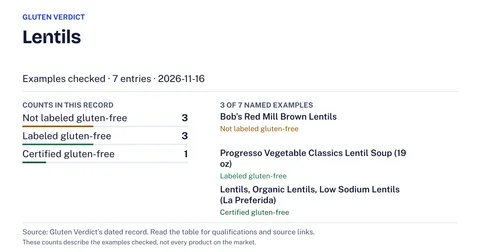 LentilsDepends on the productchecked Nov 16, 2026
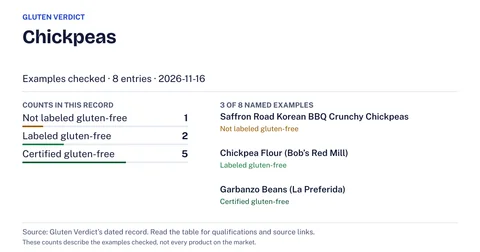 ChickpeasNaturally gluten-freechecked Nov 16, 2026
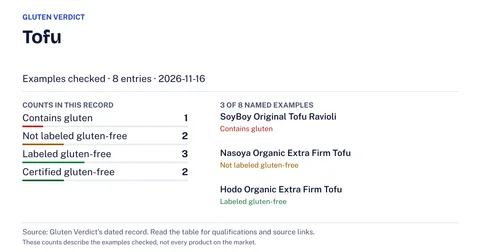 TofuDepends on the product1 of 8 products we checked contains gluten: SoyBoy Original Tofu Raviolichecked Nov 16, 2026
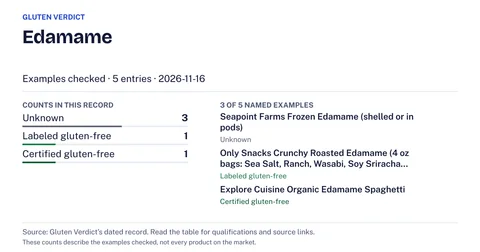 EdamameNaturally gluten-freechecked Nov 16, 2026
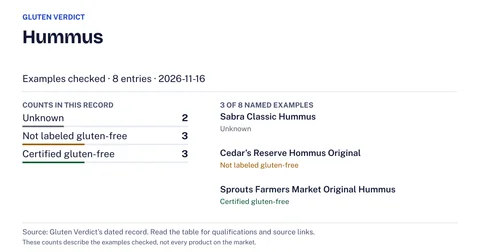 HummusDepends on the productchecked Nov 16, 2026
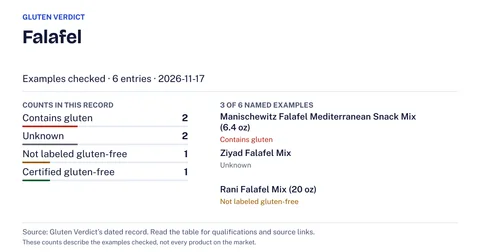 FalafelDepends on the product2 of 6 products we checked contain gluten: Manischewitz Falafel Mediterranean Snack Mix (6.4 oz) and Al’Fez Lebanese Falafel Kit (5.3 oz)checked Nov 17, 2026
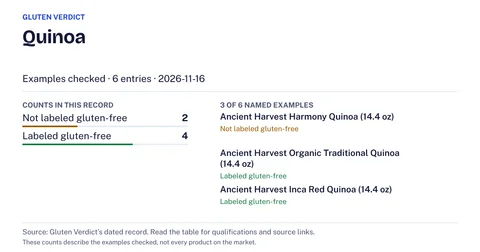 QuinoaNaturally gluten-freeBuy it labeled gluten-freechecked Nov 16, 2026
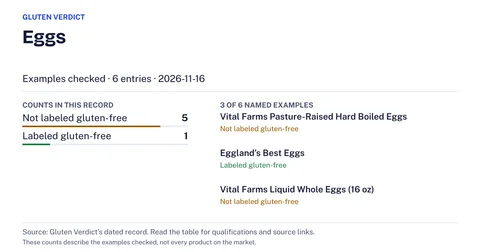 EggsNaturally gluten-freechecked Nov 16, 2026
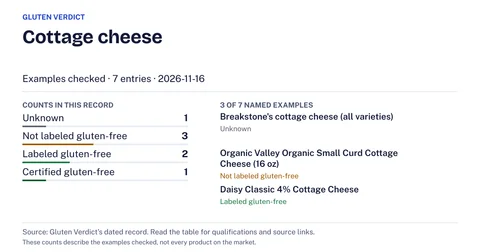 Cottage cheeseNaturally gluten-freechecked Nov 16, 2026
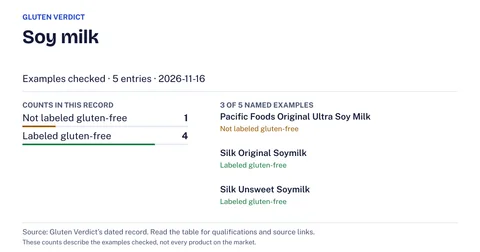 Soy milkNaturally gluten-freechecked Nov 16, 2026
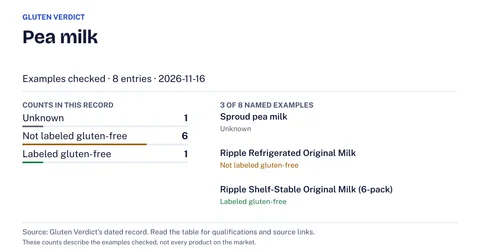 Pea milkNaturally gluten-freechecked Nov 16, 2026
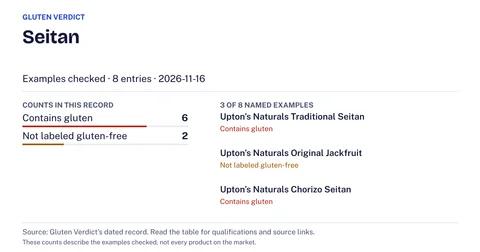 SeitanContains glutenchecked Nov 16, 2026
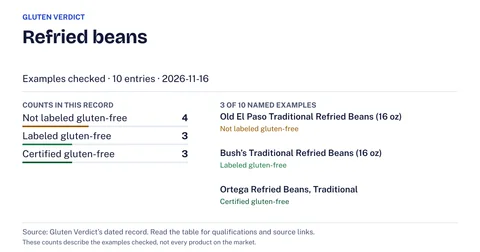 Refried beansDepends on the productchecked Nov 16, 2026
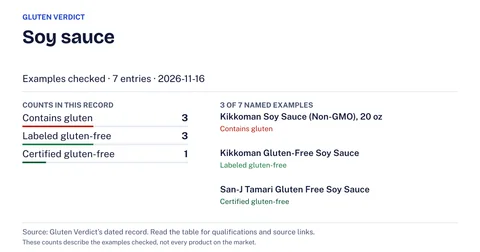 Soy sauceDepends on the product3 of 7 products we checked contain gluten: Kikkoman Soy Sauce (Non-GMO), 20 oz; San-J Organic Shoyu Soy Sauce; and Lee Kum Kee Premium Soy Sauce (No Preservatives Added)checked Nov 16, 2026
Questions people ask
Is tofu gluten-free?
Plain tofu is, according to the Gluten Intolerance Group, but added ingredients in flavored tofu may not be11. The plain tofus we read list soybeans, water and a coagulant7, 34. Sauces and batters are what to read on the rest37, 23.
Is tempeh gluten-free?
It depends on the product. GIG says some types may contain gluten or other grains5; one maker’s three-grain tempeh lists organic barley6, and another’s soy tempeh lists soybeans, water, vinegar and culture42.
Are lentils gluten-free?
Lentils are legumes22, a group the Celiac Disease Foundation lists as naturally gluten-free16, but GIG says they carry a higher cross-contact risk than other legumes or beans and should be labeled gluten-free or GFCO-certified3.
Do I need to rinse beans that say gluten-free on the bag?
The National Celiac Association’s dietitian note says beans and legumes should be picked through and rinsed regardless of a gluten-free statement4.
More in Nutrition and combining diets
 Gluten-free and vegan: where wheat hides in plant-based foodSpot wheat gluten in vegan meat substitutes and sauces, ask the right questions at a restaurant, and see where the charities send you for nutrition.
 Gluten-free high-protein foods: where gluten hides in bars, powders, jerky and marinadesCheck each protein product type for its gluten trap: seitan, jerky, bars, powders, sausage and broth, with what makers say on their own pages.
 Iron, B12 and B6 on a gluten-free diet: where they come from and how to check a labelWhich foods supply iron, B12 and B6, what US enrichment standards name, and how to check whether a gluten-free flour, bread or cereal is fortified.
 Gluten-free with type 2 diabetes or high cholesterol: where the plans overlapWhere a gluten-free plan and a diabetes or cholesterol plan agree, where packaged gluten-free foods cut across them, and what to ask a dietitian.
 Fiber on a gluten-free diet: where it drops and what fills the gapCheck the fiber on gluten-free breads and pastas against the US Daily Value, and see which gluten-free whole foods charities list to add more.
 Calcium and magnesium on a gluten-free, dairy-free dietWhere calcium and magnesium come from without dairy or gluten, and how to read a plant milk’s panel and ingredient list for added calcium.
Related guides
 Reading a US label for gluten and another food allergyHow to read a US food label for gluten and a second allergen: what the Contains line, gluten-free claim and may-contain lines each cover.
 Plant-based meat, tofu and seitan: finding the wheat glutenSeitan and some meat substitutes are made from wheat gluten. How to spot it on a plant-based label, with ingredient lists from maker pages.
 A gluten-free grocery list by aisle for US supermarketsAn aisle-by-aisle gluten-free grocery list for US stores: what needs no label, what needs a check, and what stays off the list.
 A starter gluten-free pantry: 30 shelf items and the label check for eachThirty shelf items for a first gluten-free pantry, tagged by the label check each needs, plus how to keep jars, toaster and colander apart at home.
Sources
- [1, 16, 25, 33] Celiac Disease Foundation, Gluten-Free Foods, checked Nov 17, 2026.
Read on 2026-11-17: the list headed “The following grains, legumes, seeds, and other starchy foods are naturally gluten-free” names amaranth, arrowroot, beans, buckwheat groats (also known as kasha), cassava, chia, corn, flax, gluten-free oats, millet, nut flours, potato, quinoa, rice, sorghum, soy, tapioca, teff and yucca.
Read on 2026-11-17: the list under “naturally gluten-free food groups” names fruits; vegetables; meat and poultry; fish and seafood; dairy; and beans, legumes, and nuts.
- [2, 9, 24, 50] Gluten Intolerance Group, Plant-Based Gluten-Free (Vegetarian), checked Nov 17, 2026.
- [3] Gluten Intolerance Group, If my lentils are organic, do they still need to be labeled gluten-free? (FAQ), checked Nov 17, 2026.
- [4, 49] National Celiac Association, Dietary advice for a vegetarian with celiac disease, checked Nov 17, 2026.
- [5, 10, 11, 13, 47] Gluten Intolerance Group, Navigating a Plant-Based and Gluten-Free Diet, checked Nov 17, 2026.
- [6] Lightlife, Three Grain Tempeh, checked Nov 17, 2026.
- [7] Nasoya, Organic Extra Firm Tofu, checked Nov 17, 2026.
- [8, 30, 31] Goya Foods, Pinto Beans, checked Nov 17, 2026.
Read on 2026-11-17: the feature list on the Pinto Beans page names no fat; no saturated fat; no cholesterol; good source of fiber; good source of iron and potassium; kosher; gluten free.
- [12, 40] Lightlife, Original Tempeh, checked Nov 17, 2026.
Read on 2026-11-17: the Original Tempeh page gives the ingredients and “CONTAINS: SOY.”; no gluten-free statement on the page.
- [14, 20, 21, 37, 41] US Food and Drug Administration, Questions and Answers on the Gluten-Free Food Labeling Final Rule, checked Nov 17, 2026.
- [15, 17, 27] US Food and Drug Administration, Gluten and Food Labeling, checked Nov 17, 2026.
- [18, 19, 46, 48] Coeliac UK, Following a gluten free vegetarian or vegan diet, checked Nov 17, 2026.
Read on 2026-11-17: the list headed “Non meat sources of protein which are also gluten free include” names vegetable protein made from soya, tofu made from soya milk, pulses (peas, beans, lentils), eggs, nuts, nut butters and seeds, and mycoprotein.
- [22] Gluten Intolerance Group, 5 Reasons Beans Are a Perfect Gluten-Free Staple, checked Nov 17, 2026.
- [23] Gluten Intolerance Group, Exploring Thai Cuisine on a Gluten-Free Diet, checked Nov 17, 2026.
- [26] Bob's Red Mill, Brown Lentils, checked Nov 17, 2026.
Read on 2026-11-17: the Brown Lentils page’s Ingredients tab reads “Lentils.”; no gluten-free statement about the lentils on the page.
- [28, 29] Gluten Intolerance Group, Not Labeled Gluten-Free? Washing Beans and Grains, checked Nov 17, 2026.
Read on 2026-11-17: no mention of lentils on the page; it discusses beans, larger grains, and millet, teff and amaranth.
- [32] National Institute of Diabetes and Digestive and Kidney Diseases (NIDDK), Eating, Diet, & Nutrition for Celiac Disease, checked Nov 17, 2026.
- [34, 36] Hodo, Organic Extra Firm Tofu, checked Nov 17, 2026.
Read on 2026-11-17: the feature list on the Organic Extra Firm Tofu page names 14G Protein; Calcium Rich; USDA Organic; Plant-Based; Ready-To-Cook; Gluten-Free.
- [35] SoyBoy, Organic Extra Firm Tofu, checked Nov 17, 2026.
Read on 2026-11-17: the feature list on the Organic Extra Firm Tofu page names certified USDA organic; vegan; kosher; gluten free; low sodium; very low carbs.
- [38] Nasoya, Pineapple Teriyaki Glazed Tofu, checked Nov 17, 2026.
- [39] SoyBoy, Original Tofu Ravioli, checked Nov 17, 2026.
- [42, 43] SoyBoy, Organic Soy Tempeh, checked Nov 17, 2026.
Read on 2026-11-17: the feature list on the Organic Soy Tempeh page names vegan; kosher; gluten free; low sodium; low carb; no cholesterol; non-GMO.
- [44, 45] SoyBoy, Organic 5 Grain Tempeh, checked Nov 17, 2026.
Read on 2026-11-17: the feature list on the Organic 5 Grain Tempeh page names fully cooked; ready to eat; vegan; kosher; gluten free; low sodium.