A gluten-free kid at a birthday party: the host text, the cake knife and the snack table
Short answer
Plan the party in four steps, and send your child’s own food either way:
- Tell the host ahead of time that your child has celiac disease, and ask what will be served1, 2.
- Pack a meal or snack and a small treat that looks like what the other children will have3, 4.
- Watch the shared serving tools, chip bowls, dips and buffet tables, which GIG lists as ways gluten reaches gluten-free food5.
- Wash hands with soap and water before eating: in one study of classroom activities it was consistently the most effective of the three methods tested, though other methods did as well in some scenarios6, 7.
Part of Kids, school, college and family, 21 guides

Key points
- NIDDK’s advice for a social gathering is to let the host know about the celiac disease and find out whether gluten-free food will be available1.
- GIG suggests bringing food similar to what everyone else is having, and freezing homemade baked goods one by one so a treat is ready to pack4, 14.
- The one knife study we found tested sandwich spreads, not cake: mayonnaise and peanut butter were above the 20 ppm limit, and most results across all its tests showed no significant cross-contact20, 21.
- In a study of classroom activities, a baking project and cooked pasta moved gluten far above 20 ppm onto gluten-free bread rubbed on hands and tables, so a baking or craft party needs its own plan8, 6.
- At a sleepover, check the cereal: GIG notes that some popular corn flake and crisp rice brands are made with malt from barley36.
What to tell the host: three versions of the text
NIDDK’s advice for a social gathering is to let the host know about the celiac disease and find out whether gluten-free food will be available1. GIG adds that with a host you do not know very well, you may wish to bring your own gluten-free food9, and that with a receptive host, especially one you expect to see again, you can explain the importance of avoiding cross-contact10. The three texts below are our wording of those steps. Change the names and the foods.
| Who you are writing to | Text you can send |
|---|---|
| A close friend’s parent | “Hi Sam! Mia is so excited for Saturday. Heads-up: she has celiac disease, so no wheat, barley or rye. I’ll send her own pizza and a cupcake so you don’t have to plan around her. If you’re ordering or baking anything, tell me what it is and I’ll read the label. Thank you for having her!” |
| A parent you barely know | “Hi, this is Dan, Leo’s dad. Thank you for inviting Leo! He has celiac disease and eats only gluten-free food, so he’ll bring his own food and a treat and you don’t need to change anything. If you’d like to know why, I’m glad to explain.” |
| A class or group message | “Hi everyone. Ava has celiac disease and eats only gluten-free food, so she’ll have her own food at the party. If you’re bringing the cake, a photo of the ingredient list helps me pick a matching treat for her. Thanks!” |
If the host offers to cook or buy something for your child, GIG’s questions are about the ingredients, whether separate utensils were used and how the food was prepared11. NIDDK’s advice for a food you cannot confirm is not to eat it, and to contact the maker if possible12. Our guide to telling hosts and relatives about celiac disease has more wording for adults who push back.
What to send: the meal, the matching treat and the frozen cupcake
GIG’s party tips, written for teens and their parents, suggest that a parent help pack a meal or snack the child will enjoy and add a small treat to keep it celebratory3. GIG’s fall guide adds that when you know what will be served, it can help to bring something similar to what everyone else is having4.
For cake, GIG suggests making a large batch of cupcakes, muffins or similar at home and freezing them individually14. A frozen cupcake in the freezer bag is ready for whichever party comes next.
Pack the treat in its own container with your child’s name on it, and tell the host where it is so it does not end up on the cake table. If the host will serve something your child cannot have, send the closest match: a cupcake for cake, a cup of ice cream for ice cream.
If you are unsure whether a party food is a match at all, ask the host to send a photo of the package, then check it against our pizza verdict, cake verdict or the page for the food in question. They list the products we checked and the pages we read, with the date.
Where gluten travels at a party
NIDDK describes cross-contact as gluten-containing food coming into contact with gluten-free food15. The points below are shared things at a party: bowls, spoons, knives and a grill.
| Where | What the sources say | What a parent can do |
|---|---|---|
| Chip bowls and dips | Shared chip bowls, dips, serving utensils and buffet tables can all introduce gluten into otherwise gluten-free foods5. | Pack your child’s chips and dip in their own container. |
| Serving spoons and tongs | GIG calls the same serving utensil used in both types of food one of the most common ways gluten crumbs get into gluten-free food16. | Ask for a separate utensil for your child’s portion, or bring the food already plated. |
| Condiment jars and spreads | GIG’s example is a knife used to spread mayonnaise on wheat bread and then dipped back into the jar16. | Skip the shared sandwich or topping bar, or send your child’s own toppings. |
| Toaster | GIG says crumbs from a shared toaster can end up on gluten-free bread17. | Pack something that does not need the host’s toaster. |
| Grill | GIG says gluten cannot be burned off by high temperature but can be removed by thorough cleaning with soap, water and a metal grill scrubber18, and suggests bringing your own foil to someone else’s barbecue19. | Send foil for your child’s food. |
Our cross-contamination guide covers the same ideas for your own kitchen.
The cake knife and shared spreads: what the research tested
A PubMed search on 2026-11-17 for gluten cross-contact with a cake knife returned no study. The closest study we fetched is Parsons and colleagues’ 2021 paper in Clinical Nutrition, which looked at a fryer, a toaster and sandwich spreads applied with a knife used on gluten-containing bread: mayonnaise, jam and peanut butter20.
The authors report that these practices resulted in small amounts of gluten cross-contact, although most of the results (93.6%, the study’s figure across all three practices) showed no significant cross-contact. The mayonnaise and peanut butter samples were above the limit that FDA designates for gluten-free, 20 ppm21.
What that means for a cake is our reading, not the study’s finding: the study found a problem with spreads on a knife, frosting was not among the practices the abstract lists, and a knife that has cut a wheat cake is the same kind of shared tool as GIG’s mayonnaise-knife example16. The simplest way around the question is that your child eats the cupcake or slice you brought, not a slice cut at the party.
If the host bakes a gluten-free cake, GIG’s advice for a home kitchen is that thorough cleaning of cooking equipment and utensils with soap and water is sufficient for most items22. Whether this host’s knife and board were cleaned that way is something only the host can tell you.
Hands: soap and water, wet wipes and sanitizer
GIG points out that at events, a lot of people are eating gluten-containing food and not washing their hands23. The one hand-cleaning study we fetched is a 2020 paper in the Journal of Pediatric Gastroenterology and Nutrition. It ran in classroom settings with 30 participants aged 2 to 18: after activities, slices of gluten-free bread were rubbed on hands and tables, and participants were assigned soap and water, water alone or a wet wipe6.
Its result: soap and water was consistently the most effective method for removing gluten, although other methods proved as effective in certain scenarios7. Hand sanitizer was not one of the three methods6. GIG writes that commercial wet wipes, wet cloths with detergent and soap and water do the trick for removing food proteins, but that hand sanitizer and dry towels are often found to leave residue behind24. It adds that wet wipes are great when you cannot get to a sink right away, but washing hands thoroughly is always best25.
| Activity in the study | Result |
|---|---|
| Play-Doh | Few transfers above 20 ppm8 |
| Dry pasta in a sensory table | Few transfers above 20 ppm8 |
| Paper mâché | Gluten transfer far greater than 20 ppm8 |
| Cooked pasta in a sensory table | Gluten transfer far greater than 20 ppm8 |
| Baking project | Gluten transfer far greater than 20 ppm8 |
These were school activities, not parties, and the test was bread rubbed on skin and tables. A party with cookie decorating, baking or a craft table is the nearest match we can see, so wash hands after the activity and before eating, and send your child’s own supplies for any activity that involves flour or cooked pasta.
Pizza, cake, nuggets and candy: what to check before your child eats them
A package that says “gluten-free” is making a voluntary claim26, and a food FDA regulates that carries it must have any unavoidable gluten under 20 ppm27. A line such as “made with no gluten-containing ingredients” is different: FDA says that without a “gluten-free” claim on the label, consumers should not assume the food meets the requirements for the claim28. An advisory line such as “made in a facility that also processes wheat” can appear on a label that also carries a gluten-free claim, provided it is truthful and not misleading29.
GFCO’s mark counts only when it is on the package: its product finder says a product is certified if it is on the list and carries a certification mark30, and a listed product whose packaging has no mark is not certified31.
| Party food | What to look at on the package | Our verdict page |
|---|---|---|
| Pizza | The crust ingredients, and a gluten-free claim on that exact pizza. | Is pizza gluten-free? |
| Cake and cupcakes | A gluten-free claim on the mix or cake package, and the frosting’s own label. | Is cake gluten-free? |
| Chicken nuggets | The breading in the ingredient list. | Are chicken nuggets gluten-free? |
| Mac and cheese | The pasta, and a gluten-free claim on that box or cup. | Is mac and cheese gluten-free? |
| Chips | GIG says some chip brands use wheat starch or whole wheat in reconstituted chips, and that flavorings can come from wheat or barley32. | Are chips gluten-free?; Doritos |
| Ice cream and ice pops | The ingredient list of that flavor. GIG notes that some frozen treats on a stick could contain gluten, for example fudge bars made with malted barley extract33. | Is ice cream gluten-free? |
| Cookies | A gluten-free claim on that package. | Are cookies gluten-free? |
| Gummy candy and licorice | Each wrapper. GIG says red and black licorice typically contain wheat flour as a main ingredient34. | Do gummy bears have gluten?; seasonal candy guide |
| Hot dogs | The brand’s label, including added starch and flavorings. | Are hot dogs gluten-free? |
Each verdict page lists the products we checked, the pages we read and the date. Recipes change, so the package in your hand has the final word.
Sleepovers: dinner, breakfast and the host’s pantry
A sleepover adds a dinner, a breakfast and a kitchen your child has not used. NIDDK’s advice for a household with celiac disease is to store and prepare gluten-free foods separately from other family members’ foods that contain gluten35. A host’s kitchen may not be arranged that way, and GIG suggests bringing your own gluten-free food when you do not know the host very well9.
- Dinner: send it, or agree before the night on one packaged food whose label you have read.
- Breakfast: pack it. GIG lists corn flakes and crisp rice cereal among foods where some popular brands are made with malt from barley36, so a box on the host’s shelf needs its label read before your child eats it.
- Toast and waffles: crumbs from a shared toaster can end up on gluten-free bread17, so send something that does not need the host’s toaster.
- Night snacks: the same bowl and chip advice applies5. Send your child’s own bag.
- Phone: leave your number and ask the host to call before offering any food you have not talked about.
What your child can say when offered something
GIG’s party tips suggest talking before the party about what to expect, what foods might be there and how to handle offers from others37, and eating a meal or snack beforehand to avoid temptations38. The tips are written for teens and their parents, so with a younger child the rehearsal is yours to lead.
- “No thanks, I have my own.” (our wording)
- “I can’t eat gluten, but it’s all good!” GIG’s example of a simple, upbeat answer40.
- “No thanks, I have to be careful about gluten.” GIG’s example for when your child is unsure39.
- “Can you check the label for me?” (our wording, for a younger child who hands the package to a grown-up)
A checklist to copy
- Reply to the invitation and let the host know about the celiac disease1.
- Ask what will be served, including the cake2.
- Agree who sends what: your child’s meal and a matching treat3.
- Pack in labeled containers. Add foil if there is a grill19 and wet wipes for when no sink is close25.
- Have your child eat something before leaving38.
- Rehearse the lines for offers37.
- At the party: wash hands with soap and water before eating7.
- At cake time: your child eats the treat you brought. If the host serves a gluten-free cake, read the package for a gluten-free claim26.
- Sleepover: pack breakfast, bread and cereal36, 17.
- Afterwards: GIG suggests celebrating the confidence it took41.
Verdicts in this guide
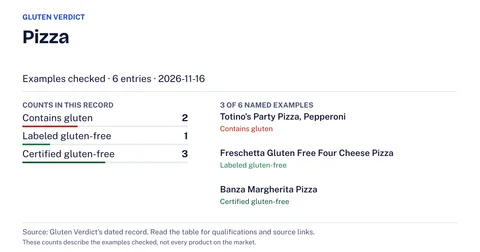 PizzaContains glutenchecked Nov 16, 2026
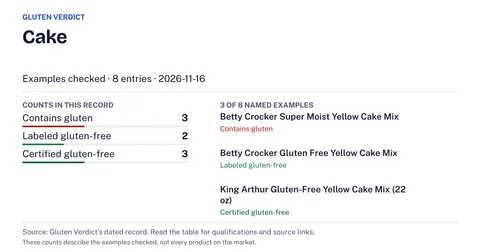 CakeContains glutenchecked Nov 16, 2026
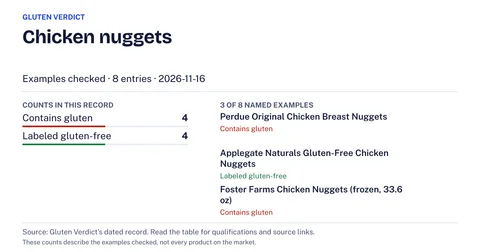 Chicken nuggetsDepends on the product4 of 8 products we checked contain glutenchecked Nov 16, 2026
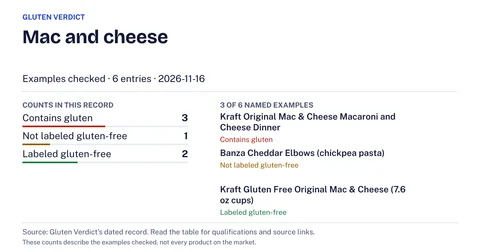 Mac and cheeseContains glutenchecked Nov 16, 2026
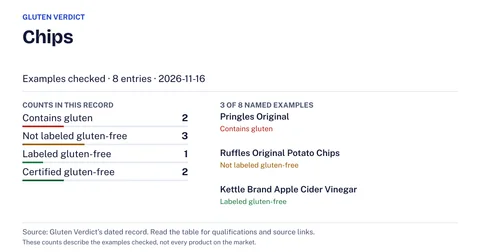 ChipsDepends on the product2 of 8 products we checked contain gluten: Pringles Original and Pringles Salt & Vinegarchecked Nov 16, 2026
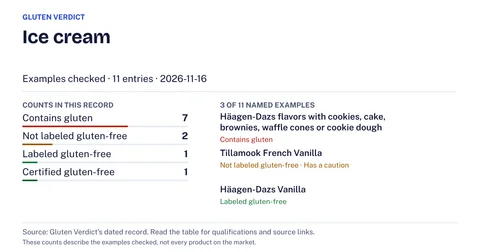 Ice creamDepends on the product7 of 11 products we checked contain glutenchecked Nov 16, 2026
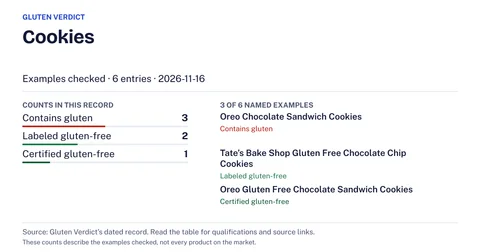 CookiesContains glutenchecked Nov 16, 2026
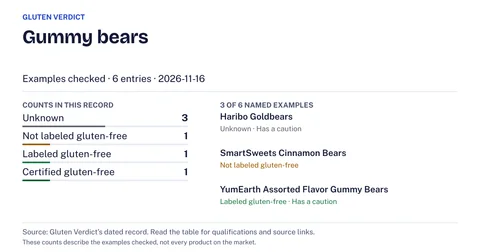 Gummy bearsDepends on the productchecked Nov 16, 2026
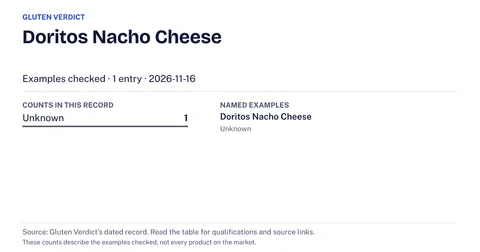 Doritos Nacho CheeseUnknownFrito-Lay (PepsiCo) · checked Nov 16, 2026
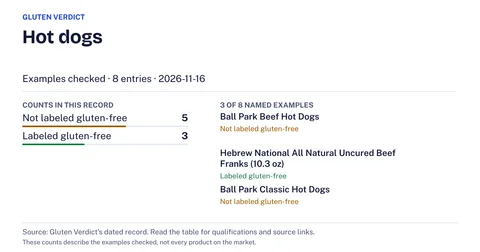 Hot dogsDepends on the productchecked Nov 16, 2026
Questions people ask
Should I ask the host to make everything gluten-free?
GIG’s tips for parents say to reach out to the host about food options if it feels right, or to offer to bring a gluten-free dish to share13. NIDDK’s advice is to let the host know and find out whether gluten-free food will be available1. GIG suggests bringing your own food when you do not know the host very well9.
Does hand sanitizer remove gluten?
The classroom study we fetched did not test sanitizer; it compared soap and water, water alone and a wet wipe6. GIG writes that hand sanitizer and dry towels are often found to leave residue behind24.
The host bought a gluten-free cake. Is that enough?
Ask to see the package. “Gluten-free” on a label is a voluntary claim26, and a food FDA regulates that carries it must have any unavoidable gluten under 20 ppm27. The package is one question; the knife and serving table are another, covered in the section on the cake knife.
Is the candy in the goodie bag okay?
Read each wrapper. GIG notes that red and black licorice typically contain wheat flour as a main ingredient34, and FDA’s rule sets requirements for the voluntary use of a gluten-free claim on a package26. Our seasonal candy guide shows how we read candy labels.
More in Kids, school, college and family
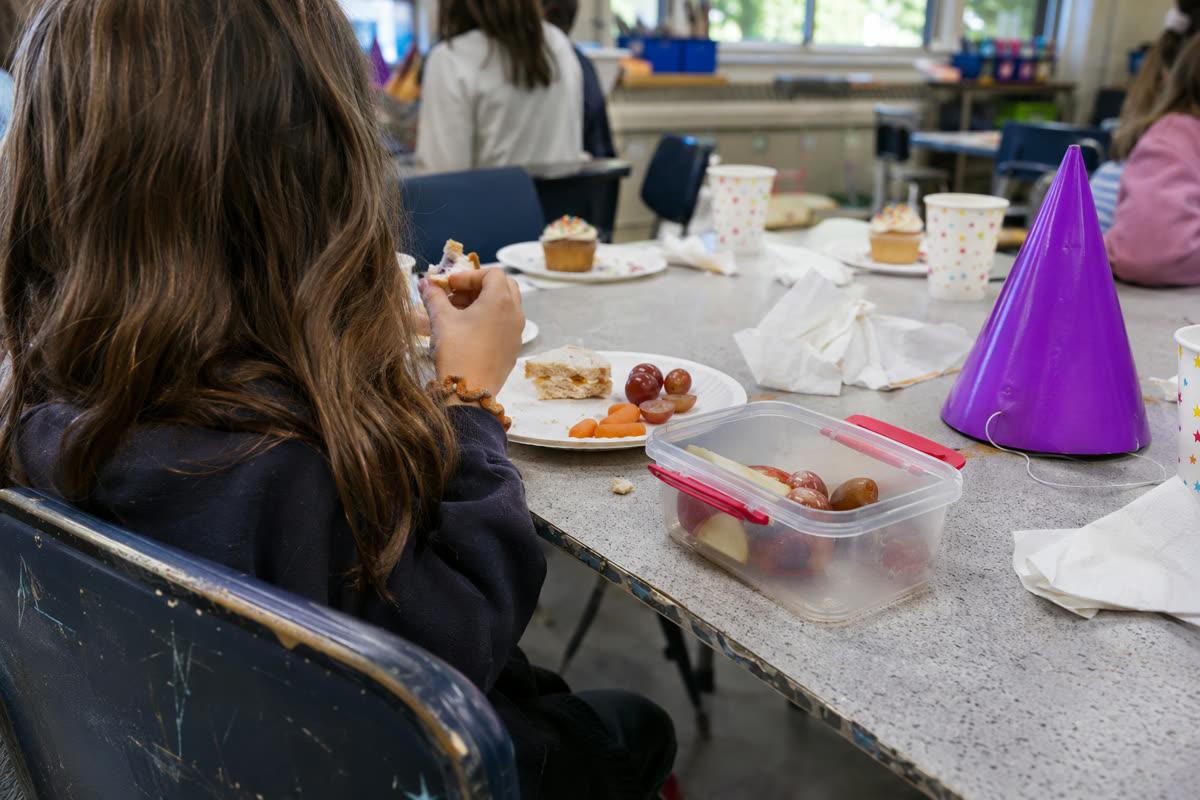 Helping a gluten-free child feel included at the table, at parties, in class and at restaurantsOne plan for each place a gluten-free child gets singled out: the table, parties, class and restaurants, with a sentence the child can say.
 A care sheet for the babysitter or grandparent of a child with celiac diseaseA one-page care sheet for a babysitter or grandparent: the checked foods, the kitchen cross-contact points, what to do after an exposure, and whom to call.
 A gluten-free child who refuses food: what to track and when to ask the doctorHow to tell ordinary picky eating from a pattern to raise with your child’s doctor or dietitian, what ARFID is, and a one-week log to bring.
 Sleepaway camp, Scouts and school trips for a gluten-free child: what to ask and what to sendWhat to ask a camp, Scout unit or school in writing, what goes on the health form, what food to send, and where gluten-free camps run.
 Gluten-free in a college dorm: the fridge, microwave, toaster and roommate rulesHow to set up a shared dorm room or kitchen for gluten-free living: fridge, microwave, toaster, sponges, a roommate script and how to ask for housing help.
 Your child has celiac disease: a first-week plan for the kitchen, labels, school and talking to your childThe first week after a child’s celiac diagnosis, in order: the diet plan, first labels, kitchen, two school routes, talking to your child and follow-up.
Related guides
 Holiday candy and gluten: how to check each piece, Halloween to Valentine’s DayA holiday shape or fun-size bag can differ from the full-size candy. Check seasonal candy against its wrapper, maker page and certifier, with dated cases.
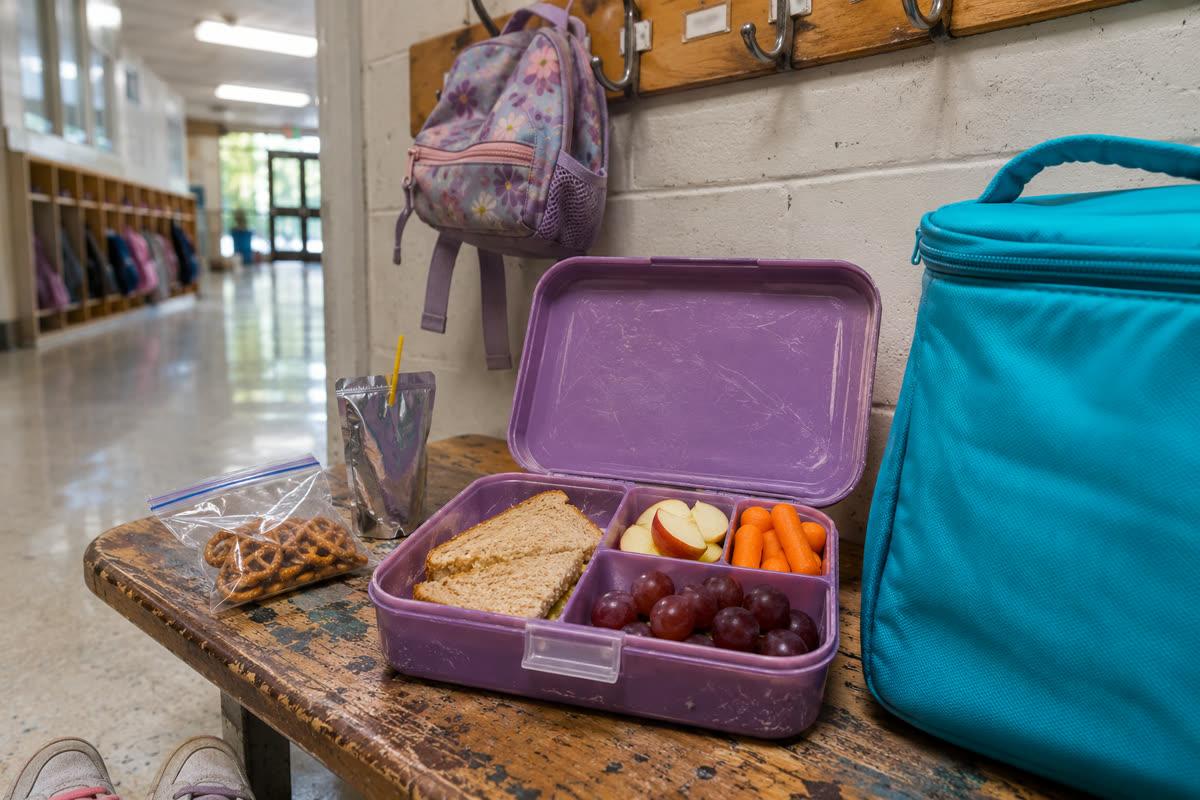 Gluten-free school lunches and classroom snacks: a checklist for parentsHow to prove each lunchbox item, read a snack label for oats, malt and wheat, brief the teacher, and when the school cafeteria is the better route.
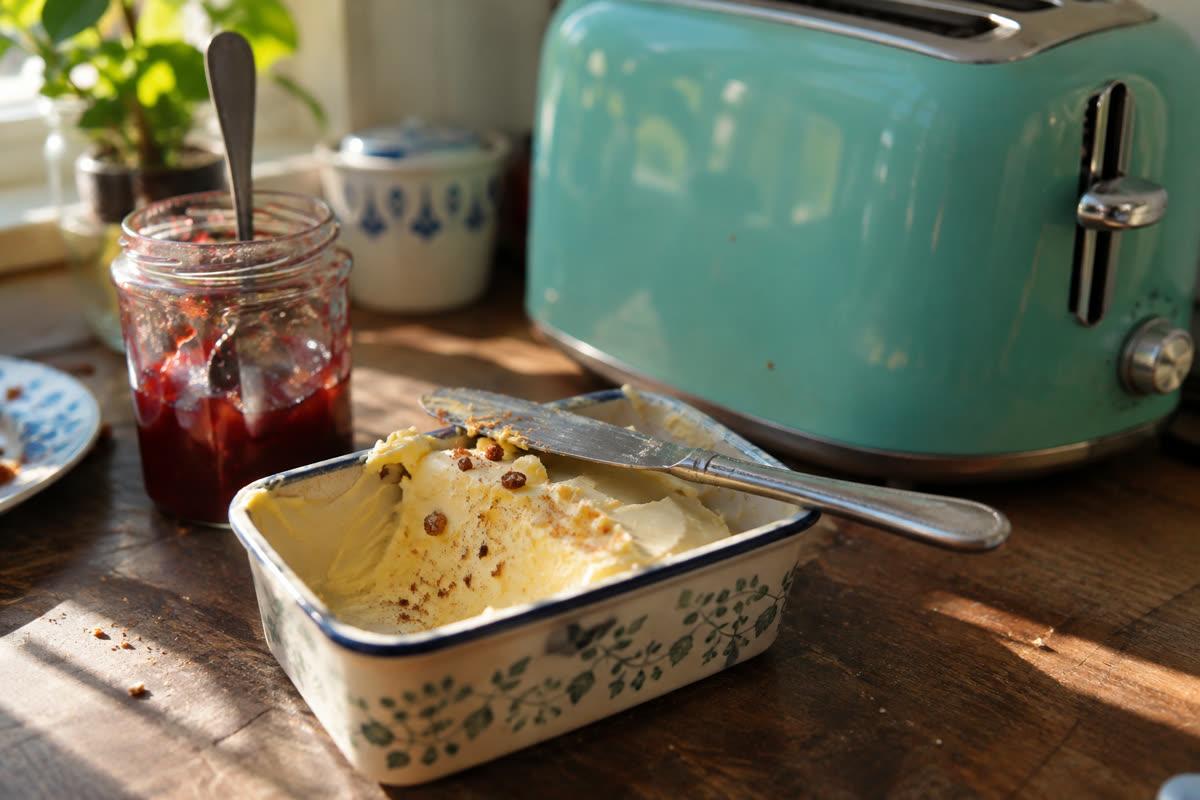 Gluten cross-contact at home: where it happens and what to do about itHow gluten reaches gluten-free food at home, whether to separate, wash or ask for each route, and which rules have lab data behind them.
 If you think you were glutened: what the celiac organizations say to doWhat the celiac charities, FDA and NIDDK say to do after accidental gluten exposure, when to contact a clinician, and how to trace the cause.
Sources
- [1, 12, 15, 35] US National Institute of Diabetes and Digestive and Kidney Diseases (NIDDK), Eating, Diet, & Nutrition for Celiac Disease, checked Nov 17, 2026.
- [2, 5, 11] Gluten Intolerance Group, Going Out Gluten-Free: Dates, Parties and Everything in Between (November 2026), checked Nov 17, 2026.
- [3, 13, 37, 38, 39, 40, 41] Gluten Intolerance Group, Supporting Gluten-Free Kids at Parties: What Teens and Parents Need to Know (October 2025), checked Nov 17, 2026.
- [4, 14, 23, 24, 25] Gluten Intolerance Group, Navigating School Parties and Community Events this Fall (October 2026), checked Nov 17, 2026.
- [6, 7, 8] PubMed (Journal of Pediatric Gastroenterology and Nutrition, 2020), A Quantitative Assessment of Gluten Cross-contact in the School Environment for Children With Celiac Disease (Weisbrod et al.), checked Nov 17, 2026.
- [9, 10, 16, 22] Gluten Intolerance Group, 25 Ways Cross-Contact Could Happen and How to Avoid It (June 2022), checked Nov 17, 2026.
- [17, 18, 19] Gluten Intolerance Group, Appliances: Risks of Cross-Contact (updated September 2021), checked Nov 17, 2026.
- [20, 21] PubMed (Clinical Nutrition, 2021), Gluten cross-contact from common food practices and preparations (Parsons et al.), checked Nov 17, 2026.
- [26, 27, 28, 29] US Food and Drug Administration, Questions and Answers on the Gluten-Free Food Labeling Final Rule, checked Nov 17, 2026.
- [30, 31] GFCO (Gluten-Free Certification Organization), GFCO Product Finder, checked Nov 17, 2026.
- [32, 33, 34, 36] Gluten Intolerance Group, 38 Foods Where Gluten May Be “Hidden” (updated August 2021), checked Nov 17, 2026.