Gluten-free fuel for training and race day: gels, bars, protein powder and aid stations
Short answer
Check the maker’s own gluten statement for the exact product, then a gluten-free certifier’s list. A sport-certification mark is a different claim: the NSF and Informed Sport pages we read describe testing for banned substances and do not mention gluten1, 2.
- The maker’s statement: “gluten-free” on a food FDA regulates means less than 20 parts per million of gluten3, while some makers say only that a product has not been tested4.
- The certifier’s list: GFCO counts a product as certified when it is on its Product Finder list and carries its mark5, 19.
- The ingredient list and any may-contain line, which a maker may print beside a gluten-free claim6.
- The race organizer: ask in writing which products are on course; some organizers publish them in a race guide7, 8.
Part of Nutrition and combining diets, 24 guides

Key points
- A gluten-free claim is the maker’s own and voluntary17. FDA does not require a maker to test for gluten to make it, but the food has to meet the rule9.
- A brand’s statement is not a product’s: GU says many of its products are gluten-free and still suggests checking the packaging10, and Maurten says its gels are made with ingredients free from gluten but are not certified11.
- NSF Certified for Sport says its mark verifies that a product has none of 290 banned substances and that the contents match the label12, 13; the page does not mention gluten1.
- FDA’s gluten-free rule covers dietary supplements as well as other packaged foods it regulates14, and NIDDK lists vitamin and nutrient supplements among products that can contain gluten15.
- A 2011 sports-medicine review notes that teammates often share snacks, so cross-contamination needs to be made clear16.
Four claims that sit near each other on a fuel package
A gel packet or protein tub can carry four statements that sound alike and answer different questions.
| Statement | Who stands behind it | What it tells you about gluten |
|---|---|---|
| “gluten-free”, “free of gluten”, “without gluten” or “no gluten” | The maker. The claim is voluntary17. | On a food FDA regulates, less than 20 parts per million of gluten3. FDA does not require the maker to test, but the maker is responsible for meeting the rule9. |
| A gluten-free certification mark, such as GFCO’s | A third-party certifier. FDA lets a maker print a certifier’s logo if its use is truthful and not misleading, and does not endorse any one program18. | GFCO counts a product as certified when it is on its Product Finder list and carries its mark; a listed product whose packaging lacks the mark is not certified5, 19. GFCO certifies products, not brands20, and requires certified brands to report gluten detected above 10 ppm21. |
| A sport-certification mark, such as NSF Certified for Sport or Informed Sport | The program that runs the testing12, 22. | NSF says its mark verifies that a product has none of 290 substances banned by major athletic organizations12 and that the contents match the label13. Informed Sport’s lab screens for substances prohibited in sport22. The NSF and Informed Sport pages we read do not mention gluten1, 2. |
| A may-contain or shared-facility line | The maker, voluntarily6. | FDA allows one beside a gluten-free claim when it is truthful and not misleading6; the food still has to comply with the gluten-free rule23. |
The two kinds of mark can sit side by side on one product. GU’s Energy Chews page lists GLUTEN FREE and BANNED SUBSTANCE TESTED as separate items under its Supplement Facts heading24. Read each one on its own terms.
Gels, chews and drink mixes: what four makers say
These are statements from each maker’s own pages, read on 2026-11-17. A brand-wide answer is not a product answer, so the table names the products each statement covers.
| Maker | What its own pages say |
|---|---|
| GU Energy Labs | FAQ: “Many of our products are gluten-free, such as our Energy Gels, Energy Chews, Drink Tabs and Drink Mixes”, with a suggestion to check the packaging or product descriptions10. The Energy Chews page says “Vegan, gluten-free, and kosher”25. The first page of GFCO’s results for GU Energy lists Energy Chews26; a listing does not make a product certified if its pack lacks the GFCO mark19. |
| Maurten | FAQ: Maurten Gels and Drink Mix are made using ingredients free from gluten, but the final product is “not certified as gluten-free”11, 27. Solid bars are made with certified gluten-free oats, yet “one ingredient in Solid may contain traces of gluten”, so the final product cannot be certified28. A GFCO search for Maurten returned “No products found”29. |
| Gatorade | FAQ: no ingredient in its ready-to-drink, mix, G2, Recover Protein, Prime Energy Chews or Endurance products comes from grains or flours linked to gluten sensitivity30, and the products “have NOT been tested to be gluten-free”4. Our verdict: Gatorade. |
| Powerade | FAQ: “Is POWERADE gluten free? Yes”31. Our verdict, Powerade, notes how far that answer reaches. |
A plain yes, a not-certified statement, a not-tested statement and a brand-wide many-of-our-products statement are four different answers, and only the first and last say outright that products are gluten-free.
The word “malt” in maltodextrin can raise a question on a fuel label. Gluten Intolerance Group says maltodextrin can be derived from corn, potato, rice or wheat and is gluten-free even when derived from wheat32. FDA describes malt extract and malt syrup as ingredients derived from barley that has not been processed to remove gluten33.
Bars and real food for long sessions
Two bars from one maker show why the product page matters. The LUNA LemonZest page names it “Gluten Free Snack Bars”34 and lists organic rolled oats35. The Chocolate Chip CLIF BAR’s ingredient list names barley malt extract in its soy rice crisps36, and FDA describes malt extract as derived from barley that has not been processed to remove gluten33. Our verdicts: LUNA LemonZest and CLIF BAR Chocolate Chip.
Both pages carry a may-contain line. LUNA’s reads “CONTAINS SOY. MAY CONTAIN PEANUTS, TREE NUTS, MILK, AND SESAME”37; the CLIF BAR’s adds wheat38. Another bar we checked is KIND Dark Chocolate Nuts & Sea Salt.
Oats are common in bars. FDA does not require oats to be certified to carry a gluten-free claim, but oats labeled gluten-free must contain less than 20 ppm of gluten39. NIDDK says that if you eat oats, make sure they are gluten-free40.
Food that is not a product raises a handling question instead. NIDDK lists fruits, rice and potatoes among foods that are naturally gluten-free without additives or some seasonings41. Our verdicts for bananas, rice cakes and pretzels show where the plain food and the packaged one differ.
Protein powder and recovery products
FDA’s gluten-free rule applies to FDA-regulated packaged foods, including dietary supplements14, so a gluten-free claim on a powder that FDA regulates has the same meaning as one on a bar: less than 20 ppm42.
NIDDK lists vitamin and nutrient supplements among products that can contain gluten15. The sentence does not name protein powder, so our protein powder verdict reads the makers’ pages brand by brand.
Gatorade’s FAQ groups its Recover Protein Shakes and Recover Protein Powders with products that “have NOT been tested to be gluten-free”30, 4, and says some flavors of its Recover Whey Protein Bar contain wheat43.
A 2011 review written for sports-medicine physicians says nutrition around workouts, including protein shakes and pre- and post-workout drinks, needs to be researched to ensure their gluten-free status44. A sport-certification mark on a tub does not answer that question1, 2.
Sports drinks, electrolyte powders and energy drinks
Coeliac UK, the UK charity, says most sports drinks do not contain gluten, but to check the ingredients, especially on cloudy and powdered drinks, because they could use wheat or barley45. For a US drink, start with the maker’s page.
Powerade’s FAQ answers yes31; Gatorade’s says the product lines it lists have not been tested to be gluten-free4, 30. Where the answer changes brand by brand, as with energy drinks, our verdict lists each one.
Aid stations: what organizers publish and what to ask
Races differ in what they publish, and these are two examples, not a survey. The 2026 IRONMAN Hamburg athlete guide names the products at its bike and run aid stations, including Maurten gels and bars, a PRECISION electrolyte drink and bananas7, and describes Personal Needs bags for your own provisions46. The Mallorca by UTMB race says each runner manages their own nutrition and hydration47, and its aid-station and nutrition page says its guide gives the products at each station with their main dietary characteristics and allergens, including information on gluten-free options8.
Questions to send the organizer in writing, well before race day:
- Which brands and flavors of drinks, gels and bars will be at each station, and is the athlete guide the final list?
- Is the sports drink poured from sealed packs or mixed from bulk powder, and in what equipment?
- Which foods will be on open tables, such as fruit, pretzels or cookies, and how are they handled?
- May athletes leave their own labeled food at a station or in a bag?
Then check each named product against its maker’s page, as in the table above. For the Hamburg guide that means Maurten, whose FAQ says its gels are made with ingredients free from gluten and are not certified as gluten-free11.
A 2011 review notes that teammates often share snacks, so cross-contamination needs to be made clear16. Open trays and shared bowls at a station raise a similar question, so decide before race day which station food you will skip.
The pre-race dinner
NIDDK’s advice for eating out is to search online for restaurants that offer a gluten-free menu48, then to let the server know you have celiac disease and ask about ingredients, how food is prepared, and whether a gluten-free menu is available49.
A 2013 article in ACSM’s Health & Fitness Journal goes further for athletes who travel. It suggests calling the restaurant, asking about the chef’s and kitchen staff’s knowledge of gluten-free cooking, and expecting a detailed answer about how the kitchen is prepared rather than general statements50. It says a caller who is not reassured with specifics should choose another restaurant51, and warns that a menu with many breaded or fried foods may mean cross contamination52. A 2011 sports-medicine review calls travel and team meals recurrent issues that need constant vigilance and attention53.
For a hotel, AboutKidsHealth’s page for teen athletes suggests asking whether the team can book accommodation with a kitchenette or mini-fridge and microwave54, and contacting the hotel in advance about breakfast55. For cross-contact at home, see our cross-contamination guide.
Packing, labeling and re-checking your own fuel
AboutKidsHealth suggests packing shelf-stable foods such as gluten-free bars, trail mix, instant gluten-free oatmeal packages, crackers and canned fish56, and labeling food so it does not get mixed up with teammates’ foods or come in contact with gluten-containing foods57. If a coach or crew member buys your gels or bars, the same page says to make sure they understand what “gluten-free” means and the importance of avoiding gluten cross-contact58.
Keep a note for each product in your kit: what the maker’s page said, and the date you read it. An ACSM journal article warns that formulations change, so “something that was GF one year may not be GF the next”59. Read the pages again before race week.
Questions about energy needs, nutrient levels or supplements belong with your care team. Coeliac New Zealand’s article on sporting performance recommends talking to a dietitian who can provide support with coeliac disease for training and competition60.
Verdicts in this guide
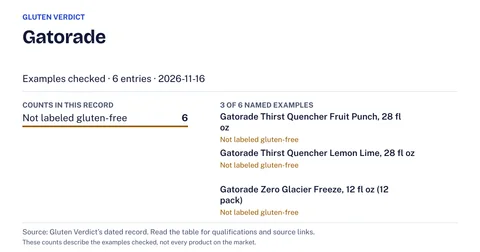 GatoradeNot labeled gluten-freePepsiCo · checked Nov 16, 2026
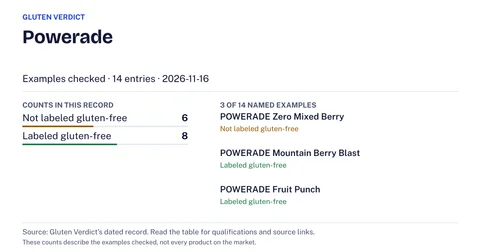 PoweradeLabeled gluten-freeThe Coca-Cola Company · checked Nov 16, 2026
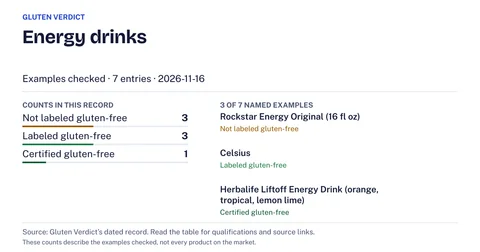 Energy drinksDepends on the productchecked Nov 16, 2026
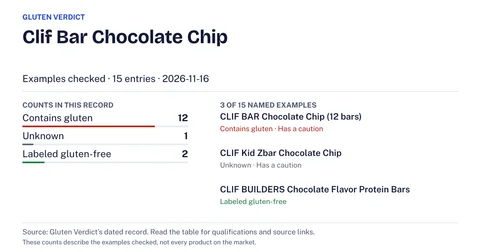 Clif Bar Chocolate ChipContains glutenClif Bar & Company · checked Nov 16, 2026
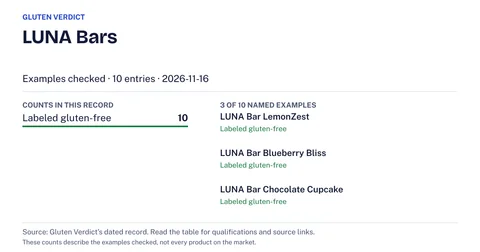 LUNA BarsLabeled gluten-freeClif Bar & Company · checked Nov 16, 2026
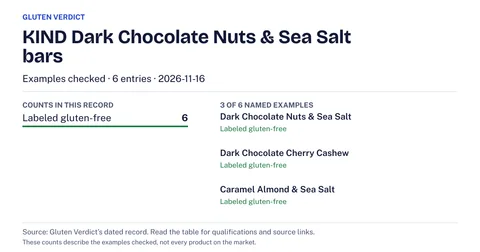 KIND Dark Chocolate Nuts & Sea Salt barsLabeled gluten-freeKIND (Mars) · checked Nov 16, 2026
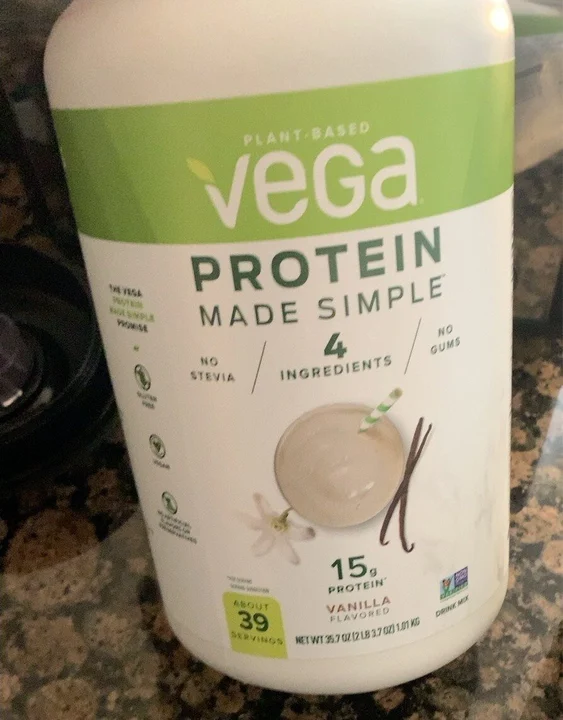 Protein powderDepends on the productchecked Nov 16, 2026
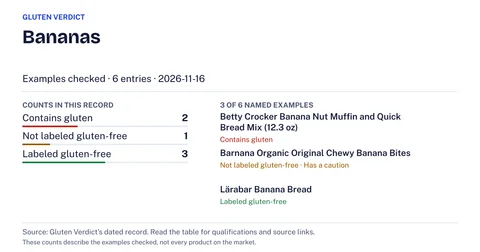 BananasNaturally gluten-free2 of 6 products we checked contain gluten: Betty Crocker Banana Nut Muffin and Quick Bread Mix (12.3 oz) and Bob’s Red Mill Chocolate Chip & Banana Pancake & Waffle Mixchecked Nov 16, 2026
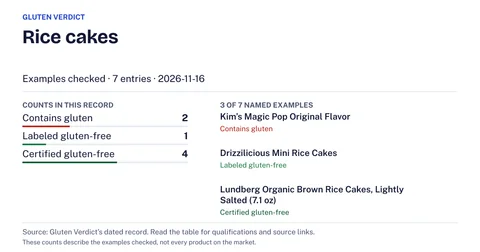 Rice cakesDepends on the product2 of 7 products we checked contain gluten: Kim’s Magic Pop Original Flavor and Kim’s Magic Pop Whole Wheat Flavorchecked Nov 16, 2026
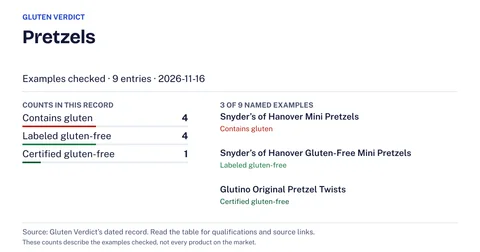 PretzelsDepends on the product4 of 9 products we checked contain glutenchecked Nov 16, 2026
Questions people ask
Does NSF Certified for Sport or Informed Sport mean a product is gluten-free?
Not on the pages we read. NSF describes its mark as verifying that a product has none of 290 banned substances and that the contents match the label12, 13, and neither NSF’s pages nor Informed Sport’s science page mentions gluten1, 2. A gluten-free claim comes from the maker17, and a gluten-free certification from a certifier whose mark is on the pack5.
Is Gatorade gluten-free?
Gatorade’s FAQ says the product lines it lists, such as ready-to-drink, G2, Recover Protein and Prime Energy Chews, are not formulated with gluten-containing ingredients but have not been tested to be gluten-free4, 30. Our verdict for Gatorade shows the details and the date we read it.
Does a gluten-free gel have to be tested?
FDA’s rule does not require a maker to test, but the maker is responsible for making sure a food labeled gluten-free complies9.
More in Nutrition and combining diets
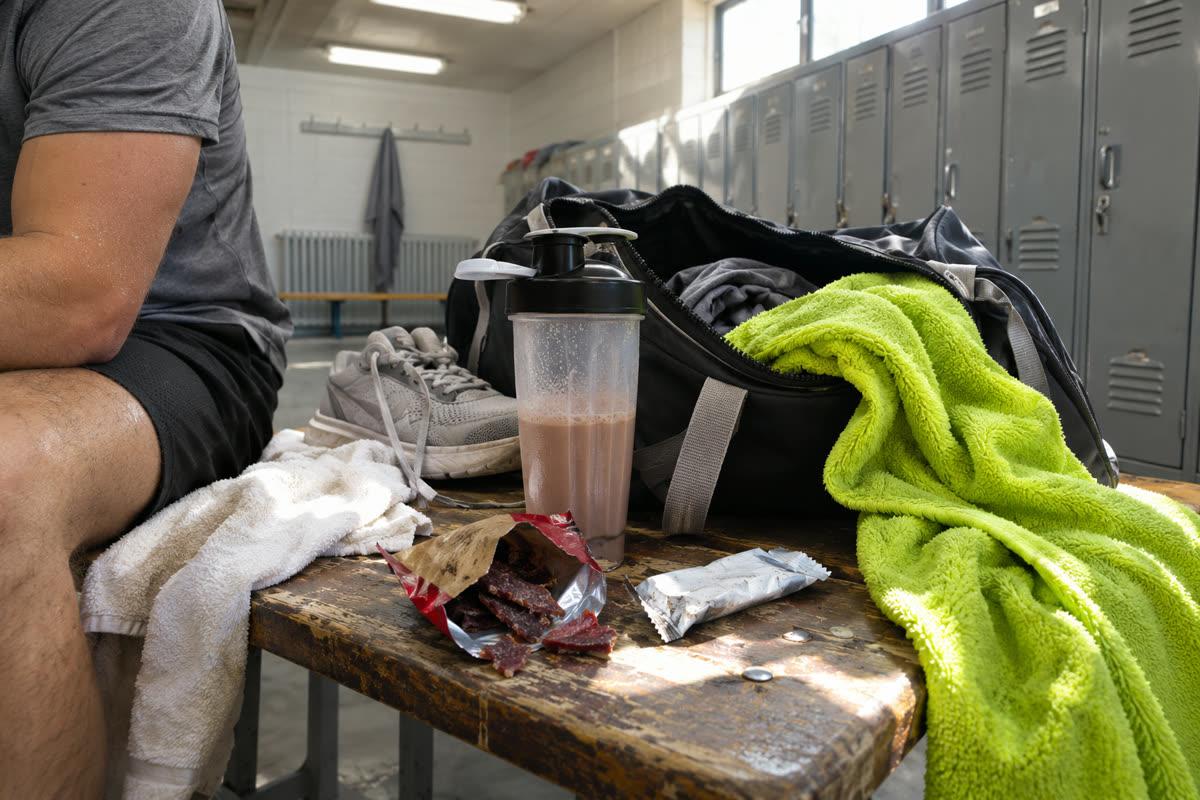 Gluten-free high-protein foods: where gluten hides in bars, powders, jerky and marinadesCheck each protein product type for its gluten trap: seitan, jerky, bars, powders, sausage and broth, with what makers say on their own pages.
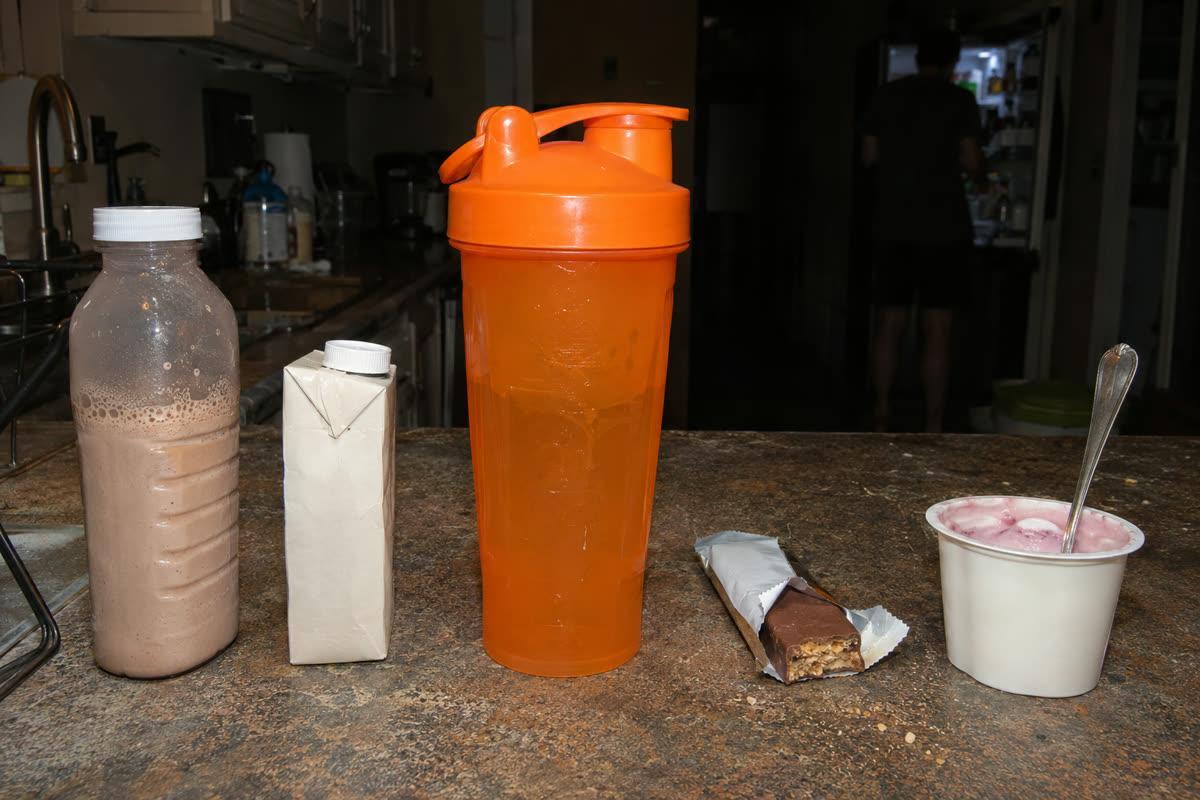 Gluten-free eating on a GLP-1 medication: what to read on shake, broth, bar and cup labelsHow to read a shake, broth, bar or cottage cheese cup for a gluten-free claim, a certifier mark and shared-equipment text while on a GLP-1 medication.
 What to eat after a celiac diagnosis: what the sources document and what they do notBone broth, collagen, glutamine or plain staples? What NIDDK, ACG and celiac charities document after a diagnosis, and what no page we read names.
 Rice and arsenic on a gluten-free diet: what FDA saysWhat FDA says about arsenic in rice, which gluten-free staples are rice-based, and the cooking and variety tips FDA and celiac charities give.
 Gluten-free vegetarian protein: what to check on beans, lentils, tofu and tempehWhat to read on beans, lentils, tofu, tempeh and meat substitutes when you are vegetarian and gluten-free: stray grain, added grains, sauces and batters.
 Gluten-free for older adults: swallowing difficulty, small appetite and thickenersHow to check thickeners, nutrition drinks and soft foods for a gluten statement, what the IDDSI texture levels are, and whom to ask about swallowing.
Related guides
 How to read a US food label for glutenWhere gluten shows up on a US food label: the gluten-free claim, the Contains line, the ingredient list and may-contain lines, and what each means.
 Certified or naturally gluten-free: when a seal mattersWhich naturally gluten-free foods are worth buying with a claim or seal: produce, grains, flours, oats and processed foods, with FDA rules and test data.
 Gluten cross-contact at home: where it happens and what to do about itHow gluten reaches gluten-free food at home, whether to separate, wash or ask for each route, and which rules have lab data behind them.
 Protein shakes, energy drinks and kombucha: what to read for glutenWhat to read on a shake, energy drink or kombucha label for gluten, and what makers such as Ensure, Celsius and Health-Ade say on their own pages.
Sources
- [1, 12, 13] NSF, Certified for Sport: What Our Mark Means, checked Nov 17, 2026.
Read the NSF Certified for Sport pages “What Our Mark Means”, “About Us” and the program home page on 2026-11-17: none of them mentions gluten.
- [2, 22] Informed Sport (LGC), Science and Testing, checked Nov 17, 2026.
Read the Informed Sport “Science and Testing” page and the site home page on 2026-11-17: neither mentions gluten.
- [3] US Food and Drug Administration, Gluten and Food Labeling, checked Nov 17, 2026.
- [4, 30, 43] Gatorade (PepsiCo), Gatorade FAQs, checked Nov 17, 2026.
- [5, 19] Gluten-Free Certification Organization (GFCO), GFCO Product Finder, checked Nov 17, 2026.
- [6, 9, 14, 17, 18, 23, 33, 39] US Food and Drug Administration, Questions and Answers on the Gluten-Free Food Labeling Final Rule, checked Nov 17, 2026.
- [7, 46] IRONMAN, 2026 Athlete Guide, IRONMAN Hamburg European Championship, checked Nov 17, 2026.
Read the “Aid Stations” pages of the guide on 2026-11-17: for the bike course it lists water, the PRECISION PH 1000 electrolyte drink, Maurten bars (standard and cacao), Maurten Gels 100 and 160 (with or without caffeine) and bananas; for the run it lists water, the same electrolyte drink, diluted cola, Maurten bars and gels, bananas, oranges and salty snacks. It names no gluten information.
- [8, 47] UTMB World Series (Mallorca by UTMB), Aid stations and nutrition guide, checked Nov 17, 2026.
- [10] GU Energy Labs, Frequently Asked Questions, checked Nov 17, 2026.
- [11, 27, 28] Maurten, Maurten Products (FAQ), checked Nov 17, 2026.
- [15] National Institute of Diabetes and Digestive and Kidney Diseases (NIDDK), Definition & Facts for Celiac Disease, checked Nov 17, 2026.
- [16, 44, 53] Current Sports Medicine Reports (Mancini, Trojian and Mancini, 2011), hosted by Beyond Celiac, Celiac Disease and the Athlete, checked Nov 17, 2026.
- [20, 21] Gluten Intolerance Group (GIG), How GFCO certifies gluten-free food, checked Nov 17, 2026.
- [24, 25] GU Energy Labs, Energy Chews, checked Nov 17, 2026.
Read on 2026-11-17: under the heading “Supplement Facts” the page lists GLUTEN FREE, DAIRY FREE, VEGAN, KOSHER and BANNED SUBSTANCE TESTED as separate items.
- [26] Gluten-Free Certification Organization (GFCO), GFCO Product Finder search: GU Energy, checked Nov 17, 2026.
Read the first page of the GFCO Product Finder search for “GU Energy” on 2026-11-17: it lists GU Energy Chews, for example “Orange GU Energy Chews - Double Serve Box” and “Lemonade GU Energy Chews - Double Serve Box”, under the brand GU Energy. The first page names no GU Energy gel.
- [29] Gluten-Free Certification Organization (GFCO), GFCO Product Finder search: Maurten, checked Nov 17, 2026.
Read the GFCO Product Finder search for “Maurten” on 2026-11-17: the result is “No products found”.
- [31] The Coca-Cola Company (Powerade), Powerade FAQs, checked Nov 17, 2026.
- [32] Gluten Intolerance Group (GIG), Are maltose and maltodextrin gluten-free?, checked Nov 17, 2026.
- [34, 35, 37] Clif Bar & Company, LUNA Bar LemonZest Flavor Gluten Free Snack Bars, checked Nov 17, 2026.
- [36, 38] Clif Bar & Company, CLIF BAR Chocolate Chip, checked Nov 17, 2026.
- [40, 41, 48, 49] National Institute of Diabetes and Digestive and Kidney Diseases (NIDDK), Eating, Diet, & Nutrition for Celiac Disease, checked Nov 17, 2026.
- [42] eCFR (US Government Publishing Office and National Archives), 21 CFR 101.91 Gluten-free labeling of food, checked Nov 17, 2026.
- [45] Coeliac UK, Diet and exercise, checked Nov 17, 2026.
- [50, 51, 52, 59] ACSM's Health & Fitness Journal (Harris and Meyer, 2013), Go Gluten-Free: Diets for Athletes and Active Individuals, checked Nov 17, 2026.
- [54, 55, 56, 57, 58] SickKids AboutKidsHealth, Athletes with celiac disease: What you need to know, checked Nov 17, 2026.
- [60] Coeliac New Zealand, Meeting Your Nutritional Needs for Sporting Performance, checked Nov 17, 2026.