Gluten-free high-protein foods: where gluten hides in bars, powders, jerky and marinades
Short answer
NIDDK lists meat as naturally gluten-free “without additives or some seasonings”15, so for each protein product check what has been added, then read the ingredient list for wheat, barley, rye and malt.
- Seitan is made of wheat gluten, and some imitation meats could contain gluten1.
- Some jerky flavors, such as teriyaki, contain soy sauce, and soy sauce made from soybeans and wheat may not carry a gluten-free claim2, 3.
- Bars can use barley malt extract in their crisps, or oats that are not gluten-free4, 5.
- FDA’s gluten-free rule covers dietary supplements, so a powder sold as one that makes the claim has to meet it6, but the claims differ by maker.
- Sausage, deli meat and broth need an ingredient check too: NIDDK lists hot dogs and sausages among foods where gluten may be found7.
Part of Nutrition and combining diets, 24 guides

Key points
- Seitan is wheat gluten, and the seitan and plant-based sausage pages we read list wheat gluten1, 8, 45.
- Soy sauce is the first thing to check in jerky and marinades: FDA says soy sauce made from soybeans and wheat may not bear a gluten-free claim3.
- A bar’s allergen line can leave out barley: the Chocolate Chip CLIF BAR page lists barley malt extract in its ingredients, while its allergen statement says it contains soy and may contain peanuts, tree nuts, milk, sesame and wheat4, 9.
- FDA’s gluten-free rule covers dietary supplements, which includes powders sold as supplements, but not foods whose labeling USDA regulates, which generally includes meat6, 10.
- In the eight powders we read, claims differ by maker and some pages carry none, so each product’s own page or label decides11, 12.
Where protein foods pick up gluten, by type
Find your product type in the table, then jump to its section below. Each row links our verdict for that food.
| Protein food | Where gluten can come from | Our verdict |
|---|---|---|
| Seitan and some plant-based meats | Seitan is made of wheat gluten, and some imitation meats could contain gluten from vital wheat gluten or yeast extract1 | Seitan, tofu |
| Jerky and marinated meat | Teriyaki and other flavors can contain soy sauce2 | Beef jerky, soy sauce |
| Protein and energy bars | The Celiac Disease Foundation says some energy and granola bars may contain wheat, and most use oats that are not gluten-free5 | CLIF BAR, LUNA Bar, KIND bar |
| Protein powder | NIDDK lists vitamin and nutrient supplements among products that contain gluten13 | Protein powder |
| Sausage and deli meat | Hot dogs and sausages are among foods where gluten may be found7 | Sausage, deli meat |
| Powdered or packaged broth | Some powdered or packaged broths can contain gluten, for example yeast extract derived from barley14 | Chicken broth |
Plain meat is a different case. NIDDK lists meat among foods that are naturally gluten-free “without additives or some seasonings”15, so the question is what was added: a marinade, a seasoning, a coating or a binder. Cottage cheese has its own verdict.
What a gluten-free claim means on a protein product
The claim is voluntary16. When a food makes it, any unavoidable presence of gluten has to be below 20 parts per million17.
Two scope points matter for protein foods. FDA’s rule applies to FDA-regulated packaged foods, including dietary supplements6, so it reaches powders sold as supplements. It does not apply to foods whose labeling USDA regulates, and USDA generally regulates meats and poultry10; we did not read USDA’s own guidance on gluten-free claims, so for jerky and meat sticks the maker’s page and the package are what we can point to.
A claim and a facility line can sit together: FDA allows a voluntary statement such as “made in a facility that also processes wheat” on a food that also says gluten-free, as long as it is truthful and not misleading18. More on reading these lines is in our guide to how to read food labels.
Protein powder: what eight makers’ pages say
NIDDK lists vitamin and nutrient supplements among products that contain gluten13, so check a powder’s label too. We read the pages of eight US powders on 2026-11-17 and recorded the wording each maker used.
| Powder | What the maker’s page says |
|---|---|
| Orgain Grass Fed Whey, Vanilla Bean | Lists “Gluten-free” under what is inside11 |
| Orgain Organic Protein Plant Based, Vanilla Bean | “USDA Certified Organic Vegan, Gluten-free”19 |
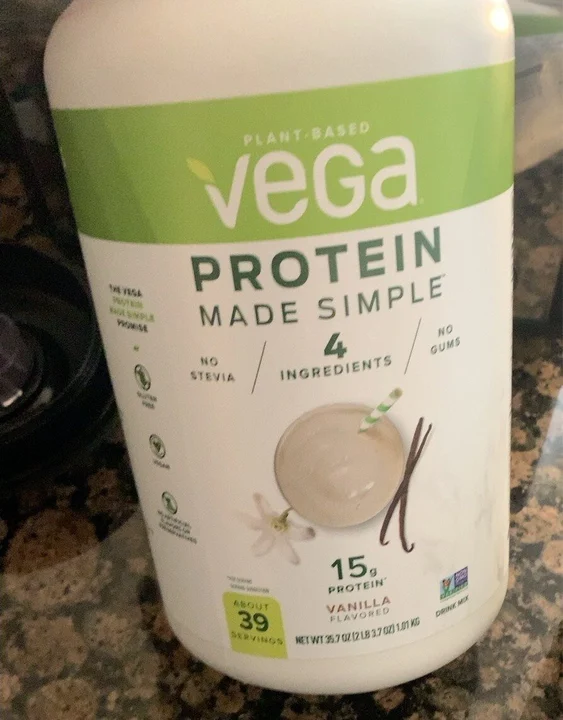
| Vega Protein Made Simple | Says it supports “vegan, gluten-free, and non-GMO dietary preferences”20 |
| Vega Essential Protein | Shows a “GF Gluten Free” icon21 |
| Quest Vanilla Milkshake | The product images’ alt text reads “Certified Gluten Free”; the allergen line adds that it is processed in a facility that also processes wheat22, 23 |
| Naked Mass Gainer | Product benefits list “Gluten free, soy free, GMO free”24 |
| Dymatize ISO100 Cookies & Cream | No gluten-free claim and no gluten or wheat mentioned on the page12 |
| Dymatize Super Mass Gainer, Gourmet Vanilla | No gluten-free claim; maltodextrin is the first ingredient and its source is not stated25 |
So six of the eight pages carry a gluten-free claim and two, both Dymatize, carry none. No claim does not mean gluten is present, because FDA calls the claim voluntary16; it means the ingredient list and the maker are your only evidence. A claim and a shared-facility line can sit on one page: Quest’s page does both23, while Vega’s facility line lists milk, soy, peanuts, eggs, tree nuts and sesame and does not name wheat26. Our protein powder verdict covers the same eight.
Mass gainers and maltodextrin
Both gainers we read list maltodextrin25, 27. Naked says most manufacturers use wheat-derived maltodextrin and that its own gainer uses organic tapioca maltodextrin27. Gluten Intolerance Group takes a different view of the ingredient itself: it says maltodextrin is gluten-free and can be derived from corn, potato, rice and wheat28. Where a list names maltodextrin and not its source, as Dymatize’s does25, the maker’s page or an email to the maker is how to settle it.
Hydrolyzed ingredients are a separate check. FDA says hydrolysis is not considered a process that removes gluten, and lists hydrolyzed soy protein and hydrolyzed wheat protein among hydrolyzed foods29. See hydrolyzed vegetable protein and our guide to hydrolyzed protein, yeast extract and wheat starch.
Bars: barley malt, oats and brown rice syrup
Of energy bars and granola bars, the Celiac Disease Foundation says some may contain wheat as an ingredient and most use oats that are not gluten-free5. Read a protein bar’s ingredient list for both.
The Chocolate Chip CLIF BAR is a concrete case. Its ingredient list names soy rice crisps made with barley malt extract4, and FDA says malt extract is derived from barley that has not been processed to remove gluten30. The allergen statement on the same page reads “CONTAINS SOY. MAY CONTAIN PEANUTS, TREE NUTS, MILK, SESAME, AND WHEAT”9: it does not name barley, so the Contains line alone would not have told you. Our CLIF BAR verdict and our guide to malt on food labels cover this.
The same ingredient list includes organic brown rice syrup4, another item to read: the Celiac Disease Foundation says brown rice syrup may be made with barley enzymes31.
Other bars make a claim. Clif’s LUNA Bar LemonZest page describes gluten free snack bars made with organic rolled oats32. KIND’s page for its Dark Chocolate Nuts & Sea Salt bar says “This KIND nut bar is also gluten free”, and the ingredient list names rice flour and no gluten grain33, 34. For oats, the rule is that oats labeled gluten-free must contain less than 20 ppm gluten35. Our verdicts: LUNA Bar and KIND bar.
Jerky, sausage and deli meat
For jerky the marinade decides. Gluten Intolerance Group says certain flavors, such as teriyaki, contain soy sauce2, and FDA says soy sauce made from soybeans and wheat may not bear a gluten-free claim3.
| Maker and product | What the page says |
|---|---|
| Old Trapper Teriyaki | Ingredients include soy sauce with soy sauce powder made from wheat, soybeans, salt and maltodextrin36 |
| Country Archer Original | Says “Certified gluten-free, Paleo and no preservatives”37, and lists gluten free tamari soy sauce38 |
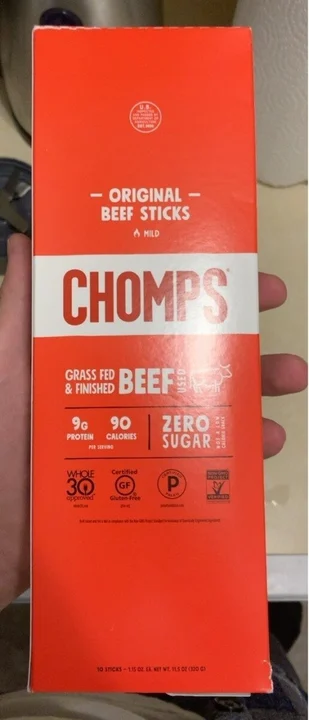
| Chomps | Says most commercial beef jerky is not gluten free because it typically contains soy sauce made from wheat, and that Chomps is certified gluten free39 |
| Jack Link’s Original | The page shows no ingredient list or gluten-free statement40; the maker’s FAQ says its gluten-free products are marked on the package41 |
Chomps sells the products it is describing, so read its comparison as a maker’s statement. Our beef jerky verdict lists more brands and the flavors that differ within a brand.
For sausage and deli meat, read the ingredient list. NIDDK lists hot dogs and sausages among foods where gluten may be found7, and the Celiac Disease Foundation says starch or dextrin on a meat or poultry product could be from any grain, including wheat42. Brand by brand, see sausage and deli meat.
Seitan and plant-based meats
Seitan is wheat protein. Upton’s Naturals describes it as a food made by rinsing the starch away from wheat and retaining the protein43, and Bob’s Red Mill says vital wheat gluten is the natural protein found in wheat and can be used to make seitan44.
Upton’s Naturals Traditional Seitan lists vital wheat gluten and soy sauce made with wheat, and its Contains line reads “Wheat, Soy”8. Plant-based sausages can go further: Field Roast’s Italian Garlic & Fennel sausage lists wheat gluten, wheat protein isolate, yeast extract and barley malt extract45. Upton’s says some of its products contain no gluten ingredients but none is certified gluten-free46. Our seitan verdict covers the products we read.
Tofu is a different case. The Celiac Disease Foundation says tofu is gluten-free but to be cautious of soy sauce marinades and cross-contact, especially when the tofu is fried47.
Marinades, sauces and broth
Gluten Intolerance Group says marinades and barbeque sauces may contain malt vinegar, soy sauce or flour48, and the Celiac Disease Foundation lists salad dressings and marinades the same way49. Soy sauce is the one to check first; the Foundation notes tamari made without wheat is gluten-free50.
Some powdered or packaged broths can contain yeast extract derived from barley, and some may contain hydrolyzed wheat protein14. If you cook with a broth or sauce, read its label as its own product: our verdicts for soy sauce, chicken broth and malt extract say more about each.
How much protein? Where personal targets belong
This guide is about gluten, not intake. For reference, a review in Advances in Nutrition describes the adult RDA as the average daily level of intake sufficient to meet the nutrient requirements of nearly all healthy people, and puts the protein RDA for adults 18 and over at 0.8 g/kg51.
A target for one person belongs with a doctor or registered dietitian; NIDDK says either can guide you on what to eat and drink to maintain a balanced diet52. Our guide to a gluten-free balanced plate and the list of hidden sources of gluten are good next steps.
Verdicts in this guide
 Protein powderDepends on the productchecked Nov 16, 2026
 Beef jerkyDepends on the product3 of 8 products we checked contain gluten: Jack Link’s Original Beef Jerky, Jack Link’s Teriyaki Beef Jerky, and Old Trapper Teriyaki Beef Jerky (bulk)checked Nov 16, 2026
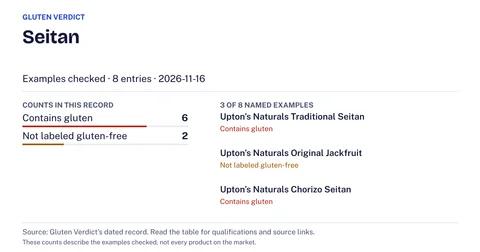 SeitanContains glutenchecked Nov 16, 2026
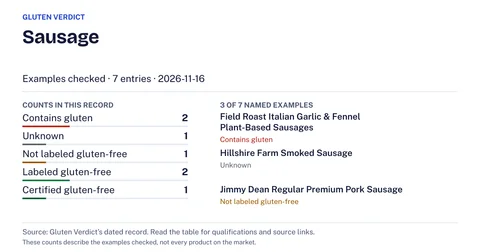 SausageDepends on the product2 of 7 products we checked contain gluten: Field Roast Italian Garlic & Fennel Plant-Based Sausages and Tofurky Plant-Based Italian Sausagechecked Nov 16, 2026
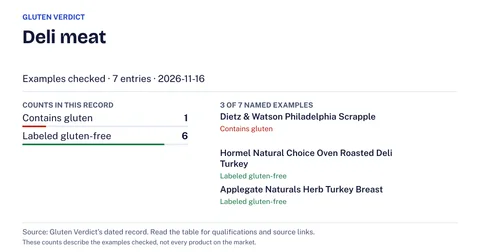 Deli meatDepends on the product1 of 7 products we checked contains gluten: Dietz & Watson Philadelphia Scrapplechecked Nov 16, 2026
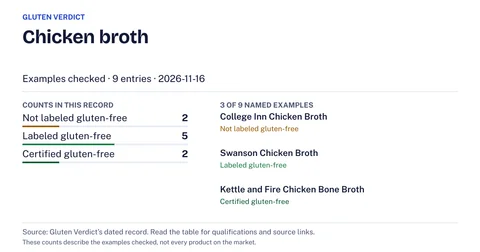 Chicken brothDepends on the productchecked Nov 16, 2026
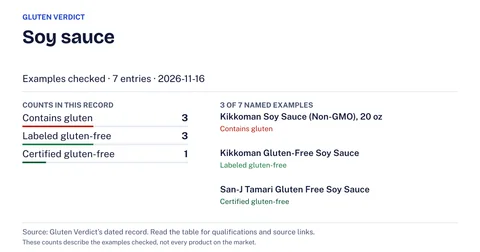 Soy sauceDepends on the product3 of 7 products we checked contain gluten: Kikkoman Soy Sauce (Non-GMO), 20 oz; San-J Organic Shoyu Soy Sauce; and Lee Kum Kee Premium Soy Sauce (No Preservatives Added)checked Nov 16, 2026
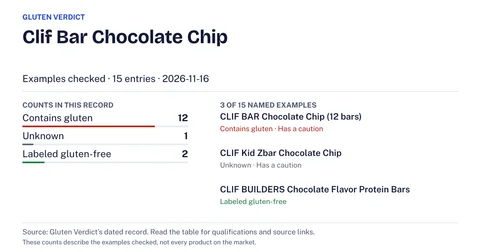 Clif Bar Chocolate ChipContains glutenClif Bar & Company · checked Nov 16, 2026
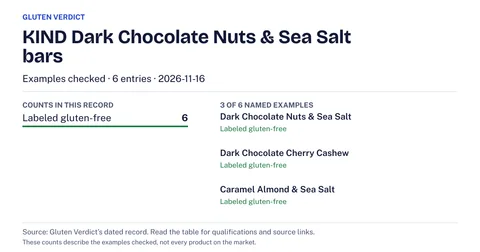 KIND Dark Chocolate Nuts & Sea Salt barsLabeled gluten-freeKIND (Mars) · checked Nov 16, 2026
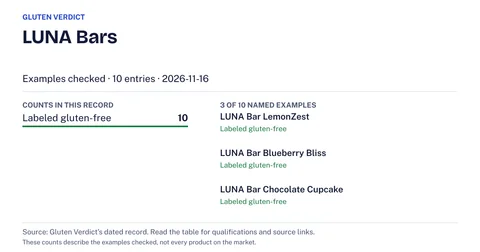 LUNA BarsLabeled gluten-freeClif Bar & Company · checked Nov 16, 2026
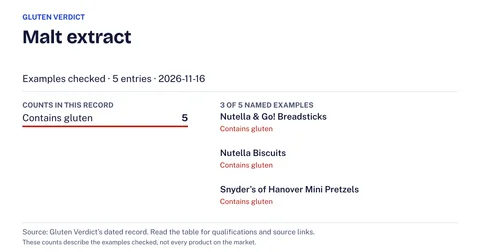 Malt extractContains glutenchecked Nov 16, 2026
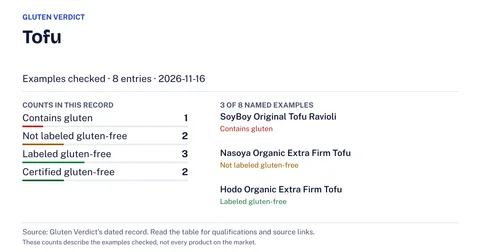 TofuDepends on the product1 of 8 products we checked contains gluten: SoyBoy Original Tofu Raviolichecked Nov 16, 2026
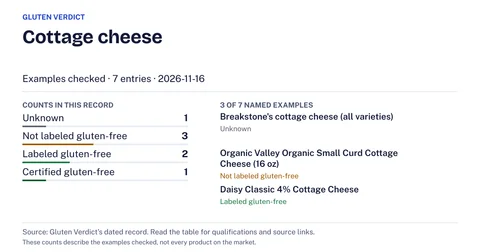 Cottage cheeseNaturally gluten-freechecked Nov 16, 2026
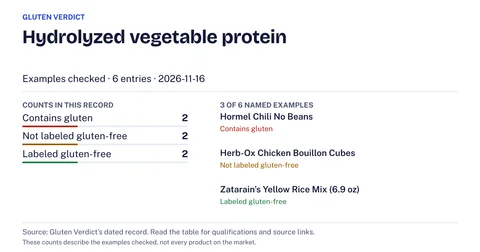 Hydrolyzed vegetable proteinDepends on the product2 of 6 products we checked contain gluten: Hormel Chili No Beans and Pioneer Brown Gravy Mix (1.61 oz)checked Nov 16, 2026
Questions people ask
Is seitan gluten-free?
No. Seitan is made of wheat gluten1, and Upton’s Naturals describes it as made by rinsing the starch away from wheat and retaining the protein43.
Is protein powder gluten-free?
It depends on the product. In the eight powders we read, six pages carry a gluten-free claim and two carry none11, 12. FDA’s gluten-free rule covers dietary supplements6.
Does beef jerky have gluten?
It can. Certain flavors, such as teriyaki, contain soy sauce2, and soy sauce made from soybeans and wheat may not bear a gluten-free claim3.
Can a bar say gluten-free and also say it may contain wheat?
FDA allows a voluntary statement such as “made in a facility that also processes wheat” on a food that also bears a gluten-free claim, if the statement is truthful and not misleading18.
Is tofu a gluten-free protein?
The Celiac Disease Foundation says tofu is gluten-free, with a caution about soy sauce marinades and cross-contact, especially when it is fried47.
More in Nutrition and combining diets
 Gluten-free fuel for training and race day: gels, bars, protein powder and aid stationsHow to check gels, chews, bars, protein powder and drinks for gluten, read sport-certification marks, and plan aid-station and pre-race food.
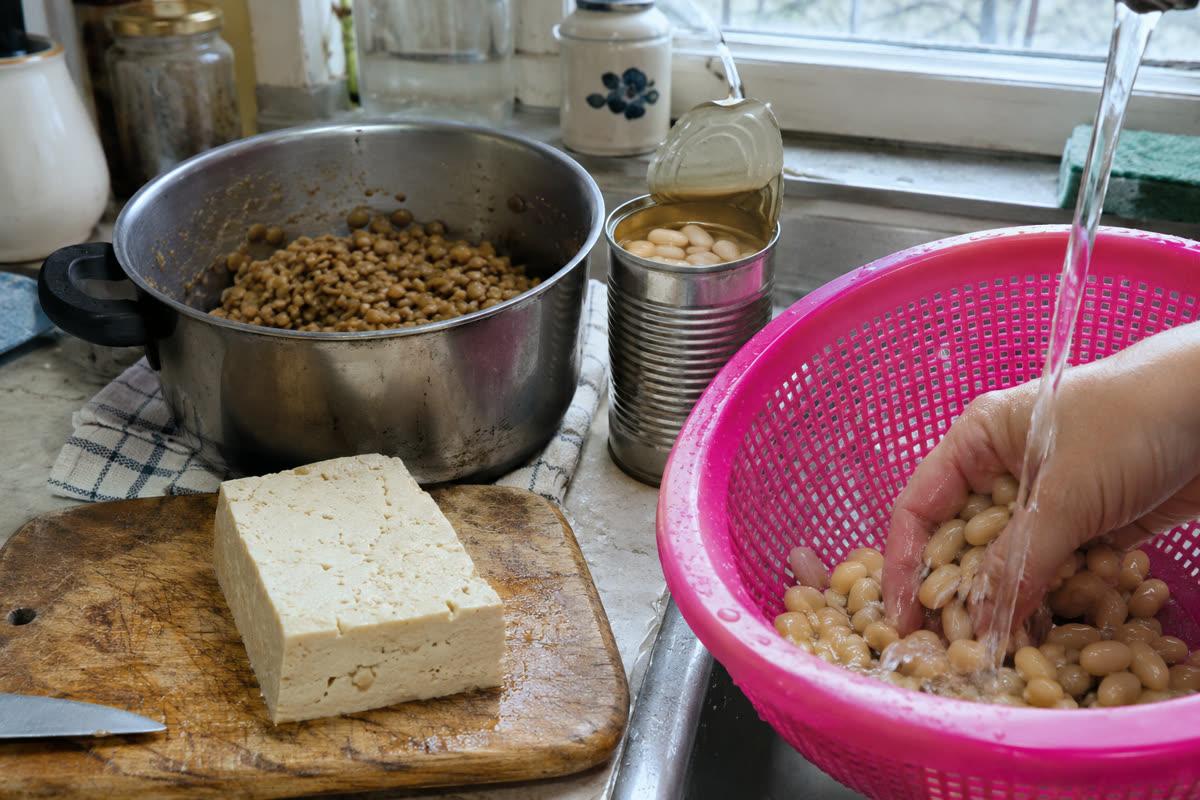 Gluten-free vegetarian protein: what to check on beans, lentils, tofu and tempehWhat to read on beans, lentils, tofu, tempeh and meat substitutes when you are vegetarian and gluten-free: stray grain, added grains, sauces and batters.
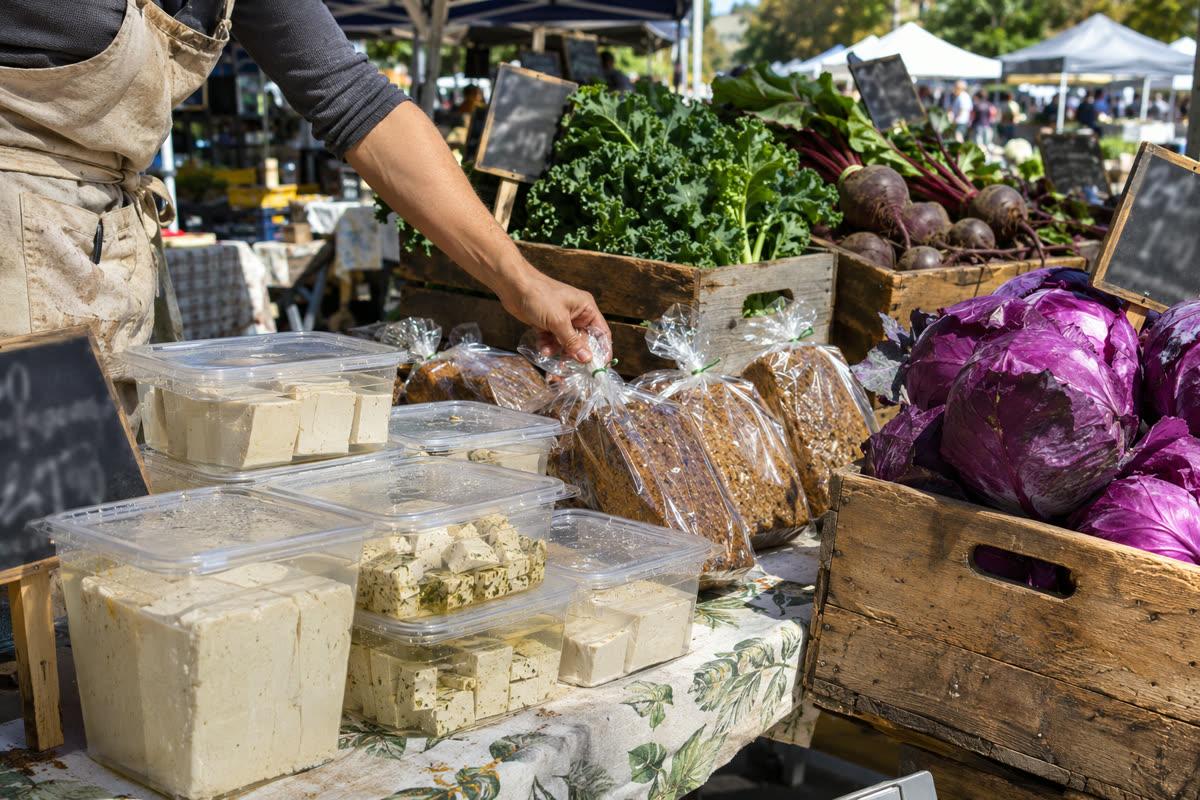 Gluten-free and vegan: where wheat hides in plant-based foodSpot wheat gluten in vegan meat substitutes and sauces, ask the right questions at a restaurant, and see where the charities send you for nutrition.
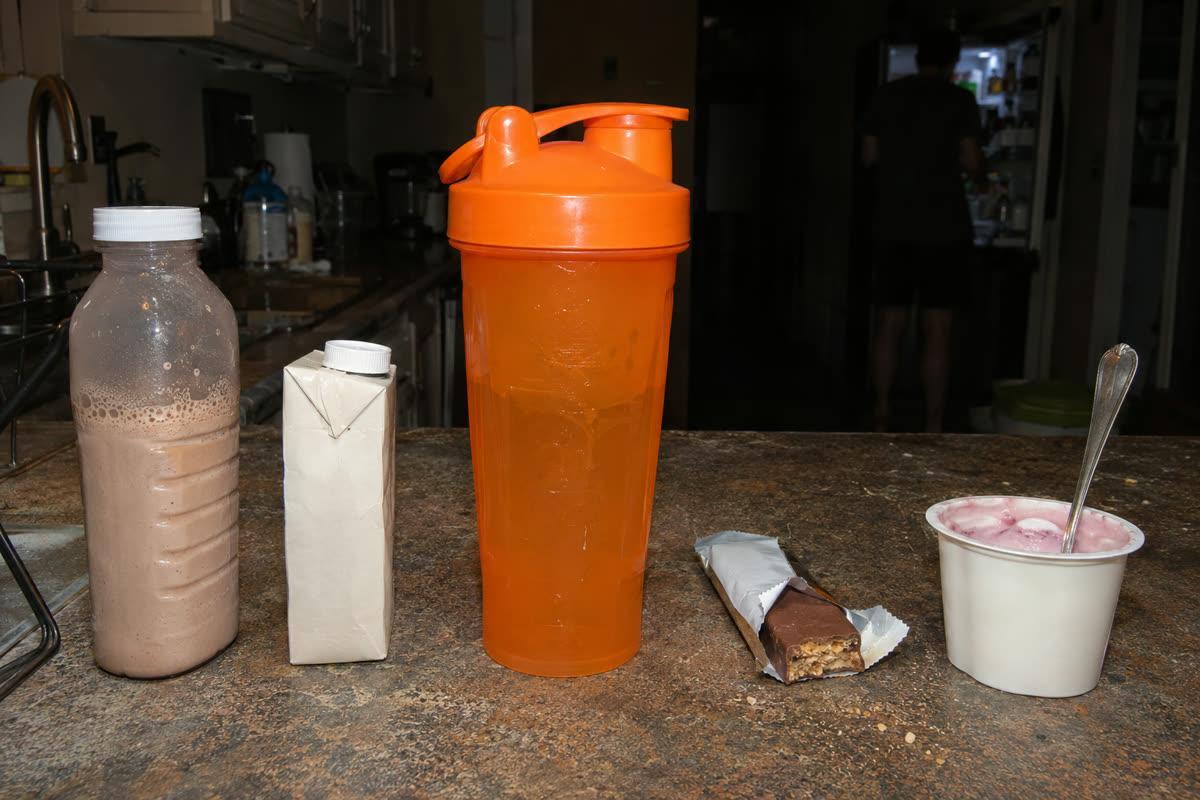 Gluten-free eating on a GLP-1 medication: what to read on shake, broth, bar and cup labelsHow to read a shake, broth, bar or cottage cheese cup for a gluten-free claim, a certifier mark and shared-equipment text while on a GLP-1 medication.
 Reading a US label for gluten and another food allergyHow to read a US food label for gluten and a second allergen: what the Contains line, gluten-free claim and may-contain lines each cover.
 What to eat after a celiac diagnosis: what the sources document and what they do notBone broth, collagen, glutamine or plain staples? What NIDDK, ACG and celiac charities document after a diagnosis, and what no page we read names.
Related guides
 Where wheat, barley and rye hide in processed food: 15 places to checkFifteen processed foods where wheat, barley or rye turn up, the label step that catches each, and what US allergen law does and does not flag.
 How to read a US food label for glutenWhere gluten shows up on a US food label: the gluten-free claim, the Contains line, the ingredient list and may-contain lines, and what each means.
 Plant-based meat, tofu and seitan: finding the wheat glutenSeitan and some meat substitutes are made from wheat gluten. How to spot it on a plant-based label, with ingredient lists from maker pages.
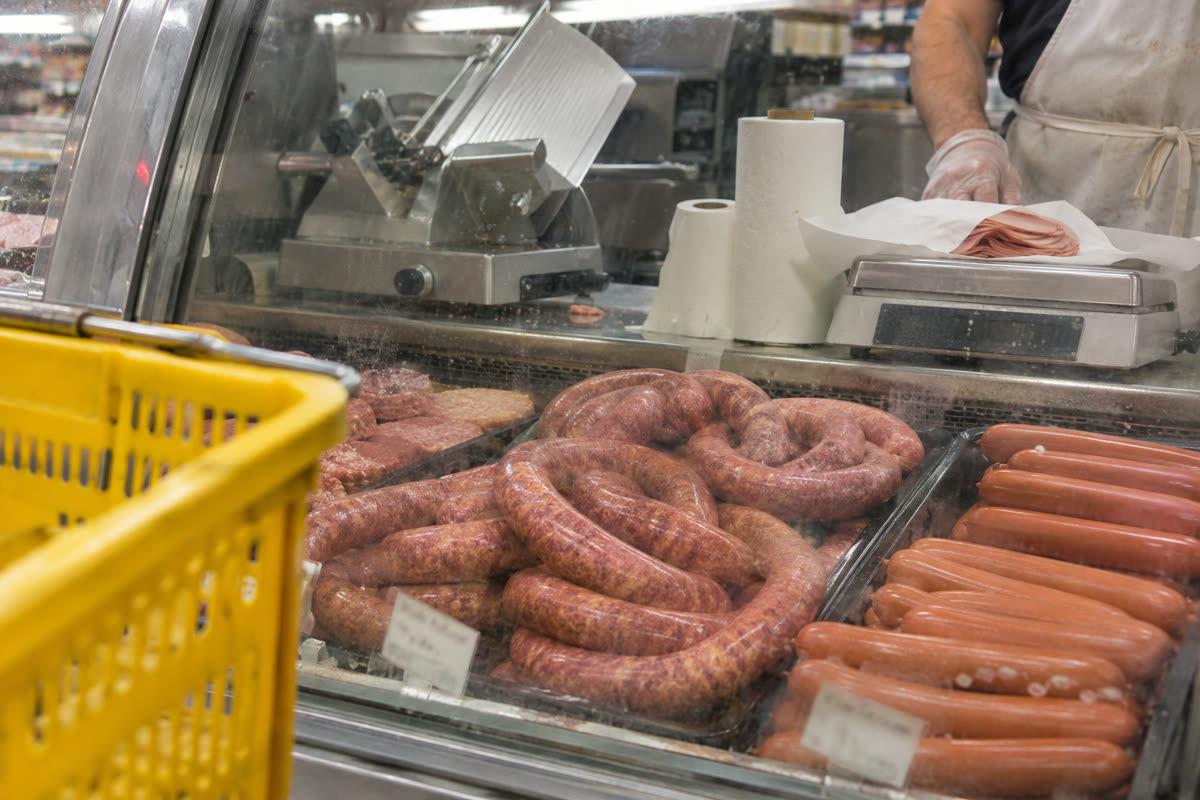 Gluten in sausage, hot dogs and deli meat: fillers, binders and flavoringsHow to read sausage, hot dog, deli meat and jerky labels for wheat, malt, starch and soy sauce, and which USDA label rules apply to meat.
Sources
- [1, 2, 14, 48] Gluten Intolerance Group, 38 Foods Where Gluten May Be “Hidden” (updated August 2021), checked Nov 17, 2026.
- [3, 6, 10, 16, 18, 29, 30, 35] US Food and Drug Administration, Questions and Answers on the Gluten-Free Food Labeling Final Rule, checked Nov 17, 2026.
- [4, 9] Clif Bar & Company, CLIF BAR Chocolate Chip, checked Nov 17, 2026.
- [5, 31, 42, 47, 49, 50] Celiac Disease Foundation, Sources of Gluten, checked Nov 17, 2026.
- [7, 15, 52] National Institute of Diabetes and Digestive and Kidney Diseases (NIDDK), Eating, Diet, & Nutrition for Celiac Disease, checked Nov 17, 2026.
- [8] Upton’s Naturals, Traditional Seitan, checked Nov 17, 2026.
- [11] Orgain, Grass Fed Whey Protein Powder - Vanilla Bean, checked Nov 17, 2026.
- [12] Dymatize, ISO100 Cookies & Cream Protein Powder, checked Nov 17, 2026.
Read on 2026-11-17: no gluten-free claim and no mention of gluten or wheat on the page; the ingredient list names hydrolyzed whey protein isolate, whey protein isolate, natural and artificial flavors, cocoa powder, soy lecithin, sucralose, salt, potassium chloride and steviol glycosides, and the allergen line reads “CONTAINS: MILK AND SOY”.
- [13] National Institute of Diabetes and Digestive and Kidney Diseases (NIDDK), Definition & Facts for Celiac Disease, checked Nov 17, 2026.
- [17] eCFR (US Code of Federal Regulations), 21 CFR 101.91 Gluten-free labeling of food, checked Nov 17, 2026.
- [19] Orgain, Organic Protein Plant Based Protein Powder - Vanilla Bean, checked Nov 17, 2026.
- [20, 26] Vega, Vega Protein Made Simple, checked Nov 17, 2026.
- [21] Vega, Vega Essential Protein, checked Nov 17, 2026.
- [22, 23] Quest Nutrition, Vanilla Milkshake Protein Powder, checked Nov 17, 2026.
- [24, 27] Naked Nutrition, Naked Mass Gainer Protein Powder, checked Nov 17, 2026.
- [25] Dymatize, Super Mass Gainer Gourmet Vanilla, checked Nov 17, 2026.
- [28] Gluten Intolerance Group, Are Maltose, Maltodextrin, Glucose Syrup, Yeast Extracts, and Wheat Starch Gluten-Free?, checked Nov 17, 2026.
- [32] Clif Bar & Company, LUNA Bar LemonZest, checked Nov 17, 2026.
- [33, 34] KIND Snacks, Dark Chocolate Nuts & Sea Salt, checked Nov 17, 2026.
- [36] Old Trapper, Beef Jerky Bulk - Teriyaki, checked Nov 17, 2026.
- [37, 38] Country Archer, Original Beef Jerky, checked Nov 17, 2026.
- [39] Chomps, Is Beef Jerky Gluten Free? Chomps’ Certified Gluten Free Meat Sticks, checked Nov 17, 2026.
- [40] Jack Link’s, Original Beef Jerky, checked Nov 17, 2026.
Read on 2026-11-17: no ingredient list and no gluten-free statement on the page.
- [41] Jack Link’s, Jack Link’s FAQs, checked Nov 17, 2026.
- [43, 46] Upton’s Naturals, FAQs About Our Vegan Products, checked Nov 17, 2026.
- [44] Bob's Red Mill, Vital Wheat Gluten, checked Nov 17, 2026.
- [45] Field Roast, Italian Garlic & Fennel Plant-Based Sausages, checked Nov 17, 2026.
- [51] Advances in Nutrition (PubMed Central), Optimizing Protein Intake in Adults: Interpretation and Application of the Recommended Dietary Allowance Compared with the Acceptable Macronutrient Distribution Range, checked Nov 17, 2026.