Spelt, farro, Kamut, bulgur, couscous and freekeh: wheat under other names
Short answer
Spelt, Kamut (khorasan wheat), einkorn, emmer, durum, semolina, farro, bulgur, couscous and freekeh are all wheat or made from wheat3, 8, 14, 19, 12, 21. FDA says a food labeled “gluten-free” cannot be intentionally made with a gluten-containing grain, or an ingredient derived from one that was not processed to remove gluten29.
Part of Grains, flours and substitutes, 13 guides
Key points
- FDA counts every species of the genus Triticum as wheat, and its allergen guidance names spelt, einkorn, emmer, durum, semolina and Khorasan wheat2, 3.
- A 2022 review says there appears to be no clear definition of “ancient grains”, and that gluten is present in all wheat grains24, 25.
- Bulgur, couscous and freekeh are described by their sources as wheat or made from wheat, not as different grains19, 12, 21.
- The Celiac Disease Foundation says products labeled wheat-free may still contain spelt, rye or barley-based ingredients28.
- A non-wheat look-alike can carry a “gluten-free” claim when unavoidable gluten is under 20 ppm; look for the claim, not the grain’s name32.
What counts as wheat under US rules
FDA’s gluten-free regulation defines a “gluten-containing grain” as wheat, rye or barley, or a crossbred hybrid of them, with triticale (a cross between wheat and rye) as its example. For wheat it covers “any species belonging to the genus Triticum”1.
FDA’s allergen guidance uses the same genus: for allergen labeling, “wheat” means any species in the genus Triticum2. It then lists grains that count, among them durum wheat, spelt, semolina, einkorn, emmer, Khorasan and triticale3.
FDA introduces that list with “grains such as”3, so it is a set of examples, not a closed list. Farro, bulgur, couscous and freekeh are not named in it; the table below relies on charities, makers and research papers for those.
Wheat is one of the major food allergens US law names4. When a maker uses a Contains line, it is printed immediately after or adjacent to the ingredient list5; because FDA’s guidance treats every Triticum species as wheat2, the Triticum species named above fall under the wheat allergen.
Every wheat name in one table
These are the names as they appear on shop shelves and menus, with what the sources say each one is.
| Name on the shelf or menu | What the sources say |
|---|---|
| Spelt | Named in FDA’s list of wheat as Triticum spelta3; FDA’s gluten-free rule gives “spelt wheat” as its example of a gluten-containing grain6. Bob’s Red Mill: “spelt is not gluten free”7. |
| Kamut, khorasan wheat | FDA’s list of wheat includes Khorasan3. The Celiac Disease Foundation lists “KAMUT® khorasan wheat” among the varieties of wheat8. |
| Einkorn | Named in FDA’s list of wheat3. Jovial calls it “the original wheat”9, and its einkorn spaghetti page lists “Contains Wheat”10. |
| Emmer | Named in FDA’s list of wheat3; NIDDK lists emmer among types of wheat11. |
| Durum | Named in FDA’s list of wheat3; NIDDK lists durum among types of wheat11. |
| Semolina | Named in FDA’s list of wheat3. The National Celiac Association says semolina comes from durum wheat12; Jovial’s durum semolina spaghetti lists “Organic Durum Wheat Semolina. Contains wheat.”13 |
| Farina, graham, wheatberries | Listed by the Celiac Disease Foundation under “Varieties and derivatives of wheat”8. |
| Farro | Listed as a variety of wheat by the Celiac Disease Foundation8 and as a form of wheat by the Gluten Intolerance Group14. Bob’s Red Mill calls it “a relative of modern-day wheat” and writes “Although not gluten free”15, 16. A Clinical Nutrition paper on celiac patients’ T-cells uses the name “farro wheat (Triticum turgidum ssp. dicoccum)”17. |
| Bulgur | Bob’s Red Mill: made from cracked wheat berries18, “made from wheat and therefore contains gluten”19. The Gluten Intolerance Group lists bulgur among the forms of wheat14. |
| Couscous | The National Celiac Association: made from semolina, which comes from durum wheat12. The Celiac Disease Foundation lists it among pastas that contain gluten20. |
| Freekeh | A review in Critical Reviews in Food Science and Nutrition calls it a traditional Middle Eastern cereal derived from wheat21 and says it contains gluten22; a Food Chemistry paper titles it a green durum wheat product23. |
| Triticale | A crossbred hybrid of wheat and rye that FDA’s gluten-free rule counts as a gluten-containing grain1; also in FDA’s allergen list of wheat3. |
“Ancient”, “heritage” and “easier to digest”
Bob’s Red Mill sells farro as “one of our most popular ancient grains”15. A 2022 review in Nutrition Bulletin says there appears to be no clear definition of “ancient grains”, though the term usually includes einkorn, emmer, spelt and Khorasan wheat24.
The same review says gluten is present in all wheat grains and all can induce coeliac disease in genetically susceptible individuals25. It reports that, compared with bread wheat, ancient wheats contain more protein and gluten and greater contents of many CD-active epitopes26, and concludes that no single wheat type can be recommended as better for reducing the risks of or mitigating the severity of CD27.
“Easier to digest” is a maker’s description, not a gluten claim. Bob’s Red Mill says whole grain spelt “can be more easily digested than other forms of wheat” and that some people with wheat intolerances may be able to tolerate it, then adds “spelt is not gluten free”7.
“Weak gluten” works the same way. Jovial says einkorn is “quickly becoming the wheat of choice among the gluten sensitive due to its very weak gluten”9, and the same maker’s einkorn spaghetti lists “Contains Wheat” under allergen info10.
“Wheat-free” is not “gluten-free”
The Celiac Disease Foundation says products labeled wheat-free are not necessarily gluten-free, because they may still contain spelt (a form of wheat), rye or barley-based ingredients28.
Spelt is wheat, so a spelt product does not meet the gluten-free definition: FDA’s rule lists “an ingredient that is a gluten-containing grain (e.g., spelt wheat)” among those a food bearing the claim cannot contain6.
Where these grains turn up
- Tabbouleh: Bob’s Red Mill calls bulgur “a must-have ingredient for tabbouleh”18.
- Soups, casseroles, salads and pilafs: the uses Bob’s Red Mill names for farro30.
- Baking: Arrowhead Mills describes spelt flour as usable as a 1:1 substitute for whole wheat or all-purpose flour31.
- Grain bowls and pilafs: ask which grain is in the base; the table above shows which names are wheat.
We have verdicts for foods built on these grains: spelt, farro, bulgur, couscous, flour, pasta, bread, sourdough and seitan, plus barley, which FDA’s definition counts alongside wheat and rye1.
For ingredient-list names beyond grains, see wheat, barley and rye names on ingredient lists; for the research on each type of wheat, types of wheat and gluten.
What can stand in for them
FDA says any grain other than wheat, rye, barley or their crossbred hybrids like triticale can be labeled “gluten-free” if any unavoidable gluten from cross-contact is under 20 ppm32. For a look-alike in a bowl or a salad, the claim on the pack is what to look for, not the grain’s name. Our gluten-free substitutes and gluten-free flour guide go further.
Verdicts in this guide
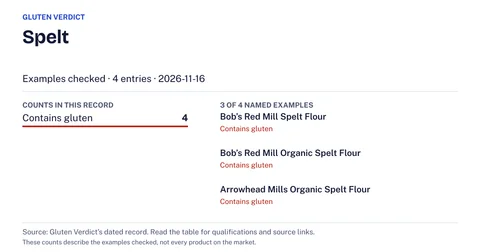 SpeltContains glutenchecked Nov 16, 2026
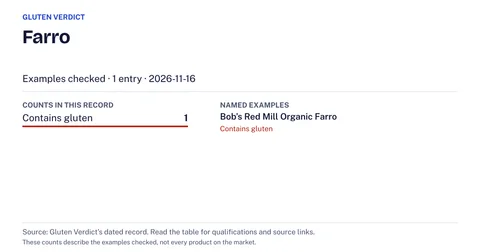 FarroContains glutenchecked Nov 16, 2026
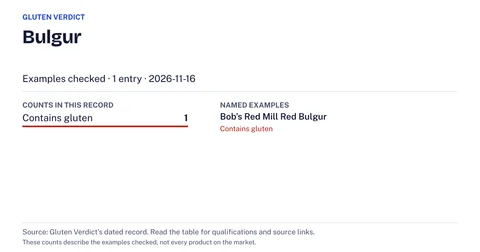 BulgurContains glutenchecked Nov 16, 2026
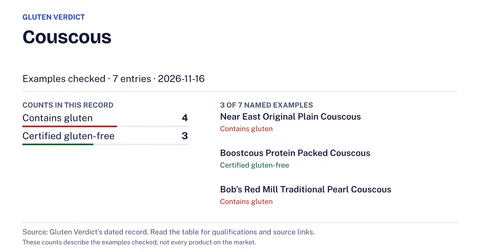 CouscousContains glutenchecked Nov 16, 2026
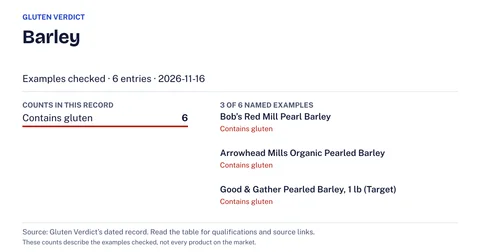 BarleyContains glutenchecked Nov 16, 2026
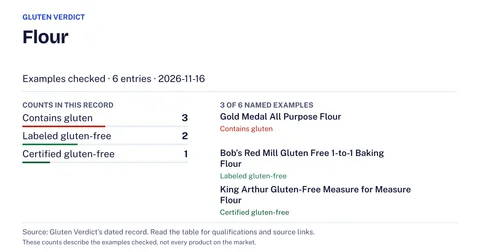 FlourContains glutenchecked Nov 16, 2026
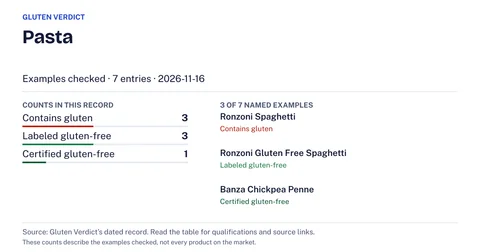 PastaContains glutenchecked Nov 16, 2026
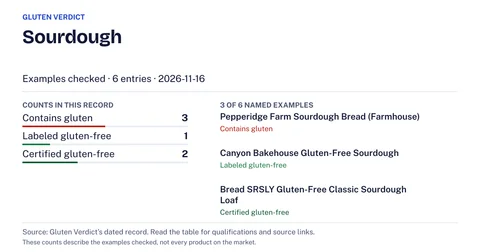 SourdoughContains glutenchecked Nov 16, 2026
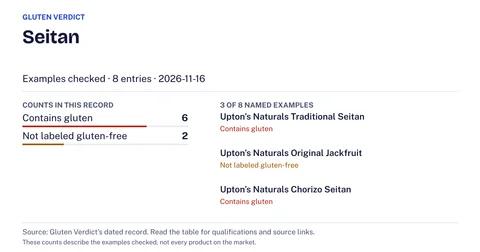 SeitanContains glutenchecked Nov 16, 2026
 BreadContains glutenchecked Nov 16, 2026
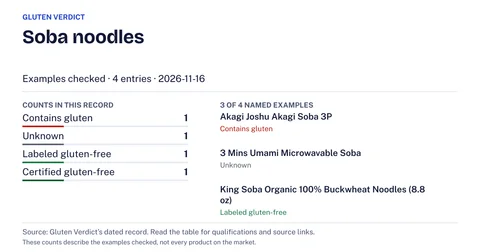 Soba noodlesDepends on the product1 of 4 products we checked contains gluten: Akagi Joshu Akagi Soba 3Pchecked Nov 16, 2026
Questions people ask
Is spelt gluten-free?
No. FDA’s allergen guidance lists spelt among the wheats3, and Bob’s Red Mill says “spelt is not gluten free”7.
Is farro gluten-free?
No. The Celiac Disease Foundation and the Gluten Intolerance Group both list farro as a form of wheat8, 14, and Bob’s Red Mill’s farro page says “Although not gluten free”16.
Is Kamut (khorasan wheat) gluten-free?
No. FDA’s list of wheat includes Khorasan3, and the Celiac Disease Foundation lists KAMUT® khorasan wheat among the varieties of wheat8.
Are bulgur, couscous and freekeh gluten-free?
No. Bob’s Red Mill says bulgur is made from wheat and contains gluten19; the National Celiac Association says couscous is made from semolina, which comes from durum wheat12; a review describes freekeh as derived from wheat and containing gluten21, 22.
Does an ancient grain have less gluten?
A 2022 review says gluten is present in all wheat grains25 and that ancient wheats contained more protein and gluten than bread wheat in the analyses it covers26. It concludes that no single wheat type can be recommended as better for reducing the risks of, or mitigating the severity of, coeliac disease27.
More in Grains, flours and substitutes
 Gluten-free substitutes: the swap for each wheat ingredient and the label check it needsA lookup table of gluten-free swaps for wheat flour, pasta, bread, soy sauce, beer and more, with the one label check each swap needs.
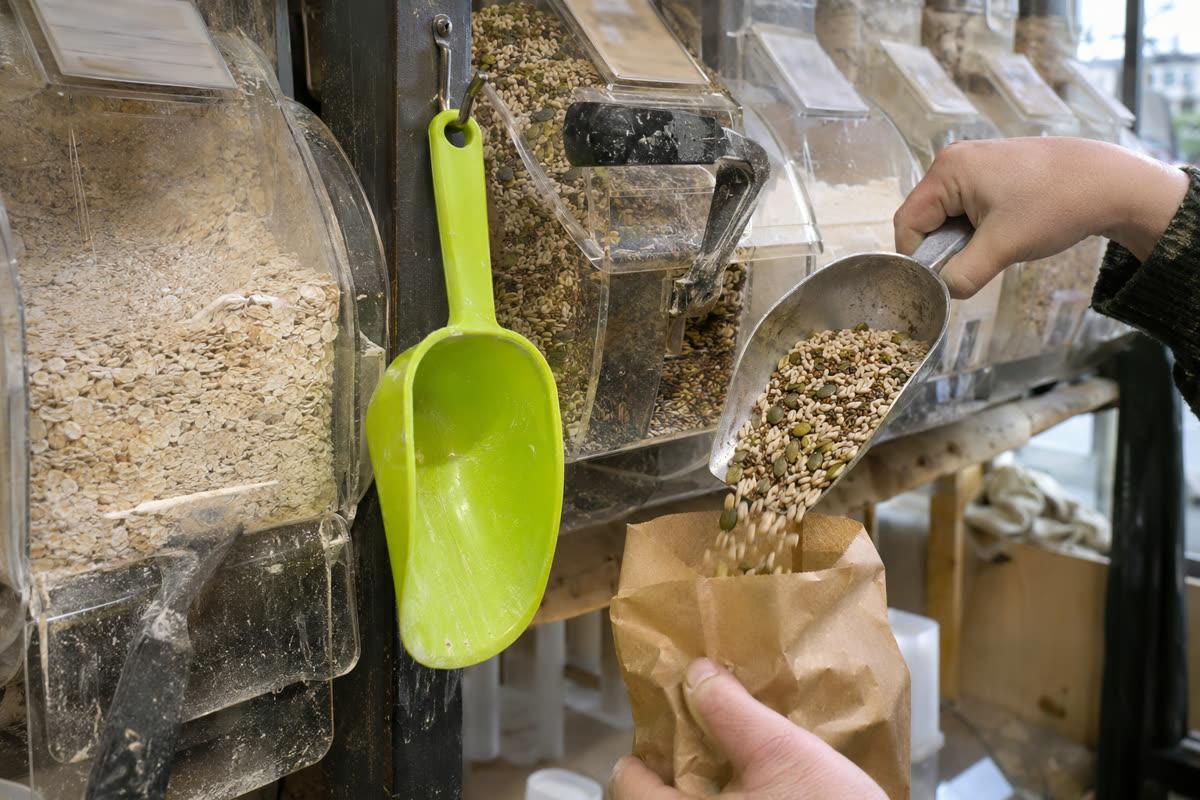 Millet, sorghum, quinoa, buckwheat, teff, amaranth and wild rice: what the bag has to sayWhich grains and seeds are gluten-free plants, what makers and certifiers say about seven of them, and the cross-contact checks for bags, bins and blends.
 Gluten-free pasta and noodles: what to read on the boxHow to read a pasta or noodle box: the gluten-free claim, the ingredient list, same-brand wheat twins, and why soba and udon need a close read.
 Gluten-free flours and starches: what each one is and how to read the bagWhich flours and starches are gluten-free by nature, what a claim and a certification mark on the bag each mean, and how to read a blend’s list.
 Cooking gluten-free pasta and rice noodles: what makers’ directions sayCompare what Jovial, Banza, Tinkyada, Lotus Foods and Thai Kitchen print for water, stirring, rinsing and time, then match the directions to your pasta.
 Gluten-free thickeners: cornstarch, tapioca, arrowroot, potato starch and rice flourPick a gluten-free thickener for gravy, soup or pie filling, follow the maker's directions, choose slurry or roux, and spot wheat thickeners.
Related guides
 Wheat, barley and rye on an ingredient list: the names to look forLook up wheat, barley and rye names on a US ingredient list, from durum to malt, and sort each as contains gluten, depends on the maker, or lookalike.
 Wheat-free, gluten-free and “no gluten ingredients”: what each label statement covers“Wheat-free”, “gluten-free” and “made with no gluten-containing ingredients” are three different statements. What each covers, and what to check.
 The Contains line names wheat, not barley or rye: what US allergen labels coverWhat the US allergen Contains line covers, why it names wheat but not barley or rye, and which ingredient-list names stand in for them.
 Spelt, Kamut, Durum and Einkorn: Every Kind of Wheat Has GlutenDurum, semolina, spelt, einkorn, kamut, farro: which wheat words on a US label count as gluten, and what the FDA rule and the sources say about each.
Sources
- [1, 6] Electronic Code of Federal Regulations, 21 CFR 101.91 Gluten-free labeling of food, checked Nov 17, 2026.
- [2, 3] US Food and Drug Administration, Questions and Answers Regarding Food Allergens, Including the Food Allergen Labeling Requirements (Edition 5), checked Nov 17, 2026.
- [4, 5] US Food and Drug Administration, Food Allergen Labeling and Consumer Protection Act of 2004 (FALCPA), checked Nov 17, 2026.
- [7] Bob’s Red Mill, Organic Spelt Flour, checked Nov 17, 2026.
- [8, 20, 28] Celiac Disease Foundation, Sources of Gluten, checked Nov 17, 2026.
Read on 2026-11-17: the list headed “Gluten-Containing Grains and Their Derivatives” names wheat, with “Varieties and derivatives of wheat such as” wheatberries, durum, emmer, semolina, spelt, farina, farro, graham, KAMUT® khorasan wheat and einkorn wheat; rye; barley; triticale; malt in various forms; brewer’s yeast; and wheat starch that has not been processed to remove gluten to below 20ppm.
- [9, 10] Jovial Foods, Organic Einkorn Traditional Spaghetti, checked Nov 17, 2026.
Read on 2026-11-17: the product page lists the ingredients as “Organic Einkorn, Water” and, under “Allergen Info”, “Contains Wheat.”
- [11] National Institute of Diabetes and Digestive and Kidney Diseases (NIDDK), Eating, Diet, & Nutrition for Celiac Disease, checked Nov 17, 2026.
- [12] National Celiac Association, Couscous: Is couscous gluten-free?, checked Nov 17, 2026.
- [13] Jovial Foods, Organic Durum Semolina Spaghetti, checked Nov 17, 2026.
- [14] Gluten Intolerance Group, Getting Started on a Gluten-Free Diet, checked Nov 17, 2026.
- [15, 16, 30] Bob’s Red Mill, Organic Farro, checked Nov 17, 2026.
- [17] Clinical Nutrition (Vincentini et al., 2009), via PubMed, T-cell response to different cultivars of farro wheat, Triticum turgidum ssp. dicoccum, in celiac disease patients, checked Nov 17, 2026.
- [18, 19] Bob’s Red Mill, Red Bulgur, checked Nov 17, 2026.
- [21, 22] Critical Reviews in Food Science and Nutrition (Aluthge et al.), via PubMed, Green wheat Freekeh: evolution from traditional cereal to sustainable future food, checked Nov 17, 2026.
- [23] Food Chemistry (Cna’ani et al.), via PubMed, The first comprehensive analysis of the flavor of Freekeh: a toasted, smoked, green durum wheat product, checked Nov 17, 2026.
- [24, 25, 26, 27] Nutrition Bulletin (Brouns et al., 2022), via PubMed, Do ancient wheats contain less gluten than modern bread wheat, in favour of better health?, checked Nov 17, 2026.
- [29, 32] US Food and Drug Administration, Questions and Answers on the Gluten-Free Food Labeling Final Rule, checked Nov 17, 2026.
- [31] Arrowhead Mills, Organic Spelt Flour, checked Nov 17, 2026.