Cornmeal, grits, polenta and masa: where gluten can get in
Short answer
Corn is naturally gluten free3, but corn foods can contain wheat as an added ingredient12, and the NCA says corn flour, cornmeal and masa could have had cross-contact with gluten-containing grains in processing5. Check three things:
- Ingredient list and Contains line: the standard Jiffy, Martha White and Krusteaz mixes we read list wheat flour12, 14, 16.
- A gluten-free claim: FDA says a grain other than wheat, rye, barley or their hybrids can be labeled gluten-free if any unavoidable gluten from cross-contact is under 20 ppm41.
- The maker’s page, for a plain bag with no claim: the NCA says cornmeal, corn flour and masa could have had cross-contact in processing5.
Part of Grains, flours and substitutes, 13 guides
Key points
- Corn is naturally gluten free3; the NCA says the protein in corn is sometimes called “corn gluten” and is not harmful to people with celiac disease3.
- Jiffy, Martha White and Krusteaz standard mixes each name wheat on their own pages13, 15, 17; Martha White and Krusteaz also sell gluten-free cornbread mixes18, 20.
- The NCA advises buying corn flour, cornmeal, masa and cornstarch labeled gluten free5.
- Some corn tortillas are a mix of corn and wheat flour34.
- A bag with no claim is unconfirmed, not clean: Bob’s Red Mill sells a regular polenta with no claim and a gluten-free one from a dedicated facility28, 27.
Why corn is not the problem
FDA describes the gluten-containing grains as wheat, rye, barley and their crossbred hybrids such as triticale1. Corn is not among them. The Celiac Disease Foundation lists corn among its naturally gluten-free foods2, and the National Celiac Association (NCA) puts it plainly: “Corn is naturally gluten free”3.
The word “gluten” can still turn up next to corn. The NCA says the protein in corn is sometimes called “corn gluten” but is not harmful to people with celiac disease3. “Hydrolyzed Corn Gluten” appears in the ingredient list on a store listing for Quaker cheddar-flavor instant grits4; the ingredient is named for corn, not wheat, so read the rest of the list for wheat as you would on any product.
So the trouble with corn foods is what gets added to the corn (wheat flour in a mix12) or possible cross-contact in processing, on shared equipment and in bulk bins5, 43, 45. The sections below take each product in turn.
Cornmeal, corn flour, cornstarch, masa harina: which is which
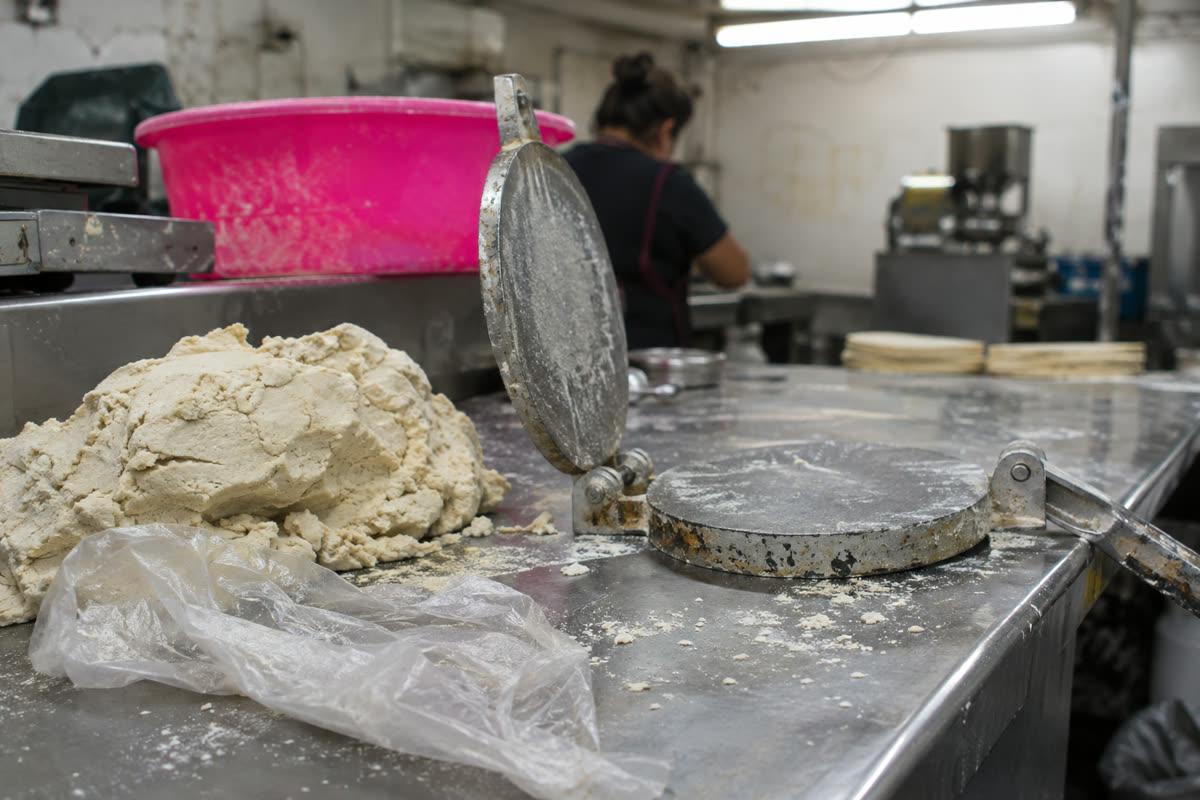
The NCA says to make sure corn-based flours such as corn flour, cornmeal, masa and cornstarch are labeled gluten free, because they could have had cross-contact with gluten-containing grains during processing5.
| Product | What a maker says it is | What to check |
|---|---|---|
| Cornmeal | Bob’s Red Mill says its gluten-free cornmeal is processed and packaged in a separate gluten free facility and batch tested with an ELISA gluten test6. | A gluten-free claim, or the maker’s statement about its mill. |
| Corn flour | Bob’s Red Mill mills its gluten-free corn flour in a dedicated gluten free facility7. It tells bakers not to use corn flour for corn tortillas8. | The claim on the bag. |
| Cornstarch | Named by the NCA among the corn-based flours to make sure are labeled gluten free5. | A gluten-free claim on the box. |
| Masa harina | Bob’s Red Mill describes its masa harina as corn that has been cooked, treated with limewater and ground into a fine flour9, and says masa is very different from cornmeal and the two should not be swapped10. | A gluten-free claim; Maseca’s page lists one on each of the six masa flours it shows (see the masa section). |
Cornbread and corn muffin mixes: where wheat flour comes in
The Celiac Disease Foundation lists cornbread among the common foods that contain gluten11. The reason shows up in the ingredient lists: the standard mixes below list wheat flour on their makers’ own pages.
| Mix | What the maker’s page says |
|---|---|
| Jiffy Corn Muffin Mix | Starts with wheat flour, then degermed yellow corn meal and sugar12; the page also says “CONTAINS: WHEAT”13. |
| Martha White Yellow Cornbread & Muffin Mix | Lists enriched degerminated yellow corn meal and enriched bleached flour, with wheat flour inside it14; the allergen line reads “Contains wheat and milk”15. |
| Krusteaz Honey Cornbread & Muffin Mix | Starts with enriched unbleached flour (wheat flour), then sugar and degermed yellow cornmeal16; the page says “CONTAINS: Wheat”17. |
| Martha White Gluten Free Sweet Yellow Cornbread & Muffin Mix | Calls itself gluten free18; its list begins with degerminated yellow cornmeal, rice flour, sugar and potato starch19. |
| Krusteaz Gluten Free Honey Cornbread Mix | Sold as gluten free20; its list is sugar, cornmeal, sorghum flour and millet flour, then smaller amounts21. |
| Bob’s Red Mill Gluten Free Cornbread Mix | Described as “specially designed for those sensitive to wheat or gluten”, built on cornmeal, potato starch and sorghum flour22. |
Martha White and Krusteaz each sell a standard mix and a gluten-free mix under almost the same name14, 16, 18, 20. Read for the words “Gluten Free” on the package, then the ingredient list, then the Contains line. Our guide to the Contains line covers what it does and does not tell you.
Grits and instant packets
Bob’s Red Mill’s page for its regular white corn grits points readers who follow a gluten free diet to its Gluten Free Yellow Corn Polenta23.
Gluten Free Watchdog’s report page for Quaker Instant Grits Original lists degerminated white corn grits, salt, calcium carbonate, reduced iron and added B vitamins24, and says the product is not labeled gluten-free25. An ingredient list with no wheat is one finding; a gluten-free claim is another. Dixie Lily puts “Gluten Free” in the name of its yellow corn quick grits26.
A flavored packet can have a longer list. The cheddar-flavor Quaker packet on one store’s listing adds maltodextrin, modified food starch, whey, cheddar cheese, yeast extract and hydrolyzed corn gluten4. Each of those needs reading on the packet in your hand; our guides on maltodextrin and dextrin and on modified food starch and natural flavors cover the ones that cause questions. Our grits verdict shows what each product we checked said.
Polenta: dry, instant and ready-made tubes
Bob’s Red Mill sells polenta two ways. Its Gluten Free Yellow Corn Polenta is processed in a dedicated gluten free facility27; its Yellow Corn Polenta page lists only corn and makes no gluten-free statement28. Pastene’s Instant Polenta page lists a gluten free claim among its attributes29.
A ready-made tube can have a longer list than a dry bag. Melissa’s precooked Organic Polenta, in its Original version, lists water, organic cornmeal, salt, yeast extract, onion, garlic and celery seed30, and its page makes no gluten-free statement31. A page without a claim is not a finding of gluten; it means the claim is not there to rely on. Our polenta verdict lists what each maker said.
Masa harina and corn tortillas
Maseca’s page lists “Gluten Free” among the attributes of each of the six masa flours it shows32, and a Publix listing for its instant corn masa flour includes the text “Certified gluten free. gfco.org.”33.
The Gluten Intolerance Group notes that some corn tortillas contain a mix of corn and wheat flour34, and the Celiac Disease Foundation says tortillas that are not entirely corn-based may contain a wheat-based ingredient35. Mission says its corn products are certified gluten free and made with corn masa flour36, on lines dedicated to corn products only37; Guerrero says its corn products do not contain gluten38.
For the full comparison with flour tortillas, see corn tortillas vs flour tortillas, and our verdicts for corn tortillas, tortillas and tortilla chips.
A plain bag with no claim: use the maker’s statement
A gluten-free claim is voluntary in the US39, so a plain bag of cornmeal without one is not a warning, and it is not a confirmation either. FDA also notes that its rule does not require makers to test starting ingredients or finished foods labeled gluten-free, though makers are responsible for making sure a gluten-free claim meets the rule40. So it is worth reading how a maker describes its process, not only the two words. Bob’s Red Mill, for one, describes its gluten-free cornmeal as batch tested with an ELISA gluten test6.
- Find the product’s own page on the maker’s site and look for a gluten-free claim, a dedicated-facility statement or a testing statement for that exact product.
- If the page is silent, ask the maker; our guide on what to ask a manufacturer about gluten lists the questions.
- Until you hear back, treat a bag with no claim as unconfirmed, not as clean.
Mills, shared equipment and bulk bins
FDA says a grain other than wheat, rye, barley or their hybrids can be labeled gluten-free if any unavoidable gluten from cross-contact is under 20 ppm41. It gives these examples of where that cross-contact comes from: crop rotation and shared harvesting, transport and storage equipment42, and manufacturing facilities that use shared production equipment for foods with and without gluten43. The Celiac Disease Foundation says some research indicates that some naturally gluten-free grains may contain gluten from harvesting and processing44.
Bulk bins add handling to that. The Foundation does not recommend buying grains from bulk bins because of possible cross-contact45, and the Gluten Intolerance Group advises staying clear of the bulk section, where gluten-containing ingredients could linger on scoops or surrounding bins46. Our guide to deli, bakery and bulk-bin counters goes through the questions to ask.
Where our verdicts sit
Each verdict lists the pages we read and the date we checked them. For the foods in this guide:
- Corn, grits and polenta
- Cornbread and corn dogs
- Corn tortillas, tortillas, tortilla chips and Fritos
- Cornstarch
- Corn flakes: the question there is malt, not corn; the Celiac Disease Foundation says corn flakes and rice puffs often contain malt extract or flavoring47. See our cereal label guide.
Verdicts in this guide
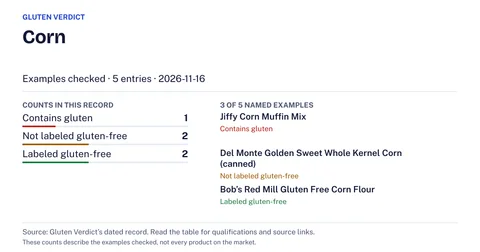 CornNaturally gluten-free1 of 5 products we checked contains gluten: Jiffy Corn Muffin Mixchecked Nov 16, 2026
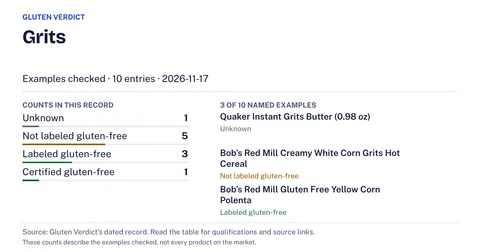 GritsNaturally gluten-freeBuy it labeled gluten-freechecked Nov 17, 2026
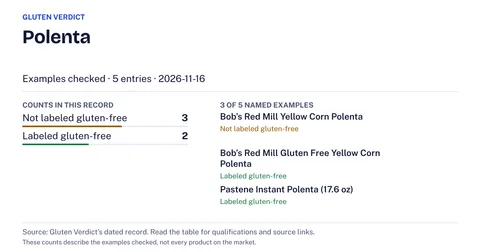 PolentaNaturally gluten-freeBuy it labeled gluten-freechecked Nov 16, 2026
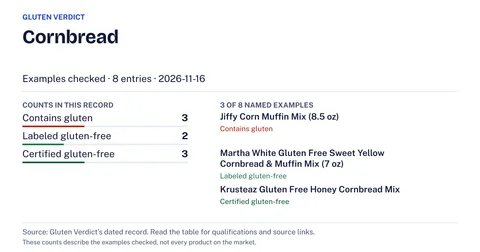 CornbreadDepends on the product3 of 8 products we checked contain gluten: Jiffy Corn Muffin Mix (8.5 oz), Krusteaz Honey Cornbread & Muffin Mix, and Martha White Yellow Cornbread & Muffin Mixchecked Nov 16, 2026
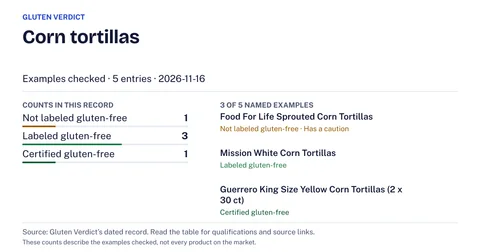 Corn tortillasDepends on the productchecked Nov 16, 2026
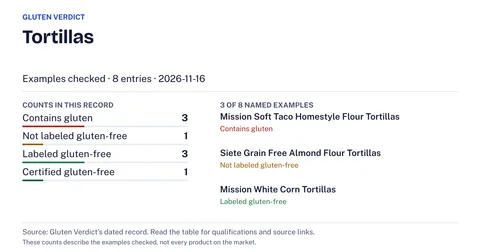 TortillasDepends on the product3 of 8 products we checked contain gluten: Mission Soft Taco Homestyle Flour Tortillas, Guerrero Riquisimas Soft Taco Flour Tortillas (24 ct), and Guerrero Corn and Wheat Tortillaschecked Nov 16, 2026
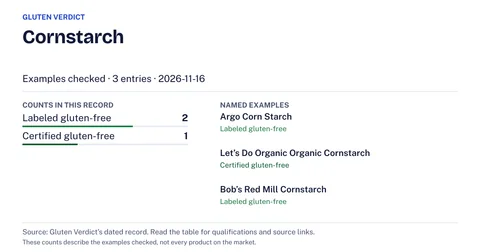 CornstarchNaturally gluten-freeBuy it labeled gluten-freechecked Nov 16, 2026
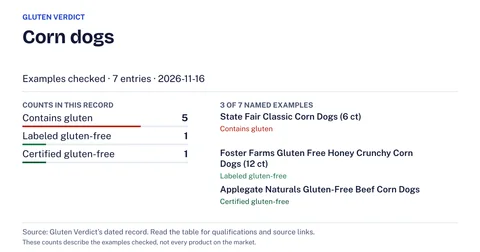 Corn dogsDepends on the product5 of 7 products we checked contain glutenchecked Nov 16, 2026
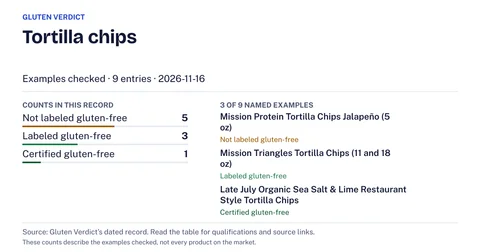 Tortilla chipsDepends on the productchecked Nov 16, 2026
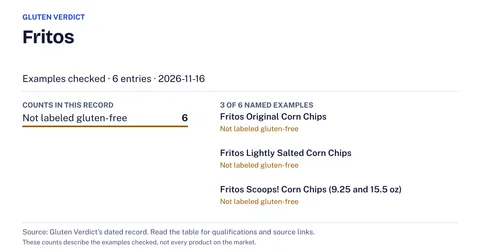 FritosNot labeled gluten-freeFrito-Lay (PepsiCo) · checked Nov 16, 2026
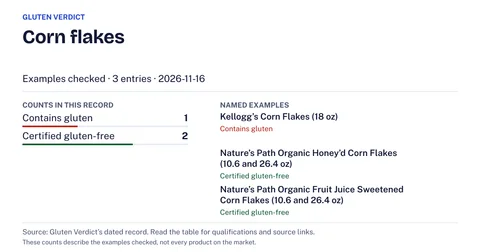 Corn flakesDepends on the product1 of 3 products we checked contains gluten: Kellogg’s Corn Flakes (18 oz)checked Nov 16, 2026
Questions people ask
Is cornmeal gluten-free?
Corn is naturally gluten free3. The NCA still advises making sure cornmeal, corn flour, masa and cornstarch are labeled gluten free, because they could have had cross-contact with gluten-containing grains during processing5.
Is the “corn gluten” on a label the same as wheat gluten?
The NCA says the protein in corn is sometimes called “corn gluten” but is not harmful to people with celiac disease3. FDA’s gluten-containing grains are wheat, rye, barley and their crossbred hybrids; corn is not among them1.
Can I use masa harina instead of cornmeal?
Bob’s Red Mill says masa is very different from cornmeal and the two should not be swapped10.
More in Grains, flours and substitutes
 Gluten-free substitutes: the swap for each wheat ingredient and the label check it needsA lookup table of gluten-free swaps for wheat flour, pasta, bread, soy sauce, beer and more, with the one label check each swap needs.
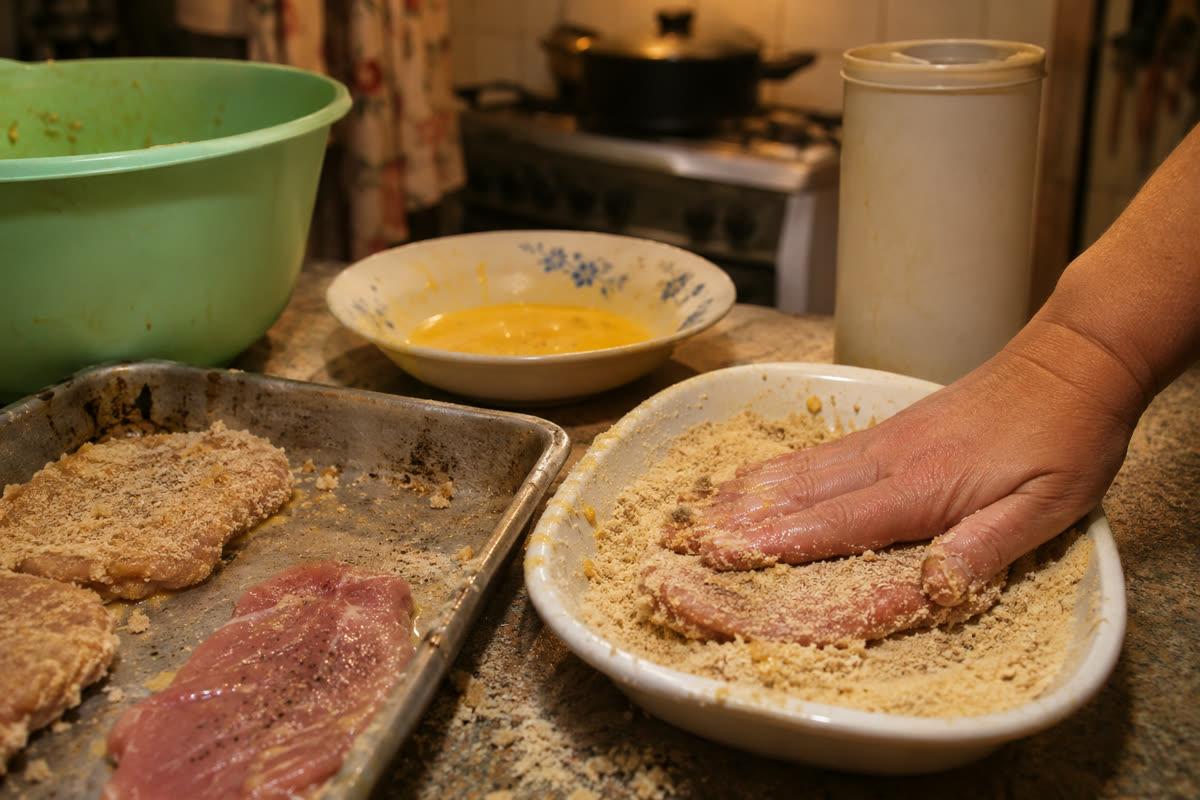 Gluten-free breadcrumbs, panko and coatings: what to read on the packHow to read a crumb, panko or batter mix for wheat, which gluten-free crumbs makers state, and what their pages say about baking and frying.
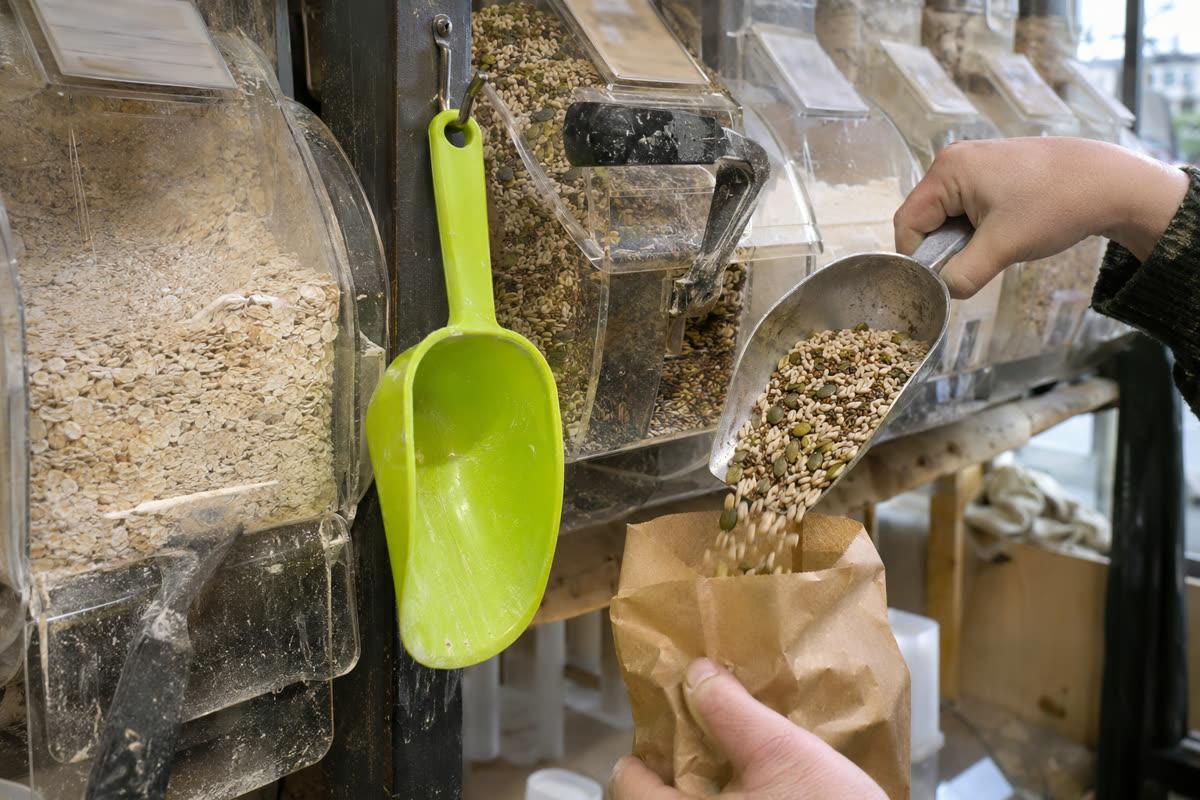 Millet, sorghum, quinoa, buckwheat, teff, amaranth and wild rice: what the bag has to sayWhich grains and seeds are gluten-free plants, what makers and certifiers say about seven of them, and the cross-contact checks for bags, bins and blends.
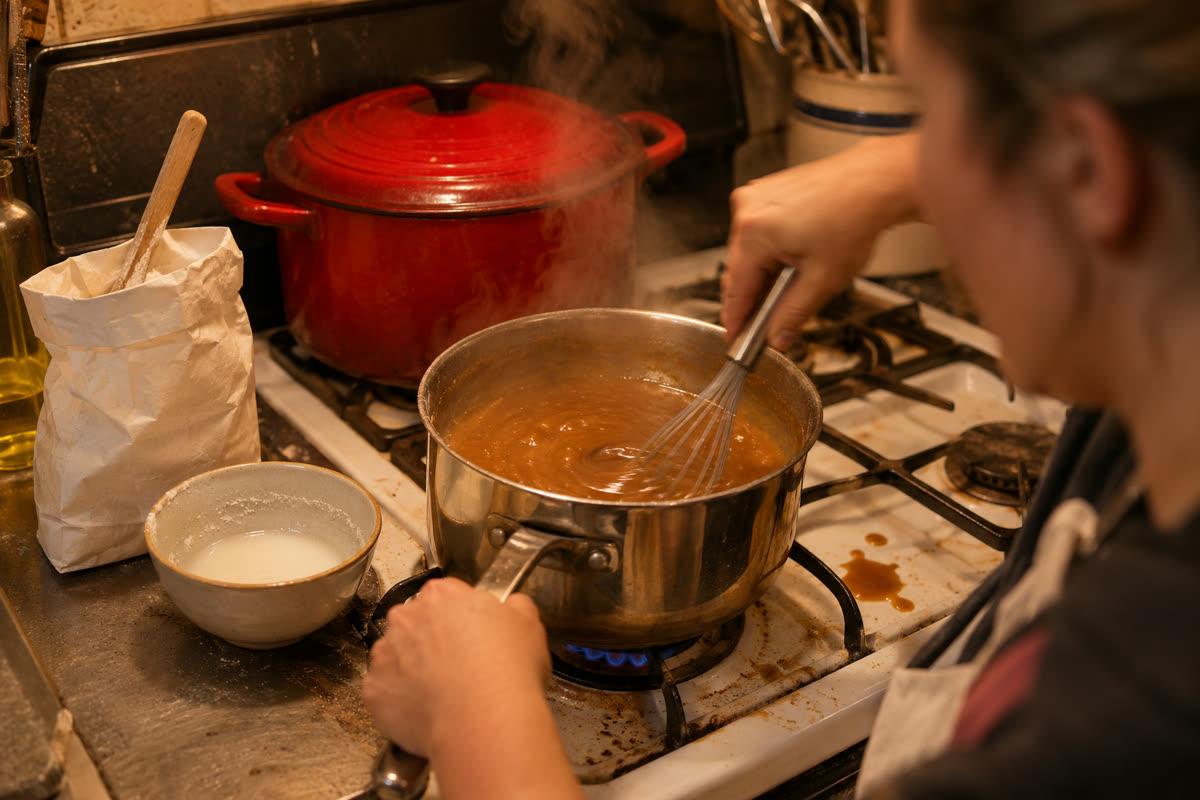 Gluten-free thickeners: cornstarch, tapioca, arrowroot, potato starch and rice flourPick a gluten-free thickener for gravy, soup or pie filling, follow the maker's directions, choose slurry or roux, and spot wheat thickeners.
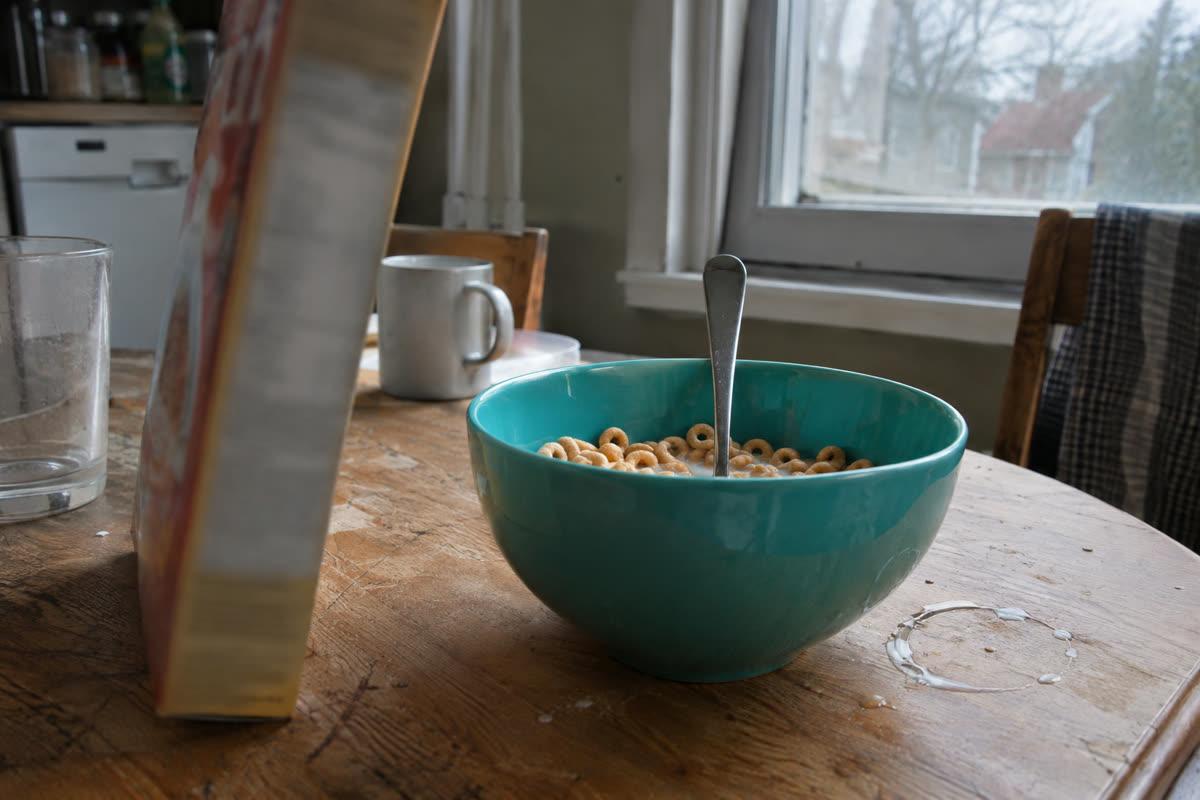 Gluten-free cereal: how to check a cereal boxCheck a cereal box in order: the gluten-free claim, malt and wheat in the ingredient list, the oats, then the maker’s own page for that flavour.
 Gluten-free flours and starches: what each one is and how to read the bagWhich flours and starches are gluten-free by nature, what a claim and a certification mark on the bag each mean, and how to read a blend’s list.
Related guides
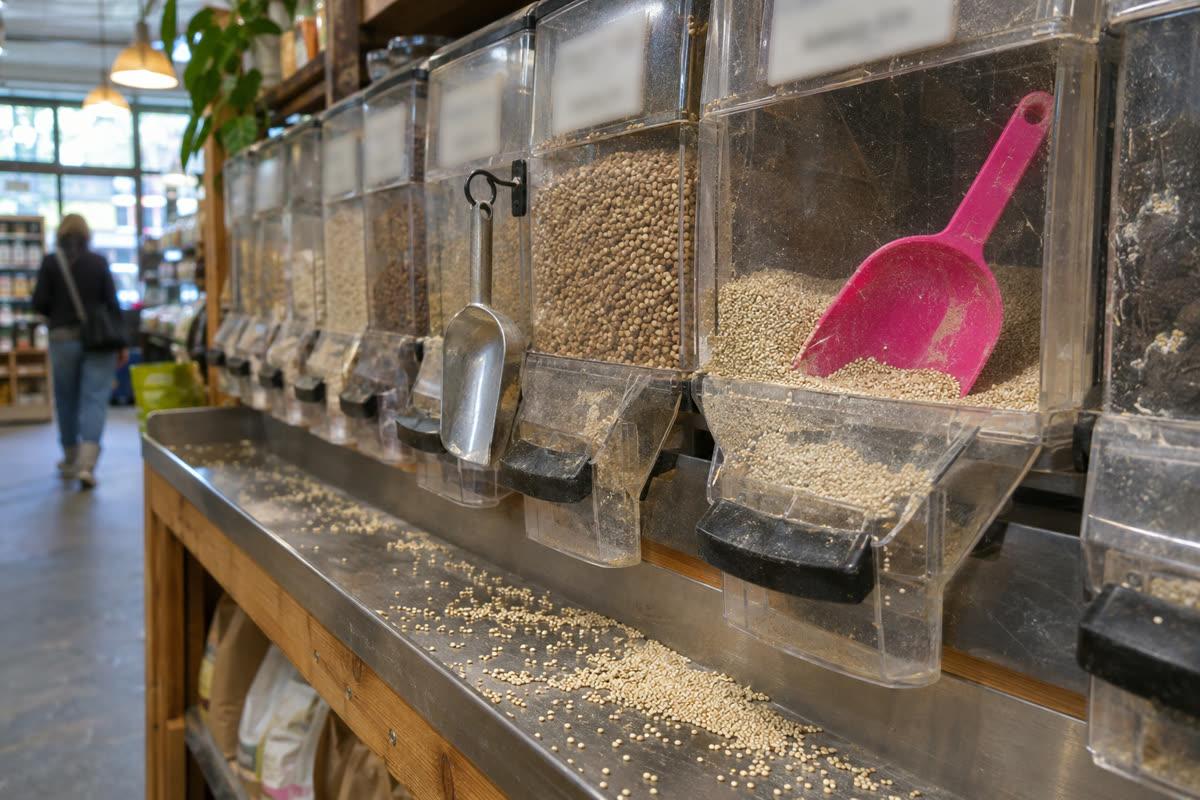 Deli, bakery and bulk-bin counters on a gluten-free dietFor each store counter (deli, bakery, bulk bins, bars): skip it, ask first, or buy the packaged item, and what a store’s own statement tells you.
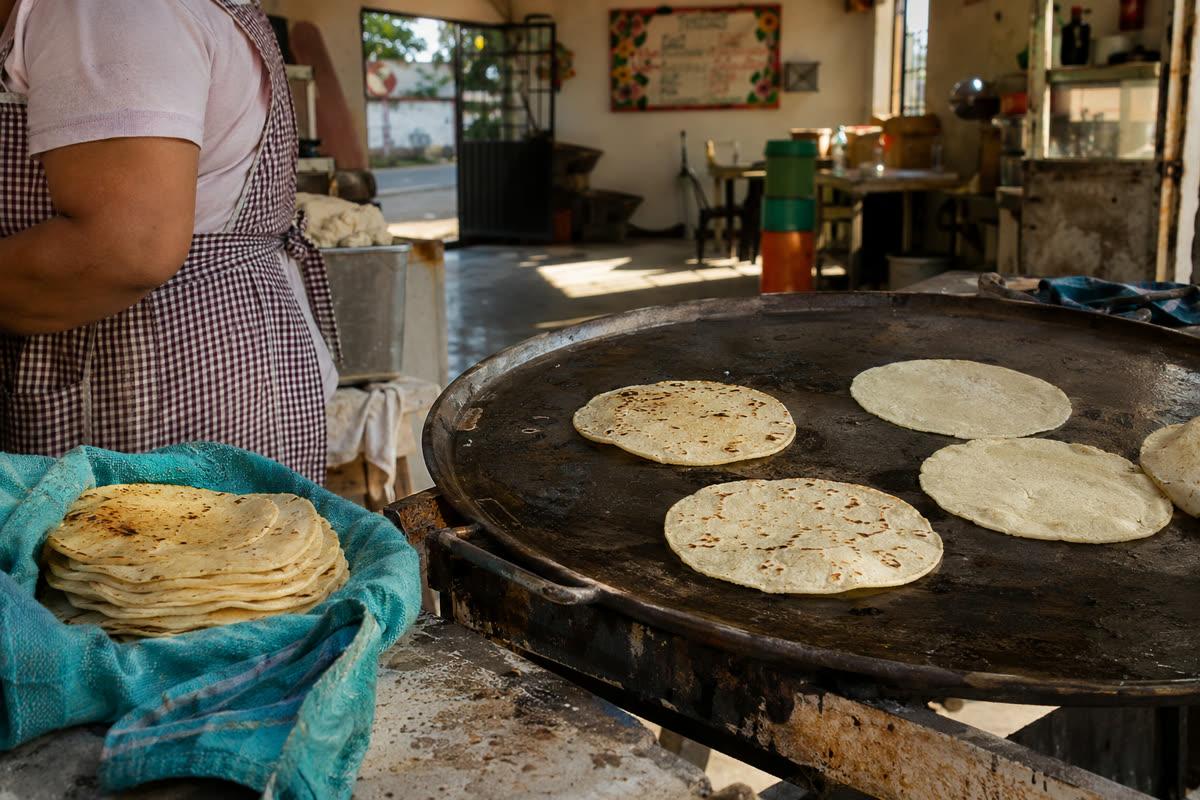 Corn vs flour tortillas: the label line and the griddle questionFlour tortillas contain wheat; corn ones may too. What to read on the package, and two questions to ask a restaurant about the tortillas and the griddle.
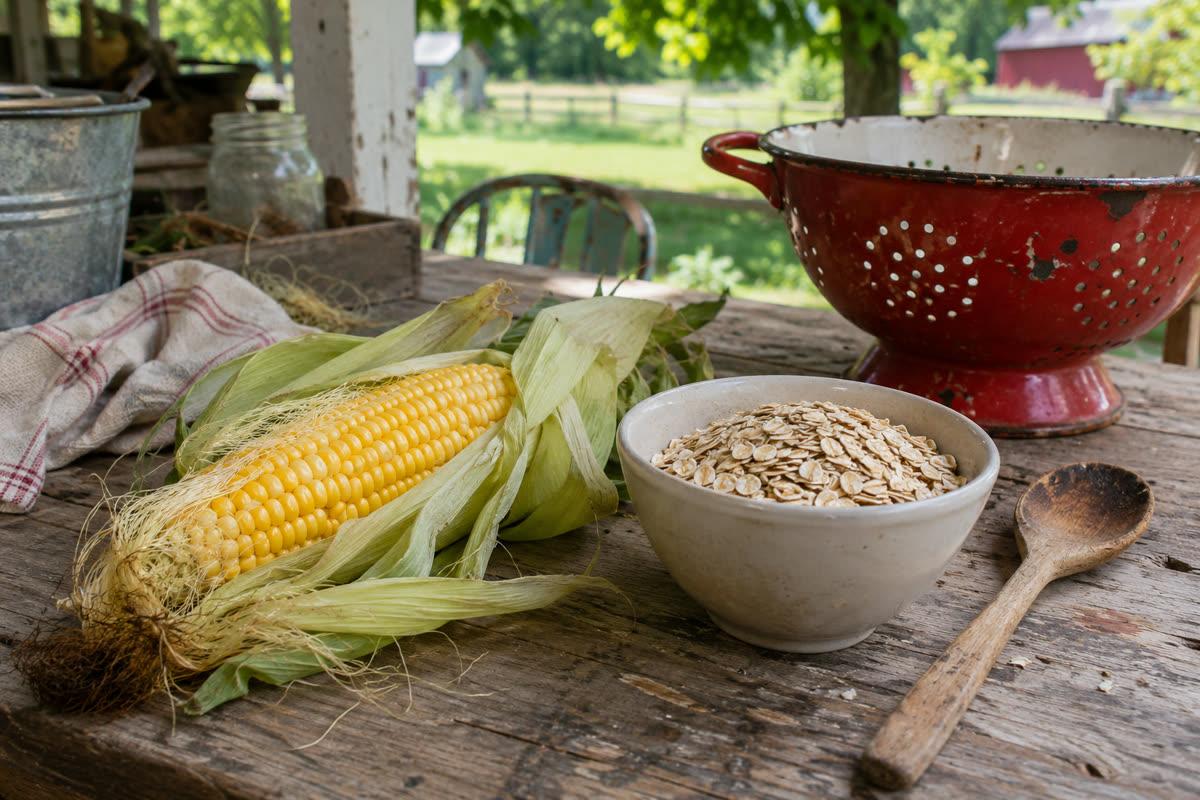 Zein, avenin and gluten: how corn and oats differ from wheatIs zein gluten? How FDA’s rule defines gluten, what “corn gluten” and avenin are, and why a gluten-free label matters for oats.
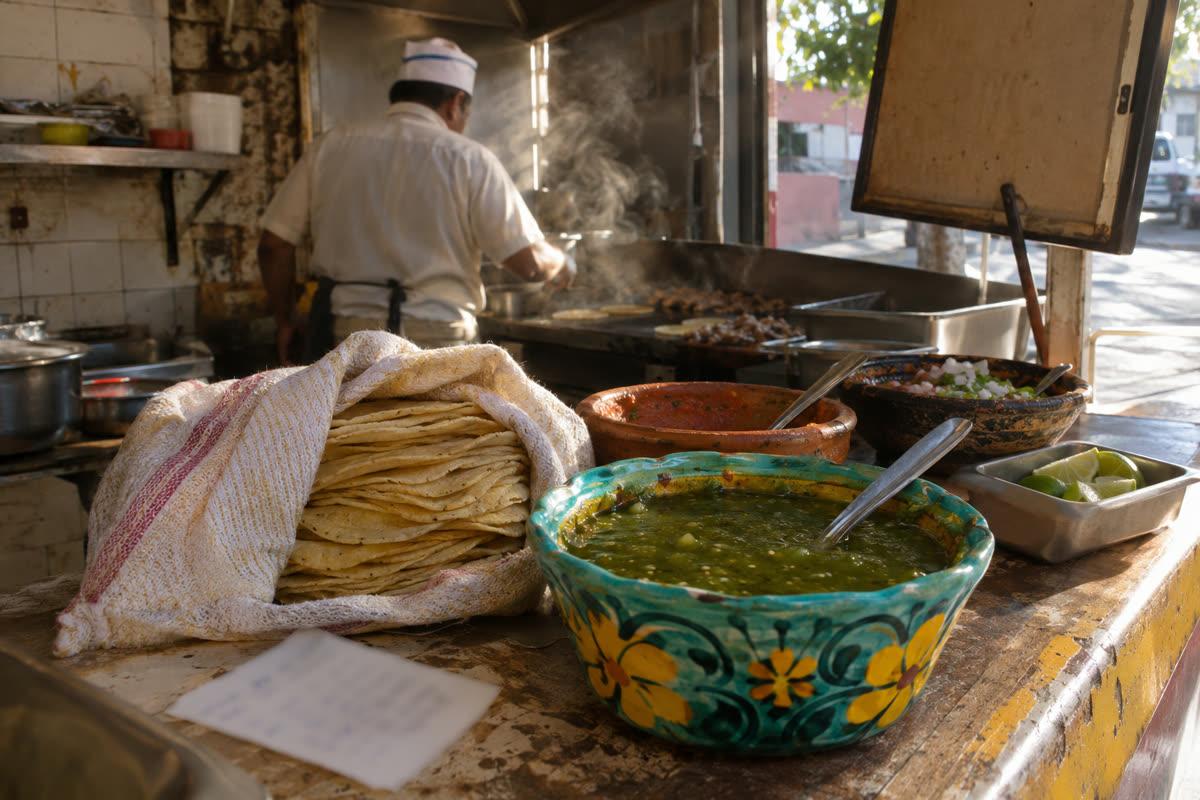 How to order at a Mexican restaurant when you avoid glutenCorn is not the whole story at a Mexican restaurant. What to ask about tortillas, chip fryers, sauces, seasoning and shared grills.
Sources
- [1, 39, 40, 41, 42, 43] US Food and Drug Administration, Questions and Answers on the Gluten-Free Food Labeling Final Rule, checked Nov 17, 2026.
- [2, 44, 45] Celiac Disease Foundation, Gluten-Free Foods, checked Nov 17, 2026.
Read on 2026-11-17: the list under “The following grains, legumes, seeds, and other starchy foods are naturally gluten-free:” names Amaranth, Arrowroot, Beans, Buckwheat groats, Cassava, Chia, Corn, Flax, Gluten-free oats, Millet, Nut flours, Potato, Quinoa, Rice, Sorghum, Soy, Tapioca, Teff and Yucca.
- [3, 5] National Celiac Association, Is there gluten in corn? (Ask the Expert), checked Nov 17, 2026.
- [4] Lowes Foods, Quaker Instant Cheddar Cheese Grits 10 Count 9.8 oz (Lowes Foods listing), checked Nov 17, 2026.
- [6] Bob's Red Mill, Gluten Free Medium Grind Cornmeal, checked Nov 17, 2026.
- [7, 8] Bob's Red Mill, Gluten Free Corn Flour, checked Nov 17, 2026.
- [9, 10] Bob's Red Mill, Organic Masa Harina Corn Flour, checked Nov 17, 2026.
- [11, 35, 47] Celiac Disease Foundation, Sources of Gluten, checked Nov 17, 2026.
Read on 2026-11-17: the list headed “Common Foods That Contain Gluten” names, under Breads and Pastries, croissants, pita, naan, bagels, flatbreads, cornbread, potato bread, muffins, donuts and rolls, and names “Flour tortillas” as its own item.
- [12, 13] Chelsea Milling Company (Jiffy), “JIFFY” Corn Muffin Mix, checked Nov 17, 2026.
- [14, 15] Martha White (The J.M. Smucker Company), Yellow Cornbread & Muffin Mix, checked Nov 17, 2026.
- [16, 17] Krusteaz (Continental Mills), Honey Cornbread & Muffin Mix, checked Nov 17, 2026.
- [18, 19] Martha White (The J.M. Smucker Company), Gluten Free Sweet Yellow Cornbread & Muffin Mix, checked Nov 17, 2026.
- [20, 21] Krusteaz (Continental Mills), Gluten Free Honey Cornbread Mix, checked Nov 17, 2026.
- [22] Bob's Red Mill, Gluten Free Cornbread Mix, checked Nov 17, 2026.
- [23] Bob's Red Mill, Creamy White Corn Grits Hot Cereal, checked Nov 17, 2026.
- [24, 25] Gluten Free Watchdog, Quaker Instant Grits Original (not labeled GF) product test report, checked Nov 17, 2026.
- [26] Dixie Lily, Yellow Corn Quick Grits (Gluten Free), checked Nov 17, 2026.
- [27] Bob's Red Mill, Gluten Free Yellow Corn Polenta, checked Nov 17, 2026.
- [28] Bob's Red Mill, Yellow Corn Polenta, checked Nov 17, 2026.
Read on 2026-11-17: the page for Yellow Corn Polenta lists the ingredient “Corn.” and makes no gluten-free statement for this product; its text says the maker carries “our regular, organic and gluten free polenta” as separate products.
- [29] Pastene, Instant Polenta, checked Nov 17, 2026.
- [30, 31] Melissa's Produce, Organic Polenta (precooked, in tubes), checked Nov 17, 2026.
Read on 2026-11-17: the page for Organic Polenta (precooked, in tubes) gives the ingredients of its Original, Italian Herb and Sun-Dried Tomato versions and the shelf life; no gluten-free statement appears on the page.
- [32] Gruma (MASECA), Maseca, checked Nov 17, 2026.
Read on 2026-11-17: the page lists attributes for each MASECA masa flour (Traditional, Nixtamasa, Tamal, Yellow, Blue and Antojitos); “Gluten Free” appears in the attribute list of every one of them.
- [33] Publix, Maseca Corn Masa Flour, Gluten Free, Instant (Publix listing), checked Nov 17, 2026.
- [34] Gluten Intolerance Group, The Wonders of Gluten-Free Mexican Meals, checked Nov 17, 2026.
- [36, 37] Mission Foods (Gruma), FAQs, checked Nov 17, 2026.
- [38] Guerrero Tortillas (Gruma), FAQs, checked Nov 17, 2026.
- [46] Gluten Intolerance Group, 7 Tips for Avoiding Gluten Cross-Contact at Home, checked Nov 17, 2026.