Youth sports with a gluten-free kid: team snacks, the coach and tournament weekends
Short answer
Talk to the coach before the first snack break1; where you know what food will be served, GIG suggests bringing your own portion similar to what everyone else is having2. Read the full label of anything another parent bought.
- Talk to the coach about if and when food will be involved, so you can prepare1.
- Where you know what will be served, GIG suggests bringing your own portion similar to what everyone else is having2; treat the team snack as a bonus.
- Check another parent’s snack label: under FDA’s rule, any unavoidable gluten in a food with a “gluten-free” claim must be less than 20 parts per million3, while a Contains line covers wheat but not barley or rye4, 5.
- For away games, pack a cooler or backup snacks and call a restaurant before the team arrives6, 7.
Part of Kids, school, college and family, 21 guides
Key points
- GIG names sporting events and tournaments among the events where it is hard to know what food will be there, and suggests bringing food similar to what everyone else is having8, 2.
- FDA says its rule does not prohibit a truthful, voluntary advisory statement such as “made in a facility that also processes wheat” on a food that also carries a gluten-free claim9.
- Sports drinks differ by maker: Powerade’s US FAQ answers its gluten question “Yes”10, while Gatorade’s FAQ says its ready-to-drink and mix products have not been tested to be gluten-free45.
- GIG says hand sanitizer and dry towels are often found to leave residue behind, and points to wipes, wet cloths with detergent, or soap and water11.
What to tell the coach and the team parents
GIG’s advice for after-school activities is to talk with your child’s coach or instructor about if and when food will be involved, so you can prepare1. Do it before the first practice, not at the first snack break.
Keep the message about what you will do, not what others must do. GIG’s sample wording for a friend or host offers to bring a dish, which keeps the focus on what you will do: “I know this is complicated, so I am more than happy to bring my own dish as well”12.
For what the child cannot eat, GIG gives wording written for ordering in a restaurant: “I am on a medically restricted diet and am unable to eat wheat, rye, barley, and foods made with these grains”13. Adapt it to your child and put it on the card below.
- Ask the coach whether food is ever part of practice, games, team meals or fundraisers, and who organizes it.
- Ask who runs the snack schedule, and ask that person to tell you the day before what is planned.
- Say that your child will bring their own portion and that you will read the label of any team snack yourself.
- Hand over the one-page card and give your phone number.
A bring-your-own portion that does not single the child out
GIG lists sporting events and tournaments among the events where food is hard to predict8. Its suggestion for events where you know what will be served: bring your own that is similar to what everyone else is having2.
- Match the item. For events that usually have baked goods, GIG suggests making a large batch at home and freezing it individually, then defrosting just a few when it is time for the event14.
- Keep something compact in the bag. GIG calls certified gluten-free bars a compact option15, and says gluten-free noodle cups just need hot water16.
- GIG also suggests volunteering to make or bring a food item to an event17. Pick one whose label you have already read.
A rule to use: your child’s own portion is the plan, and the team snack is a bonus only if you have read its label first.
Reading the label of a snack another parent bought
Ask the parent to keep the package or send a photo of the ingredient list and any allergen lines. Then work through the label in this order. Our guide to reading a US food label covers each step in more detail, and the gluten scanner can read a photo of a label.
- A “gluten-free” claim. On a food FDA regulates, it means the food has no gluten grain as an ingredient, no ingredient made from one unless it was processed to remove gluten and the food stays under 20 parts per million, and any unavoidable gluten under 20 ppm3.
- A certification mark. GFCO says products are considered certified if they appear on its Product Finder list and carry one of its certification marks18; GIG says GFCO-certified food meets a threshold of 10 ppm of gluten or less19.
- The Contains line. Where a Contains line is used, the law has it printed immediately after or next to the ingredient list4, but wheat is on the list of major food allergens and barley and rye are not5, so read the whole ingredient list for barley, rye and malt.
- The ingredient list. GIG’s label-reading list names wheat, rye, barley and malt, and sneakier forms such as hydrolyzed wheat, modified food starch and brewers yeast20.
- A may-contain or shared-facility line. FDA says its rule does not prohibit a truthful, voluntary advisory statement such as “made in a facility that also processes wheat” on a food that also carries a gluten-free claim9. See may-contain wheat labels for how to weigh one.
If there is no claim and you are not sure, your child eats their own portion.
Shared bowls, bare hands and the bench
Even a checked snack can pick up crumbs on its way to the child. GIG’s tailgate article lists shared serving tools as a cross-contact route: if the same spoon, fork, tongs or scoop serves gluten-containing and gluten-free food, cross-contact is inevitable21.
- Give your child their portion before the bag, box or bowl goes round the bench.
- Wash hands before eating. GIG says wet wipes, wet cloths with detergent, or soap and water do the trick for removing food proteins, while hand sanitizer and dry towels are often found to leave residue behind11.
- Treat snack mixes, cookies and crackers from a shared table with caution: GIG’s tailgate article says to avoid them unless the packaging verifies a gluten-free label22.
Sports drinks, popcorn, jerky, cereal treats and bars
These are the items that come up first on a snack schedule. Each row says what a source says and links to our verdict, which shows the maker’s own pages and the date we read them.
| Snack or drink | What the sources say | Our verdict |
|---|---|---|
| Powerade | The US FAQ on powerade.com answers “Is POWERADE gluten free?” with “Yes”10. | Powerade |
| Gatorade | Gatorade’s FAQ says its ready-to-drink and mix products are not formulated using gluten-containing ingredients but have not been tested to be gluten-free45. | Gatorade |
| Popcorn | GIG: plain popcorn is naturally gluten-free, and flavored popcorn could contain gluten23. | Popcorn |
| Rice Krispies cereal | WK Kellogg Co says Rice Krispies are not labeled gluten free because they contain malt, and that the malt comes from barley and may contain gluten24. | Rice Krispies |
| Chex Mix | The Traditional mix’s page says “Contains wheat and soy ingredients”25. | Chex Mix |
| Granola and oat bars | NIDDK says cross-contact between oats and grains that contain gluten is common26; GIG calls certified gluten-free bars a compact option15. | Granola bars |
| Beef jerky | FDA says that, in general, soy sauce made from soybeans and wheat may not bear a “gluten-free” claim27. FDA’s rule does not apply to foods whose labeling USDA regulates, and USDA generally regulates the labeling of meats46. If a jerky’s ingredients list soy sauce, check which kind. | Beef jerky |
Read the page for the exact product in the cooler. A verdict is a dated reading of the maker’s pages, and the package in your hand has the last word.
A coach card to copy
Put this on one page. Fill in the blanks, and keep a photo of it on your phone.
- Player: ____ Team: ____ Season: ____
- What my child cannot eat: wheat, rye, barley and foods made with these grains (wording adapted from GIG’s sample13). Add anything else your child’s healthcare team has told you.
- At snack time: my child eats the portion packed from home. If you offer a team snack, please keep the package so I can read the ingredients first.
- Shared food: please let my child take their portion before bags and bowls go round, and have wet wipes or a sink available; GIG says hand sanitizer is often found to leave residue behind11.
- On trips: please do not order or share food for my child without asking me. I will send the plan for meals.
- If my child feels unwell or may have eaten something: call me first at ____. What to do next is a question for my child’s healthcare team, and mine are: ____. GIG says to consult your healthcare team28.
This guide gives no instructions for what to do after an exposure: ask your child’s healthcare team for them, and write them on the card.
Away games and tournament weekends
GIG’s road-trip advice puts packing your own food first: when you bring your own, you are in control and know exactly what you are eating29.
- A cooler for car trips. GIG says that with a cooler you can bring perishable items6, and to pack ice packs to keep items fresh30.
- A bag of backups for the bench. GIG suggests carrying small, compact, shelf-stable snacks at all times31.
- A plan for the hotel. GIG mentions putting together food at your hotel32 and booking a vacation rental with a kitchen33. Ask when booking whether the room has a refrigerator or microwave.
- The hotel breakfast. GIG says any buffet-style display introduces new opportunities for cross-contact34, and serving utensils may be used in both foods35. A packed breakfast is the plan; treat the buffet as optional.
- A grocery stop. GIG suggests adding grocery stores to the route research, since convenience stores may be the only other option36.
- Shared team tents and potlucks follow the same rules as the bench: your child’s own portion first, and no shared tongs or scoops21.
Do the research before you leave: GIG suggests checking menus, reading reviews and calling to ask about gluten-free options yourself37. Send the plan to the coach and the other parents so no one is surprised at the team dinner.
Ordering at a chain with the team
A team order means many people arriving at once. GIG says fast-food establishments are less likely to be able to make appropriate adjustments and cross-contact could be an issue38. Its tips are to call the restaurant the day before or earlier the same day7, and to time the meal before or after the busiest mealtime39. NIDDK’s advice at the counter: tell the server, ask about ingredients and how food is prepared, and ask whether a gluten-free menu is available40.
- Chipotle: the chain’s allergen page says “If you avoid gluten, don’t eat our flour tortillas”41, and that individual foods may touch during preparation, which its chart does not show42.
- Wendy’s: the chain says cross contact is possible in its restaurants and that it is unable to guarantee any menu item is completely free of allergens43.
- Five Guys: read our verdict, which shows what the chain’s own allergy page and allergen guide say and the date we read them.
Read our verdict for the chain before the trip, then ask the same questions at the counter. Our guide to eating out with celiac disease goes further.
Next season, a travel team or high school
- Give the new coach a fresh card each season, and update the contact line.
- If a travel team means more away weekends, the cooler, backup bag and call-ahead habits above do most of the work.
- GIG says older children in middle and high school often want more autonomy and want to enjoy eating out more with their friends44. Hand the card and the questions to your teenager, and let them practice asking.
For the school side of the same plan, see school lunches and classroom snacks.
Verdicts in this guide
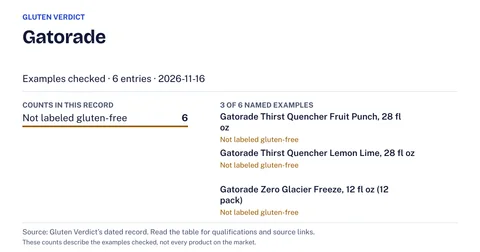 GatoradeNot labeled gluten-freePepsiCo · checked Nov 16, 2026
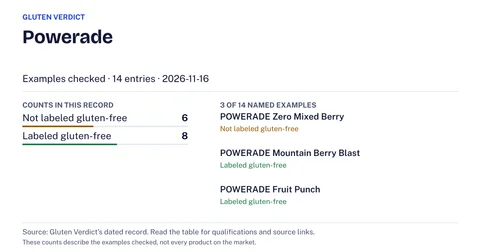 PoweradeLabeled gluten-freeThe Coca-Cola Company · checked Nov 16, 2026
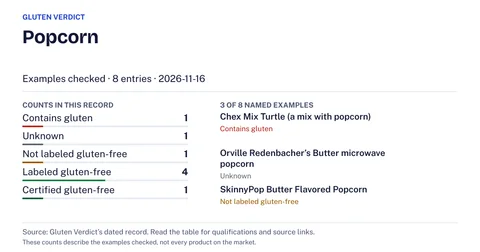 PopcornNaturally gluten-free1 of 8 products we checked contains gluten: Chex Mix Turtle (a mix with popcorn)checked Nov 16, 2026
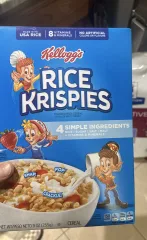 Rice KrispiesContains glutenWK Kellogg Co · checked Nov 16, 2026
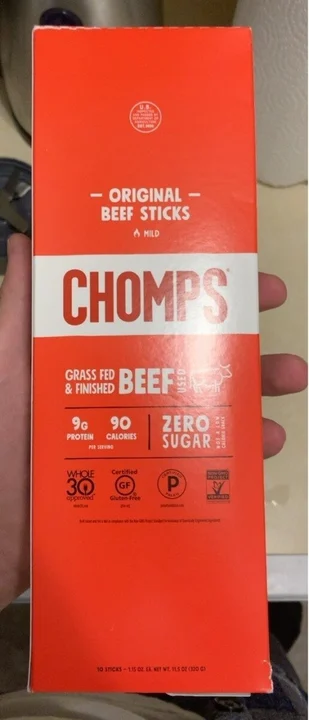 Beef jerkyDepends on the product3 of 8 products we checked contain gluten: Jack Link’s Original Beef Jerky, Jack Link’s Teriyaki Beef Jerky, and Old Trapper Teriyaki Beef Jerky (bulk)checked Nov 16, 2026
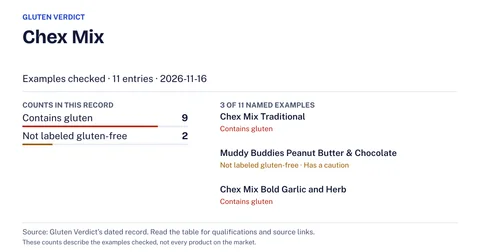 Chex MixContains glutenGeneral Mills · checked Nov 16, 2026
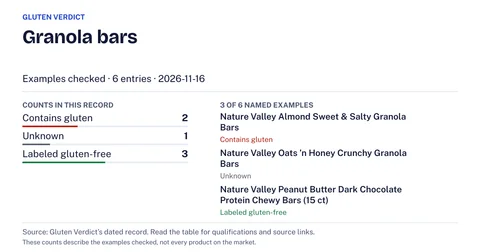 Granola barsDepends on the product2 of 6 products we checked contain gluten: Nature Valley Almond Sweet & Salty Granola Bars and Nature Valley Cinnamon Brown Sugar Soft-baked Oatmeal Squareschecked Nov 16, 2026
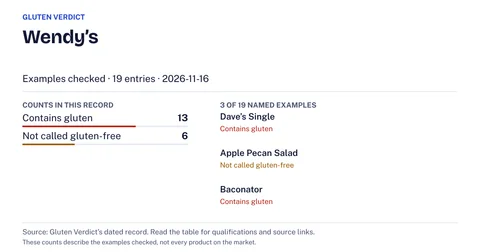 Wendy’sDepends on the order13 of 19 menu items we checked contain glutenWendy’s · checked Nov 16, 2026
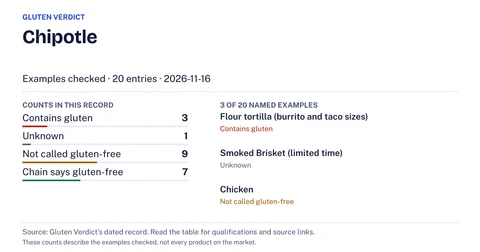 ChipotleDepends on the order3 of 20 menu items we checked contain gluten: Flour tortilla (burrito and taco sizes), Burrito, and QuesadillaChipotle Mexican Grill · checked Nov 16, 2026
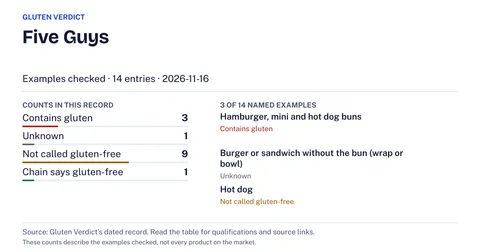 Five GuysDepends on the order3 of 14 menu items we checked contain gluten: Hamburger, mini and hot dog buns; Malt vinegar (fry condiment); and Oreo® Cookie Pieces shake mix-inFive Guys · checked Nov 16, 2026
Questions people ask
Is Powerade gluten-free?
The US FAQ on powerade.com answers “Is POWERADE gluten free?” with “Yes”10. Our Powerade verdict has the dated reading.
Is Gatorade gluten-free?
Gatorade’s FAQ says its ready-to-drink and mix products are not formulated using gluten-containing ingredients but have not been tested to be gluten-free45. Our Gatorade verdict has the dated reading.
Is hand sanitizer enough before a team snack?
GIG says hand sanitizer and dry towels are often found to leave residue behind, and that wipes, wet cloths with detergent, or soap and water remove food proteins11.
Does the Contains line list barley or rye?
The law’s list of major food allergens names wheat but not barley or rye5, so read the whole ingredient list.
More in Kids, school, college and family
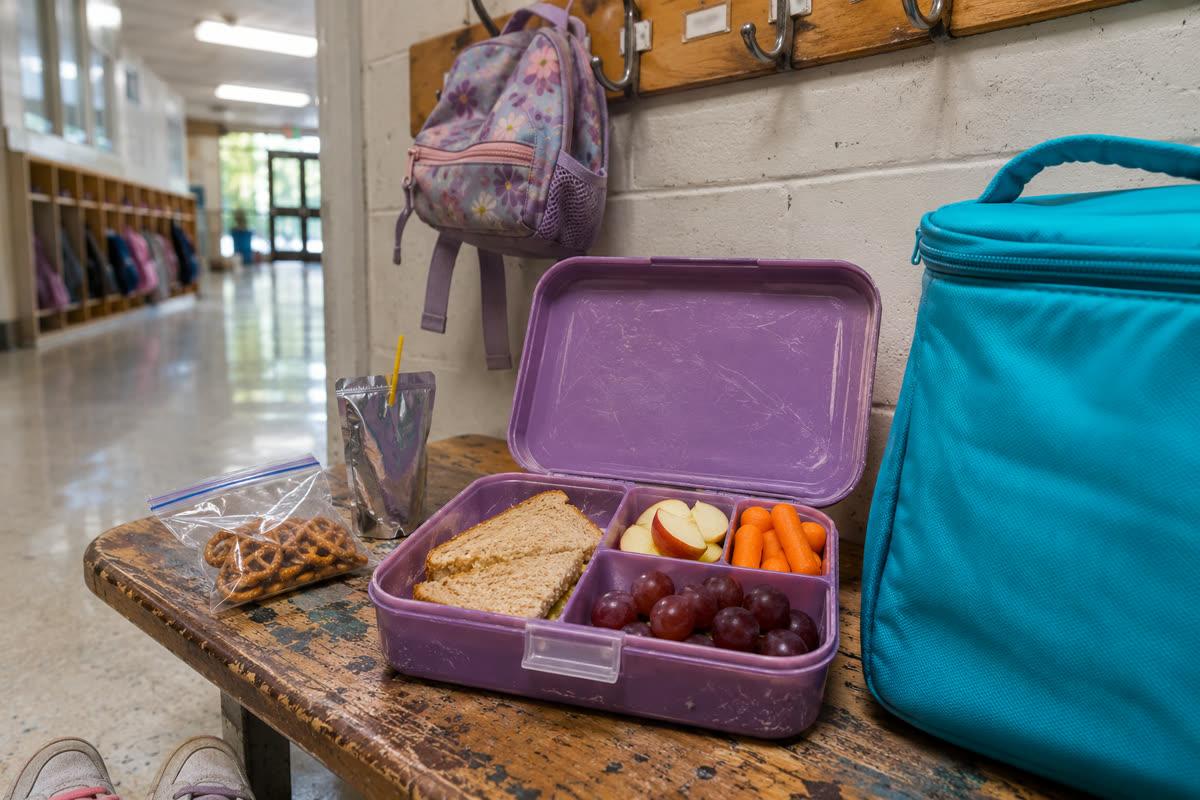 Gluten-free school lunches and classroom snacks: a checklist for parentsHow to prove each lunchbox item, read a snack label for oats, malt and wheat, brief the teacher, and when the school cafeteria is the better route.
 Helping a gluten-free child feel included at the table, at parties, in class and at restaurantsOne plan for each place a gluten-free child gets singled out: the table, parties, class and restaurants, with a sentence the child can say.
 Celiac disease in teenagers: friends, eating out and taking over their own careWhat research and celiac charities say about teenagers with celiac disease: telling friends, eating out, taking over care and clinic follow-up.
 Sleepaway camp, Scouts and school trips for a gluten-free child: what to ask and what to sendWhat to ask a camp, Scout unit or school in writing, what goes on the health form, what food to send, and where gluten-free camps run.
 A care sheet for the babysitter or grandparent of a child with celiac diseaseA one-page care sheet for a babysitter or grandparent: the checked foods, the kitchen cross-contact points, what to do after an exposure, and whom to call.
 Why Goldfish, Cheez-It and Nutri-Grain contain gluten, and what a swap has to showSee the wheat ingredient in Goldfish, Cheez-It and Nutri-Grain in each maker's words, then check any swap against a gluten-free claim or certifier mark.
Related guides
 Eating out with celiac disease: what to check, ask and watch forPlan a restaurant meal with celiac disease: what to check before you go, the questions to ask in order, how to read the answers, and what studies measured.
 What “may contain wheat” and “made in a facility with wheat” mean on a US labelHow to read “may contain wheat”, shared-facility and shared-equipment lines on US labels, with and without a gluten-free claim, and what to check next.
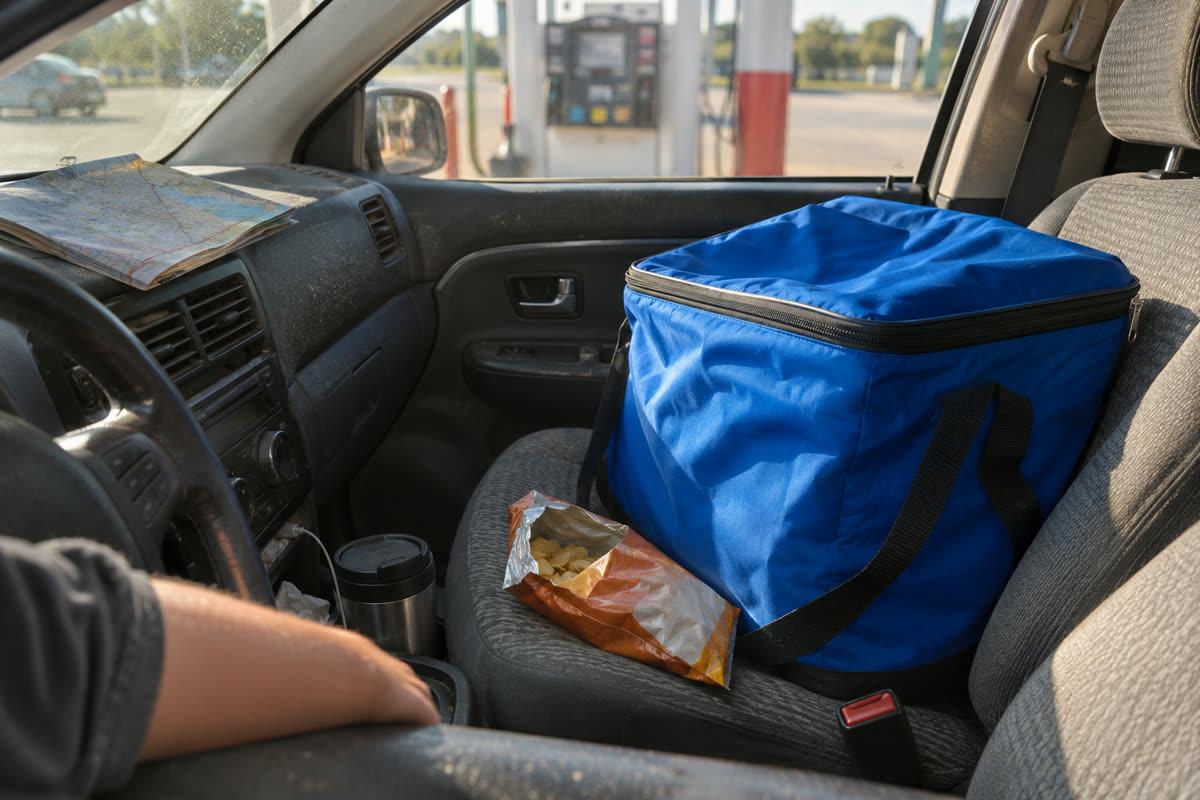 Gluten-free on a road trip: stops, snacks, cooler and hotel nightsPlan each driving day: chain stops with dated verdicts, snacks read at the gas station, a cooler packed to USDA time limits and hotel fridge questions.
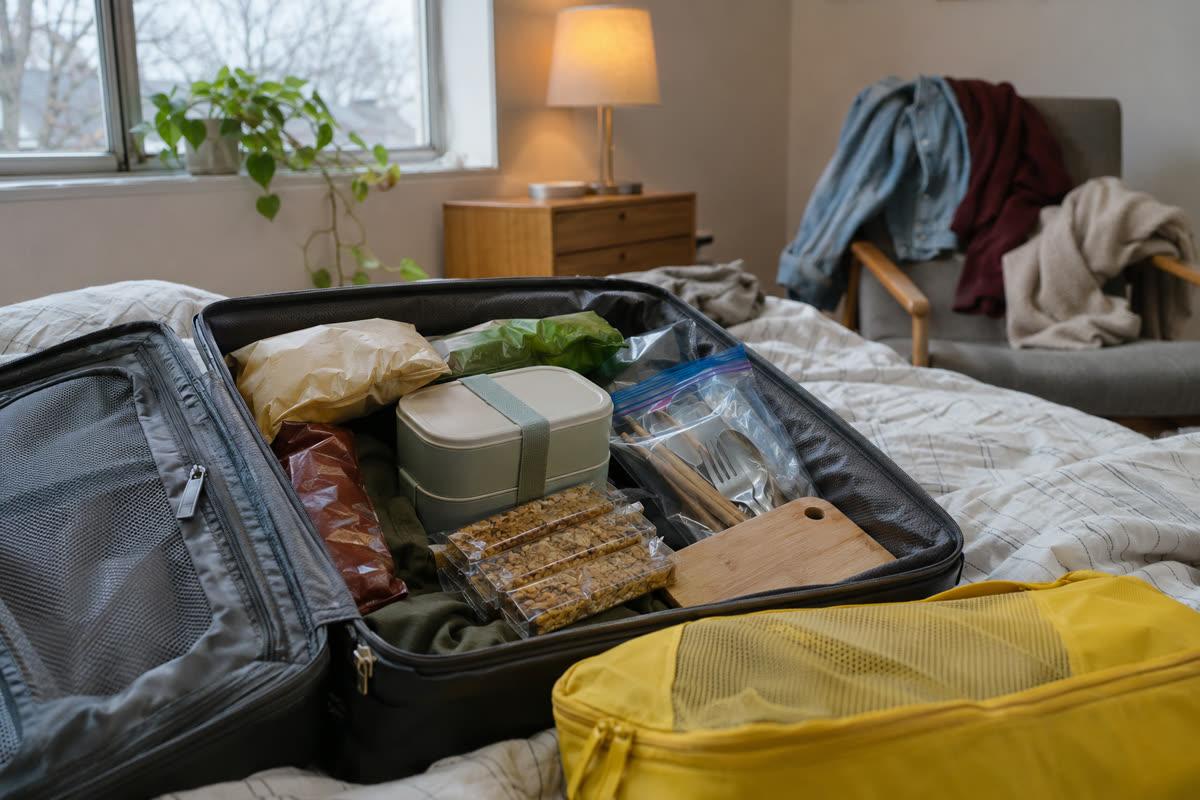 Gluten-free travel packing checklist by trip typeWhat to pack for a flight, hotel, rental kitchen or road trip, with TSA and airline limits and what sensors and enzyme pills do not show.
Sources
- [1, 44] Gluten Intolerance Group, No Gluten, No Problem: A Parent’s Guide to School Year Eating, checked Nov 17, 2026.
- [2, 8, 11, 14, 15, 16, 17] Gluten Intolerance Group, Navigating School Parties and Community Events this Fall, checked Nov 17, 2026.
- [3, 9, 27, 46] US Food and Drug Administration, Questions and Answers on the Gluten-Free Food Labeling Final Rule, checked Nov 17, 2026.
- [4, 5] US Food and Drug Administration, Food Allergen Labeling and Consumer Protection Act of 2004 (FALCPA), checked Nov 17, 2026.
- [6, 30, 32] Gluten Intolerance Group, Gluten-Free on the Go, checked Nov 17, 2026.
- [7, 13, 38, 39] Gluten Intolerance Group, Restaurant Dining: Seven Tips for Staying Gluten-Free, checked Nov 17, 2026.
- [10] Coca-Cola (powerade.com US), POWERADE FAQs, checked Nov 17, 2026.
Read on 2026-11-17: the FAQ entry headed “Is POWERADE gluten free?” answers “Yes”.
- [12] Gluten Intolerance Group, Talking to Friends & Family About Living Gluten-Free, checked Nov 17, 2026.
- [18] Gluten-Free Certification Organization (GFCO), GFCO Product Finder, checked Nov 17, 2026.
- [19, 28, 34, 35] Gluten Intolerance Group, 25 Ways Cross-Contact Could Happen and How to Avoid It, checked Nov 17, 2026.
- [20] Gluten Intolerance Group, Label Reading 101, checked Nov 17, 2026.
Read on 2026-11-17: the list headed “Common:” names wheat, rye, barley and malt (including powder, syrups, and flavor); the list headed “Uncommon/sneaky:” names colorings in food thickened with flour, modified food starch, hydrolyzed wheat, brown rice syrups and brewers yeast.
- [21, 22] Gluten Intolerance Group, Gluten-Free Tailgate Parties, checked Nov 17, 2026.
Read on 2026-11-17: the list headed “Gluten-Containing Foods”, which follows the sentence “Unless you can verify on the food packaging that the product is labeled—or preferably GFCO-certified—gluten-free, avoid eating these foods:”, names buns for burgers and hot dogs, soft and hard pretzels, sandwich bread and other bread products, breaded fried chicken and other fried foods, pasta salads and macaroni and cheese, cookies and crackers, snack mixes, some barbeque sauces, and some sauces, dressings and dips.
- [23] Gluten Intolerance Group, 31 Ways to Kick Off 2021: National Popcorn Day entry, checked Nov 17, 2026.
- [24] WK Kellogg Co, Kellogg’s FAQs: What gluten free products are available?, checked Nov 17, 2026.
- [25] General Mills (chexmix.com), Chex Mix Traditional, checked Nov 17, 2026.
- [26, 40] NIDDK, National Institutes of Health, Eating, Diet, & Nutrition for Celiac Disease, checked Nov 17, 2026.
- [29, 36, 37] Gluten Intolerance Group, Summer Vacation Roadstop Smarts, checked Nov 17, 2026.
- [31, 33] Gluten Intolerance Group, Traveling Gluten-Free with Confidence, checked Nov 17, 2026.
- [41, 42] Chipotle Mexican Grill, Allergens & Special Diet, checked Nov 17, 2026.
- [43] Wendy’s, Nutrition & Food Allergens, checked Nov 17, 2026.
- [45] Gatorade (PepsiCo), Gatorade FAQs: Does Gatorade contain gluten?, checked Nov 17, 2026.