Vegan, organic, non-GMO, natural and keto labels do not mean gluten-free
Short answer
No. Vegan, organic, non-GMO, natural, plant-based and keto labels each describe something other than gluten, and products carrying these labels can still contain wheat, barley or rye1, 2, 3, 19, 28, 29. For gluten, look for the FDA-defined “gluten-free” claim, which includes a limit of less than 20 parts per million of gluten on foods FDA regulates4, 41.
Part of Label reading and gluten-free claims, 17 guides
Key points
- “Organic” describes how a food was produced under USDA’s rules, and the Gluten Intolerance Group says organic status is unrelated to gluten-free status5, 6.
- FDA’s regulations do not currently define “vegan”, and a vegan-labeled sausage can list wheat gluten and declare wheat7, 8, 1.
- The Non-GMO Project Verified mark is a GMO-avoidance certification, and the project’s page about the mark does not mention gluten9, 10.
- FDA has not engaged in rulemaking to define “natural”, and the American Diabetes Association says the FDA has no rules for “keto” claims11, 12.
- “Gluten-free” and three equivalent terms must meet FDA’s definition; other terms about the absence of gluten are judged case by case13.
What each label claims, and who decides what it means
None of these labels is a gluten claim. The table sets out what each one describes, who sets its meaning, and what the sources we read say about gluten.
| Label | What it describes | Who sets the meaning | Does it cover gluten? |
|---|---|---|---|
| Organic | How a food was produced: practices that foster resource cycling and ecological balance, without methods such as genetic engineering5, 14 | USDA’s National Organic Program15 | No: the Gluten Intolerance Group says organic status is unrelated to gluten-free status6 |
| Vegan | No animal-derived products, such as dairy products or eggs7 | Not currently defined in FDA’s regulations; the term is commonly used with this meaning7 | No: one vegan-labeled sausage page lists wheat gluten and “CONTAINS: SOY, WHEAT”8, 1 |
| Plant-based | A food derived from plants rather than animals16 | Used loosely: the Vegan Society says it means different things to different people17 | No: the Gluten Intolerance Group tells readers to watch for plant-based proteins that contain gluten18 |
| Non-GMO Project Verified | Compliance with the Non-GMO Project Standard, a GMO avoidance certification9 | The Non-GMO Project’s own standard9 | No: the project’s page about the mark does not mention gluten10 |
| Natural | Nothing artificial or synthetic included or added that would not normally be expected in the food11 | FDA policy, with no formal definition set by rulemaking11 | No: a product not labeled or certified gluten-free could still use a “natural flavor” made with a gluten-containing ingredient, the Gluten Intolerance Group says19 |
| Keto | Not defined in any source we read: the American Diabetes Association lists “keto”, “paleo” and “low-carb” among claims the FDA has no rules for12 | No FDA rules: any company can put the word on a package12 | No: one bread page that says its products suit ketogenic plans lists vital wheat gluten and “Contains wheat”20, 3 |
Organic: USDA’s rules cover how food is produced, not gluten
USDA’s National Organic Program writes the rules for the production, handling, labeling and enforcement of USDA organic products15. Organic products must be produced with practices that foster resource cycling, promote ecological balance and conserve biodiversity, and without excluded methods such as genetic engineering5, 14. USDA’s page on organic labeling does not mention gluten21.
The Gluten Intolerance Group (GIG) has answered the question for one organic food. It says that, because lentils carry a higher risk of cross-contact than other legumes, they should be labeled gluten-free or GFCO certified, and that organic status is unrelated to gluten-free status, so the advice also applies to organic lentils6.
Organic also applies to grains that contain gluten. Arrowhead Mills sells Organic Pearled Barley and Organic Spelt Flour2, 22. FDA’s rule treats barley and spelt (a form of wheat) as gluten-containing grains23, 4. See our verdicts for barley and spelt.
Vegan and plant-based: about animal ingredients, not gluten
FDA’s regulations do not currently define “vegan”. In its January 2025 draft guidance on plant-based foods, the agency says the word is commonly used to communicate that a food does not contain any animal-derived products7. The Vegan Society defines veganism in dietary terms as avoiding all products derived wholly or partly from animals24.
A vegan mark does not stand in for an allergen or gluten check. The Vegan Society’s own standards say the Vegan Trademark is not an allergen certification and may be used alongside “may contain” warnings25.
“Plant-based” is looser. FDA’s draft guidance says the term conveys that a food is derived from plants rather than animals16, and the Vegan Society says it can mean a vegan diet or “a diet with mostly plants”17.
What it looks like on three product pages
| Product page | Claims on the page | Ingredient list |
|---|---|---|
| Tofurky Plant-Based Italian Sausage | Vegan, Non-GMO Verified, Kosher8 | Vital wheat gluten; soy sauce (water, soybeans, wheat, salt); “CONTAINS: SOY, WHEAT”1 |
| Upton’s Naturals Traditional Seitan | “CRC Kosher Certified Plant Based Free of GMOs”26 | Vital wheat gluten, soy sauce (water, soybeans, wheat, salt), whole wheat flour; “Contains: Wheat, Soy”27 |
| Field Roast Italian Garlic & Fennel Plant-Based Sausages | “Plant-Based Sausages”28 | Wheat gluten, wheat protein isolate, barley malt extract; “CONTAINS: WHEAT”29 |
These are three products, not a rule that every vegan or plant-based food contains wheat. They show that the claim and the ingredient list are separate pieces of information.
The Celiac Disease Foundation lists meat substitutes made with seitan (wheat gluten) among foods that may contain gluten30, and GIG tells readers to watch for plant-based proteins that contain gluten, such as seitan and certain veggie burgers or hot dogs18. Our verdict page for seitan shows what the makers’ pages say, and the guide to plant-based meat and seitan goes further.
Non-GMO and “natural”: genetic engineering and added ingredients
The Non-GMO Project Verified mark indicates that a product complies with the Non-GMO Project Standard, which the project calls a GMO avoidance certification9. The project’s page about the mark does not mention gluten10. The Tofurky sausage in the table above lists “Non-GMO Verified” and also lists wheat gluten and wheat8, 1.
A maker’s page can state a gluten claim and a genetic-engineering claim as two separate statements. KIND’s page for its Dark Chocolate Nuts & Sea Salt bar says “This KIND nut bar is also gluten free, has a low glycemic index, and is made without genetically engineered ingredients”31. Our verdict page reads that bar against the maker’s ingredient list: KIND Dark Chocolate Nuts & Sea Salt bars.
On “natural”, FDA says it has not engaged in rulemaking to establish a formal definition. Its longstanding policy is that the term means nothing artificial or synthetic has been included or added that would not normally be expected in the food11.
The related phrase “natural flavors” is a gluten question of its own. GIG says that on a product not labeled or certified gluten-free it could be made using a gluten-containing ingredient such as yeast extract grown on barley19, and that a natural flavor containing wheat in an FDA-regulated product must be stated on the label32. See natural flavors.
Keto, “clean” and other diet words
The American Diabetes Association says the FDA has no rules for “keto”, “paleo” and “low-carb” claims and that any company can put these words on a package12. It also says there is no FDA definition for the word “clean” on food labels33.
A product pitched at keto eaters can contain wheat. ThinSlim Foods’ page for its Zero Net Carb Honey Bread says its products suit “ketogenic” plans20; it lists wheat protein isolate and vital wheat gluten among the ingredients and states “Contains wheat”3.
Where our verdicts show the gap
- Seitan: a meat substitute written as “seitan (wheat gluten)” by the Celiac Disease Foundation30.
- KIND Dark Chocolate Nuts & Sea Salt bars: the maker’s page carries its gluten-free statement beside a separate genetic-engineering statement31.
- Granola: the Celiac Disease Foundation says granola is often made with regular oats, not gluten-free oats34.
- Oat milk, almond milk and protein powder: each verdict reads the makers’ own pages for the brands we checked. The guide to oat milk and plant milks covers the milks together.
What to look for instead
On foods FDA regulates, “gluten-free” is a defined claim: any unavoidable gluten must be under 20 parts per million4, 41. “Free of gluten”, “without gluten” and “no gluten” are treated as equivalent, while other terms about the absence of gluten are evaluated case by case under FDA’s general misbranding provisions13.
A statement such as “made with no gluten-containing ingredients” is different. FDA says that unless the label also bears a “gluten-free” claim, consumers should not assume the food meets all the requirements for that claim35.
A gluten-free certification logo may appear on a label if its use is truthful and not misleading, and FDA does not endorse any particular third-party program36. A plant-based food can carry one: GIG’s plant-based article lists plant-based products that are also GFCO certified37. See certified vs naturally gluten-free.
The claim is made product by product. FDA says a manufacturer may make foods that are “gluten-free” and foods that contain gluten, and can use the voluntary claim to show which of its foods comply38. A brand known for vegan or organic foods has not told you about the package in your hand.
When there is no claim, FDA says consumers with celiac disease should read and scrutinize labels to avoid gluten ingredients39, and the Celiac Disease Foundation says to always read the label of any food you buy when “gluten-free” is not specified40. How to read a US food label for gluten covers where to look, and wheat-free labels are another claim that is not a gluten claim.
A short checklist at the shelf
- Look for “gluten-free”, “free of gluten”, “without gluten” or “no gluten”: on foods FDA regulates, each must meet FDA’s definition13, 41.
- Look for a gluten-free certification mark, and treat it as that program’s claim: FDA does not endorse any particular program36.
- Read vegan, organic, non-GMO, natural, keto and plant-based as information about something else. None replaces the first two steps.
- With no gluten claim, read the label, as the Celiac Disease Foundation advises40: the full ingredient list, for wheat, barley, rye and malt. The guide to the names of wheat, barley and rye on ingredient lists lists the wording.
- Check plant-based meat substitutes, veggie burgers and hot dogs one product at a time18.
- Recipes change, so the package in your hand has the final word.
Verdicts in this guide
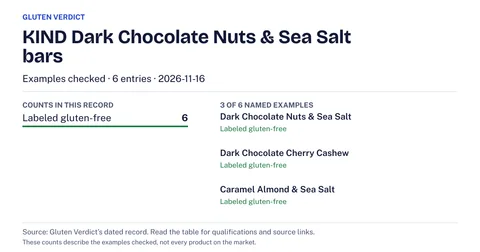 KIND Dark Chocolate Nuts & Sea Salt barsLabeled gluten-freeKIND (Mars) · checked Nov 16, 2026
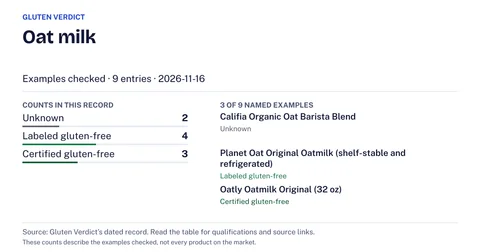 Oat milkDepends on the productchecked Nov 16, 2026
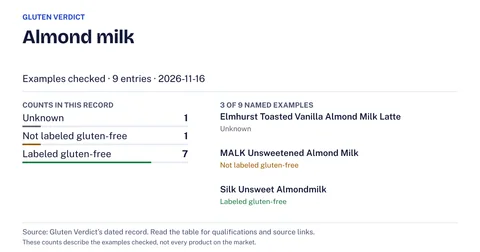 Almond milkNaturally gluten-freechecked Nov 16, 2026
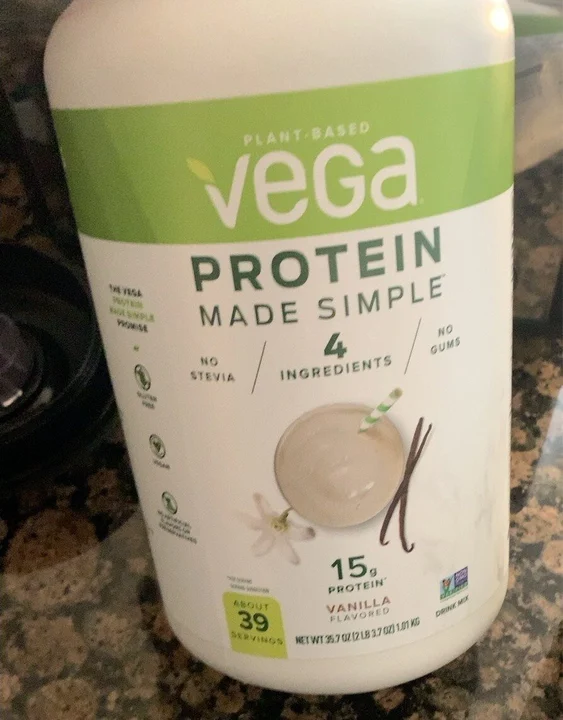 Protein powderDepends on the productchecked Nov 16, 2026
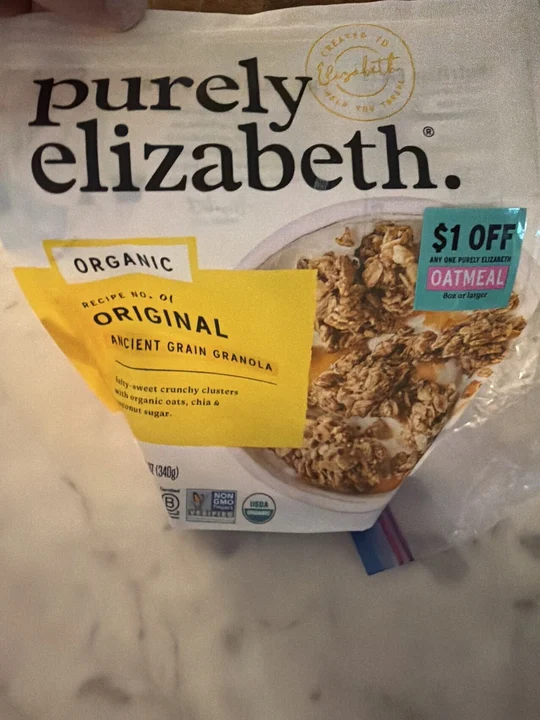 GranolaDepends on the product1 of 6 products we checked contains gluten: Honey Bunches of Oats Honey Roasted Granolachecked Nov 16, 2026
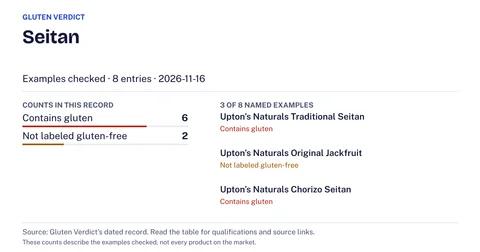 SeitanContains glutenchecked Nov 16, 2026
Questions people ask
Is vegan food gluten-free?
Not necessarily. FDA’s regulations do not currently define “vegan”, and the term is commonly used to mean a food has no animal-derived products7. One vegan-labeled sausage page lists wheat gluten and declares wheat8, 1.
Does non-GMO mean gluten-free?
No. The Non-GMO Project Verified mark indicates compliance with a GMO avoidance standard9, and the project’s page about it does not mention gluten10.
Is keto bread gluten-free?
Not because it says keto: the American Diabetes Association says the FDA has no rules for keto claims12, and one bread page that says its products suit ketogenic plans lists vital wheat gluten and “Contains wheat”20, 3.
Is “plant-based” the same as vegan?
Not always. The Vegan Society says plant-based can mean a vegan diet or “a diet with mostly plants”, and it prefers “vegan” when it wants to be specific17.
More in Label reading and gluten-free claims
 Wheat-free, gluten-free and “no gluten ingredients”: what each label statement covers“Wheat-free”, “gluten-free” and “made with no gluten-containing ingredients” are three different statements. What each covers, and what to check.
 Gluten-free certification programs compared: limit, testing and auditsHow GFCO, GFFP, NSF and the BRCGS-based marks differ on gluten limit, testing and audits, set against FDA’s 20 ppm rule for every claim.
 How to check a gluten-free seal in the certifier's own directorySearch GFCO's Product Finder by brand, product or UPC, read what an entry shows, and learn what a missing listing means for the seal on your pack.
 What to ask a food maker about gluten, and how to read the replyHow to write to a food maker about gluten: what to include, questions that get a usable answer, and how to sort the reply.
 How to read a US food label for glutenWhere gluten shows up on a US food label: the gluten-free claim, the Contains line, the ingredient list and may-contain lines, and what each means.
 Who regulates a gluten-free claim: FDA, USDA or TTBWhich agency sets the rules for a gluten-free claim on packaged food, meat, eggs, beer, wine and spirits, and what to check when a label is unclear.
Related guides
 Certified or naturally gluten-free: when a seal mattersWhich naturally gluten-free foods are worth buying with a claim or seal: produce, grains, flours, oats and processed foods, with FDA rules and test data.
 Kosher and halal marks on food: what they say about glutenA kosher or halal mark and a gluten-free claim answer different questions. What each certifier says its mark covers, and where the gluten answer is.
 Plant-based meat, tofu and seitan: finding the wheat glutenSeitan and some meat substitutes are made from wheat gluten. How to spot it on a plant-based label, with ingredient lists from maker pages.
 Gluten-free and vegan: where wheat hides in plant-based foodSpot wheat gluten in vegan meat substitutes and sauces, ask the right questions at a restaurant, and see where the charities send you for nutrition.
Sources
- [1, 8] Tofurky, Plant-Based Italian Sausage (product page), checked Nov 17, 2026.
Read on 2026-11-17: the page for Tofurky Plant-Based Italian Sausage lists “Vegan”, “Non-GMO Verified” and “Kosher” as bullet points under its description.
- [2] Arrowhead Mills, Organic Pearled Barley (product page), checked Nov 17, 2026.
- [3, 20] ThinSlim Foods, Zero Net Carb Honey Bread (product page), checked Nov 17, 2026.
- [4, 13, 23, 35, 36, 38, 39, 41] US Food and Drug Administration, Questions and Answers on the Gluten-Free Food Labeling Final Rule, checked Nov 17, 2026.
- [5, 14, 21] USDA Agricultural Marketing Service, Labeling Organic Products, checked Nov 17, 2026.
Read on 2026-11-17: the page “Labeling Organic Products” explains the organic labeling categories, the organic seal and the exemptions, and does not mention gluten.
- [6] Gluten Intolerance Group, Organic lentils and gluten-free labeling (FAQ), checked Nov 17, 2026.
- [7, 16] US Food and Drug Administration, Labeling of Plant-Based Alternatives to Animal-Derived Foods: Draft Guidance for Industry (January 2025), checked Nov 17, 2026.
- [9, 10] Non-GMO Project, What is Non-GMO Project Verified?, checked Nov 17, 2026.
Read on 2026-11-17: the page “What is Non-GMO Project Verified?” describes the Butterfly label, GMOs and the Non-GMO Project Standard, and does not mention gluten.
- [11] US Food and Drug Administration, Use of the Term Natural on Food Labeling, checked Nov 17, 2026.
- [12, 33] American Diabetes Association, Nutrition-Related Claims You Should Know About, checked Nov 17, 2026.
- [15] USDA Agricultural Marketing Service, Organic Regulations (National Organic Program), checked Nov 17, 2026.
- [17] The Vegan Society, General FAQs, checked Nov 17, 2026.
- [18, 37] Gluten Intolerance Group, Navigating a Plant-Based and Gluten-Free Diet, checked Nov 17, 2026.
- [19, 32] Gluten Intolerance Group, Are “natural flavors” a concern if I’m gluten-free? (FAQ), checked Nov 17, 2026.
- [22] Arrowhead Mills, Organic Spelt Flour (product page), checked Nov 17, 2026.
- [24, 25] The Vegan Society, The Vegan Trademark: Certification Standards, checked Nov 17, 2026.
- [26, 27] Upton’s Naturals, Traditional Seitan (product page), checked Nov 17, 2026.
- [28, 29] Field Roast, Italian Garlic & Fennel Plant-Based Sausages (product page), checked Nov 17, 2026.
- [30, 34, 40] Celiac Disease Foundation, Sources of Gluten, checked Nov 17, 2026.
Read on 2026-11-17: the list headed “Foods That May Contain Gluten” includes “Meat substitutes made with seitan (wheat gluten) such as vegetarian burgers, vegetarian sausage, imitation bacon, imitation seafood”.
- [31] KIND Snacks, Dark Chocolate Nuts & Sea Salt bars (product page), checked Nov 17, 2026.