Gluten-free in Singapore: hawker noodles, soya sauce and the new label rule
Short answer
Whether a Singapore hawker dish is gluten-free turns on its noodle and its sauce, and the pages we read do not say what backs a stall’s own gluten-free sign. Settle four things before you eat:
- The noodle: char kway teow is described as stir-fried flat rice noodles1 and bee hoon as rice vermicelli2, but the yellow noodles in Hokkien mee are described as wheat noodles3.
- The sauce: the traditional method for soya sauce uses wheat flour with the beans4, and the Lee Kum Kee soy and oyster sauce pages we read both list wheat flour5, 6.
- The wok: ask how the cook keeps your order away from wheat noodles and sauces; the Gluten Intolerance Group describes cross-contact as food prepared with cookware or utensils not thoroughly cleaned after gluten-containing food7.
- The pack: Singapore requires cereals containing gluten to be declared in the ingredient list8, 9, and its new gluten-free definition, from 30 January 2026, is 20 mg/kg or less of gluten10, 11.
- Gluten-free limit
- “Gluten-free” is 20 mg/kg or less of gluten by weight of the food as sold; “reduced gluten” is more than 20 and up to 100 mg/kg11, 52
- Set by
- Regulation 250B of the Food Regulations, a new standard in the Food (Amendment) Regulations 2025, in operation from 30 January 202650, 10
- Oats
- Oat is one of the cereals named in the definition, with barley, rye and wheat; we found no separate oat provision53
Part of Travel: Asia and the Middle East, 12 guides

Key points
- The National Heritage Board calls char kway teow “stir-fried flat rice noodles”1, yet lists its base as flat noodles and yellow noodles, flavoured with sweet dark soya sauce12, 13: ask which noodles go in.
- Soya sauce turns up well beyond fried noodles: the Heritage Board names dark soya sauce in the kway chap broth and lists a soya sauce style of chicken rice, and BiblioAsia names dark soy sauce in Indian mee goreng14, 15, 16.
- On a Singapore pack, “cereals containing gluten” means wheat, rye, barley, oats, spelt, their hybridised strains and their products, and the declaration goes in the ingredient list9, 8.
- Singapore’s “gluten-free” is 20 mg/kg or less of gluten, and a gluten-free pack that contains one of the specified cereals must still declare it in the ingredients11, 17.
- The Food Agency’s slides apply the rule to prepacked food and exclude food prepared to order and packed for delivery18; we found nothing that says what backs a stall’s own gluten-free sign.
What the noodle names mean
These are noodle names that a National Heritage Board page or a National Library Board article explains in English; the middle column keeps to what the source says.
| Name on the menu | What the source says | Our verdict page |
|---|---|---|
| Kway teow | Flat noodles12; char kway teow is “stir-fried flat rice noodles”1. Kway chap uses “broad sheets of rice noodles”19. | Rice noodles |
| Bee hoon (beehoon) | Rice vermicelli2. | Rice noodles |
| Mee | Hokkien for “noodle”; goreng is Malay for “fried”, so mee goreng is fried noodles20. | - |
| Yellow noodles, Hokkien mee noodles | In Hokkien mee, “yellow wheat noodles fried with vermicelli”3; the Heritage Board lists Hokkien mee as the “yellow noodles” in char kway teow12. | Egg noodles |
| Hokkien egg noodles in Malay noodle dishes | Mee rebus (egg noodles in thick gravy) and mee soto (egg noodle in chicken broth) include Hokkien egg noodles21. | Egg noodles |
| Laksa noodles | The laksa broth “is served with thick rice noodles or, more infrequently, rice vermicelli”22. | Rice noodles |
Two dishes combine two kinds of noodle. The Heritage Board lists char kway teow’s base as flat noodles and yellow noodles together12, and BiblioAsia describes Hokkien mee as thick yellow noodles and bee hoon2. Ask the cook which noodles go in.
The wheat description of the yellow noodle comes from a National Heritage Board collections postcard of about the 1980s3. BiblioAsia describes the same noodle as “thick yellow Hokkien noodles” without naming the grain2.
Soya sauce, dark soya sauce and oyster sauce
The Heritage Board’s entry on making soya sauce describes the traditional method this way: wheat flour is heated on an iron pan until brown, then the flour and the beans go into trays to ferment4. The Gluten Intolerance Group says many traditional Asian dishes are made with wheat-based ingredients such as soy sauce, noodles and dumplings23, and that soy sauce traditionally contains wheat24. The Singapore Food Agency lists soy sauces and Asian marinades among the condiments where gluten is found25.
The same sauces recur across the dishes in the next section, so ask about the stall’s bottle as well as the dish’s name.
For oyster sauce, the one maker whose pages we read lists wheat flour: Lee Kum Kee’s US page for its premium oyster sauce lists “modified corn starch, wheat flour” and names wheat as the allergen6, and its premium soy sauce page lists wheat flour and names wheat5. Those are US-market pages, so they describe that maker’s US bottles, not what a particular Singapore stall pours. Our soy sauce and oyster sauce verdicts compare more bottles.
A stall’s own mix is another matter. The Heritage Board says the sauce for char kway teow “can be a trade secret to many hawkers”28, so the name of a sauce or a dish will not tell you what is in it.
Dish by dish: what each starts from
These are not verdicts on any stall’s plate. Each row says what a named source describes the dish starting from, and what to ask.
| Dish | What a source says | What to ask |
|---|---|---|
| Char kway teow | Flat noodles and yellow noodles12, though the same page opens with “stir-fried flat rice noodles”1; sweet dark soya sauce, cooked in a wok at very high heat13. | Which noodle, and what is in the sauce; whether the yellow noodle can be left out. |
| Hokkien mee | Thick yellow noodles and bee hoon with prawns, pork belly, chives, egg, squid and fish cake, with sambal belacan and lime2; fried over a very hot fire29. | The yellow noodle is described as wheat3; ask what else is in the pan. |
| Mee goreng (Indian) | Yellow noodles with dark soy sauce, tomato sauce or ketchup16. | The sauces by name. |
| Laksa | A spicy soup of coconut milk, dried shrimp, fishcake and prawns, with thick rice noodles or rice vermicelli22, 30; BiblioAsia adds that tau pok and cockles were later added31. | What the fishcake and the chilli paste contain; see our coconut milk and curry verdicts. |
| Kway chap | Broad rice noodle sheets in a broth made with dark soya sauce19, 14. | The broth’s sauces, not the noodle. |
| Chicken rice | Poached, roasted or soya sauce chicken, served with soya sauce or chilli sauce and a chicken-stock soup15, 26. | Whether the chicken is the soya sauce kind, and whether the dish gets a soya sauce pour. |
| Mee rebus, mee soto | Hokkien egg noodles in thick gravy or chicken broth21. | The noodle; see our egg noodles verdict. |
| Popiah | A spring roll whose skin is typically made of wheat flour32. | The skin is typically wheat flour32; the filling is a separate question. |
| Roti prata | Dough of plain flour, water, egg and salt33. | The Heritage Board names “plain flour” and not the grain33; ask. |
| Hainanese curry rice | Pork chop coated with flour and crushed cream crackers; curry pastes thickened with starch34, 35. | The coating and the thickener, since neither source names the grain. |
| Kaya toast breakfast | Kaya (coconut-milk egg jam) on toast, with soft-boiled eggs, and Hainanese-style kopi or tea36; the bread is locally made37; the Food Agency lists bread among foods where gluten is found25. | What the bread is made from; BiblioAsia says the Hainanese drizzled dark soy sauce over the eggs27. |
The wok, the ladle and the stall
The Heritage Board says that many of its oldest hawkers specialise in one particular dish, refining the recipe over the years38. A stall that specialises may have fewer noodles and sauces to ask about, and a typical hawker centre has numerous food and drink stalls around a common seating area39.
What no menu line removes is the shared cookware. The Gluten Intolerance Group says cross-contact takes place when food is prepared with utensils and cookware that are not thoroughly cleaned after gluten-containing food7, and that frying oil used for a gluten-containing food becomes a source of cross-contact40. Char kway teow and Hokkien mee are both cooked for wok hei, the smoky flavour of frying over very high heat13, 29. So the question to ask is what else has been through the wok. Whether a given stall cleans or changes anything between orders is something only the cook can tell you.
The Gluten Intolerance Group adds that some Asian cultures have little awareness of gluten-free diets41; it does not name Singapore. Its advice for dining at an Asian restaurant is to call ahead to confirm that gluten-free ingredients and sauces are used and the gluten-free standard is understood, particularly the avoidance of cross-contact42. At a stall, that conversation happens at the counter.
- Ask which noodle your dish uses: rice, or yellow.
- Ask which sauces go in, and ask to see the bottles. A bottle sold prepacked in Singapore has to name cereals containing gluten in its ingredient list8, 43.
- Ask whether the wok is wiped or changed between orders, and whether the oil is shared with fried wheat items.
- If the answers are unclear, order something you can name end to end, or skip the stall.
Reading a Singapore pack
On prepacked food the Singapore Food Agency requires the ingredients that may cause hypersensitivity to be declared in the statement of ingredients8. “Cereals containing gluten” is the first group on its list, and covers wheat, rye, barley, oats, spelt, their hybridised strains and their products43, 9.
Three rules shape what you see on a pack:
- An allergen cannot hide behind a generic term. The Food Agency’s guide says foods and ingredients known to cause hypersensitivity must not be listed using generic terms44.
- A compound ingredient lists its parts in brackets, for example “Batter (cornstarch, wheat flour, salt, sodium bicarbonate)”45.
- A “Contains” statement, if the maker uses one, should appear immediately after the ingredient list46. Allergens that get in unintentionally should not be declared there47.
“May contain” lines are a separate thing from the ingredient list. The Food Agency describes precautionary allergen labelling such as “May contain [name of allergens]”48, says there are no international guidelines for it, and advises consumers to approach the food business directly with questions49. If you photograph a Singapore label, our gluten scanner can read the ingredient text from the photo.
| Printed words | What the Food Agency says |
|---|---|
| Cereals containing gluten | Wheat, rye, barley, oats, spelt, their hybridised strains and their products9. |
| Contains | A statement that, if used, follows the ingredient list46. |
| May contain … | Precautionary allergen labelling, with no international guidelines48, 49. |
| gluten-free, naturally gluten-free, reduced gluten | Defined from 30 January 2026 by Regulation 250B; see the next section50, 10. |
Singapore’s gluten-free definition: Regulation 250B
The Food Agency’s slides present the change as one of four in the Food (Amendment) Regulations 2025: a new standard for gluten-free and reduced gluten food and associated claims, Regulation 250B50. The slides say the amendments were published in the e-Gazette on 31 January 2025 and come into operation on 30 January 202610. We read these pages on 2026-11-17, after that date.
| Term | Definition |
|---|---|
| Gluten-free food | Food that is not or does not contain a cereal and has 20 mg/kg or less of gluten by weight as sold, or that is or contains a cereal but has been processed to 20 mg/kg or less11. |
| Naturally gluten-free food | Food that is not or does not contain a cereal and has 20 mg/kg or less of gluten by weight as sold51. |
| Reduced gluten food | Food that is or contains a cereal and has been processed to more than 20 mg/kg but no more than 100 mg/kg52. |
The definition’s list of cereals names barley, oat, rye and wheat, where wheat means durum wheat, Khorasan wheat, spelt or any other Triticum species53.
What the rule does not promise
- A pack labelled gluten-free that contains these cereals must still name them in the ingredients17.
- The Food Agency says gluten may still be present, because the limit is 20 mg/kg or less54.
- Where a pack holds a gluten-free food and another food, the words must sit by the name of the gluten-free item: the slides’ example is potato chips with wheat-based seasoning, where “naturally gluten-free” must appear immediately before or after “potato chips”55.
Compared with the US
FDA’s Q&A says any unavoidable gluten in a US gluten-free food must be less than 20 ppm56; Singapore’s wording is 20 mg/kg or less11. We have compared the wording only; we did not read a source that compares enforcement. Our labeling laws by country guide sets other countries beside each other, and the Thailand guide covers its neighbour.
Stalls, imports and packs bought before the change
The Food Agency says the labelling amendments apply to prepacked food, and that prepacked food does not include food prepared on a customer’s order and packed for delivery, such as restaurant-prepared dishes for delivery18. The slides do not mention a plated hawker meal, so we cannot say how the rule treats one; the examples they give are food prepared to order and packed for delivery. The pages we read do not say which rule governs a gluten-free sign at a stall, so we do not treat one as meeting Regulation 250B.
For packs, the slides say food businesses must ensure that prepacked food made available for sale in Singapore on or after 30 January 2026 complies57. We found no page in this set that explains how stock already on a shelf before that date is treated, so read the wording on the pack in your hand against the definitions above.
What we could not confirm
- We could not open Singapore Statutes Online (it refused the request), so the text of Regulation 250B comes from the Food Agency’s own slides and labelling guide, not from the gazetted regulation.
- The Food Agency’s labelling guide lists its amendments through November 2025 on its cover58; the slides are a presentation, not the regulation.
- National Library Board’s Infopedia entries and Kikkoman USA’s product pages blocked automated reads, so nothing here relies on them.
- We found no source for what goes into kecap manis, a stall’s chilli sauce, sambal belacan or fishcake, or for kopitiam drinks such as kopi and tea with milk.
- Lee Kum Kee’s pages are US-market pages; we did not read a Singapore-market ingredient list.
- We found no Singapore celiac society page to link, and no source on any named stall’s practices. This guide names no stall.
Verdicts in this guide
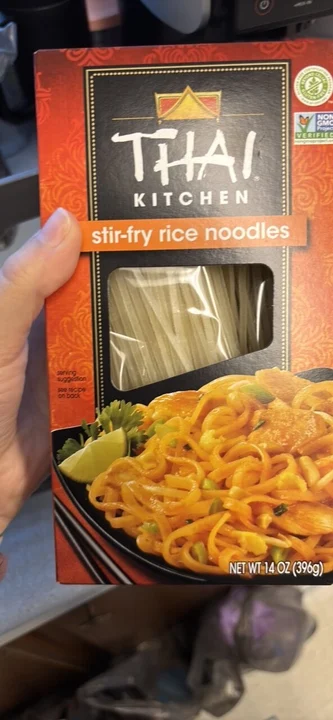 Rice noodlesNaturally gluten-free2 of 9 products we checked contain gluten: Annie Chun’s Pad Thai Noodle Bowl with Vegetables and Annie Chun’s Pho Soup Bowl with VegetablesBuy it labeled gluten-freechecked Nov 16, 2026
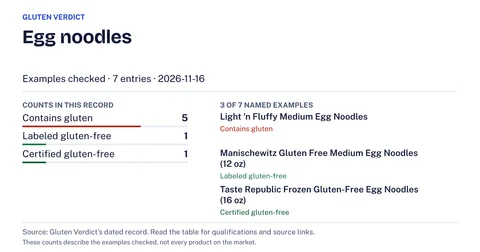 Egg noodlesContains glutenchecked Nov 16, 2026
 Soy sauceDepends on the product3 of 7 products we checked contain gluten: Kikkoman Soy Sauce (Non-GMO), 20 oz; San-J Organic Shoyu Soy Sauce; and Lee Kum Kee Premium Soy Sauce (No Preservatives Added)checked Nov 16, 2026
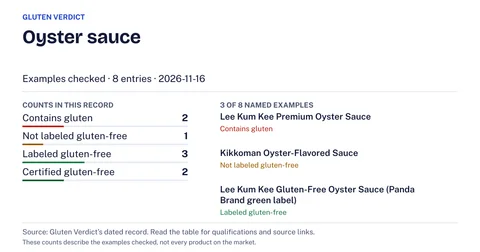 Oyster sauceDepends on the product2 of 8 products we checked contain gluten: Lee Kum Kee Premium Oyster Sauce and Lee Kum Kee Panda Brand Oyster Flavored Saucechecked Nov 16, 2026
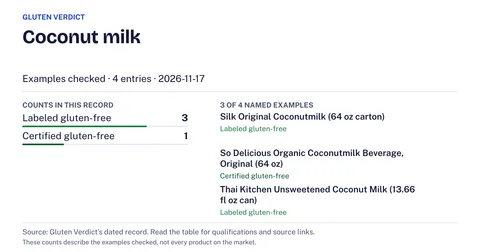 Coconut milkNaturally gluten-freechecked Nov 17, 2026
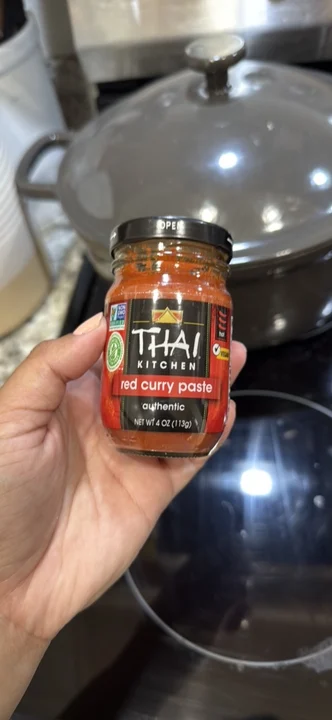 CurryDepends on the product2 of 11 products we checked contain gluten: S&B Golden Curry Mix, Mild (curry roux block) and S&B Golden Curry Sauce with Vegetables, Mild (pouch)checked Nov 16, 2026
Questions people ask
Is char kway teow gluten-free?
It depends on the noodle. The Heritage Board calls it “stir-fried flat rice noodles”1 but lists its base as flat noodles and yellow noodles, flavoured with sweet dark soya sauce12, 13, and a Heritage Board postcard describes the yellow noodle in Hokkien mee as a wheat noodle3. Ask which noodles go in.
Is bee hoon gluten-free?
Bee hoon is rice vermicelli2, but in Hokkien mee it is cooked with yellow wheat noodles3; ask what else is in the pan.
Is laksa gluten-free?
The Heritage Board describes laksa as coconut milk, dried shrimp, fishcake and prawns in a broth served with thick rice noodles or rice vermicelli22, 30. We found no source on what a stall’s fishcake or chilli paste contains.
Is soy sauce in Singapore gluten-free?
The Gluten Intolerance Group says soy sauce traditionally contains wheat24, the Food Agency lists soy sauces among condiments where gluten is found25, and the Heritage Board’s account of the traditional method includes wheat flour4.
More in Travel: Asia and the Middle East
 Eating gluten-free in Thailand: sauces, noodles and street stallsWhere wheat shows up in Thai sauces, noodles and street food, how Thailand words its own gluten-free rule, and the Thai words to look for on a pack.
 Gluten-free in Hong Kong: dim sum wrappers, noodles, sauces and the packet labelSort Hong Kong dim sum, noodle-shop and sauce choices by wrapper, noodle and ingredient, and read what a Hong Kong packet must name.
 Gluten-free in Vietnam, the Philippines, Malaysia, Indonesia and Taiwan: sauces, noodles and label rulesWhere wheat enters a Southeast and East Asian meal, what four regulators print about gluten cereals, and the one country whose rule we could not read.
 Gluten-free in China: wheat staples, sauces, hot pot and the label rulesWhere wheat sits in Chinese staples, sauces and hot-pot bases, what China’s label standard requires, and the Chinese words it prints for wheat and gluten.
 Gluten-free in Japan: soy sauce, miso, barley tea and the allergen boxWhat to check in Japan: wheat in soy sauce, barley in miso and barley tea, and what the Japanese allergen box covers and leaves out.
 Gluten-free in South Korea: where wheat and barley turn up at a Korean tableWhere wheat and barley turn up in Korean food: marinades, ganjang, doenjang, gochujang, noodles, barley tea, and what a Korean label says.
Related guides
 Soy, hoisin, oyster, teriyaki and fish sauce: which bottles carry wheatSoy, hoisin, oyster, teriyaki and fish sauce compared by the ingredient lists of Kikkoman, Lee Kum Kee, San-J and Red Boat, plus what to ask at a counter.
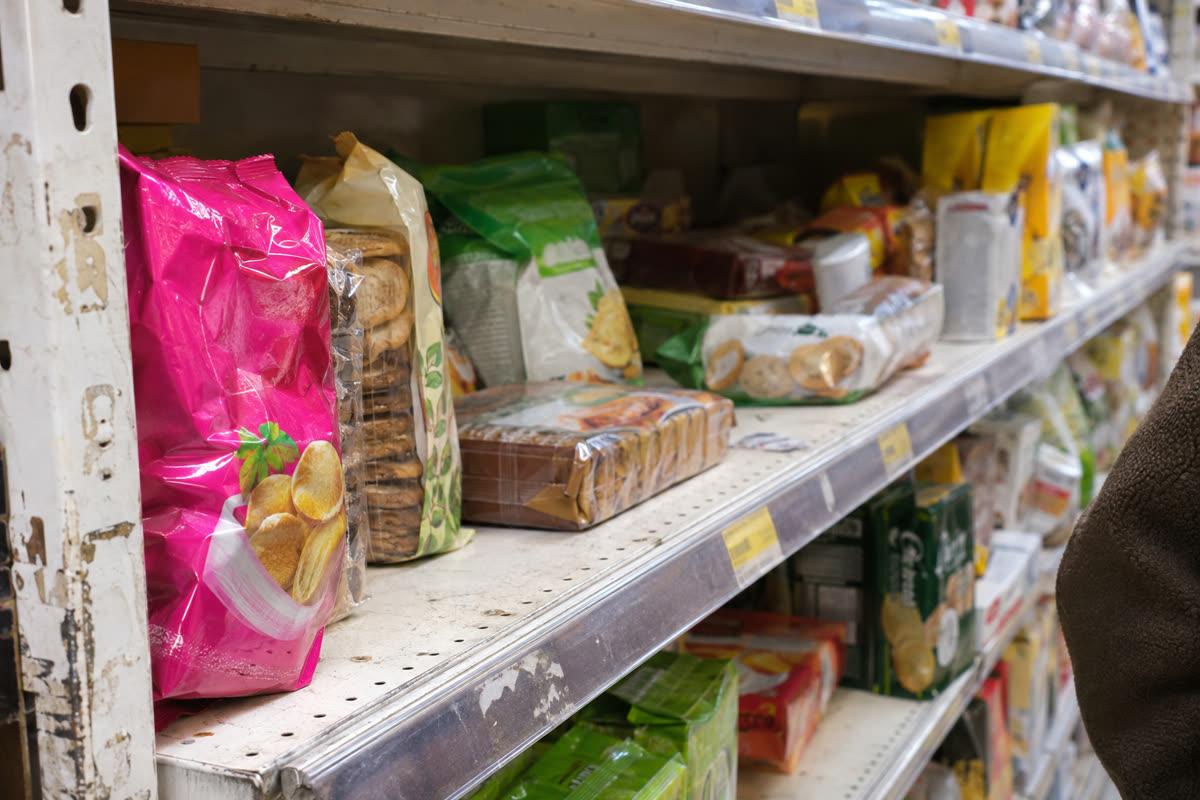 Gluten-free labeling rules by country: ceilings, claim wording and where no rule was foundLook up the gluten-free limit and claim wording for the US, Canada, EU, UK, Australia, New Zealand and more, each figure tied to the page we read.
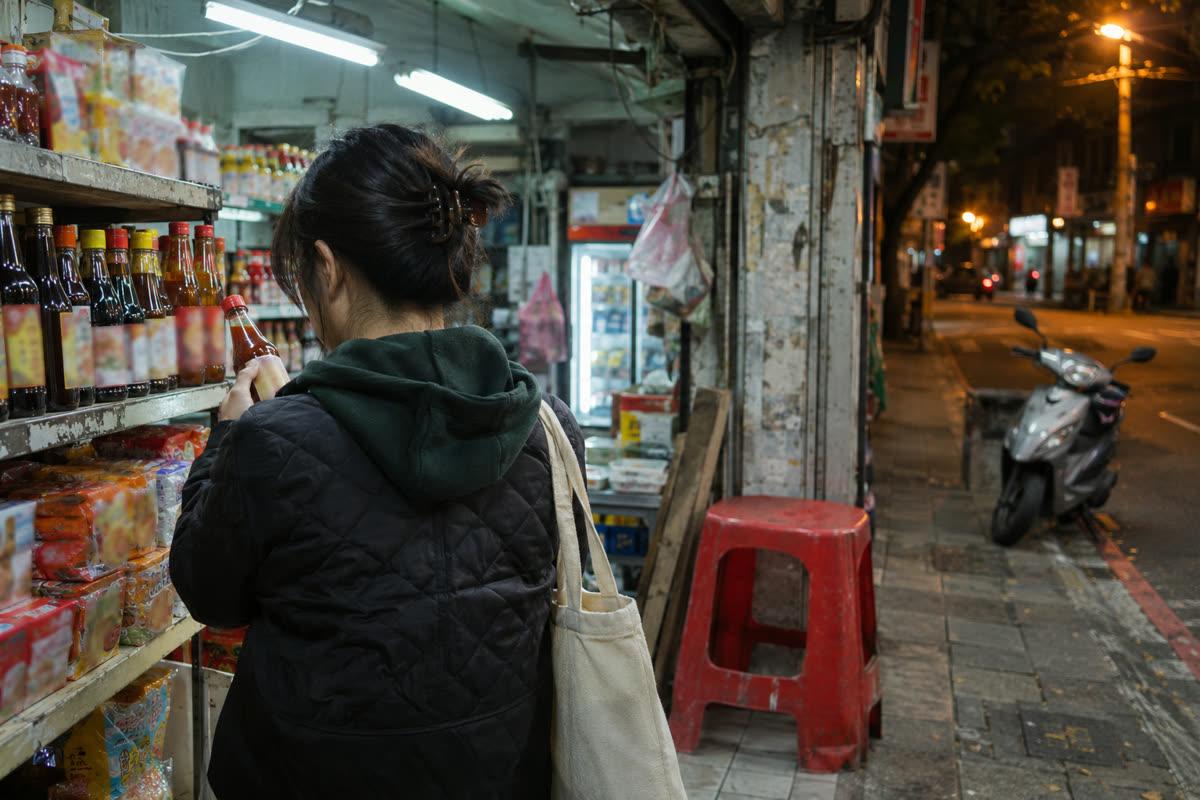 What “gluten-free” means on a pack in Asia, country by countryWhat a gluten-free claim requires in six Asian countries, what Japan, Hong Kong, Taiwan and China print instead, and how to read a pack in hand.
 Gluten-free dining cards in other languages: where the wording comes fromWhich gluten-free card wording comes from EU law or a celiac society, which cards are members-only, and how to hand one to a server.
Sources
- [1, 12, 13, 28] National Heritage Board (Roots.gov.sg), Char Kway Teow (intangible cultural heritage inventory), checked Nov 17, 2026.
- [2, 16, 20, 27, 29, 31] BiblioAsia (National Library Board, Singapore), We Are What We Eat: The Evolution of Chinese Food in Singapore, checked Nov 17, 2026.
- [3] National Heritage Board (Roots.gov.sg), Singapore’s local food delicacies (postcard, c. 1980s, collections), checked Nov 17, 2026.
- [4] National Heritage Board (Roots.gov.sg), Making of Soya Sauce (intangible cultural heritage inventory), checked Nov 17, 2026.
- [5] Lee Kum Kee (USA), Premium Soy Sauce, ingredient list (US product page), checked Nov 17, 2026.
- [6] Lee Kum Kee (USA), Premium Oyster Sauce, ingredient list (US product page), checked Nov 17, 2026.
- [7, 40] Gluten Intolerance Group, Cross-Contact, checked Nov 17, 2026.
- [8, 25, 43] Singapore Food Agency, Food allergy and intolerance, checked Nov 17, 2026.
- [9, 44, 45, 46, 47, 48, 49, 58] Singapore Food Agency, A Guide to Food Labelling and Advertisements, checked Nov 17, 2026.
- [10, 11, 17, 18, 50, 51, 52, 53, 54, 55, 57] Singapore Food Agency, Amendments to Labelling Requirements for Prepacked Food (SFA presentation slides), checked Nov 17, 2026.
- [14, 19] National Heritage Board (Roots.gov.sg), Kway Chap (intangible cultural heritage inventory), checked Nov 17, 2026.
- [15, 26] National Heritage Board (Roots.gov.sg), Chicken Rice (intangible cultural heritage inventory), checked Nov 17, 2026.
- [21] National Heritage Board (Roots.gov.sg), Malay Cuisine in Singapore (intangible cultural heritage inventory), checked Nov 17, 2026.
- [22, 30] National Heritage Board (Roots.gov.sg), Laksa (intangible cultural heritage inventory), checked Nov 17, 2026.
- [23, 24, 41, 42] Gluten Intolerance Group, Explore Asian Cuisine – Gluten-Free, checked Nov 17, 2026.
- [32] National Heritage Board (Roots.gov.sg), Popiah (intangible cultural heritage inventory), checked Nov 17, 2026.
- [33] National Heritage Board (Roots.gov.sg), Roti Prata (intangible cultural heritage inventory), checked Nov 17, 2026.
- [34, 35] National Heritage Board (Roots.gov.sg), Hainanese Curry Rice (intangible cultural heritage inventory), checked Nov 17, 2026.
- [36, 37] National Heritage Board (Roots.gov.sg), Traditional Breakfast of Kaya and Kopi (intangible cultural heritage inventory), checked Nov 17, 2026.
- [38, 39] National Heritage Board (Roots.gov.sg), Hawker Culture (intangible cultural heritage inventory), checked Nov 17, 2026.
- [56] US Food and Drug Administration, Questions and Answers on the Gluten-Free Food Labeling Final Rule, checked Nov 17, 2026.