Gluten-free labelling in Australia and New Zealand: what the claim means
Short answer
In Australia and New Zealand a “gluten free” claim means the food has no detectable gluten, no oats or oat products and no malted gluten cereals1, which is a different test from the US limit of less than 20 parts per million2. Read a pack in this order:
- The claim itself: “gluten free” (the three conditions above), or the separate “low gluten”, which allows no more than 20 mg of gluten per 100 g of the food1.
- The ingredient list and the Contains statement, where barley, oats and rye must be named, with “gluten” added, when they contain gluten3.
- Where the pack comes from: Coeliac NZ says a product that only meets the international Codex level of under 20 parts per million cannot carry the words “gluten free” in New Zealand4.
Part of Gluten-free labeling law by country, 12 guides

Key points
- A food with oats or oat products cannot carry a “gluten free” claim under Schedule 41, and Coeliac NZ says this includes imported oats5.
- “Low gluten” is its own claim with one condition, no more than 20 mg of gluten per 100 g, and its Schedule 4 row lists no oats or malt condition1.
- Barley, oats and rye must be declared by name when they contain gluten, and the summary statement then adds “gluten”3.
- Foods imported for sale in Australia must comply with the Code6, and Coeliac NZ says a Codex-only product cannot use the words “gluten free” in New Zealand4.
- Gluten claims stay allowed on foods with more than 1.15% alcohol by volume, so a beer or spirit can carry one if it meets Schedule 47, 1.
Which parts of the Food Standards Code decide a gluten claim
Australia and New Zealand share one rulebook, the Australia New Zealand Food Standards Code. In New Zealand, the provisions of the Code that apply there are incorporated in, or adopted under, the Food Act 20148.
Two parts matter on a gluten pack. Standard 1.2.7 and its Schedule 4 set the conditions for a claim such as “gluten free”9. Standard 1.2.3, with Schedule 9, sets the allergen labelling requirements, including the declarations a label must carry10.
A gluten claim is voluntary in the Code’s own terms: it defines a claim as a statement “which is not mandatory in this Code”11. Once a maker makes one, the food has to meet the table’s conditions, and the claim can only use the table’s descriptors (“free” or “low”, or a synonym) or say that the food contains gluten or is high in gluten9, 1.
What “gluten free” and “low gluten” require
| Claim | What the food must meet |
|---|---|
| Gluten free | The food must not contain detectable gluten; or oats or oat products; or cereals containing gluten that have been malted, or products of such cereals1. |
| Low gluten | The food contains no more than 20 mg of gluten per 100 g of the food. The row sets no oats or malt condition1. |
FSANZ’s page on allergen exemptions repeats the gluten free conditions in the same terms and says its allergen exemptions do not change them12.
The gluten free row is written as “detectable gluten”, not as a figure; we found no number for “detectable” in that row1. FSANZ’s 2004 final assessment report records why: claims should not be false, misleading or deceptive, so calling a food gluten free when it contains detectable gluten was not considered appropriate13.
That report was written under an older numbering of the Code (Standard 1.2.8). The 2015 P1035 report places the gluten conditions “previously in Standard 1.2.8”37. Use the 2004 report for FSANZ’s reasoning and Schedule 4 for today’s conditions1.
Why oats and malt are set apart
FSANZ reviewed gluten claims on foods with oats or malt in Proposal P264. Its Final Assessment Report is dated 17 March 200414.
The report says the older bar on gluten claims for foods with oats or malt was introduced because the available methods could not reliably detect the gluten-equivalent fractions in oats and malt15. It also records that, in the consultation, the ELISA tests then in use were able to detect wheat gliadins and rye secalins but had limited reactivity to barley hordeins and failed to detect oat avenins16.
It also records that opinion was divided: New Zealand health professionals considered that small amounts of oats and malt can be consumed by people with coeliac disease, while Australian health professionals believed there are some people with coeliac disease who cannot tolerate even the smallest amounts17.
FSANZ’s recommendation extended the bar for one claim and removed it for the other. A gluten free claim would need no detectable gluten, no oats or malted gluten-containing cereals and no products of them, while low gluten claims lost the oats and malt ban, leaving 20 mg of gluten per 100 g as the sole criterion18. Today’s Schedule 4 rows have that shape1.
Coeliac New Zealand describes where that leaves oats now: Australian and New Zealand food legislation does not allow oats to be labelled ‘gluten free’, and that includes imported oats5. Because of that, other words are often used on oat products, such as ‘wheat free’, ‘low gluten’, ‘uncontaminated’ or ‘pure’19. The charity’s own position is that it advises against including oats in a gluten-free diet because of the risk of contamination with standard oats products, and it notes that a small number of individuals will not tolerate ‘pure’ oats20.
For the US picture, see gluten-free oats versus regular oats and our verdicts on oatmeal and Cheerios, the second of which draws on General Mills’ own pages.
Malt is excluded in both systems. Schedule 4 excludes malted gluten cereals and their products from the claim1; in the US, FDA says malt extract and similar malt-derived ingredients cannot be used in foods bearing a gluten-free claim21. See our verdicts on malt extract and barley.
How gluten grains are declared on a pack
A declaration is separate from a claim. Under Standard 1.2.3, when a listed food is present in a food for sale in one of the ways the Standard lists, a declaration that it is present is required22. On a pack that looks like this:
- Wheat is declared as “wheat” in the statement of ingredients and in the summary statement23; if gluten is present in the wheat, “gluten” is added to the summary statement24.
- Barley, oats and rye are declared by name, with “gluten” in the summary statement, when they contain gluten3. They are not required to be declared in a form that does not contain gluten25.
- The required name is printed in bold, in a type size no smaller than the rest of the ingredient text26. The summary statement begins with the word ‘Contains’27.
- Food sold without a label, such as at a café or takeaway, must show the declaration in connection with the food or give it on request28.
- Voluntary “may contain” statements are not regulated by the Code29.
The declaration and the claim answer different questions. Allergen exemptions do not change the gluten free conditions12. Glucose syrup shows the difference: FSANZ says glucose syrups must have no more than 20 mg/kg detectable gluten to meet the requirements for an exemption from declaring wheat30, and a glucose syrup with any detectable gluten cannot be labelled gluten free31.
Coeliac New Zealand publishes two rules of thumb for reading labels on products made in New Zealand and Australia. Its Rule 2 says that if wheat, rye, barley, oats or gluten does not appear on the ingredient list, there are no ingredients derived from gluten-containing grains32. Its Rule 3 lists exceptions: some wheat-derived ingredients that it says are so highly processed that they contain ‘no detectable gluten’, including caramel from wheat, dextrose from wheat, glucose syrup from wheat and maltodextrin33. That is the charity’s guidance, not a legal test, and it is for products made in those two countries only32.
For how other countries’ declaration rules compare, see which gluten grains a pack’s allergen line must name, by country.
Side by side with the US rule
The US rule here is FDA’s. Each cell below follows that system’s own source.
| Question | Australia and New Zealand (Schedule 4) | United States (FDA) |
|---|---|---|
| How much gluten? | No detectable gluten1 | Any unavoidable presence of gluten must be less than 20 ppm2 |
| Oats | A food with oats or oat products cannot carry the claim1 | Oats labeled gluten-free must contain less than 20 ppm gluten34 |
| Malted cereals | A food with malted gluten-containing cereals or their products cannot carry the claim1 | Malt extract and similar malt-derived ingredients cannot be used in foods bearing the claim21 |
The headline tests differ in kind: one is a no-detectable-gluten condition, the other a numeric limit1, 2. For the US rules at length, see how to read a US food label for gluten. For every country in one place, see gluten-free labeling rules by country.
Alcohol: gluten claims on beer, spirits and other foods over 1.15% alcohol
Standard 1.2.7 bars nutrition content claims and health claims on a food with more than 1.15% alcohol by volume, with exceptions that include a claim about gluten content7.
That exception comes from FSANZ Proposal P1035, whose purpose its page gives as permitting nutrition content claims about gluten in foods, including beverages, containing more than 1.15% alcohol by volume35. The approval report records the decision: FSANZ decided to amend Standard 1.2.7 so that such claims continue to be permitted after January 201636, with the conditions for gluten content claims unchanged37.
The report names the concern behind it: manufacturers of gluten free beers in New Zealand and Coeliac New Zealand worried that gluten free beer would no longer be permitted to be labelled or advertised as such38.
A beer or spirit can therefore say “gluten free” only if it meets the Schedule 4 conditions, which exclude malted gluten cereals7, 1. For the US view of the same drinks, see the gluten-free alcohol guide and the beer verdict.
A US pack on an Australian or New Zealand shelf
Foods imported for sale in Australia must comply with the Code6, which includes the conditions for a gluten claim1.
Coeliac New Zealand spells out the consequence for overseas labels: a gluten free logo abroad may sit on products tested to the international Codex standard, meaning gluten levels of less than 20 parts per million, and products that only qualify under that standard cannot carry the wording ‘gluten free’ in NZ4. The same charity says imported oats fall under the oats rule5, and advises always checking the nutritional information panel on imported gluten free products39.
So read an imported pack as a new pack: use the table above for the claim, then the ingredient list and the declaration, instead of carrying a US assumption across.
In both countries you may also see Coeliac New Zealand’s Crossed Grain logo, a certified trademark owned by the charity for products produced and licensed in New Zealand and sold in New Zealand and Australia40. It is a charity’s certification, not the Code’s claim.
Carrying food across the border is a separate question. See our guides to Australia and New Zealand; for visitors going the other way, see US gluten-free labels for visitors.
Where to check a food for yourself
- Read the claim wording first, then the ingredient list and the Contains statement, using the tables above.
- Find the supplier’s name and address: the Code requires them on the label, and FSANZ says you can contact suppliers for information that is not on the label41.
- Re-read labels on regular purchases. Coeliac NZ notes that manufacturers often change labels for reasons that include manufacturing changes, legislative requirements and ingredient changes42, and says that if in doubt you should contact the manufacturer directly about changes you notice43.
- Check the rule itself: Schedule 4 and Standards 1.2.7 and 1.2.3 are published on legislation.gov.au (links in the sources below), and FSANZ’s allergen labelling page explains the declaration rules10.
Verdicts in this guide
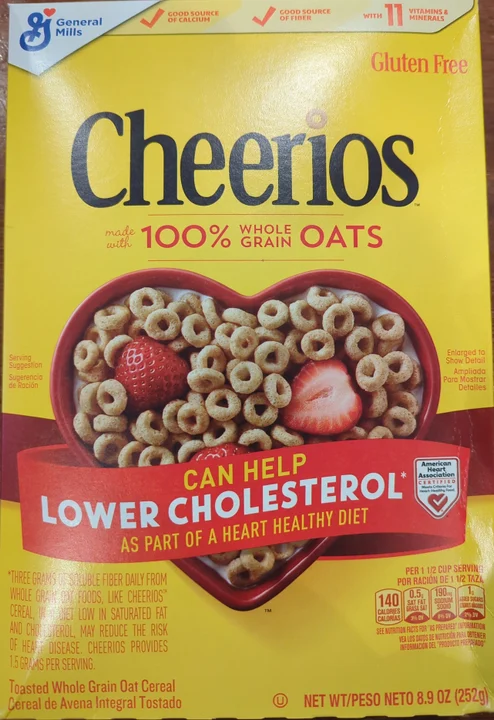 CheeriosLabeled gluten-freeWheat warning on 1 of 8 varieties we checkedGeneral Mills · checked Nov 16, 2026
 OatmealDepends on the productchecked Nov 16, 2026
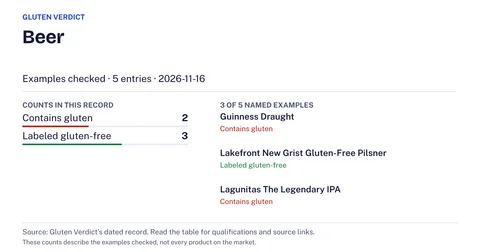 BeerDepends on the product2 of 5 products we checked contain gluten: Guinness Draught and Lagunitas The Legendary IPAchecked Nov 16, 2026
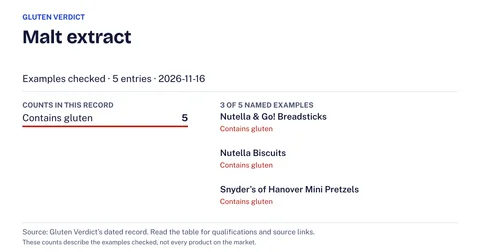 Malt extractContains glutenchecked Nov 16, 2026
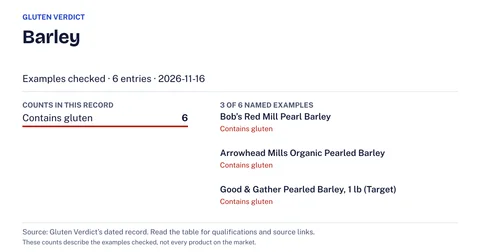 BarleyContains glutenchecked Nov 16, 2026
Questions people ask
Can oats be labelled gluten free in Australia or New Zealand?
No. Schedule 4 requires a gluten free food to contain no oats or oat products1, and Coeliac NZ says Australian and New Zealand food legislation does not allow oats to be labelled ‘gluten free’, imported oats included5.
What does “low gluten” mean on an Australian or New Zealand pack?
Under Schedule 4 the food contains no more than 20 mg of gluten per 100 g, and that row sets no oats or malt condition1. It is a separate claim from “gluten free”.
Is “gluten free” in Australia the same as the US claim?
No. Schedule 4 requires no detectable gluten and excludes oats and malted gluten cereals1. FDA’s rule requires that any unavoidable gluten be less than 20 ppm and lets oats carry the claim at that level2, 34.
More in Gluten-free labeling law by country
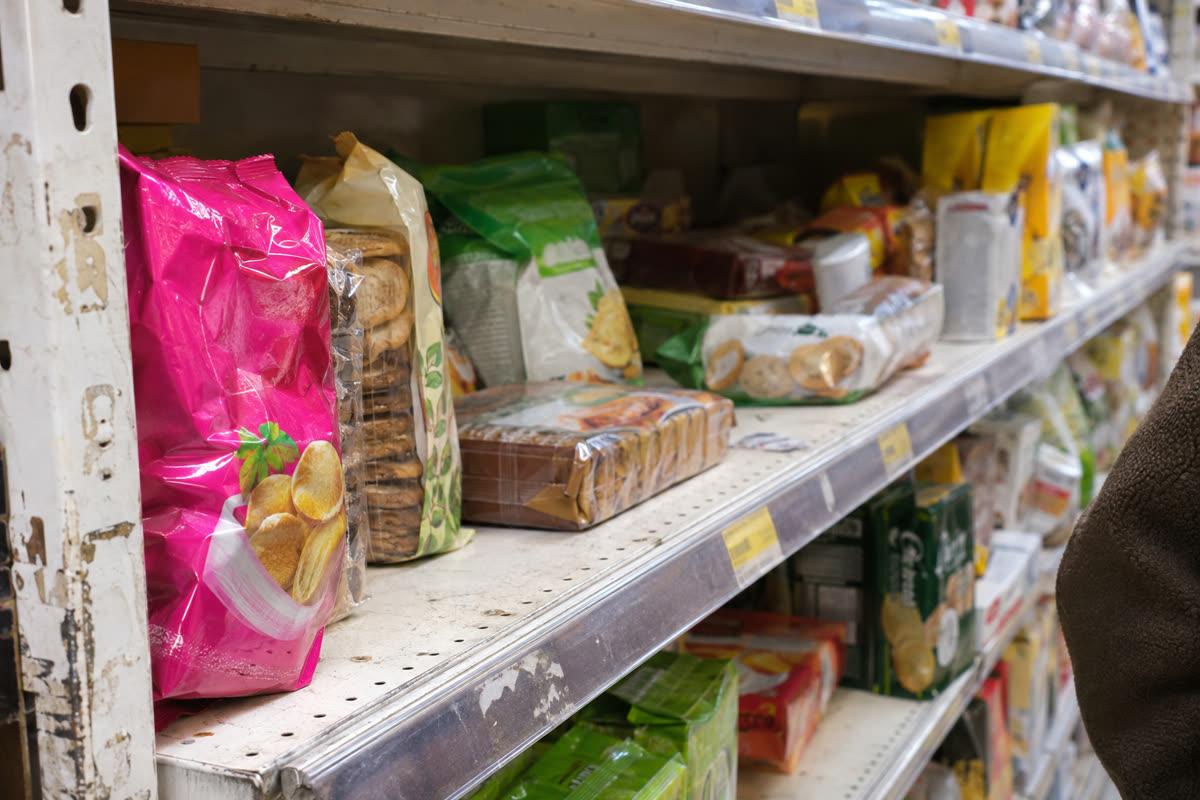 Gluten-free labeling rules by country: ceilings, claim wording and where no rule was foundLook up the gluten-free limit and claim wording for the US, Canada, EU, UK, Australia, New Zealand and more, each figure tied to the page we read.
 Which gluten grains a pack’s allergen line must name, by countryWhether the allergen line must name barley, rye and oats, country by country: US, Canada, EU, UK, Australia and New Zealand, Brazil, Japan.
 Gluten-free oats by country: where the claim is allowed and where it is barredWhether oats can carry a gluten-free claim in the US, Canada, EU, UK, Australia and New Zealand, in each regulator’s own words.
 Gluten-free labeling in Canada: the claim, the gluten-source declaration and oatsHow Health Canada's gluten-free claim works, how gluten sources and oats must be declared on a Canadian pack, and how it differs from the FDA rule.
 Gluten-free and very low gluten on EU labels, and how allergens are highlightedWhat EU “gluten-free” and “very low gluten” claims permit, how cereals containing gluten are highlighted in ingredient lists, and the rules for loose food.
 Reading US gluten-free labels as a visitor from the UK, EU, Canada or AustraliaWhat a US gluten-free claim, the Contains line, malt and alcohol labels mean if you are used to UK, EU, Canadian or Australian labels.
Related guides
 Gluten-free logos outside the US: who issues each one and what it requiresTell a certifier’s gluten-free logo from a maker’s own: who issues Crossed Grain, Coeliac Australia’s and Celiac Canada’s marks, and the limit each sets.
 Eating gluten-free in Australia: the oats rule, Vegemite and the borderWhat “gluten free” means on an Australian pack, why oats cannot carry the claim, which Vegemite to check, and what to declare on arrival.
 Gluten-free in New Zealand: the shared food code, oats, Marmite and the borderWhat a US visitor needs for gluten-free food in New Zealand: the shared Australian claim, oats, Marmite, Coeliac NZ marks and border declaration.
 Malt on a food label: which forms are barley and what to checkWhat malt extract, syrup, flavoring and vinegar on a US label mean for gluten, why the Contains line misses barley, and what to check first.
Sources
- [1, 8] Food Standards Australia New Zealand (Food Standards Code), Schedule 4: Nutrition, health and related claims, checked Nov 17, 2026.
Read on 2026-11-17: in the table in section S4—3 the row for gluten has two descriptors. “Free”: the food must not contain (a) detectable gluten; or (b) oats or oat products; or (c) cereals containing gluten that have been malted, or products of such cereals. “Low”: the food contains no more than 20 mg gluten/100 g of the food. The Low row lists no oats or malt condition, and the Free row gives no figure for “detectable”.
- [2, 21, 34] US Food and Drug Administration, Questions and Answers on the Gluten-Free Food Labeling Final Rule, checked Nov 17, 2026.
- [3, 10, 23, 24, 25, 28, 29] Food Standards Australia New Zealand, Allergen labelling for food businesses, checked Nov 17, 2026.
- [4, 39, 40] Coeliac New Zealand, The Crossed Grain logo, checked Nov 17, 2026.
- [5, 19, 20] Coeliac New Zealand, Coeliac NZ position statement: Oats and coeliac disease, checked Nov 17, 2026.
- [6] Food Standards Australia New Zealand, Imported foods, checked Nov 17, 2026.
- [7, 9, 11] Food Standards Australia New Zealand (Food Standards Code), Standard 1.2.7: claims on foods over 1.15% alcohol, checked Nov 17, 2026.
Read on 2026-11-17: section 1.2.7—4(1)(c) bars nutrition content claims and health claims about a food that contains more than 1.15% alcohol by volume, other than a nutrition content claim about any of: salt or sodium content of a food that is not a beverage; carbohydrate content; energy content; gluten content; sugar or sugars content.
Read on 2026-11-17: section 1.2.7—12 says that if a claim is made about a property of food listed in Column 1 of the nutrition content claims table (section S4—3), the food must meet the conditions in that table, and 1.2.7—12(7) says a nutrition content claim in relation to gluten may only use a descriptor listed in Column 3 of the table in conjunction with gluten, or a synonym of such a descriptor, or state that a food contains gluten or is high in gluten.
- [12, 30, 31, 41] Food Standards Australia New Zealand, Product exemptions from allergen labelling, checked Nov 17, 2026.
- [13, 15, 16, 17, 18] Food Standards Australia New Zealand, P264 Final Assessment Report (17 March 2004): why “detectable”, checked Nov 17, 2026.
- [14] Food Standards Australia New Zealand, Proposal P264: Review of Gluten Claims with Specific Reference to Oats and Malt, checked Nov 17, 2026.
Read on 2026-11-17: the page is marked “Published 18 November 2014” and lists four reports: First Review Report (4 August 2004), Final Assessment Report (17 March 2004), Draft Assessment Report (8 October 2003) and Initial Assessment Report (18 December 2002). It carries the note “Page last updated: 13 February 2025”.
- [22, 26, 27] Food Standards Australia New Zealand (Food Standards Code), Standard 1.2.3: mandatory declarations, checked Nov 17, 2026.
- [32, 33] Coeliac New Zealand, How to read food labels, checked Nov 17, 2026.
- [35] Food Standards Australia New Zealand, Proposal P1035: Gluten Claims about Foods containing Alcohol, checked Nov 17, 2026.
- [36, 37, 38] Food Standards Australia New Zealand, P1035 Approval Report (29 June 2015): the decision, checked Nov 17, 2026.
- [42, 43] Coeliac New Zealand, Reading food labels: staying vigilant, checked Nov 17, 2026.