Gluten-free in Dubai and the Gulf: dishes by grain, imported packs and label checks
Short answer
Sort what you are offered by grain, then read the pack in your hand:
- Harees is made with wheat grain1; Arabic flatbreads such as khameer5 and regag4, and the luqaimat recipe in the Dubai tourism guidebook8, start from flour, so ask which flour.
- Machboos is described as spiced rice with chicken, lamb or fish17; ask what is added and what shares the pot.
- USDA reports that labels on imported food must be in Arabic, and that any other language on the label must carry the same information as the Arabic27; read the ingredient list, not only the claim.
- In a 2022 news item, Dubai Municipality says its laboratory developed a gluten detection service using ELISA that aims to check the correctness of “gluten-free” label information34, 35; the page gives no limit and does not mention restaurants36.
Part of Travel: Asia and the Middle East, 12 guides

Key points
- Harees is made with wheat grain1; Arabic flatbreads and the luqaimat recipe in Dubai’s tourism guidebook start from flour, so ask which flour4, 5, 8.
- Machboos is spiced rice with meat or fish17 and khuzi is stuffed roast lamb or goat on spiced rice18; what is added and what shares the pot still has to be asked.
- USDA reports that imported food labels must be in Arabic with any other language identical to it, and that a sticker may translate the label but not diverge from it27, 28, 29.
- Dubai Municipality says its laboratory developed a service to detect gluten by ELISA that aims to check “gluten-free” label information34, 35; its page gives no limit36.
- A Gulf-wide gluten-free draft was revised in August 2026 and is listed as proposed, not in force40, 41.
Gulf dishes by grain: where the wheat is
The table uses UNESCO, the UAE government portal, Experience Abu Dhabi and Salt & Sand, a guidebook of Emirati recipes on Visit Dubai’s site. A guidebook recipe is one cook’s version, so a kitchen’s own recipe decides; read the right-hand column as the question to ask.
| Dish | What the source says | Ask about |
|---|---|---|
| Harees | Made with wheat grain, meat and ghee1; slow-cooked to a porridge, the dish of Ramadan and weddings2. | Wheat grain is a named ingredient. |
| Regag | A thin flatbread made from a runny batter spread onto a hot surface3; the guidebook’s batter starts from flour, salt and water4. | Which flour; what else is cooked on the same griddle. |
| Khameer | An Arabic bread made from yeast, flour and powdered milk5. | Which flour. |
| Chabab (chebab) | An Emirati pancake made with flour, eggs, sugar and spices like cardamom and saffron6. | Which flour. |
| Luqaimat | Crisp fried dough balls soaked in date syrup7; the guidebook’s dough recipe begins by combining flour, sugar and cornstarch8. | Which flour, and whether the frying oil is shared with breaded foods9. |
| Khanfaroosh | A fried dough; the guidebook’s ingredient list names whole wheat flour10. | Whole wheat flour, in the guidebook’s recipe. |
| Margooga | A one-pot dish of meat, vegetables and dough pieces that soften in the broth11. | What the dough is made from. |
| Tharid | A meat and vegetable stew served over flatbread12. | The bread under the stew. |
| Khabeesa | The guidebook’s recipe starts from semolina13, which the Celiac Disease Foundation lists as a derivative of wheat14. | Semolina is wheat. |
| Balaleet | Sweet vermicelli and eggs15. | What the vermicelli is made from. |
| Farni | A milk dessert thickened with rice flour16. | Whether anything else goes in. |
| Machboos, khuzi | Machboos is spiced rice with chicken, lamb or fish17; the government portal describes khuzi as stuffed whole roast lamb or goat on a bed of spiced rice and machboos as a casserole of lamb or chicken layered with rice18. | What is added to the rice and meat, and what shares the pot or platter. |
The sources describe machboos and khuzi as built on rice17, 18, but the table shows what a recipe starts with, not what a given kitchen adds, serves beside it or cooks in; khuzi, for one, is stuffed, and the portal does not say with what18.
Shawarma, wraps and the bread under the stew
Pita and other flatbreads are on the Celiac Disease Foundation’s list of breads and pastries that contain gluten19. As one example of what that looks like on a pack, the ingredient list of Toufayan’s classic white pita names wheat flour, malted barley flour and wheat gluten20 and the allergen statement reads “CONTAINS: WHEAT, SESAME”21. A Gulf bakery’s pita may differ; the example shows what to look for, not what is in a particular loaf.
Before ordering a wrap or a shawarma plate, three questions are worth asking: what the bread or wrap is made from, whether the meat is marinated or coated with anything that contains flour or crumbs, and what shares the grill, fryer or slicer. Asking about preparation methods and cross-contact is the Gluten Intolerance Group’s general advice for local dishes22.
Our verdict pages show how the products we read differ: pita, bread, gyro meat, hummus, falafel and tahini. Tahini itself is described by one importer as sesame seeds ground to a paste23.
The other kitchens in the same food court
The UAE government portal lists the cuisines popular in its restaurants, among them Arabic, Indian, Pakistani, Iranian, Italian, Chinese, Japanese and Mexican24. The same portal describes biryani as meat cooked with Indian-style spiced rice18.
- Naan is on the Celiac Disease Foundation’s list of breads that contain gluten19: see naan.
- Couscous is on its list of pastas25: see couscous and bulgur.
- Rice, curry, spices, chai and yogurt vary by dish and product: rice, curry, spices, chai and yogurt show what the products we read list.
For ordering questions that carry over from Indian kitchens, see ordering at an Indian restaurant; for Levantine menus, see gluten-free in Israel.
Reading an imported pack in the UAE
USDA’s Foreign Agricultural Service reports that UAE importers must apply for a label assessment of food items before they enter the country26. The same report lists labels in Arabic among the requirements and says that where another language is also used, its information must be identical to the Arabic27. A sticker may translate the label into Arabic28, but it may not carry statements that diverge from the original label29.
Read the ingredient list as you would at home, in whichever language it is printed; how to read a US food label lists the grain names. The Celiac Disease Foundation’s advice is to read the label of any product when it does not say gluten-free30. For how gluten-free claims differ between countries, see labeling laws by country.
USDA also reports that food items registering for the first time for import into Dubai will undergo laboratory testing through Dubai Municipality31, and that an item is rejected when an ingredient or additive is detected that the label does not list32. The report does not mention gluten33, so we do not read that testing as a gluten check.
What Dubai Municipality says its laboratory checks
In a news item dated 27 July 2022, Dubai Municipality said its Dubai Central Laboratory had developed a service to detect gluten in food products using ELISA, and called it the first lab in the country to offer a quick gluten detection service34. The page says the service aims to check the correctness of the “gluten-free” information on a food product label35.
The page gives no limit, does not mention restaurants or menus, and does not say who sends in samples or whether the service is required36. It tells you Dubai Municipality says its laboratory has a service for detecting gluten in food products. It does not tell you that a given product, venue or menu has been tested.
The Gulf-wide rule: what we could and could not confirm
The GCC Standardization Organization’s store lists a Gulf technical regulation for foods for special dietary use for persons intolerant to gluten, GSO 1021:201237, and GSO CODEX STAN 118:2022, shown as a Gulf Technical Regulation, current edition, approved on 19 October 202238. We read only these store listings, not the texts, so we cannot say which applies or quote a limit from either.
USDA’s Saudi report says GSO 654:2021 covers prepackaged foods for special dietary uses, a group that includes gluten-free foods39.
Expodite’s summary of the World Trade Organization notification says Qatar notified a revised draft Gulf technical regulation on foods for persons intolerant to gluten in August 202640; it lists the UAE among the notifying members41. We read the notified Arabic text ourselves: it limits gluten-free foods to no more than 20 mg/kg as sold, sets a separate category above 20 and up to 100 mg/kg, requires the name of a product in the first category to be followed by the wording “Gluten free” with its Arabic equivalent, and does not allow products in the second category to be named gluten free42.
It is a draft. Expodite’s summary of the notification lists adoption as to be determined and entry into force as six months after adoption41, and USDA’s Saudi report says new GSO standards are in most cases implemented after a six-month phase-in from approval43. Because we could not read a text in force, our travel comparison carries no UAE entry.
The figures above come from our reading of an Arabic draft, not an official translation. Check notification G/TBT/N/QAT/721/Rev.1 before relying on them.
Before you go: card, phrase and snacks
- The Gluten Intolerance Group suggests bringing a printed translation card if the main language is not the one you speak44.
- It also suggests memorizing how to say “gluten-free” where you are going45.
- And it suggests carrying small, compact, shelf-stable snacks46.
- The Celiac Disease Foundation’s list of celiac associations for travel destinations has entries for the U.A.E.47 and Saudi Arabia48.
For the flight itself, see air travel.
What we could not confirm
- The text of a Gulf gluten-free rule in force: we read store listings and a draft.
- Whether the Dubai laboratory service covers restaurant food: its page says only “food products”36.
- How any particular restaurant makes harees, luqaimat or a shawarma wrap: the sources describe recipes and packs, not venues.
- Anything from a restaurant directory or a gluten-free blog: we used none. Every page cited was read on 2026-11-17.
Verdicts in this guide
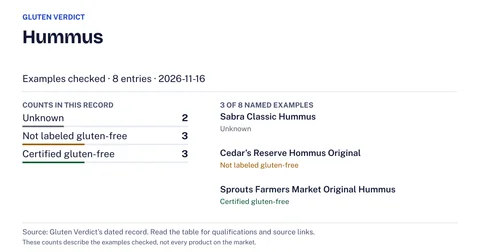 HummusDepends on the productchecked Nov 16, 2026
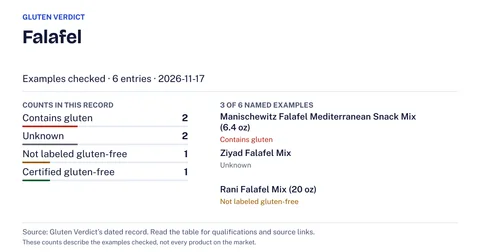 FalafelDepends on the product2 of 6 products we checked contain gluten: Manischewitz Falafel Mediterranean Snack Mix (6.4 oz) and Al’Fez Lebanese Falafel Kit (5.3 oz)checked Nov 17, 2026
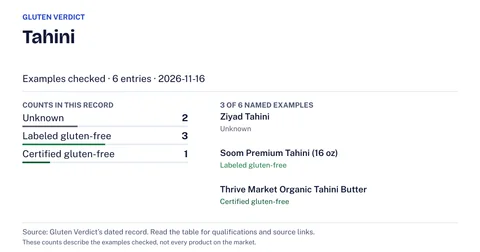 TahiniDepends on the productchecked Nov 16, 2026
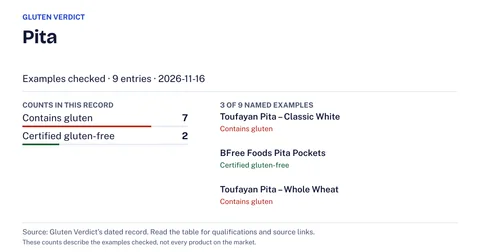 PitaContains glutenchecked Nov 16, 2026
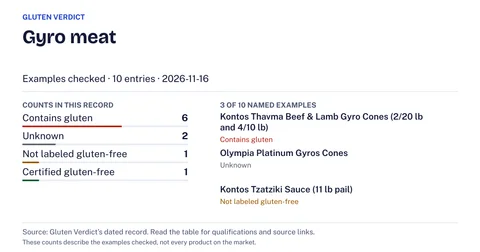 Gyro meatDepends on the product6 of 10 products we checked contain glutenchecked Nov 16, 2026
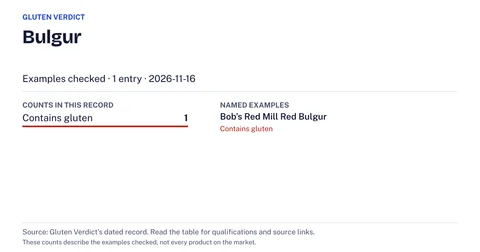 BulgurContains glutenchecked Nov 16, 2026
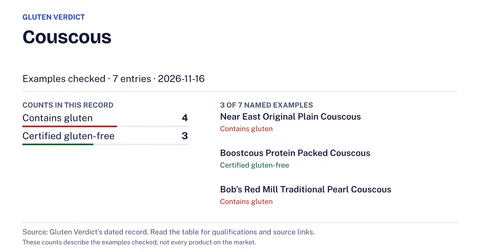 CouscousContains glutenchecked Nov 16, 2026
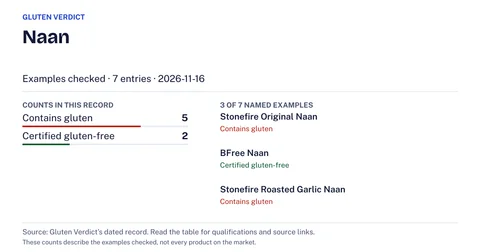 NaanContains glutenchecked Nov 16, 2026
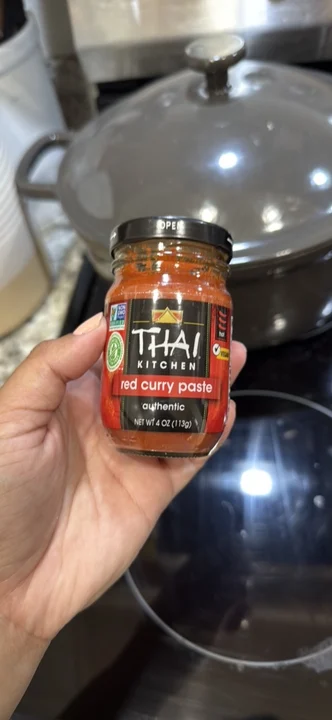 CurryDepends on the product2 of 11 products we checked contain gluten: S&B Golden Curry Mix, Mild (curry roux block) and S&B Golden Curry Sauce with Vegetables, Mild (pouch)checked Nov 16, 2026
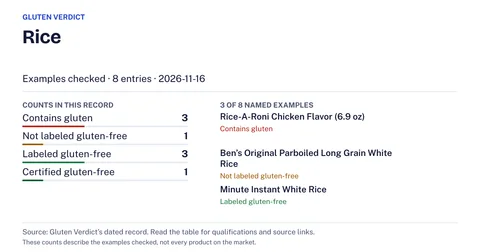 RiceNaturally gluten-free3 of 8 products we checked contain gluten: Rice-A-Roni Chicken Flavor (6.9 oz), Near East Original Rice Pilaf, and Ben’s Original Ready Rice Rice PilafBuy it labeled gluten-freechecked Nov 16, 2026
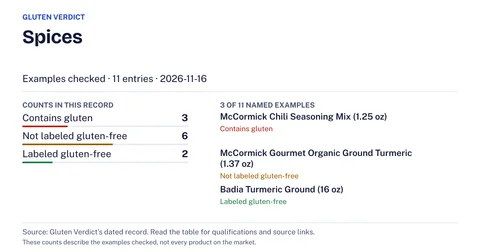 SpicesDepends on the product3 of 11 products we checked contain gluten: McCormick Chili Seasoning Mix (1.25 oz), Lawry’s Chili Spices & Seasonings Mix (1.48 oz), and McCormick Cheesy Taco Seasoning Mix (1.12 oz)checked Nov 16, 2026
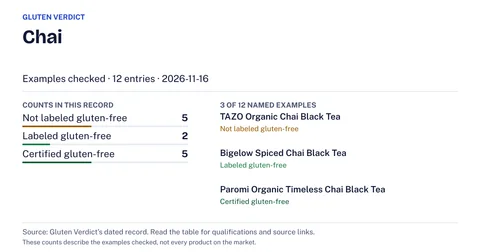 ChaiDepends on the productchecked Nov 16, 2026
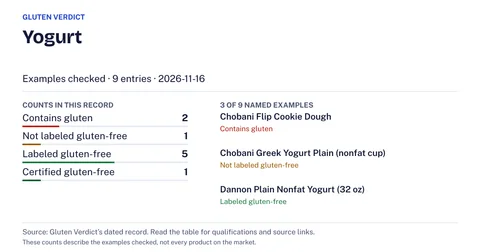 YogurtDepends on the product2 of 9 products we checked contain gluten: Chobani Flip Cookie Dough and Chobani Flip Cookies & Creamchecked Nov 16, 2026
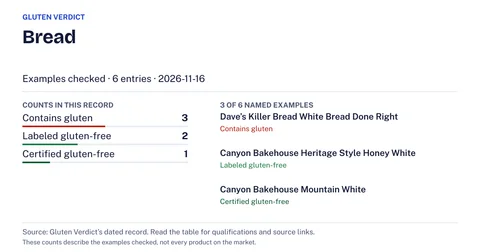 BreadContains glutenchecked Nov 16, 2026
Questions people ask
Is harees gluten-free?
No. UNESCO describes harees as made with wheat grain, meat and ghee1, and the Celiac Disease Foundation lists wheat among the gluten-containing grains14.
Does Dubai test gluten-free labels?
Dubai Municipality says its laboratory has a gluten detection service that aims to check the correctness of the “gluten-free” information on a label35. Its page names no limit36.
More in Travel: Asia and the Middle East
 Gluten-Free in Israel: Labels, Kosher and the Israeli TableIsrael’s gluten label rules, the Hebrew words in the regulation, why kosher and kosher for Passover are not gluten-free claims, and where wheat enters.
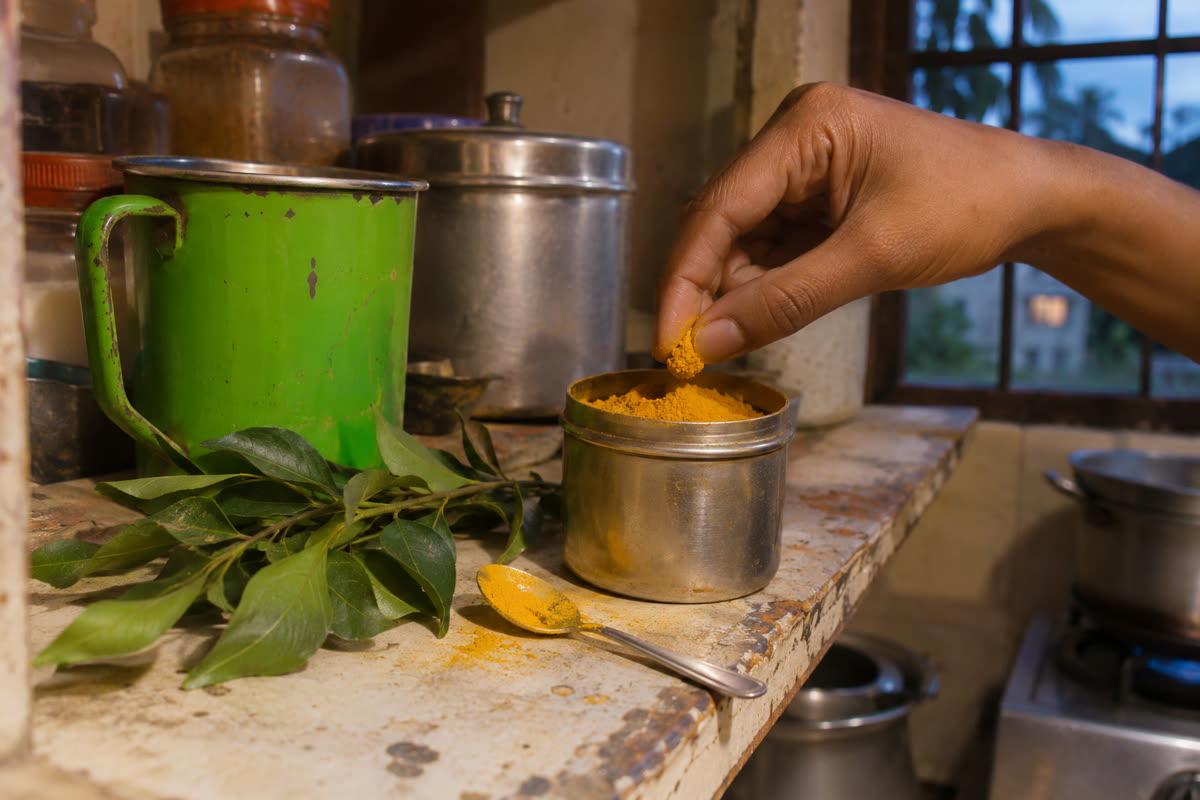 Is hing (asafoetida) gluten-free? How to read the jarHing powder can be a blend. How to read its binder, and what “gluten friendly”, “wheat free” and “batch tested” do and do not promise.
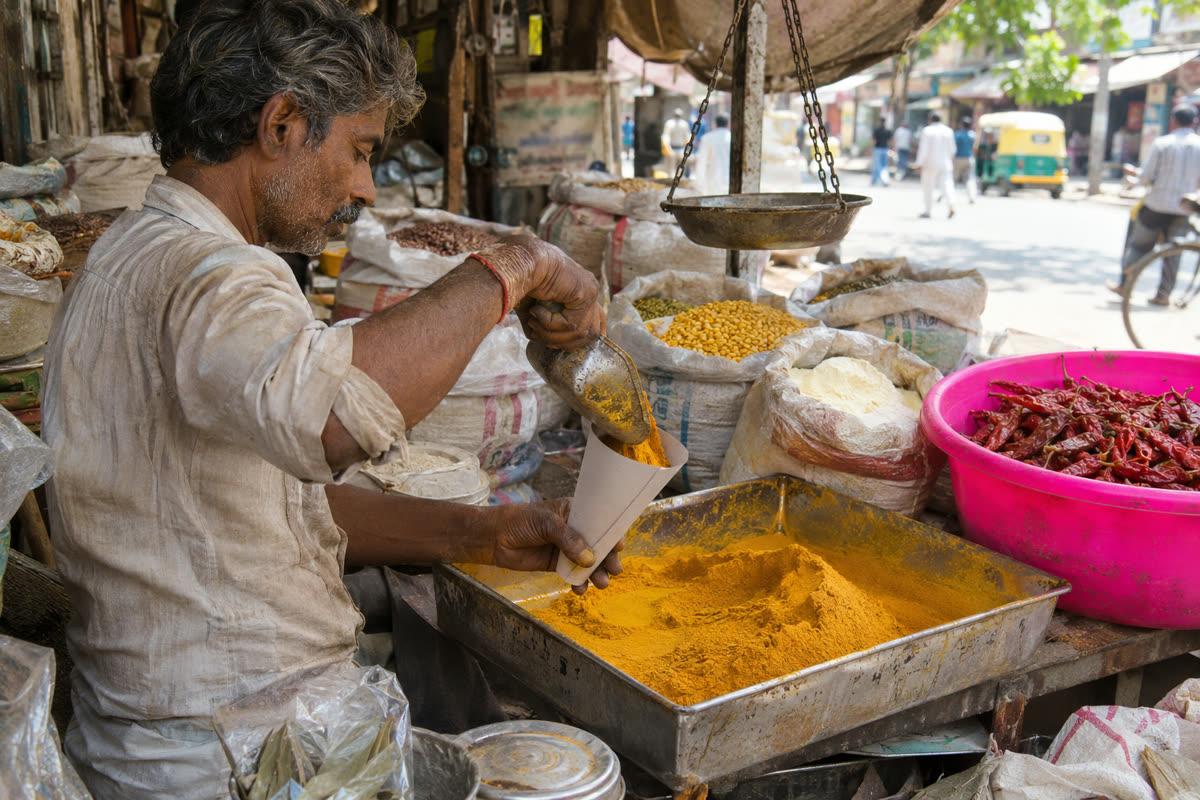 Gluten-free in India: hing, atta, rava and what a pack must sayWheat routes in Indian food that curry advice misses (hing, atta, rava, biryani seals, shared griddles) and what India’s own gluten free rules say.
 Eating gluten-free in Thailand: sauces, noodles and street stallsWhere wheat shows up in Thai sauces, noodles and street food, how Thailand words its own gluten-free rule, and the Thai words to look for on a pack.
 Gluten-free in Singapore: hawker noodles, soya sauce and the new label ruleWhich Singapore hawker noodles are rice and which wheat, where soya and oyster sauce come in, and what the Food Agency's gluten-free label means.
 Gluten-free in Vietnam, the Philippines, Malaysia, Indonesia and Taiwan: sauces, noodles and label rulesWhere wheat enters a Southeast and East Asian meal, what four regulators print about gluten cereals, and the one country whose rule we could not read.
Related guides
 Ordering at an Indian restaurant: where wheat enters the menuWhere wheat enters an Indian menu (naan, hing, thickeners, samosas, the fryer and the tandoor) and the questions to ask before you order.
 Gluten-free labeling rules by country: ceilings, claim wording and where no rule was foundLook up the gluten-free limit and claim wording for the US, Canada, EU, UK, Australia, New Zealand and more, each figure tied to the page we read.
 Gluten-free dining cards in other languages: where the wording comes fromWhich gluten-free card wording comes from EU law or a celiac society, which cards are members-only, and how to hand one to a server.
 What “gluten-free” means on a pack in Asia, country by countryWhat a gluten-free claim requires in six Asian countries, what Japan, Hong Kong, Taiwan and China print instead, and how to read a pack in hand.
Sources
- [1] UNESCO, Harees dish: know-how, skills and practices, checked Nov 17, 2026.
- [2, 7, 17] Experience Abu Dhabi, Emirati Food and Coffee Culture in Abu Dhabi, checked Nov 17, 2026.
- [3, 4, 8, 10, 11, 12, 13, 15, 16] Visit Dubai (Dubai Department of Economy and Tourism), Salt & Sand: a guidebook of Emirati cuisine, checked Nov 17, 2026.
- [5, 6, 18, 24] The Official Portal of the UAE Government, Food, checked Nov 17, 2026.
- [9, 14, 19, 25, 30] Celiac Disease Foundation, Sources of Gluten, checked Nov 17, 2026.
Read on 2026-11-17: the list headed “Gluten-Containing Grains and Their Derivatives” names wheat; varieties and derivatives of wheat (wheatberries, durum, emmer, semolina, spelt, farina, farro, graham, KAMUT® khorasan wheat, einkorn wheat); rye; barley; triticale; malt in various forms; brewer’s yeast; and wheat starch that has not been processed to remove gluten to below 20ppm.
- [20, 21] Toufayan Bakeries, Pita, Classic White: ingredients, checked Nov 17, 2026.
- [22, 44, 45, 46] Gluten Intolerance Group, Traveling gluten-free with confidence, checked Nov 17, 2026.
- [23] Ziyad Brothers Importing, Ziyad Tahini, checked Nov 17, 2026.
- [26, 27, 28, 29, 31, 32, 33] USDA Foreign Agricultural Service, FAIRS Country Report Annual: United Arab Emirates (TC2025-0008, 21 November 2025), checked Nov 17, 2026.
Read on 2026-11-17: the 35-page report, including its labeling section, does not contain the word gluten.
- [34, 35, 36] Dubai Municipality, Dubai Central Laboratory introduces gluten detection for food products (27 July 2022), checked Nov 17, 2026.
Read on 2026-11-17: the page, dated 27 July 2022, names no gluten limit, no restaurants or menus, and does not say who sends in samples or whether using the service is required.
- [37] GCC Standardization Organization (GSO), GSO 1021:2012, Standards Store listing, checked Nov 17, 2026.
- [38] GCC Standardization Organization (GSO), GSO CODEX STAN 118:2022, Standards Store listing, checked Nov 17, 2026.
- [39, 43] USDA Foreign Agricultural Service, FAIRS Country Report Annual: Saudi Arabia (SA2025-0013, 14 July 2025), checked Nov 17, 2026.
- [40, 41] Expodite (summary of the WTO notification), Food – United Arab Emirates +6 (G/TBT/N/ARE/667), checked Nov 17, 2026.
Read on 2026-11-17: the page lists the notifying members as the United Arab Emirates, Bahrain, Kuwait, Oman, Qatar, Saudi Arabia and Yemen; under Status it says “Proposed measure, not in force yet”; under Key dates it lists proposed adoption as “To be determined” and proposed entry into force as “6 months from adoption”.
- [42] World Trade Organization (notified by Qatar), G/TBT/N/QAT/721/Rev.1: notified draft, Foods for Special Dietary Use for Persons Intolerant to Gluten, checked Nov 17, 2026.
Read on 2026-11-17: the 7-page notified document is in Arabic. Its clause 3.1 defines gluten-free foods with a gluten level that does not exceed 20 mg/kg of the food as sold to the consumer; clause 3.2 defines a second category above 20 and not above 100 mg/kg; clause 4.2 sets those two limits; clause 8.1 requires the name of a product in the first category to be followed by the Arabic wording for “gluten free” and the English “Gluten free”; and clause 8.2 does not allow products in the second category to be named “gluten free”. The meanings are our reading of the Arabic.
- [47, 48] Celiac Disease Foundation, Associations Around the World, checked Nov 17, 2026.