Gluten-free in the Netherlands and Belgium: labels, fryers, waffles and beer
Short answer
A pack marked “glutenvrij” or “sans gluten” carries the same EU limit in both countries1, 2, 3. The harder questions are at the counter and the fryer:
- Packs: “glutenvrij” and “sans gluten” both mean no more than 20 mg/kg of gluten in the food as sold1, 2, 17.
- Restaurants and counters: staff may give allergen information out loud or in writing, on conditions that differ between the Netherlands and Belgium4, 5.
- Fries and fried snacks: ask whether the fries share a fryer with croquettes and other breaded snacks6, 7.
- Waffles and beer: the Flemish coeliac society’s kitchen guide lists waffles, and malted drinks such as traditional beer, among the foods not allowed in a gluten-free meal8, 9.
Part of Travel: Europe, 19 guides

Key points
- The EU rule on gluten statements is binding in every Member State, and it sets the same limit for “gluten-free”, “glutenvrij” and “sans gluten”: no more than 20 mg/kg3, 1, 2, 17.
- The Netherlands has its own rule for may-contain lines on packs; the NCV says Belgium and some other states do not oblige makers to follow it10, 11.
- Both countries let a business give allergen information orally, but each attaches conditions, and both the NVWA page and the Belgian FAVV circular treat speech as a departure from giving the information in writing73, 13, 14.
- The NCV and the VCV both warn about frying gluten-free fries in fat shared with croquettes and other snacks (NCV) or with breaded foods (VCV)15, 7.
- Allergen information on loose food says what is in the dish; the NCV notes that not all establishments are aware of cross contamination16.
What “glutenvrij” and “sans gluten” on a pack mean
Both countries apply the EU rule on gluten statements, which is binding in its entirety and directly applicable in every Member State3. Under it, “gluten-free” may be used only where the food as sold to the final consumer contains no more than 20 mg/kg of gluten1. The French text of the regulation puts the same limit behind «sans gluten»2, and Belgium’s federal public health service gives the Dutch word as “Glutenvrij”17.
| Language | Gluten-free | Very low gluten | May be added next to either |
|---|---|---|---|
| English | gluten-free1 | very low gluten18 | suitable for coeliacs19 |
| French | sans gluten2 | très faible teneur en gluten20 | Convient aux personnes atteintes de la maladie cœliaque21 |
| Dutch (Belgian public health wording) | Glutenvrij17 | Zeer laag glutengehalte22 | Geschikt voor personen met coeliakie23 |
“Very low gluten” is a different statement with a higher limit, 100 mg/kg, and it is for foods whose ingredients from wheat, rye, barley or oats were specially processed to reduce gluten18. Do not read it as “glutenvrij”. Oats in a food presented as gluten-free must be specially produced to avoid contamination by wheat, rye or barley, and their gluten cannot exceed 20 mg/kg24.
A glutenvrij pack can still name a grain
The NCV, the Dutch coeliac society, notes that gluten-free does not always mean wheat free: some brands use gluten-free wheat starch, and it gives the Dutch as “glutenvrij tarwe zetmeel”25. Belgium’s public health service says that when a product may carry the gluten-free statement but contains an ingredient from a gluten-containing grain, that grain must be emphasised in the ingredient list26. Our wheat starch page covers the ingredient.
The crossed-ear logo
The Flemish society VCV says that a drawing of a crossed ear without an official numeric code is the manufacturer’s own logo: it falls under ordinary law, not under the Crossed Grain control system27. For the US rules, see our food label guide; for the EU rules across countries, see our EU labeling guide.
May-contain lines: a Dutch rule that Belgium does not share
The Netherlands regulates warnings about possible cross-contamination. The NVWA, the Dutch food authority, says that where reference values are not exceeded, a precautionary allergen label may not be put on the pack10. It allows two wordings, “Kan X bevatten”28 and “Niet geschikt voor mensen met een X-allergie”29, and no other30. The NCV says there was no regulation on how manufacturers handle allergen cross-contamination before 202431, and that the word “sporen” (traces) has not been allowed in these warnings since 202632. Old packs can still be on shelves33.
| On a Dutch pack or sign | What the NCV says |
|---|---|
| kan glutenbevattende granen bevatten | A real risk that the product contains more than 20 mg gluten per kilo34 |
| Niet geschikt voor mensen met coeliakie | Means exactly the same as a “kan … bevatten” warning35 |
| Deze gerechten kunnen allergenen bevatten (on a menu, shop sign or food stall) | The NCV reads it as the business saying it knows too little about allergens and gluten-free eating to guarantee there is no gluten in the food36 |
This is a Dutch decision rule. The NCV writes that the policy applies to all prepacked food sold on the Dutch market, including food made abroad37. It adds that Belgium, Germany and Spain recognise the same values only for checks on the market, and that makers there are not obliged to use them when deciding whether a warning is needed11. So, in the NCV’s account, a may-contain line on a Belgian pack need not rest on the Dutch test. The Belgian public health page we read has no section on may-contain wording38. Our may-contain guide compares countries.
What restaurants, snack bars and counters must tell you
Both countries require allergen information for food sold without a pack, and both allow it to be given out loud73, 40, 4, 5. The conditions differ.
| Netherlands (NVWA) | Belgium (FOD Volksgezondheid and FAVV) | |
|---|---|---|
| Who it covers | The NVWA page addresses a horeca business, ice-cream parlour, bakery, fish shop or butcher among others39 | All food businesses, including bakeries, butchers, supermarkets, restaurants, hotels and canteens40; the FAVV circular covers food meant for the end consumer41 |
| How it may be given | Two ways: in writing or orally4; the page treats speech as a departure from the duty to inform in writing or electronically, on three conditions73 | Orally or in writing5; where no seller is nearby, as in self-service, it must be available in writing42; the FAVV circular says writing is the route and speech a derogation under five conditions13, 14 |
| If given out loud | The owner or employee must be able to give it directly before the purchase43; a record must exist in writing or electronically for staff and inspectors12; a clearly visible notice or prompt, for example a sign, must tell customers they can ask staff44 | A staff member must be present to inform the consumer45; the FAVV circular adds trained staff46, and, however the information is given, a visible written notice saying where it can be found and that the composition may change47 |
| Gluten wording | The business must say which gluten grain is meant48 | The allergen list names wheat (such as spelt and Khorasan wheat), rye, barley, oats or their hybrid strains49 |
Packed food carries its allergens in the ingredient list, emphasised so they stand out50; where a pack has no ingredient list, the word “bevat” (Dutch) or “contient” (French) comes before the allergen51, 52.
What this tells you is what is in the dish. It does not tell you how the kitchen works: the NCV advises explaining that you eat gluten-free on medical grounds, because not all establishments are aware of cross contamination16. So ask to see the allergen sheet or binder, and ask the fryer question below. The NCV’s tourist page also offers a Dutch restaurant card to show the waiter and the chef what you can and cannot eat53.
Fries, croquettes and snack-bar snacks: the fryer question
Fries are the easy part and the fat is the hard part. The NCV says fries made from potatoes and sunflower or palm oil are gluten-free54, but that fries with an extra-crunchy coating can carry gluten in that layer55. Fried snacks are different: the NCV says they almost always contain breadcrumbs56.
The risk is the shared fat. The NCV says fries are often cooked in the same fat as croquettes and other snacks, and tells diners to ask staff about it15; its tourist page says to ask whether the restaurant has a fryer dedicated to gluten-free food6. It gives frying gluten-free snacks in the same fryer as gluten snacks as an example of the cross-contamination risk behind its Zorgeloos Glutenvrij mark57. In Flanders the VCV tells kitchens never to fry gluten-free fries in oil that has cooked croquettes, breaded fish or other gluten foods7, and says the loose breadcrumbs float in the fat and contaminate the fries, so gluten-free frying needs a separate fryer58.
Questions to ask at the counter
- Are the fries cooked in a fryer of their own, or in the fat used for croquettes and other breaded snacks?
- If a snack is sold as gluten-free, is it cooked in that same fat?
- What is in the sauce? The NCV advises avoiding sauces unless you are sure they are gluten-free59.
- Can I see the allergen sheet, and what does it say about this dish?
For a sit-down meal in the Netherlands, the NCV points to restaurants with the Zorgeloos Glutenvrij logo, which it says have been inspected by or for the NCV and are checked annually by an external audit agency60. In Belgium, the French-language society SBC, introducing its list of addresses drawn from members’ experiences, tells readers to contact the restaurateur beforehand to check that the place suits them and that the team has not changed61. Our french fries page covers the food itself.
Waffles, pancakes, cookies and sweets
The VCV’s guide for kitchens lists, under “Gebak en zoetwaren” (pastries and sweets), koekjes, pannenkoeken and wafels (cookies, pancakes and waffles) among the foods not allowed in a gluten-free meal8. Our verdict pages cover waffles, pancakes, cookies and chocolate.
The VCV’s advice on a home kitchen is to watch waffle irons and waffle plates that have been used with ordinary flour62. At a waffle stand, ask what flour the batter uses and whether the iron is shared.
Cafés add their own traps. The NCV warns that the chocolate powder on a cappuccino is not always gluten-free63, and that a dessert or drink with whipped cream may come with a biscuit stuck in it64.
Beer and other drinks
The VCV’s kitchen guide puts malted drinks (“gemoute dranken”) such as traditional beer on its not-allowed list, and flags soft drinks made with barley malt extract, naming ginger beer and some colas9. Our beer page has the general verdict.
The NCV explains that drinks over 1.2 percent alcohol are exempt from listing ingredients and nutrition values, but allergens in them must still be declared65.
Bread, sauces and supermarkets
The NCV says that more restaurants in the Netherlands now have gluten-free bread66, that Albert Heijn, Jumbo and Plus have their own gluten-free ranges and that Lidl and Aldi usually stock some basics67, and that health stores such as Ekoplaza and Holland & Barrett also carry gluten-free products68. Our bread page and our guide on bread in Europe cover the bread question.
For sauces, soups and stews, the VCV tells kitchens to check stock cubes, soy sauce, spice mixes, sauces and binders for hidden gluten69. So ask what thickens a sauce. Our mayonnaise page covers a common side.
Who publishes what: regulator and society pages
| Body | What it is | What we used it for |
|---|---|---|
| European Commission (EUR-Lex) | The EU’s legal texts | The gluten-free limit and wording in English and French1, 2 |
| NVWA | Dutch food authority | Allergen information for loose food and the may-contain rule4, 10 |
| NCV | Dutch coeliac society | Tourist information, the Zorgeloos Glutenvrij mark and label explanations60, 34 |
| FOD Volksgezondheid | Belgian federal public health service | Allergen declarations and gluten statements in Dutch and French5, 70 |
| FAVV (AFSCA) | Belgian food-chain agency | Its 2014 circular on allergen information for loose food41 |
| VCV | Flemish coeliac society | A guide for kitchens and the Crossed Grain mark71, 27 |
| SBC | Belgian coeliac society, French-language site | A list of restaurant addresses with a caution61, 72 |
Verdicts in this guide
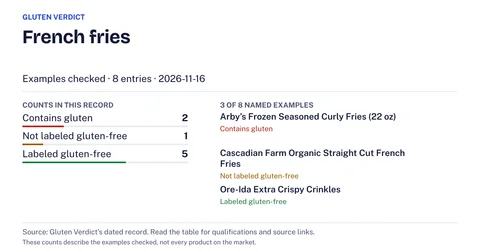 French friesDepends on the product2 of 8 products we checked contain gluten: Arby’s Frozen Seasoned Curly Fries (22 oz) and Checkers Frozen Crispy Seasoned Fries (28 oz)checked Nov 16, 2026
 BreadContains glutenchecked Nov 16, 2026
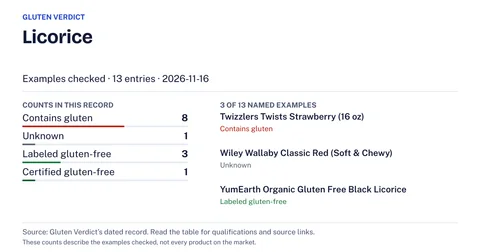 LicoriceDepends on the product8 of 13 products we checked contain glutenchecked Nov 16, 2026
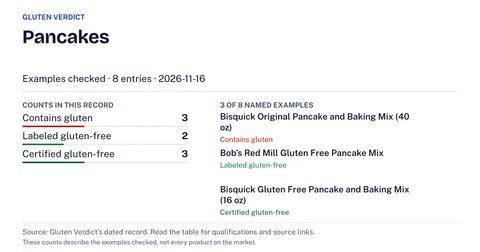 PancakesContains glutenchecked Nov 16, 2026
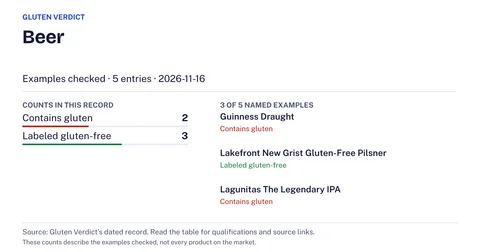 BeerDepends on the product2 of 5 products we checked contain gluten: Guinness Draught and Lagunitas The Legendary IPAchecked Nov 16, 2026
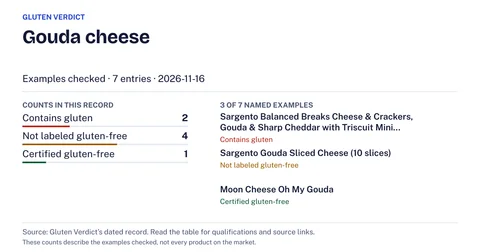 Gouda cheeseNaturally gluten-free2 of 7 products we checked contain gluten: Sargento Balanced Breaks Cheese & Crackers, Gouda & Sharp Cheddar with Triscuit Mini Crackers (3-pack) and Sargento Shareables White Cheddar & Gouda Sliced Cheese with Triscuit Original Crackers (6 oz)checked Nov 16, 2026
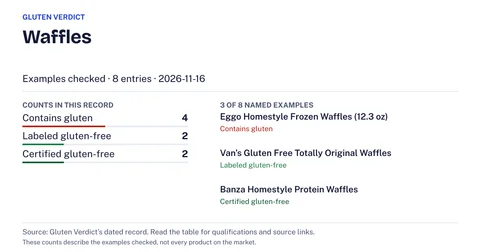 WafflesContains glutenchecked Nov 16, 2026
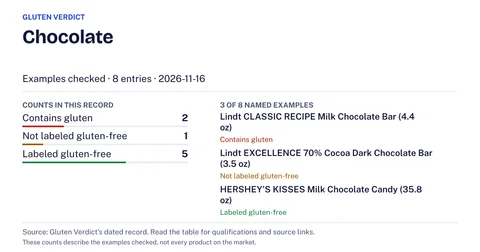 ChocolateDepends on the product2 of 8 products we checked contain gluten: Lindt CLASSIC RECIPE Milk Chocolate Bar (4.4 oz) and HERSHEY’S Cookies ‘N’ Creme Candy Bar (1.55 oz)checked Nov 16, 2026
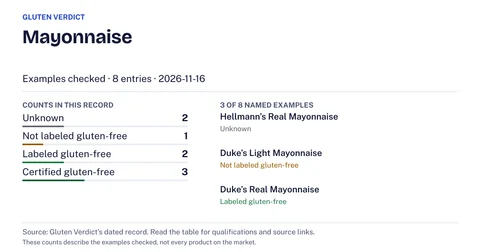 MayonnaiseNaturally gluten-freechecked Nov 16, 2026
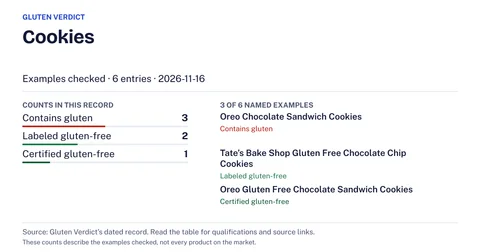 CookiesContains glutenchecked Nov 16, 2026
Questions people ask
Does “glutenvrij” in the Netherlands mean the same as “sans gluten” in Belgium?
Yes on the limit: the EU text sets no more than 20 mg/kg for “gluten-free” and the French text gives the same figure for «sans gluten»1, 2, with Belgium’s public health service giving the Dutch word as “Glutenvrij”17, under a regulation that applies in every Member State3.
Are fries in the Netherlands or Belgium gluten-free?
The NCV says fries made from potatoes and sunflower or palm oil are gluten-free54, and also that fries are sometimes cooked in the same fryer as gluten-containing products6. The VCV likewise says gluten-free frying needs a separate fryer58.
Can a restaurant just answer my allergen question out loud?
In the Netherlands yes, with a record in writing or electronically and a visible notice, such as a sign, telling customers they can ask12, 44. In Belgium yes; the FAVV circular treats speech as a derogation from writing under five conditions14.
More in Travel: Europe
 Gluten-free in Estonia, Latvia and Lithuania: label words, rye bread and dumplingsHow Estonia, Latvia and Lithuania word gluten-free claims, where rye, barley and wheat sit in local dishes, and which official pages to check.
 Gluten-free in Central Europe: the rules in five countries and where wheat hides in the dishesWhich gluten-free rule covers a pack in Austria, Czechia, Hungary, Poland and Switzerland, and where wheat enters schnitzel, dumplings and sauces.
 Gluten-free in Greece: what the label and the taverna promise, and what to askWhat “gluten-free” means in Greece, where wheat hides in Greek dishes such as gyro, orzo and pies, and what to ask at a taverna.
 Gluten-free in Portugal: the couvert, pastelarias and what to askWhat «isento de glúten» means in Portugal, what you owe for the couvert, what restaurants must say about allergens, and what the celiac society advises.
 Gluten-free in France: reading a pack, a menu and a “sans gluten” signWhat «sans gluten» means on a French pack, how restaurants must give allergen information, and what a bakery’s “sans gluten” sign does not promise.
 Gluten-free ranges at European supermarkets, as the chains describe themWhat Mercadona, Carrefour, Tesco, Sainsbury’s, Albert Heijn and Migros say about their gluten-free lists, filters and marks, read from their own pages.
Related guides
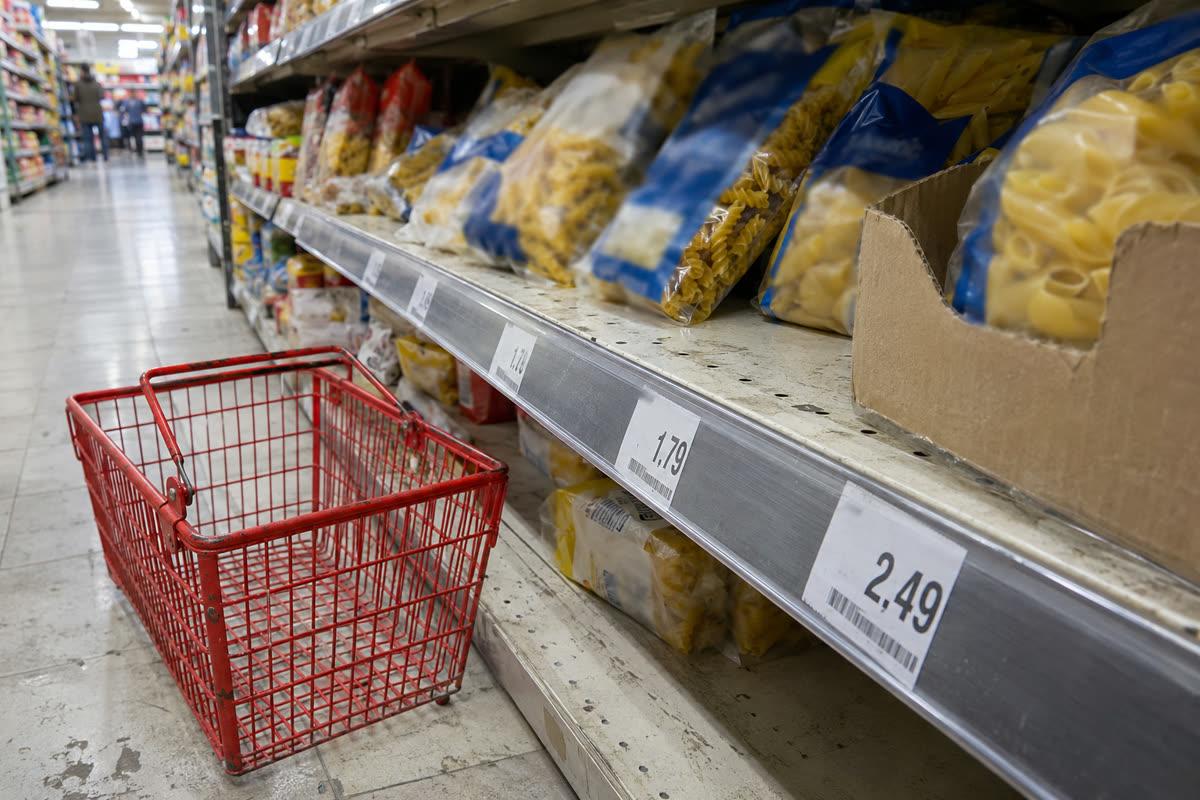 Gluten-free and very low gluten on EU labels, and how allergens are highlightedWhat EU “gluten-free” and “very low gluten” claims permit, how cereals containing gluten are highlighted in ingredient lists, and the rules for loose food.
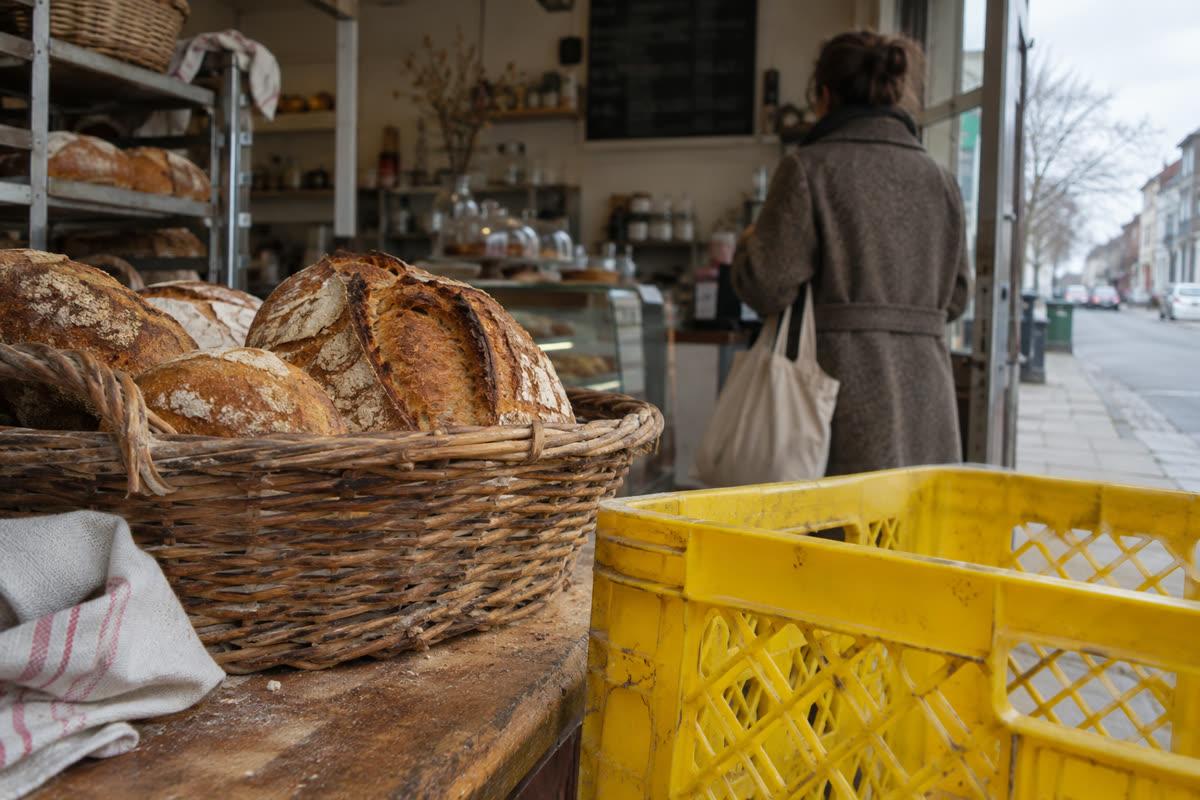 Fine on bread in Europe? What it does and does not showWhat a trip where bread felt fine does and does not show about celiac disease, and how EU and US gluten-free label rules compare.
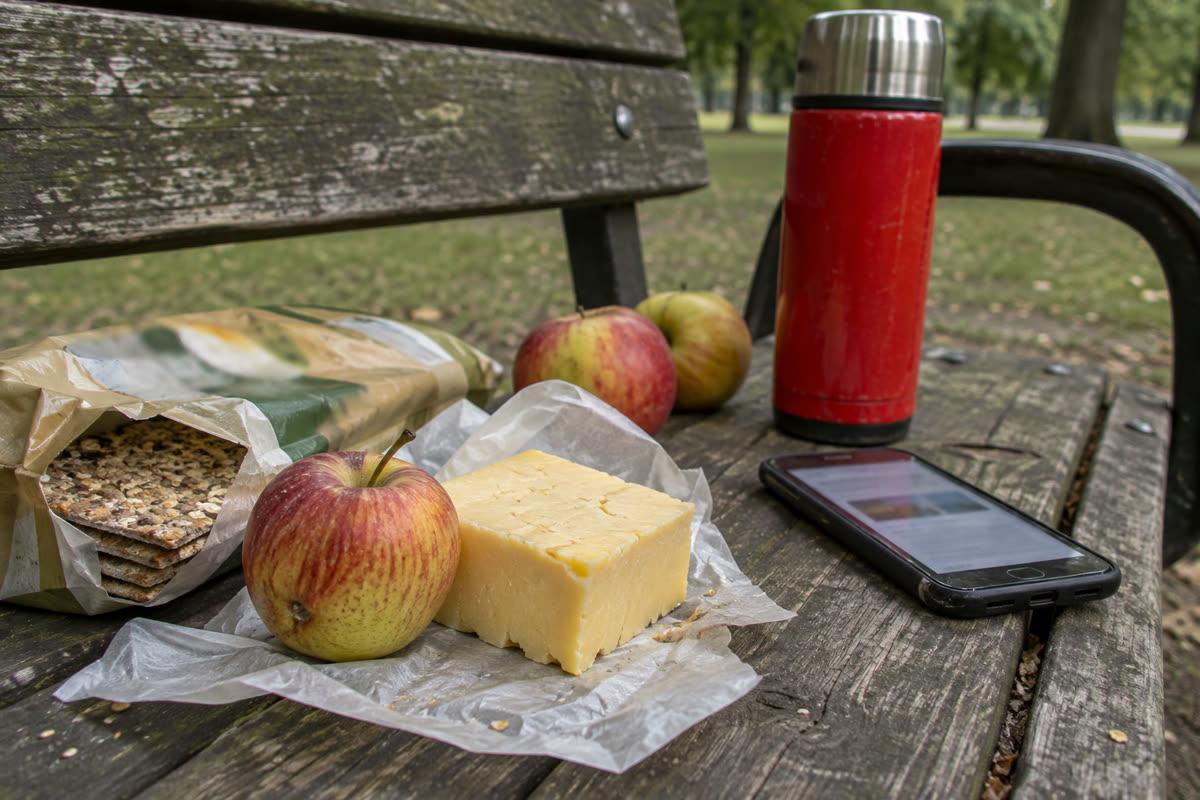 Gluten words on European food labels, language by languageFind the ingredient list, the gluten-cereal name and the gluten-free claim on a European pack in 11 languages, using words from the EU’s own texts.
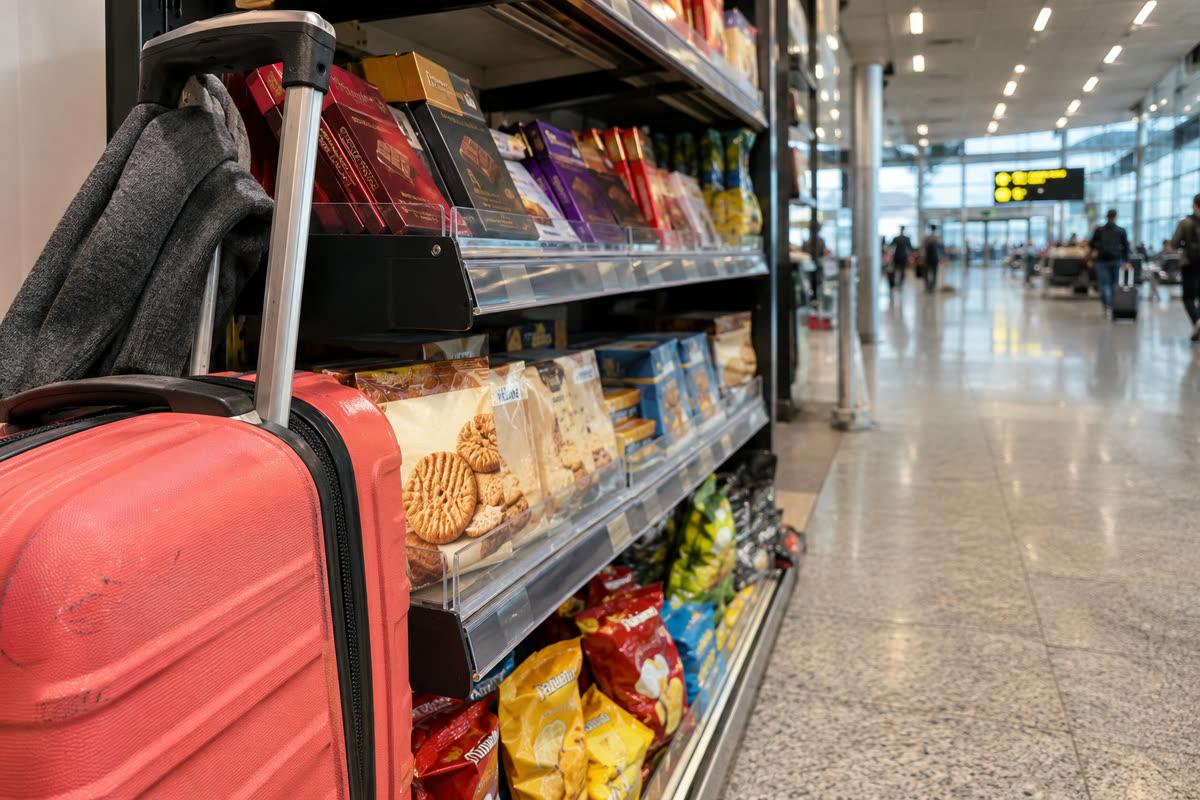 May-contain labels abroad: what each country’s regulator says about themWhether a “may contain” or shared-facility line is required, voluntary or guided by a scheme in the US, UK, EU, Canada, Australia, New Zealand and Codex.
Sources
- [1, 3, 18, 19, 24] European Commission (EUR-Lex), Commission Implementing Regulation (EU) No 828/2014 on information on the absence or reduced presence of gluten in food, checked Nov 17, 2026.
- [2, 20, 21] European Commission (EUR-Lex), Commission Implementing Regulation (EU) No 828/2014 on information on the absence or reduced presence of gluten in food (French text), checked Nov 17, 2026.
- [4, 12, 39, 43, 44, 48, 73] NVWA (Netherlands Food and Consumer Product Authority), Allergenen bij onverpakte levensmiddelen (allergens in unpackaged food), checked Nov 17, 2026.
- [5, 17, 22, 23, 26, 38, 40, 42, 45, 49, 50, 51] FOD Volksgezondheid (Belgian federal public health service), Allergenenvermelding (declaring allergens), checked Nov 17, 2026.
Read on 2026-11-17: the page is organised under the headings “Welke allergenen moeten worden vermeld?”, “Hoe moet je allergenen vermelden op het etiket van voorverpakte levensmiddelen?”, “Etiketteringsregels voor niet-voorverpakte levensmiddelen” and “Bijzondere bepalingen voor gluten”; it has no section on may-contain or cross-contamination warnings.
- [6, 16, 25, 53, 60, 63, 64, 66, 67, 68] Nederlandse Coeliakie Vereniging (NCV), Gluten-free tourist information, checked Nov 17, 2026.
- [7, 8, 9, 69, 71] Vlaamse Coeliakie Vereniging (VCV), Horeca (guide for restaurants and chefs), checked Nov 17, 2026.
Read on 2026-11-17: under the heading “4. Wat is WEL en NIET toegelaten in de keuken?”, the “NIET TOEGESTAAN” list includes “Gebak en zoetwaren: taart, koekjes, pannenkoeken, wafels, koffiekoeken, peperkoek, banketbakkersroom enz.”
Read on 2026-11-17: under the heading “4. Wat is WEL en NIET toegelaten in de keuken?”, the “NIET TOEGESTAAN” list includes “Dranken: Gemoute dranken zoals traditioneel bier. Let ook op bij frisdranken met gerstemoutextract (zoals Ginger Beer of sommige cola's).”
- [10, 28, 29, 30] NVWA (Netherlands Food and Consumer Product Authority), Hoe waarschuw ik voor risico op kruisbesmetting allergenen? (how to warn of cross-contamination risk), checked Nov 17, 2026.
- [11, 33, 37] Nederlandse Coeliakie Vereniging (NCV), Veelgestelde vragen kruisbesmettingswaarschuwingen (FAQ on cross-contamination warnings), checked Nov 17, 2026.
- [13, 14, 41, 46, 47] FAVV / AFSCA (Belgian federal food-chain agency), Omzendbrief met betrekking tot allergeneninformatie (circular on allergen information, 2014), checked Nov 17, 2026.
- [15, 59] Nederlandse Coeliakie Vereniging (NCV), Glutenvrij uit eten (gluten-free eating out), checked Nov 17, 2026.
- [27] Vlaamse Coeliakie Vereniging (VCV), Crossed Grain Keurmerk (Crossed Grain mark), checked Nov 17, 2026.
- [31, 32, 34, 35] Nederlandse Coeliakie Vereniging (NCV), Kruisbesmettingswaarschuwing (cross-contamination warning), checked Nov 17, 2026.
- [36, 65] Nederlandse Coeliakie Vereniging (NCV), Etiketten lezen (reading labels), checked Nov 17, 2026.
- [52, 70] FOD Volksgezondheid (Belgian federal public health service), Allergenenvermelding (declaring allergens) (French page), checked Nov 17, 2026.
- [54, 55, 56] Nederlandse Coeliakie Vereniging (NCV), Glutenvrije snacks (gluten-free snacks), checked Nov 17, 2026.
- [57] Nederlandse Coeliakie Vereniging (NCV), Het Zorgeloos Glutenvrij keurmerk (the Zorgeloos Glutenvrij mark), checked Nov 17, 2026.
- [58, 62] Vlaamse Coeliakie Vereniging (VCV), Kruisbesmetting & koken thuis (cross-contamination and cooking at home), checked Nov 17, 2026.
- [61] Société belge de la Cœliaquie asbl (SBC), Bonnes adresses en Belgique (good addresses in Belgium), checked Nov 17, 2026.
- [72] Société belge de la Cœliaquie asbl (SBC), Home page of the Belgian coeliac society's French-language site, checked Nov 17, 2026.